Skip to content
Skip to main content

Voices from the Stacks: Phillip G. Hubbard

The following is written by Olson Graduate Research Assistant Anne Moore.
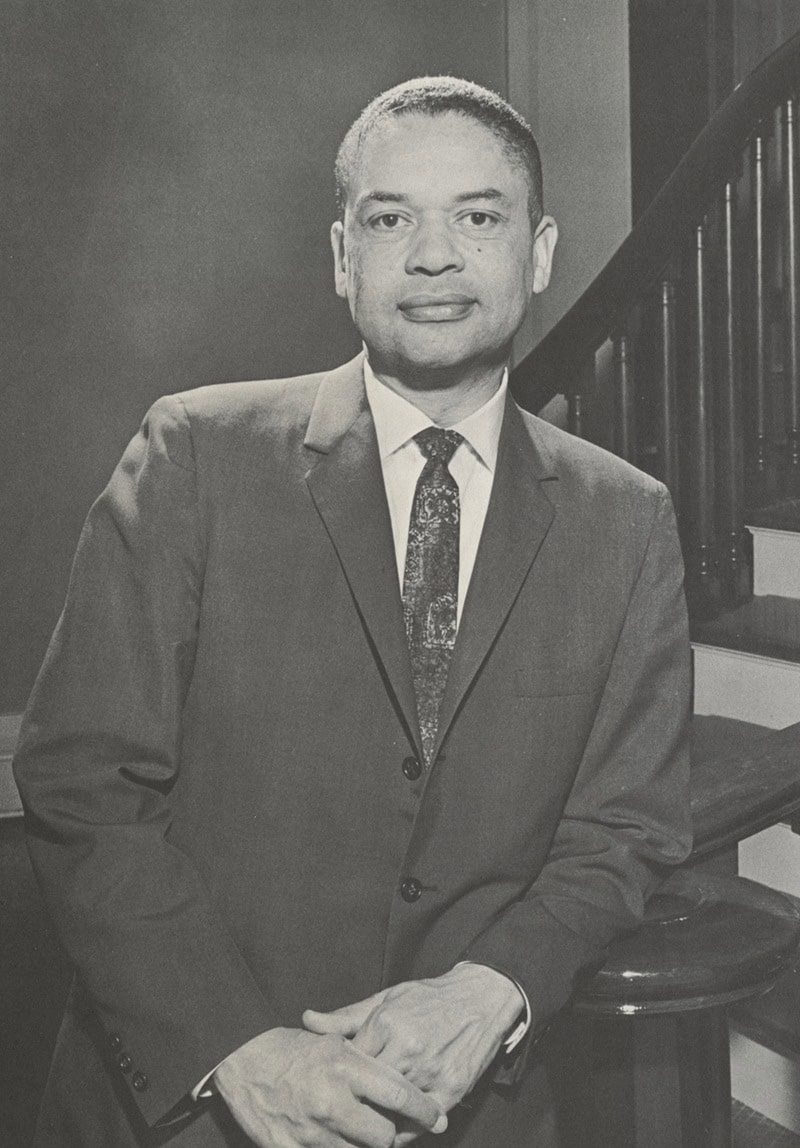
 

Hubbard in 1966, after being appointed dean of academic affairs (From University Archives Faculty Files, RG01.0015.003) 

Phillip G. Hubbard was an engineering professor, administrator, civil rights champion, and distinguished member of the University of Iowa community. He was the first Black professor at the university and spent more than 40 years advocating for students and providing counsel to six presidents. In 1971, he became the first Black vice president at any Big 10 university.  

Hubbard was born in Missouri in 1921, but his mother moved the family to Des Moines, Iowawhere the schools were desegratedso her children could have a better education. Hubbard attended North High School and shined shoes to save up money for college. He first came to the UI as an undergraduate student in 1940, when the university was still largely, if informally, segregated. Black men were excluded from university housing, and all students of color were discouraged from using the cafeteria and attending social events. Like many Black male students, Hubbard lived with a local Black family during his undergraduate years because of housing discrimination in Iowa City. Years later, Hubbard and his wife, Wynonna, would welcome Black students into their own home.  

In 1943, Hubbard enlisted in the Army reserves but eventually returned to the UI to finish his BS in electrical engineering, graduating with honors in 1947. That same year, he was hired by the university as a research engineer, making him the first Black faculty member at the UI. He went on to earn an MA in hydraulics and mechanics, a PhD in engineering, and became an assistant professor in 1954.  

As the civil rights movement reached its peak throughout the United States, Hubbard helped to found the Committee on Human Rights to combat housing and employment discrimination at the UI and in Iowa City. They investigated complaints and lobbied for Fair Housing ordinances, which were adopted by the city in 1964.  

1968 University of Iowa Hawkeye Yearbook

Hubbard was appointed dean of academic affairs at the UI in 1966, becoming the first Black administrator at a university in the state of Iowa. In 1971, he was named vice president of student services. During his leadership tenure, he was a staunch advocate for students of all walks of life. He fought for better undergraduate support and engagement and was admired on campus for his willingness to listen to student concerns. His steady relationship with students helped see the university through the turbulence of the Vietnam War and protests that rocked the campus.  

In 1967 Hubbard spearheaded the Rust, Iowa, and Le Moyne for Expanding Educational Horizons (RILEEH) program, which created partnership between the UI and predominantly Black colleges in the rural south. RILEEH facilitated student exchanges, teacher training, and graduate research to help support under-resourced academic institutions in Mississippi and Tennessee. Later, Hubbard would recruit faculty from these same institutions to help build the emerging Afro-American studies program.

As part of his work to promote cultural studies at UI, Hubbard chaired a newly created committee on Afro-American studies in 1968. He encouraged students of all backgrounds to take classes in this emerging field. He saw inclusivity and cultural competency as vital in higher education, believing the university should produce well rounded students who are prepared to live and work in a diverse world. He advocated for the Afro-American Cultural House and the Chicano Indian American Cultural Center (now called the Latino Native American Cultural Center), understanding the importance of creating a welcoming and supportive environment for minority students. 
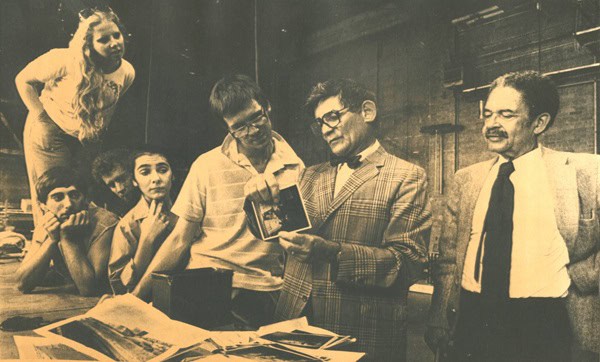
Hubbard with Students in 1983 (Frederick W. Kent Collection of Photographs).

To that end, Hubbard created Opportunity at Iowa in 1987, a program aimed at increasing diversity at the university through the recruitment and retention of minority students and faculty. This included scholarships, outreach to underserved public schools in Iowa, and summer workshops for highschoolers.  

After more than 40 years of service, Hubbard retired from the UI in 1990, though he continued to advise Opportunity at Iowa. A year later, Union field (located south of the Iowa Memorial Union) was renamed Hubbard Park in his honor. In 2001, he received a lifetime achievement award from the Iowa City Human Rights Commission.  

Dedication of Hubbard Park in August 1991 (Daily Iowan Archives)

Hubbard passed away in 2002 at the age of 80. Today numerous scholarships, medals, and awards bare the Hubbard name, including the Philip G. Hubbard Human Rights Award and the Wynonna G. Hubbard Scholarship. As we reflect on his life and legacy, we should strive to honor Hubbard’s commitment to human rights and his dedication to uplifting students of all backgrounds.  

To learn more, view the finding aid for the Phillip G. Hubbard Papers (RG99.0248), or visit us in person or online at the Iowa Digital Library. You can also search the Daily Iowan archives for articles on Phillip Hubbard’s work, or check out his autobiography My Iowa Journey: The Life Story of the University of Iowa’s First African American Professor on InfoHawk+.  
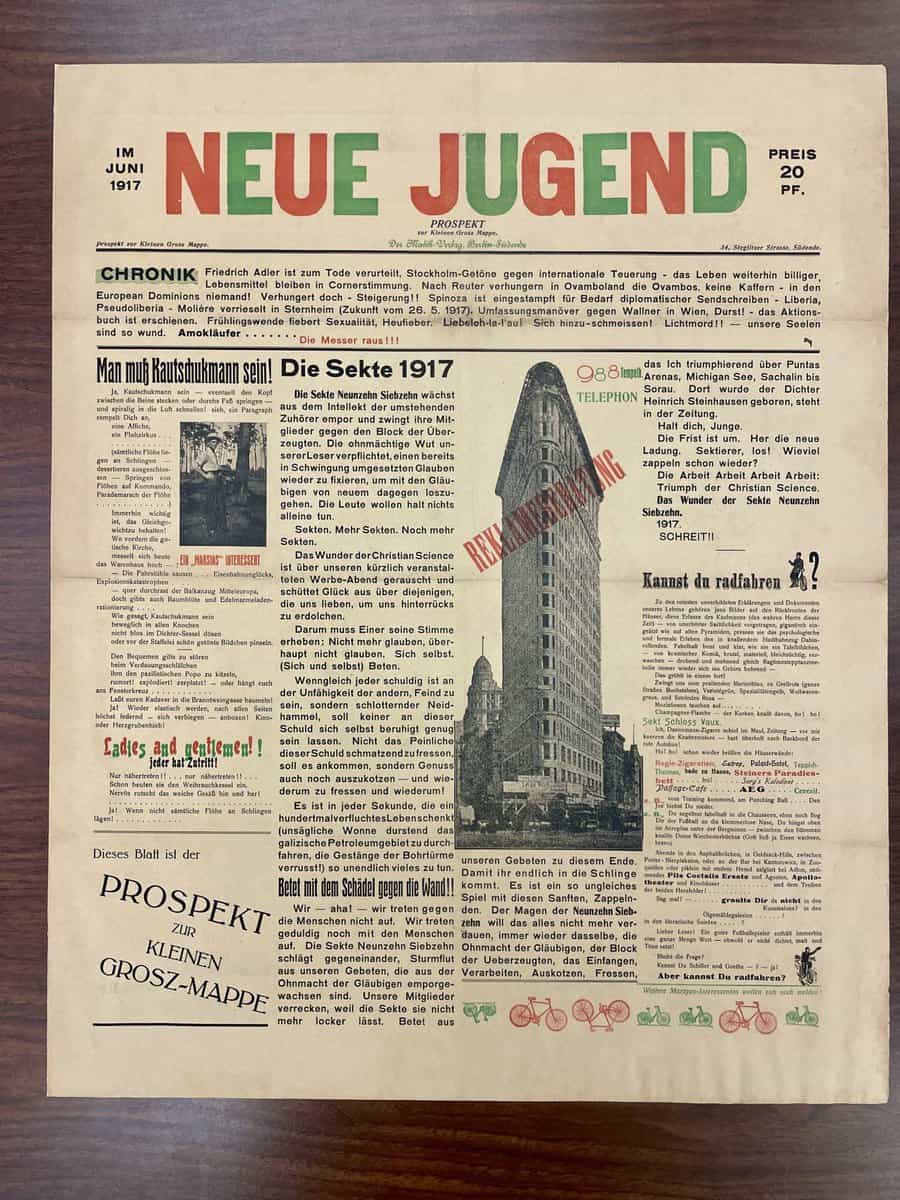
New acquisition, Neue Jugend, imparts Dada history

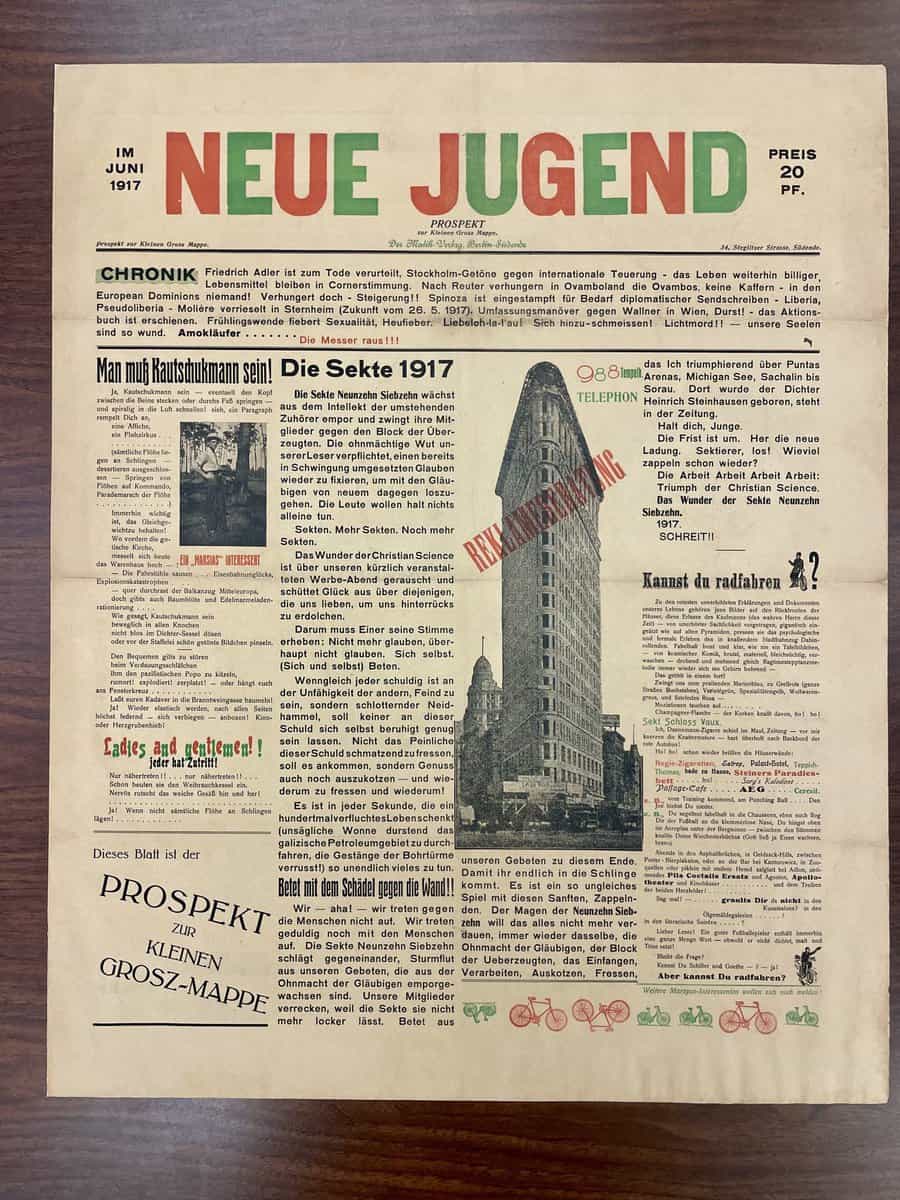
Cover of June 1917 edition of Neue Jugend
Cover of June 1917 edition of Neue Jugend, taken by Ursula Romero

The following is written by curator Timothy Shipe

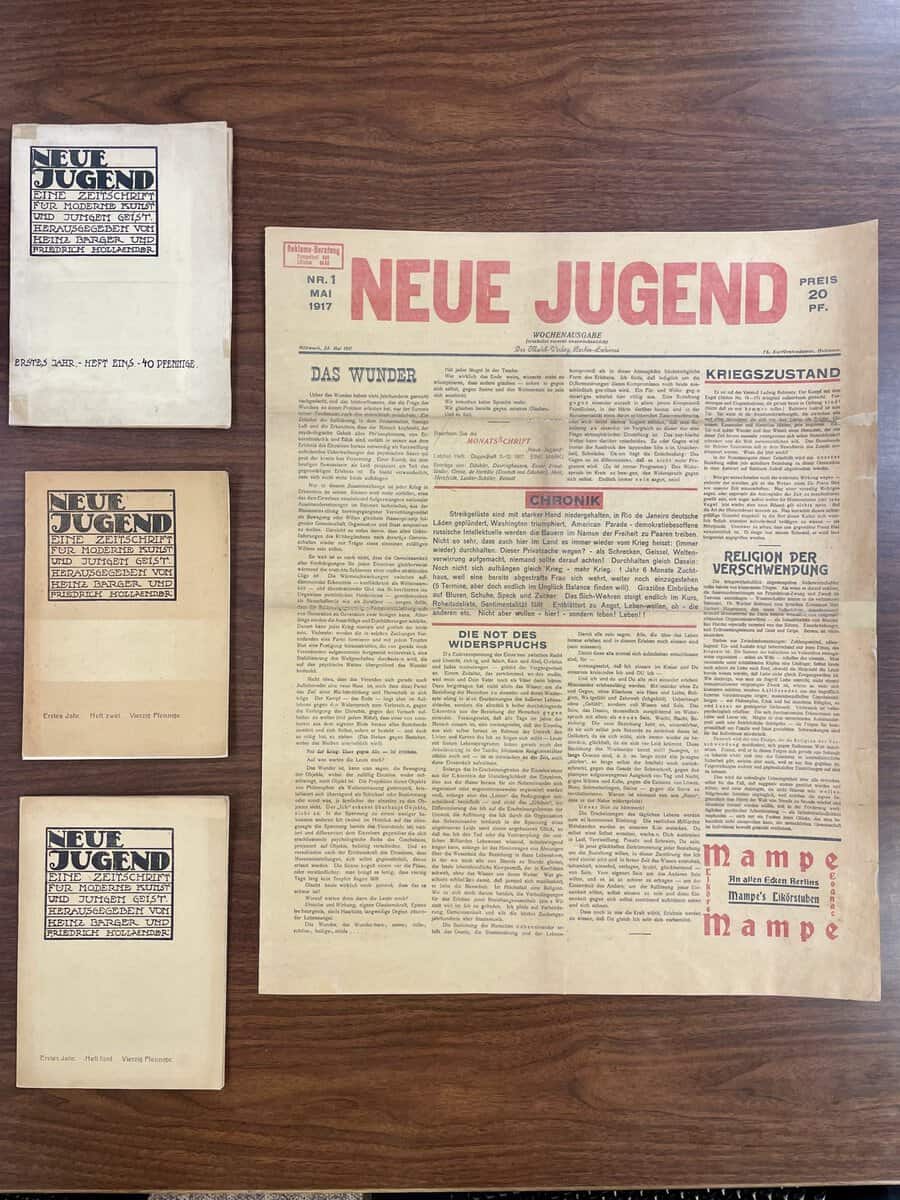
Among the International Dada Archive’s latest acquisitions are several issues of the Berlin journal Neue Jugend, founded in early 1914 by two student poets, Heinz Barger and Friedrich Hollaender.

Neue Jugend is a telling example of how the Berlin dadaists managed to elude wartime government censorship. The journal published five issues before its editors were drafted to fight when Germany went to war in August 1914. A sixth issue, distinctly pro-war in tenor, was published in December, after which the journal went silent. Meanwhile, the young writer Wieland Herzfelde served in the German medical corps in Belgium, returning to Berlin in early 1915, expelled from the military for insubordination and deeply disillusioned by the massive slaughter he had witnessed. In Berlin he joined a circle of young writers and artists who, like Herzfelde, were seeking an outlet for their growing pacifist sentiments. Their ingenious solution was to purchase publishing rights to the dormant Neue Jugend.

Because the last issue had been staunchly pro-war, the authorities paid little attention to the journal as it resumed publication in July 1916 with a staunchly anti-war and internationalist orientation. Herzfelde and his associates managed to produce numbers 7 through 12 before the authorities took notice and banned the journal in early 1917. But the editors had one more trick up their sleeves. Taking advantage of a legal loophole, they were able to recast Neue Jugend as a “weekly” in newspaper format. Two issues of this “Wochenausgabe” appeared before it, too, was banned. But it is these two issues, with their radical page layout and avant-garde content, that mark the beginning of a Dada sensibility in Berlin.

By this time, Richard Huelsenbeck had returned from Zurich, where he had helped found the Dada movement. Herzfelde and his colleagues eagerly adopted this new movement, giving it a more overtly political flavor. The final, June 1917 issue of Neue Jugend is considered one of the masterpieces of dadaist page design. Now, with the recent acquisition of nos. 1 and 2 of the first series and no. 1 of the “Wochenausgabe,” we are just one issue short of holding a complete run of this major Berlin Dada publication. 

Pages from Neue Jugend

You can find out more about visiting Special Collections to view this and other items in the International Dada Archive by visiting our website.

Hiring for Maps Collection Graduate Assistant

Calling graduate students looking to chart their next year!

Applications are open for two graduate assistantships for hands on work in the University of Iowa Special Collections and Archives. In addition to the Olson Graduate Research Assistant search, we are seeking a graduate student to help navigate the Map Collection. Find the full postings on Handshake and a closer look below.

About the Maps Collection at University of Iowa Libraries Special Collections and Archives

The University of Iowa Map Collection merged with Special Collections and Archives in 2013 as a result of the changing uses and users of paper maps. The collection is local, regional, and international in scope and subject coverage is broad, from topographic maps and atlases to aerial photos, historical maps, celestial charts, and more. It is the largest collection of its kind in the state and is accessible to patrons and researchers on campus and off. Through a Roy J. Carver Charitable Trust Grant in 2024, a dedicated project is underway to revitalize discovery and access to the Map Collection. As a part Special Collections and Archives, it is part of an extensive teaching collection and supports researchers on and off campus.

Position Description

The University of Iowa Libraries Special Collections and Archives invites current or incoming graduate students to apply for the Maps Collection Graduate Assistantship for 2025–2026 (August 2025–July 2026), with the possibility of an extension to summer 2027.

The Maps Collection Graduate Assistant will assist the maps collection librarian and Special Collections and Archives staff with on-site projects pertaining to the collection and Roy J. Carver Charitable Trust grant project. Their work will support the project through activities such as identifying materials for digitization, generating metadata, expanding catalog records, providing collections care, and shifting materials. They will also support Map Collection operations by assisting patrons and researchers, contributing to research projects, assisting map-based instruction, or supporting outreach efforts. Prior knowledge of special collections and archives, maps, GIS, or cartography are welcomed but not required.

Qualifications

The Maps Collection Graduate Assistantship is open to incoming students who have been accepted into a graduate degree program at the University of Iowa for the upcoming fall semester, as well as students who are currently enrolled in a graduate degree program. Students in the School of Library and Information Science, new School of Earth, Environment, and Sustainability, and the University of Iowa Center for the Book, or the English, history, American studies, and art and art history programs may have particular interest, but applications from students in any graduate program will be carefully considered. Please note that students currently enrolled in the U2G students (undergraduate-to-graduate) program are not eligible for the Maps Collection Research Assistant position due to funding structure requirements.

Successful candidates must also possess the following requirements:

· Expected graduation date of May 2027 or later

· Demonstrated interest in special collections, archives or a related field

· Interest in learning about maps

· Excellent interpersonal and written communication skills

· Demonstrated skill at making progress towards goals in an environment with many competing priorities and projects

· Demonstrated ability to work in a team-based setting where consultation, flexibility, and collaboration are essential

· Demonstrated commitment to a welcoming and respectful environment, in a workplace setting, and/or in the community

· Ability to carefully physically handle and maneuver oversized materials

Application Details

Students wishing to apply should submit all required materials to Laura Michelson at laura-michelson@uiowa.edu. The deadline is midnight on Feb. 28, 2025.

· Current resume or CV

· Statement outlining the skills or talents the candidate would bring to the Special Collections and Archives department and Map Collection, as well as outlining their academic and career aspirations in special collections or a related field and describing how the Maps Collection Graduate Assistantship aligns with those aspirations. The statement should not exceed two (2) typed pages (under 1000 words).

· Contact information for two professional references who can speak to the candidate’s work experience should also be submitted.

For more, see the full posting for the Maps Collection Graduate Assistant on Handshake here.

Eligible graduate students are welcome to submit applications for both Special Collections and Archives Graduate Assistant positions. Learn more about the Olson Graduate Assistantship on Special Collections and Archives website.

10 Weird Tales Covers to Haunt Your Halloween

The following is written by graduate student worker Theo Prineas

Sometimes, when I’m hunched over a desk in the back of the Hevelin pulps’ windowless archive room, the lights – which are set to a motion-sensing timer – go out. As I jump up and wave my arms to reactivate them, I expect a chalky-dry hand with long fingernails to snake out of the Hevelin pulp and pull me into the dark. Below are the covers that I have come across while I’m working on processing the Hevelin pulps that really set me on edge. As the spirits and demons come out to cavort on All Hallow’s Eve, I invite you to join me in fear and fascination with Weird Tales’ spookiest covers.

July 1945. Cover art by Lee Brown Coye.

Now is the time to plan ahead for your thermostat wars with family, roommates, and friends. Personally, I will be channeling these two as I pull a blanket around myself and huddle in my apartment for the next few months. ‘Tis the season to be cold and spooky.

March 1946. Cover art by Lee Brown Coye.

I love the way the billowing heroism of the red cloak and fine suit of armor sag into the desiccated body of the ghoul. The decayed glory of this character is reflected by the sour sun, the hunching vulture, and the barren sprawl of the tree. Big mood.

Jan. 1947. Cover art by A.R. Tilburne.

In landlocked Iowa, we occasionally need a reminder that the ocean is filled with primal horrors. I need convince myself that my life is complete without going to a beach. You’ve seen The Meg—now read this Weird Tales to meet the creatures that lurk below the depths!

Nov. 1949. Cover art by Matt Fox.

He’s just a hungry little guy!

Nov. 1950. Cover art by Frank Kelly Freas.

I find this cover compellingly mysterious. What strange creatures dance in the darkest part of Halloween night? The shadow over the satyr’s face hides its true intentions. You’ll have to read the pulp and enter the weird to uncover the truth.

July 1951. Cover art by Charles A. Kennedy.

Who amongst us hasn’t danced in a moonlit fire ritual? To me, this is a quintessential graduate school rite of passage. How else am I supposed to get an A on finals? Study? No thanks. I shall instead entreat the Flame Birds that emerge with all the demons on All Hallow’s Eve for magical aid.

Sept. 1952. Cover art by Virgil Finlay.

I entered this copy of Weird Tales into the collection guide a few hours before leaving work to meet up with friends at the Iowa City Jazz Fest to watch the fireworks. The impression of this chaotic scene lingered in my mind as I departed from the quiet library into Iowa City’s bacchanalian street celebrations.

Nov. 1952. Cover art by Anthony Di Giannurio.

Reader, it is fall. The skeletons rising from the mud evoke students dragging themselves to 8 a.m. classes as the mornings get darker and colder. Over our heads lurks the specter of a hungry vulture, a manifestation of the menace awaiting us at the end of the semester. Prepare yourselves for the grim scourge: finals.

Jan. 1953. Cover art by Frank Kelly Freas.

The alien at the heart of the spiral is oddly hypnotic. As I write this, I’m getting very sleepy…Why do I have the inexplicable urge to go to the Reading Room and read this pulp? If I catch any library staff building a UFO in their office, I’ll know that they spent too long looking at this issue of Weird Tales.

Winter 1973. Cover art By Bill Edwards.

The expressions on this cover capture the duality of Halloween. The devil’s expression is the depraved wickedness I feel after I buy myself cake even though I haven’t earned it. The terror of the man on the slab is my stomach’s horror at just how much sugar I’ve consumed. This is your invitation to join me in my depravity: Have some cake. Torment your gut biome. It’s the season of tricks and treats!

Want to continue your scary journey through the Hevelin pulp magazines? Come visit us at Special Collections and Archives!

Voices from the Stacks: Los Bailadores Zapatistas and the Latino Native American Cultural Center

The following is written by Olson Graduate Research Assistant Anne Moore.

Last week, the Latino-Native American Alumni Alliance (LANA3) gathered on campus to celebrate more than 50 years of the Latino Native American Cultural Center (LNACC) at the University of Iowa.

In 1971, three students—Rusty Barceló, Ruth Pushetonequa, and Tony Zavala—founded the the Chicano Indian American Cultural Center, later renamed the Latino Native American Cultural Center (LNACC). In it’s five-decade history LNACC has hosted events like cookouts, powwows, and dances; published literary magazines and newsletters; held rallies, boycotts, and protests; and sponsored a variety of other educational and social programs.

The Libraries’ Special Collections and Archives recently acquired new materials from LNACC, including four beautiful dresses handmade by students in Los Bailadores Zapatistas, a baile folklórico troupe on campus. Baile folklórico encompasses many different types of traditional folk dance stemming from various regions of Mexico and cultural traditions, often with Indigenous and Spanish influences.

Los Bailadores Zapatista’s was formed at University of Iowa in the mid-1970s and aimed to “increase the education level and understanding of mestizo dancing and music, and to share our mestizo culture with the university and community population.” Los Bailadores performed on campus and throughout Iowa and the Midwest, often accompanied by the singing group El Conjunto Chicano. They visited other campuses and performed at community events and festivals. In 1978 they attended the National Ballet Folklórico festival in Kansas, and six students traveled to Mexico that summer to learn traditional dances.

Celina Espinoza, the groups instructor, taught the other members how to sew costumes, which are representative of traditional dance attire worn in different regions of Mexico. The group performed dances from the states of Jalisco and Veracruz, as well as from northern regions of Mexico and what is now the Southwestern United States.

Los Bailadores Zapatistas was just one of several groups affiliated with LNACC that brought Chicano art, music, and culture to audiences on the University of Iowa campus and beyond. To learn more about Los Bailadores and the Latino Native American Cultural Center, visit us in person or online at the Iowa Digital Library, and check out our past blog posts on LNACC. You can also find the full finding aid to this collection online.

Voices from the Stacks: Riot Grrrl and the Jen and Sarah Wolfe Zine Collection

The following is written by Olson Graduate Research Assistant Kaylee Swinford and Instruction Graduate Assistant M Clark

On their 1995 track, “Criminal Boy,” female pop punk band Bunnygrunt begs the question: ‘what is a girl to do?’ The song chronicles a tough sister’s plans to break her all bark and no bite brother out of the slammer, which serves to be a fitting parallel to how the Riot Grrrl feminist movement of the 1990s got its start.

Kitpaw zine featuring Bunnygrunt

By the ’90s, the male-dominated U.S. punk movement, prominent in cities like Seattle and Portland, had been long ignoring the women participating in and moving forward the empowered anarchist agenda underlying punk music, media, and culture.

The Riot Grrrl Movement, aptly named and noted by its signature growling triple “r”, emerged as an opportunity for women in the punk scene to reclaim and redefine their identities as “girls” through expressions of anger, rage, and frustration. This subculture combined feminism, punk music, and politics by addressing issues of assault, patriarchy, anarchism, and female empowerment. The growth and success of the movement can be attributed to the multiple modalities used to spread their message: music, zines, art, and other DIYs that served as vessels for political activism.

Zines can be simply defined as self-written, often self-published and self-distributed “magazines” of narrow focus, created out of a desire to share. In the case of Riot Grrrl, this included, but was not limited to, punk and feminist literature, social commentary, news, gossip, music reviews, and other topical articles and musings.

Cover of Panophobia, zine made by Jen Wolfe

The University of Iowa’s Special Collections and Archives’ Sarah and Jen Wolfe Zine Collection provides a dynamic, wide-ranging, and intimate glimpse into the zines created and distributed during the Riot Grrrl era. Donors of the collection, sisters Sarah and Jen Wolfe, were active Riot Grrrls throughout the late ’90s and early 2000s, with Jen playing bass for the band Bunnygrunt in 1995–1998 and later publishing her own zines: Bunnygrunt and Panophobia. The sisters also operated their own mail-order distribution service, out of Iowa City, Septophilia, for zines and records both, leading to their large collection of various independent, underground, and occasionally personalized zines.

With an established interest in the DIY and communal nature of zines, the Wolfe sisters have curated a thorough and impressive collection that will continue to provide insight of a first-person narrative in both collecting and creating at the height of the Riot Grrrl movement.

If you are interested in seeing this collection or similar collections, email us lib-spec@uiowa.edu and we will help you set up a visit!

The Special Collections and Archives’ fall 2024 reading room exhibition, Japanese Pocket Lanterns, brings a delicate art to life

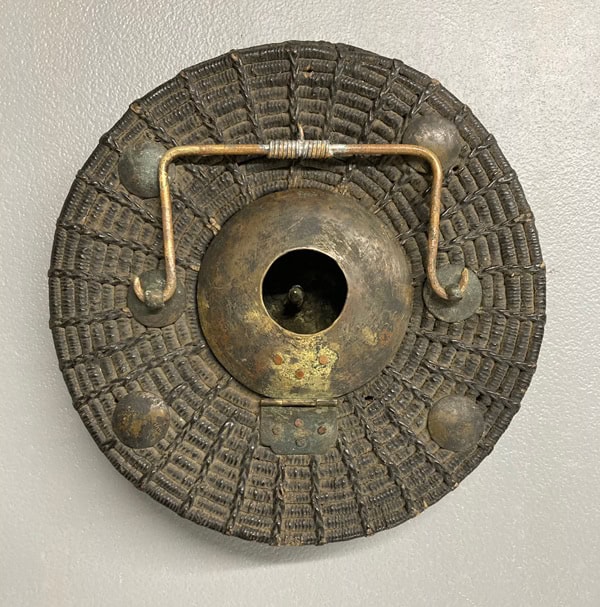
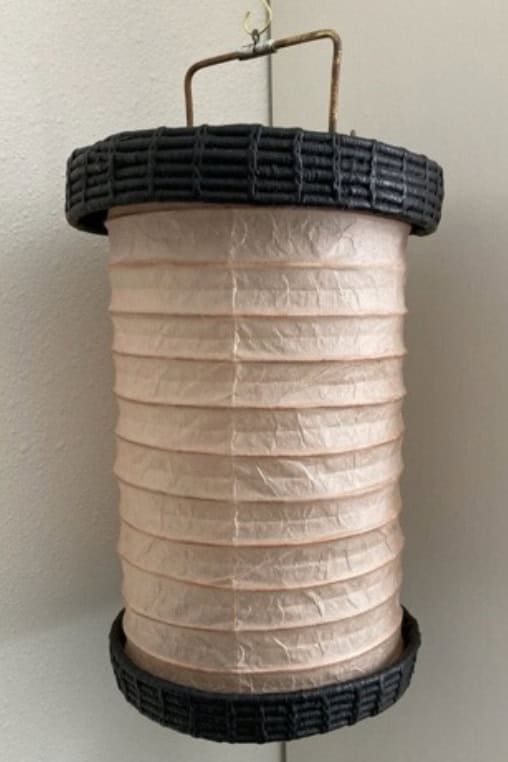
In 1975, Tim Barrett, now emeritus director and paper specialist at the University of Iowa Center for the Book, traveled to Japan to begin Fulbright research on hand papermaking techniques. It was during his two-year fellowship that he found himself fascinated by small lanterns known as Odawara chochin, “the equivalent of a personal flashlight,” dating back to the late 18th to early 20th centuries. Barrett is an enthusiastic collector of these lanterns, which were named for their origin in the town of Odawara, an important stop on the road between Tokyo and Kyoto. The lanterns in the exhibit will eventually join the paper specimens, slides, videos, and other items in the Tim Barrett Collection at the UI Libraries. Below, Barrett casts light on what drew him to these unique items.

This exhibit is on display for the Fall 2024 semester in the Special Collections and Archives reading room. Learn more about these lanterns by attending Barrett’s curator talk at 3:30 p.m. on Friday, Oct. 11, 2024.

An imaginative “obsession”

“Over the last few years I have become mildly obsessed with collecting and restoring [Japanese pocket lanterns], bringing them back to life, and imagining their original owners.

Several things have drawn me down this rabbit hole. In general, I am touched by the quality of the artisanal workmanship and the materials evident in these utilitarian objects that were part of their owners’ daily lives. During their restoration, I imagine the comfort and joy their light gave, keeping darkness at bay, and how they must have been reassuring, almost spiritual, company for anyone walking alone in the darkness. Finally, there is an undeniable tension between the highly flammable components and the precious light they gave.”

Illuminating the path

“To appreciate the importance of these lanterns, one has first to imagine near total darkness. Darkness, as on a path in a deep forest on a moonless night. Dark, dark. This is not easy for us to do in modern times. Because we are surrounded by sources of light at night, we are unfamiliar with the experience of true darkness.

In Japan, electric lighting didn’t arrive until the late 19th or early 20th century. Oil lamps, torches, fires, and candles provided limited sources of light for those in the immediate vicinity and also gave those at a distance a helpful sense of direction.”

 A sense of what it must have been like in the dark, and how important paper lanterns were, is evident from these early 20th century Japanese prints.

Tim Barrett
Starlight night by Shotei Takahashi, 1936
Oh-hashi Bridge at Atako by Koho, 1910-1930s
Hurrying with a Horse by Yamamoto Shoun, 1910

Building a collection

“Most of the lanterns in the exhibit were found on Japanese auction sites or online antique shops. The purchase prices varied from $20 to $150 depending on workmanship, rarity, and condition. Lanterns with their original paper and bamboo ‘fire bags’ intact were generally at the higher end of the price range. Because the paper and bamboo caught fire so easily, most lanterns today consist of only the remaining top and bottom pieces, usually made of copper or brass.”

GALLERY

Odawara Chochin Reference

Tsuyoshi Harada, Japanese Studies Librarian, and I have searched and thus far found only one book that specifically addresses Odawara Chochin. Published by the “Odawara Chochin Preservation Society” in 1977, the book documents the history, production, use, literature, artwork, and memories associated with Odawara Chochin. In Japanese. No complete English translation is known. It is available to check out from the UI Libraries Japanese Collection.

Top 10 Pacific Islands materials in the University of Iowa’s Special Collections and Archives

The following is written by M Clark, instruction and reference graduate assistant for Special Collections and Archives

While Pacific Island cultural experiences are far and few in Iowa, Special Collections and Archives is the proud host of a number of rare and highly regarded publications by prolific Pacific Islander creators or about the rich histories and cultures of the islands. Here is a look at just 10 items from the collection you can come see.

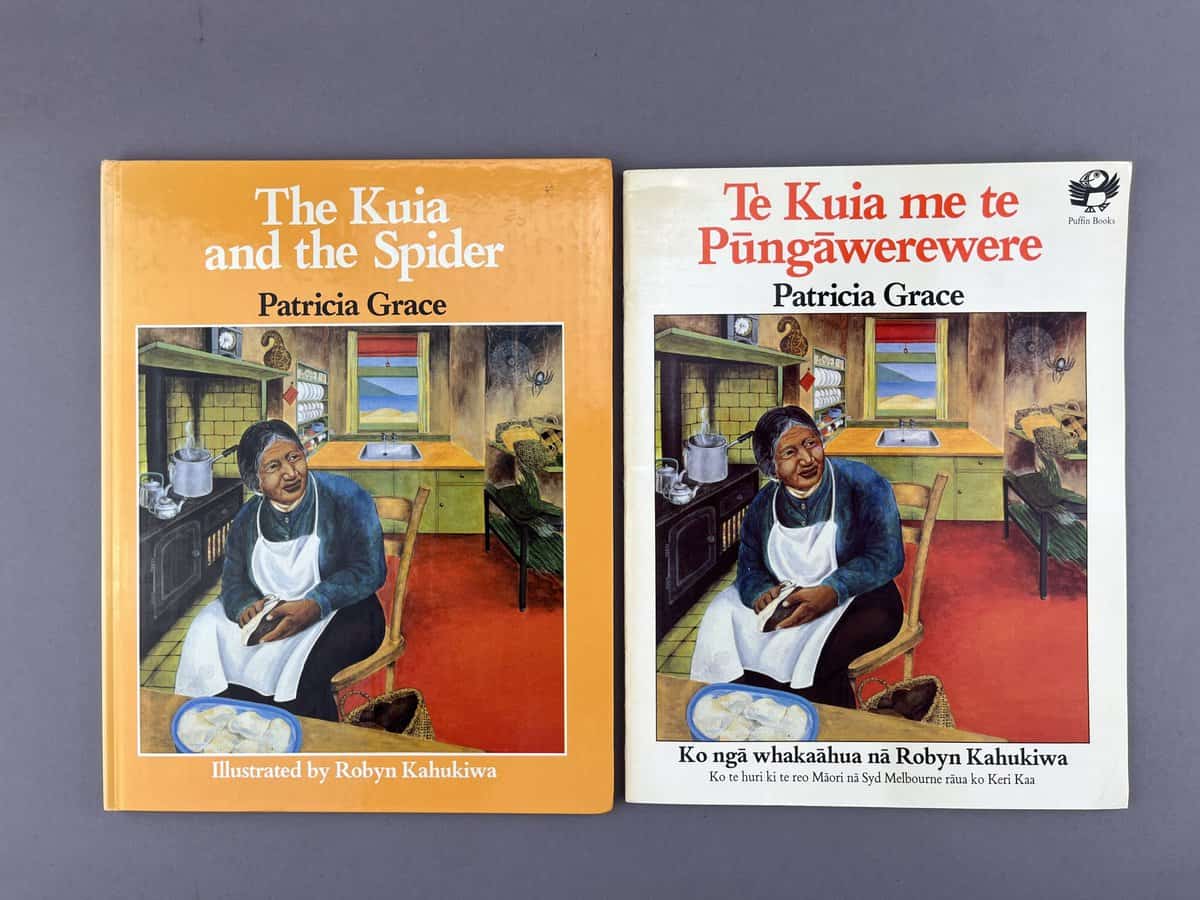
Te Kuia me te Pungawerewere (The Kuia and the Spider) by Patricia Grace.

X-Collection FOLIO PZ5.G73 K853 1981

Cover of book in both language

Patricia Grace’s Māori children’s book Te Kuia me te Pungawerewere (its English language version titled The Kuia and the Spider) is the tale of a Kuia, meaning elderly woman or grandmother in English, and a spider who share a kitchen and are in a constant playful argument of who is better than the other. Patricia Grace, a former school librarian herself, is a famed Māori writer of novels, short stories, and children’s books. The publication of this book in both English and te reo Māori, the Māori language in the 1980s was of immense importance to language revitalization efforts following the presentation of the Māori Language Petition in 1972 and the officialization of Māori Language Week in 1975. Te Kuia me te Pungawerewere was awarded New Zealand Picture Book of the year in 1982 and remains a beloved story by Māori educators and families.


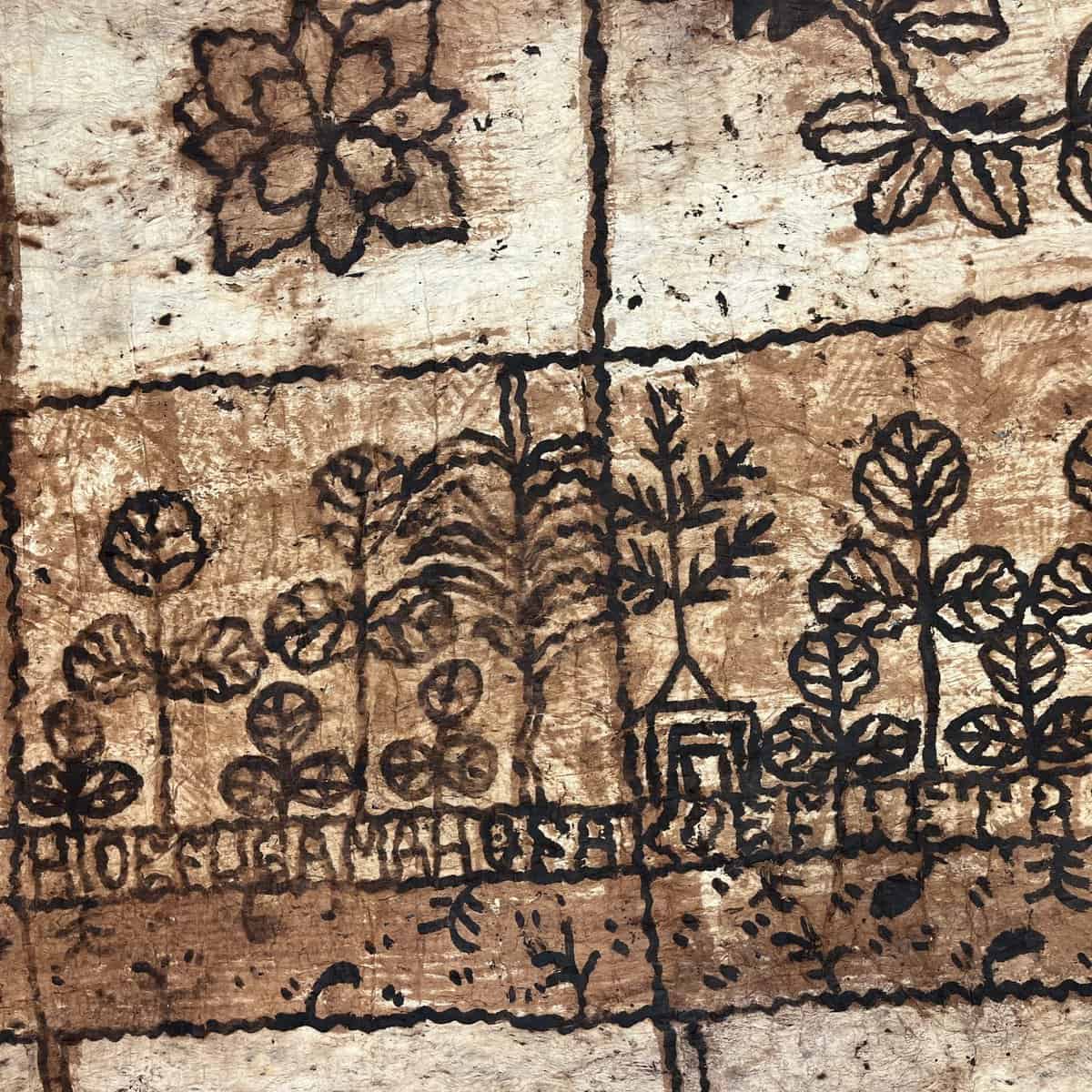
Tongan Ngatu.

MsC 913

Ngatu, or ngatu hingoa, in the Tongan language refers to the elaborately decorated tapa bark cloth tapestries of Tongan cultural significance. The art of ngatu is made distinct through processes of dying, stamping, and hand painting the tapestries, though still similar to the artful practices using tapa bark cloth in other Polynesian islands. The ngatu held in Special Collections was likely created in the 1940s, during or after World War II, and includes illustrations of planes to commemorate the contribution of the Tongan Defense Force to the British war effort. The tapa, or bark cloth itself, is likely made from mulberry tree bark, commonly used in the Pacific for this exact craft. Illustrations and stamping was likely done with dyes made from saps of other native Tongan plant species, such as candlenut trees.


Roma Potiki by Roma Potiki.

X-Collection Folio PR9639.3.P59 R6 1996

thin blue book with brown lettering tied in a string

Roma Potiki is a noteworthy contemporary Māori poet, playwright, and performer. Her self-titled collection of poetry explores themes and topics of nature, the human spirit, Māori womanhood, politicization, and the lasting effects of colonization. The poems in this limited collection were also published in her 1998 collection Shaking the Tree.


Death and the Tagua by Alistair Te Ariki Campbell.

X-Collection Folio PR9639.3.C275 D4 1995

Front page art showing drawing of man in toga

Alistair Te Ariki Campbell is a famed New Zealand poet and playwright of Cook Islands Māori descent. This collection of poems, Death and the Tagua, is the artistic account of and response to Campbell’s own journey from Rarotonga in the Cook Islands to New Zealand via a Tagua sailing vessel, and the deaths of both of his parents in his early life. 


Tapa: the bark paper of Samoa and Tonga by Lilian Bell & Ulista Brooks.

Smith Miniatures Collection TS1095.S36 B45 1979

Inside pages showing paper sample

Tapa is the bark paper or cloth of Polynesian islands including Samoa and Tonga, as specifically shown in this miniature book of paper samples. The bark of mulberry trees, among other plants, is processed into a fibrous paper that is often then ornately decorated with dyes for cultural customary or celebratory purposes. In Tongan culture, these decorated tapas are called ngatu, and in Samoan culture, called siapo.


Whanau by Witi Ihimaera.

X-Collection PZ5.I35 W43 1974

Cover of book showing two young children

Whanau, meaning family in te reo Māori, is a story of just one day in the lives of a large family living in a rural Māori village, struggling with the loss of traditional values and ways of living due to colonial pressures. It is the second work published by Witi Ihimaera, who is considered one of if not the most influential Māori writer still today. He was the first Māori writer to ever publish both a novel and book of short stories. The story takes place in the small town of Waituhi, were Ihimaera himself was raised and inspired to become a writer after seeing the erasure or mischaracterization of Māori in literature in New Zealand and globally. Our copy is signed by Ihimaera, with a note to the book’s donor, Carmon Slater, that reads “To remind you of a wonderful partnership and warm time at Tokomaru Bay when we worked on improving the self image of Māori Children.”


Ethnic Foods of Hawai’i by Ann Kondo Corum

Szathmary Collection TX724.5 .H3 C68 1983

Recipe with drawings showing how to make Laulau

Ann Kondo Corum, formerly a school librarian in Honolulu, wrote and illustrated Ethnic Foods in Hawai’i to provide a sense of history and culture through the foods and cooking traditions of the now multi-racial state of Hawai’i. She saw a need for this during her time as a librarian, when students had trouble finding information about the foods and culinary customs of their peers. This cookbook dives into the history and popular traditional recipes of the major cultural groups on Hawai’i, including traditional Hawaiian and Samoan recipes, celebrations, and culinary customs.


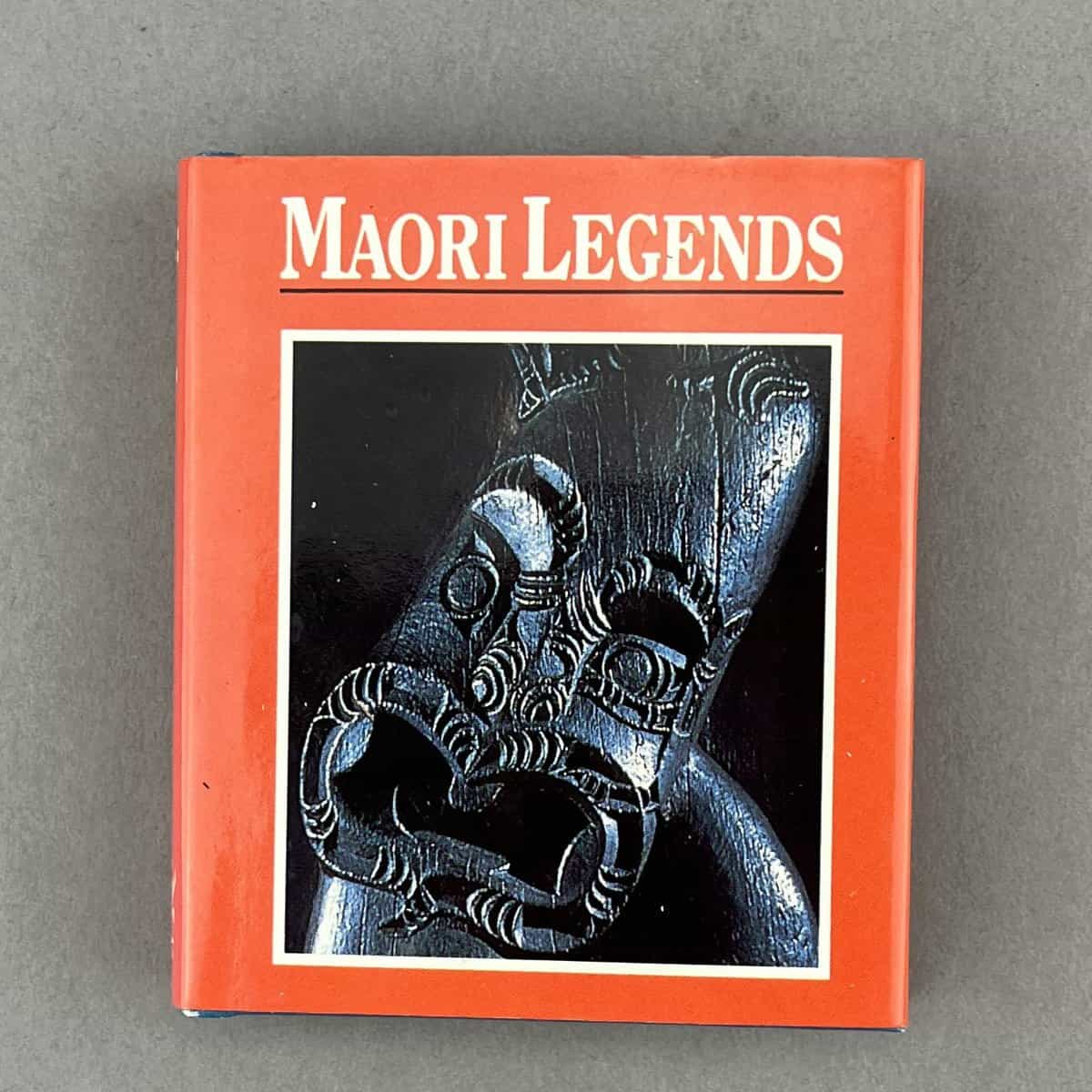
Māori Legends illustrated by Manu Smith.

Smith Miniatures Collection GR375 .M36 1993

Cover of book showing carved wooden figure

This miniature book is the illustrated telling of major Māori legends or oral histories, including those of Maui, Pania, and Rona, the woman who went up to the moon. Illustrations are done by Manu Smith, who is also known for having illustrated Māori legends series for New Zealand stamps and phone cards in the 1980s and early 2000s.


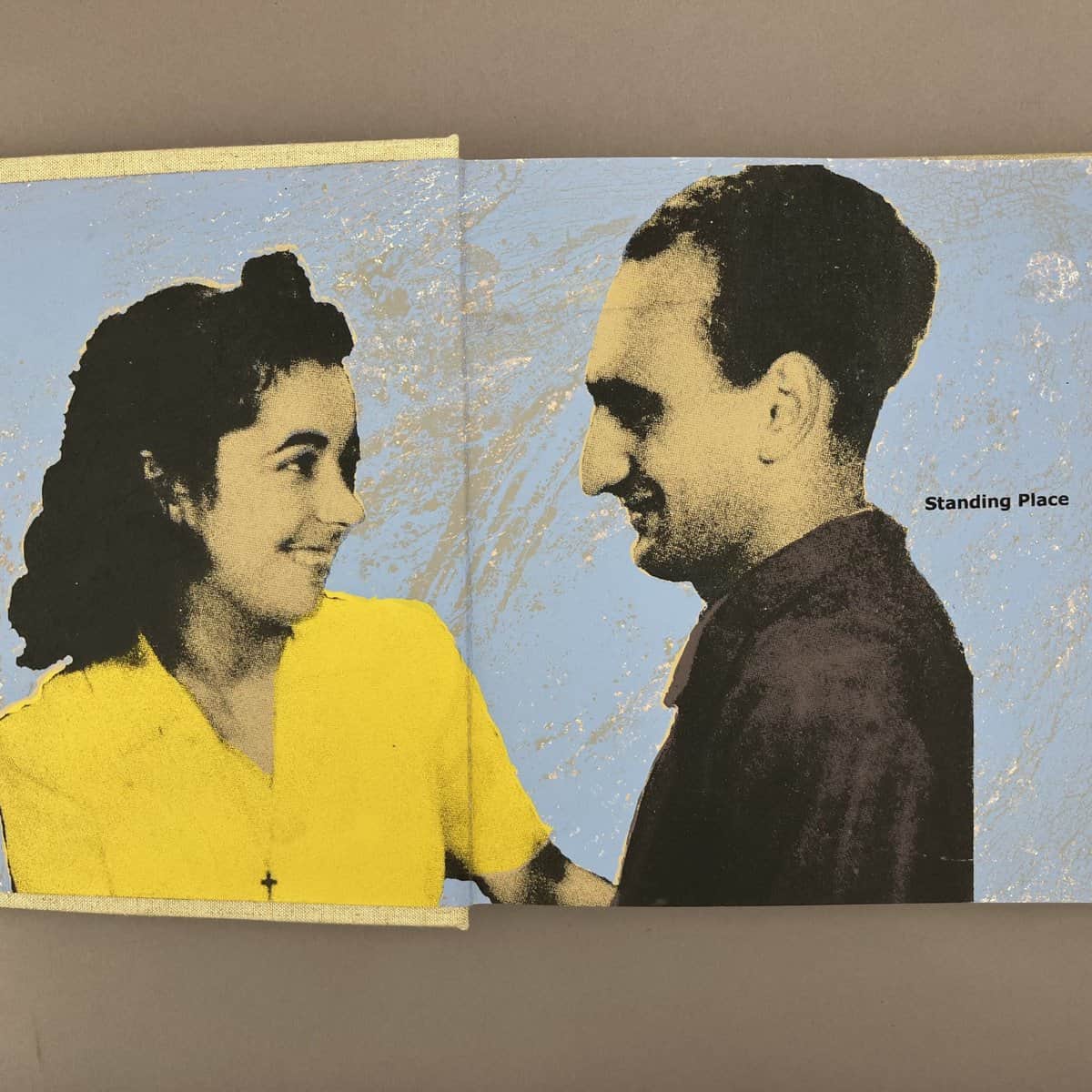
Standing Place by Fred Hagstrom.

X-Collection Oblong N7433.4.H25 S73 2012

picture of solider and woman in yellow looking at each other smiling

Fred Hagstrom is an artist and professor emeritus of art and art history at Carleton College in Minnesota. Standing Place is an artistic telling of a story about shared culture and the soldiers of the Māori Battalion during World War II. This covers the story of Ned and Katina Nathan, who are also the focus of Patricia Grace’s book, Ned and Katina. In his artist statement on the piece, Hagstrom writes: “I take students to New Zealand every two years, and in doing that have made good friends at a Māori Marae, which is a tribal meetinghouse. This is the story of their parents. …They also founded the Marae that I visit. This book is made in the friendship I feel for this remarkable family.” The Marae in mention is the Matatina Marae at Waipoua. The kawai pattern on the book’s cover, titled Tatai Hono (the joining of lines of descent) was designed by Manos Nathan, son of Ned and Katina.


Francis Wherahiko Rawei, from the Redpath Chautauqua Bureau Records

MsC0150 Box 238, Box 272

Cover with large "The New Zealanders" written across the middle and a person in a grass skirt holding spear and shield

Francis Rawei, also known by his former name Wherahiko Rawei or his stage name Dr. Rawei, was a Māori performer and educator of the early 20th century. Alongside his wife Hine Taimoa, a lecturer, harpist and singer herself, Rawei toured internationally lecturing, singing and storytelling about Māori history, life, and culture. Together they toured the United States and Canada on the Chautauqua circuit and lived briefly in Chicago before eventually returning to New Zealand.


Also worth mention are the many travel diaries and publications collated by some of the first foreign seamen to arrive in the South Pacific. I have intentionally not included any of these materials, as these diaries are predominantly accounts of travel to these islands with the goal of imperial conquest or religious purification of Indigenous Pacific Islanders, and unfortunately are not without deeply racist and offensive language. This undoubtedly makes these materials challenging to read and engage with, but the effects of colonialism and religious missionary efforts are very real and prominent parts of Pacific Islands history, as well as our present day. Their place in a rare book repository is just as important to the preservation of Pacific Islands history and culture as those included on this list.

Welcome Ursula Romero

Young woman with curly black hair and glasses smiles at camera while leaning on a card catalog
Ursula Romero

We are happy to welcome Ursula Romero as our new outreach and instruction librarian in Special Collections and Archives.

Originally from New Jersey, Ursula spent the last five years working as an outreach librarian at the Lilly Library at Indiana University. She earned her BA in media studies and a minor in international cinema from William Paterson University in Wayne, New Jersey. She went on to receive her MLIS at Pratt Institute in Manhattan, graduating in 2019.

Ursula says she’s looking forward to getting to know the collections here, as well as the people of Iowa City. “I’m also extremely excited to work with the Center for the Book and the other special collections on campus, and to just generally live in a place as bookish as Iowa City.”

As a librarian, Ursula loves meeting people and learning about their interests and finding ways to connect those interests to the collections.

“I feel very strongly that special collections are for absolutely everyone, and it is my mission to make everyone feel welcome here and be able to see themselves in our collections, especially groups who have been historically marginalized or overlooked,” she says, “I love teaching classes or hosting events where visitors are able to interact with the materials and feel a connection to the past and an ownership of our shared cultural heritage.”

When not working, Ursula loves to be watching movies, especially horror/cult/avant-garde/independent films. She hasn’t been here a full month and has already been to FilmScene six times! She also has a love of reading and science fiction, crochet and embroidery, hanging out with her two perfect cats (Zefram and Thisbe), and seeing live music.

Welcome Ursula!


Welcome Rachel Romero

We are excited to welcome Rachel Romero as our new collections archivist in Special Collections and Archives.

Originally from Chicago, Rachel received her MLIS with a special collections certificate in May 2024 and her BA in English from the University of Iowa. Previously, Rachel was a graduate processing assistant in Special Collections and Archives, where she worked on the Estera Milman and Stephen Foster papers. She brings a strong background of public services after 13 years at the Drake Community Library in Grinnell, Iowa, where she filled multiple roles, the latest one being a library assistant.

Rachel is looking forward to cultivating her archival skills, especially with arranging and describing analog and born-digital materials. She also looks forward to collaborating with her coworkers to “increase discoverability of collections and highlighting marginalized communities through accessioning and processing work.”

As an archivist, she states that she enjoys diving “into interesting collections and getting to know their creators. My first collection was so fascinating and off the wall at times that I’ve been hooked ever since!”

When not at work, Rachel enjoys painting, reading, and visiting a good farmers’ market.