Aldus Manutius was born in Italy during the Italian Renaissance. He became the leading printer of his time and is responsible for many literary accomplishments, including the invention of italic type for use in a printing press and the semicolon. Most importantly, Manutius was one of the first people to publish small, pocket editions of books that more people could actually afford. This month, we’ll be featuring a few of the books in our collection which were published by this incredible scholar on our Tumblr, so we thought we would give you all a little more background information.
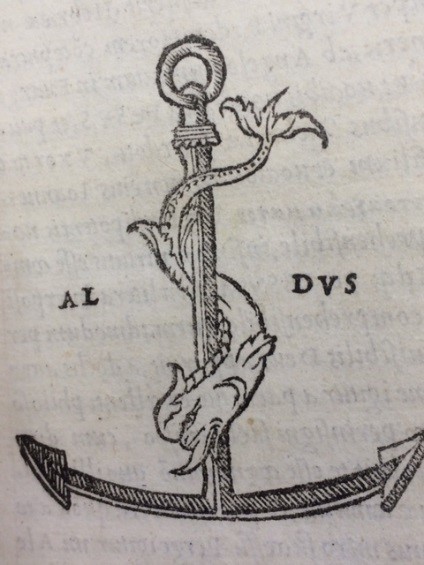
Manutius’ goal was to preserve ancient Greek literature by printing personal, usable editions for everyone to own. He accomplished this by organizing the famous Aldine Press. Through the Aldine Press, Manutius was able to produce the first printed editions of many Greek and Latin classics. These included works such as The Odyssey, The Iliad, and The Divine Comedy. Aldus Manutius’ work is always recognizable by the colophon (or inscription, which gives details about the book, usually found at the end of a work), which pictures a dolphin wrapped around an anchor.
Here at the University of Iowa Special Collections and University Archives, we are honored to house such an incredible collection of his works. Keep an eye out for posts about Manutius on our Tumblr, as well as other social media. If you have any questions about these items, feel free to ask us on our social media, or email us at lib-spec@uiowa.edu.
Over the summer members of the University of Iowa Special Collections team visited Las Vegas for the American Library Association and stopped by Bauman Rare Books to chat with Rebecca Romney, who you also might recognize as the rare book appraiser on the History Channel series “Pawn Stars.” While there they let the cameras roll as they chatted with Rebecca Romney about the rare book field, collecting rare books, and the types of research that rare book dealers do that ends up being incorporated into catalog records and supporting academic research, all while taking a look at some particularly delightful rare books that they had in the shop.
Here is the result of the trip: A five video series. Enjoy!
The first video: Down the Rabbit Hole. This one includes an edition of “Alice’s Adventures in Wonderland” illustrated by Salvador Dalí.
The second video: The Game is Afoot. The team analyzes the lasting power of favorite characters such as Sherlock Holmes and Lizzie Bennet who continue to thrive through fan works and new interpretations.
The third video: It’s a First Edition Pride and Prejudice!
The fourth video: Et Tu Brute? Taking a close look at a Shakespeare quarto (a single play).
The fifth video: We Go West. A very rare surviving pamphlet, 1848 Latter-Day Saints’ Emigrants’ Guide.
First edition, first issue, privately printed in 1900, issued in 1901
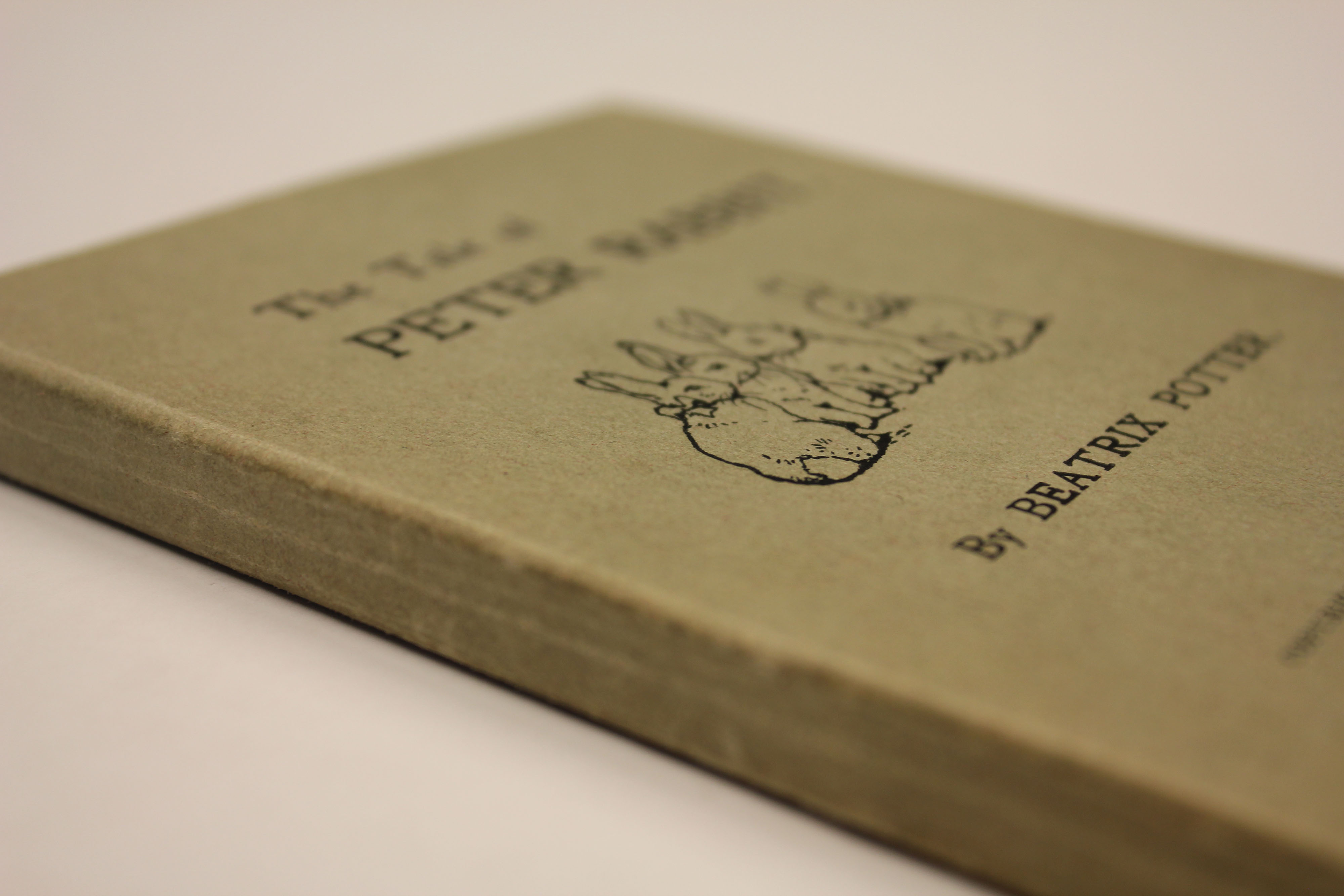
July 28th marks the 148th birthday of Beatrix Potter: illustrator, natural scientist, conservationist, and, of course, world-famous author of The Tale of Peter Rabbit. Here at the University of Iowa, we are fortunate enough to have a copy of one of the first printings of this charming tale, which according to our acquisition papers, was previously owned by Potter’s niece. The provenance is not the only thing that makes this copy special, but the condition alone is enough to impress any Beatrix Potter collector. Children’s books were often avidly read and handled, hence, finding this famous piece of children’s literature in such good condition is quite remarkable. When placed next to a 1993 facsimile, only the size and slight difference in the color can distinguish the two.
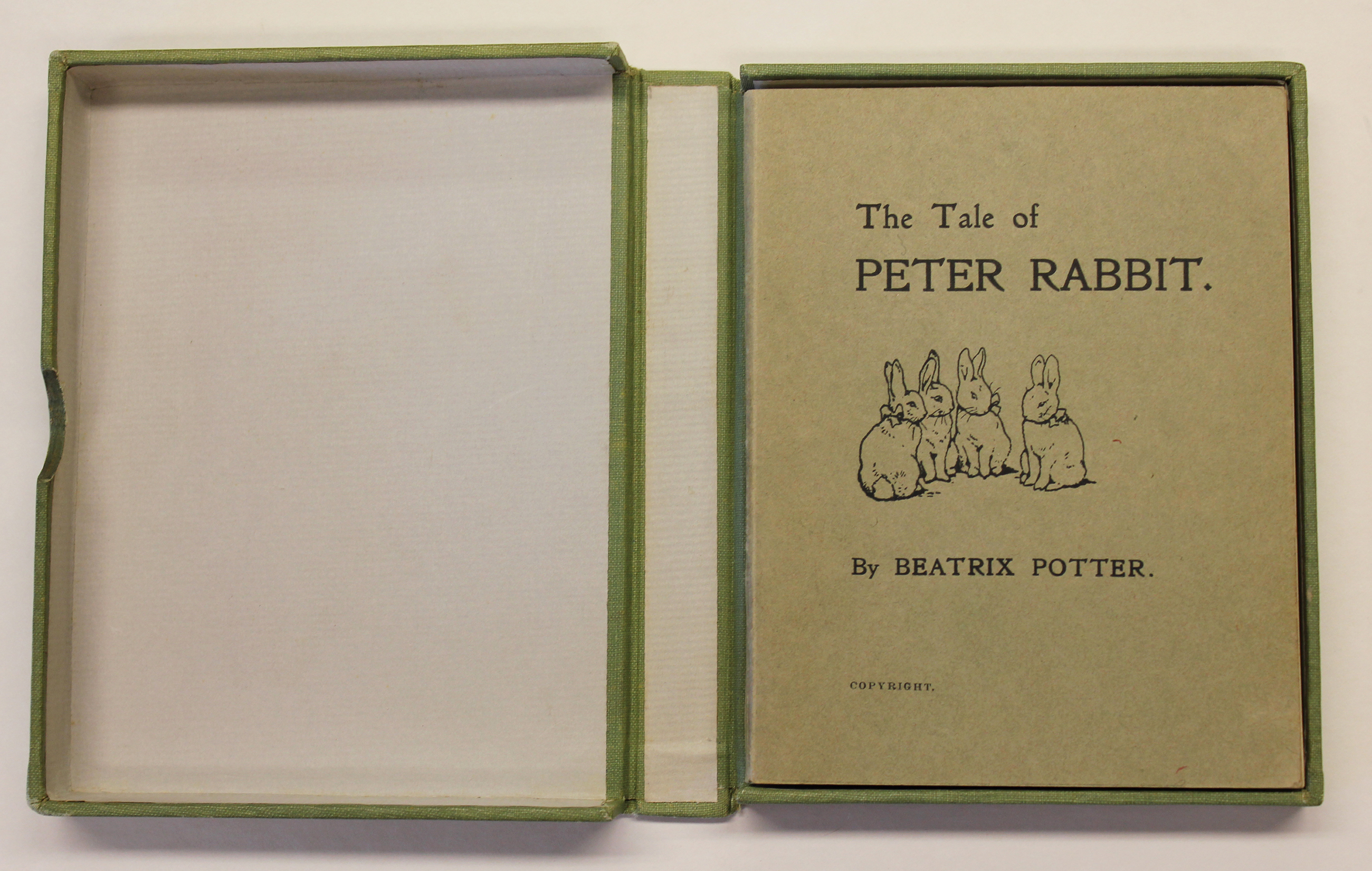
The Tale of Peter Rabbit in it’s custom-made box which was likely made around 1948.On the left is a privately printed, first edition, first issue of The Tale of Peter Rabbit. On the right is a facsimile of the privately printed, first edition, first issue, printed in 1993.
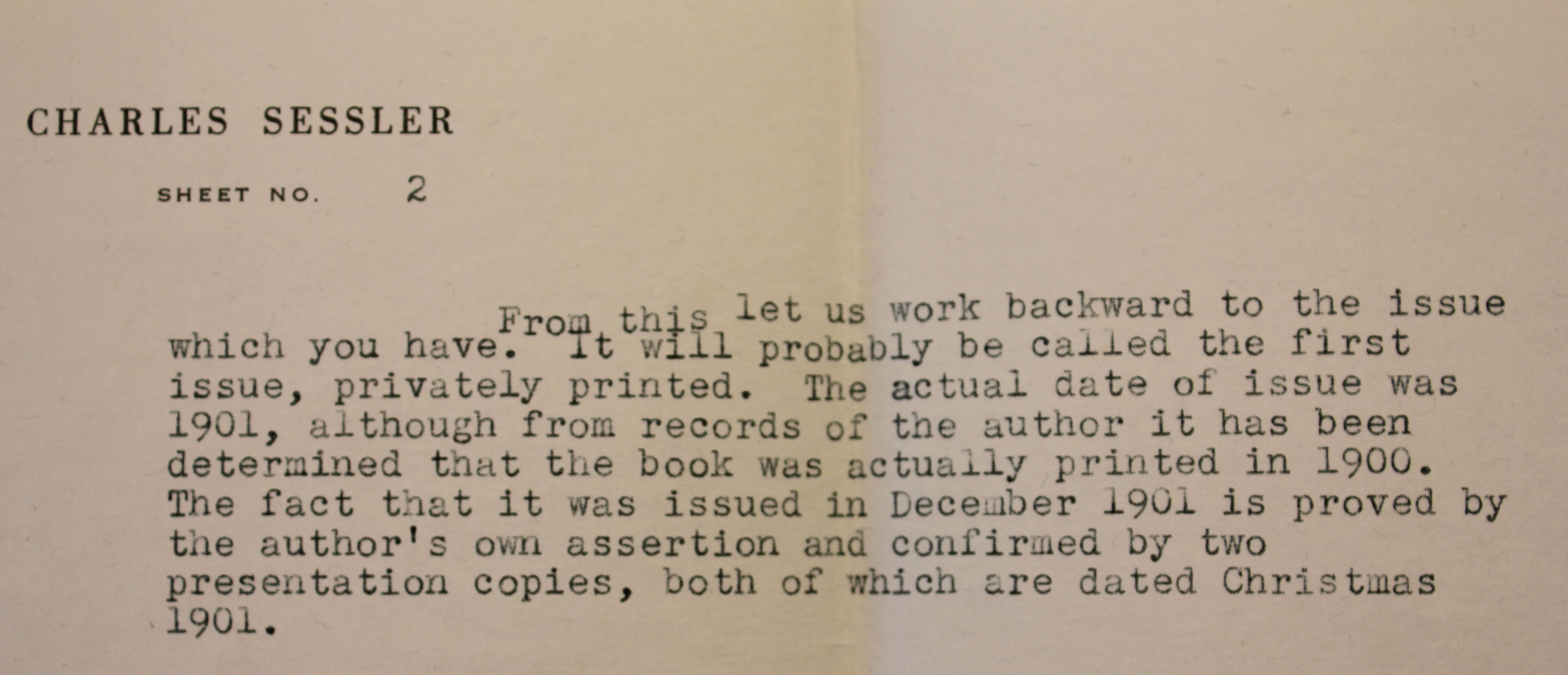
This particular book was one of 250 that were privately printed by Potter, as she was initially rejected by multiple publishers for commercial printing. Our copy’s acquisition papers shows a curious note that Potter’s records indicate it was privately printed in 1900, and then later issued in 1901. However, the privately printed edition was printed in 1901. Potter primarily gave out copies to family and friends, along with selling them for a small fee. [Linder, Leslie. A History of the Writings of Beatrix Potter. Frederick Warne & Co Ltd, 1971.]
Acquisition papers from 1948 stating this book was printed in 1900.
After a second printing of 200 first editions of The Tale of Peter Rabbit in February 1902, the story started to gain some popularity. Eventually, after some textual alterations and the addition of color images, Frederick Warne & Co. published 8000 copies of the first commercially sold edition of The Tale of Peter Rabbit in October 1902. Some of the changes to later productions were to omit pages that were deemed “unsuitable for children”.
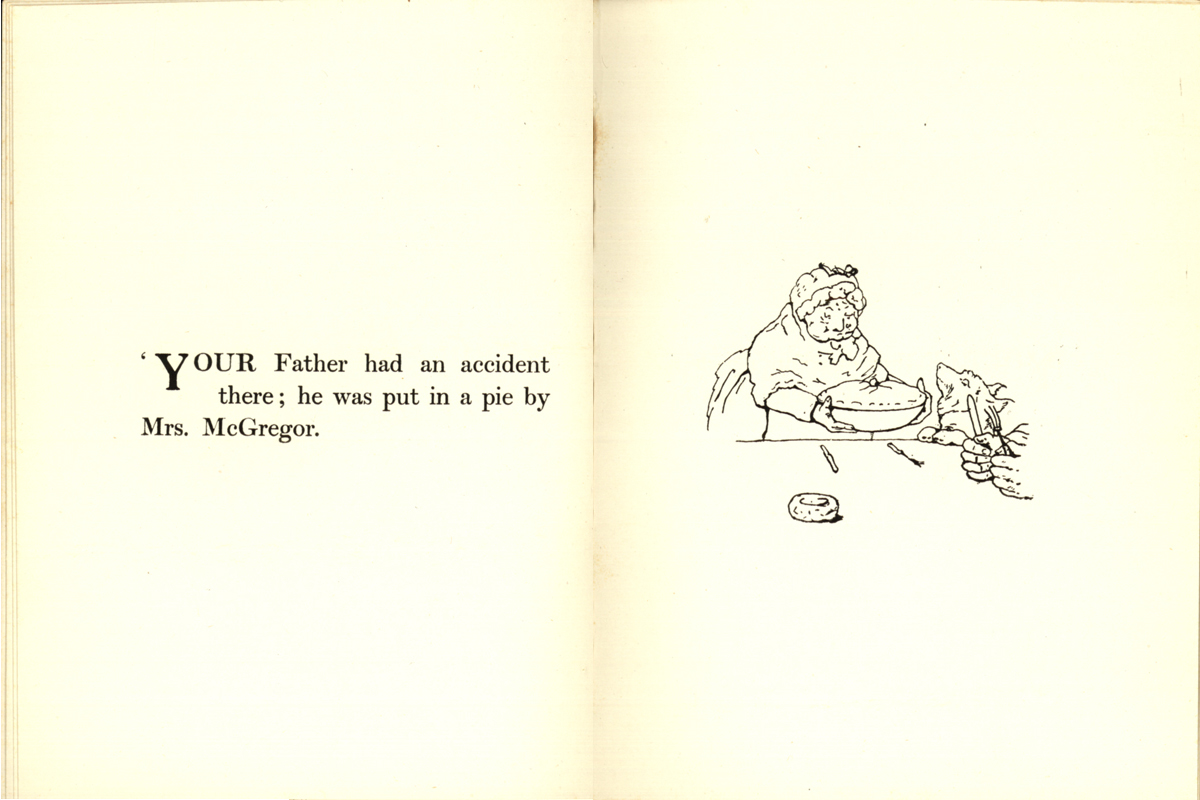
One set of these omitted pages show how Peter Rabbit’s father was put in a pie by Mrs. McGregor (this made it into the first commercially sold edition).
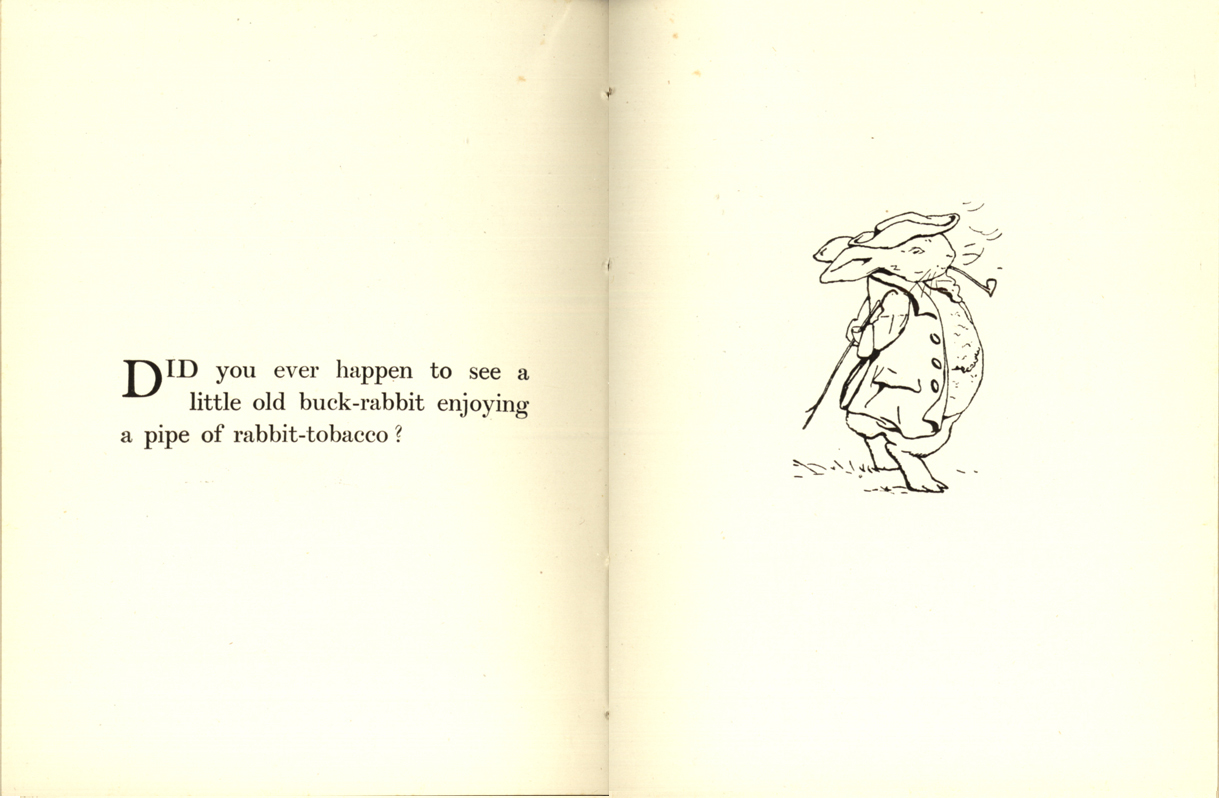
Another set of omitted pages show a rabbit smoking a pipe of tobacco (which only appears in the privately printed editions).
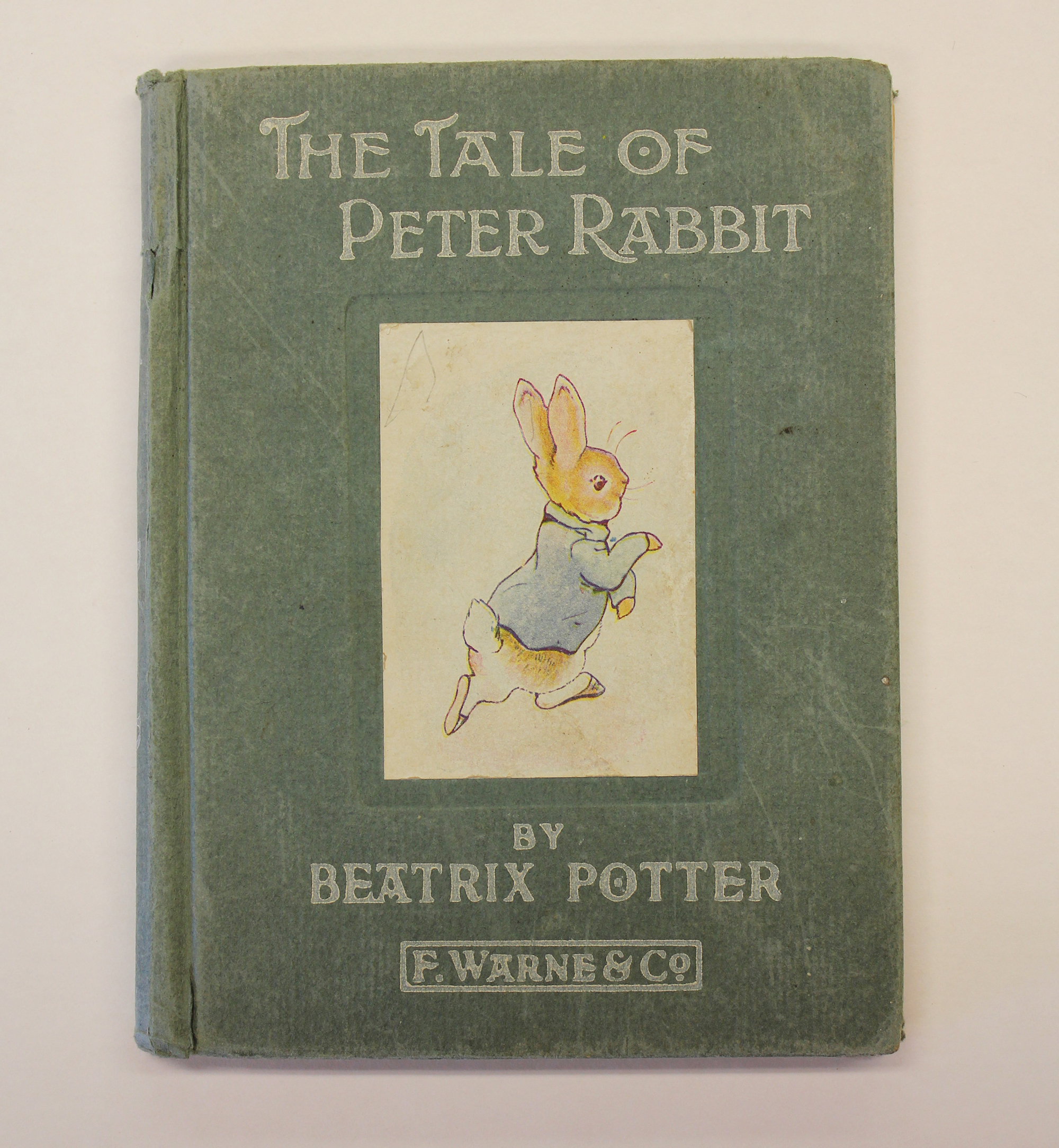
Along with many related Peter Rabbit books, such as The Peter Rabbit Pop-Up Book, Peter Rabbit’s Cookery Book, and Yours Affectionately, Peter Rabbit (currently on display in our reading room), we also have a later edition of The Tale of Peter Rabbit, which is undated, but is at least as old as 1918 based on the decorated endpapers inside the book.This cover style, which began with the first commercially printed edition in 1902, can be seen in contemporary publications.
~1918 edition of The Tale of Peter Rabbit
Beatrix Potter has thirty-three titles to her name, twenty-three being similarly written tales to accompany The Tale of Peter Rabbit. We have many of these wonderful tales in our collections, and audiences of young and old are welcome to take a look!
Can’t make it to to the collections? Check out a fully digitized version of the first edition, first printing of The Tale of Peter Rabbithere!
Beatrix Potter aficionado, Lindsay Morecraft Moen
Please note that this blog was updated in 2021 to reflect new information
Today a team of librarians, archivists, and museum professionals from around campus including University Archivist David McCartney again begin teaching a week long Spring Break class, “The Continuing Role of Real Collections.” The students have been researching mystery items as part of the class and often come up with very surprising revelations! What follows is a post from a student from last year’s class, Lindsay Schroeder, and the surprising story she unearthed:
The Mystery Portrait
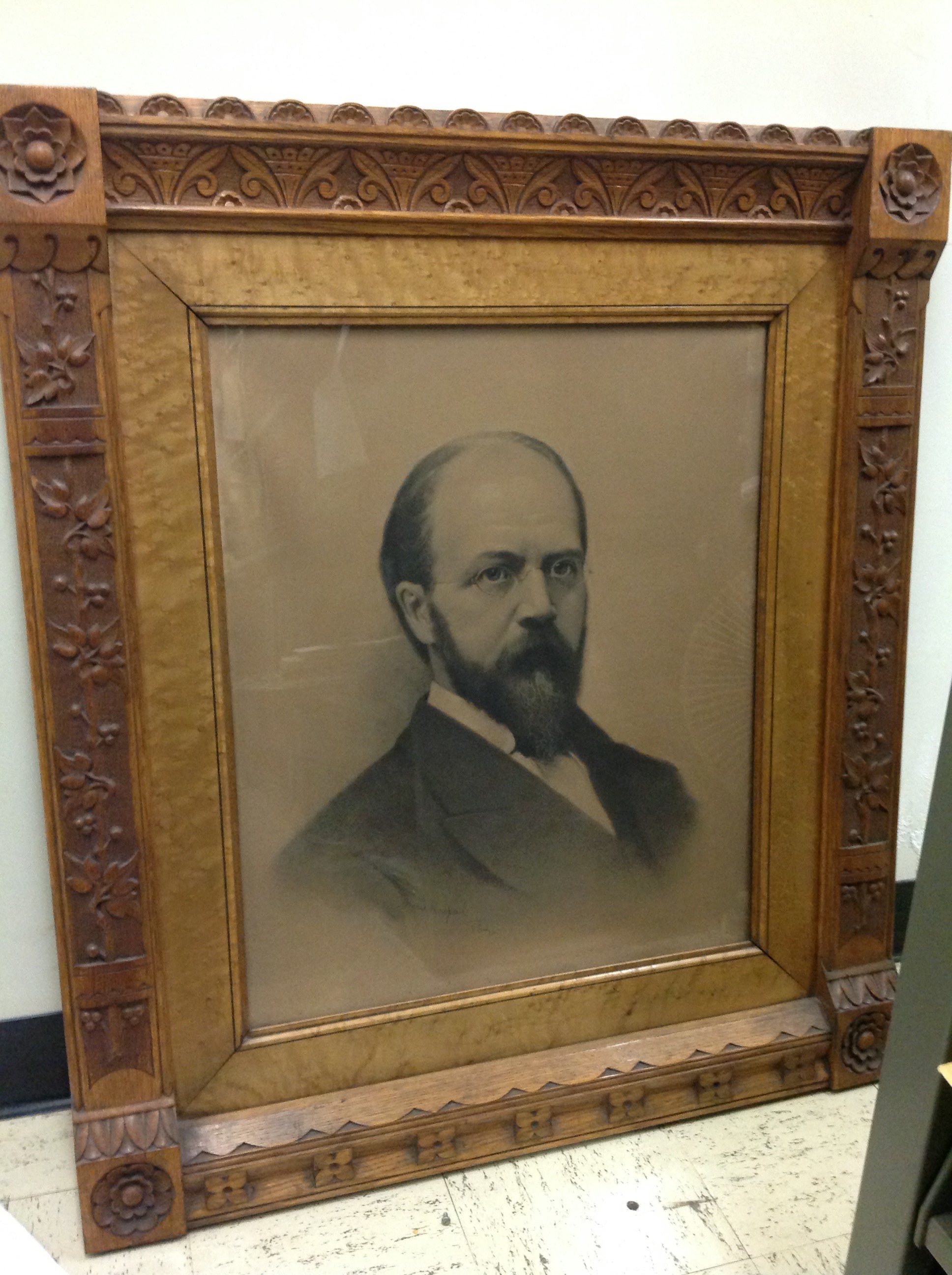
During spring break of 2013 I took Topics in Museum Studies:The Continuing Role of Real Collections, taught by David McCartney with many prominent guest speakers within the museum and library fields. We were given a project to research artifacts within the University of Iowa that had little to no information connected to them so little is known about what they are. I chose a large painted portrait of a man with a wood, ornate frame and held only one clue, the artist’s signature. This mysterious artifact was found in the University of Iowa’s Museum of Natural History’s attic storage cabinet, hidden between large animal hides this spring.
The artist’s name was Marie Koupal, dated 1882. I researched her name and found an article within the Daily Iowan, dating November 19, 1920. It was about a man named Dr. Mark W. Ranney and his cherished book collection that stood in the Ranney Memorial Library at the University. The article concluded with a major clue, “Besides the books there are about twenty pictures on the walls that belong in the collection. Most of these are portraits…A portrait of Dr. Ranney stands on an easel in one corner of the room. This was done in 1882 by Marie Koupal and is framed in a fine hand made frame of several kinds of wood” (Daily Iowan). This was the same portrait, of Dr. Mark W. Ranney. This object’s original purpose had to be a memorial piece done by Koupal, because on January 13, 1882, Dr. Ranney died of acute pneumonia.
Special Collections has information in their collection guide pertaining to the Dr. Mark Ranney papers, with an additional link to a biographical report written by Margaret Schindler Bryant, in Books at Iowa, Issue 30, April 1979, about Dr. Ranney. This report gave me a lot of information regarding Dr. Ranney and his passion for collecting rare books along with other artifacts. Bryant’s report gave great insight to who this man was and why his portrait was originally located in the library during the 1920s, commemorated on an easel. Dr. Ranney’s wife bequeathed his entire collection to the University of Iowa after her death on July 18, 1907. She left a trust that created the “Mark Ranney Memorial Fund”. This established the Mark Ranney Memorial Library that was located in room 305, Schaeffer Hall.
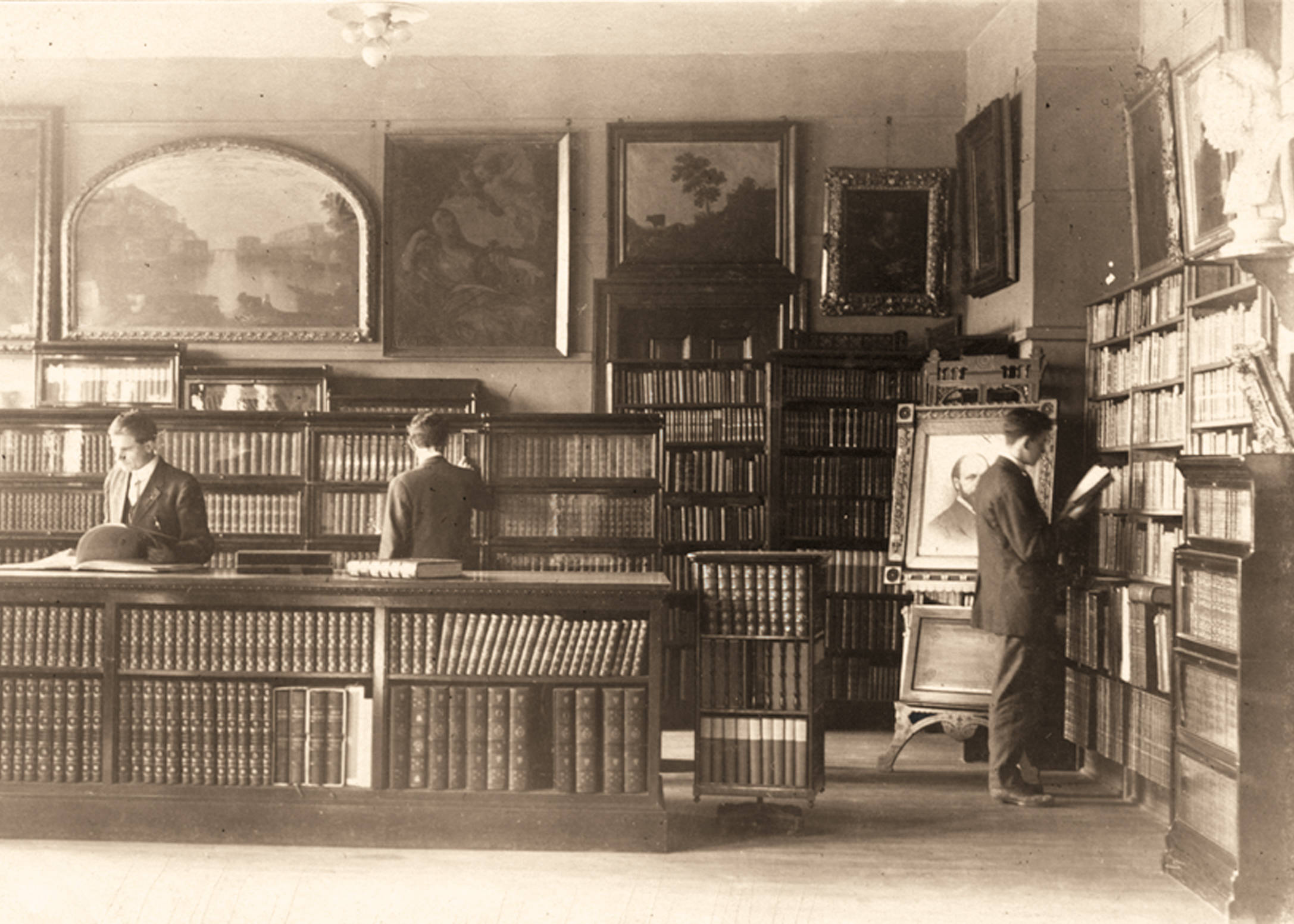
The day before my report and presentation was due, I was searching the Iowa Digital Library within the time frame of 1920-1940. After endless searching for more concrete information, I came across the ultimate completion of this project, a photograph from the digital database of the Mark Ranney Memorial Library with the portrait of Dr. Ranney on the easel in the 1930s. It was truly amazing and reminded me of why I am in this field of work.
Ranney Memorial Library, Schaeffer Hall, University of Iowa, between 1902 and 1907.
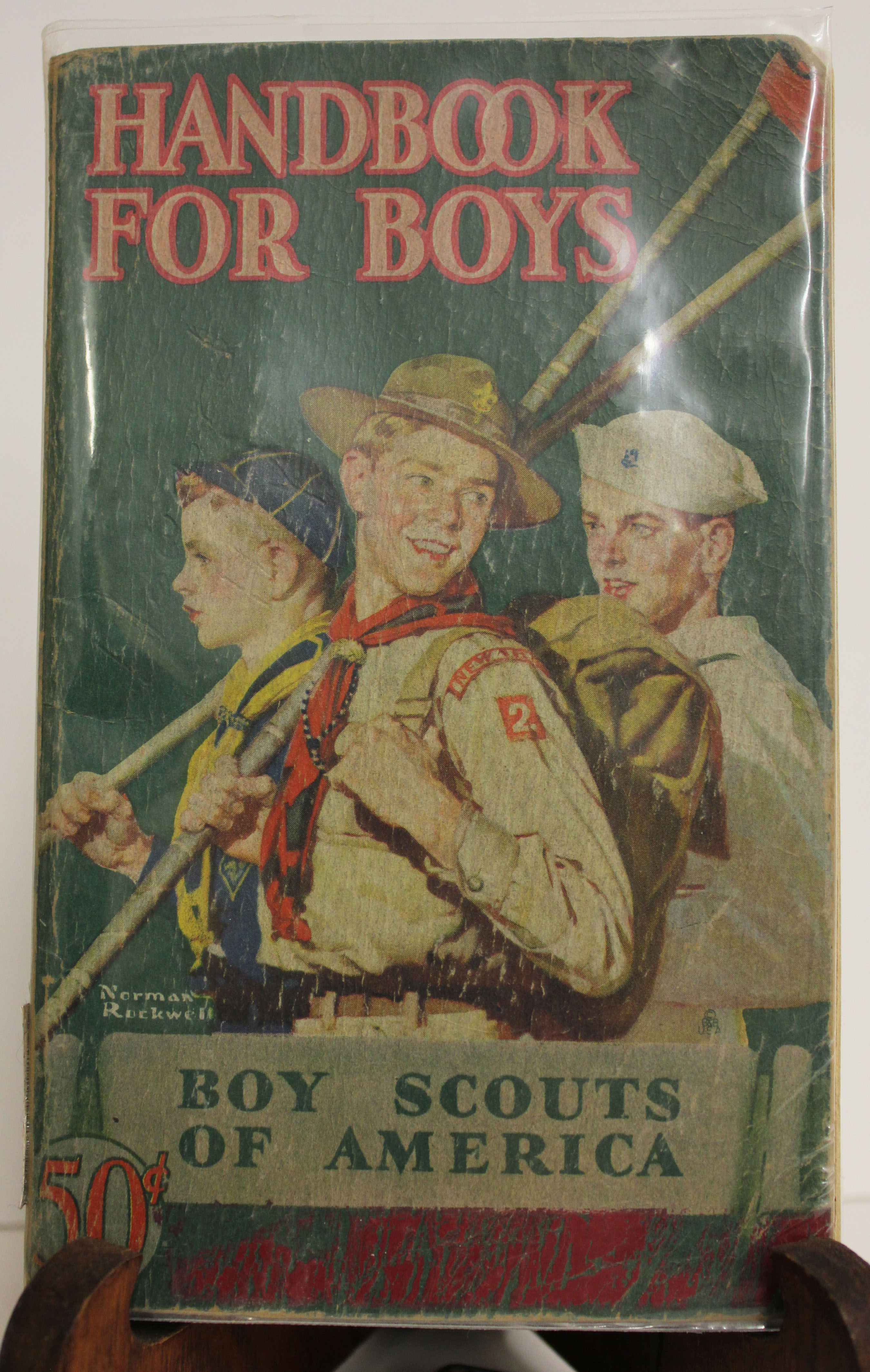
What follows is a guest post from one of our student workers, Shawn Conley, an Eagle Scout and Boy Scout memorabilia collector.
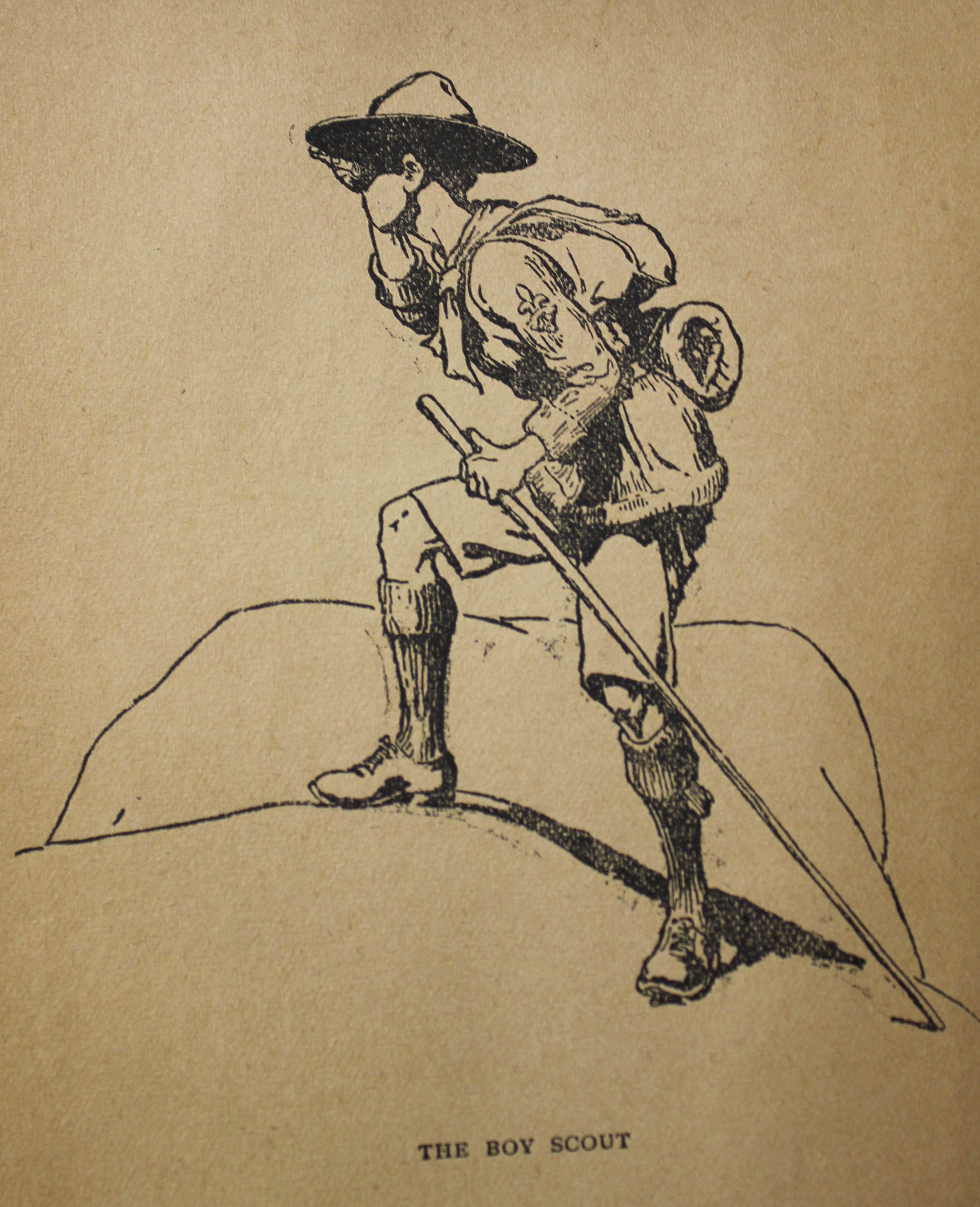
The classic image of the Boy Scout from Lord Baden-Powell’s handbook “Scouting for Boys” (1910).
Since its founding more than a century ago, the Boy Scouts of America has striven to turn young men into well-rounded individuals and citizens of our society. Lord Baden-Powell, the founder of the original Boy Scouts in England, expressed the need for proper handbooks for the young scouts to use as a way of learning and becoming familiar with skills they would find useful. From how to escort a lady down the sidewalk to how to splint a broken leg, the Boy Scout handbook purveyed basic information and skills in handicrafts, first aid, castrametation, and moral values.
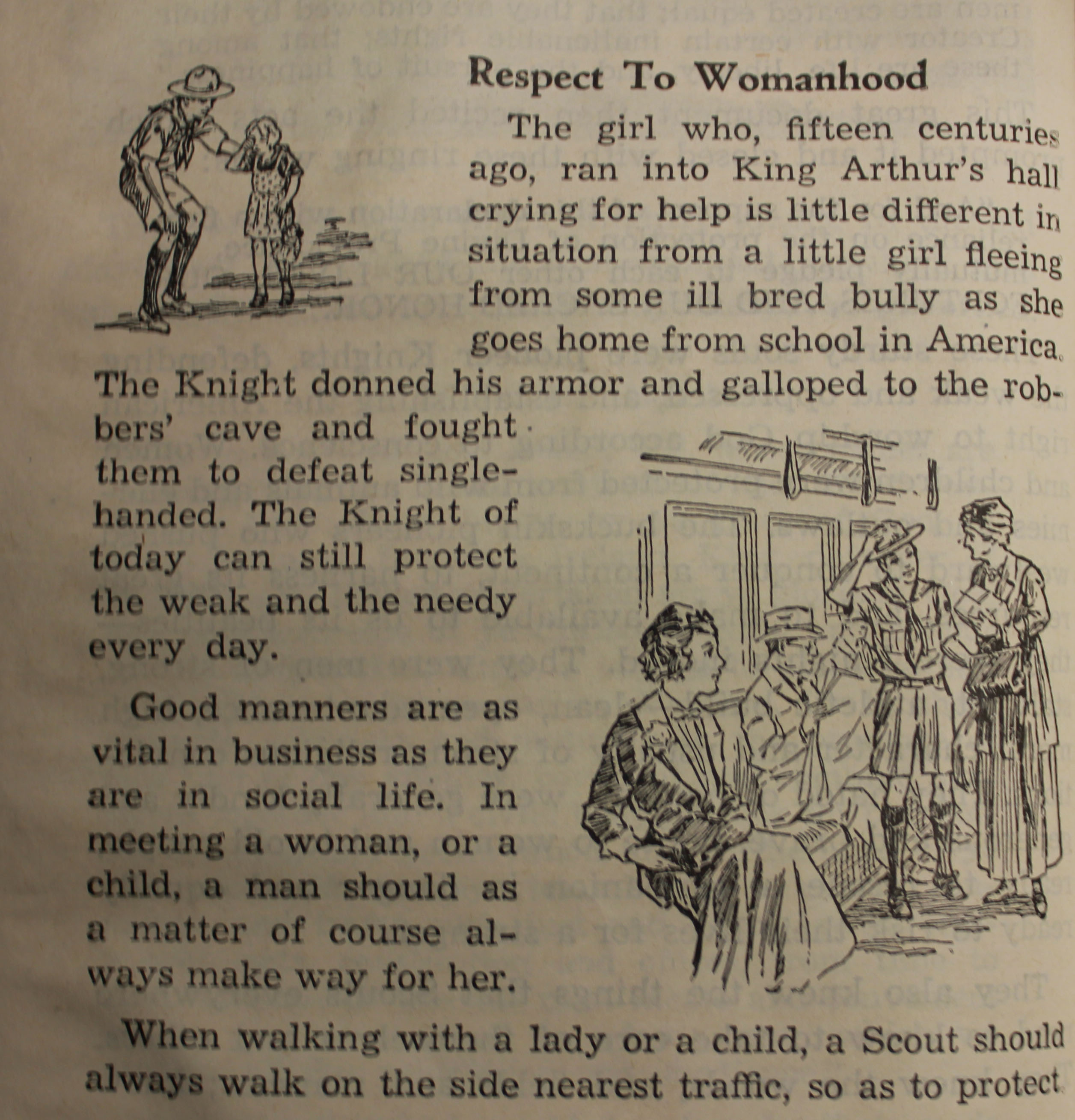
“Respect to Womanhood” (“Boy Scout Handbook”, 1945).
First Aid is a major topic covered in every handbook. (“Boy Scout Handbook”, 1965).
If one wanted to research the changing American culture from the early 20th century to the modern day, the handbooks of the Boy Scouts are a wonderful resource in deducing what the founders of the Scouting movement thought worthwhile for Scouts to know in turning them into productive citizens. Culture of the time-period is engrained into these handbooks. For example, during the Second World War when material rationing restricted what average Americans could purchase, the Boy Scouts produced uniforms of a less expensive, tan cotton canvas. These canvas uniforms are shown in the handbooks and how to properly sew on badges and insignia.
Upon examining Boy Scout handbooks of an earlier time, one might notice that very few are in excellent condition. These books were meant to be used, and used they were. From the author’s own perspective, his handbook was in tatters by the end of his Scouting career.
Why is the Boy Scout handbook so important? The handbook was, and still remains to be, the Scout’s greatest point of informational reference. Forgot how to tie a Clove Hitch? Consult your handbook. Can’t recall how many leaves a sprig of Poison Ivy has? The handbook knows! From how to properly swing an axe to properly cooking for your Patrol or Troop, the handbook strives to give Scouts the information they need to carry out skills necessary for being a good Scout. This aspect is as true now as it was 103 years ago.
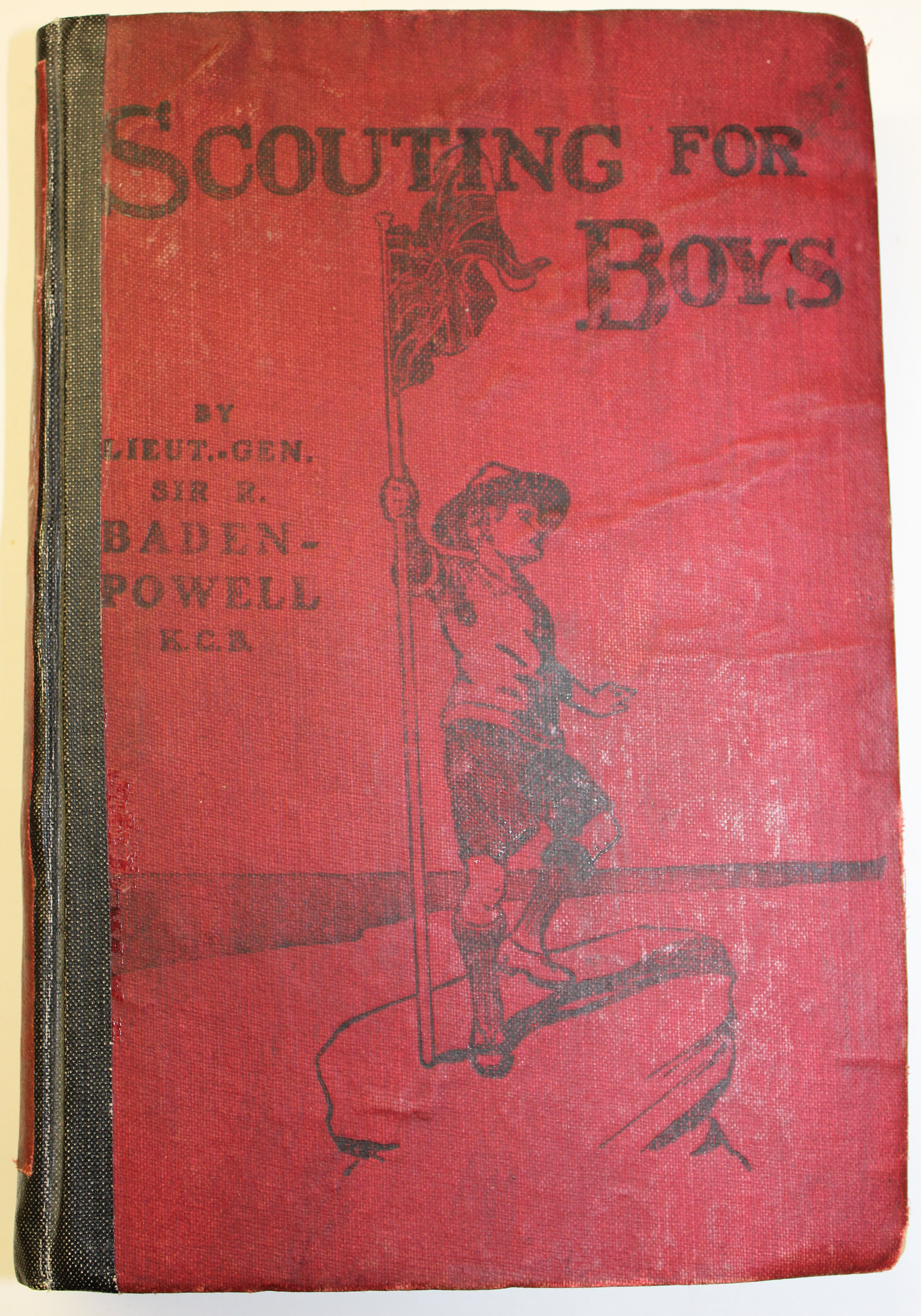
“Scouting for Boys” by Lieut.-Gen. Sir R. Baden-Powell, K.C.B. (1910)
“Boy Scout Handbook” (1945).
Perhaps more importantly, the handbook was a moral compass. Some sections of the handbook are geared specifically towards showing Scouts how they can be a positive influence on their communities. Some early examples of how Scouts influenced their communities was promoting and selling war bonds during the Great War and the Second World War, and conducting metal drives by going door to door and asking people for any scrap metal that could be melted down for the war effort. In the 21st century, helping the community can be something as simple as a food drive, which many Boy Scout troops across Iowa conduct every year. Therefore, the handbook was not only a reference for physical skill building, but also mental and moral skill building.
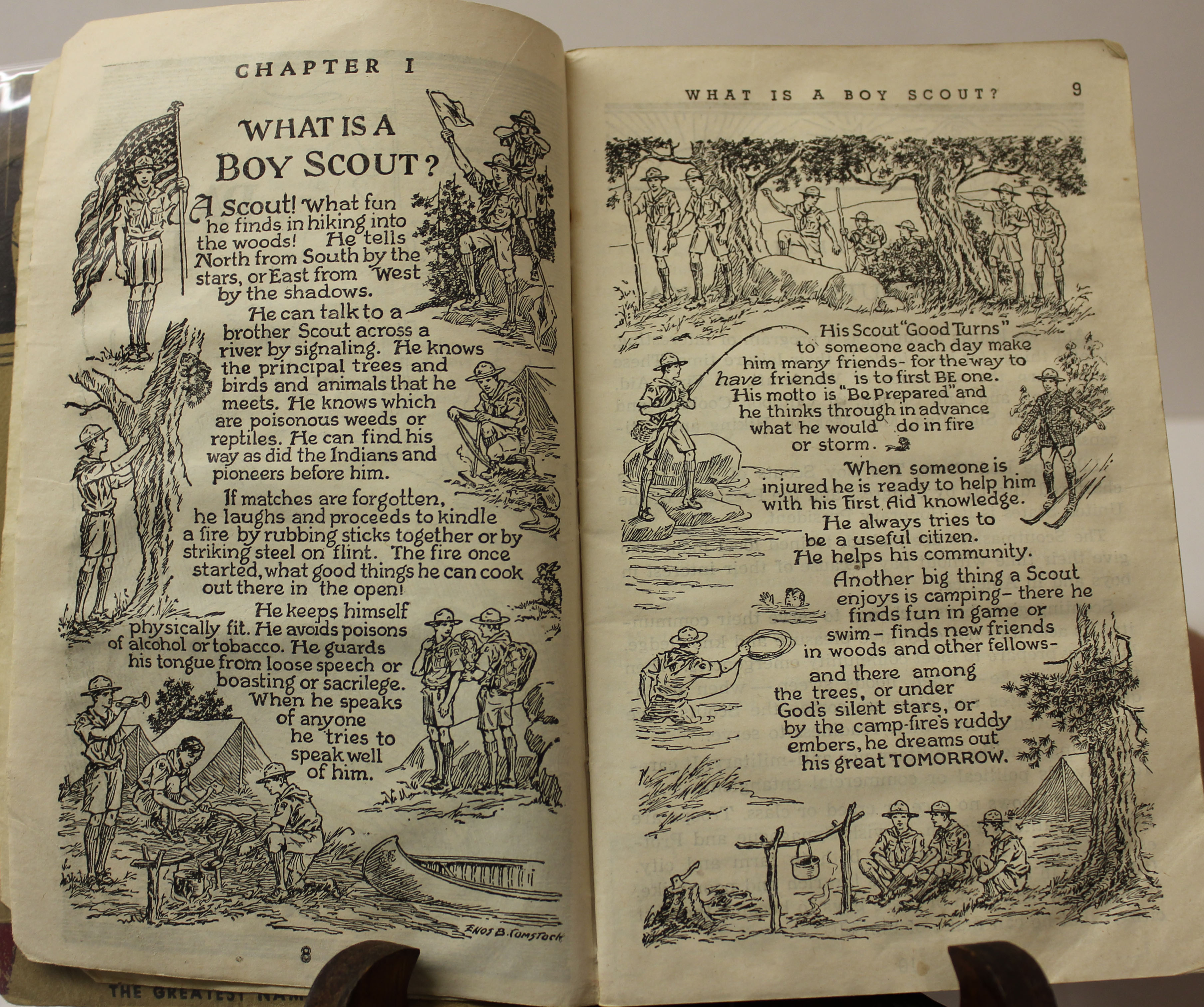
“What is a Boy Scout?” (“Boy Scout Handbook”, 1945).
The Special Collections department has a very nice Scouting collection, much of it about Scouting in Iowa. The collection also has a few early handbooks from both the Boy Scouts
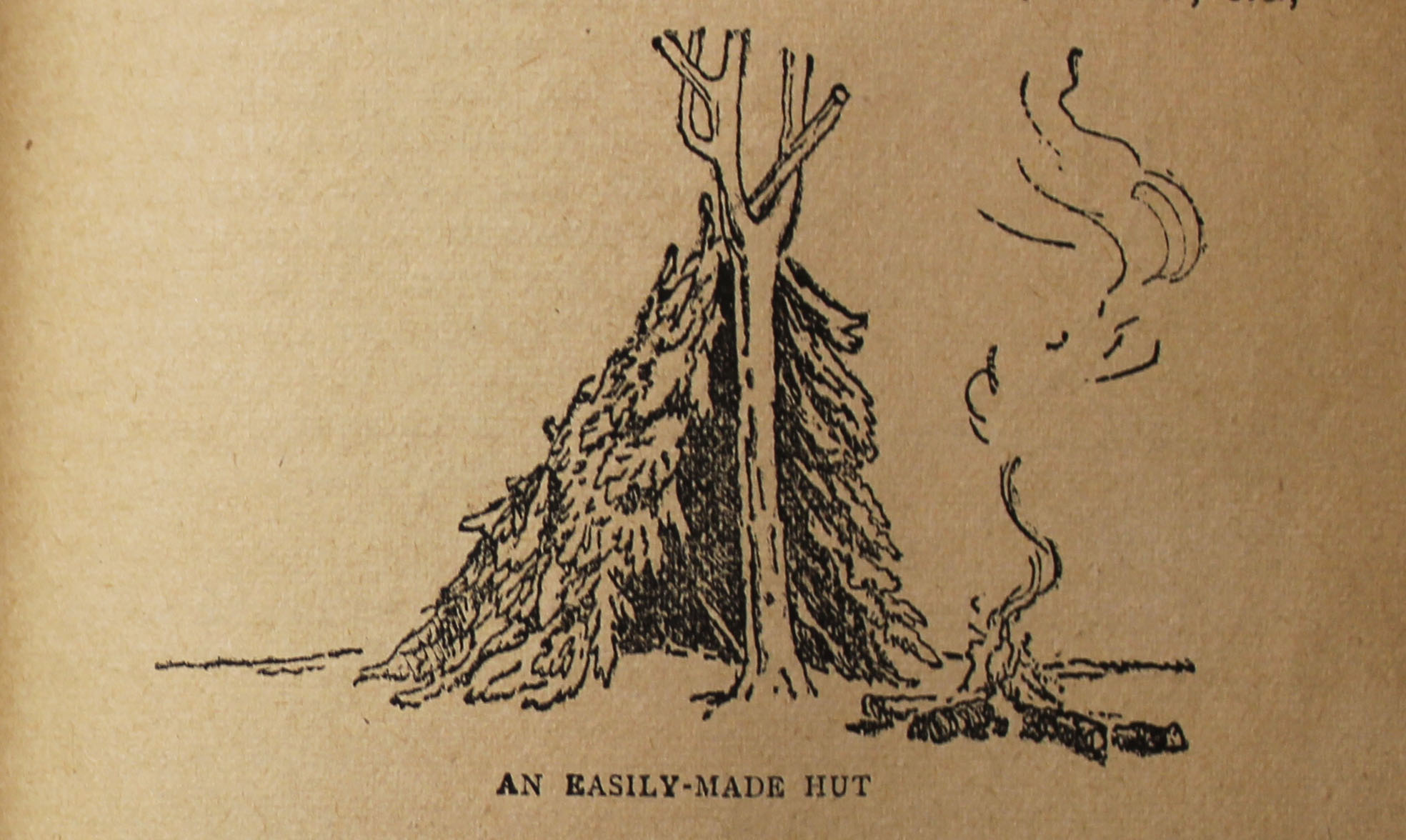
“An Easily-Made Hut” (“Scouting for Boys”, 1910).
and Cub Scouts (All photos in this post were derived from the handbooks in Special Collections). Stop on by and have a look. The author guarantees that in reading just a few pages, you’ll learn something totally new. Perhaps you can read up on how to properly escort a lady down the sidewalk (the man/Scout always walks on the woman’s side facing the street), or perhaps you can familiarize yourself with how to splint a broken leg or cook pies in a Dutch oven.
The handbooks of the Boy Scouts of America are truly a wonderful reference to anyone wanting to learn how to “Be Prepared” and to “Do a Good Turn Daily”.
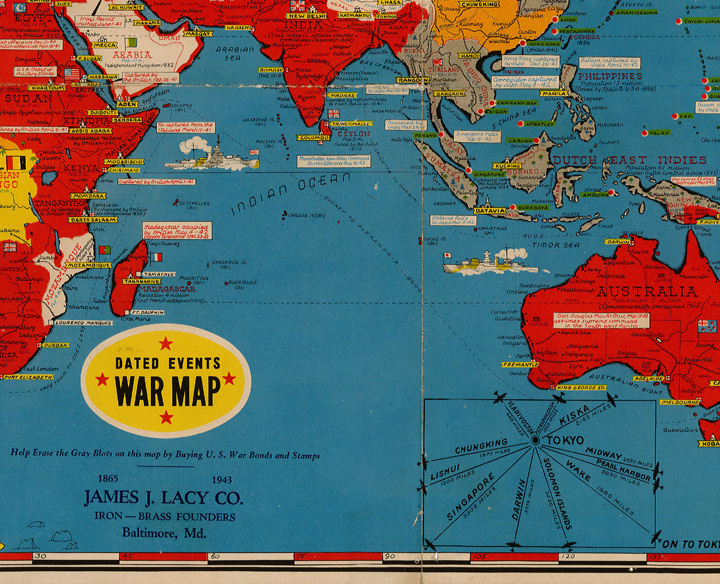
Today is Veterans Day so we want to share this 1943 map of occupied countries, noted in gray. The legend reads: “Help erase the gray blots on this map by buying U. S. war bonds and stamps.” This map is part of the John N. Calhoun Papers. Calhoun lived in Burlington, Iowa. After earning his law degree at the University of Iowa, he served as a senator in the Iowa state legislature from 1933 to 1937. Major Calhoun served as a member of the U. S. Army in the Persian Gulf from 1942 to 1945 and was promoted to the rank of lieutenant colonel. Calhoun returned to his legal practice in Burlington following the war. His papers include other materials from his World War II service, such as photographs and correspondence. We are grateful to have received John Calhoun’s papers from his wife after his death in 1972.
Meridian, Mississippi; 1964. From Papers of Patti Miller, Drake University Archives.
In 1964, a significant turning point in the U.S. Civil Rights movement occurred in what became known as the Freedom Summer. With the 50th anniversary of that momentous time approaching, the UI Alumni Association (UIAA) has organized a public discussion about those events and current work to safeguard the memory of Iowans who participated in the historic effort to challenge discrimination.
David McCartney, University of Iowa archivist and member of the Historical Iowa Civil Rights Network, will host “Documenting Conscience: Preserving the Stories of Iowa Civil Rights Workers.” He’ll explain how hundreds of volunteers from across the country traveled to Mississippi to help register African-Americans to vote, and how violence, including four murders and daily beatings, haunted them as they attempted to deliver voter registration materials, hold informational meetings, and mobilize support.
Part of the UIAA’s ongoing Lifelong Learning series, the event takes place on Wednesday, Oct. 23, at 6:30 p.m. at Melrose Meadows, 350 Dublin Drive, Iowa City. This event is free and open to the public, and refreshments will be served. To register by the Oct. 16 deadline or to learn more, visit the Lifelong Learning website.
Individuals with disabilities are encouraged to attend all UI-sponsored events. If you are a person with a disability who requires a reasonable accommodation in order to attend this reading, contact Whit France-Kelly in advance at 319-335-2311 or whit-france-kelly@uiowa.edu. The event is co-sponsored by Melrose Meadows.
Three major new acquisitions from Dada’s transitional period of 1919-1920 document that movement’s spread beyond its World War I origins in neutral Switzerland to the key cultural centers of Europe during the early postwar era.
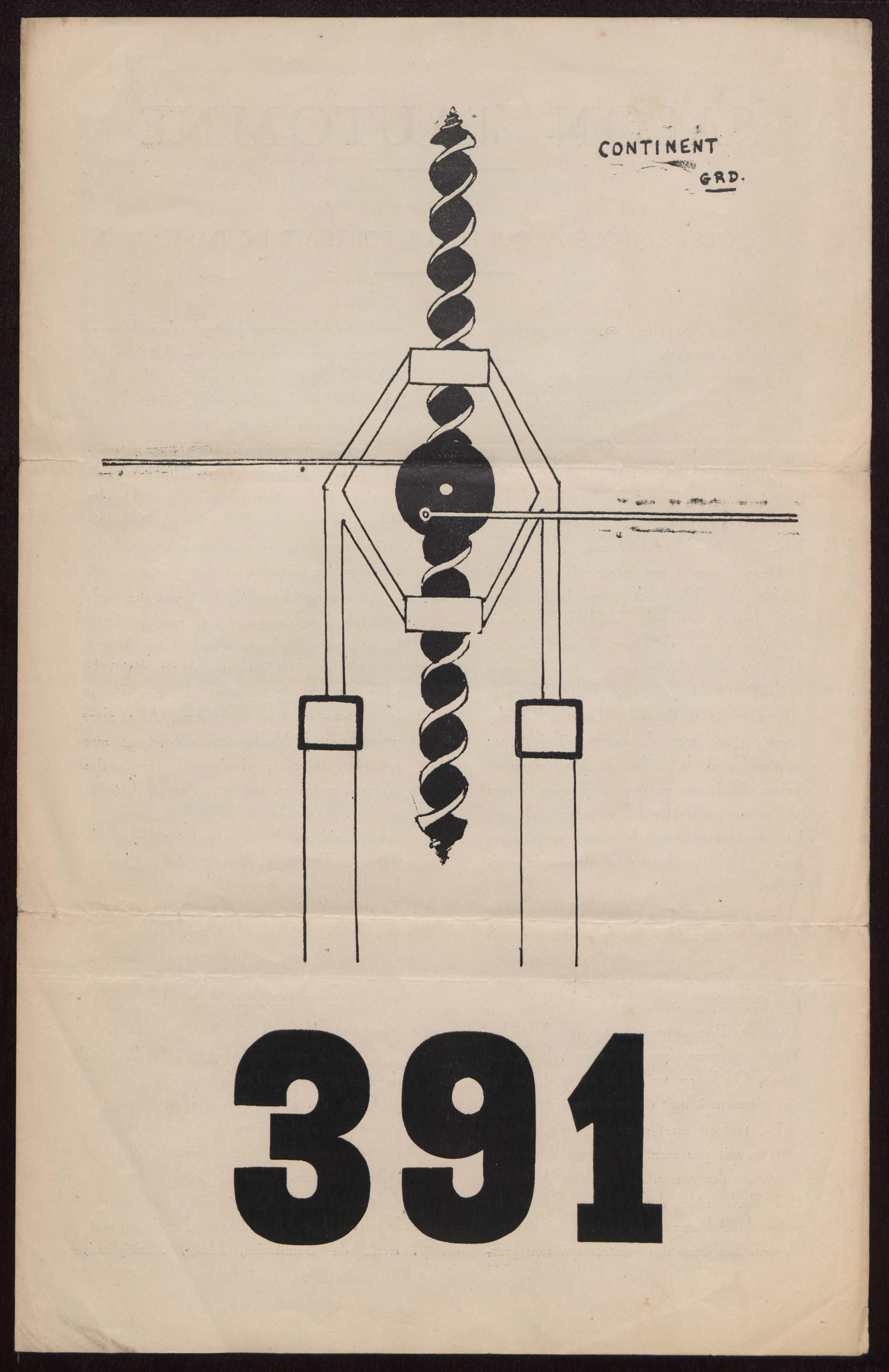
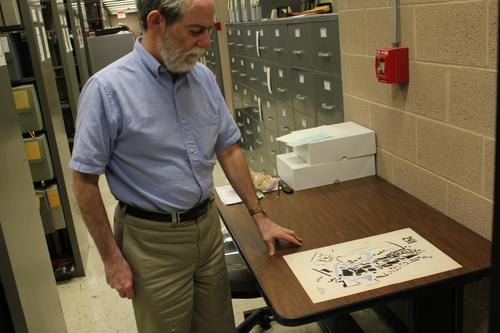
Francis Picabia was one of the chief agents for the propagation of the Dada movement, and his periodical 391 was a key vehicle for spreading Dada beyond its origins in Zurich. Picabia published the first four numbers in Barcelona, then took 391 with him to New York, Zurich, and finally Paris. Special Collections owns ten of the nineteen issues, representing all four cities. Our latest acquisition is Number 9 (November 1919), the first issue to be published in Paris (following the single Zurich number), just as Tristan Tzara, Dada’s self-proclaimed leader, was preparing to move to the French capital. With a cover featuring one of Picabia’s famous machine drawings, and with texts by Tzara, Picabia, and future Parisian Dadaist Georges Ribemont-Dessaignes, this issue anticipates the founding of the Paris Dada movement.
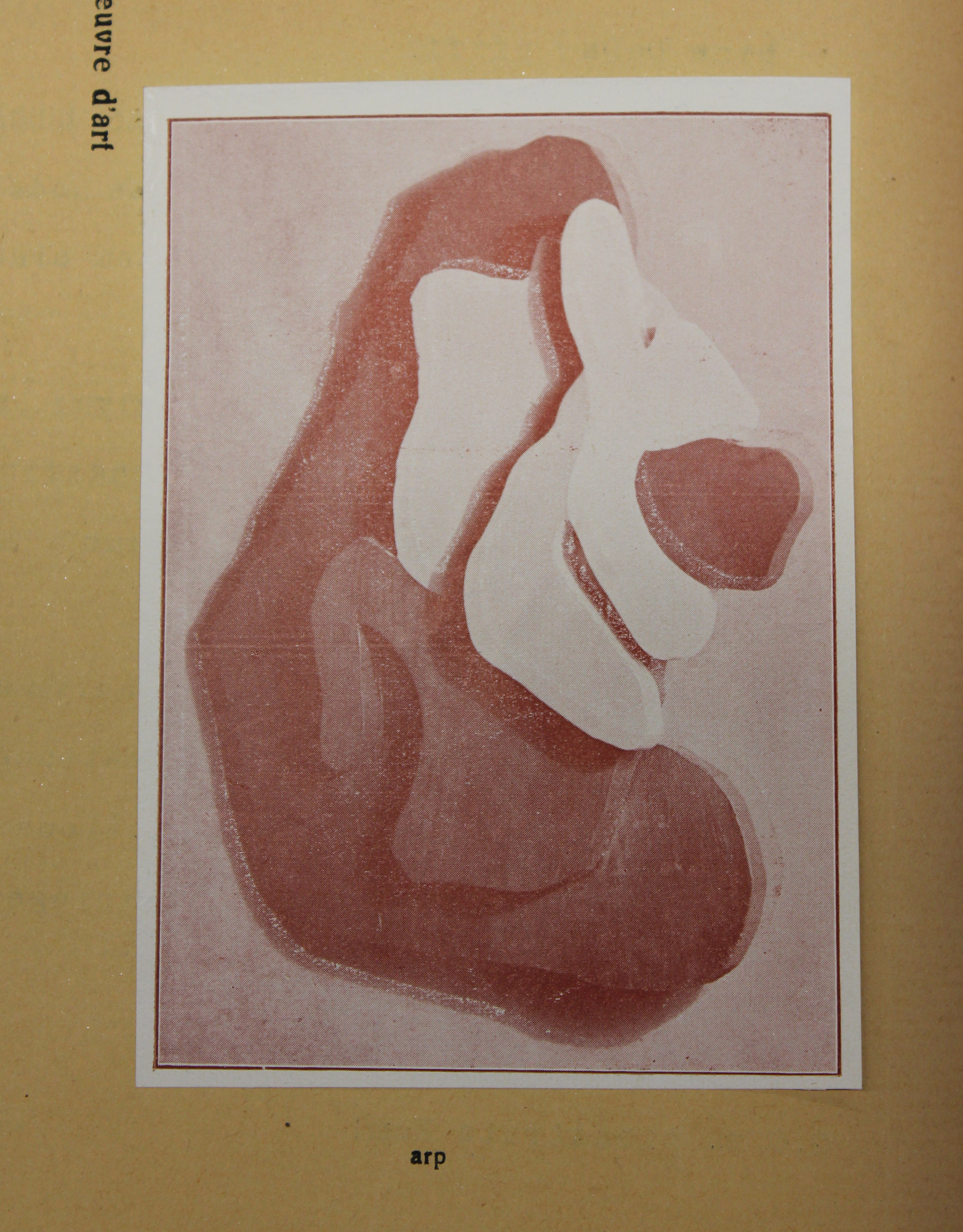
Published shortly after the author had established himself in Paris, Cinéma calendrier du coeur abstrait; Maisons (1920) completes our collection of Tzara’s three books of poetry in the series “Collection Dada.” The first two were published in Zurich, and this third collection marks the full fruition of Dada in Paris. Illustrated with nineteen original woodcuts by Jean Arp, this masterpiece of Dada book art is signed by the author and the artist.
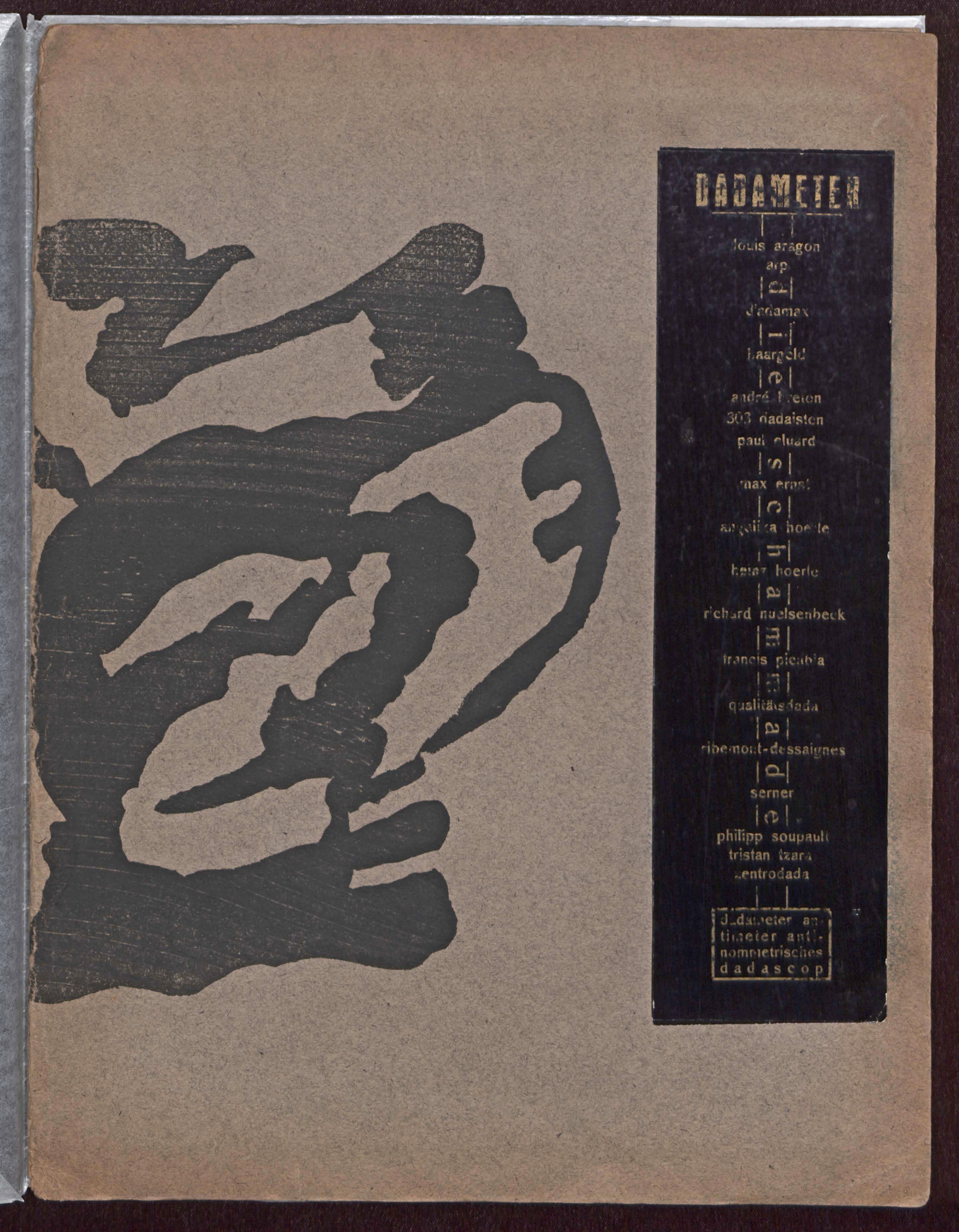
Die Schammade (also known as Dadameter) is the seminal publication of the short-lived branch of the Dada movement in Cologne, Germany. Edited in early 1920 by Max Ernst and Johannes Baargeld and printed on multicolored paper with magnificent woodcuts and drawings by Ernst, Arp, and others, Die Schammade typifies the international nature Dada, and includes texts in German and French, including some of the most important Dada writings of Arp, Ernst, and Baargeld.
In addition, we recently acquired the one issue of the Dada publication 291 not previously in the collection, making a complete set.
This past spring was a good season for acquisitions in Special Collections, Leigh Hunt material not least among them. Not only did we pick up Percy Shelley’s personal copy of Hunt’s Feast of the Poets—a spectacular association copy, as Hunt and Shelley were remarkably close friends—but we acquired four Leigh Hunt manuscripts.
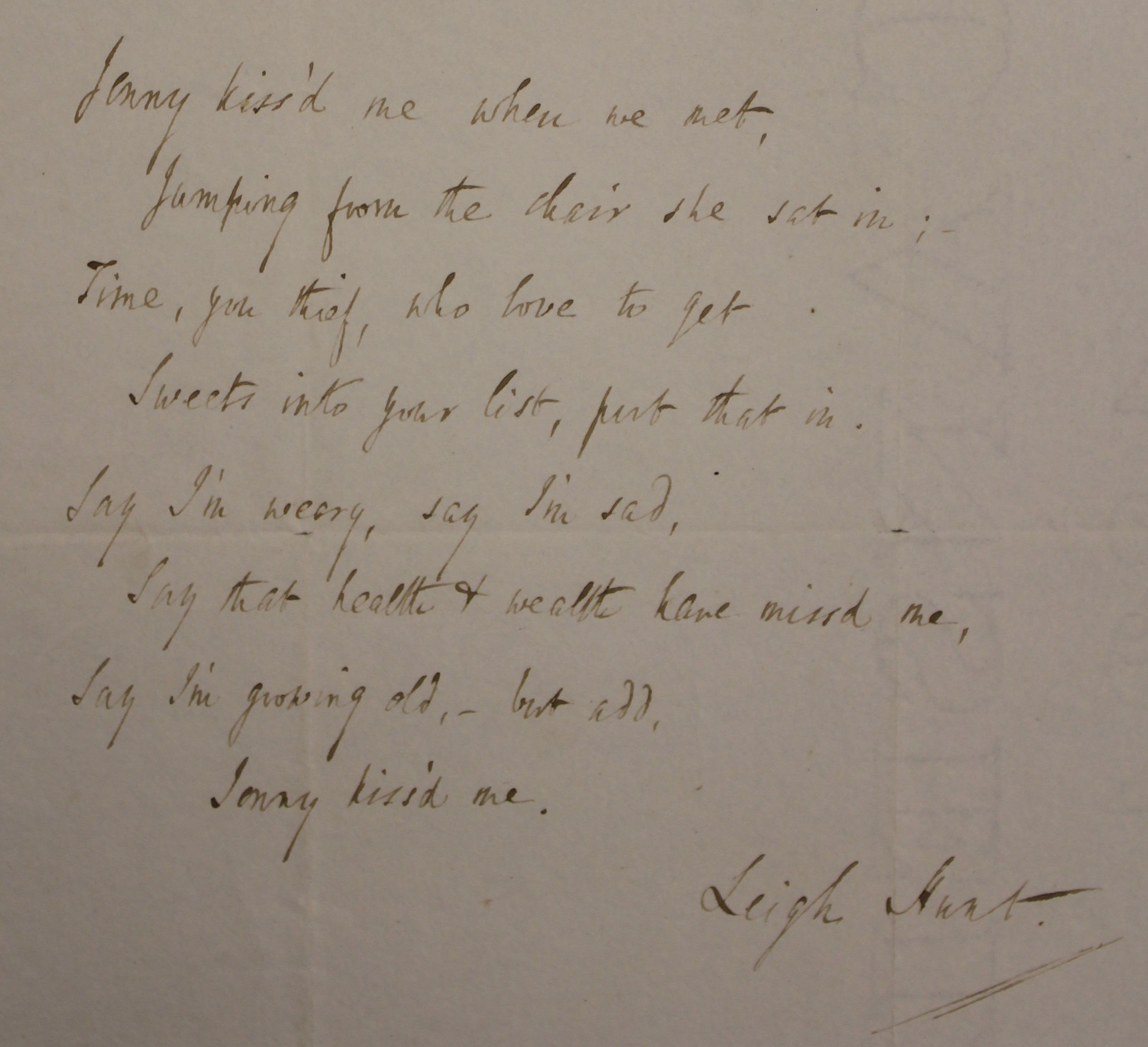
Two of these are copies of his most famous poems: “Abou Ben Adhem” and “Rondeau.” Perhaps the poem most beloved by posterity, “Rondeau” (more commonly known as “Jenny Kissed Me”) shares the poet’s excitement after having kissed Jane Carlyle, wife of the archetypal Victorian Thomas and neighbor of the Hunts.
The third manuscript is a draft fragment of The Palfrey. Only a few of the lines from this draft found their way into the published version, betraying the significant revisions the poem underwent at the author’s hand.
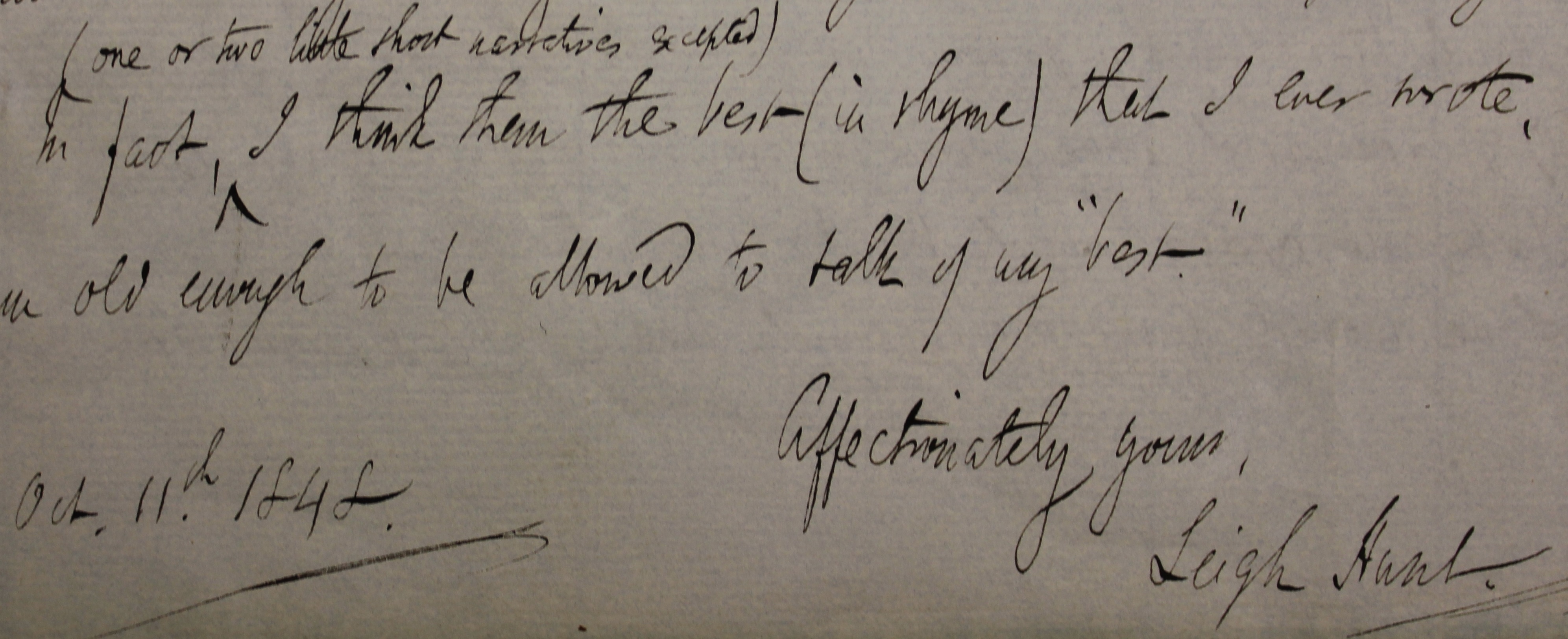
A transcript of “Velluti to his Revilers” is perhaps the most interesting manuscript in the lot. It’s not one of Hunt’s best known poems, but the transcript is thought to be in the hand of Julia, the author’s eighth child. While “Velluti” may not make the cut for the latest Norton anthology, Leigh Hunt writes at the end of these lines, “I think them the best (in rhyme) that I ever wrote—if I am old enough to be allowed to talk of my ‘best.’”
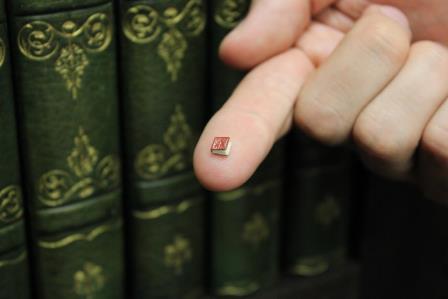
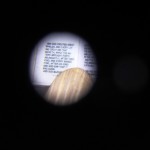
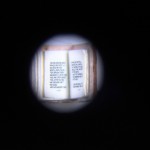
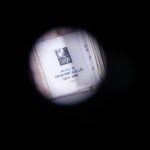
The University of Iowa Special Collections and University Archives is home to the Charlotte Smith Collection of miniature books with more than 4,000 tiny tomes. Most perplexing has been this microscopic Bible that remained unidentified, likely because we lacked the tools to adequately magnify the page with the publisher’s information. Highlighting this tiny book yesterday on our social media pages brought it to the attention of our conservator, Giselle Simon, who suggested that we try the microscope that recently arrived in the conservation lab.
Handling it safely proved to be no easy task! With some extra sets of hands we were able to read the name of the publisher – Toppan Printing Co. (You can see the damage on this page from earlier attempts to read it).
Text viewed under the microscope
Text viewed under the microscope
Microscope view of publisher’s information
Following the trail we were able to identify the item as being a set of two books sold at the 1965 World’s Fair in New York. In fact, the larger miniature book in the set was already in the collection, unassociated with the ultra microminiature that could not be read.
Now the two have been reunited and they will be cataloged together.
The two books in the collection, reunited.
Books as they appeared for sale at the 1965 World’s Fair. (Image from “Miniature Books” by Anne C. Bromer)
Citation as included in Anne C. Bromer’s excellent reference book, Miniature Books: 4,000 Years of Tiny Treasures from 2007.
Holy Bible, Tokyo: Toppan Printing Company, 1964. 4x4mm. Published to coincide with the New York World’s Fair in 1965, this Bible was printed by a new process called “microprinting.”