Slate featured the Hevelin Collection Fanzine Digitization Project this week. You can read their coverage of the UI Libraries’ work digitizing 1930s-1950s science fiction fanzines here.
New Acquisitions:
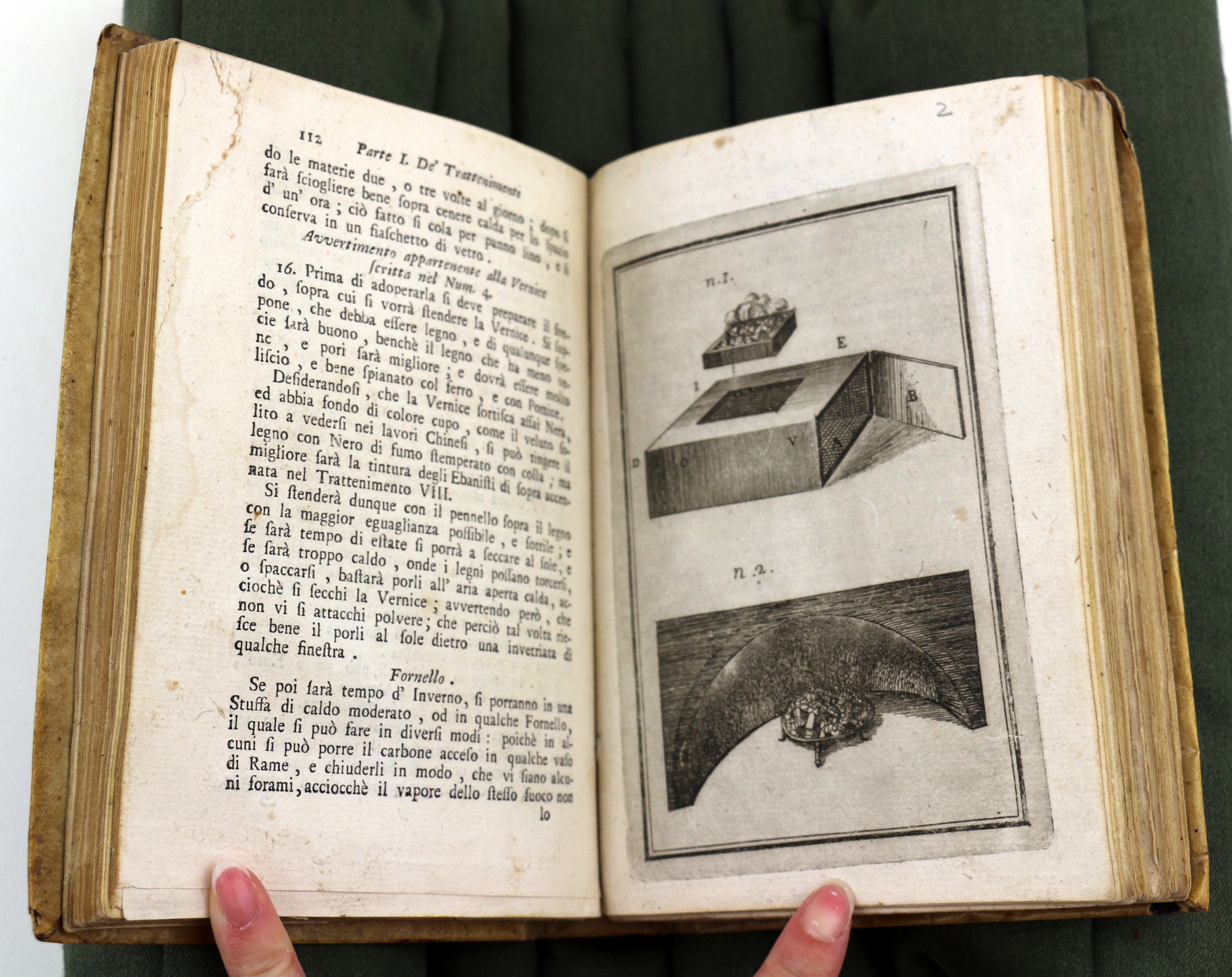
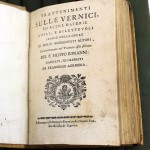
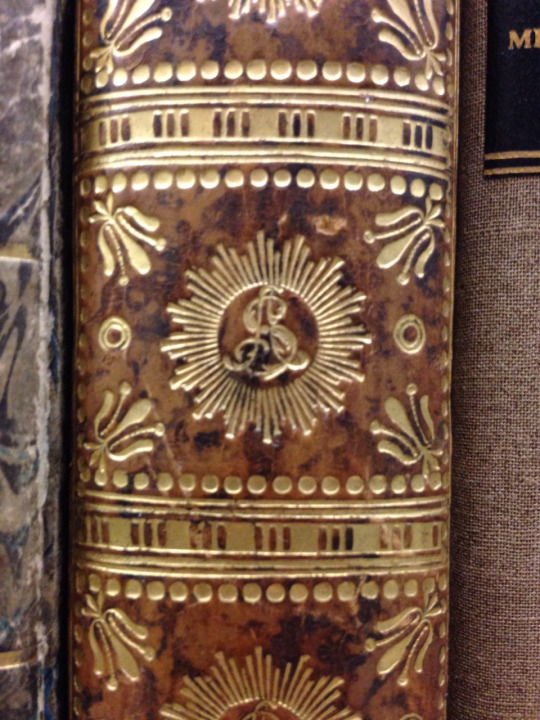
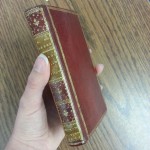
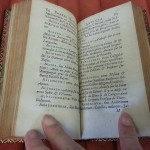
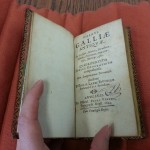
Agricola. Trattenimenti sulle vernici. Ravenna 1789.
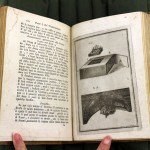
This book bridges several of our collection areas, covering a very broad array of topics; overall, it could be considered an early “how to” guide. Painting, printmaking, sculpting, cartography, conservation, cooking, gardening, rat extermination, and stain removal are all addressed, and are accompanied by an extensive bibliography.
Staff Publications:
Amy Chen led a group of current and former Council on Library and Information Resources (CLIR) postdoctoral fellows to write a piece for a CLIR report that is now available online here.
University Archivist David McCartney assisted in the production of this documentary.
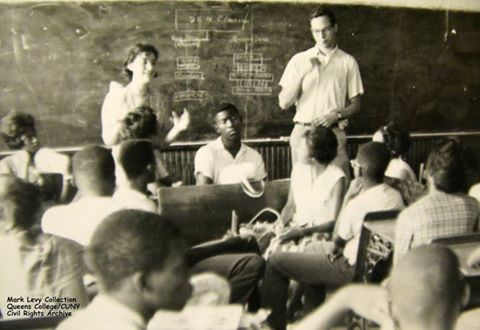
Monday September 28, 2015, 5:00 pm at FilmScene in Iowa City – “Iowans Return to Freedom Summer” (Iowa PBS, 2014, 48 mins). In the summer of 1964, hundreds of predominantly white college students answered the call from Civil Rights leaders to volunteer for Freedom Summer. They joined with voter registration efforts, taught in freedom schools and worked in community centers in towns throughout racially segregated Mississippi. This documentary features five native Iowans sharing why they felt compelled to volunteer. Following the screening there will be a discussion with producer Patti Miller and historian Shel Stromquist, both of whom were among the volunteers.
Event Recap:
Staff from Special Collections including the Iowa Women’s Archives participated in an event for National Voter Registration Day in the Learning Commons on Tuesday, providing a display of historic voting and suffrage related materials. In partnership with the League of Women Voters (LWV) of Johnson County, we registered 82 voters here in the Library, and a total of 171 overall at the four host locations (ICPL, Coralville PL, and Kirkwood). #CelebrateNVRD
Want to stay connected? Follow us on social media:
The Battle Creek Sanitarium was opened in 1866 by John Harvey Kellogg and his brother W. K. Kellogg, promoting health through a regimen of dietetics, exercise, hydrotherapy, phototherapy, thermotherapy, electotherapy, mechanotherapy, and enemas. They were joined in this enterprise by C.W. Post. In some areas they were ahead of their time, such as their emphasis on a low fat diet including whole grains, fiber-rich foods, and nuts, as well as getting lots of fresh air and exercise. But other areas were on the fringe and were open to ridicule, such as the treatment the Sanitarium received in the book and movie The Road to Wellville, the title of which is a spoof of John Harvey Kellogg’s book The Road to Wellness. The Sanitarium suffered during the depression and was scaled back in 1933 and permanently closed in 1952. What lives on are the cereals created by the Kelloggs and C.W. Post Companies, derivatives of the healthy foods promoted by the Sanitarium.
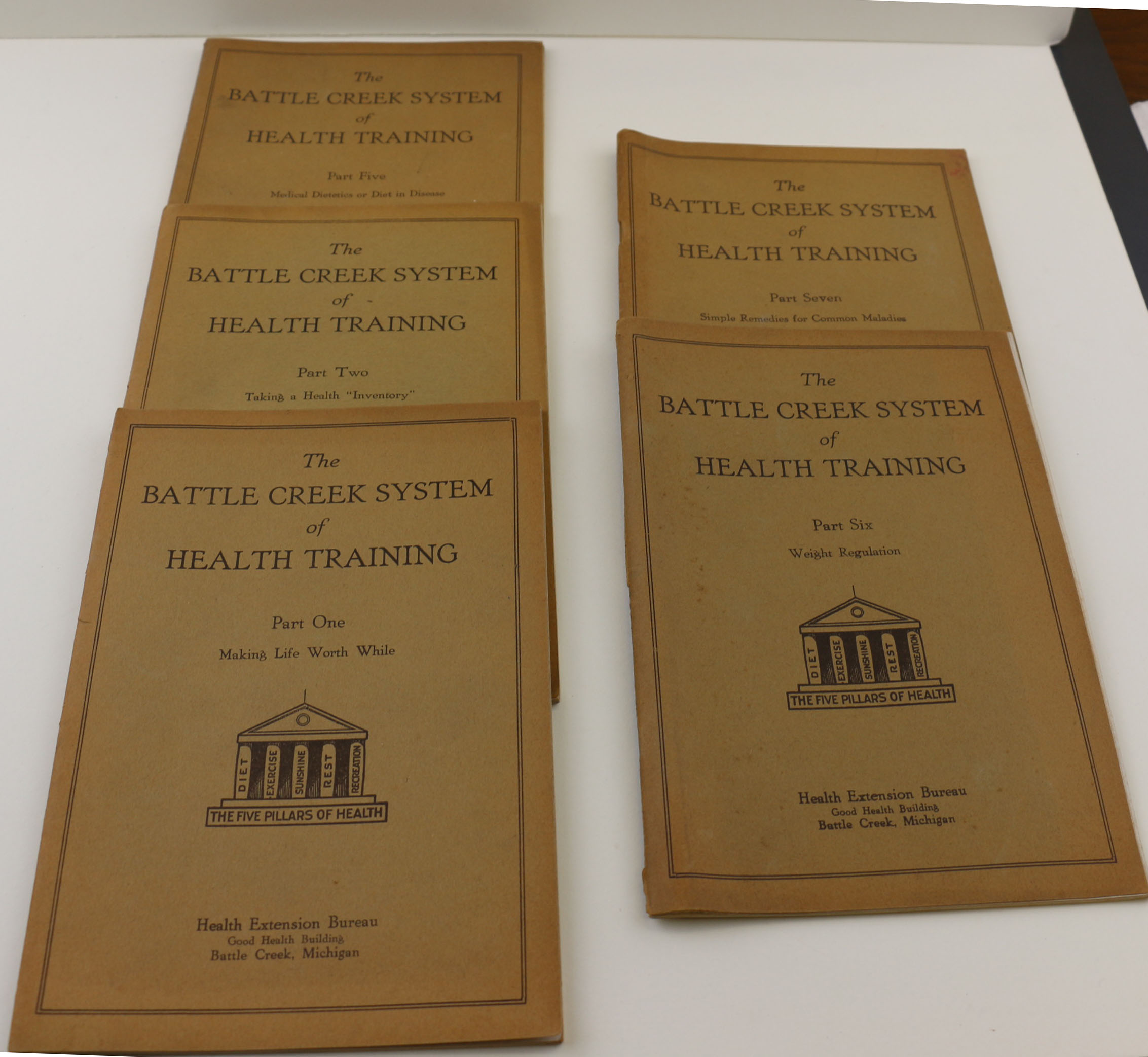
In the Brinton collection we recently found these books, entitled The Battle Creek System of Health Training. While not emanating from the Sanitarium, the books are from Battle Creek’s Health Extension Bureau and carry a publication dates of 1922 and 1924, during the height of the Sanitarium’s popularity. There were seven volumes in the series: 1) Making Life Worth While; 2) Taking a Health Inventory; 3) The Digestibility of Different Foods; 4) Foods and Feeding; 5) Diet in Disease; 6) Weight Regulation; and 7) Simple Remedies for Common Maladies.
The books in this collection are in near perfect condition. Unfortunately volumes 3 and 4 are missing so this is not a complete set. On a search in OCLC First Search, only four other libraries were named as having these volumes.
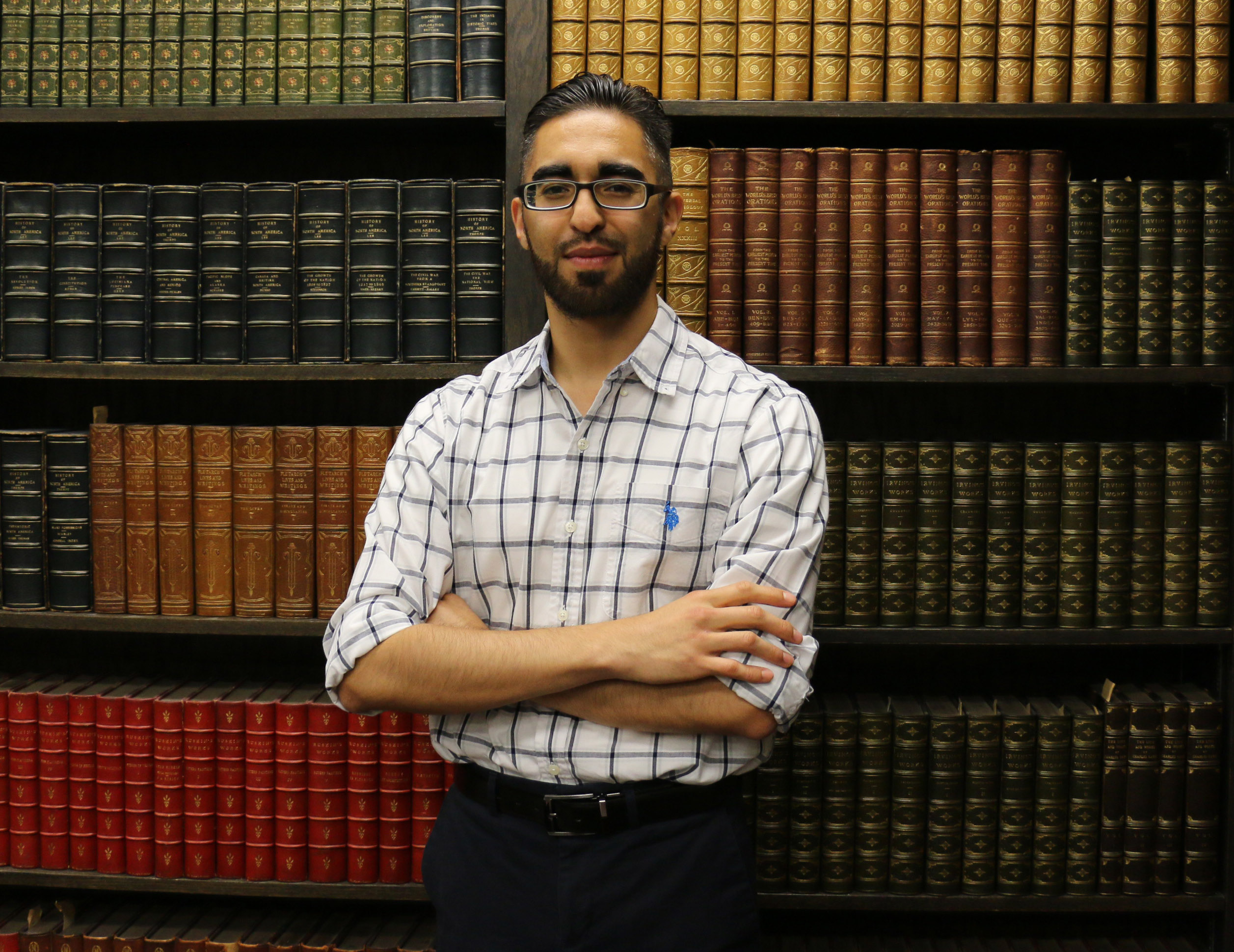
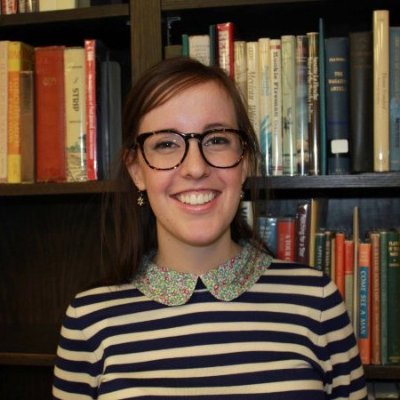
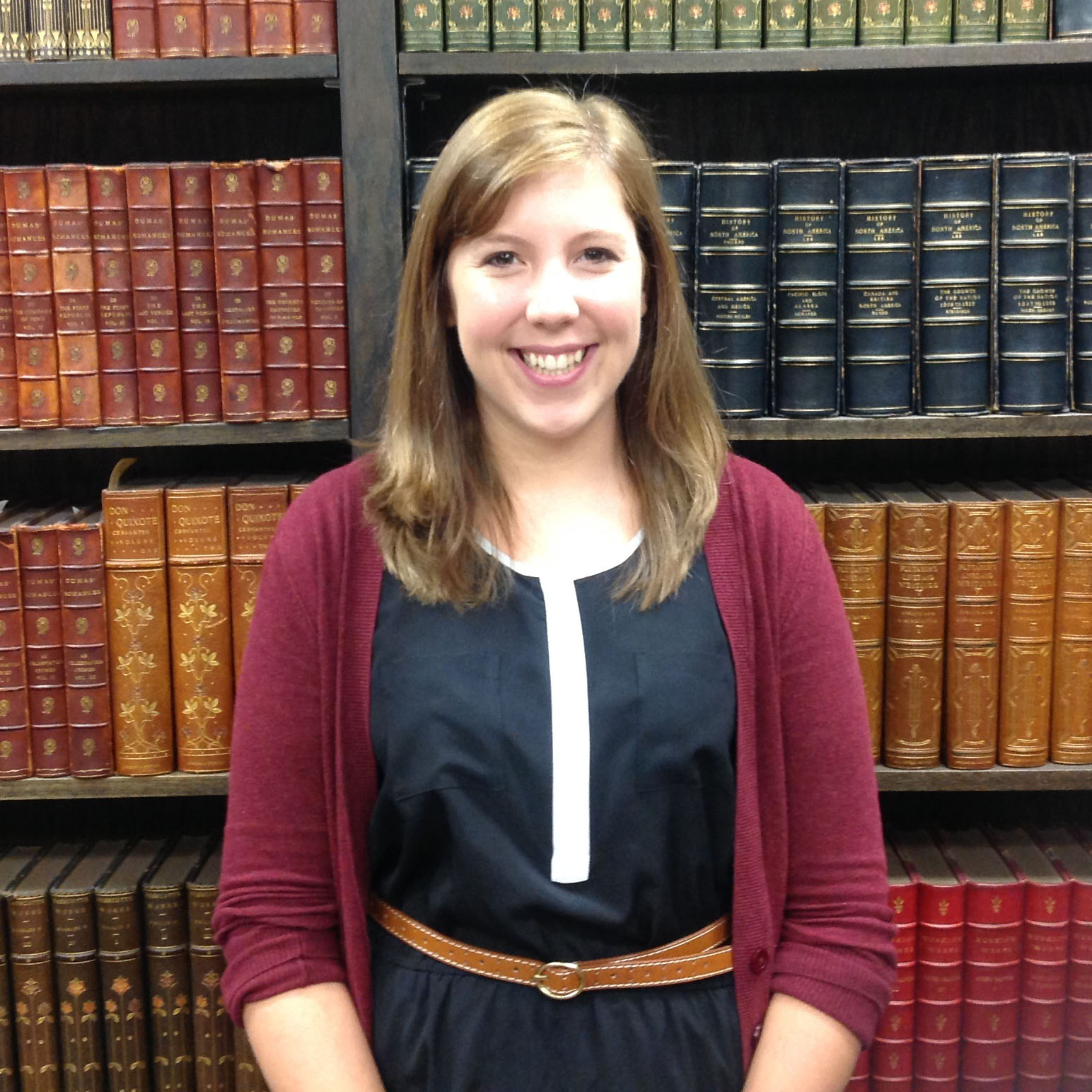
Alonso Avila is a new librarian and will begin his residency at the University of Iowa Libraries by spending a year working in Special Collections & University Archives. In May 2015, he received his Master’s degree from the Graduate School of Library and Information Science at the University of Illinois at Urbana-Champaign (UIUC). Prior to UIUC, Alonso worked as a special education tutor at a charter high school in Chicago, and also served two years in Peace Corps Jordan. Alonso’s research interests include the intersection of youth culture and social justice, as well as the interrelationship between librarianship and hip hop’s 5th element, knowledge AKA information literacy. While at The University of Iowa Libraries, he plans on building and gaining a new set of skills that will help him become a successful academic librarian whether in Chicago or any other institution around the world.
From the Web and Social Media:
1. Iowa Public Radio Interview
PHOTO BY JOHN PEMBLE
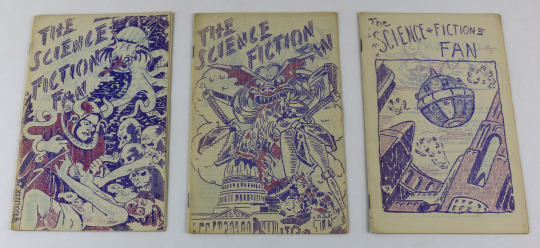
Librarians Peter Balestrieri and Laura Hampton were interviewed on Iowa Public Radio this week about digitizing 1930s-1950s science fiction fanzines. You can hear the four minute interview or read the transcript here.
2. Cheryl Jacobsen Calligraphy Video
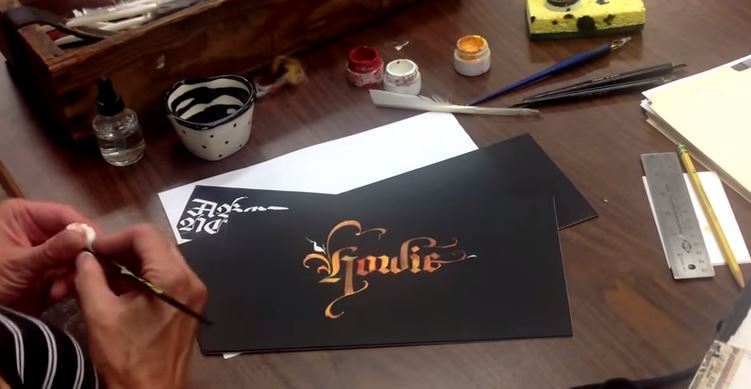
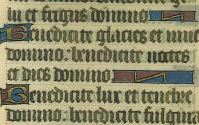
Cheryl Jacobsen, professional calligrapher and Lettering Arts instructor for the University of Iowa Center for the Book spoke about historic black letter hands from Medieval manuscripts at the Iowa Bibliophiles meeting last week. While there, she did a calligraphy demonstration and Colleen Theisen put together this short video of her work.
New Acquisitions:
1. Emblem book
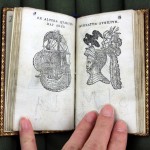
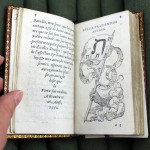
Paradin. Devises Heroïques. Lyon 1551.
This is the first edition of the first illustrated book of devices, or emblem book. Iowa has a growing collection of emblem books, which are frequently used for class sessions, but none are quite like this. Paradin’s devices went without explanation until the second edition was printed in 1557 with more text. This first edition, with its complete lack of explanation, is oddly appealing in its vagueness.
2. Facsimiles of Historic Bindings
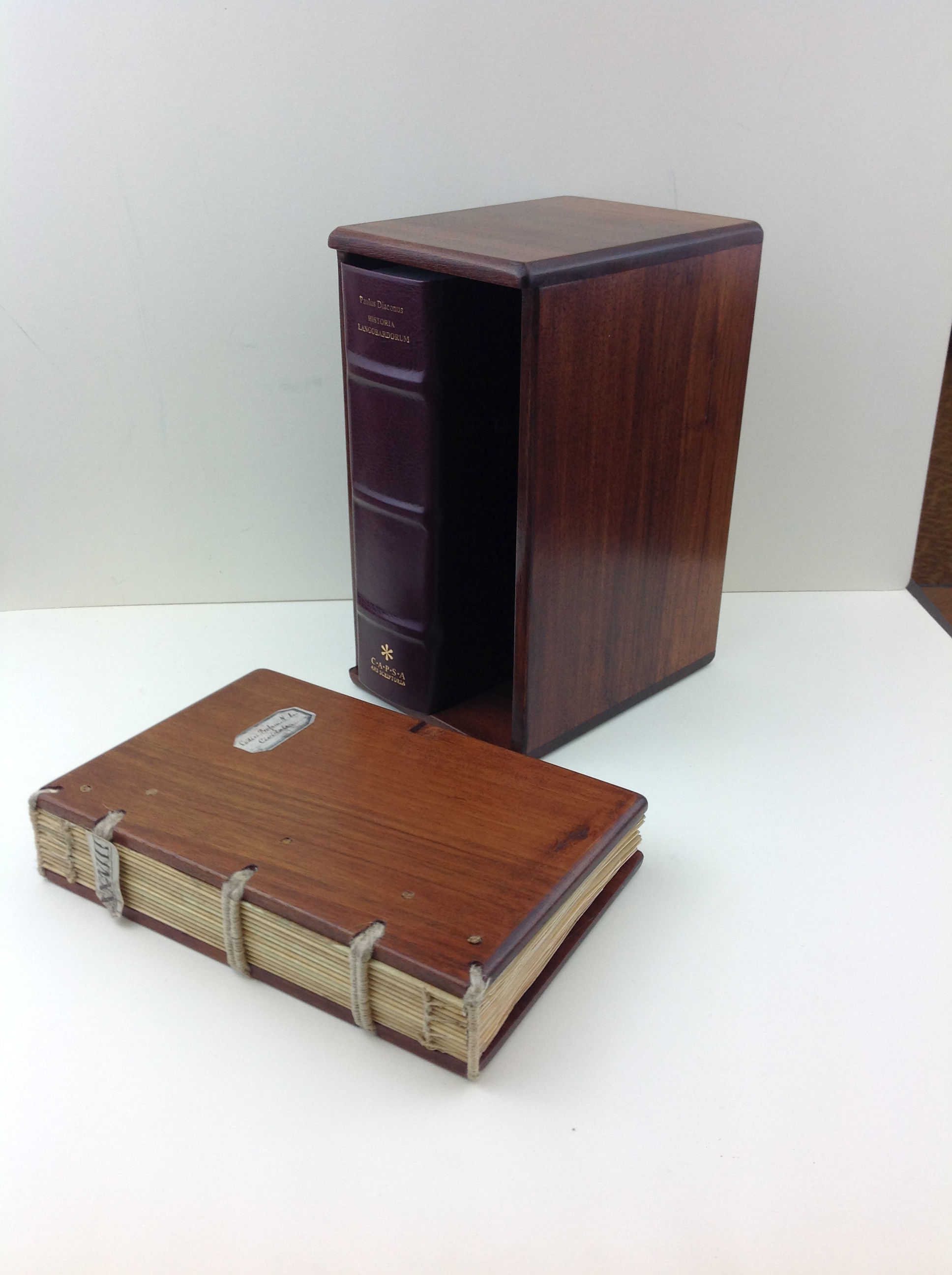
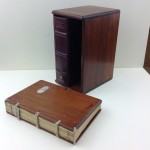
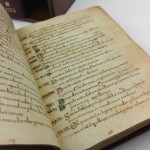
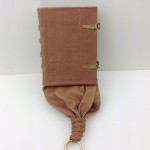
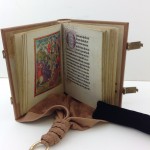
Two wonderful new facsimiles have arrived that are extremely high quality reproductions of early types of medieval manuscripts and their bindings.
The first is Historia Langobardorum by Paul the Deacon which is a 9th century text that is fundamental to understand the relationship between the Lombards, the Franks, the Byzantine Empire and the Papacy. The bare boards binding allows students to view how the quires are assembled and sewn in the text.
The second is Liber Precum, a facsimile of a 16th century book with a girdle style binding. The manuscript combines two Latin texts, each written and decorated separately and apparently unique in the forms found in this book: the first portion of the manuscript is a series of prayers on the life and Passion of Christ, and the second is a set of sermons and prayers in prose and verse, many attributed to distinguished spiritual authors, among them Saints Anselm, Gregory, Bernard, Jerome, and Thomas, as well as Jean Gerson and others. It includes 41 full page miniatures.
Want to stay connected? Follow us on social media:
The Hevelin Fanzine Digitization Project was featured on The Verge. The University of Iowa Libraries is digitizing science fiction fanzines from the 1930s-1950s.
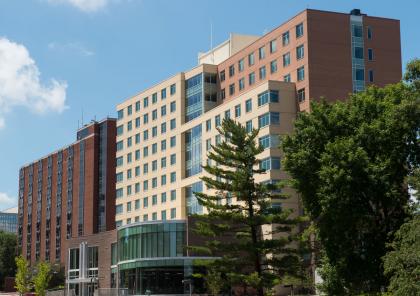
The planned 1,100-student high-rise, proposed in 1966, never got off the ground.
A Culinary Alphabet by Annie Tremmel Wilcox, published in 1998 was featured on our Instagram page. This culinary artist’s book has three spoons as part of the binding. [Szathmary N7433.4 W524 C8 1998]
Upcoming Events:
1. The first Iowa Bibliophiles meeting of the 2015-2016 season
University of Iowa Center for the Book calligraphy instructor Cheryl Jacobsen will present about calligraphic hands featured in Medieval manuscripts held in Special Collections.
6:00PM – Stop by to view a repeat showing of the livestream video of Alison Altstatt’s September 4th talk
6:30PM – Refreshments served
7PM – Cheryl Jacobsen’s talk
Special Collections Reading Room, 3rd Floor Main Library, 125 W. Washington, Iowa City, IA
2. Special Collections Editions featured in Old Capitol Museum Exhibition
Old Capitol Museum Keyes Gallery for the Arts, Humanities, and Sciences
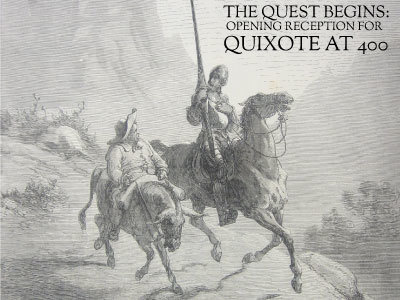
Explore artistic interpretations of Cervantes’ tale from the 1600s to the 1930s through collected images from editions of Don Quixote from the University of Iowa Libraries.
Individuals with disabilities are encouraged to attend all University of Iowa sponsored events. If you are a person with a disability who requires a reasonable accommodation in order to participate in this program, please contact the sponsoring department or contact person listed in advance of the event.
New Acquisitions:
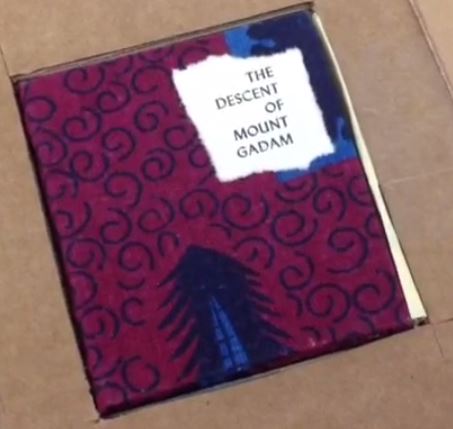
1. A new acquisition for our collection of miniature books.
Amos Paul Kennedy, Jr., Descent of Mount Gadam, Jubilee Press, 1993. Adapted from a folktale of the Mensa Bet-Abrehe people of northern Ethiopia. Includes a linocut outline map of Africa.
https://vine.co/v/eTJBM6xpHaH
2. A new addition to the University of Iowa Libraries’ map collections for studying World War I.
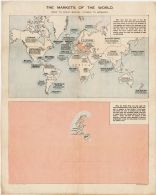
The Markets of the World. Open to Great Britain: Closed to Germany, London : Roberts & Leete Ltd., [1916]. This map shows sources of import for Britain during 1916.
https://vine.co/v/eT5YZ5uwWnm
Just for Fun:
Our graduate assistants made a parody of our new acquisition unboxing videos we’ve been making on the social media site Vine.
Please welcome our “new acquisition,” graduate assistant John Fifield.
https://vine.co/v/eIYrx5PBEwY
Want to stay connected? Follow us on social media:
What follows is one final blog post from our former Olson Graduate Assistant, Jillian Sparks, who attended the SHARP conference July 7-10, 2015 to present a poster related to her cataloging work here in Special Collections.
The Society for the History of Authorship, Reading, and Publishing (SHARP) is an international organization dedicated to book history and print culture. SHARP describes their research focus as, “the composition, mediation, reception, survival, and transformation of written communication in material forms from marks on stone to new media. Perspectives range from the individual reader to the transnational communication network” (sharpweb.org). There are over a 1,000 members from more than 40 countries who provide a truly global perspective of book history. Due to its large international community, the conference location rotates between the Western and Eastern hemispheres each year—typically North America and Europe.
Montreal from St. Lawrence River
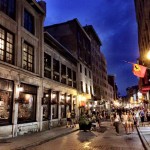
Vieux Montreal at night
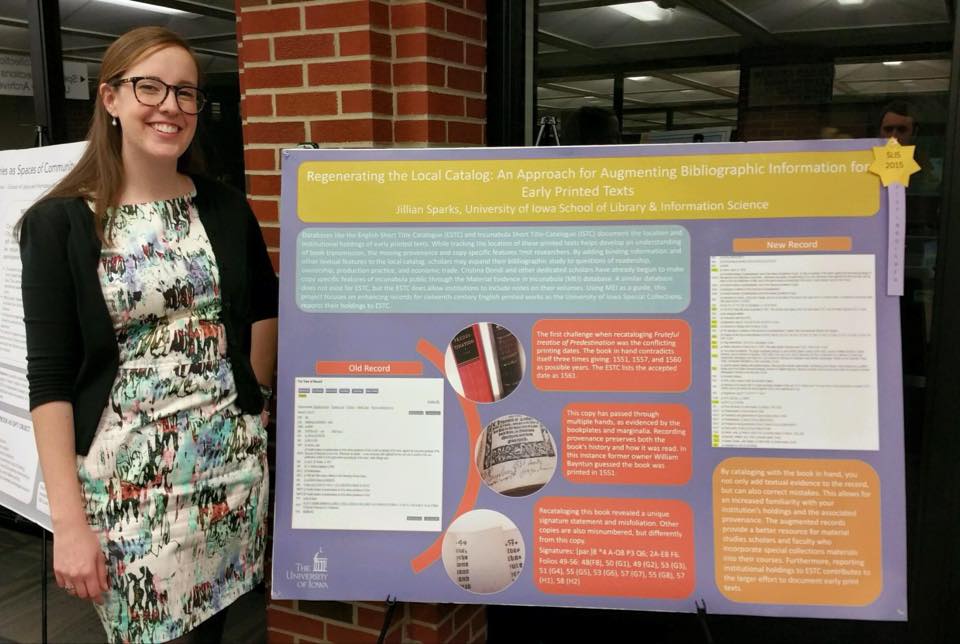
I first learned about SHARP while attending the Digital Humanities Summer Institute in 2012. Adrian van der Weel, the keynote speaker and my course instructor, highly encouraged joining SHARP if we were interested in book history. I joined the same afternoon and after three summers, I was finally able to attend the annual conference this summer in Longueil/Montreal as a master’s student poster presenter. I presented my final poster from the University of Iowa’s School of Library and Information Science program titled “Regenerating the Local Catalog: An Approach for Augmenting Bibliographic Information for Early Printed Texts.” The theme this year was “The Generation and Regeneration of Books” and was hosted by the Groupe de recherches et d’études sur le livre au Québec, the University of Sherbrooke, McGill University and the Bibliothèque et Archives nationales du Québec. The conference was truly a bilingual event with presentations in both French and English. Over 350 people traveled to Québec to participate.
Scholars from all disciplines and librarians alike attend SHARP, and the conference program reflects this diversity. I attended sessions on special collections instruction, cataloging, and pivotal collectors. “Old Books and New Tricks: Regenerating the Library Visit” has been the most helpful session on special collections instruction out of all the conferences I have attended. Gale Burrow from Claremont College presented on how to turn a one-time visit into a two part lab series that focuses on primary research in the first lab and the secondary sources in the second lab. Karla Nielsen demonstrated how Book Traces, a crowd-sourced web project aimed at identifying unique copies of 19th- and early 20th-century books on circulating library shelves, was successfully carried out at Columbia University. CLIR postdoctoral fellow at Southwestern University, Charlotte Nunes, discussed the emotional connection her students experienced while transcribing Latino oral histories and the importance of capturing the students’ oral histories on their project work. The last presenter, Amanda Watson from Yale, showed how she has collaborated with special collections to integrate technology into the class visit. All four presenters illustrated creative methods of teaching that I look forward to incorporating into my professional career.
Jillian Sparks and her poster
Because of my interest in copy specific cataloging and in relation to my own work on cataloging 16th-century books at the University of Iowa, the panels on “Pivotal Collectors” and “Early modern Women and the Book (II): case Studies in Ownership, Circulation, and Collecting” served as interesting comparisons. In the first panel, presenters discussed the familiar issues of how to catalog and organize famous personages’ personal collections. In the second panel, speakers addressed the problem of how to find someone’s books after the collection has been separated and sold. In her presentation “Finding Frances Wolfreston in Online Public Access Catalogues: How Electronic Records Can Lead Us to Early Modern Women Readers,” Sarah Lindenbaum demonstrated how Frances Wolfreston’s unique signature as noted in various catalog records enabled her to trace the dispersion of her books. The discussion surrounded the general value of provenance notes and included mention of Provenance Online Project also known as POP.
Other presentations on embroidered bindings (Amanda Pullan) and the history of dog-earing books (Ian Gadd) were equally exciting and all of the SHARP panels appealed to my love of book history. The most fulfilling aspect of the conference was SHARP’s dedication to encouraging emerging scholars. There was a specific dinner for master’s and PhD candidate presenters. The poster session and PhD candidate papers did not conflict with other sessions, thus allowing all conference attendees to engage with their research. I personally benefited from the feedback and encouragement I received during the poster session. Most importantly, I left SHARP feeling welcome and excited to be a member of the organization and enthused about book history as a discipline.
Relevant links:
Sparks, Jillian A. Regenerating the Local Catalog: An Approach for Augmenting Bibliographic Information for Early Printed Texts http://ir.uiowa.edu/slis_student_pubs/1
1. Saying Farewell to Olson Graduate Assistant Jillian Sparks
Jillian Sparks will complete her two years as Olson Graduate Assistant here in Special Collections this week. The Olson GA’s participate in the department as junior staff for twenty hours a week; working at the reference desk and answering email reference questions, teaching classes, planning events, writing about collection items for social media, and assisting with a myriad of other duties that come up in day to day life here in Special Collections. Above and beyond those duties Jillian worked on a project adding copy specific notes about types of bindings, marginalia, and provenance information to our catalog records for the earliest English language books in the collection and prepared an exhibition about her work that can still be seen in the cases outside Special Collection on the 3rd floor of the Main Library, or online here. Jillian recently completed her Masters of Library Science here at the University of Iowa along with a certificate in book studies from The Center for the Book, and is seeking employment in the field. Her contributions to this department over the past two years cannot be measured. It was an honor and a privilege to work with such a talented librarian.
Upcoming Events:
1. Special Guest Lecture, Alison Altstatt, University of Northern Iowa
“Re-membering the Wilton Processional: a Manuscript Lost and Found”
Friday, September 4, 2015
1:30PM-2:30PM
2032 Main Library, 125 W. Washington, Iowa City, IA
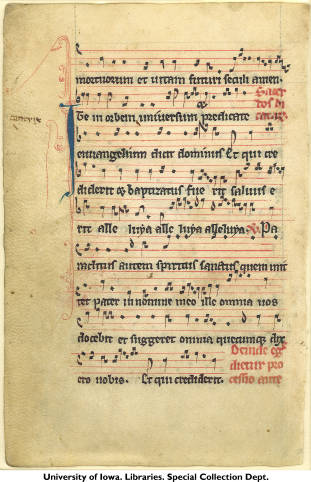
This talk concerns a notated leaf of an English medieval manuscript held in the Special Collections of the University of Iowa Libraries. Musical, textual and codicological evidence supports the identification of the leaf as a fragment of a processional from Wilton Abbey, an important center for women’s Latin learning from its tenth-century foundation to its sixteenth-century dissolution. The recovery of the University of Iowa leaf, along with more than thirty others, provides a window into the abbey’s musico-poetic tradition, its processional liturgies, and its dramatic rituals.
2. Iowa Bibliophiles First Meeting for 2015-2016, Wednesday September 9th
The first Iowa Bibliophiles meeting of the 2015-2016 season will feature University of Iowa Center for the Book calligraphy instructor Cheryl Jacobsen speaking about calligraphic hands featured in Medieval manuscripts held in Special Collections.
6:00PM – Stop by to view a repeat showing of the livestream video of Alison Altstatt’s September 4th talk
6:30PM – Refreshments served
7PM – Cheryl Jacobsen’s talk
Special Collections Reading Room, 3rd Floor Main Library, 125 W. Washington, Iowa City, IA
Individuals with disabilities are encouraged to attend all University of Iowa sponsored events. If you are a person with a disability who requires a reasonable accommodation in order to participate in this program, please contact the sponsoring department or contact person listed in advance of the event.
Recently on the Web and Social Media:
1. Olson Graduate Assistant Kelly Grogg’s IFLA Conference Report
Jillian wrote a farewell Tumblr post about the History of Hydraulics collection that you can see here. You can also view all of the posts she made for our Tumblr in her time in Special Collections here.
3. U. Iowa Curriculum Featuring Special Collections Materials Featured in “In the Library with the Lead Pipe” Article
Tom Keegan, Head of the Digital Scholarship and Publishing Studio in the UI Libraries, and former Undergraduate Services Librarian Kelly McElroy published an article about Archives Alive!, the primary source based curriculum for the Rhetoric Department that has students transcribing, analyzing, and interpreting historic documents from Special Collections in DIY History, the University of Iowa Libraries volunteer-based document transcription site. The curriculum was originally developed in partnership with a campus curriculum development project, Iowa Digital Engagement and Learning (IDEAL).
4. “Weekly Squint” On Tumblr
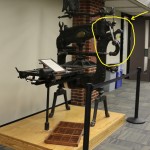
Several libraries on Tumblr this week featured a “Weekly Squint” which includes a close up view of a collection item. The Huntington Library Tumblr began the “Weekly Squint” feature on Tumblr and invited other libraries and institutions to participate. Our post was a close up view of the Columbian Press in the 3rd Floor hallway.
New Acquisitions:
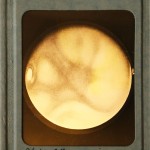
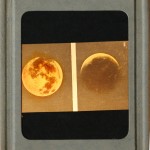
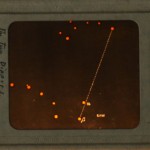
1. Early 20th Century Astronomy Slides
With the July 14 New Horizons flyby of Pluto, there has been a surge of interest in astronomy. A recent acquisition by the Special Collections department shows that interest in the heavens has been with us for a long time.
These slides were used by Bishop Simeon Arthur Huston (1876-1963), Bishop of the Episcopal Dioceses of Olympia, WA from 1925 to 1947. He had a life-long love of astronomy and after his retirement, he wrote a regular astronomy column in his local newspaper on Bainbridge Island, Washington. He gave frequent talks on astronomy, using these slides to illustrate his talks. There are approximately 50 slides in the collection.
These slides were generously donated by Simeon Huston’s grandchildren Matt Huston, John Huston, Jr., and Elisabeth LeLion.
2. The Gazetteer
The Map Collection’s merge with Special Collections in 2013 has resulted in a heavier focus on the history of cartography. Although Labbé didn’t advertise this work as a gazetteer, it is one of the earliest works on place names in France. Nicolas Sanson, a famous cartographer, heavily criticized the book for plagiarism; perhaps that explains why this was the only edition!
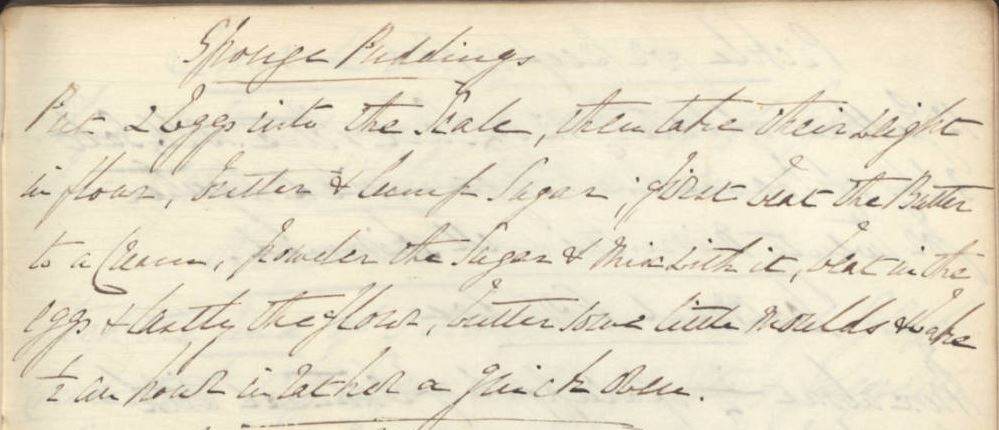
Contestants in the Szathmary Collection of Historic Recipes competition, judged Tuesday at the 2015 Iowa State Fair, were part cook, part historian and part detective. Entrants were challenged to interpret a recipe from 1874, maintaining the original recipe’s integrity, while filling in the gaps and adapting to modern measurements, equipment and ingredients
Celeste F. Bremer of Urbandale won first place. Natalie Ridgway of Johnston earned second place and Lindsey Pepper of Boone claimed third place.
See this item, MsC 533, EN32, in the Iowa Digital Library: http://digital.lib.uiowa.edu/cdm/ref/collection/cookbooks/id/12876
“Put two eggs into the scale, then take their weight in flour, butter and lump sugar; first beat the butter in to a cream, powder the sugar and mix with it, beat in the eggs and lastly the flour, butter some little moulds and take ½ an hour in rather a quick oven.”
The Iowa State Fair Food Department is the largest of any state fair in the country. There are 228 divisions, 850 classes and over 10,600 entries at this year’s Fair. Food Department judging is held in the Elwell Family Food Center sponsored by Wells Blue Bunny.
The judges for the contest were members of the “Historic Foodies” group in Iowa City.
Congratulations to all the winners!
2. A Final Reminder to Sign Up for Fall Semester Class Sessions or Group Visits
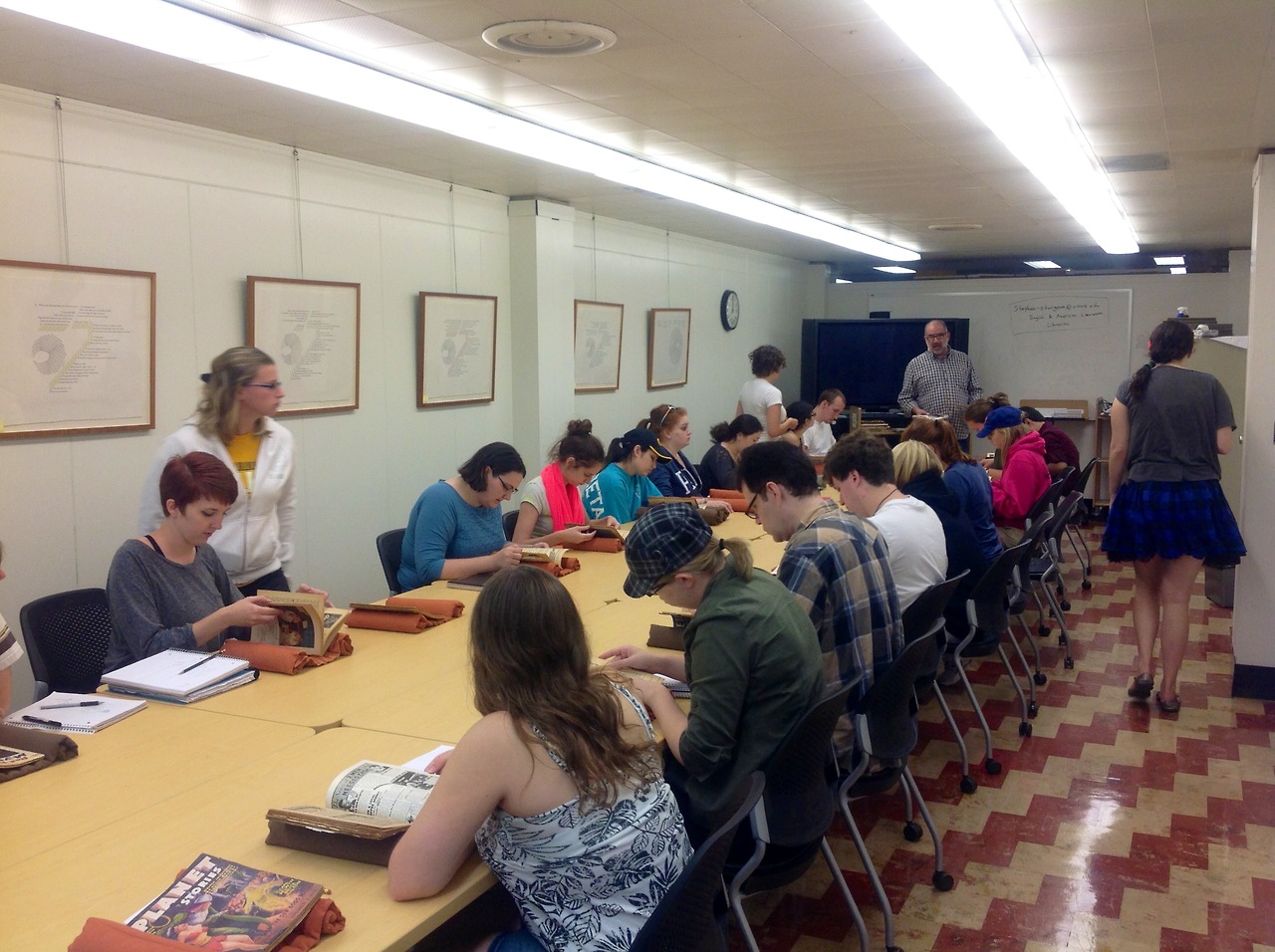
Special Collections and University Archives already has 40 professors scheduling classes with us this fall. You should bring your students too! We have a staff of librarians with expertise in areas ranging from medieval manuscripts to science fiction, all available to help design curricula to complement your learning objectives. Submit your request here to learn more: http://www.lib.uiowa.edu/forms/speccoll_class/
Want to stay connected? Follow us on social media:
This week I’m finishing up my summer internship at Special Collections. I’ve had so much fun here this past month and no two days have been exactly the same. I’ve done all sorts of things, from helping with reference questions and pulling materials, to listening to Oral History interviews and exploring the collections. One of my favorite things I had the opportunity to do was create a series of Tumblr posts featuring postcards from the World’s Fair Collection. I even got to create a display for the display case in the reading room with the postcards from my posts.
Another thing that I really enjoyed was getting to meet with all the people in the department individually. Through these meetings I learned so much about what each person does and how they got here. I loved hearing everyone’s stories and I have a much greater appreciation for all the work everyone does here.
I also had the opportunity to pull items for the upcoming comics program for the Iowa City Public Library summer reading program. The nerd in me loved going through the boxes of old comics to help chose what to show at the event, (I especially loved the Dazzler comics). Everyone here must have really strong arm muscles though, because some of those boxes are very heavy.
This internship has given me a greater appreciation of all the work that goes on behind the scenes, that most people never see, and all the amazing people that work here. I’m so thankful to have had this opportunity and I’m going to miss coming in every morning. Have a wonderful summer everyone.
-Emily
We certainly enjoyed having Emily with us this summer, and we miss her already! If you’d like to check out Emily’s wonderful tumblr series, follow this link!
The Map Collection sent out a call to the Auditors of Iowa Counties for current plat books to update our collection. So far, over 40 counties (of 99) have donated current and back issues of plat books for our collection! Thanks Iowa!
Plat books are atlases, drawn to scale, that show property ownership and land divisions.
2. Special Guest Lecture, Alison Altstatt, University of Northern Iowa
“Re-membering the Wilton Processional: a Manuscript Lost and Found”
September 4, 2015
1:30PM
Special Collections Reading Room, 3rd Floor Main Library, 125 W. Washington, Iowa City, IA
This talk concerns a notated leaf of an English medieval manuscript held in the Special Collections of the University of Iowa Libraries. Musical, textual and codicological evidence supports the identification of the leaf as a fragment of a processional from Wilton Abbey, an important center for women’s Latin learning from its tenth-century foundation to its sixteenth-century dissolution. The recovery of the University of Iowa leaf, along with more than thirty others, provides a window into the abbey’s musico-poetic tradition, its processional liturgies, and its dramatic rituals.
Individuals with disabilities are encouraged to attend all University of Iowa sponsored events. If you are a person with a disability who requires a reasonable accommodation in order to participate in this program, please contact the sponsoring department or contact person listed in advance of the event.
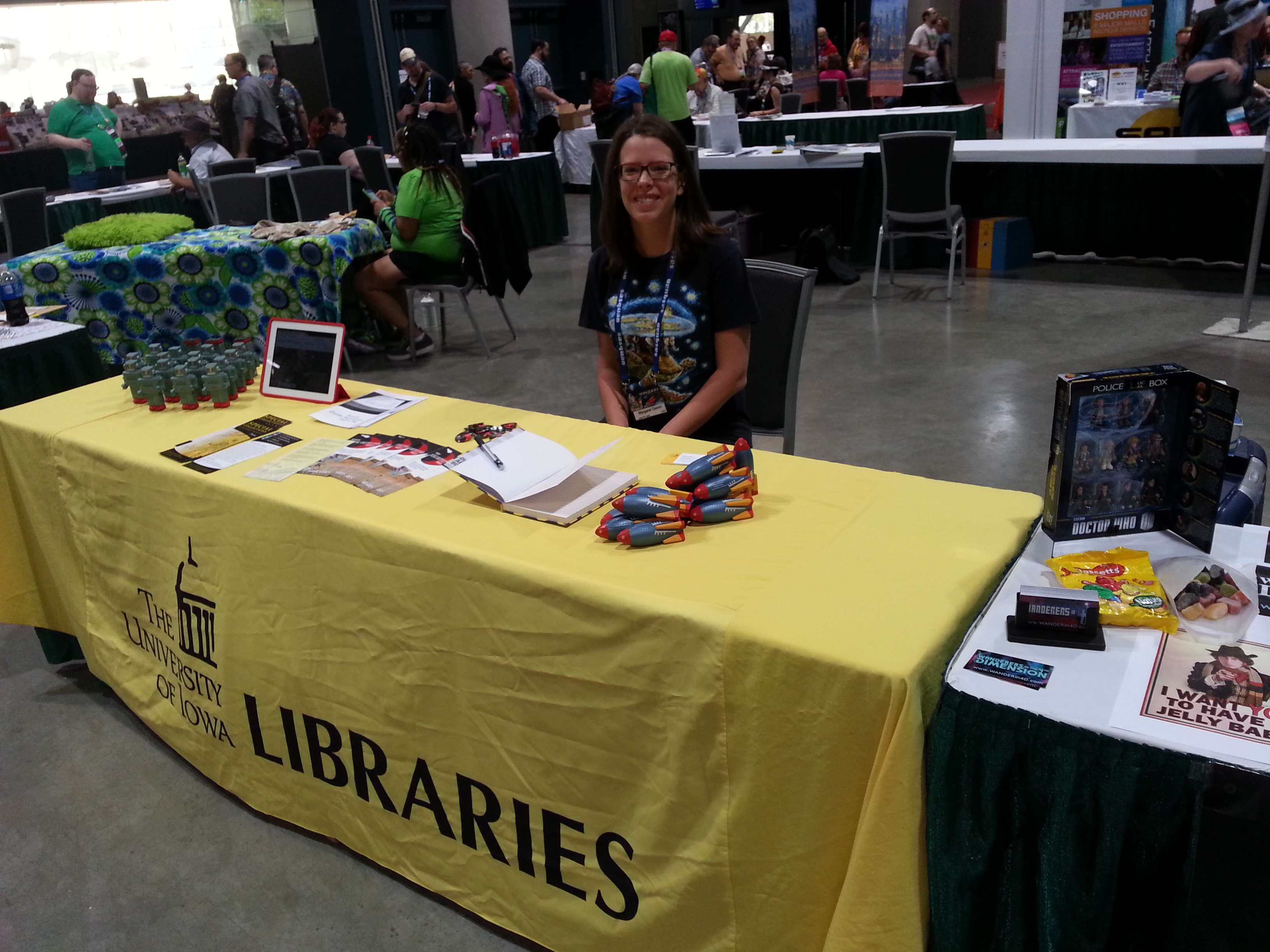
3. World Con
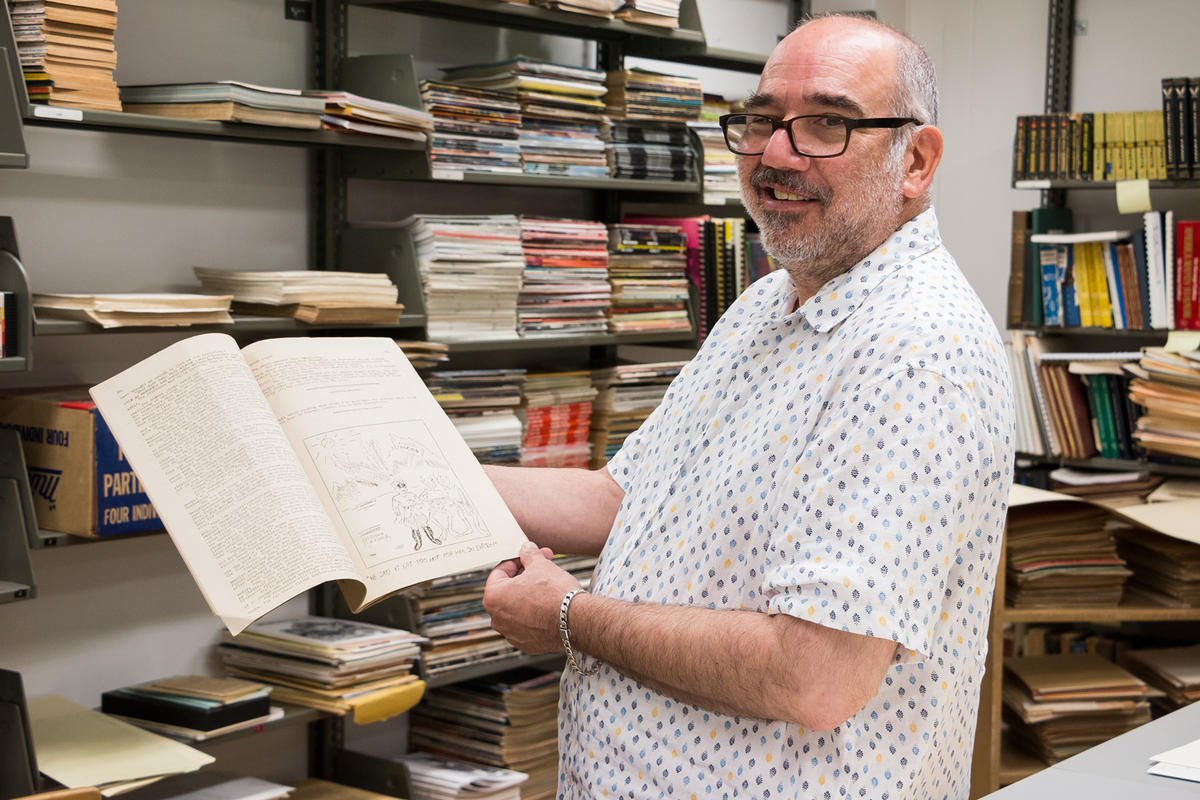
The World Science Fiction Convention is going on this week in Spokane, Washington and Special Collections has a table in the dealer’s room to talk to the fans about our Hevelin Collection fanzine digitization project.
Over 5,000 people have already checked out the Over Here From Over There: Iowans in World War II exhibit in the Mobile Museum at the State Fair as of Wednesday. The fair continues through Sunday, August 23rd so check out the exhibition if you head out to the fair this weekend.
Recently on the Web and Social Media:
1. Man From U.N.C.L.E. Posts Recap
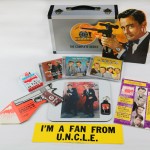
Last week to coincide with the release of the Man From U.N.C.L.E. movie, we featured a post here on our blog with an overview of our related collections and some information about the history of the show and also a related post on our Tumblr about memorabilia in the collections.
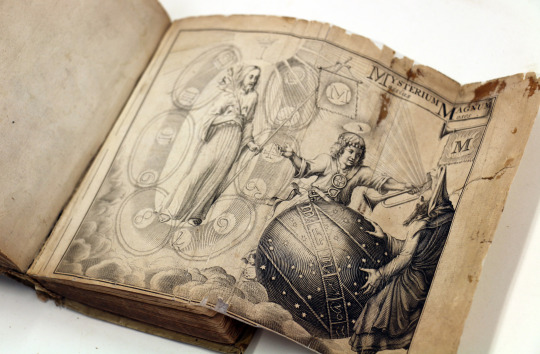
2. An Exquisitely Illustrated Lutheran Theological Text Was Featured on Tumblr
This theological text was written by Jacob Boehme (Jakob Böhme), a Lutheran theologian. The majority of his writings concern the nature of sin, evil, and redemption. These themes can be seen in some of the detailed images.
In September of 1964, a new series premiered on American television. It was a spy series influenced by Ian Fleming’s James Bond novels and the films that began with 1962’s, Dr. No. I was eleven years old at the time and couldn’t wait to see it. America had caught spy fever and television and Hollywood were feeding demand. The show was called, The Man from U.N.C.L.E., and it was a major hit, the source for what is widely recognized as the first real media fandom, two years before the debut of Star Trek and Trekkies. This fandom grew and sustained itself from the 60’s through to the present, rewarded with a new film interpretation that seeks to cash in on both Boomer nostalgia and the current fascination with hyper-lethal, shadow agent heroes.
N. Felton Papers, MsC 265
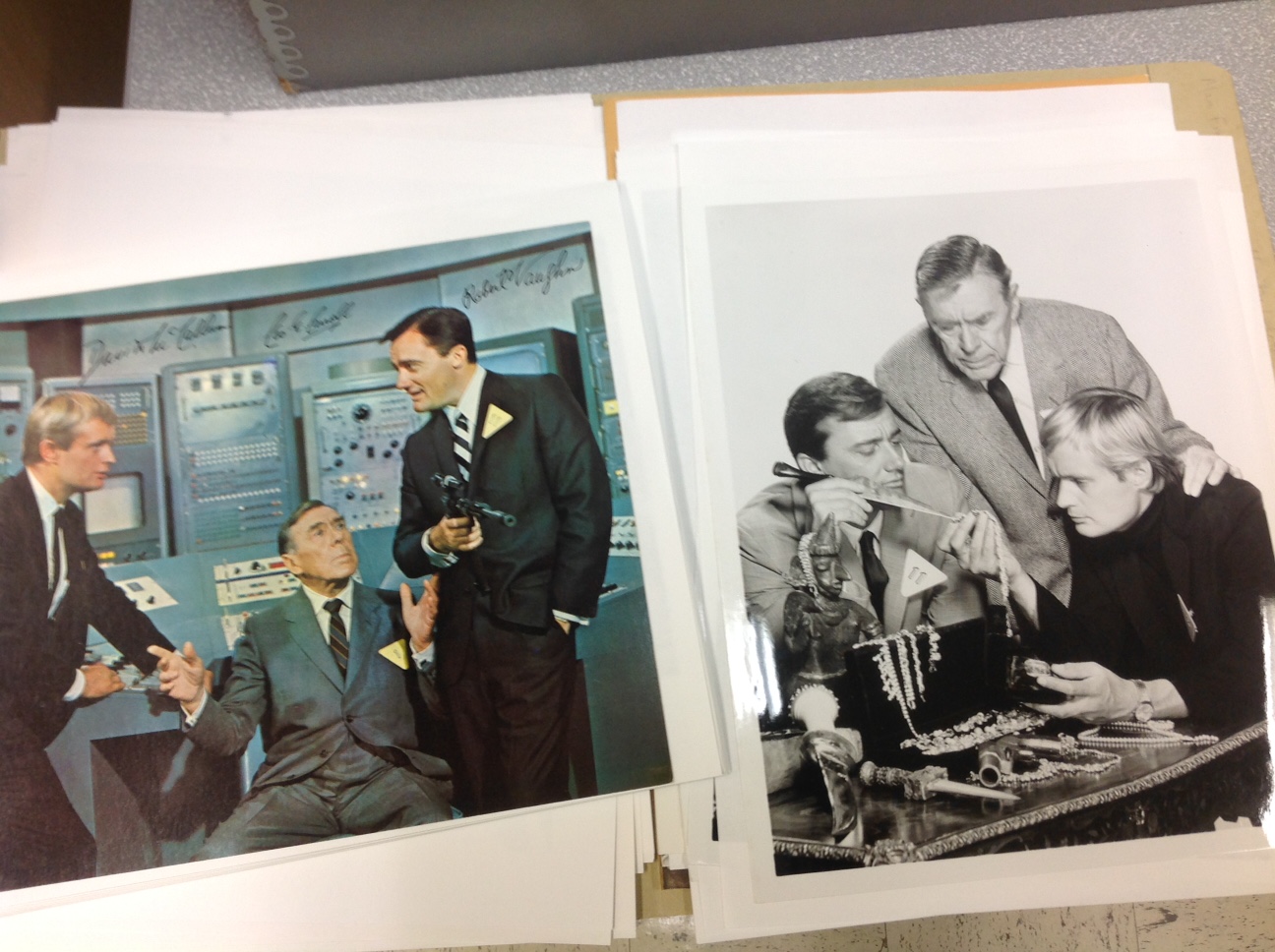
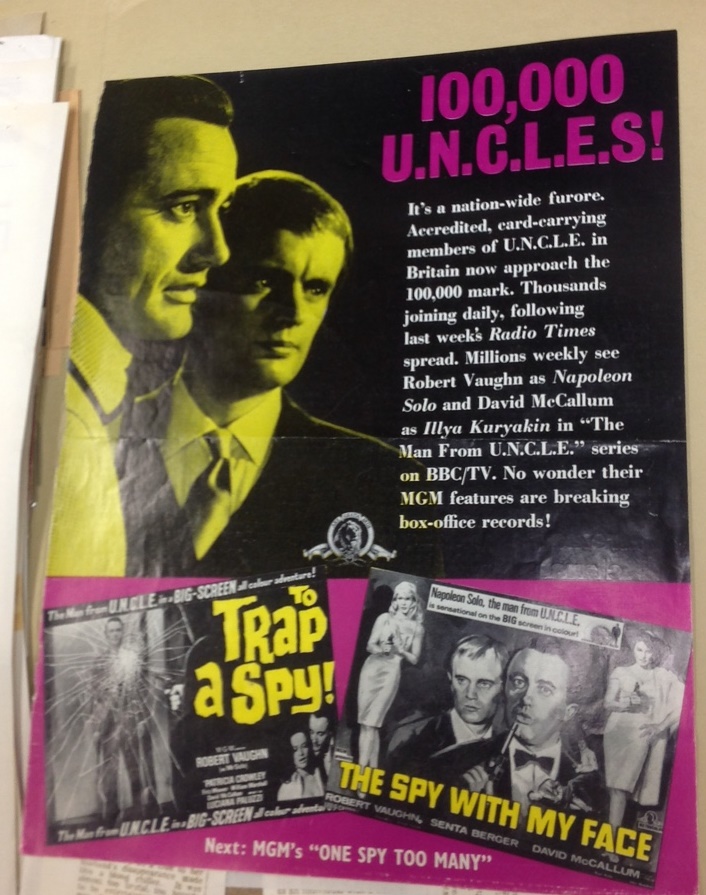
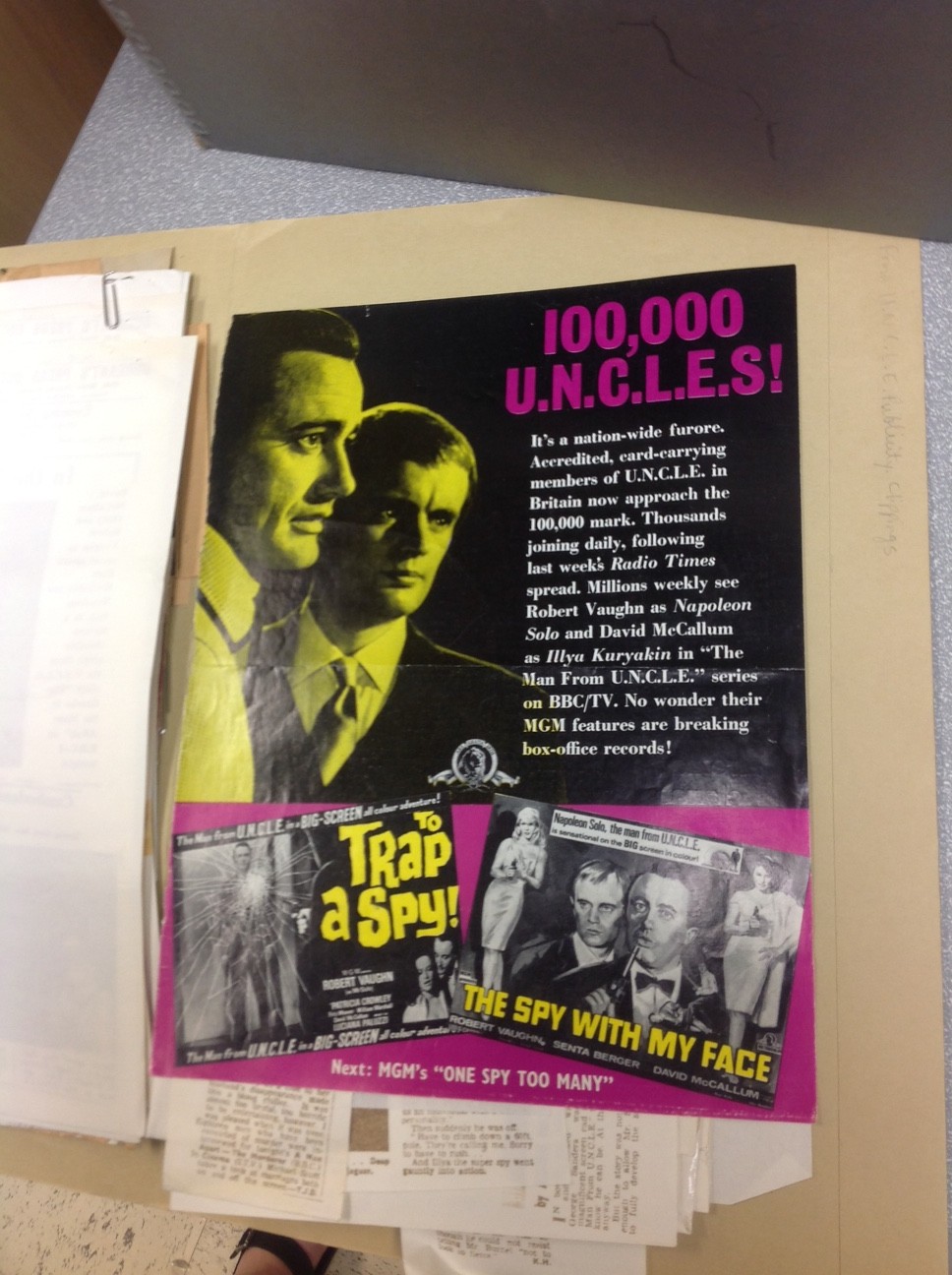
We are fortunate to hold the papers of the executive producer and co-creator of The Man from U.N.C.L.E., Norman Felton, in the University of Iowa Library’s Special Collections http://aspace.lib.uiowa.edu/repositories/2/resources/271. As a kid, I ran around the house with my U.N.C.L.E. gun and my U.N.C.L.E. communicator and glued myself to the screen when the show aired. Not content to be mere consumers, many teens began newsletters and fan clubs. Teenage girls were an enormous share of the show’s audience and were particularly smitten with the show’s English actor, David McCallum. He played agent Illya Kuryakin, a cool, cerebral opposite to his partner Napoleon Solo’s suave man-of-action, played by American actor Robert Vaughn (The Magnificent Seven, The Young Philadelphians). Vaughn’s character was the show’s ladies’ man but it was McCallum that pulled in record-breaking fan mail, more than Clark Gable at his most popular.
Ad describing 100,000 card carrying fans in the U.K. Norman Felton Papers, MsC 265
By 1966, the show was a huge success and the stars of the series were on a promotional tour. They travelled to New York to appear at Macy’s department store. They were to drive their limo straight into a freight elevator and go up to meet the fans, but it was not to be. 15,000 teenage girls showed up and quickly became unmanageable. It was decided to cancel the appearance. When they learned of the cancellation, the girls rioted, doing extensive damage to Macy’s with a few injuries as well. The police influenced Vaughn and McCallum to return immediately to the West Coast. McCallum later vowed to never appear at an American promotion again, fearing that fans or he himself would be injured. This devotion didn’t end when the series was finished in 1968. It expanded into more clubs, newsletters, conventions, and fan art and fan fiction. One of those fans was Lynda Mendoza and we are privileged to have her fine collection of David McCallum fan materials http://aspace.lib.uiowa.edu/repositories/2/resources/778.
With the new film, U.N.C.L.E. returns to center stage in pop culture. I‘m currently binge-watching the first season of the series on DVD, enjoying it and watching with a more critical eye than I did fifty years ago. The show alternates between a self-reflexive campiness and a realism that makes it palatable to a contemporary audience. Interestingly, in light of the huge McCallum fandom, the Kuryakin character makes only intermittent appearances, sometimes not at all. Perhaps this peekaboo added to the hunger teens felt for McCallum. He was often referred to as “the blond Beatle” because of his hair. He is still acting, in the hit series, NCIS, as is Robert Vaughn, seen recently on Law and Order: Special Victim’s Unit.
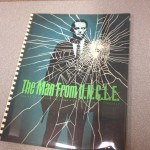
Man From U.N.C.L.E. preview booklet fall 1964 from the Norman Felton Papers, MsC 265
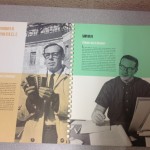
Producer Norman Felton profiled in the booklet. Norman Felton Papers, MsC 265
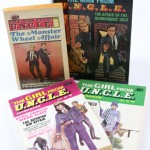
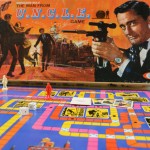
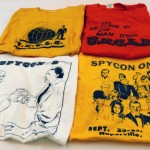
Among the fan-related and series-related material in the two collections are letters from Felton to and from Ian Fleming regarding the series and a letter from Felton explaining that he sent his papers, including scripts, correspondence, photos, business records, advertising, etc. to the University of Iowa so that fans would leave him alone and could come to a central location to see the treasure. In the Mendoza collection, there are card and board games, fan t-shirts, convention materials, fan correspondence, newsletters, and a wealth of merchandise and memorabilia.
Medoza and Felton collection memorablia
Memorabilia from the Lynda Mendoza Collection Msc 895
Medoza and Felton collection memorablia
Want to get started exploring Man From U.N.C.L.E related collections in the University of Iowa Special Collections?
Scripts, photos, memorabilia, and documentation relating to the making of the Man From U.N.C.L.E, its reception, and its fan communities from the series’ executive producer Norman Felton.
2. Lynda Mendoza Collection of David McCallum Memorabilia, MsC 895
Collection of materials related to the actor David McCallum, assembled by the president of his official fan club.
3. Laura Leach Collection of The Man From U.N.C.L.E. Fanzines, MsC 910
Responding to library use patterns, we will be shifting our evening hours when the fall semester begins. On August 25th, we will be open until 7 PM on Tuesdays and we will no longer open on Thursday nights.
Our new hours are:
Mondays, Wednesdays, Thursdays, and Fridays: 8:30 AM – 5 PM
Tuesdays: 8:30 AM – 7 PM
2. Request Fall Class Sessions Now
Classes are beginning to schedule their sessions at Special Collections for the fall.
To get your desired date and time, sign up soon using our request form.
3. Save the Date: First Iowa Bibliophiles Talk of the 2015-2016 Season
6 pm on September 9, 2015, with refreshments at 5:30PM, just before the speaker. More details will follow soon.
4. New Collection Guide Search Engine
Our collection guides may suddenly look a bit different that they did before. We officially have transitioned behind-the-scenes from an Archon-based interface to using ArchivesSpace to host our finding aids. ArchivesSpace is a new open source archives information management application for managing and providing web access to archives, manuscripts, and digital objects. The University of Iowa is one institution among a team of beta testers for this product.
Feel free to contact members of our staff if you need help navigating the program or if you have any other related questions.
5. Mobile Museum Visits the Iowa State Fair August 13-23
The University of Iowa’s Mobile Museum will be at the State Fair all week.
Over Here From Over There: Iowans in World War II tells the story of Iowans during World War II. Nurses, Red Cross workers, and soldiers, as well as those who contributed to the war effort on the home front, are represented through letters, diaries, photographs, and artifacts from collections housed in the Iowa Women’s Archives and Special Collections. One portion of the exhibition focuses on the wartime correspondence of Lloyd and Laura Davis, a Cedar Rapids couple who married in 1942. The Davises spent the first years of their marriage apart when Lloyd was drafted into the Army. He eventually served in both North Africa and Europe while Laura Davis, a social worker, spent the war years in Cedar Rapids helping to set up daycare centers for the children of working mothers.
The Mobile Museum can visit your community. Follow this link to submit your request.
6. Big Ten Network Commercial
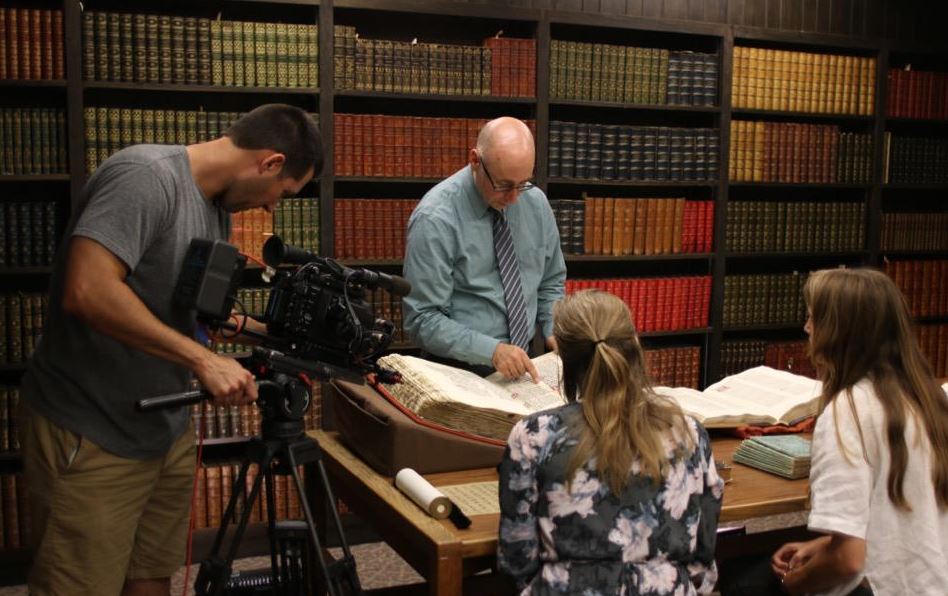
The Big Ten Network stopped by yesterday for a shoot for a commercial for the University of Iowa Center for the Book that will feature Special Collections materials and Greg Prickman, Head of Special Collections. Watch for the commercial this fall during football games on the Big Ten Network!
Recently on the Web and Social Media:
1. Digitization
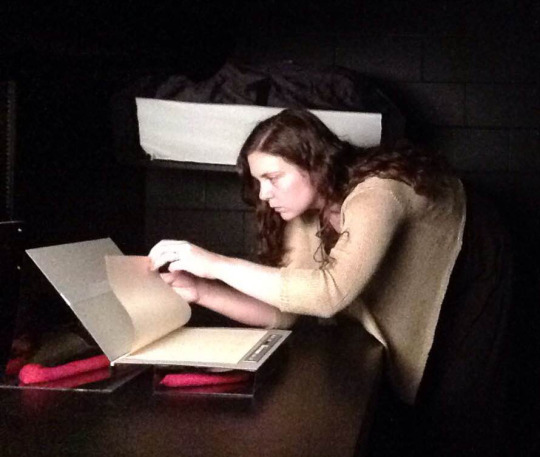
The Hevelin Collection Tumblr featured a post showing librarian Laura Hampton conduct the behind-the-scenes work to digitize the 1930s-1950s science fiction fanzines from the James L. “Rusty” Hevelin Science Fiction Collection.
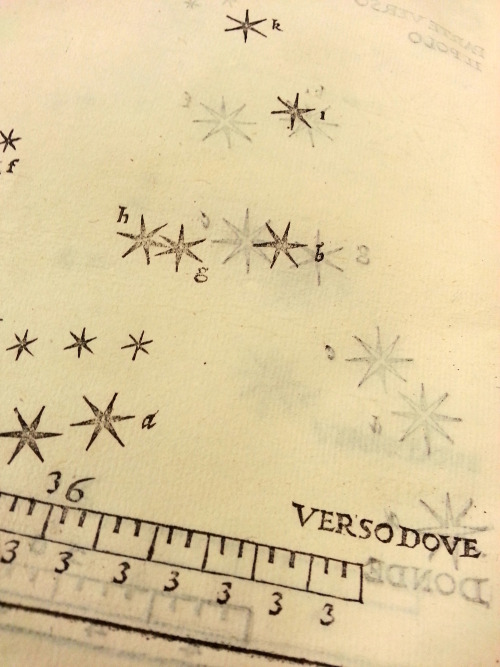
The UI Map Collection Tumblr recently featured our stunning 1548 copy of Alessandro Piccolomini’s astronomical text, which is a continual favorite in classes and in the reading room for its impressive star charts. See the post here.
De la sfera del mondo; libri qvattro in lingva toscana … De le stelle fisse; libro vno con le sve figvre e con le sve tauole … Venetia [N. de Bascarini] 1548.
New Acquisitions:
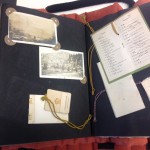
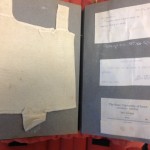
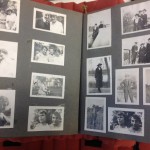
1. University of Iowa Nursing Scrapbook c. 1913-1917
From the opening page with a handwritten poem “What Makes a Good Nurse,” to the day-to-day ephemeral documentation of life at the hospital, such as baby onesies and memos, dance cards and graduation programs, this scrapbook documents life as a nursing student from 1913 to 1917 here at the University of Iowa. It is an incredible addition to the Iowa Women’s Archives.
2. Sculptural Book Arts Piece from Daniel Essig
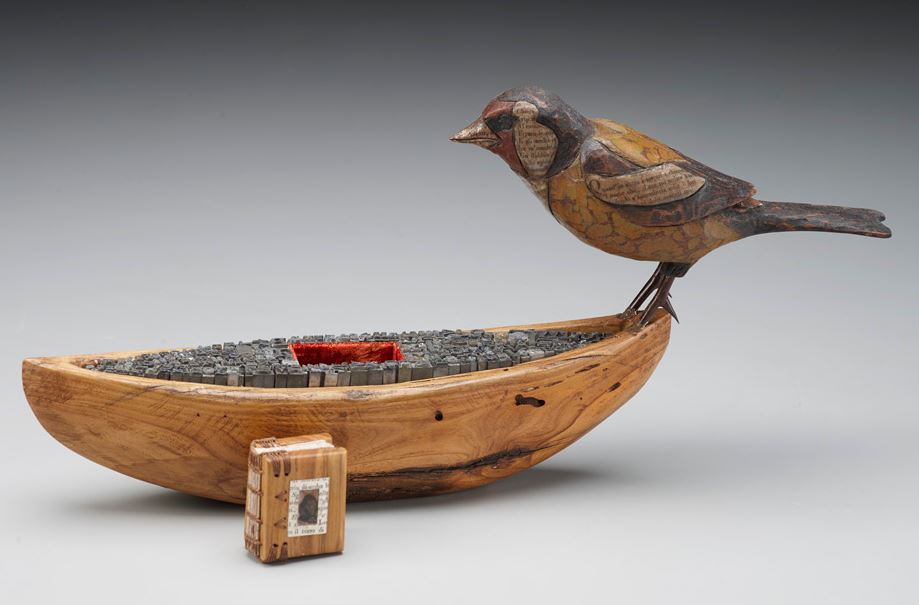
Responding to requests from multiple University of Iowa professors for a teaching example of sculptural books arts as well as for a contemporary example of work from the book artist Daniel Essig, we put the two together and acquired Sentinella by Daniel Essig, a sculpture made of Italian Olive, mahogany, milk paint, printers type, mica, thorns, as well as Ethiopian and Coptic bindings.
You can see a video of its arrival and box opening below.
https://vine.co/v/edHQXmahVVM
Want to stay connected? Follow us on social media:
 Monday September 28, 2015, 5:00 pm at FilmScene in Iowa City – “Iowans Return to Freedom Summer” (Iowa PBS, 2014, 48 mins). In the summer of 1964, hundreds of predominantly white college students answered the call from Civil Rights leaders to volunteer for Freedom Summer. They joined with voter registration efforts, taught in freedom schools and worked in community centers in towns throughout racially segregated Mississippi. This documentary features five native Iowans sharing why they felt compelled to volunteer. Following the screening there will be a discussion with producer Patti Miller and historian Shel Stromquist, both of whom were among the volunteers.
  Staff from Special Collections including the Iowa Women’s Archives participated in an event for National Voter Registration Day in the Learning Commons on Tuesday, providing a display of historic voting and suffrage related materials. In partnership with the League of Women Voters (LWV) of Johnson County, we registered 82 voters here in the Library, and a total of 171 overall at the four host locations (ICPL, Coralville PL, and Kirkwood). #CelebrateNVRD




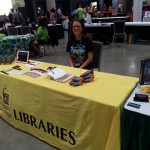 The World Science Fiction Convention is going on this week in Spokane, Washington and Special Collections has a table in the dealer’s room to talk to the fans about our Hevelin Collection fanzine digitization project.