Skip to content
Skip to main content

New Book Display – May 12, 2021

Welcome to the Library’s virtual New Book Shelf. Here we will present new titles for you to browse and check out. Titles listed here will be monographs published in the current year. If you see a title you would like to borrow, please click the link below the item and sign in with your Hawk ID and Password to request a loan.

What is Post-Modern Conservatism

What Is Post-Modern Conservatism: Essays On Our Hugely Tremendous Times by [Matthew McManus]

What is post-modern conservatism? How it has come to dominate the political landscape in many developed countries? Edited by Matt McManus, Professor of Politics and International Relations at the University of Tec de Monterrey, What Is Post-Modern Conservatism touches on how technological, economic, and social transformations of the post-modern epoch have brought about a political landscape where the irrational and traditionalist aspects of conservative thought have mutated into the hugely tremendous forms we see today. With contributory essays from Dylan De Jong, Erik Tate, Borna Radnik, David Hollands and Conrad Hamilton.

https://search.lib.uiowa.edu/permalink/f/7nh330/01IOWA_ALMA21732515280002771

The Death of Public Integrity
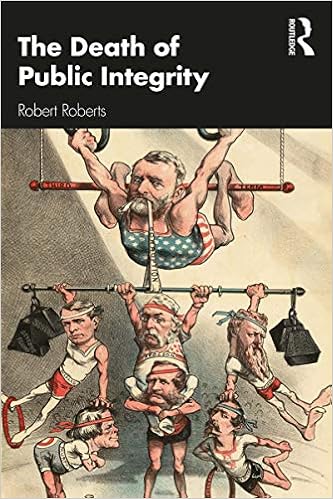
From the late nineteenth century through the 1970s, several government reform movements succeeded in controlling traditional types of public corruption. But has this historic success led to a false sense of security among public management scholars and professionals? As this book argues, powerful special interests increasingly find effective ways to gain preferential treatment without violating traditional types of public corruption prohibitions. Although the post-Watergate good government reform movement sought to close this gap, the 1980s saw a backlash against public integrity regulation, as the electorate in the United States began to split into two sharply different camps driven by very different moral value imperatives.

Taking a historical view from the ratification of the U.S. Constitution through to the Trump administration, The Death of Public Integrity details efforts by reformers to protect public confidence in the integrity of government at the local, state, and federal levels. Arguing that progressives and conservatives increasingly live in different moral worlds, author Robert Roberts demonstrates the ways in which it has become next to impossible to hold public officials accountable without agreement on what constitutes immoral conduct. This book is required reading for students of public administration, public policy, and political science, as well as those interested in public service ethics.

https://search.lib.uiowa.edu/permalink/f/7nh330/01IOWA_ALMA21728783050002771

Exit and Voice: The Paradox of Cross-Border Politics in Mexico

Exit and Voice: The Paradox of Cross-Border Politics in Mexico by [Lauren Duquette-Rury]

Sometimes leaving home allows you to make an impact on it—but at what cost? Exit and Voice is a compelling account of how Mexican migrants with strong ties to their home communities impact the economic and political welfare of the communities they have left behind. In many decentralized democracies like Mexico, migrants have willingly stepped in to supply public goods when local or state government lack the resources or political will to improve the town. Though migrants’ cross-border investments often improve citizens’ access to essential public goods and create a more responsive local government, their work allows them to unintentionally exert political engagement and power, undermining the influence of those still living in their hometowns. In looking at the paradox of migrants who have left their home to make an impact on it, Exit and Voice sheds light on how migrant transnational engagement refashions the meaning of community, democratic governance, and practices of citizenship in the era of globalization.

https://search.lib.uiowa.edu/permalink/f/7nh330/01IOWA_ALMA51725387480002771

Beneath the China Boom: Labor, Citizenship, and the Making of a Rural Land Market

Beneath the China Boom: Labor, Citizenship, and the Making of a Rural Land Market by [Julia Chuang]

For nearly four decades, China’s manufacturing boom has been powered by the labor of 287 million rural migrant workers, who travel seasonally between villages where they farm for subsistence and cities where they work. Yet recently local governments have moved away from manufacturing and toward urban expansion and construction as a development strategy. As a result, at least 88 million rural people to date have lost rights to village land. In Beneath the China Boom, Julia Chuang follows the trajectories of rural workers, who were once supported by a village welfare state and are now landless. This book provides a view of the undertow of China’s economic success, and the periodic crises—a rural fiscal crisis, a runaway urbanization—that it first created and now must resolve.

https://search.lib.uiowa.edu/permalink/f/7nh330/01IOWA_ALMA21730507980002771

The Art of Political Control in China
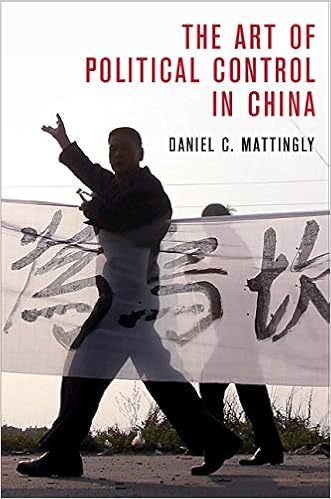
When and why do people obey political authority when it runs against their own interests to do so? This book is about the channels beyond direct repression through which China’s authoritarian state controls protest and implements ambitious policies from sweeping urbanization schemes that have displaced millions to family planning initiatives like the one-child policy. Daniel C. Mattingly argues that China’s remarkable state capacity is not simply a product of coercive institutions such as the secret police or the military. Instead, the state uses local civil society groups as hidden but effective tools of informal control to suppress dissent and implement far-reaching policies. Drawing on evidence from qualitative case studies, experiments, and national surveys, the book challenges the conventional wisdom that a robust civil society strengthens political responsiveness. Surprisingly, it is communities that lack strong civil society groups that find it easiest to act collectively and spontaneously resist the state.

https://search.lib.uiowa.edu/permalink/f/7nh330/01IOWA_ALMA21727811550002771

A Modern History of European Cities: 1815 to the Present

A Modern History of European Cities: 1815 to the Present by [Rosemary Wakeman]

Rosemary Wakeman’s original survey text comprehensively explores modern European urban history from 1815 to the present day. It provides a journey to cities and towns across the continent, in search of the patterns of development that have shaped the urban landscape as indelibly European. The focus is on the built environment, the social and cultural transformations that mark the patterns of continuity and change, and the transition to modern urban society.

Including over 60 images that serve to illuminate the analysis, the book examines whether there is a European city, and if so, what are its characteristics? Wakeman offers an interdisciplinary approach that incorporates concepts from cultural and postcolonial studies, as well as urban geography, and provides full coverage of urban society not only in western Europe, but also in eastern and southern Europe, using various cities and city types to inform the discussion. The book provides detailed coverage of the often-neglected urbanization post-1945 which allows us to more clearly understand the modernizing arc Europe has followed over the last two centuries.

https://search.lib.uiowa.edu/permalink/f/7nh330/01IOWA_ALMA21732614880002771

The Development of Southern Public Libraries and the African American Quest For LIbrary Access

The Development of Southern Public Libraries and the African American Quest for Library Access, 1898–1963 (New Studies in Southern History) by [Dallas Hanbury]

Using the Atlanta, Birmingham, and Nashville Public Libraries as case studies, The Development of Southern Public Libraries and the African American Quest for Library Access, 1898-1963 argues that public libraries played an integral role in Southern cities’ economic and cultural boosterism efforts during the New South and Progressive Eras. First, Southern public libraries helped institutionalize segregation during the early twentieth century by refusing to serve African Americans, or only to a limited degree. Yet, the Progressive Era’s emphasis on self-improvement and moral uplift influenced Southern public libraries to the extent that not all embraced total segregation. It even caused Southern public libraries to remain open to the idea of slowly expanding library service to African Americans. Later, libraries’ social mission and imperfect commitment to segregation made them prime targets for breaking down the barriers of segregation in the post- World War II era. In this study, Dallas Hanbury concludes that dealing with the complicated and unexpected outcomes of having practiced segregation constituted a difficult and lengthy process for Southern public libraries.

https://search.lib.uiowa.edu/permalink/f/7nh330/01IOWA_ALMA21730403030002771

Presidential Power, Rhetoric, and the Terror Wars: The Sovereign Presidency

Presidential Power, Rhetoric, and the Terror Wars: The Sovereign Presidency by [Alexander Hiland]

Presidential Power, Rhetoric, and the Terror Wars: The Sovereign Presidency argues that the War on Terror provided an opportunity to fundamentally change the presidency. Alexander Hiland analyzes the documents used to exercise presidential powers, including executive orders, signing statements, and presidential policy directives. Treating these documents as genres of speech-act that are ideologically motivated, Hiland provides a rhetorical criticism that illuminates the values and political convictions at play in these documents. This book reveals how both President George W. Bush and President Barack Obama wielded the personal power of the office to dramatically expand the power of the executive branch. During the War on Terror, the presidency shifted from an imperial form that avoided checks and balances, to a sovereign presidency where the executive branch had the ability to decide whether those checks and balances existed. As a result, Hiland argues that this shift to the sovereign presidency enabled the violation of human rights, myriad policy mistakes, and the degradation of democracy within the United States.

https://search.lib.uiowa.edu/permalink/f/7nh330/01IOWA_ALMA21728753770002771

Women in Tang China

Women in Tang China (Asian Voices) by [Bret Hinsch]

This important book provides the first comprehensive survey of women in China during the Sui and Tang dynasties from the sixth through tenth centuries CE. Bret Hinsch provides rich insight into female life in the medieval era, ranging from political power, wealth, and work to family, religious roles, and virtues. He explores women’s lived experiences but also delves into the subjective side of their emotional life and the ideals they pursued. Deeply researched, the book draws on a wide range of sources, including standard histories, poetry, prose literature, and epigraphic sources such as epitaphs, commemorative religious inscriptions, and Dunhuang documents. Building on the best Western and Japanese scholarship, Hinsch also draws heavily on Chinese scholarship, most of which is unknown outside China. As the first study in English about women in the medieval era, this groundbreaking work will open a new window into Chinese history for Western readers.

https://search.lib.uiowa.edu/permalink/f/7nh330/01IOWA_ALMA21727811760002771

Intelligence in the National Security Enterprise

Intelligence in the National Security Enterprise: An Introduction by [Roger Z. George]

This textbook introduces students to the critical role of the US intelligence community within the wider national security decision-making and political process. Intelligence in the National Security Enterprise defines what intelligence is and what intelligence agencies do, but the emphasis is on showing how intelligence serves the policymaker. Roger Z. George draws on his thirty-year CIA career and more than a decade of teaching at both the undergraduate and graduate level to reveal the real world of intelligence. Intelligence support is examined from a variety of perspectives to include providing strategic intelligence, warning, daily tactical support to policy actions as well as covert action. The book includes useful features for students and instructors such as excerpts and links to primary-source documents, suggestions for further reading, and a glossary.

https://search.lib.uiowa.edu/permalink/f/7nh330/01IOWA_ALMA21732515520002771

New Book Display April 7, 2021

Welcome to the Library’s virtual New Book Shelf. Here we will present new titles for you to browse and check out. Titles listed here will be monographs published in the current year. If you see a title you would like to borrow, please click the link below the item and sign in with your Hawk ID and Password to request a loan.

Religion As We Know It

How did our forebears begin to think about religion as a distinct domain, separate from other activities that were once inseparable from it? Starting at the birth of Christianity―a religion inextricably bound to Western thought―Jack Miles reveals how the West’s “common sense” understanding of religion emerged and then changed as insular Europe discovered the rest of the world. In a moving postscript, he shows how this very story continues today in the hearts of individual religious or irreligious men and women.

https://search.lib.uiowa.edu/permalink/f/7nh330/01IOWA_ALMA21732840530002771

The Old Testament – A Concise Introduction

This concise volume introduces readers to the three main sections of the Hebrew Bible (Tanakh) and to the biblical books found in each. It is organized around two primary “stories”: the story that scholars tell about the Old Testament and the story the literature itself tells. Concluding with a reconsideration of the Old Testament as more like poetry than a story, three main chapters cover:

  • The Pentateuch (Torah)
  • The Prophets (Neviʾim)
  • The Writings (Ketuvim)

With key summaries of what the parts of the Old Testament “are all about,” and including suggestions for further reading, this volume is an ideal introduction for students of and newcomers to the Old Testament.

https://search.lib.uiowa.edu/permalink/f/7nh330/01IOWA_ALMA21732814610002771

Allah – God in the Qur’an

The central figure of the Qur’an is not Muhammad but Allah. The Qur’an, Islam’s sacred scripture, is marked above all by its call to worship Allah, and Allah alone. Yet who is the God of the Qur’an? What distinguishes the qur’anic presentation of God from that of the Bible?

In this illuminating study, Gabriel Said Reynolds depicts a god of both mercy and vengeance, one who transcends simple classification. He is personal and mysterious; no limits can be placed on his mercy. Remarkably, the Qur’an is open to God’s salvation of both sinners and unbelievers. At the same time, Allah can lead humans astray, so all are called to a disposition of piety and fear. Allah, in other words, is a dynamic and personal God. This eye-opening book provides a unique portrait of the God of the Qur’an.

https://search.lib.uiowa.edu/permalink/f/7nh330/01IOWA_ALMA21732834470002771

Monumental Jesus  : landscapes of faith and doubt in modern America

Monumental Jesus: Landscapes of Faith and Doubt in Modern America (Midcentury) by [Margaret M. Grubiak]

Opening up new avenues of thinking about how people deal with theological questions in the vernacular, Grubiak’s book shows how religious doubt is made manifest in the humorous, satirical, blasphemous, and popular culture responses to religious architecture and image in modern America.

Midcentury: Architecture, Landscape, Urbanism, and Design

https://search.lib.uiowa.edu/permalink/f/7nh330/01IOWA_ALMA21732816230002771

Inside the Church of Almighty God : the most persecuted religious movement in Chin

Inside The Church of Almighty God: The Most Persecuted Religious Movement in China by [Massimo Introvigne]

Branded as “the new Falun Gong” by local authorities, The Church of Almighty God is the most persecuted religious movement in China today. Thousands of police officers are deployed full time to identify and arrest its members. Hundreds of thousands of its devotees are in jail. Authorities claim, perhaps hyperbolically, that it has some four million members and accuse the group of serious crimes. Yet, the movement continues to grow.

In this ground-breaking study, Massimo Introvigne offers an inside look at this once-elusive movement, sharing interviews with hundreds of members and the Chinese police officers who hunt them down. The story of The Church of Almighty God is one of rapid growth, dramatic persecution, and the struggle of believers to seek asylum in countries around the world. In his telling of the story, Introvigne reconstructs the Church’s idiosyncratic theology, centered in the belief that Jesus Christ has returned in our time in the shape of a Chinese woman, worshipped as Almighty God, to eradicate the sinful nature of humans, and that we have entered the third and final time period in the history of humanity: the Age of Kingdom. A major book from one of the world’s leading scholars of new religious movements, Inside The Church of Almighty God is a critical addition to the scholarship of Chinese religion.

https://search.lib.uiowa.edu/permalink/f/7nh330/01IOWA_ALMA21768532300002771

The Art of Chinese Philosophy

The Art of Chinese Philosophy: Eight Classical Texts and How to Read Them by [Paul Goldin]

This book provides an unmatched introduction to eight of the most important works of classical Chinese philosophy—the Analects of Confucius, Mozi, MenciusLaoziZhuangziSunziXunzi, and Han Feizi. Combining accessibility with the latest scholarship, Paul Goldin, one of the world’s leading authorities on the history of Chinese philosophy, places these works in rich context as he explains the origin and meaning of their compelling ideas.

Because none of these classics was written in its current form by the author to whom it is attributed, the book begins by asking, “What are we reading?” and showing that understanding the textual history of the works enriches our appreciation of them. A chapter is devoted to each of the eight works, and the chapters are organized into three sections: “Philosophy of Heaven,” which looks at how the AnalectsMozi, and Mencius discuss, often skeptically, Heaven (tian) as a source of philosophical values; “Philosophy of the Way,” which addresses how LaoziZhuangzi, and Sunzi introduce the new concept of the Way (dao) to transcend the older paradigms; and “Two Titans at the End of an Age,” which examines how Xunzi and Han Feizi adapt the best ideas of the earlier thinkers for a coming imperial age.

In addition, the book presents clear and insightful explanations of the protean and frequently misunderstood concept of qi—and of a crucial characteristic of Chinese philosophy, nondeductive reasoning. The result is an invaluable account of an endlessly fascinating and influential philosophical tradition.

https://search.lib.uiowa.edu/permalink/f/7nh330/01IOWA_ALMA21768532420002771

Virtue and Meaning : a Neo-Aristotelian perspective

The revival of Aristotelian virtue ethics can be seen as a response to the modern problem of disenchantment, that is, the perceived loss of meaning in modernity. However, in Virtue and Meaning, David McPherson contends that the dominant approach still embraces an overly disenchanted view. In a wide-ranging discussion, McPherson argues for a more fully re-enchanted perspective that gives better recognition to the meanings by which we live and after which we seek, and to the fact that human beings are the meaning-seeking animal. In doing so, he defends distinctive accounts of the relationship between virtue and happiness, other-regarding demands, and the significance of linking neo-Aristotelian virtue ethics with a view of the meaning of life and a spiritual life where contemplation has a central role. This book will be valuable for philosophers and other readers who are interested in virtue ethics and the perennial question of the meaning of life.

https://search.lib.uiowa.edu/permalink/f/7nh330/01IOWA_ALMA21733124390002771

From the Earliest Gospel (Q+) to the Gospel of Mark

From the Earliest Gospel (Q+) to the Gospel of Mark: Solving the Synoptic Problem with Mimesis Criticism by [Dennis R. MacDonald, James R. Van Dore]

From the Earliest Gospel (Q+) to the Gospel of Mark focuses on the remarkable overlaps between Jesus’s teachings in the lost Gospel Q and Mark.

Dennis R. MacDonald argues Synoptic intertextuality is best explained not as the redaction of sources but more flexibly as the imitation of literary models. Part One applies the criteria of mimesis criticism in a running commentary on Q+ to demonstrate that it polemically imitated Deuteronomy. Part Two argues that Mark in turn tendentiously imitated Logoi. The Conclusion proposes that Matthew and Luke in turn brilliantly and freely imitated both Logoi and Mark and by doing so created scores of duplicate sayings and episodes (doublets).

https://search.lib.uiowa.edu/permalink/f/7nh330/01IOWA_ALMA21732840010002771

Reading Islam : life and politics of brotherhood in modern Turkey

In Reading Islam Fabio Vicini offers a journey within the intimate relations, reading practices, and forms of intellectual engagement that regulate Muslim life in two enclosed religious communities in Istanbul. Combining anthropological observation with textual and genealogical analysis, he illustrates how the modes of thought and social engagement promoted by these two communities are the outcome of complex intellectual entanglements with modern discourses about science, education, the self, and Muslims’ place and responsibility in society. In this way, Reading Islam sheds light on the formation of new generations of faithful and socially active Muslims over the last thirty years and on their impact on the turn of Turkey from an assertive secularist Republic to an Islamic-oriented form of governance.

https://search.lib.uiowa.edu/permalink/f/7nh330/01IOWA_ALMA21732804170002771

Gospel Women and the Long Ending of Mark

Gospel Women and the Long Ending of Mark (The Library of New Testament Studies Book 614) by [Kara Lyons-Pardue]

Kara Lyons-Pardue examines the issue of the ending of the gospel of Mark, showing how the later additions to the text function as early receptions of the original gospel tradition providing an ancient “fix” to the problem of the ending in which the women flee the tomb in terror and silence. Lyons-Pardue suggests that the long ending functions canonically, smoothing out the “problem” of 16:8 in ways that support the nascent four-gospel canon.

Lyons-Pardue argues that the long ending represents an ancient reception of the preceding gospel that continues to the unique portrait of discipleship that is characteristically Markan. Mary Magdalene forms the renewed paradigm of an unlikely person or outsider, here a woman, being the one to “go and tell” the good news. This pattern is then projected onto all disciples who are called to proclaim the news to the entire created order (16:15).

https://search.lib.uiowa.edu/permalink/f/7nh330/01IOWA_ALMA21732838050002771

New Book Display April 4, 2021

Welcome to the Library’s virtual New Book Shelf. Here we will present new titles for you to browse and check out. Titles listed here will be monographs published in the current year. If you see a title you would like to borrow, please click the link below the item and sign in with your Hawk ID and Password to request a loan.

Roman Catholocism in America

Who are American Catholics and what do they believe and practice? How has American Catholicism influenced and been influenced by American culture and society? This book examines the history of American Catholics from the colonial era to the present, with an emphasis on changes and challenges in the contemporary church.

Chester Gillis chronicles America Catholics: where they have come from, how they have integrated into American society, and how the church has influenced their lives. He highlights key events and people, examines data on Catholics and their relationship to the church, and considers the church’s positions and actions on politics, education, and gender and sexuality in the context of its history and doctrines.

This second edition of Roman Catholicism in America pays particular attention to the tumultuous past twenty years and points toward the future of the religion in the United States. It examines the unprecedented crisis of sexual abuse by priests―the legal, moral, financial, and institutional repercussions of which continue to this day―and the bishops’ role in it. Gillis also discusses the election of Pope Francis and the controversial role Catholic leadership has played in American politics.

https://search.lib.uiowa.edu/permalink/f/7nh330/01IOWA_ALMA21488565980002771

On Insignificance: The Loss of Meaning in the Post-Material Age

Focusing on the anthropological consequences of the disappearing of materiality and sensory embodiment, On Insignificance highlights some of the most perturbing patterns of insignificance that have seeped into our everyday lives. Seeking to explain the semiotic causes of feelings of meaninglessness, Leone posits that caring for the singularities of the world is the most viable way to resist the alienating effects of the digital bureaucratization of meaning. The book will be of interest to scholars of anthropology, cultural studies, semiotics, aesthetics, communication studies, and social theory.

https://search.lib.uiowa.edu/permalink/f/7nh330/01IOWA_ALMA21733124300002771

Soul Liberty: The Evolution of Black Religious Politics in Postemancipation Virginia

Soul Liberty: The Evolution of Black Religious Politics in Postemancipation Virginia by [Nicole Myers Turner]

That churches are one of the most important cornerstones of black political organization is a commonplace. In this history of African American Protestantism and American politics at the end of the Civil War, Nicole Myers Turner challenges the idea of black churches as having always been politically engaged. Using local archives, church and convention minutes, and innovative Geographic Information Systems (GIS) mapping, Turner reveals how freedpeople in Virginia adapted strategies for pursuing the freedom of their souls to worship as they saw fit—and to participate in society completely in the evolving landscape of emancipation.

Freedpeople, for both evangelical and electoral reasons, were well aware of the significance of the physical territory they occupied, and they sought to organize the geographies that they could in favor of their religious and political agendas at the outset of Reconstruction. As emancipation included opportunities to purchase properties, establish black families, and reconfigure gender roles, the ministry became predominantly male, a development that affected not only discourses around family life but also the political project of crafting, defining, and teaching freedom. After freedmen obtained the right to vote, an array of black-controlled institutions increasingly became centers for political organizing on the basis of networks that mirrored those established earlier by church associations.

https://search.lib.uiowa.edu/permalink/f/7nh330/01IOWA_ALMA51779910800002771

A Radical Pluralist Philosophy of Religion

A Radical Pluralist Philosophy of Religion: Cross-Cultural, Multireligious, Interdisciplinary by [Mikel Burley]

This book is a unique introduction to studying the philosophy of religion, drawing on a wide range of cultures and literary sources in an approach that is both methodologically innovative and expansive in its cross-cultural and multi-religious scope.

Employing his expertise in interdisciplinary and Wittgenstein-influenced methods, Mikel Burley draws on works of ethnography and narrative fiction, including Dostoevsky’s The Brothers Karamazov and Soyinka’s Death and the King’s Horseman, to critically engage with existing approaches to the philosophy of religion and advocate a radical, pluralist approach. Breaking away from the standard fixation on a narrow construal of theism, topics discussed include conceptions of compassion in Buddhist ethics, cannibalism in mortuary rituals, divine possession and animal sacrifice in Hindu Goddess worship and animism in indigenous traditions.

Original and engaging, Burley’s synthesis of philosophical, anthropological and literary elements expands and diversifies the philosophy of religion, providing an essential introduction for anyone interested in studying the radical plurality of forms that religion takes in human life.

https://search.lib.uiowa.edu/permalink/f/7nh330/01IOWA_ALMA21732804220002771

Ethics, Left and Right: The Moral Issues That Divide Us

The only contemporary moral problems text to focus directly on the ethics of current, divisive political issues, Ethics, Left and Right features newly commissioned essays on twenty contentious debates, written expressly with undergraduate students in mind. It offers two position pieces on each
issue–one left-leaning, one right–followed by a reply from each author, giving you and your students the opportunity to engage in in-depth discussions of serious issues. The essays cover compelling topics including whether we should have an “America First” approach to policy, whether it’s okay to
have religious tests for immigration, the merits of political correctness, the ethics of voting, whether progressive taxation is legitimate, and what to make of accusations of privilege. Case studies at the end of every main contribution encourage students to examine related problems and/or delve
deeper into the current issue.

https://search.lib.uiowa.edu/permalink/f/7nh330/01IOWA_ALMA21733152550002771

Negotiating Science and Religion in America

Science and religion represent two powerful forces that continue to influence the American cultural landscape. Negotiating Science and Religion in America sketches an intellectual-cultural history from the Puritans to the twenty-first century, focusing on the sometimes turbulent relationship between the two. Using the past as a guide for what is happening today, this volume engages research from key scholars and the author’s work on emerging adults’ attitudes in order to map out the contours of the future for this exciting, and sometimes controversial, field. The book discusses the relationship between religion and science in the following important historical periods:

  • from 1687 to the American Revolution
  • the revolutionary period to 1859
  • after Darwin’s 1859 On the Origin of Species
  • 1870–1925: the rise of religious modernism and pluralism to the Scopes Trial
  • from Scopes to 1966
  • the present: 1966 to 2000
  • the third millennium: the voices of Stephen Jay Gould, Richard Dawkins, and Francis Collins
  •  the future and its contours.

https://search.lib.uiowa.edu/permalink/f/7nh330/01IOWA_ALMA21732815100002771

Rabbinic Drinking: What Beverages Teach Us About Rabbinic Literature

Though ancient rabbinic texts are fundamental to analyzing the history of Judaism, they are also daunting for the novice to read. Rabbinic literature presumes tremendous prior knowledge, and its fascinating twists and turns in logic can be disorienting. Rabbinic Drinking helps learners at every level navigate this brilliant but mystifying terrain by focusing on rabbinic conversations about beverages, such as beer and wine, water, and even breast milk. By studying the contents of a drinking vessel—including the contexts and practices in which they are imbibed—Rabbinic Drinking surveys key themes in rabbinic literature to introduce readers to the main contours of this extensive body of historical documents.

Features and Benefits:

  • Contains a broad array of rabbinic passages, accompanied by didactic and rich explanations and contextual discussions, both literary and historical
  • Thematic chapters are organized into sections that include significant and original translations of rabbinic texts
  • Each chapter includes in-text references and concludes with a list of both referenced works and suggested additional readings

https://search.lib.uiowa.edu/permalink/f/7nh330/01IOWA_ALMA21732804320002771


Psyche and the Sacred: Spirituality Beyond Religion

This book presents an approach to spirituality based on direct personal experience of the sacred. Using the language and insights of depth psychology, Corbett outlines the intimate relationship between spiritual experience and the psychology of the individual, unveiling the seamless continuity between the personal and transpersonal dimensions of the psyche. His discussion runs the gamut of spiritual concerns, from the problem of evil to the riddle of pain and suffering. Drawing upon his psychotherapeutic practice as well as on the experiences of characters from our religious heritage, Corbett explores the various portals through which the sacred presents itself to us: dreams, visions, nature, the body, relationships, psychopathology, and creative work. Referring extensively to Jung’s writings on religion, but also to contemporary psychoanalytic theory, Corbett gives form to the new spirituality that is emerging alongside the world’s great religious traditions. For those seeking alternative forms of spirituality beyond the Judeo-Christian tradition, this volume will be a useful guide on the journey.

https://search.lib.uiowa.edu/permalink/f/7nh330/01IOWA_ALMA21733146600002771

Thinking Nature and the Nature of Thinking

A fresh and more capacious reading of the Western religious tradition on nature and creation, Thinking Nature and the Nature of Thinking puts medieval Irish theologian John Scottus Eriugena (810–877) into conversation with American philosopher Ralph Waldo Emerson (1803–1882). Challenging the biblical stewardship model of nature and histories of nature and religion that pit orthodoxy against the heresy of pantheism, Willemien Otten reveals a line of thought that has long made room for nature’s agency as the coworker of God. Embracing in this more elusive idea of nature in a world beset by environmental crisis, she suggests, will allow us to see nature not as a victim but as an ally in a common quest for re-attunement to the divine. Putting its protagonists into further dialogue with such classic authors as Augustine, Maximus the Confessor, Friedrich Schleiermacher, and William James, her study deconstructs the idea of pantheism and paves the way for a new natural theology.

https://search.lib.uiowa.edu/permalink/f/7nh330/01IOWA_ALMA21733142050002771

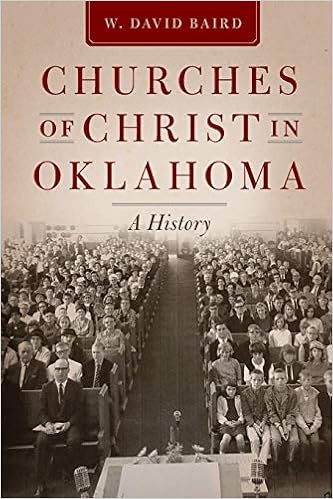
Churches of Christ in Oklahoma: A History

In the 1950s and 1960s, Churches of Christ were the fastest growing religious organization in the United States. The churches flourished especially in southern and western states, including Oklahoma. In this compelling history, historian W. David Baird examines the key characteristics, individuals, and debates that have shaped the Churches of Christ in Oklahoma from the early nineteenth century to the beginning of the twenty-first century.

Baird’s narrative begins with an account of the Stone-Campbell movement, which emerged along the American frontier in the early 1800s. Representatives of this movement in Oklahoma first came as missionaries to American Indians, mainly to the Cherokees, Chickasaws, and Choctaws. Baird highlights the role of two prominent missionaries during this period, and he next describes a second generation of missionaries who came along during the era of the Twin Territories, prior to statehood.

In 1906, as a result of disagreements regarding faith and practice, followers of the Stone-Campbell Movement divided into two organizations: Churches of Christ and Disciples of Christ. Baird then focuses solely on Churches of Christ in Oklahoma, all the while keeping a broader national context in view. Drawing on extensive research, Baird delves into theological and political debates and explores the role of the Churches of Christ during the two world wars.

As Churches of Christ grew in number and size throughout the country during the mid-twentieth century, controversy loomed. Oklahoma’s Churches of Christ argued over everything from Sunday schools and the support of orphan’s homes to worship elements, gender roles in the church, and biblical interpretation. And nobody could agree on why church membership began to decline in the 1970s, despite exciting new community outreach efforts.

This history by an accomplished scholar provides solid background and new insight into the question of whether Churches of Christ locally and nationally will be able to reverse course and rebuild their membership in the twenty-first century.

https://search.lib.uiowa.edu/permalink/f/7nh330/01IOWA_ALMA21732817690002771

New Book Display 4/27/21

Welcome to the Library’s virtual New Book Shelf. Here we will present new titles for you to browse and check out. Titles listed here will be monographs published in the current year. If you see a title you would like to borrow, please click the link below the item and sign in with your Hawk ID and Password to request a loan.

Nietzsche’s Ethics

This Element explains Nietzsche’s ethics in his late works, from 1886 onwards. The first three sections explain the basics of his ethical theory – its context and presuppositions, its scope and its central tension. The next three sections explore Nietzsche’s goals in writing a history of Christian morality (On the Genealogy of Morality), the content of that history, and whether he achieves his goals. The last two sections take a broader look, respectively, at Nietzsche’s wider philosophy in light of his ethics and at the prospects for a Nietzschean ethics after Nietzsche.

https://search.lib.uiowa.edu/permalink/f/7nh330/01IOWA_ALMA21733126130002771

Utilitarianism

Moral theories can be distinguished, not only by the answers they give, but also by the questions they ask. Utilitarianism’s central commitment is to the promotion of well-being, impartially considered. This commitment shapes utilitarianism in a number of ways. If scarce resources should be directed where they will best promote well-being, and if theoretical attention is a scarce resource, then moral theorists should focus on topics that are most important to the future promotion of well-being. A theme of this Element is that, as times change, the priorities (both practical and theoretical) of utilitarianism also change. Questions that were once theoretical curiosities move centre stage. And themes from earlier utilitarians that have become unfashionable may come to the fore again. Utilitarianism is a living tradition, not an abstract set of timeless principles or a purely historical artefact.

https://search.lib.uiowa.edu/permalink/f/7nh330/01IOWA_ALMA21733141600002771

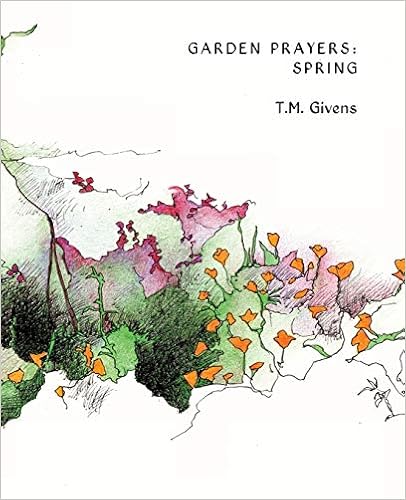
Garden Prayers: Spring

Literary Nonfiction. Art. California Interest. GARDEN PRAYERS: SPRING is the second collection of drawings made at the Rancho Santa Ana Botanic Garden in Claremont and in Cambria, California. These are “still part of the meditation I experience while looking at or experiencing or talking to or wondering about or thinking of these living places,” says artist T.M. Givens.

https://search.lib.uiowa.edu/permalink/f/7nh330/01IOWA_ALMA21725998340002771

The Ahuman Manifesto

We are in the midst of a growing ecological crisis. Developing technologies and cultural interventions are throwing the status of “human” into question.

It is against this context that Patricia McCormack delivers her expert justification for the “ahuman”. An alternative to “posthuman” thought, the term paves the way for thinking that doesn’t dissolve into nihilism and despair, but actively embraces issues like human extinction, vegan abolition, atheist occultism, death studies, a refusal of identity politics, deep ecology, and the apocalypse as an optimistic beginning.

In order to suggest vitalistic, perhaps even optimistic, ways to negotiate some of the difficulties in thinking and acting in the world, this book explores five key contemporary themes:
· Identity
· Spirituality
· Art
· Death
· The apocalypse

Collapsing activism, artistic practice and affirmative ethics, while introducing some radical contemporary ideas and addressing specifically modern phenomena like death cults, intersectional identity politics and capitalist enslavement of human and nonhuman organisms to the point of ‘zombiedom’, The Ahuman Manifesto navigates the ways in which we must compose the human differently, specifically beyond nihilism and post- and trans-humanism and outside human privilege. This is so that we can actively think and live viscerally, with connectivity (actual not virtual), and with passion and grace, toward a new world.

https://search.lib.uiowa.edu/permalink/f/7nh330/01IOWA_ALMA21733146180002771

Hegel, Marx, Nietzsche

With the translation of Lefebvre’s philosophical writings, his stature in the English-speaking world continues to grow. Though certainly within the Marxist tradition, he consistently saw Marx as an ‘unavoidable, necessary, but insufficient starting point’. Unsurprisingly, Lefebvre always insisted on the importance of Hegel to understanding Marx. But the imposing Metaphilosophy also suggested the significance he ascribed to Nietzsche, in the ‘realm of shadows’ through which philosophy seeks to think the world. Lefebvre proposes here that the modern world is at the same time Hegelian in terms of the state; Marxist in terms of the social and society; and Nietzschean in terms of civilization and its values. As early as 1939, Lefebvre pioneered a French reading of Nietzsche that rejected the philosopher’s appropriation by fascism, bringing out the tragic implications of Nietzsche’s proclamation that ‘God is dead’ long before this approach was followed by such later writers as Foucault, Derrida and Deleuze. Forty years later, in the last of his philosophical writings, Lefebvre juxtaposes the contributions of the three great thinkers, in a text whose themes remain surprisingly relevant today.

https://search.lib.uiowa.edu/permalink/f/7nh330/01IOWA_ALMA21733117290002771

The Self, Relational Sociology, and Morality in Practice

Providing a theory of moral practice for a contemporary sociological audience, Owen Abbott shows that morality is a relational practice achieved by people in their everyday lives. He moves beyond old dualisms―society versus the individual, social structure versus agency, body versus mind―to offer a sociologically rigorous and coherent theory of the relational constitution of the self and moral practice, which is both shared and yet enacted from an individualized perspective. In so doing, The Self, Relational Sociology, and Morality in Practice not only offers an urgently needed account of moral practice and its integral role in the emergence of the self, but also examines morality itself within and through social relations and practices. Abbott’s conclusions will be of interest to social scientists and philosophers of morality, those working with pragmatic and interactionist approaches, and those involved with relational sociology and social theory.

https://search.lib.uiowa.edu/permalink/f/7nh330/01IOWA_ALMA21733147650002771

The Science of Generosity

This book advances understanding of the manifestations, causes, and consequences of generosity. Synthesizing the findings of the 14 research projects conducted by the Science of Generosity Initiative and offering an appendix of methods for studying generosity, this comprehensive account integrates insights from disparate disciplines to facilitate a broader understanding of giving―ultimately creating a compendium of not only the latest research in the field of altruistic behaviors, but also a research roadmap for the future. As the author sequentially explores the manifestations, causes, and consequences of generosity, Patricia Snell Herzog here also offers analyses ranging from the micro- to macro-level to paint a full picture of the individual, interpersonal and familial, and collective (inter)actions involved in altruism and generosity. The author concludes with a call to stimulate further interdisciplinary generosity studies, describing the implications for emerging scholars and practitioners across sociology, economics, political science, religious studies, and beyond.

https://search.lib.uiowa.edu/permalink/f/7nh330/01IOWA_ALMA21733146750002771

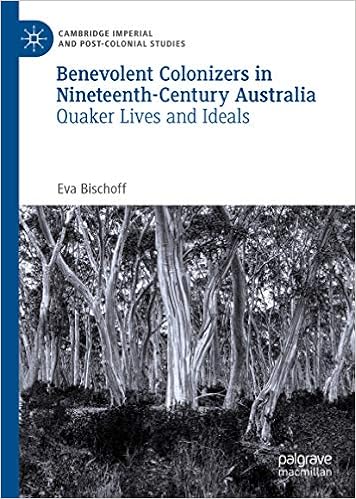
Benevolent Colonizers in Nineteenth-Century Australia

This book reconstructs the history of a group of British Quaker families and their involvement in the process of settler colonialism in early nineteenth-century Australia. Their everyday actions contributed to the multiplicity of practices that displaced and annihilated Aboriginal communities. Simultaneously, early nineteenth-century Friends were members of a translocal, transatlantic community characterized by pacifism and an involvement in transnational humanitarian efforts, such as the abolitionist and the prison reform movements as well as the Aborigines Protection Society. Considering these ideals, how did Quakers negotiate the violence of the frontier? To answer this question, the book looks at Tasmanian and South Australian Quakers’ lives and experiences, their journeys and their writings. Building on recent scholarship on the entanglement between the local and the global, each chapter adopts a different historical perspective in terms of breadth and focused time period. The study combines these different takes to capture the complexities of this topic and era.

https://search.lib.uiowa.edu/permalink/f/7nh330/01IOWA_ALMA21732838160002771

The Joy of Religion

The Joy of Religion: Exploring the Nature of Pleasure in Spiritual Life by [Ariel Glucklich]

All religions describe spiritual experience as pleasant, and the goal of the religious pursuit as profoundly joyful. But many religions also condemn sensory pleasures and the desire for objects of pleasure. In this book, Ariel Glucklich resolves this apparent contradiction by showing how religious practices that instill self-control and discipline transform one type of pleasure into the pleasures of mastery and play. Using historical data and psychological analysis, he details how the rituals, mystical practices, moral teachings, and sacred texts of the world’s religions act as psychological instruments that induce well-being. Glucklich also shows that in promoting joy and pleasure, religion also strengthens social bonds and enhances an individual’s pursuit of meaning.

https://search.lib.uiowa.edu/permalink/f/7nh330/01IOWA_ALMA21732815630002771

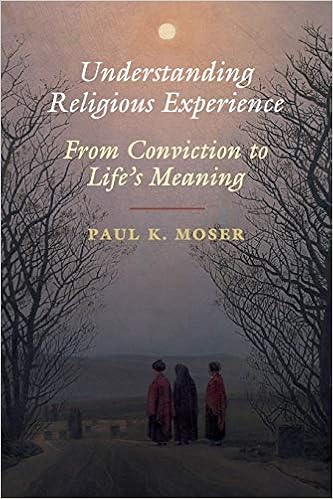
Understanding Religious Experiences

In this book, Paul K. Moser offers a new approach to religious experience and the kind of evidence it provides. Here, he explains the nature of theistic and non-theistic experience in relation to the meaning of human life and its underlying evidence, with special attention given to the perspectives of Tolstoy, Buddha, Confucius, Krishna, Moses, the apostle Paul, and Muhammad. Among the many topics explored in this timely volume are: religious experience characterized in a unifying conception; religious experience naturalized relative to science; religious experience psychologized in merely psychological phenomena; and religious experience cognized relative to potential defeaters from evil, divine hiddenness, and religious diversity. Understanding Religious Experience will benefit those interested in the nature of religion and can be used in relevant courses in religious studies, philosophy, theology, Biblical studies, and the history of religion.

https://search.lib.uiowa.edu/permalink/f/7nh330/01IOWA_ALMA21732830710002771

New Book Display April 21, 2021

Welcome to the Library’s virtual New Book Shelf. Here we will present new titles for you to browse and check out. Titles listed here will be monographs published in the current year. If you see a title you would like to borrow, please click the link below the item and sign in with your Hawk ID and Password to request a loan.

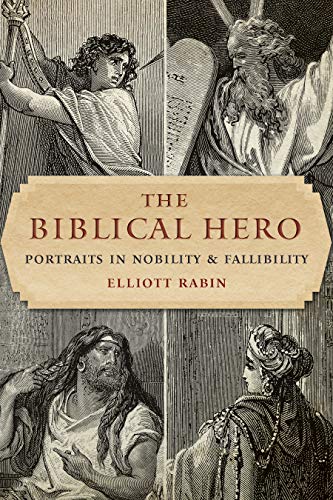
The Biblical Hero

Approaching the Bible in an original way—comparing biblical heroes to heroes in world literature—Elliott Rabin addresses a core biblical question: What is the Bible telling us about what it means to be a hero? 
              
Focusing on the lives of six major biblical characters—Moses, Samson, David, Esther, Abraham, and Jacob—Rabin examines their resemblance to hero types found in (and perhaps drawn from) other literatures and analyzes why the Bible depicts its heroes less gloriously than do the texts of other cultures:
 
* Moses founds the nation of Israel—and is short-tempered and weak-armed.
* Samson, arrogant and unhinged, can kill a thousand enemies with his bare hands.
* David establishes a centralized, unified, triumphal government—through pretense and self-deception.
* Esther saves her people but marries a murderous, misogynist king.
* Abraham’s relationships are wracked with tension.
* Jacob fathers twelve tribes—and wins his inheritance through deceit.
 
In the end, is God the real hero? Or is God too removed from human constraints to even be called a “hero”?
              
Ultimately, Rabin excavates how the Bible’s unique perspective on heroism can address our own deep-seated need for human-scale heroes.

https://search.lib.uiowa.edu/permalink/f/7nh330/01IOWA_ALMA21732837680002771

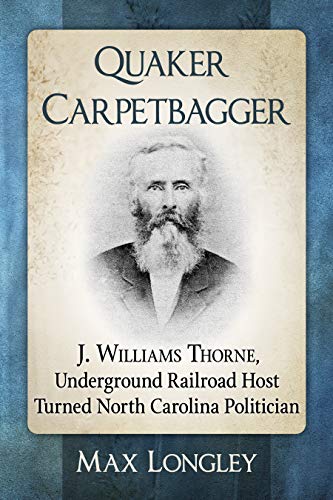
Quaker Carpetbagger: J. Williams Thorne, Underground Railroad Host Turned North Carolina Politician

J. Williams Thorne (1816-1897) was an outspoken farmer who spent the first half-century of his remarkable life in Chester County, Pennsylvania, where he took part in political debates, helped fugitive slaves in the Underground Railroad and was active in the Progressive Friends Meeting, a national group of activist Quakers and allied reformers who met annually in Chester County. Williams and his associates discussed vital matters of the day, from slavery to prohibition to women’s rights. These issues sometimes came to Thorne’s doorstep–he met with nationally prominent reformers, and thwarted kidnappers seeking to enslave one of his free black tenants. 
After the Civil War, Williams became a “carpetbagger,” moving to North Carolina to pursue farming and politics. An “infidel” Quaker (anti-Christian), he was opposed by Democrats who sought to keep him out of the legislature on account of his religious beliefs. Today a little-known figure in history, Williams made his mark through his outspokenness and persistent battling for what he believed.

https://search.lib.uiowa.edu/permalink/f/7nh330/01IOWA_ALMA21732842510002771

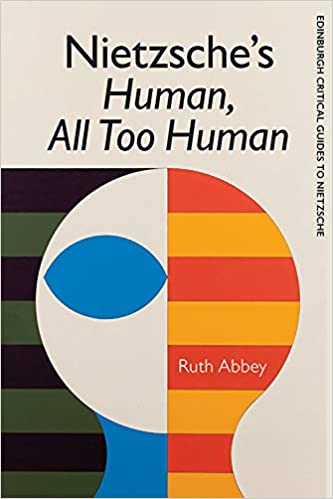
Nietzche’s Human, All Too Human : a critical introduction and guide

Human, All Too Human marks the beginning of what is often called Nietzsche’s middle or positivist period (which ends with the conclusion of Book IV of The Gay Science). It initiates some important features that become permanent in his work, such as his experiments in multiple writing styles within one work, his self-representation as a psychologist, his genealogical excavations of morality and his appeal to fellow Europeans to overcome the parochialism and antagonism of nationalism. Ruth Abbey shows Nietzsche to be more receptive to the Enlightenment tradition than he is typically taken to be. She assumes no knowledge of the text or of Nietzsche. She maps her chapters onto those of Nietzsche’s text, allowing you to read the guide alongside the book. Altogether, she opens up Human, All Too Human for new readers, while more experienced Nietzsche scholars will appreciate the new perspective.

https://search.lib.uiowa.edu/permalink/f/7nh330/01IOWA_ALMA21733125990002771

The Realm of Facts : aspects of philosophical realism

Knowledge of facts is essential for the management of life. Most studies of the subject examine how we go about trying to obtain it; they describe the processes and proceedings of rational inquiry. The present work steps back from this to inquire into the limits and limitations of such processes and to identify the assets and the limitabilities of what they are able to supply for us. It examines how knowledge of facts is secured and consolidated as such, and what the resulting information can and cannot provide. It argues that the unavoidable incompleteness of our factual information also endows it with an element of incorrectness. By looking also at the negative side of human inquiry the book’s perspective clarifies the nature of our grip on the facts that constitute our view of the reality of things.

https://search.lib.uiowa.edu/permalink/f/7nh330/01IOWA_ALMA21735702770002771

Pop Culture Yoga : a communication remix

Pop Culture Yoga: A Communication Remix (Communication Perspectives in Popular Culture) by [Kristen C. Blinne]

Pop Culture Yoga: A Communication Remix was born out of a series of questions about the paradoxical nature of yoga: How do individuals and groups define yoga? What does it mean to “practice yoga,” and what does this practice involve? What are some of the most important principles, guidelines, or philosophical tenets of yoga that shape people’s definitions and practices? Who has the power and authority to define yoga? What are the limits, if any, of shared definitions of yoga? Kristen C. Blinne explores the myriad ways “yoga” is communicatively constructed and defined in and through popular culture in the United States. In doing so, Blinne offers insight into the many identity work processes in play in the construction of yoga categories, illuminating how individuals’ and groups’ words and actions represent practices of claiming—part of a complex communicative process centered around membership categorization—based on a range of authenticity discourses. Employing popular culture writing styles, Blinne ultimately contends that the majority of yoga styles practiced in the United States are remixes that can be classified as pop culture yoga, a distinct way of understanding this complex phenomenon.

https://search.lib.uiowa.edu/permalink/f/7nh330/01IOWA_ALMA21733126910002771

Doing the Work of Comparative Theology

Doing the Work of Comparative Theology: A Primer for Christians by [Veli-Matti Kärkkäinen]

In a world that is more religiously diverse than ever before, our coworkers and neighbors may well be adherents of other faiths. But how many of us really grasp the similarities and differences between the major world religions? Comparative theology is one increasingly important way to bridge this gap, especially for Christian leaders and professors, but also for lay people and students. 

Veli-Matti Kärkkäinen introduces the nature and work of comparative theology, then delves into a detailed doctrine-by-doctrine comparison of Christian teachings with those of historical and contemporary Judaism, Islam, Buddhism, and Hinduism. With every doctrine, he first presents a summary of consensual Christian belief and then orients the reader to the distinctive teachings of other faith traditions, highlighting parallels and differences. 

Ideal for students, ministers, instructors, and lay people interested in interfaith dialogue, Doing the Work of Comparative Theology distills the comparative-theological rigor of Kärkkäinen’s Constructive Christian Theology for the Pluralistic World series into an accessible and user-friendly textbook. Readers will not only learn basic methodology but also begin to undertake the actual work of comparative theology.

https://search.lib.uiowa.edu/permalink/f/7nh330/01IOWA_ALMA21732818730002771

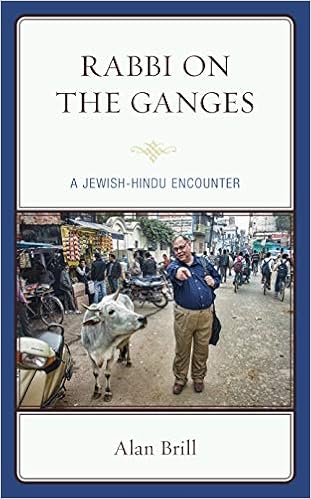
Rabbi On The Ganges : a Jewish-Hindu encounter

Rabbi on the Ganges: A Jewish-Hindu Encounter is the first work to engage the new terrain of Hindu-Jewish religious encounter.

The book offers understanding into points of contact between the two religions of Hinduism and Judaism. Providing an important comparative account, the work illuminates key ideas and practices within the traditions, surfacing commonalities between the jnana and Torah study, karmakanda and Jewish ritual, and between the different Hindu philosophic schools and Jewish thought and mysticism, along with meditation and the life of prayer and Kabbalah and creating dialogue around ritual, mediation, worship, and dietary restrictions. The goal of the book is not only to unfold the content of these faith traditions but also to create a religious encounter marked by mutual and reciprocal understanding and openness.

https://search.lib.uiowa.edu/permalink/f/7nh330/01IOWA_ALMA21732804380002771

Exploring the Isaiah Scrolls and Their Textual Variants

In Exploring the Isaiah Scrolls and Their Textual Variants, Donald W. Parry systematically presents, on a verse-by-verse basis, the variants of the Hebrew witnesses of Isaiah (the Masoretic Text and the twenty-one Isaiah Dead Sea Scrolls) and briefly discusses why each variant exists. The Isaiah scrolls have greatly impacted our understanding of the textual history of the Bible, and in recent decades, Bible translation committees have incorporated a number of the variants into their translations; as such, the Isaiah scrolls are important for both academic and popular audiences. Variant characterizations include four categories: (a) accidental errors, e.g., dittography, haplography, metathesis, graphic similarity; (b) intentional changes by scribes and copyists; (c) synonymous readings; (d) scribes’ stylistic approaches and conventions.

https://search.lib.uiowa.edu/permalink/f/7nh330/01IOWA_ALMA21732821100002771

Lebanon: The Rise and Fall of a Secular State Under Siege

Why has secularism faced such challenges in the Middle East and in Lebanon in particular? In light of dominating headlines about the spread of sectarianism and the so-called death of Arab secularism, Mark Farha addresses the need for a thorough examination of the history of secular thought and practice in the region. By offering a comprehensive, systematic account of the underlying ideological, socio-economic, and political factors involved, Farha provides a new understanding of the historical roots of secularism as well as the potential causes for the continued resistance a fully deconfessionalized state faces both in Lebanon and in the region at large. Drawing on a vast corpus of primary and secondary sources to examine the varying political parties and ideologies involved, this book provides a fresh approach to the study of religion and politics in the Arab world and beyond.

https://search.lib.uiowa.edu/permalink/f/7nh330/01IOWA_ALMA21732814550002771

New Book Display 3-26-2021

Welcome to the Library’s virtual New Book Shelf. Here we will present new titles for you to browse and check out. Titles listed here will be monographs published in the current year. If you see a title you would like to borrow, please click the link below the item and sign in with your Hawk ID and Password to request a loan.

Retracing Baptists in Rhode Island

Rhode Island can legitimately claim to be the home of Baptists in America. The first three varieties of Baptists in the New World—General Six Principle, Particular, and Seventh Day—made their debut in this small colony. And it was in Rhode Island that the General Six Principle Baptists formed the first Baptist association; the Seventh Day Baptists organized the first national denomination of Baptists; the Regular Baptists founded the first Baptist college, Brown University; and the Warren Baptist Association led the fight for religious liberty in New England.

In Retracing Baptists in Rhode Island, historian J. Stanley Lemons follows the story of Baptists, from their founding in the colonial period to the present. Lemons considers the impact of industrialization, urbanization, and immigration upon Baptists as they negotiated their identities in an ever-changing American landscape. Rhode Island Baptists, regardless of variety, stood united on the question of temperance, hesitated on the abolition of slavery before the Civil War, and uniformly embraced revivalism, but they remained vexed and divided over denominational competition, the anti-Masonic movement, and the Dorr Rebellion.

Lemons also chronicles the relationship between Rhode Island Baptists and the broader Baptist world. Modernism and historical criticism finally brought the Baptist theological civil war to Rhode Island. How to interpret the Bible became increasingly pressing, even leading to the devolution of Brown’s identity as a Baptist institution. Since the 1940s, the number of Baptists in the state has declined, despite the number of Baptist denominations rising from four to twelve. At the same time, the number of independent Baptist churches has greatly increased while other churches have shed their Baptist identity completely to become nondenominational. Lemons asserts that tectonic shifts in Baptist identity will continue to create a new landscape out of the heritage and traditions first established by the original Baptists of Rhode Island.

https://search.lib.uiowa.edu/permalink/f/7nh330/01IOWA_ALMA21732840680002771

Papal Diplomacy from 1914 to 1989

The First World War, the Second World War, and the Cold War are episodes of a wider conflict, called here “The Seventy-Five Years War,” dominated the twentieth century. Both unresolved issues and new issues from the First World War carry over into the next conflict, which in turn led immediately to the Cold War. While this great conflict can be viewed from different perspectives, this book focuses on the role of the Papacy. From the stateless Benedict XV’s attempts to call a peace conference, to the establishment of Vatican City and the restoration of sovereignty, to the struggles of Pius XI and Pius XII with both Fascism and Communism, and the contributions of John Paul II to the collapse of Communism, the Catholic Church was a part of this struggle. In addition to its humanitarian and pacifistic efforts from 1914 to 1989, the Catholic Church was also engaged in an intense ideological struggle with atheistic communism. This conflict will often take priority over other ideological conflicts, such as that with Fascism, as well as complicate the Church’s mission in other parts of the world, such as Latin America and Asia.

https://search.lib.uiowa.edu/permalink/f/7nh330/01IOWA_ALMA21732803630002771

Luther’s Treatise on Christian Freedom and Its Legacy

This book analyzes Luther’s treatise On Christian Freedom and its revolutionary re-definition of what it means to be Christian as one freed by Christ from sin, the accusation of God’s law, and death in order to be bound or bonded to the neighbor. Robert Kolb puts the treatise in its historical context, tracing its key ideas as they developed out of his medieval background, and as they continued to mature throughout his life. A contextual analysis of the text accompanies an overview of how this treatise was used or ignored throughout subsequent centuries, including the more extensive impact it has had in the last half century. 

https://search.lib.uiowa.edu/permalink/f/7nh330/01IOWA_ALMA21732813080002771

How Ancient Narratives Persuade

The Acts of the Apostles includes persuasive speeches, but the whole story should also be seen as an act of persuasion. In How Ancient Narratives Persuade: Acts in Its Literary Context, Eric Clouston takes a fresh approach to interpreting Acts, treating it as a persuasive narrative. Comparison with other Greek narratives allows Clouston to show how events and characters––and how they are described as worthy of trust, empathy, or respect, as well as their speeches and narrator asides––all have different persuasive effects. His examination of the persuasive effects of narrative in Acts leads at last to conclusions about the purpose of the work directed to a readership unconvinced by the figure of Paul.

https://search.lib.uiowa.edu/permalink/f/7nh330/01IOWA_ALMA21732835640002771

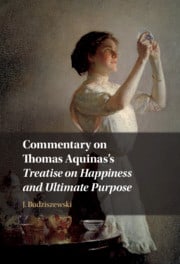
Commentary on Thomas Aquinas’s Treatise on Happiness and Ultimate Purpose

This monumental, line-by-line commentary makes Thomas Aquinas’s classic Treatise on Happiness and Ultimate Purpose accessible to all readers. Budziszewski illuminates arguments that even specialists find challenging: What is happiness? Is it something that we have, feel, or do? Does it lie in such things as wealth, power, fame, having friends, or knowing God? Can it actually be attained? This book’s luminous prose makes Aquinas’s treatise transparent, bringing to light profound underlying issues concerning knowledge, meaning, human psychology, and even the nature of reality.

https://search.lib.uiowa.edu/permalink/f/7nh330/01IOWA_ALMA21732821190002771

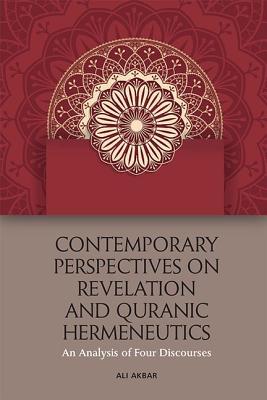
Contemporary Perspectives on Revelations and Qur’anic Hermeneutics

Ali Akbar examines the works of four noted scholars of Islam: Fazlur Rahman (Pakistan), Abdolkarim Soroush (Iran), Muhammad Mujtahed Shabestari (Iran) and Nasr Hamid Abu Zayd (Egypt). His study shows that the consequences of taking a humanistic approach to understanding revelation are not confined to the realm of speculation about the relationship between God and humans, but also to interpreting Qur’ānic socio-political precepts. The four scholars emerge as a distinctive group of Muslim thinkers who open up a new horizon in contemporary Islamic discourse.

https://search.lib.uiowa.edu/permalink/f/7nh330/01IOWA_ALMA21732820950002771

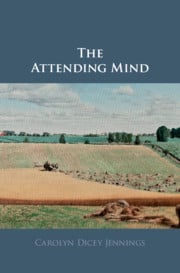
The Attending Mind

An ancient metaphor likens attention to an archer pulling her bow – the self directing her mind through attention. Yet both the existence of such a self, and the impact of attention on the mind, have been debated for millennia. Advancements in science mean that we now have a better understanding of what attention is and how it works, but philosophers and scientists remain divided as to its impact on the mind. This book takes a strong stance: attention is the key to the self, consciousness, perception, action, and knowledge. While it claims that we cannot perceive novel stimuli without attention, it argues that we can act on and experience the world without attention. It thus provides a new way of thinking about the mind – as something that can either shape itself through attention or engage with the world as it is given, relying on its habits and skills.

https://search.lib.uiowa.edu/permalink/f/7nh330/01IOWA_ALMA21733144980002771

The Movement of Showing

Explores why Derrida, Hegel, and Heidegger conceive their thought as a “movement” rather than as a presentation of results or conclusions, and of the consequences of such an indirect method for critique and responsibility.

This book explores the idea shared by Derrida, Hegel, and Heidegger that the value of their thought is not found in its results or conclusions, but in its “movement.” All three describe the heart of their work in terms of a pathway, development, or movement that seems to deprive their thought of a solid ground. Johan de Jong argues that this is a structural vulnerability that is the source of its value, tracing Derrida’s indirect method from his early to later works, and critically considering his engagements with Hegel and Heidegger. De Jong’s analysis locates an affinity among Hegel, Heidegger, and Derrida in a shared distrust of externality and, against the grain of some Levinasian commentaries, argues that Derrida’s indirectness results in an ethics of complicity. The Movement of Showing answers a central question that many polemics about continental philosophy and postmodernism revolve around, namely: with which methods does one philosophize responsibly? It shows the difference between critique and polemics, and why simply taking up a position for or against is insufficient in order to think responsibly.

https://search.lib.uiowa.edu/permalink/f/7nh330/01IOWA_ALMA21733123390002771

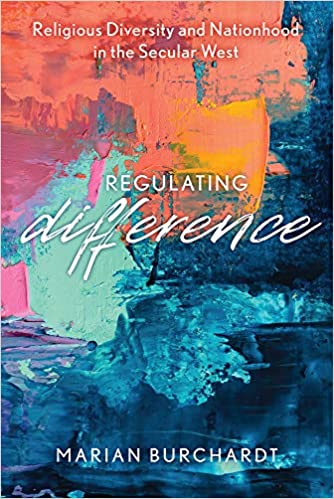
Regulating Difference

Transnational migration has contributed to the rise of religious diversity and has led to profound changes in the religious make-up of society across the Western world. As a result, societies and nation-states have faced the challenge of crafting ways to bring new religious communities into existing institutions and the legal frameworks. Regulating Difference explores how the state regulates religious diversity and examines the processes whereby religious diversity and expression becomes part of administrative landscapes of nation-states and people’s everyday lives. Arguing that concepts of nationhood are key to understanding the governance of religious diversity, Regulating Difference employs a transatlantic comparison of the Spanish region of Catalonia and the Canadian province of Quebec to show how processes of nation-building, religious heritage-making and the mobilization of divergent interpretations of secularism are co-implicated in shaping religious diversity. It argues that religious diversity has become central for governing national and urban spaces.

https://search.lib.uiowa.edu/permalink/f/7nh330/01IOWA_ALMA21732841240002771

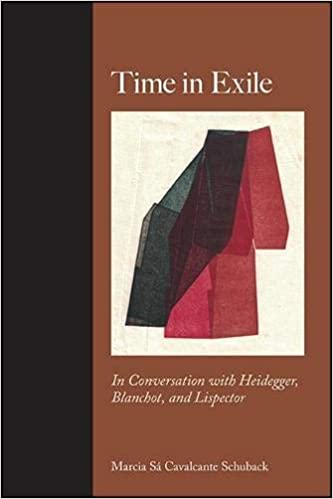
Time In Exile : in conversation with Heidegger, Blanchot, and Lispector

This book is a philosophical reflection on the experience of time from within exile. Its focus on temporality is unique, as most literature on exile focuses on the experience of space, as exile involves dislocation, and moods of nostalgia and utopia. Marcia Sá Cavalcante Schuback proposes that in exile, time is experienced neither as longing back to the lost past nor as wanting a future to come but rather as a present without anchors or supports. She articulates this present as a “gerundive” mode, in which the one who is in exile discovers herself simply being, exposed to the uncanny experience of having lost the past and not having a future. To explore this, she establishes a conversation among three authors whose work has exemplified this sense of gerundive time: the German philosopher Martin Heidegger, the French writer and essayist Maurice Blanchot, and the Brazilian writer Clarice Lispector. The book does not aim to discuss how these authors understand the relation between time and exile, but presents a conversation with them in relation to this question that reflects new aspects in their work. Attempting to think and express this difficult sense of time from within exile, Time in Exile engages with the relation between thought and language, and between philosophy and literature. Departing from concrete existential questions, Sá Cavalcante Schuback reveals new philosophical and theoretical modes to understand what it means to be present in times of exile.

https://search.lib.uiowa.edu/permalink/f/7nh330/01IOWA_ALMA21733141900002771

New Book Display 3-23-2021

Welcome to the Library’s virtual New Book Shelf. Here we will present new titles for you to browse and check out. Titles listed here will be monographs published in the current year. If you see a title you would like to borrow, please click the link below the item and sign in with your Hawk ID and Password to request a loan.


Origins of Temporal (t>v) Universe

The essence of temporal universe creation is that any analytical solution has to comply with the boundary condition of our universe; dimensionality and causality constraints. The essence of this book is to show that everything has a price within our temporal (t > 0) universe; energy and time.

In mathematics, every postulation needs proof; there exists a solution before searching for the solution. Yet science does not have seem to have a criterion as mathematics does; to prove first that a postulated science exists within our temporal universe. Without such a criterion, fictitious science emerges, as already have been happening in every day’s event. In this book, the author has shown there exists a criterion for a postulated science whether or not it is existed within our universe. The author started this book from Einstein’s relativity to the creation of our temporal universe. He has shown that every subspace within our universe is created by energy and time, in which subspace and time are coexisted. The important aspect is that every science has to satisfy the boundary condition of our universe; causality and dimensionality. Following up with temporal universe, the author has shown a profound relationship with the second law of thermodynamics. He examines the relationship between entropy with science as well as communication with quantum limited subspace throughout the book. The author discusses the paradox of Schrödinger’s Cat (which has been debated by Einstein, Bohr, Schrödinger and many others since 1935) that triggered his discovering that Schrödinger’s quantum mechanics is a timeless machine, in which he has disproved the fundamental principle of superposition within our universe. Since quantum mechanics is a virtual mathematics, he has shown that a temporal quantum machine can, in principle, be built on the top of a temporal platform.

This book is intended for cosmologists, particle physicists, astrophysicists, quantum physicists, computer scientists, engineers, professors and students as a reference and research-oriented book.

https://search.lib.uiowa.edu/permalink/f/7nh330/01IOWA_ALMA21733142410002771

Hegel on Possibility

Providing a clear interpretation of Hegel’s characterizations of possibility and actuality in the Science of Logic, this book departs from the standard understandings of these concepts to break new ground in Hegelian scholarship.

The book draws out some of the implications of Hegel’s view of immanent possibility, especially as it relates to Leibniz’s thesis of modal optimism: his view that this world is the best of all possible worlds. Reading Hegel as a philosopher of possibility, against a tradition that has conceived of him primarily as a philosopher of necessity, rationality, and finitude, Nahum Brown demonstrates the historical background and philosophical traditions from which Hegel’s concept of possibility emerges.

Systematically outlining Hegel’s conceptions of positive and negative freedom, Brown reveals the Hegelian underpinnings of our conception of reality and what it is to be in the world itself. Original and convincing, this book is crucial for philosophers approaching modality from any tradition.

https://search.lib.uiowa.edu/permalink/f/7nh330/01IOWA_ALMA21733117380002771

A Permanent Beginning

Situates a Hasidic master in the context of his time, demonstrating his formative influence on Jewish literary modernity.

The Hasidic leader R. Nachman of Braslav (1772–1810) has held a place in the Jewish popular imagination for more than two centuries. Some see him as the (self-proclaimed) Messiah, others as the forerunner of modern Jewish literature. Existing studies struggle between these dueling readings, largely ignoring questions of aesthetics and politics in his work. A Permanent Beginning lays out a new paradigm for understanding R. Nachman’s thought and writing, and, with them, the beginnings of Jewish literary modernity. Yitzhak Lewis examines the connections between imperial modernization processes in Eastern Europe at the turn of the eighteenth century and the emergence of “modern literature” in the storytelling of R. Nachman. Reading his tales and teachings alongside the social, legal, and intellectual history of the time, the book’s guiding question is literary: How does R. Nachman represent this changing environment in his writing? Lewis paints a nuanced and fascinating portrait of a literary thinker and creative genius at the very moment his world was evolving unrecognizably. He argues compellingly that R. Nachman’s narrative response to his changing world was a major point of departure for Jewish literary modernity.

https://search.lib.uiowa.edu/permalink/f/7nh330/01IOWA_ALMA21732803450002771

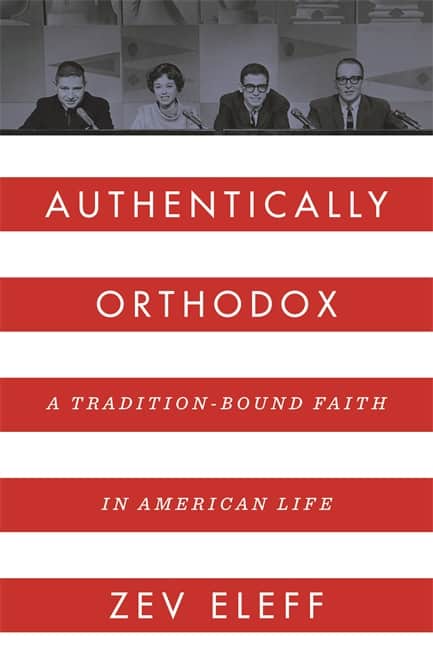
Authentically Orthodox

With a fresh perspective, Authentically Orthodox: A Tradition-Bound Faith in American Life challenges the current historical paradigm in the study of Orthodox Judaism and other tradition-bound faith communities in the United States.Paying attention to “lived religion,” the book moves beyond sermons and synagogues and examines the webs of experiences mediated by any number of American cultural forces. With exceptional writing, Zev Eleff lucidly explores Orthodox Judaism’s engagement with Jewish law, youth culture and gender, and how this religious group has been affected by its indigenous environs. To do this, the book makes ample use of archives and other previously unpublished primary sources.

Eleff explores the curious history of Passover peanut oil and the folkways and foodways that battled in this culinary arena to both justify and rebuff the validity of this healthier substitute for other fatty ingredients. He looks at the Yeshiva University quiz team’s fifteen minutes of fame on the nationally televised College Bowl program and the unprecedented pride of young people and youth culture in the burgeoning Modern Orthodox movement. Another chapter focuses on the advent of women’s prayer groups as an alternative to other synagogue experiences in Orthodox life and the vociferous opposition it received on the grounds that it was motivated by “heretical” religious and social movements. Whereas past monographs and articles argue that these communities have moved right toward a conservative brand of faith, Eleff posits that Orthodox Judaism—like other like-minded religious enclaves—ought to be studied in their American religious contexts.

https://search.lib.uiowa.edu/permalink/f/7nh330/01IOWA_ALMA21732839200002771

Gendered Paradigms in Theologies of Survival

Gendered Paradigms in Theologies of Survival: Silenced to Survive is a book about women in survival communities and the ways that survival and theology are used to shut down women’s voices. Mariam Youssef examines the ways in which the condition of survival puts religious women in a bind by embedding paradigms into theology that, more often than not, reinforce women’s subordination as a condition of survival. Women in survival communities are not only grappling with the existential threat that comes with their survival identities but also struggling to make their voices heard within their own communities where their needs are frequently put on the back burner. Survival communities often find themselves responding to their trauma in ways that prescribe strict patriarchal norms, promoting notions of gender binary and compulsory heterosexuality.

https://search.lib.uiowa.edu/permalink/f/7nh330/01IOWA_ALMA21732839690002771

A Qualitative Study of Black Atheists

A Qualitative Study of Black Atheists: “Don’t Tell Me You’re One of Those” is an interdisciplinary examination of a group that is rarely the study of inquiry, Black Atheists. Using in-depth, qualitative interviews, Daniel Swann builds a foundation for understanding Black Atheist identities, how Black Atheists conceive of themselves, how they perceive, internalize, and manage stigma, how they view in-group belonging, and how they understand their experiences as Atheists to be racialized. The author argues these unique circumstances have produced a distinctive identity at this particular intersection of race and religion. 

https://search.lib.uiowa.edu/permalink/f/7nh330/01IOWA_ALMA21732842360002771

Jesuit Kaddish

While much has been written about the Catholic Church and the Holocaust, little has been published about the hostile role of priests, in particular Jesuits, toward Jews and Judaism. Jesuit Kaddish is a long overdue study that examines Jesuit hostility toward Judaism before the Shoah and the development of a new understanding of the Catholic Church’s relation to Judaism that culminated with Vatican II’s landmark decree Nostra aetate. James Bernauer undertakes a self-examination as a member of the Jesuit order and writes this story in the hopes that it will contribute to interreligious reconciliation. Jesuit Kaddish demonstrates the way Jesuit hostility operated, examining Jesuit moral theology’s dualistic approach to sexuality and, in the case of Nazi Germany, the articulation of an unholy alliance between a sexualizing and a Judaizing of German culture. Bernauer then identifies an influential group of Jesuits whose thought and action contributed to the developments in Catholic teaching about Judaism that eventually led to the watershed moment of Nostra aetate. This book concludes with a proposed statement of repentance from the Jesuits and an appendix presenting the fifteen Jesuits who have been honored as “Righteous Among the Nations” by Israel’s Yad Vashem Holocaust Center. Jesuit Kaddish offers a crucial contribution to the fields of Catholicism and Nazism, Catholic-Jewish relations, Jesuit history, and the history of anti-Semitism in Europe.

https://search.lib.uiowa.edu/permalink/f/7nh330/01IOWA_ALMA21735702860002771

The Figure of Abraham in John 8

This is the first volume to extensively explore the intersection between Johannine anti-Judaism and Abrahamic allusions, using the theoretical lens of poststructuralism and intertextuality theory. Ruth Sheridan’s study yields new insights into how the metaphors of ‘sin’, ‘slavery’ and ‘vision’ are constructed in the text, producing an interpretation consistent with figurations of Abraham in Early Judaism as a paternal figure of vicarious merit.

John 8.31-59 is often categorised in New Testament scholarship as one of the most polemical texts illustrating nascent Christianity’s anti-Jewish trajectory, as Jesus debates with ‘the Jews’ about their reputed diabolic paternity, sidelining their own selfidentifications that are steeped in biblical traditions. Another defining feature of the text is its repeated reference to the figure of Abraham, displaying a condensed network of intertextual allusions to Abraham seen nowhere else in the Fourth Gospel. Sheridan seeks instead to rehabilitate the Jewish voice of the text, working with the narrative intertext of ‘the Jews” self-characterisation as the ‘seed of Abraham’ to counteract particular pejorative readings of John 8 found in the secondary literature.

https://search.lib.uiowa.edu/permalink/f/7nh330/01IOWA_ALMA21732838910002771

Bad Christians, New Spains

This book centers on two inquisitorial investigations, both of which began in the 1540s. One involved relations of Europeans and Native Americans in the Oaxacan town of Yanhuitlán (in New Spain, today’s Mexico). The other involved relations of Moriscos (recent Muslim converts to Catholicism) and Old Christians (people with deep Catholic ancestries) in the Mediterranean kingdom of Valencia (in the “old” Spain).

Although separated by an ocean, the social worlds preserved in these inquisitorial files share many things. By bringing the two inquisitions together, Hamann reveals how very local practices and debates had long-distance parallels, parallels that reveal larger entanglements of the early modern world. Through a dialogue of two microhistories, he presents a macrohistory of large-scale social transformation. We see how attempts in both places to turn old worlds into new ones were centered on struggles over materiality and temporality. By paying close attention to theories (and practices) of reduction and conversion, Hamann suggests we can move beyond anachronistic models of social change as colonization, and place early modern concepts of time and history at the center of our understandings of the sixteenth-century past.

https://search.lib.uiowa.edu/permalink/f/7nh330/01IOWA_ALMA21732838760002771

Philosophical Mysticism

Few twenty-first century academics take seriously mysticism’s claim that we have direct knowledge of a higher or more “inner” reality or God. But Philosophical Mysticism argues that such leading philosophers of earlier epochs as Plato, G. W. F. Hegel, Ludwig Wittgenstein, and Alfred North Whitehead were, in fact, all philosophical mystics. This book discusses major versions of philosophical mysticism beginning with Plato. It shows how the framework of mysticism’s higher or more inner reality allows nature, freedom, science, ethics, the arts, and a rational religion-in-the-making to work together rather than conflicting with one another. This is how philosophical mysticism understands the relationships of fact to value, rationality to ethics, and the rest. And this is why Plato’s notion of ascent or turning inward to a higher or more inner reality has strongly attracted such major figures in philosophy, religion, and literature as Aristotle, Plotinus, St Augustine, Dante Alighieri, Immanuel Kant, Hegel, William Wordsworth, Ralph Waldo Emerson, Emily Dickinson, Whitehead, and Wittgenstein.

https://search.lib.uiowa.edu/permalink/f/7nh330/01IOWA_ALMA21733124360002771

New Book Display 2-22-2021

Welcome to the Library’s virtual New Book Shelf. Here we will present new titles for you to browse and check out. Titles listed here will be monographs published in the current year. If you see a title you would like to borrow, please click the link below the item and sign in with your Hawk ID and Password to request a loan.

Future Metaphysics

The triumph of technological rationality and of the sciences as a whole has by no means provided answers to humanity’s great questions. Instead, it has raised new and old questions and problems. To orient ourselves in the twenty-first century, we must take a new look at the central categories of philosophy that, often unbeknownst to us, continue to shape our everyday thinking.

Future Metaphysics is an attempt at restating the importance of the great metaphysical categories for the present: how our contemporary predicament forces us both to reclaim them and to give them a radically new twist. Armen Avanessian re-examines and displaces categories like substance and accident, form and matter, life and death, giving them an unexpected twist. What if the idea of accident, for instance, had to take into account the many new kinds of glitches, crashes and crises – from finance to ecology, from technological catastrophes to social collapses – that permeate our culture and make everyday news? Can we keep on using this concept as it was traditionally meant to be used when risk and chance have become part of the very substance of our world, so rendering the distinction between substance and accident meaningless? The other concepts and distinctions require a similar interrogation, giving birth to a new metaphysical landscape, where the most urgent realities of the twenty-first century impinge on the most fundamental categories of thought.

https://search.lib.uiowa.edu/permalink/f/7nh330/01IOWA_ALMA21733152130002771

Secularization

Secularization’ sounds simple, a decline in the power of religion. Yet, the history of the term is controversial and multi-faceted; it has been useful to both religious believers and non-believers and has been deployed by scholars to make sense of a variety of aspects of cultural and social change. This book will introduce the reader to this variety and show how secularization bears on the contemporary politics of religion.

Secularization addresses the sociological classics’ ambivalent accounts of the future of religion, later and more robust sociological claims about religious decline, and the most influential philosophical secularization thesis, which says that the dominant ideas of modern thought are in fact religious ones in a secularized form. The book outlines some shortcomings of these accounts in the light of historical inquiry and comparative sociology; examines claims that some religions are ‘resistant to secularization’; and analyzes controversies in the politics of religion, in particular over the relationship between Christianity and Islam and over the implicitly religious character of some modern political movements.

By giving equal attention to both sociological and philosophical accounts of secularization, and equal weight to ideas, institutions, and practices, this book introduces complicated ideas in a digestible format. It will appeal to students and scholars interested in making unusual connections within sociology, anthropology, philosophy, theology, and political theory.

https://search.lib.uiowa.edu/permalink/f/7nh330/01IOWA_ALMA21732831610002771

Is A Good God Logically Possible

Using yet untapped resources from moral and political philosophy, this book seeks to answer the question of whether an all good God who is presumed to be all powerful is logically compatible with the degree and amount of moral and natural evil that exists in our world. It is widely held by theists and atheists alike that it may be logically impossible for an all good, all powerful God to create a world with moral agents like ourselves that does not also have at least some moral evil in it.  James P. Sterba focuses on the further question of whether God is logically compatible with the degree and amount of moral and natural evil that exists in our world. The negative answer he provides marks a new stage in the age-old debate about God’s existence. 

https://search.lib.uiowa.edu/permalink/f/7nh330/01IOWA_ALMA21732840350002771

Buddhist Ethics

‘Ethics’ was not developed as a separate branch of philosophy in Buddhist traditions until the modern period, though Buddhist philosophers have always been concerned with the moral significance of thoughts, emotions, intentions, actions, virtues, and precepts. Their most penetrating forms of moral reflection have been developed within disciplines of practice aimed at achieving freedom and peace. This Element first offers a brief overview of Buddhist thought and modern scholarly approaches to its diverse forms of moral reflection. It then explores two of the most prominent philosophers from the main strands of the Indian Buddhist tradition – Buddhaghosa and Śāntideva – in a comparative fashion.

https://search.lib.uiowa.edu/permalink/f/7nh330/01IOWA_ALMA21732835830002771

Chicago Catolico

Today, over one hundred Chicago-area Catholic churches offer Spanish language mass to congregants. How did the city’s Mexican population, contained in just two parishes prior to 1960, come to reshape dozens of parishes and neighborhoods?

Deborah E. Kanter tells the story of neighborhood change and rebirth in Chicago’s Mexican American communities. She unveils a vibrant history of Mexican American and Mexican immigrant relations as remembered by laity and clergy, schoolchildren and their female religious teachers, parish athletes and coaches, European American neighbors, and from the immigrant women who organized as guadalupanas and their husbands who took part in the Holy Name Society. Kanter shows how the newly arrived mixed memories of home into learning the ways of Chicago to create new identities. In an ever-evolving city, Mexican immigrants and Mexican Americans’ fierce devotion to their churches transformed neighborhoods such as Pilsen.

The first-ever study of Mexican-descent Catholicism in the city, Chicago Católico illuminates a previously unexplored facet of the urban past and provides present-day lessons for American communities undergoing ethnic integration and succession.

https://search.lib.uiowa.edu/permalink/f/7nh330/01IOWA_ALMA21732834330002771

 Margaret’s Monsters

St. Margaret of Antioch was one of the most popular saints in medieval England and, throughout the Middle Ages, the various Lives of St. Margaret functioned as a blueprint for a virginal life and supernatural assistance to pregnant women during the dangerous process of labor. In her narrative, Margaret is accosted by various demons and, having defeated each monster in turn, she is taken to the place of her martyrdom where she prays for supernatural boons for her adherents. This book argues that Margaret’s monsters are a key element in understanding Margaret’s importance to her adherents, specifically how the sexual identities of her adherents were constructed and maintained.

More broadly, this study offers three major contributions to the field of medieval studies: first, it argues for the utility of a diachronic analysis of Saints’ Lives literature in a field dominated by synchronic analyses; second, this diachronic analysis is important to interpreting the intertext of Saints’ Lives, not only between different Lives but also different versions of the same Life; and third, the approach further suggests that the most valuable socio-cultural information in hagiographic literature is found in the auxiliary characters and not in the figure of the saint him/herself.

https://search.lib.uiowa.edu/permalink/f/7nh330/01IOWA_ALMA21732832840002771

A Humanist in Reformation Politics

This book is the first contextual account of the political philosophy and natural law theory of the German reformer Philipp Melanchthon (1497-1560). Mads Langballe Jensen presents Melanchthon as a significant political thinker in his own right and an engaged scholar drawing on the intellectual arsenal of renaissance humanism to develop a new Protestant political philosophy. As such, he also shows how and why natural law theories first became integral to Protestant political thought in response to the political and religious conflicts of the Reformation. This study offers new, contextual studies of a wide range of Melanchthon’s works including his early humanist orations, commentaries on Aristotle’s ethics and politics, Melanchthon’s own textbooks on moral and political philosophy, and polemical works.

https://search.lib.uiowa.edu/permalink/f/7nh330/01IOWA_ALMA21732835150002771

Jerome of Stridon and the Ethics of Literary Production in Late Antiquity

Jerome of Stridon and the Ethics of Literary Production in Late Antiquity offers a new account of the development of Jeromes work in the period 386-393CE. Focusing on his commentaries, his translation projects, and his work against heresy, it argues that Jerome has a consistent theology of language and embodiment.

https://search.lib.uiowa.edu/permalink/f/7nh330/01IOWA_ALMA21732836610002771

Leviticus

In Leviticus Awabdy offers the first commentary on the Greek version of Leviticus according to Codex Vaticanus (4th century CE), which binds the Old and New Testaments into a single volume as Christian scripture. Distinct from other LXX Leviticus commentaries that employ a critical edition and focus on translation technique, Greco-Roman context and reception, this study interprets a single Greek manuscript on its own terms in solidarity with its early Byzantine users unversed in Hebrew. With a formal-equivalence English translation of a new, uncorrected edition, Awabdy illuminates Leueitikon in B as an aesthetic composition that not only exhibits inherited Hebraic syntax and Koine lexical forms, but its own structure and theology, paragraph (outdented) divisions, syntax and pragmatics, intertextuality, solecisms and textual variants.

https://search.lib.uiowa.edu/permalink/f/7nh330/01IOWA_ALMA21732814220002771

Sacred and Secular Martyrdom in Britain and Ireland Since 1914

During and immediately after the First World War, there was a merging of Christian and nationalist traditions of martyrdom, expressed in the design of war cemeteries and war memorials, and the state funeral of the Unknown Warrior in 1920. John Wolffe explores the subsequent development of these traditions of ‘sacred’ and ‘secular’ martyrdom, analysing the ways in which they operated – sometimes in parallel, sometimes merged together and sometimes in conflict with each other.

Particular topics explored include the Protestant commemoration of Marian and missionary martyrs, and the Roman Catholic campaign for the canonization of the ‘saints and martyrs of England’. Secular martyrdom is discussed in relation to military conflicts especially the Second World War and the Falklands. In Ireland there was a particularly persistent merging of sacred and secular martyrdom in the wake of the Easter Rising of 1916 although by the time of the Northern Ireland ‘Troubles’ in the later twentieth-century these traditions diverged. In covering these themes, the book also offers historical and comparative context for understanding present-day acts of martyrdom in the form of suicide attacks.

https://search.lib.uiowa.edu/permalink/f/7nh330/01IOWA_ALMA21732832270002771