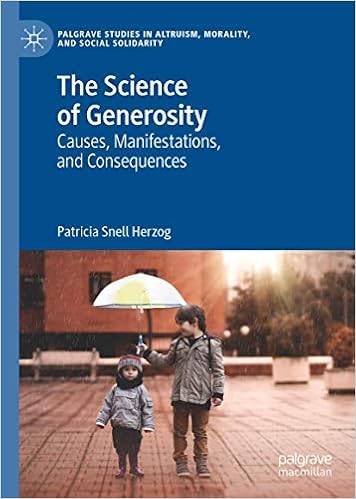
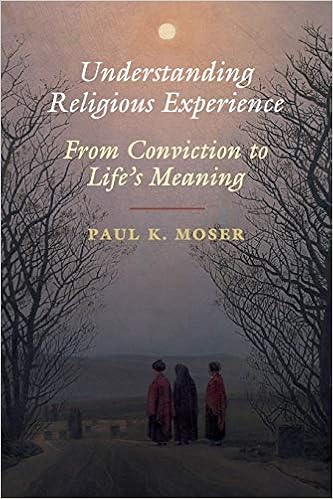
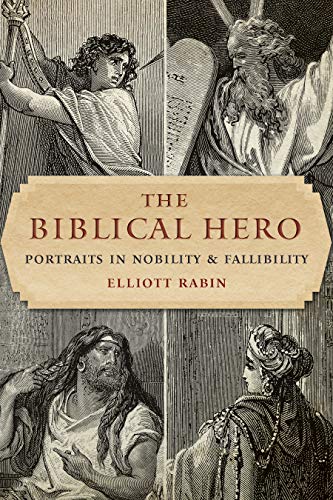
The University of Iowa Libraries’ Hardin Library for the Health Sciences has been awarded a five-year grant to continue its role as a Regional Medical Library (RML) in the Network of the National Library of Medicine (NNLM). NNLM consists of seven competitively selected RMLs; Hardin Library will serve Region 6. The National Library of Medicine, the world’s largest biomedical library and a component of the National Institutes of Health, will award Hardin Library $5.7 million to develop programs and services aimed at addressing health literacy and health equity through information access. In 2016, Hardin Library was awarded a five-year grant to establish an RML for the Greater Midwest Region. This new grant will enable Hardin to build on its work over the past five years.
As a Regional Medical Library, the Hardin Library’s role is to carry out regional and national programs in support of NNLM’s mission to provide U.S. researchers, health professionals, public health workforce, educators, and the public with equal access to biomedical and health information resources and data. The emphasis of the RML program is to bring quality health, public health, and biomedical information resources within reach of the public and all health and public health professionals.
Among other objectives, each RML is expected to:
Develop approaches to promote awareness of, improve access to, and enable use of NLM’s resources and data,
Develop and support a diverse workforce to access information resources and data, and support data-driven research,
Provide community-driven innovative approaches and interventions for biomedical and health information access and use.
To accomplish these objectives, Hardin’s team of five librarians will form partnerships with libraries and other organizations and offer a variety of in-person and online training for health professionals; community organizations; health-information centers; and public, hospital, and academic medical libraries throughout the country, with a regional focus on Iowa, Illinois, Indiana, Michigan, Minnesota, Ohio, and Wisconsin. In addition, Hardin Library will fund awards to assist regional libraries and other organizations to educate and support access to biomedical and health information resources and data within medically underserved areas.
Linda Walton, associate university librarian at the University of Iowa Libraries, will serve as director for the Regional Medical Library. Derek Johnson, the current associate director for the RML, will continue in this role. John Culshaw, university librarian for the UI Libraries, commends the Hardin Library staff for earning this competitive contract.
“This grant recognizes the efforts and leadership of staff at UIowa’s Hardin Library for the Health Sciences over the past five years. Their role, especially during the pandemic, has been invaluable to researchers, health professionals, and members of public throughout the region,” he says. “Not only does this renewed contract reflect well on the quality and breadth of our library’s outreach efforts within Iowa and our region but also on the high level of staff expertise and leadership at Hardin.”
Since its original authorization by Congress in the 1965 Medical Library Assistance Act, the NNLM has worked to equalize and enhance access to health information and data throughout the United States. This Network is vital in NLM’s outreach efforts to advance the progress of medicine and improve the public’s health by providing education and access to information for U.S. researchers, health professionals, public health workforce, educators, and the public. NNLM’s main goals are to work through libraries and other members to support a highly trained workforce for biomedical and health information resources and data, promote health literacy, and advance health equity through access to trusted, quality health information.
During the previous (2016-2021) grant period, the RMLs awarded more than 1,338 subawards to NNLM members. The RMLs, in collaboration with funded NNLM members, conducted more than 10,000 training events and other outreach and engagement activities reaching more than 108,000 health professionals, librarians, and members of the public.
Developed resources reported in this press release are supported by the National Library of Medicine (NLM), National Institutes of Health (NIH) under cooperative agreement number UG4LM013729. The content is solely the responsibility of the authors and does not necessarily represent the official views of the National Institutes of Health.
Welcome to the Library’s virtual New Book Shelf. Here we will present new titles for you to browse and check out. Titles listed here will be monographs published in the current year. If you see a title you would like to borrow, please click the link below the item and sign in with your Hawk ID and Password to request a loan.
Retracing Baptists in Rhode Island
Rhode Island can legitimately claim to be the home of Baptists in America. The first three varieties of Baptists in the New World—General Six Principle, Particular, and Seventh Day—made their debut in this small colony. And it was in Rhode Island that the General Six Principle Baptists formed the first Baptist association; the Seventh Day Baptists organized the first national denomination of Baptists; the Regular Baptists founded the first Baptist college, Brown University; and the Warren Baptist Association led the fight for religious liberty in New England.
In Retracing Baptists in Rhode Island, historian J. Stanley Lemons follows the story of Baptists, from their founding in the colonial period to the present. Lemons considers the impact of industrialization, urbanization, and immigration upon Baptists as they negotiated their identities in an ever-changing American landscape. Rhode Island Baptists, regardless of variety, stood united on the question of temperance, hesitated on the abolition of slavery before the Civil War, and uniformly embraced revivalism, but they remained vexed and divided over denominational competition, the anti-Masonic movement, and the Dorr Rebellion.
Lemons also chronicles the relationship between Rhode Island Baptists and the broader Baptist world. Modernism and historical criticism finally brought the Baptist theological civil war to Rhode Island. How to interpret the Bible became increasingly pressing, even leading to the devolution of Brown’s identity as a Baptist institution. Since the 1940s, the number of Baptists in the state has declined, despite the number of Baptist denominations rising from four to twelve. At the same time, the number of independent Baptist churches has greatly increased while other churches have shed their Baptist identity completely to become nondenominational. Lemons asserts that tectonic shifts in Baptist identity will continue to create a new landscape out of the heritage and traditions first established by the original Baptists of Rhode Island.
The First World War, the Second World War, and the Cold War are episodes of a wider conflict, called here “The Seventy-Five Years War,” dominated the twentieth century. Both unresolved issues and new issues from the First World War carry over into the next conflict, which in turn led immediately to the Cold War. While this great conflict can be viewed from different perspectives, this book focuses on the role of the Papacy. From the stateless Benedict XV’s attempts to call a peace conference, to the establishment of Vatican City and the restoration of sovereignty, to the struggles of Pius XI and Pius XII with both Fascism and Communism, and the contributions of John Paul II to the collapse of Communism, the Catholic Church was a part of this struggle. In addition to its humanitarian and pacifistic efforts from 1914 to 1989, the Catholic Church was also engaged in an intense ideological struggle with atheistic communism. This conflict will often take priority over other ideological conflicts, such as that with Fascism, as well as complicate the Church’s mission in other parts of the world, such as Latin America and Asia.
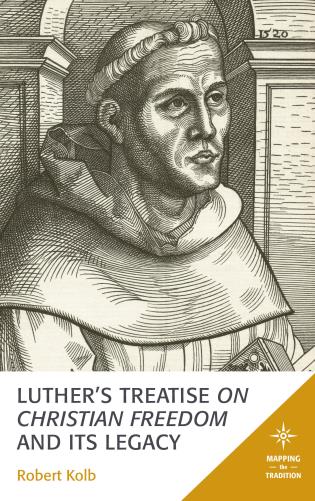
Luther’s Treatise on Christian Freedom and Its Legacy
This book analyzes Luther’s treatise On Christian Freedom and its revolutionary re-definition of what it means to be Christian as one freed by Christ from sin, the accusation of God’s law, and death in order to be bound or bonded to the neighbor. Robert Kolb puts the treatise in its historical context, tracing its key ideas as they developed out of his medieval background, and as they continued to mature throughout his life. A contextual analysis of the text accompanies an overview of how this treatise was used or ignored throughout subsequent centuries, including the more extensive impact it has had in the last half century.
The Acts of the Apostles includes persuasive speeches, but the whole story should also be seen as an act of persuasion. In How Ancient Narratives Persuade: Acts in Its Literary Context, Eric Clouston takes a fresh approach to interpreting Acts, treating it as a persuasive narrative. Comparison with other Greek narratives allows Clouston to show how events and characters––and how they are described as worthy of trust, empathy, or respect, as well as their speeches and narrator asides––all have different persuasive effects. His examination of the persuasive effects of narrative in Acts leads at last to conclusions about the purpose of the work directed to a readership unconvinced by the figure of Paul.
Commentary on Thomas Aquinas’s Treatise on Happiness and Ultimate Purpose
This monumental, line-by-line commentary makes Thomas Aquinas’s classic Treatise on Happiness and Ultimate Purpose accessible to all readers. Budziszewski illuminates arguments that even specialists find challenging: What is happiness? Is it something that we have, feel, or do? Does it lie in such things as wealth, power, fame, having friends, or knowing God? Can it actually be attained? This book’s luminous prose makes Aquinas’s treatise transparent, bringing to light profound underlying issues concerning knowledge, meaning, human psychology, and even the nature of reality.
Contemporary Perspectives on Revelations and Qur’anic Hermeneutics
Ali Akbar examines the works of four noted scholars of Islam: Fazlur Rahman (Pakistan), Abdolkarim Soroush (Iran), Muhammad Mujtahed Shabestari (Iran) and Nasr Hamid Abu Zayd (Egypt). His study shows that the consequences of taking a humanistic approach to understanding revelation are not confined to the realm of speculation about the relationship between God and humans, but also to interpreting Qur’ānic socio-political precepts. The four scholars emerge as a distinctive group of Muslim thinkers who open up a new horizon in contemporary Islamic discourse.
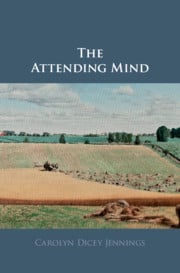
An ancient metaphor likens attention to an archer pulling her bow – the self directing her mind through attention. Yet both the existence of such a self, and the impact of attention on the mind, have been debated for millennia. Advancements in science mean that we now have a better understanding of what attention is and how it works, but philosophers and scientists remain divided as to its impact on the mind. This book takes a strong stance: attention is the key to the self, consciousness, perception, action, and knowledge. While it claims that we cannot perceive novel stimuli without attention, it argues that we can act on and experience the world without attention. It thus provides a new way of thinking about the mind – as something that can either shape itself through attention or engage with the world as it is given, relying on its habits and skills.
Explores why Derrida, Hegel, and Heidegger conceive their thought as a “movement” rather than as a presentation of results or conclusions, and of the consequences of such an indirect method for critique and responsibility.
This book explores the idea shared by Derrida, Hegel, and Heidegger that the value of their thought is not found in its results or conclusions, but in its “movement.” All three describe the heart of their work in terms of a pathway, development, or movement that seems to deprive their thought of a solid ground. Johan de Jong argues that this is a structural vulnerability that is the source of its value, tracing Derrida’s indirect method from his early to later works, and critically considering his engagements with Hegel and Heidegger. De Jong’s analysis locates an affinity among Hegel, Heidegger, and Derrida in a shared distrust of externality and, against the grain of some Levinasian commentaries, argues that Derrida’s indirectness results in an ethics of complicity. The Movement of Showing answers a central question that many polemics about continental philosophy and postmodernism revolve around, namely: with which methods does one philosophize responsibly? It shows the difference between critique and polemics, and why simply taking up a position for or against is insufficient in order to think responsibly.
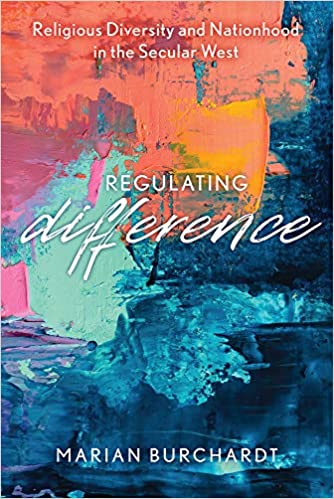
Transnational migration has contributed to the rise of religious diversity and has led to profound changes in the religious make-up of society across the Western world. As a result, societies and nation-states have faced the challenge of crafting ways to bring new religious communities into existing institutions and the legal frameworks. Regulating Difference explores how the state regulates religious diversity and examines the processes whereby religious diversity and expression becomes part of administrative landscapes of nation-states and people’s everyday lives. Arguing that concepts of nationhood are key to understanding the governance of religious diversity, Regulating Difference employs a transatlantic comparison of the Spanish region of Catalonia and the Canadian province of Quebec to show how processes of nation-building, religious heritage-making and the mobilization of divergent interpretations of secularism are co-implicated in shaping religious diversity. It argues that religious diversity has become central for governing national and urban spaces.
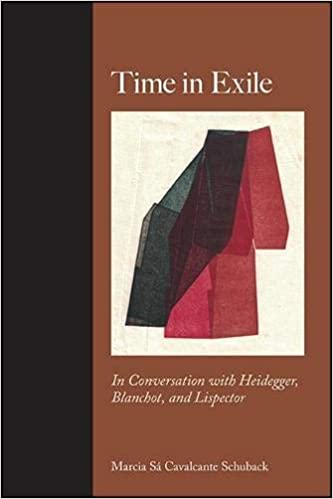
Time In Exile : in conversation with Heidegger, Blanchot, and Lispector
This book is a philosophical reflection on the experience of time from within exile. Its focus on temporality is unique, as most literature on exile focuses on the experience of space, as exile involves dislocation, and moods of nostalgia and utopia. Marcia Sá Cavalcante Schuback proposes that in exile, time is experienced neither as longing back to the lost past nor as wanting a future to come but rather as a present without anchors or supports. She articulates this present as a “gerundive” mode, in which the one who is in exile discovers herself simply being, exposed to the uncanny experience of having lost the past and not having a future. To explore this, she establishes a conversation among three authors whose work has exemplified this sense of gerundive time: the German philosopher Martin Heidegger, the French writer and essayist Maurice Blanchot, and the Brazilian writer Clarice Lispector. The book does not aim to discuss how these authors understand the relation between time and exile, but presents a conversation with them in relation to this question that reflects new aspects in their work. Attempting to think and express this difficult sense of time from within exile, Time in Exile engages with the relation between thought and language, and between philosophy and literature. Departing from concrete existential questions, Sá Cavalcante Schuback reveals new philosophical and theoretical modes to understand what it means to be present in times of exile.
Welcome to the Library’s virtual New Book Shelf. Here we will present new titles for you to browse and check out. Titles listed here will be monographs published in the current year. If you see a title you would like to borrow, please click the link below the item and sign in with your Hawk ID and Password to request a loan.
Origins of Temporal (t>v) Universe
The essence of temporal universe creation is that any analytical solution has to comply with the boundary condition of our universe; dimensionality and causality constraints. The essence of this book is to show that everything has a price within our temporal (t > 0) universe; energy and time.
In mathematics, every postulation needs proof; there exists a solution before searching for the solution. Yet science does not have seem to have a criterion as mathematics does; to prove first that a postulated science exists within our temporal universe. Without such a criterion, fictitious science emerges, as already have been happening in every day’s event. In this book, the author has shown there exists a criterion for a postulated science whether or not it is existed within our universe. The author started this book from Einstein’s relativity to the creation of our temporal universe. He has shown that every subspace within our universe is created by energy and time, in which subspace and time are coexisted. The important aspect is that every science has to satisfy the boundary condition of our universe; causality and dimensionality. Following up with temporal universe, the author has shown a profound relationship with the second law of thermodynamics. He examines the relationship between entropy with science as well as communication with quantum limited subspace throughout the book. The author discusses the paradox of Schrödinger’s Cat (which has been debated by Einstein, Bohr, Schrödinger and many others since 1935) that triggered his discovering that Schrödinger’s quantum mechanics is a timeless machine, in which he has disproved the fundamental principle of superposition within our universe. Since quantum mechanics is a virtual mathematics, he has shown that a temporal quantum machine can, in principle, be built on the top of a temporal platform.
This book is intended for cosmologists, particle physicists, astrophysicists, quantum physicists, computer scientists, engineers, professors and students as a reference and research-oriented book.
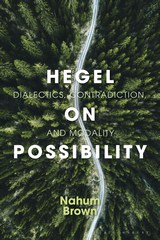
Providing a clear interpretation of Hegel’s characterizations of possibility and actuality in the Science of Logic, this book departs from the standard understandings of these concepts to break new ground in Hegelian scholarship.
The book draws out some of the implications of Hegel’s view of immanent possibility, especially as it relates to Leibniz’s thesis of modal optimism: his view that this world is the best of all possible worlds. Reading Hegel as a philosopher of possibility, against a tradition that has conceived of him primarily as a philosopher of necessity, rationality, and finitude, Nahum Brown demonstrates the historical background and philosophical traditions from which Hegel’s concept of possibility emerges.
Systematically outlining Hegel’s conceptions of positive and negative freedom, Brown reveals the Hegelian underpinnings of our conception of reality and what it is to be in the world itself. Original and convincing, this book is crucial for philosophers approaching modality from any tradition.
Situates a Hasidic master in the context of his time, demonstrating his formative influence on Jewish literary modernity.
The Hasidic leader R. Nachman of Braslav (1772–1810) has held a place in the Jewish popular imagination for more than two centuries. Some see him as the (self-proclaimed) Messiah, others as the forerunner of modern Jewish literature. Existing studies struggle between these dueling readings, largely ignoring questions of aesthetics and politics in his work. A Permanent Beginning lays out a new paradigm for understanding R. Nachman’s thought and writing, and, with them, the beginnings of Jewish literary modernity. Yitzhak Lewis examines the connections between imperial modernization processes in Eastern Europe at the turn of the eighteenth century and the emergence of “modern literature” in the storytelling of R. Nachman. Reading his tales and teachings alongside the social, legal, and intellectual history of the time, the book’s guiding question is literary: How does R. Nachman represent this changing environment in his writing? Lewis paints a nuanced and fascinating portrait of a literary thinker and creative genius at the very moment his world was evolving unrecognizably. He argues compellingly that R. Nachman’s narrative response to his changing world was a major point of departure for Jewish literary modernity.
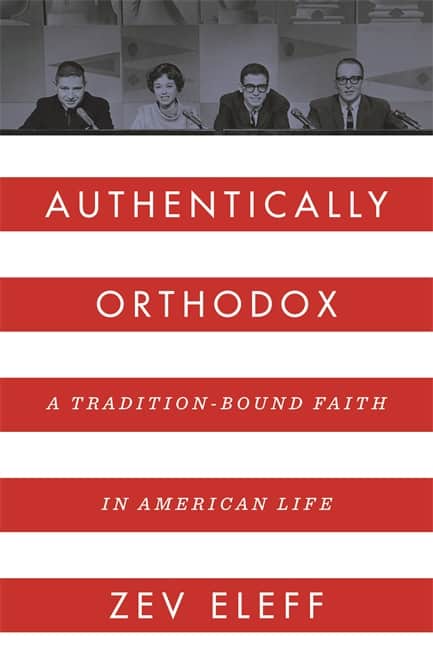
With a fresh perspective, Authentically Orthodox: A Tradition-Bound Faith in American Life challenges the current historical paradigm in the study of Orthodox Judaism and other tradition-bound faith communities in the United States.Paying attention to “lived religion,” the book moves beyond sermons and synagogues and examines the webs of experiences mediated by any number of American cultural forces. With exceptional writing, Zev Eleff lucidly explores Orthodox Judaism’s engagement with Jewish law, youth culture and gender, and how this religious group has been affected by its indigenous environs. To do this, the book makes ample use of archives and other previously unpublished primary sources.
Eleff explores the curious history of Passover peanut oil and the folkways and foodways that battled in this culinary arena to both justify and rebuff the validity of this healthier substitute for other fatty ingredients. He looks at the Yeshiva University quiz team’s fifteen minutes of fame on the nationally televised College Bowl program and the unprecedented pride of young people and youth culture in the burgeoning Modern Orthodox movement. Another chapter focuses on the advent of women’s prayer groups as an alternative to other synagogue experiences in Orthodox life and the vociferous opposition it received on the grounds that it was motivated by “heretical” religious and social movements. Whereas past monographs and articles argue that these communities have moved right toward a conservative brand of faith, Eleff posits that Orthodox Judaism—like other like-minded religious enclaves—ought to be studied in their American religious contexts.
Gendered Paradigms in Theologies of Survival: Silenced to Survive is a book about women in survival communities and the ways that survival and theology are used to shut down women’s voices. Mariam Youssef examines the ways in which the condition of survival puts religious women in a bind by embedding paradigms into theology that, more often than not, reinforce women’s subordination as a condition of survival. Women in survival communities are not only grappling with the existential threat that comes with their survival identities but also struggling to make their voices heard within their own communities where their needs are frequently put on the back burner. Survival communities often find themselves responding to their trauma in ways that prescribe strict patriarchal norms, promoting notions of gender binary and compulsory heterosexuality.
A Qualitative Study of Black Atheists: “Don’t Tell Me You’re One of Those” is an interdisciplinary examination of a group that is rarely the study of inquiry, Black Atheists. Using in-depth, qualitative interviews, Daniel Swann builds a foundation for understanding Black Atheist identities, how Black Atheists conceive of themselves, how they perceive, internalize, and manage stigma, how they view in-group belonging, and how they understand their experiences as Atheists to be racialized. The author argues these unique circumstances have produced a distinctive identity at this particular intersection of race and religion.
While much has been written about the Catholic Church and the Holocaust, little has been published about the hostile role of priests, in particular Jesuits, toward Jews and Judaism. Jesuit Kaddish is a long overdue study that examines Jesuit hostility toward Judaism before the Shoah and the development of a new understanding of the Catholic Church’s relation to Judaism that culminated with Vatican II’s landmark decree Nostra aetate. James Bernauer undertakes a self-examination as a member of the Jesuit order and writes this story in the hopes that it will contribute to interreligious reconciliation. Jesuit Kaddish demonstrates the way Jesuit hostility operated, examining Jesuit moral theology’s dualistic approach to sexuality and, in the case of Nazi Germany, the articulation of an unholy alliance between a sexualizing and a Judaizing of German culture. Bernauer then identifies an influential group of Jesuits whose thought and action contributed to the developments in Catholic teaching about Judaism that eventually led to the watershed moment of Nostra aetate. This book concludes with a proposed statement of repentance from the Jesuits and an appendix presenting the fifteen Jesuits who have been honored as “Righteous Among the Nations” by Israel’s Yad Vashem Holocaust Center. Jesuit Kaddish offers a crucial contribution to the fields of Catholicism and Nazism, Catholic-Jewish relations, Jesuit history, and the history of anti-Semitism in Europe.
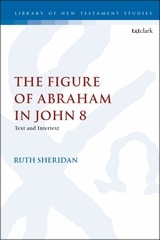
This is the first volume to extensively explore the intersection between Johannine anti-Judaism and Abrahamic allusions, using the theoretical lens of poststructuralism and intertextuality theory. Ruth Sheridan’s study yields new insights into how the metaphors of ‘sin’, ‘slavery’ and ‘vision’ are constructed in the text, producing an interpretation consistent with figurations of Abraham in Early Judaism as a paternal figure of vicarious merit.
John 8.31-59 is often categorised in New Testament scholarship as one of the most polemical texts illustrating nascent Christianity’s anti-Jewish trajectory, as Jesus debates with ‘the Jews’ about their reputed diabolic paternity, sidelining their own selfidentifications that are steeped in biblical traditions. Another defining feature of the text is its repeated reference to the figure of Abraham, displaying a condensed network of intertextual allusions to Abraham seen nowhere else in the Fourth Gospel. Sheridan seeks instead to rehabilitate the Jewish voice of the text, working with the narrative intertext of ‘the Jews” self-characterisation as the ‘seed of Abraham’ to counteract particular pejorative readings of John 8 found in the secondary literature.
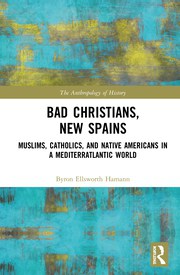
This book centers on two inquisitorial investigations, both of which began in the 1540s. One involved relations of Europeans and Native Americans in the Oaxacan town of Yanhuitlán (in New Spain, today’s Mexico). The other involved relations of Moriscos (recent Muslim converts to Catholicism) and Old Christians (people with deep Catholic ancestries) in the Mediterranean kingdom of Valencia (in the “old” Spain).
Although separated by an ocean, the social worlds preserved in these inquisitorial files share many things. By bringing the two inquisitions together, Hamann reveals how very local practices and debates had long-distance parallels, parallels that reveal larger entanglements of the early modern world. Through a dialogue of two microhistories, he presents a macrohistory of large-scale social transformation. We see how attempts in both places to turn old worlds into new ones were centered on struggles over materiality and temporality. By paying close attention to theories (and practices) of reduction and conversion, Hamann suggests we can move beyond anachronistic models of social change as colonization, and place early modern concepts of time and history at the center of our understandings of the sixteenth-century past.
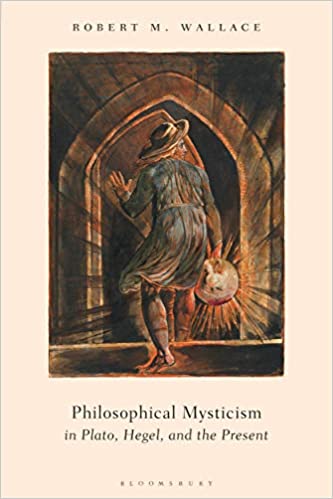
Few twenty-first century academics take seriously mysticism’s claim that we have direct knowledge of a higher or more “inner” reality or God. But Philosophical Mysticism argues that such leading philosophers of earlier epochs as Plato, G. W. F. Hegel, Ludwig Wittgenstein, and Alfred North Whitehead were, in fact, all philosophical mystics. This book discusses major versions of philosophical mysticism beginning with Plato. It shows how the framework of mysticism’s higher or more inner reality allows nature, freedom, science, ethics, the arts, and a rational religion-in-the-making to work together rather than conflicting with one another. This is how philosophical mysticism understands the relationships of fact to value, rationality to ethics, and the rest. And this is why Plato’s notion of ascent or turning inward to a higher or more inner reality has strongly attracted such major figures in philosophy, religion, and literature as Aristotle, Plotinus, St Augustine, Dante Alighieri, Immanuel Kant, Hegel, William Wordsworth, Ralph Waldo Emerson, Emily Dickinson, Whitehead, and Wittgenstein.
Open Education Week (March 1-5, 2021, #OEWeek) is a time when educators around the world come together to learn and share practices aroundOpen Educational Resources (OER) and Open Pedagogy. While there are a host of excellent webinars and events to tune into this week, let’s also celebrateour local faculty who are creating openly licensed resources, tailoring existing OER to better fit the needs of their students, and creating courses with fewer barriers to learning. Integrating OER into a course takes a lot of work, oftentimes uncompensated. But the result is well worth it. Students can access their course materials for free, from the first day of class. Ideally, the materials have been chosen and tailored to better align with the needs of the class, and they can be adapted easily if something isn’t working.
OER Projects Underway
UI Libraries supports faculty and graduate students working on OER projects through ourOpenHawks grants program. There are currently 27 UI grant teams who are working on or have recently completed OER projects as part of this three-year pilot. You can read more about these projects at the links to our 2019 and 2020 announcements. Completed OpenHawks projects can be found in Iowa Research Online, as well as OER Commons, Open Textbook Library, and wherever else you go to find OER. The projects below are complete and ready to use.
Description: The materials in this project are specifically designed for a third-year Spanish Writing course, offering guidance to instructors on how to develop each of the four modules that constitute the course: Description, narration, argumentation, and exposition.
Description: Guided Inquiry Activities for Programming Language Concepts is a collection of activities intended to support the use of POGIL—a research-based instruction strategy comprising peer learning, development of process skills, and activities that are designed around the constructivist theory of learning cycles (pogil.org)—in intermediate-level undergraduate computer science courses on functional programming and the implementation of programming languages.
Description: This book is intended for use by future teachers, written from the perspective of students who have taken Science Methods II. The student authors gathered and created resources to help prospective elementary science teachers better understand science and feel confident in their abilities as future teachers.
Description: At our institution, teaching basic physical examination (PE) skills capitalizes on the use of electronic resources and Standardized Patients (SP) with advanced training who are better able to assist students in developing their skills. This online module uses interactive methods, video, and concept applications to prepare learners for practice/review of the necessary components to develop a PE skill set.
Wingate, Christine. American English Sounds. Iowa City, Iowa: University of Iowa, 2018-2021.
Description: American English Sounds is a web resource that allows English as a Second Language (ESL) students to practice perceiving and producing the sounds of American English in order to improve their pronunciation.
Description: The Korean Activity Book 1 is designed to provide various useful materials for practicing Korean. This book is ideal for learners at the Novice Low to Novice High levels who want to practice writing and pronouncing hangeul, communicate in Korean by creating sentences using basic grammar and vocabulary, and understand and create simple conversations that are useful in everyday conversations.
More about OpenHawks
We have just released our third Call for Proposals for additional OpenHawks grant funding. If you’re interested in applying or finding out more, I would encourage you to visit the OpenHawks website to learn about the different award categories and types of OER projects you might consider. You will also find more information about the application, including the rubrics we use to evaluate proposals, general information about OER, and links to upcoming informational sessions.
Applications are due onApril 30, 2021 so get yours in soon!
Iowa Colleges and Universities Group on OER Commons
Finally, I’m pleased to announce the new Iowa Colleges and Universities Group on OER Commons. OER in these collections have been adopted, created, or recommended by faculty in the state of Iowa. The purpose of this group is to share OER that have been adopted in the state and to make it easier for faculty to locate what they need. You will be able to find many of the completed OpenHawks projects in the group, as well.
Welcome to the Library’s virtual New Book Shelf. Here we will present new titles for you to browse and check out. Titles listed here will be monographs published in the current year. If you see a title you would like to borrow, please click the link below the item and sign in with your Hawk ID and Password to request a loan.
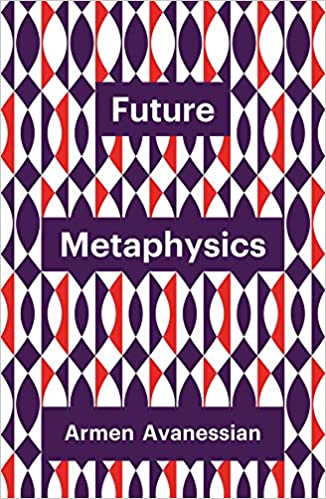
Future Metaphysics
The triumph of technological rationality and of the sciences as a whole has by no means provided answers to humanity’s great questions. Instead, it has raised new and old questions and problems. To orient ourselves in the twenty-first century, we must take a new look at the central categories of philosophy that, often unbeknownst to us, continue to shape our everyday thinking.
Future Metaphysics is an attempt at restating the importance of the great metaphysical categories for the present: how our contemporary predicament forces us both to reclaim them and to give them a radically new twist. Armen Avanessian re-examines and displaces categories like substance and accident, form and matter, life and death, giving them an unexpected twist. What if the idea of accident, for instance, had to take into account the many new kinds of glitches, crashes and crises – from finance to ecology, from technological catastrophes to social collapses – that permeate our culture and make everyday news? Can we keep on using this concept as it was traditionally meant to be used when risk and chance have become part of the very substance of our world, so rendering the distinction between substance and accident meaningless? The other concepts and distinctions require a similar interrogation, giving birth to a new metaphysical landscape, where the most urgent realities of the twenty-first century impinge on the most fundamental categories of thought.
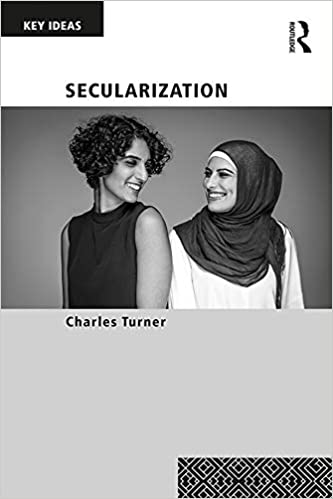
Secularization’ sounds simple, a decline in the power of religion. Yet, the history of the term is controversial and multi-faceted; it has been useful to both religious believers and non-believers and has been deployed by scholars to make sense of a variety of aspects of cultural and social change. This book will introduce the reader to this variety and show how secularization bears on the contemporary politics of religion.
Secularization addresses the sociological classics’ ambivalent accounts of the future of religion, later and more robust sociological claims about religious decline, and the most influential philosophical secularization thesis, which says that the dominant ideas of modern thought are in fact religious ones in a secularized form. The book outlines some shortcomings of these accounts in the light of historical inquiry and comparative sociology; examines claims that some religions are ‘resistant to secularization’; and analyzes controversies in the politics of religion, in particular over the relationship between Christianity and Islam and over the implicitly religious character of some modern political movements.
By giving equal attention to both sociological and philosophical accounts of secularization, and equal weight to ideas, institutions, and practices, this book introduces complicated ideas in a digestible format. It will appeal to students and scholars interested in making unusual connections within sociology, anthropology, philosophy, theology, and political theory.
Using yet untapped resources from moral and political philosophy, this book seeks to answer the question of whether an all good God who is presumed to be all powerful is logically compatible with the degree and amount of moral and natural evil that exists in our world. It is widely held by theists and atheists alike that it may be logically impossible for an all good, all powerful God to create a world with moral agents like ourselves that does not also have at least some moral evil in it. James P. Sterba focuses on the further question of whether God is logically compatible with the degree and amount of moral and natural evil that exists in our world. The negative answer he provides marks a new stage in the age-old debate about God’s existence.
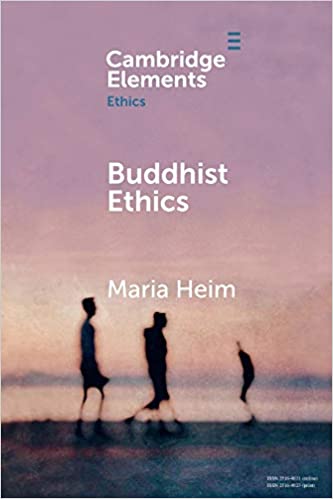
‘Ethics’ was not developed as a separate branch of philosophy in Buddhist traditions until the modern period, though Buddhist philosophers have always been concerned with the moral significance of thoughts, emotions, intentions, actions, virtues, and precepts. Their most penetrating forms of moral reflection have been developed within disciplines of practice aimed at achieving freedom and peace. This Element first offers a brief overview of Buddhist thought and modern scholarly approaches to its diverse forms of moral reflection. It then explores two of the most prominent philosophers from the main strands of the Indian Buddhist tradition – Buddhaghosa and Śāntideva – in a comparative fashion.
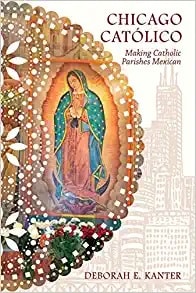
Today, over one hundred Chicago-area Catholic churches offer Spanish language mass to congregants. How did the city’s Mexican population, contained in just two parishes prior to 1960, come to reshape dozens of parishes and neighborhoods?
Deborah E. Kanter tells the story of neighborhood change and rebirth in Chicago’s Mexican American communities. She unveils a vibrant history of Mexican American and Mexican immigrant relations as remembered by laity and clergy, schoolchildren and their female religious teachers, parish athletes and coaches, European American neighbors, and from the immigrant women who organized as guadalupanas and their husbands who took part in the Holy Name Society. Kanter shows how the newly arrived mixed memories of home into learning the ways of Chicago to create new identities. In an ever-evolving city, Mexican immigrants and Mexican Americans’ fierce devotion to their churches transformed neighborhoods such as Pilsen.
The first-ever study of Mexican-descent Catholicism in the city, Chicago Católico illuminates a previously unexplored facet of the urban past and provides present-day lessons for American communities undergoing ethnic integration and succession.
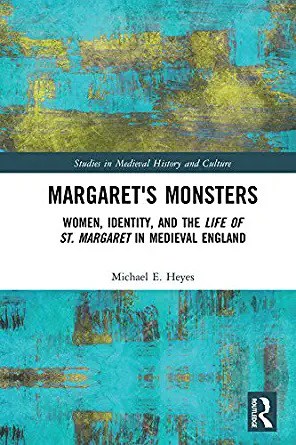
St. Margaret of Antioch was one of the most popular saints in medieval England and, throughout the Middle Ages, the various Lives of St. Margaret functioned as a blueprint for a virginal life and supernatural assistance to pregnant women during the dangerous process of labor. In her narrative, Margaret is accosted by various demons and, having defeated each monster in turn, she is taken to the place of her martyrdom where she prays for supernatural boons for her adherents. This book argues that Margaret’s monsters are a key element in understanding Margaret’s importance to her adherents, specifically how the sexual identities of her adherents were constructed and maintained.
More broadly, this study offers three major contributions to the field of medieval studies: first, it argues for the utility of a diachronic analysis of Saints’ Lives literature in a field dominated by synchronic analyses; second, this diachronic analysis is important to interpreting the intertext of Saints’ Lives, not only between different Lives but also different versions of the same Life; and third, the approach further suggests that the most valuable socio-cultural information in hagiographic literature is found in the auxiliary characters and not in the figure of the saint him/herself.
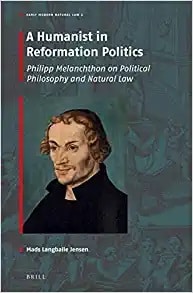
This book is the first contextual account of the political philosophy and natural law theory of the German reformer Philipp Melanchthon (1497-1560). Mads Langballe Jensen presents Melanchthon as a significant political thinker in his own right and an engaged scholar drawing on the intellectual arsenal of renaissance humanism to develop a new Protestant political philosophy. As such, he also shows how and why natural law theories first became integral to Protestant political thought in response to the political and religious conflicts of the Reformation. This study offers new, contextual studies of a wide range of Melanchthon’s works including his early humanist orations, commentaries on Aristotle’s ethics and politics, Melanchthon’s own textbooks on moral and political philosophy, and polemical works.
Jerome of Stridon and the Ethics of Literary Production in Late Antiquity
Jerome of Stridon and the Ethics of Literary Production in Late Antiquity offers a new account of the development of Jeromes work in the period 386-393CE. Focusing on his commentaries, his translation projects, and his work against heresy, it argues that Jerome has a consistent theology of language and embodiment.
In Leviticus Awabdy offers the first commentary on the Greek version of Leviticus according to Codex Vaticanus (4th century CE), which binds the Old and New Testaments into a single volume as Christian scripture. Distinct from other LXX Leviticus commentaries that employ a critical edition and focus on translation technique, Greco-Roman context and reception, this study interprets a single Greek manuscript on its own terms in solidarity with its early Byzantine users unversed in Hebrew. With a formal-equivalence English translation of a new, uncorrected edition, Awabdy illuminates Leueitikon in B as an aesthetic composition that not only exhibits inherited Hebraic syntax and Koine lexical forms, but its own structure and theology, paragraph (outdented) divisions, syntax and pragmatics, intertextuality, solecisms and textual variants.
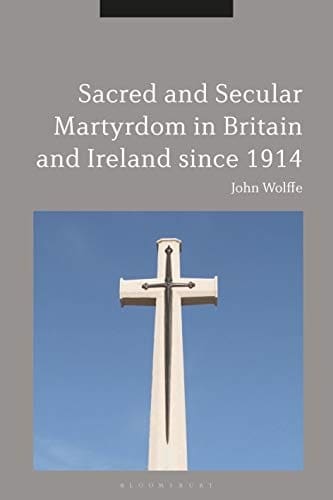
Sacred and Secular Martyrdom in Britain and Ireland Since 1914
During and immediately after the First World War, there was a merging of Christian and nationalist traditions of martyrdom, expressed in the design of war cemeteries and war memorials, and the state funeral of the Unknown Warrior in 1920. John Wolffe explores the subsequent development of these traditions of ‘sacred’ and ‘secular’ martyrdom, analysing the ways in which they operated – sometimes in parallel, sometimes merged together and sometimes in conflict with each other.
Particular topics explored include the Protestant commemoration of Marian and missionary martyrs, and the Roman Catholic campaign for the canonization of the ‘saints and martyrs of England’. Secular martyrdom is discussed in relation to military conflicts especially the Second World War and the Falklands. In Ireland there was a particularly persistent merging of sacred and secular martyrdom in the wake of the Easter Rising of 1916 although by the time of the Northern Ireland ‘Troubles’ in the later twentieth-century these traditions diverged. In covering these themes, the book also offers historical and comparative context for understanding present-day acts of martyrdom in the form of suicide attacks.
On the heels of its recent arrangement with PLOS, the Big Ten Academic Alliance (BTAA) has entered intoa second contract to bundle the cost of journal subscriptions and Open Access (OA) publishing, this time with publisher, Cambridge University Press. Under this agreement, UI corresponding authors can publish their journal articles OA and free of cost to them, in any of Cambridge’s journals.* These articles can then be read by anyone, anywhere, without the paywalls that traditionally accompany academic journals.
This arrangement is part of a larger effort by UI Libraries and the BTAA to reduce the cost of OA for individual researchers. Unfortunately, publishers often charge authors directly to pay for the cost of publishing OA journal articles.(For instance, Cambridge normally charges $2,520 per article for OA.) For faculty who don’t have grant or departmental funding, this can be prohibitively expensive. These costs have soared in recent years and are a significant barrier to making research open and freely accessible.
As the Libraries continue to sign these types oftransformative agreements, our hope is that more and more of our faculty will be able to publish their research OA without fees.
For more information, please contact Sara Scheib, Head of Scholarly Impact, or Mahrya Burnett, Scholarly Communications Librarian.
* Six Cambridge University Press journals are excluded from this agreement: – Africa Bibliography – Annales. Histoire, Sciences Sociales – Annales. Histoire, Sciences Sociales: English Edition – Behavioral and Brain Sciences – PMLA / Publications of the Modern Language Association of America – New Surveys in the Classics
Welcome to the Library’s virtual New Book Shelf. Here we will present new titles for you to browse and check out. Titles listed here will be monographs published in the current year. If you see a title you would like to borrow, please click the link and use the website to request a loan.
The Hope of Israel
Mauro summarizes what not only constitutes the hope of the Jews, but the hope of the Christian Church as well.
His entire argument can be summed up in this way: it’s a serious mistake to think that the faithful Jews in the Old Testament were hoping for anything less than the spiritual Kingdom of Christ that we Christians are hoping for.
And since Mauro had just extricated himself from Dispensationalism, he makes the point plain, over and over, that anybody who believes that the Jews (past or future) are going to receive a physical fulfillment of the Old Testament promises is just as much in error as were the Pharisees in Jesus’ day, who rejected outright the Lord’s efforts to turn them in a spiritual direction.
Summoning everyday Catholic laywomen to the forefront of twentieth-century Catholic history, Mary J. Henold considers how these committed parishioners experienced their religion in the wake of Vatican II (1962–1965). This era saw major changes within the heavily patriarchal religious faith—at the same time as an American feminist revolution caught fire. Who was the Catholic woman for a new era? Henold uncovers a vast archive of writing, both intimate and public facing, by hundreds of rank-and-file American laywomen active in national laywomen’s groups, including the National Council of Catholic Women, the Catholic Daughters of America, and the Daughters of Isabella. These records evoke a formative period when laywomen played publicly with a surprising variety of ideas about their own position in the Catholic Church.
While marginalized near the bottom of the church hierarchy, laywomen quietly but purposefully engaged both their religious and gender roles as changing circumstances called them into question. Some eventually chose feminism while others rejected it, but most, Henold says, crafted a middle position: even conservative, nonfeminist laywomen came to reject the idea that the church could adapt to the modern world while keeping women’s status frozen in amber.
This book sheds light on the career of Samuel Prideaux Tregelles, and in doing so touches on numerous aspects of nineteenth-century British and European religious history. Several recent scholars have celebrated the 200th anniversary of the German textual critic Tischendorf but Tregelles, his contemporary English rival, has been neglected, despite his achievements being comparable. In addition to his decisive contribution to Biblical textual scholarship, this study of Tregelles’ career sheds light on developments among Quakers in the period, and Tregelles’s enthusiastic involvement with the early nineteenth-century Welsh literary renaissance usefully supplements recent studies on Iolo Morganwg. The early career of Tregelles also gives valuable fresh detail to the origins of the Plymouth Brethren, (in both England and Italy) the study of whose early history has become more extensive over the last twenty years. The whole of Tregelles’s career therefore illuminates neglected aspects of Victorian religious life.
The conflict and contact between Muslims and Christians in the Middle Ages is among the most important but least appreciated developments of the period from the seventh to the fourteenth century. Michael Frassetto argues that the relationship between these two faiths during the Middle Ages was essential to the cultural and religious developments of Christianity and Islam—even as Christians and Muslims often found themselves engaged in violent conflict. Frassetto traces the history of those conflicts and argues that these holy wars helped create the identity that defined the essential characteristics of Christians and Muslims. The polemic works that often accompanied these holy wars was important, Frassetto contends, because by defining the essential evil of the enemy, Christian authors were also defining their own beliefs and practices. Holy war was not the only defining element of the relationship between Christians and Muslims during the Middle Ages, and Frassetto explains that everyday contacts between Christian and Muslim leaders and scholars generated more peaceful relations and shaped the literary, intellectual, and religious culture that defined medieval and even modern Christianity and Islam.
This book is among the most thorough and comprehensive analysis of the causes of religious discrimination to date, complete with detailed illustrations and anecdotes. Jonathan Fox examines the causes of government-based religious discrimination (GRD) against 771 minorities in 183 countries over the course of twenty-five years, while offering possible reasons for why some minorities are discriminated against more than others. Fox illustrates the complexities inherent in the causes of GRD, which can emerge from secular ideologies, religious monopolies, anti-cult policies, security concerns and more. Western democracies tend to discriminate more than Christian-majority countries in the developing world, whether they are democratic or not. While the causes of GRD are ubiquitous, they play out in vastly different ways across world regions and religious traditions. This book serves as a method for better understanding this particular form of discrimination, so that we may have the tools to better combat it and foster compassion across people of different religions and cultures.
This comprehensive volume examines contemporary life and history in Beijing, covering such topics as culture, politics, economics, crime, security, the environment, and more.
While it is not China’s most populated city, Beijing serves an important role as the political and cultural capital of the country. This volume examines Beijing’s long history, contemporary society, and current challenges the city faces as we move further into the 21st century.
Geared toward high school readers, undergraduates, and general readers interested in learning about Beijing, this volume consists of 12 narrative chapters focused on geography, history, and culture. Coverage includes location, people, history, politics, economy, environment and sustainability, local crime and violence, security issues, natural hazards and emergency management, culture and lifestyle, popular culture, and the future. “Life in the City” sidebars feature interviews and memories transcribed by people who are from, lived in, or traveled through Beijing, while other sidebars offer cultural fun facts and travel tips.
Between Europe and Asia analyzes the origins and development of Eurasianism, an intellectual movement that proclaimed the existence of Eurasia, a separate civilization coinciding with the former Russian Empire. The essays in the volume explore the historical roots, the heyday of the movement in the 1920s, and the afterlife of the movement in the Soviet and post-Soviet periods. The first study to offer a multifaceted account of Eurasianism in the twentieth century and to touch on the movement’s intellectual entanglements with history, politics, literature, or geography, this book also explores Eurasianism’s influences beyond Russia. The Eurasianists blended their search for a primordial essence of Russian culture with radicalism of Europe’s interwar period. In reaction to the devastation and dislocation of the wars and revolutions, they celebrated the Orthodox Church and the Asian connections of Russian culture, while rejecting Western individualism and democracy. The movement sought to articulate a non-European, non-Western modernity, and to underscore Russia’s role in the colonial world. As the authors demonstrate, Eurasianism was akin to many fascist movements in interwar Europe, and became one of the sources of the rhetoric of nationalist mobilization in Vladimir Putin’s Russia. This book presents the rich history of the concept of Eurasianism, and how it developed over time to achieve its present form.
One thousand years ago, a traveler to Baghdad or the Chinese capital Kaifeng would have discovered a vast and flourishing city of broad streets, spacious gardens, and sophisticated urban amenities; meanwhile, Paris, Rome, and London were cramped and unhygienic collections of villages, and Europe was a backwater. How, then, did it rise to world preeminence over the next several centuries? This is the central historical conundrum of modern times.
How Europe Made the Modern World draws upon the latest scholarship dealing with the various aspects of the West’s divergence, including geography, demography, technology, culture, institutions, science and economics. It avoids the twin dangers of Eurocentrism and anti-Westernism, strongly emphasizing the contributions of other cultures of the world to the West’s rise while rejecting the claim that there was nothing distinctive about Europe in the premodern period. Daly provides a concise summary of the debate from both sides, whilst also presenting his own provocative arguments.
It is now forty years after Mao Zedong’s death and the end of the Cultural Revolution, and more than fifty years since the Great Leap Forward and the Great Famine. During this time, the collective memory of these events has been sanitized, reduced to a much-diluted version of what truly took place. Historical and sociological approaches cannot fully address the moral failure that allowed the atrocities of the Mao era to take place. Humanist approaches, such as literary criticism, have a central role to play in uncovering and making explicit the testimonies of both victims and perpetrators in “memory writing” in order to recover the truth of China’s history.
In this unprecedented study The Great Leap Backward, inspired by Holocaust studies, memory work such as fiction, memoirs, autobiographies, and documentary films that have surfaced since Mao’s death are examined to uncover the many aspects of the forces underlying remembering and forgetting. These are significant for they also embody the politics of writing and publishing traumatic historical memories in contemporary China and beyond. Beginning with a scar literature classic and ending with popular Cultural Revolution memoirs that appeared early in the twenty-first century, this study provides us with another important way through which memory studies can help us grapple with traumatic histories.
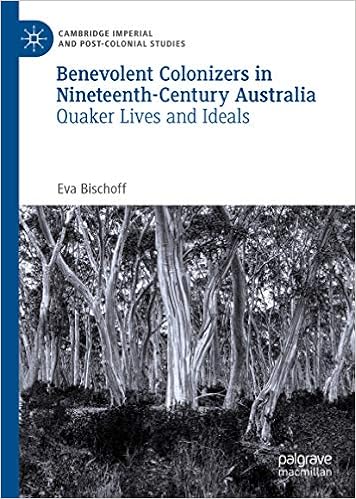
Emotions are not universal, but are experienced and expressed in diverse ways within different cultures and times. This overview of the history of emotions within nineteenth-century British imperialism focuses on the role of the compassionate emotions, or what today we refer to as empathy, and how they created relations across empire. Jane Lydon examines how empathy was produced, qualified and contested, including via the fear and anger aroused by frontier violence. She reveals the overlooked emotional dimensions of relationships constructed between Britain, her Australasian colonies, and Indigenous people, showing that ideas about who to care about were frequently drawn from the intimate domestic sphere, but were also developed through colonial experience. This history reveals the contingent and highly politicised nature of emotions in imperial deployment. Moving beyond arguments that emotions such as empathy are either ‘good’ or ‘bad’, this study evaluates their concrete political uses and effects.
Welcome to the Library’s virtual New Book Shelf. Here we will present new titles for you to browse and check out. Titles listed here will be monographs published in the current year. If you see a title you would like to borrow, please click the link and use the website to request a loan.
The Age of Selfies: reasoning about rights when the stakes are personal
This book diagnoses an unexamined cause of the incivility in our public discourse. Our most contentious controversies today are moral. We disagree not only about questions of efficiency and democracy and civil liberties but also about what is right to do and who we are becoming as a people. We have not yet understood the implications of this shift in public reasoning from discourse about political ideals to debates about moral imperatives.
Herman Cohen draws on both the documentary record and his years of on-the-ground experience to provide a uniquely comprehensive survey and interpretation of nearly eight decades of US policy toward Africa. Tracing how this policy has evolved across successive administrations since 1942 (beginning with President Franklin D. Roosevelt’s third term in office), Cohen illuminates the debates that have taken place at the highest levels of government; shows how policy toward Africa has been affected over the years by US relations with Europe, the Soviet Union, the Middle East, and most recently China; and points to the increasing reliance of Western economic interests on Africa’s natural resources. His deeply informed narrative reveals the roles not only of circumstance and ideology, but also of personalities, in the formulation and implementation of US foreign policy.
A Sacred People: Indigenous Governance, Traditional Leadership, and the Warriors of the Cheyenne Nation
Killsback, a citizen of the Northern Cheyenne Nation, reconstructs and rekindles an ancient Cheyenne world–ways of living and thinking that became casualties of colonization and forced assimilation. Spanning more than a millennium of antiquity and recovering stories and ideas interpreted from a Cheyenne worldview, the works’ joint purpose is rooted as much in a decolonization roadmap as it is in preservation of culture and identity for the next generations of Cheyenne people. Dividing the story of the Cheyenne Nation into pre- and post-contact, A Sacred People and A Sovereign People lay out indigenously conceived possibilities for employing traditional worldviews to replace unhealthy and dysfunctional ones bred of territorial, cultural, and psychological colonization.
Folk Literati, Contested Tradition, and Heritage in Contemporary China: Incense Is Kept Burning
In this important ethnography Ziying You explores the role of the “folk literati” in negotiating, defining, and maintaining local cultural heritage. Expanding on the idea of the elite literati—a widely studied pre-modern Chinese social group, influential in cultural production—the folk literati are defined as those who are skilled in classical Chinese, knowledgeable about local traditions, and capable of representing them in writing. The folk literati work to maintain cultural continuity, a concept that is expressed locally through the vernacular phrase: “incense is kept burning.”
Underglobalization: Beijing’s Media Urbanism and the Chimera of Legitimacy
Despite China’s recent emergence as a major global economic and geopolitical power, its association with counterfeit goods and intellectual property piracy has led many in the West to dismiss its urbanization and globalization as suspect or inauthentic. In Underglobalization Joshua Neves examines the cultural politics of the “fake” and how frictions between legality and legitimacy propel dominant models of economic development and political life in contemporary China. Focusing on a wide range of media technologies and practices in Beijing, Neves shows how piracy and fakes are manifestations of what he calls underglobalization—the ways social actors undermine and refuse to implement the specific procedures and protocols required by globalization at different scales. By tracking the rise of fake politics and transformations in political society, in China and globally, Neves demonstrates that they are alternate outcomes of globalizing processes rather than anathema to them.
A Cultural History of Early Modern Europe examines the relationships that developed in cities from the time of the late Renaissance through to the Napoleonic period, exploring culture in the broadest sense by selecting a variety of sources not commonly used in history books, such as plays, popular songs, sketches, and documents created by ordinary people.
Extending from 1480 to 1820, the book traces the flourishing cultural life of key European cities and the opportunities that emerged for ordinary people to engage with new forms of creative expression, such as literature, theatre, music, and dance. Arranged chronologically, each chapter in the volume begins with an overview of the period being discussed and an introduction to the key figures. Cultural issues in political, religious, and social life are addressed in each section, providing an insight into life in the cities most important to the creative developments of the time. Throughout the book, narrative history is balanced with primary sources and illustrations allowing the reader to grasp the cultural changes of the period and their effect on public and private life.
The Black Speculative Arts Movement: Black Futurity, Art+Design is a 21st century statement on the intersection of the future of African people with art, culture, technology, and politics. This collection enters the global debate on the emerging field of Afrofuturism studies with an international array of scholars and artists contributing to the discussion of Black futurity in the 21st century. The contributors analyze and respond to the invisibility or mischaracterization of Black people in the popular imagination, in science fiction, and in philosophies of history.
Cross-Strait Relations Since 2016:The End of the Illusion examines the situation in the Taiwan Strait since the election of Tsai Ing-wen of the Democratic Progressive Party in the January 2016 general elections.
Tracking the pragmatic approach taken by the Tsai administration, this book positions the recent developments within a changing geopolitical context and analyzes Beijing’s reactions to an environment which has become increasingly skeptical of its intentions. It shows that despite President Tsai’s commitment to the “status quo” in the Taiwan Strait and pro-democracy policies, which have been well received by the international community, Xi Jinping continues to advocate for a unification policy which remains very unpopular in Taiwan. With in-depth, on-the-ground analysis based on access to various government actors in Taiwan and abroad, the author takes a deep dive into a highly complex relationship that is often misunderstood abroad, with stakes that have direct implications for the future stability of the Indo-Pacific region.
This history of ancient diplomacy demonstrates how the ancient Greeks used guest-friendship as a mechanism of diplomacy. Ancient proxenoi were the equivalent of contemporary consul-generals and they served some of the same purposes. The proxenoi conducted the diplomatic affairs of the state they represented and looked after the interests of the city-state that had adopted them. In times of war the proxenoi maintained spies and supplied intelligence on the movements of fleets and armies.
More than the Great Wall: The Northern Frontier and Ming National Security, 1368–1644
This groundbreaking book provides the first comprehensive analysis of Ming China’s pursuit of national security along its 1,700 miles of northern frontier. Drawing on a wealth of original sources, John Dardess vividly portrays how Ming China’s emperors, officials, and commanders in the field thought, argued, and made decisions in real time as they worked to defend their country. Despite common perceptions of the central role of the so-called Great Wall of China, Dardess convincingly shows that the wall was but a minor piece in a much bigger effort to battle Tatar looting. Dardess immerses readers in the day-to-day world of the Ming as he explores the question of how leaders kept their country safe over the 276 years the dynasty ruled.
The University Libraries received several strong applications for the Fall 2020 Undergraduate Library Research Award (ULRA). Because of this, we were able to secure extra funding from the Academic Enrichment Fund thanks to the Friends of the UI Libraries. We were able to recognize three undergraduate students, who showed impressive research skills, innovative use of library resources, and initiative in seeking assistance from expert librarians.
Emily Bronswick, a senior History and Social Studies Education major, received an award of $500 for her project on Black Iowa Women’s Activism during the Civil Rights era. Emily met with Janalyn Moss, who helped her select books and articles to help with her research. Emily also accessed collections in the Iowa Women’s Archives that included the Edna Griffin Papers.
McKenna Kephart, a senior Nursing major with a certificate in Aging and Longevity studies, received an award of $100 for her work on developing a dining and Dementia-Friendly Communication Educational Program for Western Home Communities. McKenna met with Jen DeBerg, who helped her identify search terms and utilize subject-specific databases, such as AgeLine and PubMed.
Precious Maryah Pate, a freshman Neuroscience major received the Emerging Scholars award of $50 for research done for a Rhetoric assignment on the racial wealth gap and its effects on Black youth and Black mothers. Precious worked with Tim Arnold, who helped her identify resources in InfoHawk+ and other databases to address multiple perspectives in her research.
Join me in congratulating these students on their well-deserved accomplishments. To learn more about the award and to see past winners, visit the ULRA site.
Thanks to the review committee: Brett Cloyd, Elizabeth Riordan, and Riley Samuelson for their help selecting this semester’s award winners.
Welcome to the Library’s virtual New Book Shelf. Here we will present new titles for you to browse and check out. Titles listed here will be monographs published in the current year. If you see a title you would like to borrow, please click the link and use the website to request a loan.
Radiant Emptiness
Three Seminal Works by the Golden Pandita Shakya Chokden
Yaroslav Komarovski
Offers annotated translation of never before translated seminal works of a controversial and influential Tibetan thinker
Explores the relationship between conceptual models of reality and Buddhist contemplative practices
Critically appraises philosophical commitments and interpretive frameworks involved in accessing and describing realization of reality
In recent years, Islam – whether via the derivatives of ‘Political Islam’ or ‘Islamism’ – has come to be seen as an ‘activist’ force in social and political spheres worldwide. What such representations have neglected is the strong countervailing tradition of political quietism. Political quietism in Islam holds that it is not for Muslims to question or oppose their leaders. Rather, the faithful should concentrate on their piety, prayer, religious rituals and personal quest for virtue.
This book is the first to analyze the history and meaning of political quietism in Islamic societies. It takes an innovative cross-sectarian approach, investigating the phenomenon and practice across both Sunni and Shi’i communities.
On the fortieth anniversary of the historic “Miracle on Ice,” Mike Eruzione—the captain of the 1980 U.S Men’s Olympic Hockey Team, who scored the winning goal—recounts his amazing career on ice, the legendary upset against the Soviets, and winning the gold medal.
It is the greatest American underdog sports story ever told: how a team of college kids and unsigned amateurs, under the tutelage of legendary coach—and legendary taskmaster—Herb Brooks, beat the elite Soviet hockey team on their way to winning the gold medal at the 1980 Lake Placid Olympics. No one believed the scrappy Americans had a real shot at winning. Despite being undefeated, the U.S.—the youngest team in the competition—were facing off against the four-time defending gold medalist Russians. But the Americans’ irrepressible optimism, skill, and fearless attitude helped them outplay the seasoned Soviet team and deliver their iconic win.
This book provides a definitive overview of contemporary developments in our understanding of urban life in China. Multidisciplinary perspectives outline the most significant critical, theoretical, methodological and empirical developments in our appreciation of Chinese cities in the context of an increasingly globalized world. Each chapter includes reviews and appraisals of past and current theoretical development and embarks on innovative theoretical directions relating toMarxist, feminist, post-structural, post-colonial and ‘more-than-representational’ thinking. The book provides an in-depth insight into urban change and considers in what ways theoretical engagement with Chinese cities contributes to our understanding of ‘global urbanism’. Chapters explore how new critical perspectives on economic, political, social, spatial, emotional, embodied and affective practices add value to our understanding of urban life in, and beyond, China.
This collection of essays is dedicated to William Henry Brackney, one of the leading Baptist historians in North America for the past four decades. Few, if any, Baptist historians of any era have written more extensively, more broadly, or more insightfully on the Baptist people in North America than Brackney.
This New York Times and Wall Street Journal bestseller shows us that America’s political system isn’t broken. The truth is scarier: it’s working exactly as designed. In this “superbly researched” (The Washington Post) and timely book, journalist Ezra Klein reveals how that system is polarizing us—and how we are polarizing it—with disastrous results.
Exploring more than seventy-five well-known paradoxes in mathematics, philosophy, physics, and the social sciences showing how reason and logic can dispel the illusion of contradiction.
The journey begins with “a most ingenious paradox” from Gilbert and Sullivan’s Pirates of Penzance. Readers will then travel from Ancient Greece to cutting-edge laboratories, encounter infinity and its different sizes, and discover mathematical impossibilities inherent in elections. They will tackle conundrums in probability, induction, geometry, and game theory; perform “supertasks”; build apparent perpetual motion machines; meet twins living in different millennia; explore the strange quantum world—and much more.
In A Jewish Jesuit in the Eastern Mediterranean, Robert Clines retraces the conversion and missionary career of Giovanni Battista Eliano, the only Jewish-born member of the Society of Jesus. He highlights the lived experience of conversion, and how converts dealt with others’ skepticism of their motives. Clines uses primary sources, including Eliano’s personal letters, missionary reports, and autobiography, together with scholarship on conversion in the early modern Mediterranean world to illustrate how false and sincere conversion often mirrored each other in outward performance. Devout converts were not readily taken at face value and needed to prove themselves in the moment and over the course of their lifetimes. Consequently, Eliano’s story underscores that the mystical, introspective nature of religious belief and the formulation of new spiritual selves came into direct confrontation with the ways in which converts needed to present themselves to others in an age of political and religious turmoil.
While hagiographies tell of Christian martyrs who have died in an astonishing number of ways and places, slain by members of many different groups, martyrdom in a Franciscan context generally meant death at Muslim hands; indeed, in Franciscan discourse, “death by Saracen” came to rival or even surpass other definitions of what made a martyr. The centrality of Islam to Franciscan conceptions of martyrdom becomes even more apparent—and problematic—when we realize that many of the martyr narratives were largely invented. Franciscan authors were free to choose the antagonist they wanted, Christopher MacEvitt observes, and they almost always chose Muslims. However, martyrdom in Franciscan accounts rarely leads to conversion of the infidel, nor is it accompanied, as is so often the case in earlier hagiographical accounts, by any miraculous manifestation.
If the importance of preaching to infidels was written into the official Franciscan Rule of Order, the Order did not demonstrate much interest in conversion, and the primary efforts of friars in Muslim lands were devoted to preaching not to the native populations but to the Latin Christians—mercenaries, merchants, and captives—living there. Franciscan attitudes toward conversion and martyrdom changed dramatically in the beginning of the fourteenth century, however, when accounts of the martyrdom of four Franciscans said to have died while preaching in India were written. The speed with which the accounts of their martyrdom spread had less to do with the world beyond Christendom than with ecclesiastical affairs within, MacEvitt contends. The Martyrdom of the Franciscans shows how, for Franciscans, martyrdom accounts could at once offer veiled critique of papal policies toward the Order, a substitute for the rigorous pursuit of poverty, and a symbolic way to overcome Islam by denying Muslims the solace of conversion.
Regional Literature and the Transmission of Culture
Regional Literature and the Transmission of Culture provides a richly textured picture of cultural transmission in the Qing and early Republican eras. Drum ballad texts (guci) evoke one of the most popular performance traditions of their day, a practice that flourished in North China. Study of these narratives opens up surprising new perspectives on vital topics in Chinese literature and history: the creation of regional cultural identities and their relation to a central “Chinese culture”; the relationship between oral and written cultures; the transmission of legal knowledge and popular ideals of justice; and the impact of the changing technology of the late nineteenth and early twentieth centuries on the reproduction and dissemination of popular texts.