Hardin News

Notes from the Rare Book Room - Bleeding by the Numbers

November 19th, 2008 by Ed Holtum

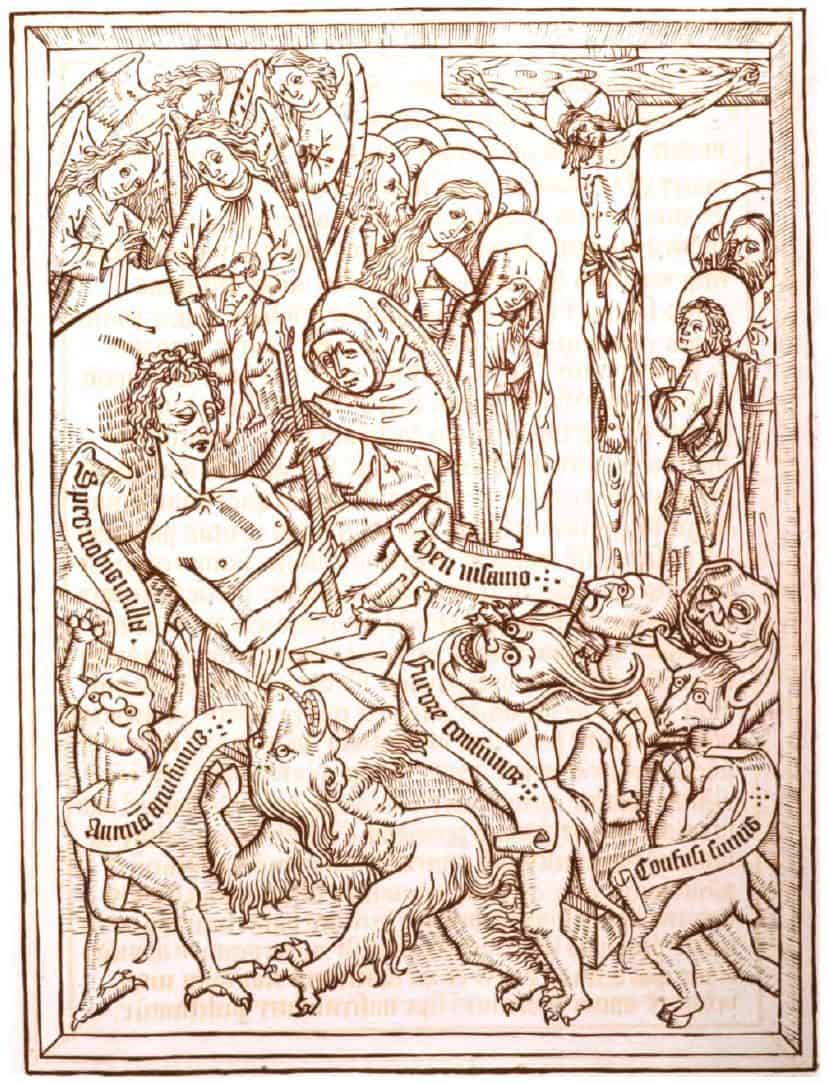
Pierre Louis’ 1835, Recherches sur les effets de la saignée dans quelques maladies inflammatoires, et sur l’action de l’émétique et des vésicatoires dans la pneumonie is one of the less impressive looking books in the John Martin Rare Book Room, but it was instrumental in laying the foundation for what we now term, “evidence based medicine.” For over 2000 years the practice of bloodletting (phlebotomy) was a mainstay of therapeutics. In fact it is difficult to identify a disease for which this practice was not recommended at some time. Bleeding had its roots in the classical Hippocratic/Galenic medical paradigm which held that the cause of illness was the result of an imbalance of humors (blood, phlegm, bile, and black bile). Just as important as the volume of blood removed was the site of the bleeding; some of the earliest medical illustrations depict the most appropriate bleeding points for various ailments. When Pierre Louis (1787-1872) placed the practice under statistical scrutiny, using “la methode numerique” he was thus swimming against the tide of centuries of tradition and authority. In Recherches sur les effets de la saignée…, Louis measured the effectiveness of bloodletting in pneumonia in 77 previously healthy patients and came to the general conclusion that bloodletting had no benefit and was even deleterious in certain groups. Just as importantly, Louis lays down in a few simple sentences the rationale large scale evaluation and in so doing paves the way for the modern clinical trial:

“Let us further remark that the objection made to the numerical method, to wit, the difficulty or impossibility of forming classes of similar facts, is alike applicable to all the methods that might be substituted. It is impossible to appreciate each case with mathematical exactness, and it is precisely on this account that enumeration becomes necessary. By so doing, the errors (which are inevitable) being the same in the two groups of patients subjected to different treatments, mutually compensate each other, and they may be disregarded without materially affecting the exactness of the results”

Louis’ methods and conclusions were lambasted by the medical establishment and it was several decades before bloodletting stopped for good and statistical analysis found its way into mainstream medical thinking.

Notes from the Rare Book Room — The Nuremberg Chronicle

October 6th, 2008 by Ed Holtum
While the production of the Guttenberg Bible in the mid 15th century constitutes the most important milestone in the history of printing, the happy marriage of moveable type and mechanized illustration is best represented by the 1493 book, Liber Chronicarum, more popularly known as the Nuremberg Chronicle. The University Libraries is fortunate to have not one but two copies of this splendid work, both of them in Latin (A German version was published later the same year). The first is located in the Special Collections Department at the Main Library while the second resides in the John Martin Rare Book Room. The text (a seven part history of the world) is the work of Hartmann Schedel (1440-1514), a German physician and scholar, while the hundreds of woodcuts come from the workshop of Michael Wolgemut (1434 – 1519), a German printmaker. 
Birth of Adam

Birth of Adam

It is probable that many of the illustrations were the work of Albrecht Dürer (1471-1528) one of the most important artists of the renaissance. Because wood-cut blocks (like metal type) employ a raised printing surface (unlike engravings), the metal type and the wood blocks can be set in the same printing chase. The impressions made using this arrangement allow text and illustration to be shown side-by-side. The Nuremberg Chronicle contains over 645 distinct illustrations (with many illustrations used more than once), including a variety of biblical scenes, stylized cityscapes, iconic genealogic trees, battle depictions, and maps (the New World being conspicuous by its absence). The Hardin Library’s copy is available for examination in the rare book room.

Notes from the John Martin Rare Book Room — More Than Mickey Mouse

June 3rd, 2008 by Ed Holtum

view-master-smallest2.jpgVisitors to the John Martin Rare Book Room are often bemused when they spot a View-Master resting on one of the bookcases. If you’re under the age of sixty-five you probably owned one of these devices along with several View-Master reels depicting far-off countries, cartoon characters or comic book heroes rendered in 3-D. But why a viewer in the rare book room? In 1962, Dr. David L. Bassett, anatomist from the University of Washington, working with William Gruber, the inventor of the View-Master created the “Stereoscopic Atlas of Human Anatomy” — over 1,500 slides of three-dimensional color images of human dissection. Nearly fifty years later the 25 volume collection remains a marvel of relatively simple technology that still elicits gasps of wonder from viewers as they behold in stark clarity the “in-depth” photographs of body structures and cavities. Each of the slides is accompanied by commentary written by Dr. Bassett (the lone dissector) and a line diagram that labels all of the structures. mandible-small.jpg The Hardin Library is fortunate to own a complete set of this amazing work which is beginning to arouse the curiosity of anatomists interested in using high-tech solutions to bring 3-D to desktop computers. In the meantime the marvelous handiwork of Mr. Gruber and Dr. Bassett is at your disposal.
You can read about and view more images of Dr. Bassett’s work here.

Rare Morphological Work Added to Rare Book Collection

March 24th, 2008 by Ed Holtum

Recently, the John Martin Rare Book Room acquired a rare copy of Edward Tyson’s 1699 book, Orang-outang, sive, Homo sylvestris, or, The anatomy of a pygmie compared with that of a monkey, an ape, and a man… The book constitutes of the most important works in the history of comparative morphology. tyson-1sm1.jpg
Physician, Edward Tyson, studied at Oxford and Cambridge and was a frequent lecturer on anatomy; he made several important contributions to medicine including the discovery of the sebaceous glands of the corona glandis (“Tyson Glands”). As a hospital administrator, Tyson was responsible for introducing female nurses to Bethlehem Hospital. Tyson’s reputation, however, rests largely with his anatomical studies which, in addition to the present investigation, included the porpoise and the opossum.

The “Orang-Outang” Tyson describes is actually a less than mature male chimpanzee from Angola that died a few months after its arrival in London. Also, his use of the word “Pygmie” denotes a group of small mythical beings whose supposed existence Tyson attributes to sightings of chimpanzees made in antiquity. Tyson’s “Pygmie” is completely unrelated to the name now given to the short-statured groups of people in Central Africa whose existence was unknown to Europeans until the 19th century.

As the first to dissect this species, Tyson noted the great morphological similarity between the animal and humans and termed it “an intermediate link” between ape and man. In doing so, Tyson did not mean to suggest a common lineage or descent but rather was referring to the “links” in the “Great Chain of Being,” the classical conception of a hierarchical universe from the simplest elements through the plants and animals and culminating in humans and finally God.

Tyson writes that the animal is “…of a higher degree above any of [the other apes and monkeys] we yet know, and more resembling a man. But at the same time I take him to be wholly a Brute, tho’ in the formation of the of the Body, and in the sensitive or brutal soul, it may be, more resembling a man, than another other anima; so that in this chain of the creation, as in intermediate link between an ape and a man, I would place our Pygmie.” The remarkable plates are executed in a style very similar to those in Vesalius’ Fabrica further underscoring Tyson’s thesis.

The copy in the John Martin Rare Book Room was once owned by William Musgrave (ca 1655-1721), former secretary of the Royal Society, physician, and noted historian. The skeleton of the chimpanzee dissected by Tyson remains on display at The Natural History Museum of London.
For additional images, click on links.
Musculature
Skeleton

Notes from the John Martin Rare Book Room

January 19th, 2007 by UI Libraries

The Well-Equipped Surgeon’s Chest — Don’t Leave Home Without It 

Woodall, John (1570–1643). The Surgeons mate or military & domestique surgery. 2nd edition, London, 1639.

Woodall, John (1570–1643). The Surgeons mate or military & domestique surgery. 2nd edition, London, 1639.The John Martin Rare Book Room recently acquired a 1639 copy of John Woodall’s, The Surgeon’s Mate, the second and greatly expanded version of the work first published in 1617. Intended as a tutorial for apprentice ship surgeons, the book was extremely popular as an authority in its time and brings to light first-hand medical care as practiced aboard sailing vessels in the early 17th century. The first surgeon-general of the East India Company, Woodall was responsible for supplying each ship with a surgeon’s chest. This accompanying volume details the various ailments, medicines, and surgical techniques for dealing with the myriad of health problems and injuries faced by sailors, including gunshot, gangrene, amputation, ulcers, and fistulas. In the passage, below, Woodall advises the junior surgeon on how to prepare a patient for the ordeal of amputation, a procedure in all too frequent use on ships.

“If you be constrained to use your saw, let first your patient be well informed of the eminent danger of death by the use thereof; prescribe him no certaintie of life, and let the work be done with his owne free will, and request, and not otherwise. Let him prepare his soule as a ready sacrifice to the Lord by earnest prayers, craving mercie and helpe unfainedly: and forget thou not also they dutie in that kinde, to crave mercie and helpe from the Almightie, and that heartily. For it is no small presumption to dismember the image of God.” [spelling from original].

Woodall was one of the first to recommend lemon juice for preventing and treating scurvy, years before James Lind confirmed its efficacy in his Treatise on the Scurvy in 1753. Woodall’s organizational talents were well recognized during his lifetime as was his courage; he remained in London to treat victims of the 1603 and 1638 plague outbreaks during which he contracted and recovered from the disease twice. Our copy of this important work is in excellent condition and includes well preserved leaves illustrating the vast armaments of surgical tools necessary for the well-equipped ship’s surgeon.

Notes from the John Martin Rare Book Room

March 21st, 2006 by UI Libraries

An Anatomical Work of Uncommon Beauty

Bourgery, Marc Jean (1797-1849). Traité complet de l’anatomie de l’homme, comprenant la médecine opératoire. 8 vols. Paris, 1831-1854.Bourgery, Marc Jean (1797-1849). Traité complet de l’anatomie de l’homme, comprenant la médecine opératoire. 8 vols. Paris, 1831-1854.

Paule Dumaitre in his Histoire de la médecine et du livre medical (Paris, 1978) commented that Bourgery’s work is considered today without question the most beautiful French work of anatomy published in 19th century. It is also without question one of the most beautifully illustrated anatomical and surgical treatises ever published in any language. The 726 hand-colored lithographs were executed after drawings by Nicolas Henri Jacob (1781-1871), a pupil of David. Jacob made his drawings from dissections and other anatomical preparations, some of which were prepared by Claude Bernard (see Heirs of Hippocrates No. 1792 ff.). One of the activities Bernard undertook in 1845, most likely to compensate for income lost when he resigned as Magendie’s student assistant, was to prepare dissections for Jacob. Although he is not recognized as a contributor, drawings made from some of his preparations appear in this first edition. Bourgery studied medicine at Paris where he interned under Laennec and Dupuytren and won gold medals for excellence from the Paris faculty of medicine and hospital administration. After ten years as health officer at Romilly, Bourgery returned to Paris to continue his career in anatomy and surgery. In addition to the present work he prepared an earlier illustrated anatomy and contributed a number of papers to the medical journals of his day. Bourgery divided his treatise into four parts which covered descriptive anatomy, surgical anatomy and techniques, general anatomy, and embryology and microscopic anatomy. Four volumes of the set are devoted to surgical anatomy and cover in detail nearly all the major operations that were performed during the first half of the nineteenth century. The University of Iowa Libraries’ copy lacks Planche 85 in Volume IV (lymphatics of the axilla).

Click here for more images of Bourgery’s Traité complet de l’anatomie de l’homme, comprenant la médecine opératoire

Notes from the John Martin Rare Book Room

January 18th, 2006 by UI Libraries

Heirs of Hippocrates Now Online

We are pleased to announce that the book catalog, “Heirs of Hippocrates” last published in 1990 (3rd edition), is now available as an online database and offered to the public on the internet at no charge.

witheringfoxglovesm2.jpg

“Heirs” is an annotated bibliography of the historic books in the John Martin Rare Book Room and has become a source of authority for antiquarian book dealers, librarians, bibliographers, historians, and collectors from around the world.

This new product is the result of the labor of many individuals, most notably, Linda Roth, Hardin Library’s Web Producer (please see the About Heirs Online for further acknowledgements).

The online version is much more than the full text of the book; although it can be browsed, the content has been entered in the form of a database to allow for precision searching and quick recall.

We invite you to take a look at this new and important scholarly contribution to the history of medicine and printing.

http://www.lib.uiowa.edu/hardin/heirsonline

Notes from the John Martin Rare Book Room

January 18th, 2006 by UI Libraries

Extreme Makeovers From The Sixteenth Century

Tagliacozzi, Gaspare (1545-1599). De curtorum chirurgia per insitionem, libri due. Venice, 1597.

taglio-2a_small.jpgAlthough Tagliacozzi was not the first plastic surgeon (it had been practiced in India centuries earlier) he is usually credited as the first modern practitioner of the art. Loss of facial parts from dueling, street fights, and syphilis were common during the 16th century. His work covers the anatomy of the nose and includes sections on the restoration of the nose, lips, and ears by means of autografting; it is replete with stunning engravings illustrating the techniques and instruments used in the various procedures. The popularity of the work caused it to be plagiarized almost immediately. However, Tagliacozzi’s work was opposed on religious grounds by such authorities as Paré and Fallopius and condemned by the church whose authorities exhumed his body and reburied it in unconsecrated ground.

Click here for additional images

Notes from the John Martin Rare Book Room

September 16th, 2005 by UI Libraries

Judging By Appearances

Porta, Giovanni Battista Della (1535?-1615).
De humana physiognomonia libri III. , Naples, 1586.

porta-front-small.jpgThe practice of attempting to discern personality traits from physical appearance goes back to antiquity. In fact, it was Aristotle who coined the term, “physiognomy” to support his own writings and inclinations on the subject. Since that time and until quite recently, the notion that character and personality are somehow imprinted in facial features has received considerable attention through a variety of approaches, many of which have been used for such nefarious purposes as racial stereotyping and the outright support of bigotry and racial superiority.

Porta was a Neapolitan philosopher, inventor, botanist, and playwright whose range of interest appeared to have no bounds. His scientific work set him at odds with the church from time to time and many of his books were banned during his lifetime. Porta posited the belief that human qualities can be discovered by noting similarities between human and animal visages. The work is made especially intriguing by the numerous wood-cut illustrations that correlate animal and human facial features.

Click here for more images.

Notes from the John Martin Rare Book Room

May 2nd, 2005 by UI Libraries

A Withering Glance at Foxglove

Withering, William (1741-1799). An Account of the foxglove, and some of its medical uses, Birmingham, 1785.

Withering, William (1741-1799). An Account of the foxglove, and some of its medical uses, Birmingham, 1785.William Withering was a keen observer of plants and their medicinal uses and had already published a widely respected and comprehensive treatise on “Botanical Arrangement of all the vegetables” when this, his most famous work was printed. A graduate of the University of Edinburgh and later appointed an early physician to General Hospital, he noted the success of a complex herbal folk recipe in the treatment of “dropsy” (cardiac edema). Withering isolated the active component as the dried leaf of the foxglove (Digitalis purpura) which had been used indiscriminately (mostly as a diuretic) for centuries. It was Withering’s careful documentation and analysis of his many cases together with his instructions for preparation and dosage that introduced digitalis as a safe drug for a specific purpose. The book was written not only as a directive but as warning against the over-use of the drug which, of course, remains in use today. The exquisite hand-colored illustration of the foxglove plant included in this copy is in near mint condition.

Click here for a larger view of image

Hardin News is proudly powered by WordPress MU