
A TRIENNIAL FINE BINDING COMPETITION & EXHIBITION
PROMOTING THE ART OF THE BINDING
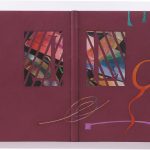
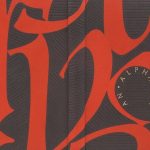
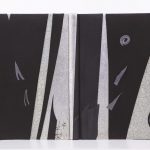
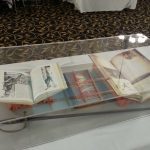
The University of Iowa Libraries’ Special Collections is pleased to announce the imminent arrival of Open*Set an exhibition in the third floor gallery space in Special Collections March 8-April 19th, 2017.
The OPEN • SET competition is a NEW triennial competition that formed in response to the burgeoning interest and palpable momentum in finely crafted design book bindings in the United States. Sponsored by the American Academy of Bookbinding, www.bookbindingacademy.org.
All are welcome for a reception in honor of this exhibition March 8, 2017 in the Special Collections Reading Room from 5:30pm. Artist, designer, printer, bookbinder and publisher and Open*Set judge David Esslemont will speak about the exhibition at 6:15pm. Light refreshments will be served.
EXHIBITION LOCATIONS AND DATES 2017
DENVER PUBLIC LIBRARY – January 5 to 28
SAN FRANCISCO CENTER FOR THE BOOK – February 1 to March 4
UNIVERSITY OF IOWA – March 8 to April 19
AH HAA SCHOOL FOR THE ARTS, TELLURIDE – April 24 to May 20
NORTH BENNETT STREET SCHOOL, BOSTON – June 8 to July 19
AUSTIN PUBLIC LIBRARY – July 26 to August 26
SEATTLE PUBLIC LIBRARY – September 8 to October 28
MARRIOT LIBRARY, SALT LAKE CITY – November 10 to January 19
OPEN SET JURORS
CATHY ADELMAN
Cathy Adelman began her bookbinding career by accident – a happy accident – at North Carolina’s Penland School of Craft in 1999. In 2003, she graduated from the American Academy of Bookbinding, having spent five years studying with Tini Miura. During that time she also began a 10-year pilgrimage to the internationally known Centro del Bel Libro in Ascona, Switzerland, to study with Edwin Heim and other international master binders.
Originally from northern Maine, Adelman is now a studio binder in southern California. Her work is exhibited both domestically and internationally
by ARA (France, Canada, Belgium and Switzerland), Designer Bookbinders, Society of Bookbinders, Estonian Association of Designer Bookbinders, Guild of BookWorkers, and Hand Bookbinders of California. She has received several awards from The Society of Bookbinders: ‘Highly Commended’ (2001); ‘Harmatan Leather Award’ for forwarding (2003); and ‘First Prize Case Binding’ (2007). She also received recognition from the Estonian Association of Designer Bookbinders (2005) and the Chicago Public Library (2006).
Cathy teaches at the Penland School of Craft as well as privately. She is a Trustee at the Penland School of Craft in Penland, North Carolina, and the Center for Craft Creativity and Design in Asheville, North Carolina.
DAVID ESSLEMONT
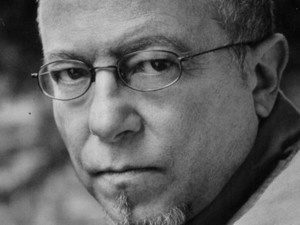
David Esslemont hails from Newcastle upon Tyne, England, and studied fine art (painting) at the Central School of Art in London. He began printing, binding and publishing in 1978 and from 1985 to 1997, was Controller (artistic and managing director, and printer) of Gwasg Gregynog, the University of Wales’ private press.
He has won many awards, including the Felice Feliciano International Award for Book Design. He has judged both Designer Bookbinders UK competitions and book design and production surveys in Wales. In 2012, he won a chili cook-off and turned the recipe into a book: Chili: a recipe. This book won the Printmaking Today ‘Innovation in Printmaking Award’ at the Oxford Fine Press Book Fair (2013) and a ‘Best of Show’ Award in the Feast exhibition in Portland, OR. His books and fine bindings have recently been selected for exhibition in Marking Time (Guild of BookWorkers, 2009-11), Feast (23 Sandy Gallery, 2013) and InsideOUT (Designer Bookbinders UK, 2014-15).
Esslemont has lectured widely in the U.K. and U.S., and his work can be found in both private and public collections worldwide. His archive is held at the University of Iowa. He has been artist-in-residence with the Wordsworth Trust in Grasmere, England, and the Minnesota Center for Book Arts (MCBA) in Minneapolis. He now lives on a farm in northeast Iowa and continues to work as an artist, designer, printer, bookbinder and publisher.
ELEANORE RAMSEY
Eleanore Ramsey began her studies in design bookbinding with Barbara Hiller in San Francisco, CA in 1974. She began exhibiting work in 1978 and has been teaching fine bookbinding privately and accepting commissions since 1980.
Ramsey has presided over a number of presentations, courses and workshops at prestigious institutions, including Mills College, the University of California at Santa Cruz, Scripps College, the ‘Standards of Excellence’ Conference for the Guild of BookWorkers, the American Academy of Bookbinding in Telluride, CO, and the California Chapter of the Guild of BookWorkers in Los Angeles, CA.
Her design bindings have been exhibited widely. Notable awards include Hand-Bookbinding Today: An International Competition and Exhibition, Stanford University, 1992 (winner of the competition); the DeGolyer Triennial Competition sponsored by Bridwell Library at Southern Methodist University (awards received in 1997, 2003 and 2012 for ‘Design’ and ‘Excellence in Fine Binding’); the Oscar Lewis Award, given by the Book Club of California for outstanding contributions in the field of Book Arts (2004); and the San Francisco Center for the Book,in recognition as one of “Five Treasures” for extraordinary dedication and innovation in Book Arts (2009).
Ramsey continues to work and teach in her San Francisco studio.
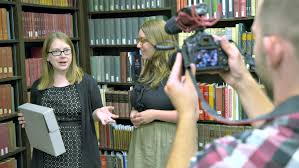



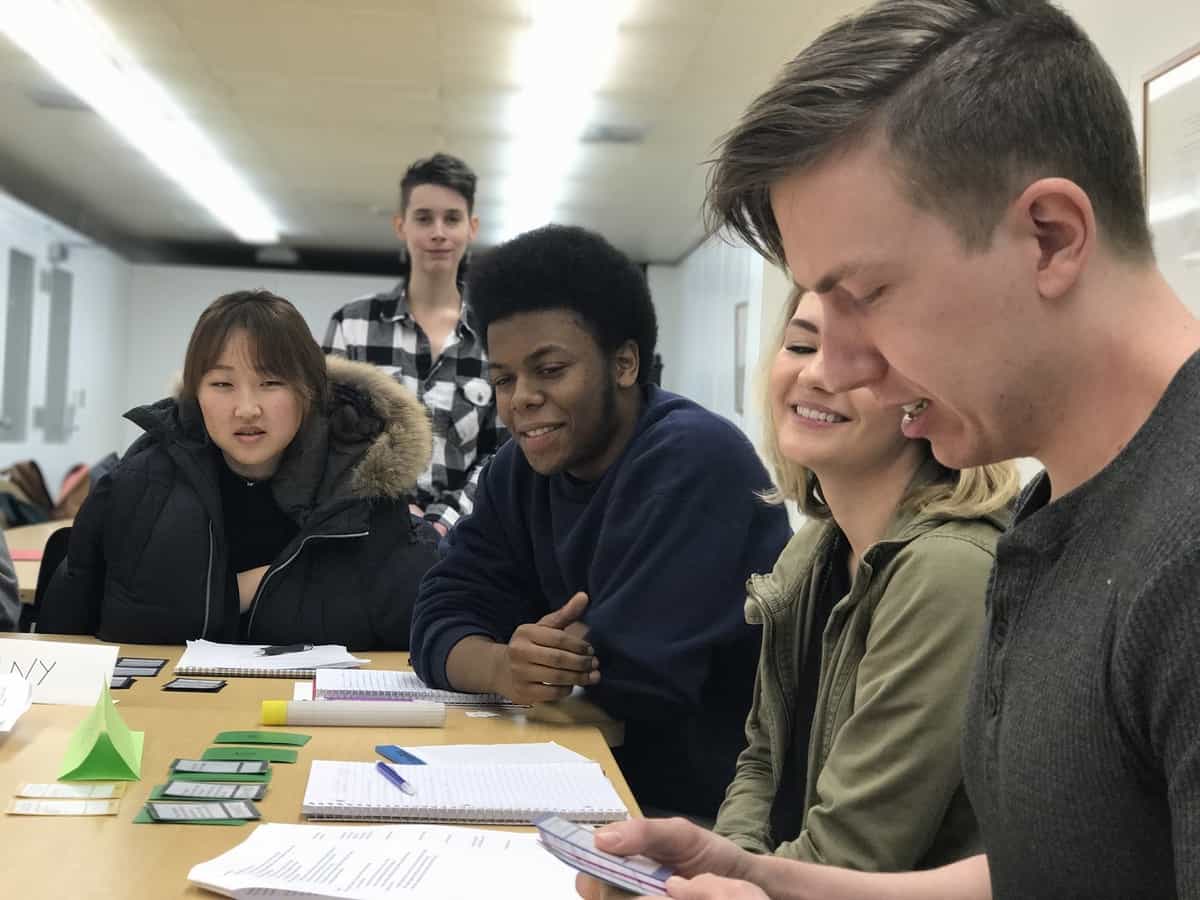
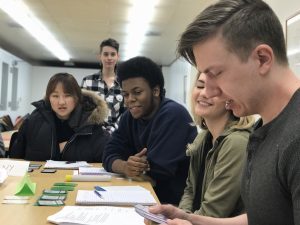 Amy is working with Serina Sulentic to allow her graphic design students create printable and boxed versions of Codex Conquest: The Game of Book History, which is currently being developed and tested.
 Timothy Shipe, curator of the International Dada Archives has two new publications:







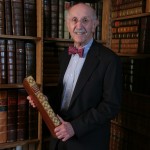 Arthur Bonfield, “The Why, How, What, and Result of 60 Years of Rare Book Collecting”
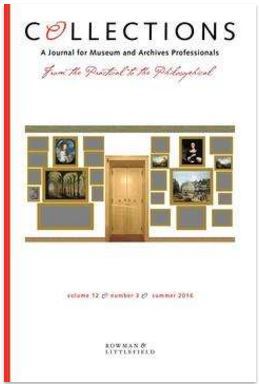
 Instruction Librarian Amy Chen has a new publication.
 So you want to visualize your data?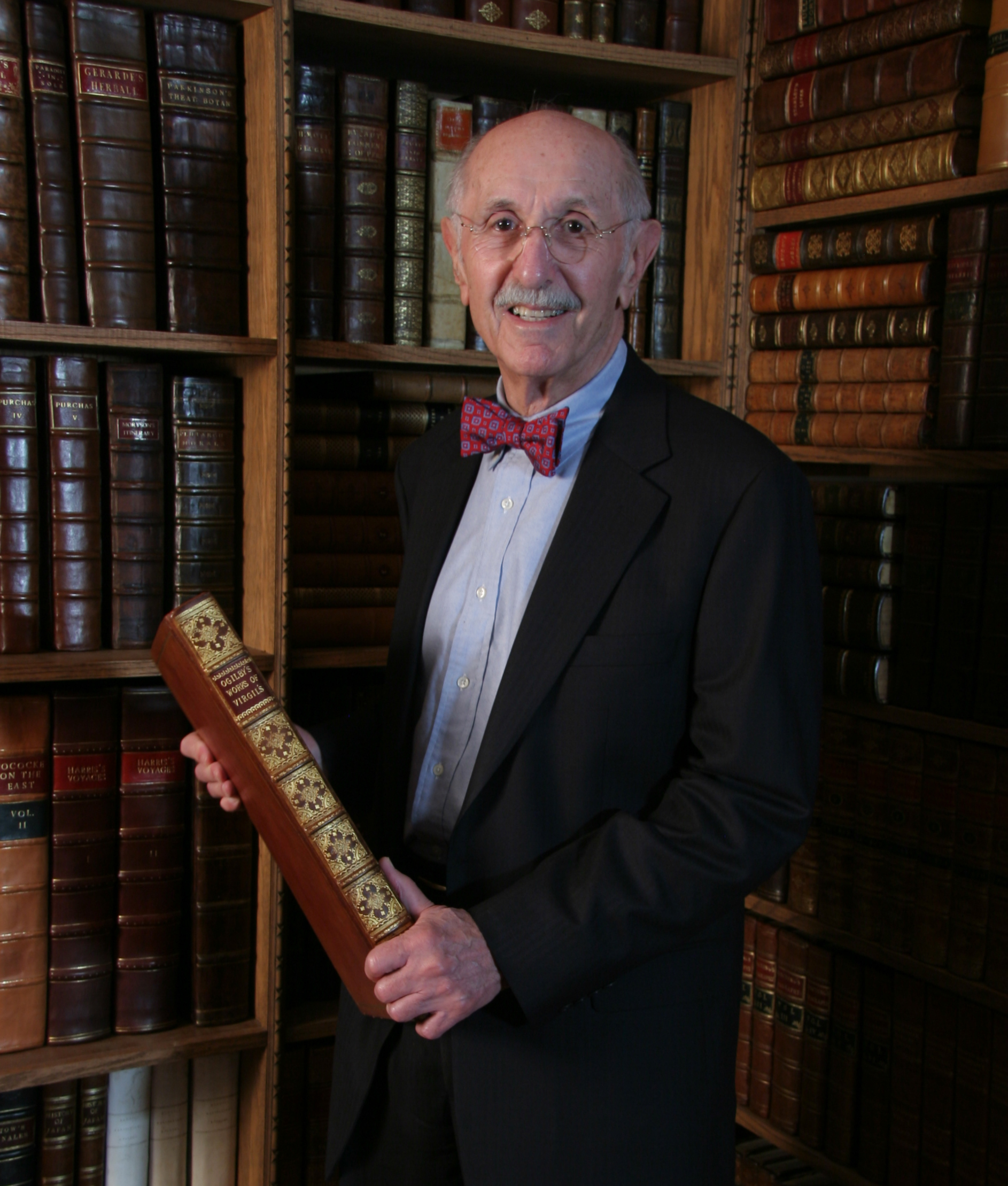
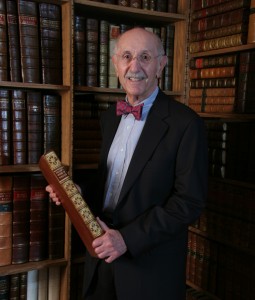 For the last 60 years Professor Arthur Bonfield has collected rare books— original copies of books on several subjects written, published, printed, and bound between 1490 and 1800. In this talk he will discuss the why, how, what, and result of his 60 years of rare book collecting. He has collected over 1,000 original copies of books from that period on voyages, travels, exploration, and geography; encyclopedias; English and continental history; English literature; English translations of classical Greek and Roman literature; political philosophy; and herbals. In his talk he will explain how and why his life has been enriched by his continuing attachment to and preoccupation with this very absorbing avocation.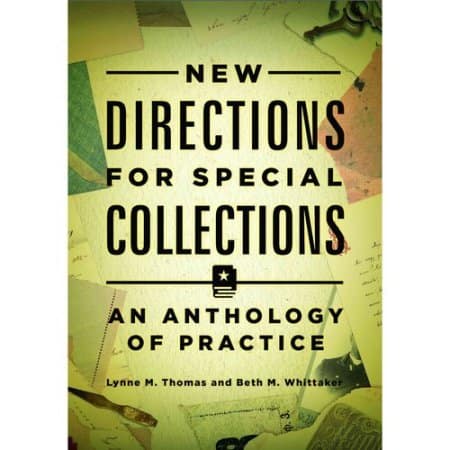
 We’ve started a new project to simulate browsing the artists’ books in the stacks. Every week, John Fifield will be refreshing the shelf with the
 Instruction Librarian Amy Chen and Outreach & Engagement Librarian Colleen Theisen have written book chapters in “New Directions for Special Collections” which will be available Nov 30, 2016 from Libraries Unlimited.
  Historic Foodies November 30th Meeting