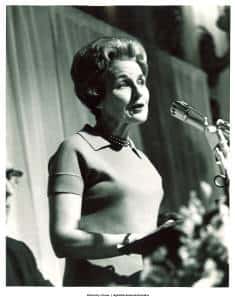
Smith speaking at Republican Women’s Conference, 1968.
Today, at the Iowa Women’s Archives commemorate one of our founders, Mary Louise Smith! Smith was born Mary Louise Epperson on October 6th, 1914 in Eddyville, Iowa. She became involved with the Republican Party in the 1950s and quickly rose through the ranks. In 1974, just after Watergate, she was appointed as the first woman to lead the Republican National Committee. Among her many accomplishments, we’re most grateful for Smith’s part in establishing the Iowa Women’s Archives. Her papers, documenting a long political career, were among the first on IWA’s shelves.
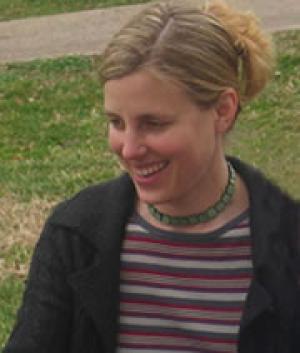
Catherine Rymph was one of the first student hired to work in the Iowa Women’s Archives when it was established in 1992. Rymph earned her PhD in history at the University of Iowa in 1998 and is now a professor of history and director of undergraduate studies at the University of Missouri. Her experience processing the papers of Mary Louise Smith had a profound impact on her:
The Mary Louise Smith papers and the Iowa Women’s Archives changed my life!—or at least they changed my career.
Catherine Rymph, professor of history, University of Missouri
In the summer of 1992, while a graduate student in History at the University of Iowa, I took an extra job working at the IWA (before the archive even opened). I spent the next year and a half processing collections what at the time were the nearly empty stacks. By far the largest collection I worked on was the papers of Mary Louise Smith, one of the IWA’s prescient founders. The collection is rich in correspondence and other documentation of Smith’s many years as a Republican Party official and as an active participant in the 1970s women’s movement. Through the process of sorting through and organizing Smith’s papers, I became
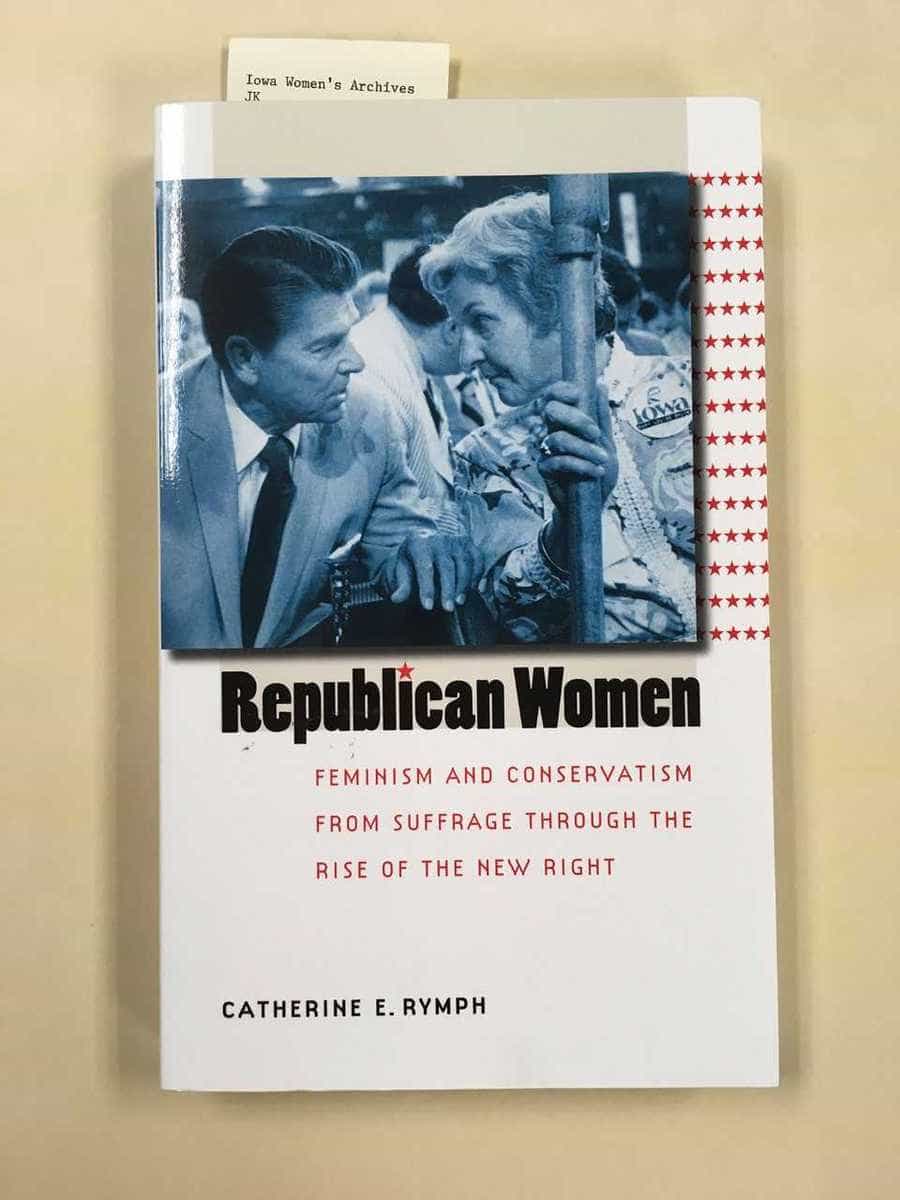
Rymph’s book Republican Women: Feminism and Conservatism from Suffrage through the Rise of the New Right
particularly fascinated by her self-identification as a Republican feminist. So fascinated, in fact, that I switched my Ph.D. research focus from the 19th to 20th centuries and wrote a dissertation on women in the Republican Party. I later published Republican Women: Feminism and Conservatism from Suffrage through the Rise of the New Right (University of North Carolina Press, 2006), which was the basis of my early career as a historian. Although I visited a number of other archives for my research, I never would have landed on the topic at all without that formative experience in Smith’s papers.
Ruth Salzmann Becker’s papers represent several common themes found in IWA’s collections, including Jewish women in Iowa, German immigration, and feminist activism. Elizabeth Heineman, professor and chair of the University of Iowa’s history department, has used Becker’s papers in her classes. She shared with us why she finds the Ruth Salzmann Becker papers so engaging:
Elizabeth Heineman, professor, University of Iowa
“One of my favorite collections at the IWA is the Ruth Salzmann Becker papers. Ruth was born in Berlin to a Jewish Socialist family; both of her parents were medical professionals. With the rise of Nazism, the family fled, though they couldn’t all get visas together. Ruth went to England, and her parents and younger sister Eva sailed to Cuba. In 1940 they regrouped in New York, where Ruth got a degree in nursing. Somewhere along the line she met Samuel Becker, who later founded Communication Studies at UI. They married, settled in Iowa City, and raised three children. Ruth became an activist for disabled children, racial justice, and feminist causes.
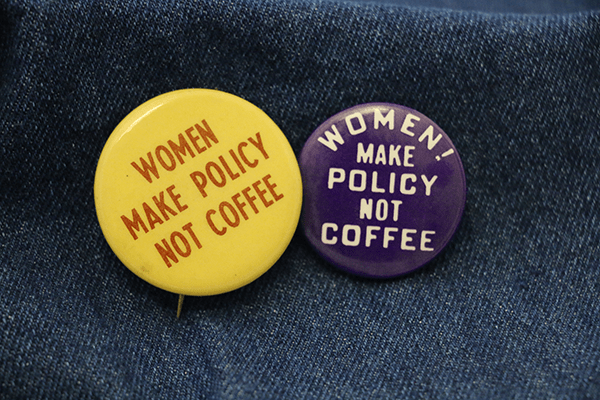
Just two of the many political buttons in the Ruth Salzmann Becker papers.
One of the wonderful things about this collection is how it shows the blending of cultures that occurs with immigration. For example, Ruth started a recipe book in Germany, perhaps as part of a Home Economics class. The book traveled with her to England, then New York, and finally Iowa. Over the years, the recipes changed, from German classics like Sauerbraten to my personal favorite: marshmallow salad. Ruth switched from German to English, from grams to ounces – even her handwriting changed, from an angular Germanic script to rounded American letters. When we displayed items from the collection in a recent exhibit called “German Iowa and the Global Midwest,” visitors could see how the family tradition of political engagement evolved: from her father’s membership book in the German Social Democratic party to Ruth’s collection of pins from the 1970s, with slogans like “My consciousness is fine – it’s my pay that needs raising!” My only regret in using the collection is that I didn’t do it early enough to meet Ruth herself!”
— Elizabeth Heineman, University of Iowa, June 2017
The Iowa Women’s Archives is turning 25! As a part of our celebration, we’re presenting an exhibit, 25 Collections for 25 Years: Selections from the Iowa Women’s Archives, in the Main Library Gallery. Through December 29th, visitors to the library can see selections from a wide array of our collections accompanied by comments from researchers who have used them. Although these comments were edited for the exhibit, we’ll be posting them in full right here on our blog for the rest of the year!
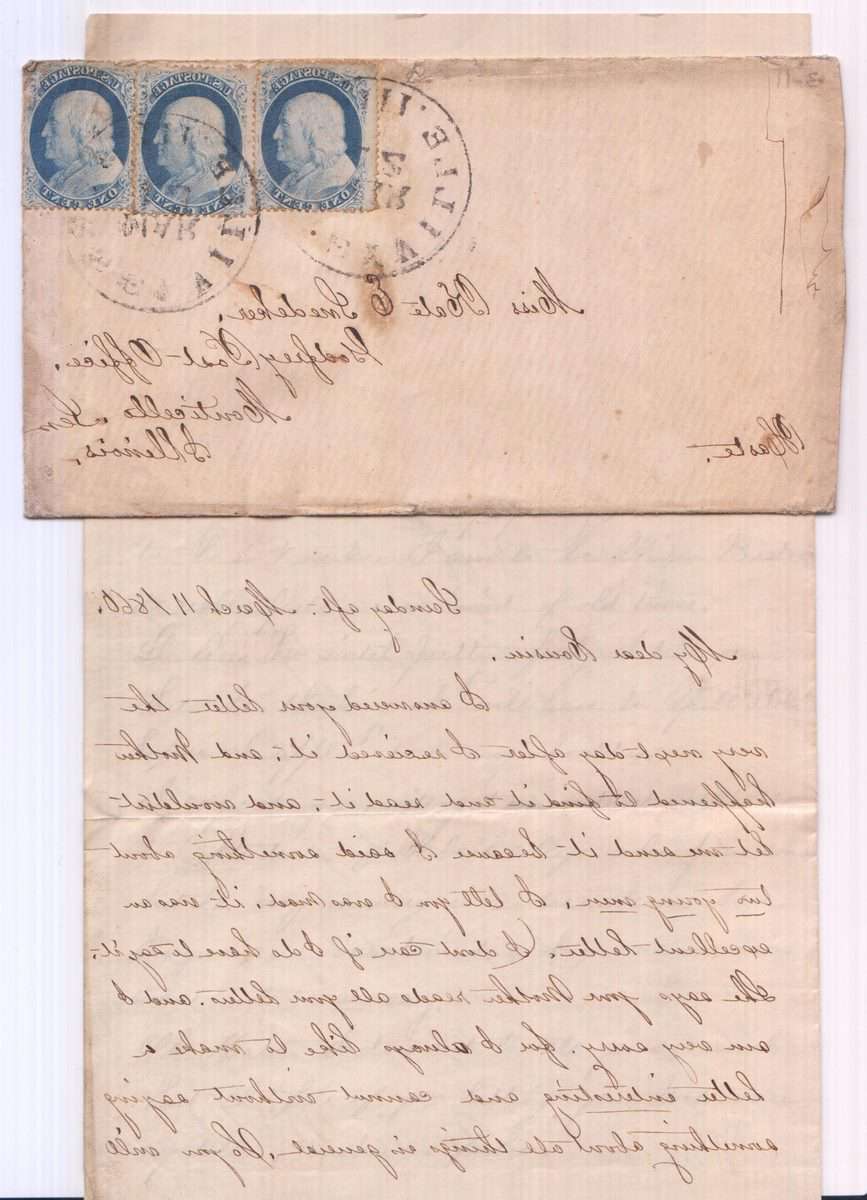
A letter to Catherine from her cousin, Annie, 1860. “I answered your letter the very next day after I received it and Mother happened to find it and read it and wouldn’t let me send it because I said something about two young men.”
For our first post, we’ll be looking at the Catherine Snedeker Hill Papers, one of the oldest collections in the Iowa Women’s Archives (IWA). Before Snedeker Hill moved to Mt. Pleasant, Iowa in 1870, she attended the Monticello Female Seminary in Monticello, Illinois. Her letters home provide a look into her daily life during the Civil War era.
Susan Stanfield is a professor of history at the University of Texas at El Paso and earned her PhD from the University of Iowa in 2013. Stanfield had this to say about the Catherine Snedeker Hill Papers:
This was the first collection I worked with at the IWA. I was a new graduate student and visiting the archive was part of an assignment for Leslie Schwalm’s 19th Century U.S. Race and Gender course.
I selected this collection because it is one of the earliest in the archive. Although the collection goes beyond her school days, I was initially interested in the education of an antebellum woman from the Midwest. Instead of being sent ‘back East’ to be educated, Catherine Snedeker attended the Monticello Female Seminary in Illinois. The Snedeker Hill papers include a large number of letters written to Catherine while she was attending school. Her senior year at Monticello was 1862, which coincided with the Civil War. It is particularly interesting to see the Civil War through the eyes of a young woman and her family, away from the conflict.
One of the things that has made this collection so memorable to me is the chance to see Catherine’s life through that liminal time between being a schoolgirl and being a wife and mother. For Catherine Snedeker that liminal moment spanned almost a decade. For me, it clarified the tenuous position many young women were in—those that left school with no defined role for themselves.
I feel fortunate to have used the Archives as both a student and as an instructor. I used a few collections (unfortunately, not the Catherine Snedeker Hill Papers) in my dissertation. My students in two different classes wrote their final papers from collections found in the IWA. It was exciting to see them work with archival material for the first time. I believe that this project not only introduced them to the practical skills of the historian, but also important critical thinking skills, as they constructed an argument from the various letters, diaries, photographs and other artifacts they encountered.
— Susan Stanfield, University of Texas at El Paso, June 2017
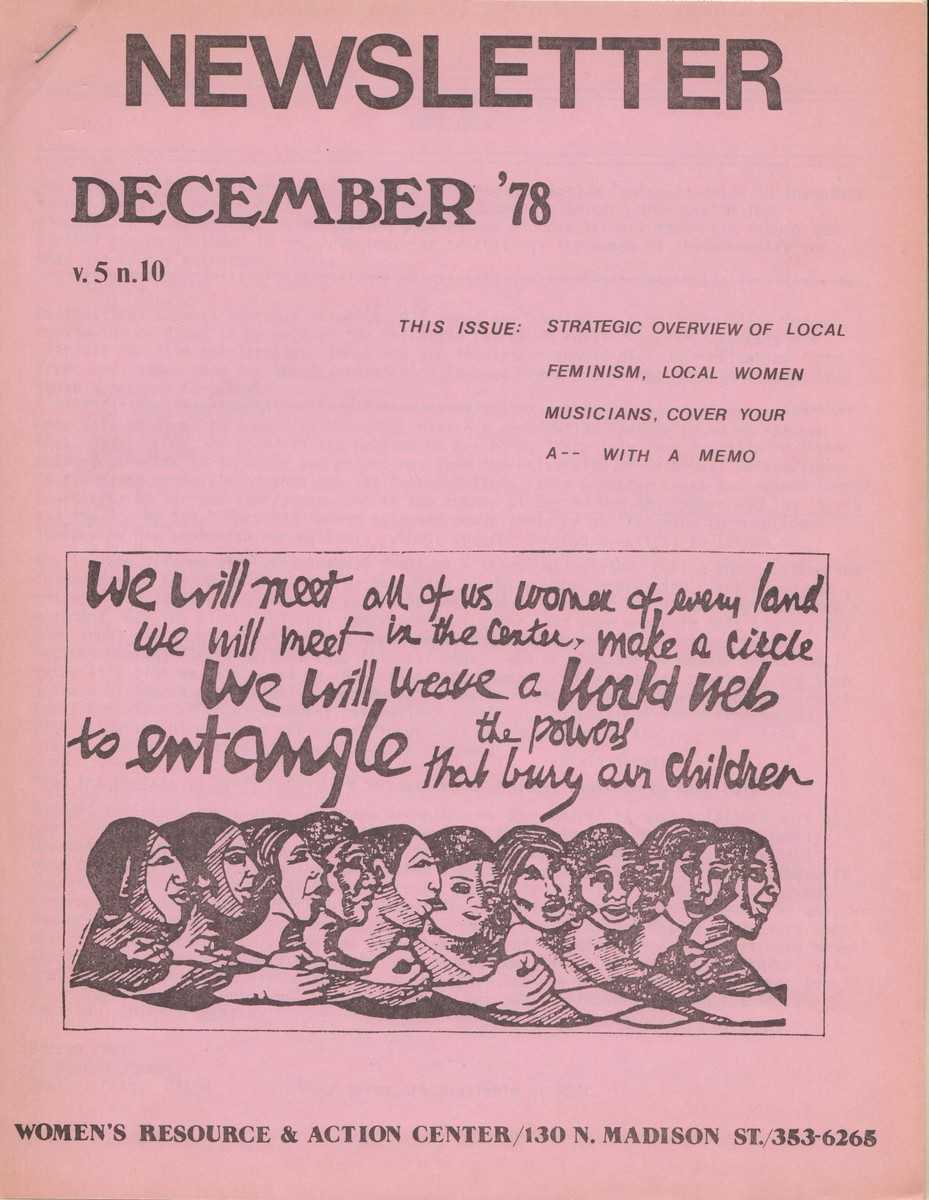
“We will meet all of us women of every land. We will meet at the center, make a circle. We will weave a world we to entangle the powers that bury our children.” — cover art for WRAC’s December 1978 newsletter
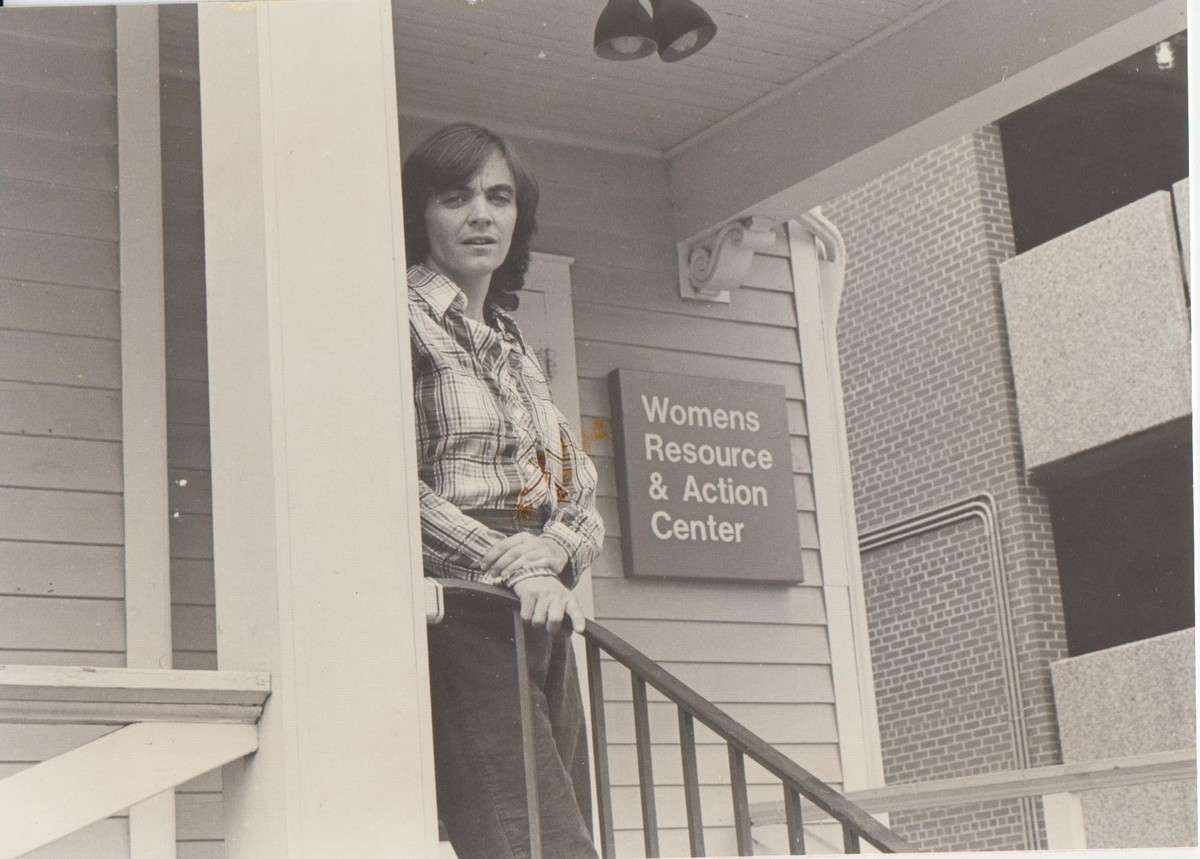
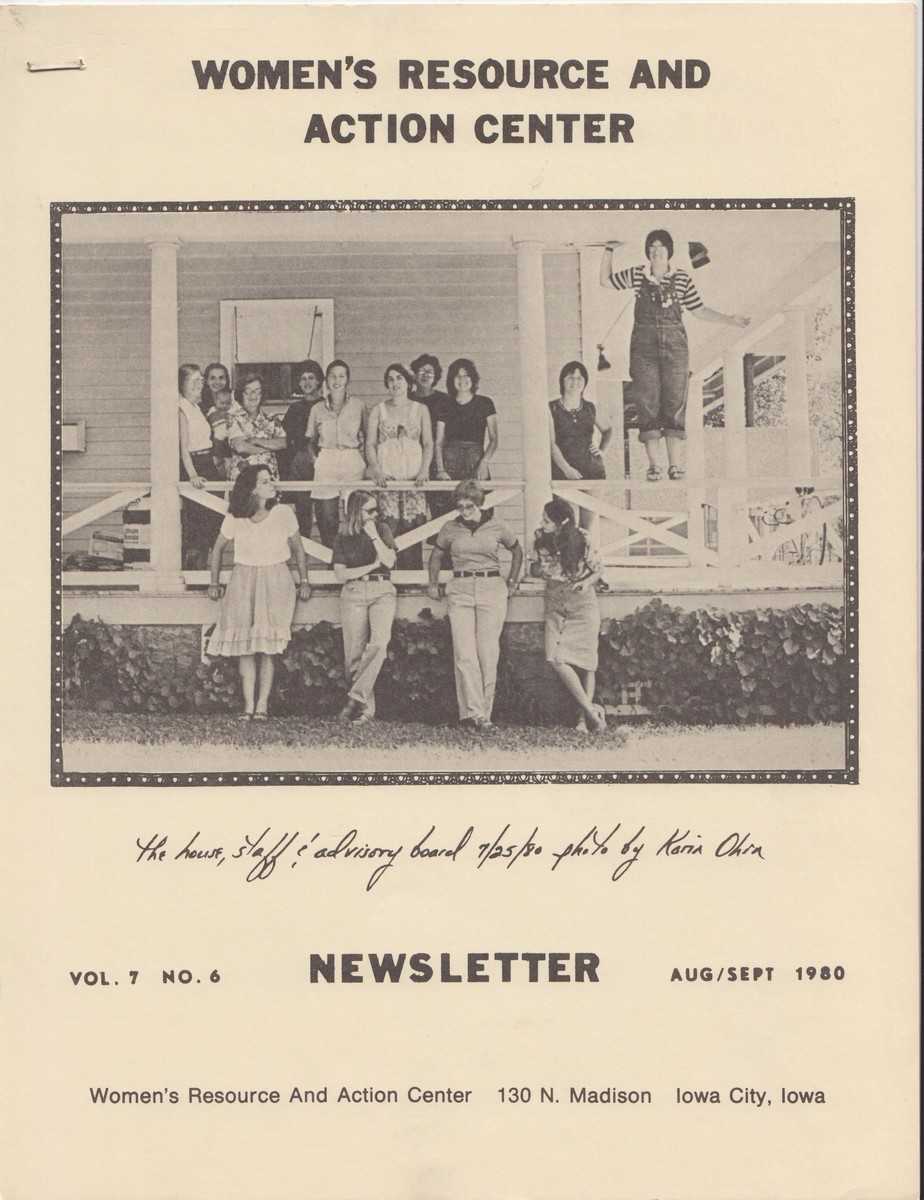
Iowa City’s Women’s Resource and Action Center (WRAC) opened in 1971 as a place for women to meet about and organize around issues that mattered to them. With support from the University, members of WRAC hosted a rape crisis line, formed anti-racism organizations, and kept track of local LGBT friendly businesses and housed dozens of discussion and support groups for women from all walks of life.
WRAC published monthly newsletters for Newsletters frequently included schedules for women’s events in town, notices for
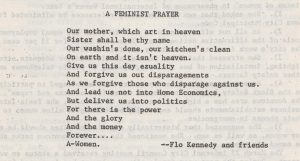
“A Feminist Prayer” from vol. 1 no 12 issue of the WRAC newsletter
for discussion and support groups, and opinion pieces on issues important to women. Newsletters also frequently included feminist poetry, such as “A Feminist Prayer,” printed in a 1975 issue.
WRAC, still on the UIowa campus, recently moved to a new, bigger location. If you would like to tour WRAC, it will be hosting a reception this Friday, July 14th, at 6pm as a part of the Iowa City Feminist Reunion.
Join us this weekend, July 14-15, for the Iowa City Feminists Reunion! Many of the women who created Ain’t I a Woman, the Iowa City Women’s Press, Nahuatzen, and other publications featured in the Main Library’s current exhibit, Power to the Printers, will be here to reflect on their experiences as activists in Iowa City in the 1960s, ‘70s, and ‘80s.
Festivities over Friday and Saturday will include a gala dinner, a variety of panel discussions, an open house at the Iowa Women’s Archives, and a reception at the Women’s Resource and Action Center. For a full schedule, please visit the event’s site.
Feel free to drop in this Friday and Saturday for the panel discussions in Shambaugh Auditorium in the Main Library. We hope to see you there!
Linda and Richard Kerber Fund for Research in the Iowa Women’s Archives
In honor of Linda and Richard Kerber’s enduring support for scholarship in the history of women, the Iowa Women’s Archives (University of Iowa Libraries) announces a grant of $1000 to fund travel to Iowa City, Iowa, to conduct research in the Iowa Women’s Archives. We welcome applicants from a variety of backgrounds, including graduate students, academic and public historians, and independent researchers and writers, although preference will be given to graduate students. The grant is intended to offset travel and lodging expenses of researchers whose work will benefit from using collections in the archives. The strengths of the Iowa Women’s Archives include rich collections on the history of the women’s movement, political activism, African Americans, rural women, and Latinas, especially in the nineteenth and twentieth centuries. The collections are global in scope. (See http://www.lib.uiowa.edu/iwa/viewshare/).
Grant recipients are expected to donate a courtesy copy of any publications that make use of the collections, and to acknowledge support of the Iowa Women’s Archives in any theses, dissertations, and publications.
Applications should be sent to lib-women@uiowa.edu with the subject line TRAVEL GRANT APPLICATION. Applications must be received via email by April 15, 2017. Notification of awards will be made by May 1, 2017.
APPLICATION GUIDELINES
Who is eligible?
We welcome applications from graduate students, academic and public historians, and independent researchers and writers who reside outside a 100-mile radius of Iowa City, Iowa, and whose research projects would be substantially enriched by the use of materials held by the Iowa Women’s Archives.
Research topics should be strongly supported by the collections of the Iowa Women’s Archives. We encourage each prospective grant applicant to discuss his or her research project and the collections that might support it with the Iowa Women’s Archives staff before submitting an application.
For information about the collections, please see our collection guides.
What expenses does the award cover?
The award may be used for travel and lodging but not for meals or photocopying. Prior to applying, non-US citizens should contact the library regarding visas or other required paperwork.
How do I apply?
The application packet consists of the following:
A one-page letter of application. Be sure to state your name, mailing address, email address, and phone number.
A research proposal of no more than 500 words describing the purpose of the research, the Iowa Women’s Archives holdings to be consulted, and the significance of these holdings to the overall project.
A curriculum vita of no more than two pages.
A proposed budget (not to exceed $1000) indicating how the funds will be spent.
Submit application to lib-women@uiowa.edu with the subject line TRAVEL GRANT APPLICATION. If you do not receive an email within 3 days confirming that your application has been received, please contact karen-mason@uiowa.edu or janet-weaver@uiowa.edu and write TRAVEL FUND in the subject line.
What dates do I need to remember?
Applications must be emailed by April 15, 2017.
Grant recipients will be notified by May 1, 2017.
Funds must be spent between June 1, 2017 and May 31, 2018.
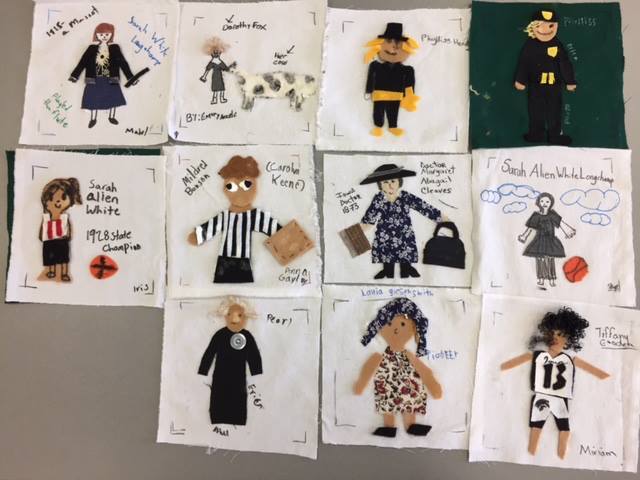
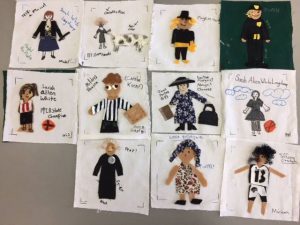
This month the IWA held an event for area girls from ages 8 – 14. The girls learned about Iowa girls and women from decades past like Dora Martin Berry, the first black student to be named Miss State University of Iowa; Dorothy Fox Wurster, who joined the local boys 4-H club in order to competitively show cattle; and Phyliss Henry, Des Moines’ first police woman.
Using photocopies of what they found, the kids made their own mini-exhibits and decorated a quilt square about a girl or woman of their choice.
All who participated had a blast, and we hope to have a similar event in the future.
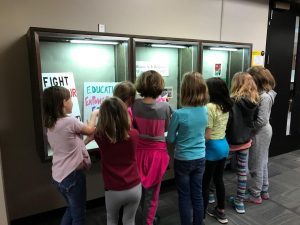
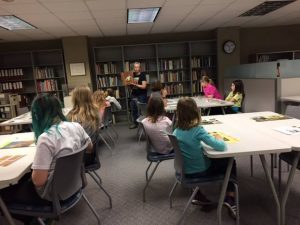
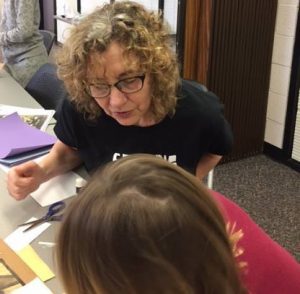
The girls examine our current exhibit “History as it Happens: Women’s March 2017Curator Kären Mason shows the girls some artifacts from IWA collections.Assistant curator Janet Weaver helps a girl write her exhibit caption, “And the women powered through it!”Quilt squares about Iowa women, by Iowa girls.
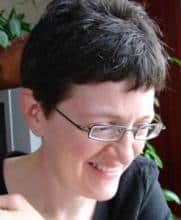
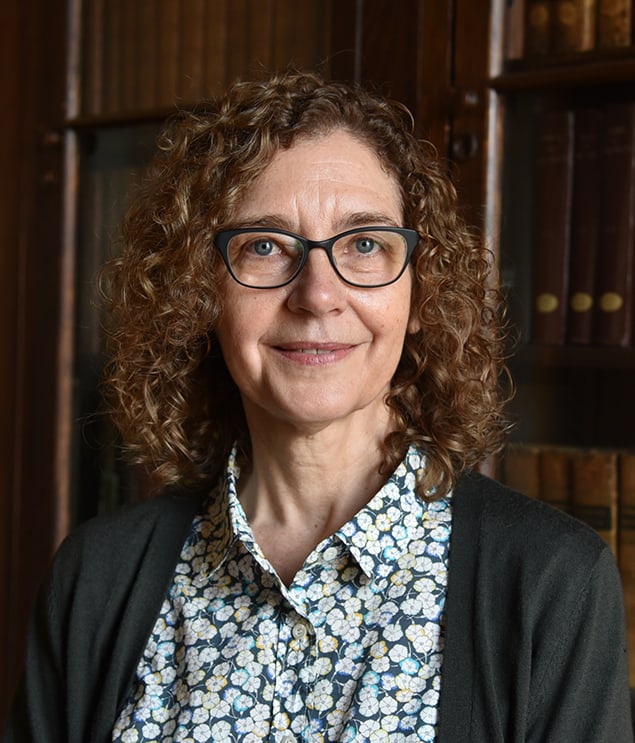
CHICAGO – Janet Weaver, assistant curator of the Iowa Women’s Archives at the University of Iowa, is the winner of the 2017 Association of College and Research Libraries (ACRL) Women and Gender Studies Section (WGSS) Award for Significant Achievement in Woman’s Studies Librarianship. The WGSS award honors a significant or one-time contribution to women’s studies librarianship.
A plaque will be presented to Weaver at a WGSS event during the ALA Annual Conference in Chicago.
“The Awards Committee was greatly impressed by Weaver’s creation of the Migration is Beautiful website, which is a project constructed from oral histories and other archival material housed at the Iowa Women’s Archives,” said award chair Stacy Russo, librarian and associate professor at Santa Ana College. “Migration is Beautiful was developed from the Iowa Women’s Archives’ Mujeres Latinas project that launched in 2005. The committee especially noted Weaver’s level of collaboration with her colleagues and undergraduate students. The students selected documents for the website and also wrote vignettes. The introduction on the website reads: ‘Migration is Beautiful highlights the contributions Latinas and Latinos have made to Iowa history. Migration is central to understanding and interpreting the past, shaped first by Native Americans, and later by immigrants from around the world.’”
The Migration is Beautiful digital humanities project highlights the contributions of Latinas, their families, and their organizations to Iowa history. Visitors can navigate the site in multiple ways to access hundreds of digitized primary documents and audio clips from oral history interviews through historical topics, life stories, and a migration map.
“Weaver’s work has brought accessibility to primary source documents that were previously only available to visitors at the Iowa Women’s Archives,” continued Russo. “After its launch in 2016, Migration is Beautiful debuted with a travelling exhibit at the national League of United Latin American Citizens (LULAC) convention in Washington, D.C. In her continued emphasis on outreach, Weaver has made presentations to Latino groups around Iowa regarding the project. Her work has also been featured on Hola Iowa, a news outlet that focuses on Latinos in the Midwest.”
Weaver received her M.A. in Modern History from the University of St. Andrews in Scotland.
Rachel Black, IWA graduate assistant completed her studies and graduated from the School of Library and Information Science. She will walk tomorrow at graduation.
Earlier this month, Rachel successfully defended her poster, “Community Building and Humanizing Social Media.”
Earlier we highlighted Rachel’s work on her blog, “@ Your Local Library.” You can read more about the project here.
Please join us in congratulating Rachel and wishing her the best in her future career.
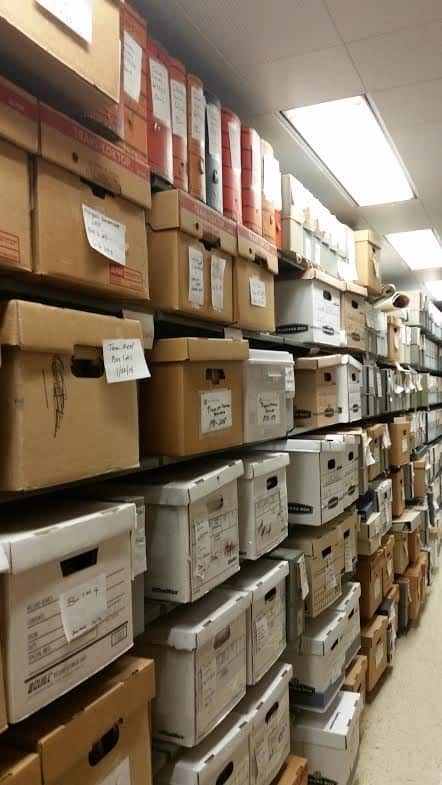
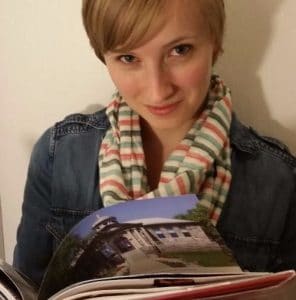
Rachel Black is a graduate assistant in the Iowa Women’s Archives. As part of her graduate work in the School of Library and Information Science she has been working on a project called “@ Your Local Library.”
“@ Your Local Library” is a series of photo essays bringing to life stories of the important work going on behind the scenes in libraries around the area, and posting about them on a WordPress site as well as Tumblr and Facebook.
On the “About” page for her website, Black describes her goals:
“Unfortunately, a lot of people aren’t aware of everything their local library has to offer. They see the books and the computers, but not the new programs or initiatives librarians are working to provide in order to create a happy and healthy community. I started this website in order to share with everyone the different ways librarians are working to benefit their communities.”
As part of the project, Black posted a six part series featuring librarians and staff from the Iowa Women’s Archives. The posts are embedded as a series below. Be sure to check out her pages to read all of the compelling stories of work going on in libraries around The Corridor.

 CHICAGO – Janet Weaver, assistant curator of the Iowa Women’s Archives at the University of Iowa, is the winner of the 2017 Association of College and Research Libraries (ACRL) Women and Gender Studies Section (WGSS) Award for Significant Achievement in Woman’s Studies Librarianship. The WGSS award honors a significant or one-time contribution to women’s studies librarianship.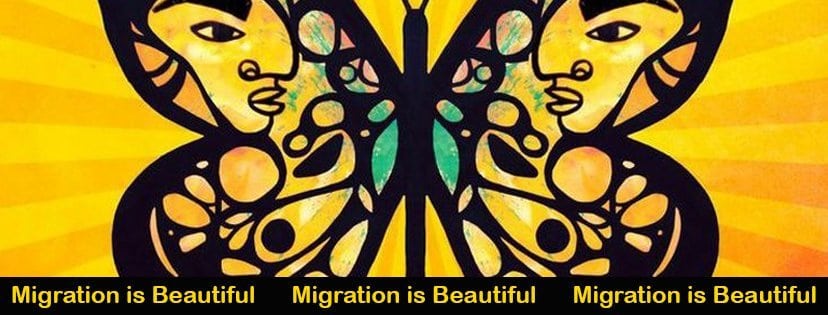
 Rachel Black, IWA graduate assistant completed her studies and graduated from the School of Library and Information Science. She will walk tomorrow at graduation.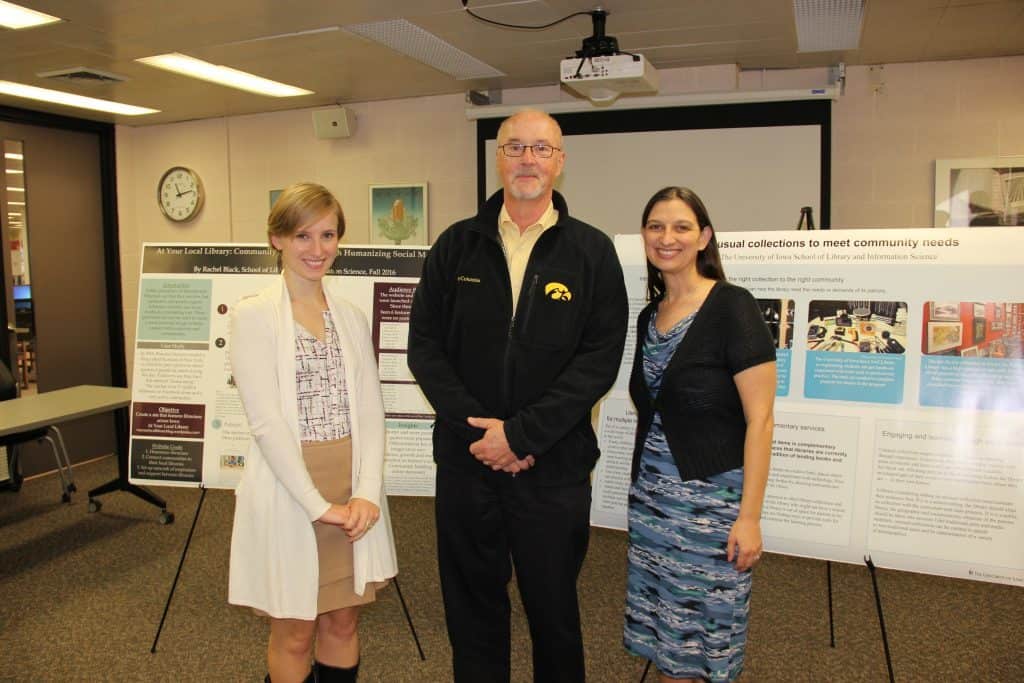

 Rachel Black is a graduate assistant in the Iowa Women’s Archives. As part of her graduate work in the School of Library and Information Science she has been working on a project called “