Skip to content
Skip to main content

Join us for a glimpse at the career of a USPTO patent examiner 

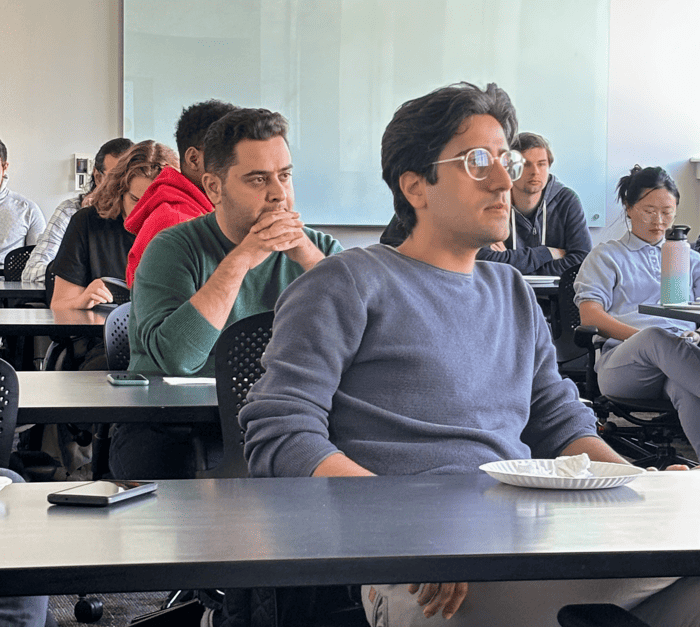
Have you ever wondered what happens to a patent after an inventor submits all that paperwork? Get a behind the scenes look with our upcoming presentation: The role of a USPTO patent examiner on Oct. 9, 2024, from 1:30 to 2:30 p.m.  

A patent examiner plays a crucial role in the intellectual property system by evaluating patent applications to determine whether they meet the legal requirements for patentability. They are the ones who ensure that the inventions described in the applications are new, useful, and non-obvious. 

Patent examiners also communicate with applicants or their lawyers. Examiners identify issues with an application and may request clarification or let the applicant know that the invention is not patentable. Applicants may respond with amendments or arguments to address these issues. This back-and-forth process continues until the application is either approved or finally rejected. 

Patent examiners come from many backgrounds. For example, Primary Patent Examiner Dung Ulsh, who will be presenting our workshop, is an expert in drugdelivery medical devices. In addition to their technical expertise, patent examiners must have a strong understanding of patent laws and regulations. 

After Ms. Ulsh’s presentation, there will be a Q&A session where Derris Banks, the regional director of the Elijah J. McCoy Midwest Regional Outreach Office, will answer questions about the patent application process. 

Need to brush up on your patent basics? Visit our patents guide for a great overview! 

The workshop is free but registration is required. Click here to save your spot today!

Explore soldering with Engineering Library resources 

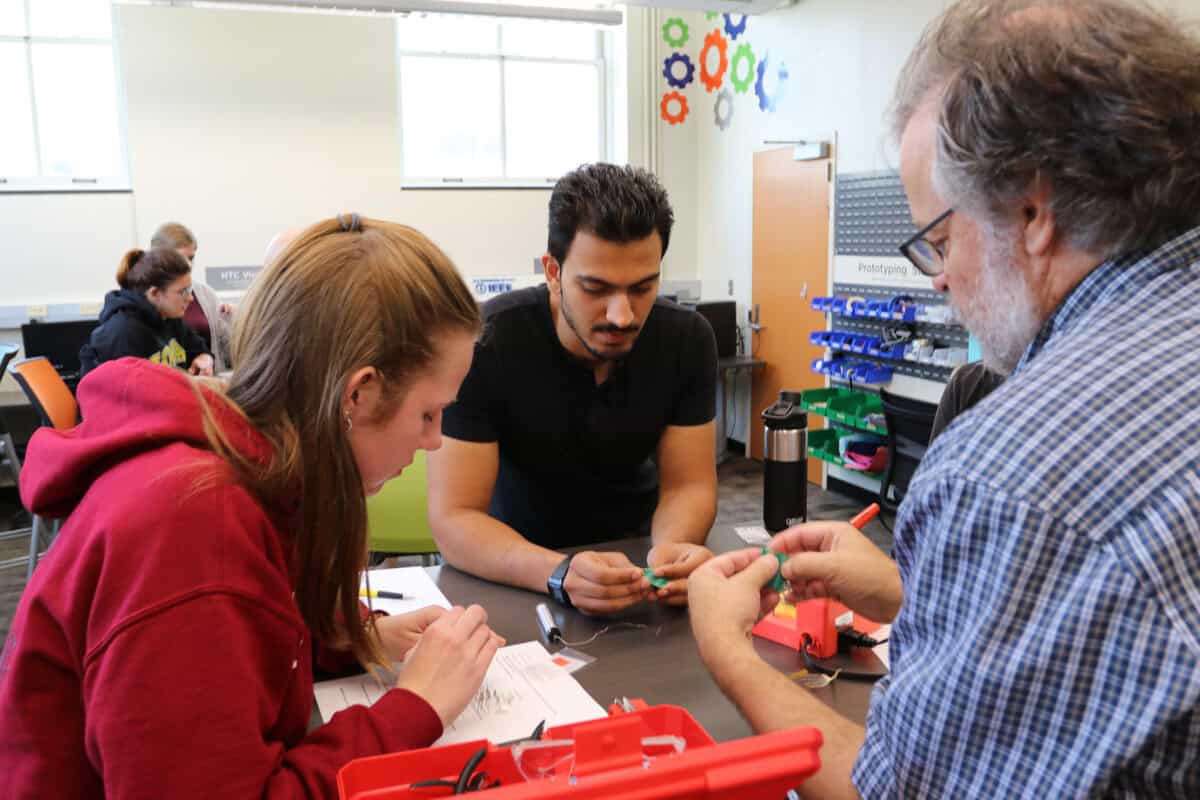
During the week of Sept. 16, we hosted a through-hole soldering workshop where participants got hands-on experience with the wide world of electronics. If your schedule is too full to make it to one of our workshops, you can still learn how to solder, just by using your Iowa One Card! 

As a guidebook check out The Basics of Soldering by Armin Rahn. As the title suggests, this book provides a great baseline of technique and application for those completely new to soldering.  

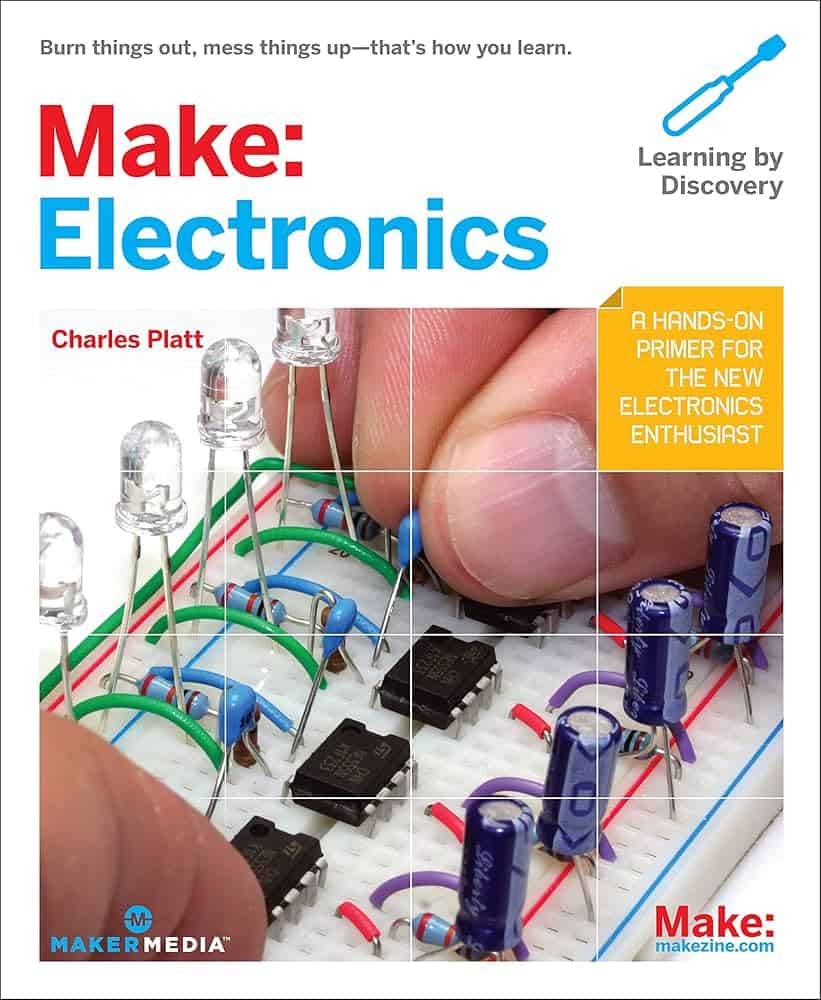
If you’re eager to jump in with more complicated projects, try a selection from our Making and Innovation Collection, found on the main floor of the Engineering Library. Try Make: Electronics by Charles Platt or Snip, Burn, Solder, Shred: seriously geeky stuff to make with your kids by Erik Nelson.  

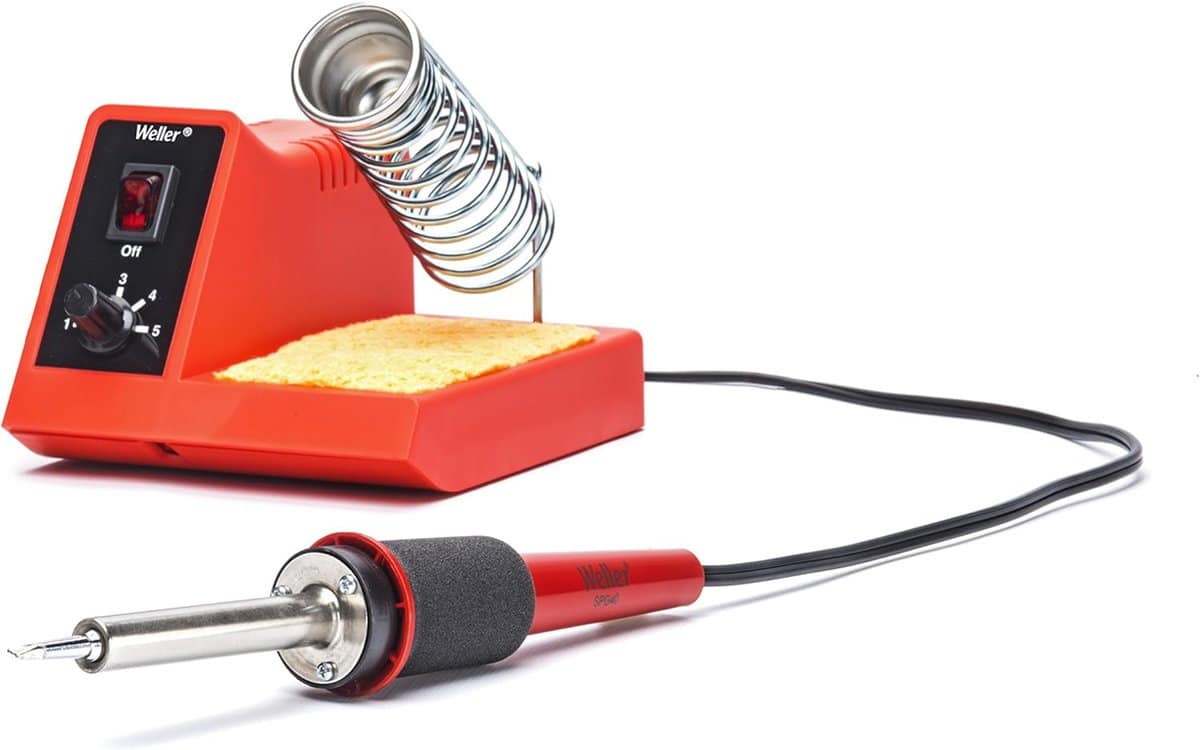
Soldering irons are also available for checkout through our Tool Library! You can check them out for one week at a time for free using your Iowa One Card. 

We still have a few spots available for our upcoming LED Pendant Soldering workshop on September 25th. The workshop is free but registration is required. Click here to register today! 

Upcoming workshops with the Engineering Library 

Learn a new skill, enhance your research, or get creative with your friends with these new workshops from the Engineering Library! 

Maker Breaks 

Take a break and get creative with seasonal crafts each month. No registration is required for these workshops—just drop by! 

All Maker Breaks take place from 11:30 a.m.–1:30 p.m. in the Engineering Student Commons. 

Thursday, Sept. 19: Origami ahoy! Celebrating Talk Like a Pirate Day 

Thursday, Oct. 24: Hawkeye nightlight 

Wednesday, Nov. 19: DIY handwarmers 

Tuesday, Dec. 10: Cookies and coasters 

Soldering 

Soldering is one of the most fundamental skills needed to explore the world of electronics. With this simple skill, you will gain a better understanding of electronics and be better equipped to create your own. Taught by Kara Beauchamp, Instructional Services Lab Manager. 

Soldering workshops are sponsored by the Institute of Electrical and Electronic Engineers (IEEE) and the Lichtenberger Engineering Library. 


Wednesday, Sept.18: Through-hole soldering 

Wednesday, Sept. 25: LED pendants 

Lunch and Learn 

Enrich your research skills and enjoy a free lunch with our new Lunch and Learn series! These workshops are designed for graduate students and faculty, but they are also open to undergraduates. 

Lunch and Learns include free pizza and are held from noon to 1 p.m. in person  in the Engineering Library Creative Space (2001C SC) and online. 

Wednesday, Sept. 11: Find the good stuff fast: Intro to the Engineering Library 

Wednesday, Oct. 2: Introduction to Endnote Desktop 

Tuesday, Oct. 22: From journals to open access: A guide to scholarly publishing 

Wednesday, Nov. 13: Navigating comprehensive literature reviews 

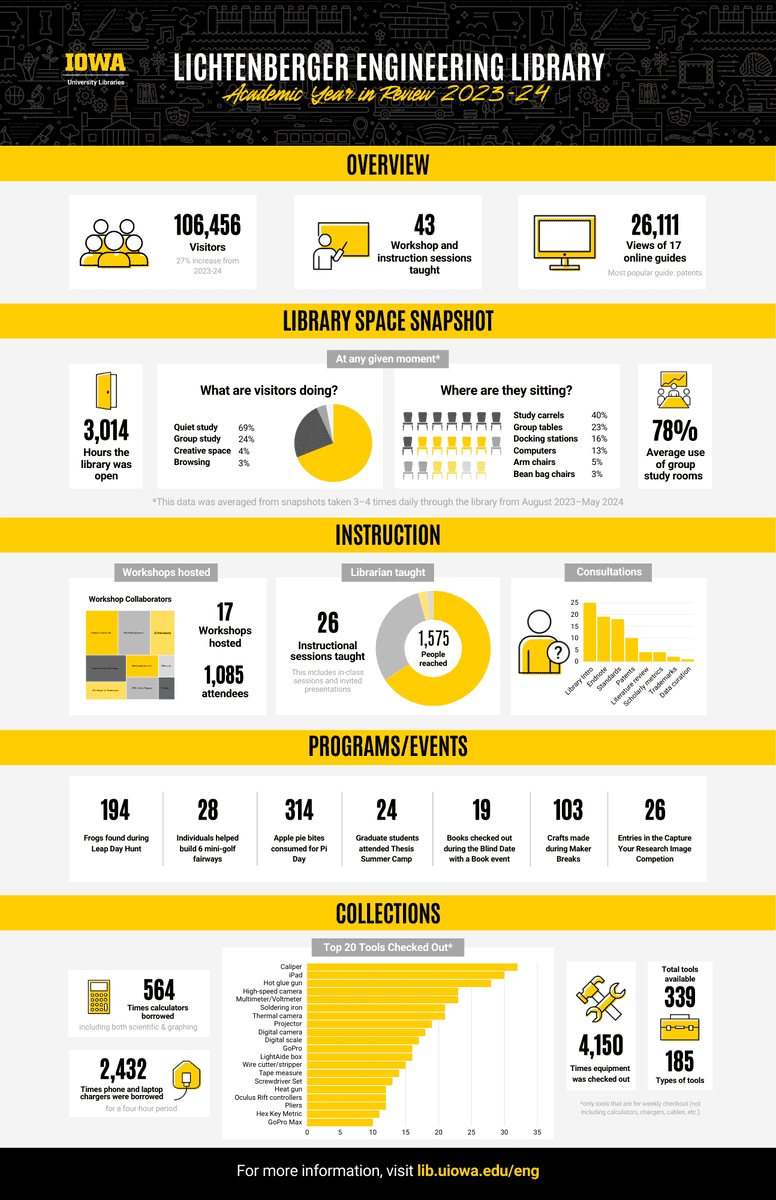
Our 2023–24 academic year in review

Lots of things are happening in the Engineering Library! Every year, we create an infographic to demonstrate just how much happens here. Here are some highlights: 

  • We welcomed over 106,000 visitors to the library (a 27% increase from last year!) 
  • On average, the group study rooms were used 78% of the time during our open hours. 
  • We hosted 17 workshops with 1,085 attendees and taught 26 instructional sessions with 1,575 audience members. 
  • Our tool library was heavily used, with items borrowed 4,150 times during the year. 

Learn more by taking a closer look at the infographic below. 

Congratulations to our spring 2024 graduates! 

Each semester we like to highlight our student workers who are graduating. This semester, our cohort of graduating student workers is four students strong.

CJ Brauns

Hometown: Coralville, Iowa 

Degree: Master of Arts in Library and Information Science 

Post-graduation plans: I’m currently applying for full-time library jobs. For now, I will continue to work at the Lichtenberger Engineering Library and the North Liberty Aquatic Center. 

 What’s one thing you learned from working at the Engineering Library? Academic libraries can be even louder than public libraries. 

Kendra Walton

Hometown: Deforest, Wisconsin 

Degree: Bachelor of Science in Biomedical Engineering 

Post-graduation plans: Still looking for a job. 

What’s one thing you learned from working at the Engineering Library? I learned a lot about different tools and technology! 

Lucas Pieper

Hometown: Ankeny, Iowa 

Degree: Bachelor of Arts in Finance with a minor in Sports and Recreation Management and Public Health Certificate 

Post-graduation plans: I have accepted a job with a commercial real estate brokerage company (Advocate Commercial Real Estate Advisors) as a client relationship associate in downtown Chicago, Illinois.   

What’s one thing you learned from working at the Engineering Library? One thing I learned while working at the Engineering Library is creative, on-the-spot problem solving. While not being an engineering major myself, I was constantly working to assist engineering majors. There were often times when they had a complex STEM-related issue that I did not know much about, but since I was working in the Engineering Library, I was able to help come up with fast and creative solutions to help solve those students’ problems. 

Wes Johnson

Hometown: Cedar Rapids, Iowa 

Degree: Bachelor of Science in Industrial Engineering 

Post-graduation plans: Work at Crystal Group in Hiawatha, Iowa as an industrial engineer 

What’s one thing you learned from working at the Engineering Library? Over my time working in the library I learned how to navigate tough requests and questions, searching for a solution even when it wasn’t right in front of me. If I was really stuck, it was always a good bet to ask James [Cox]! 

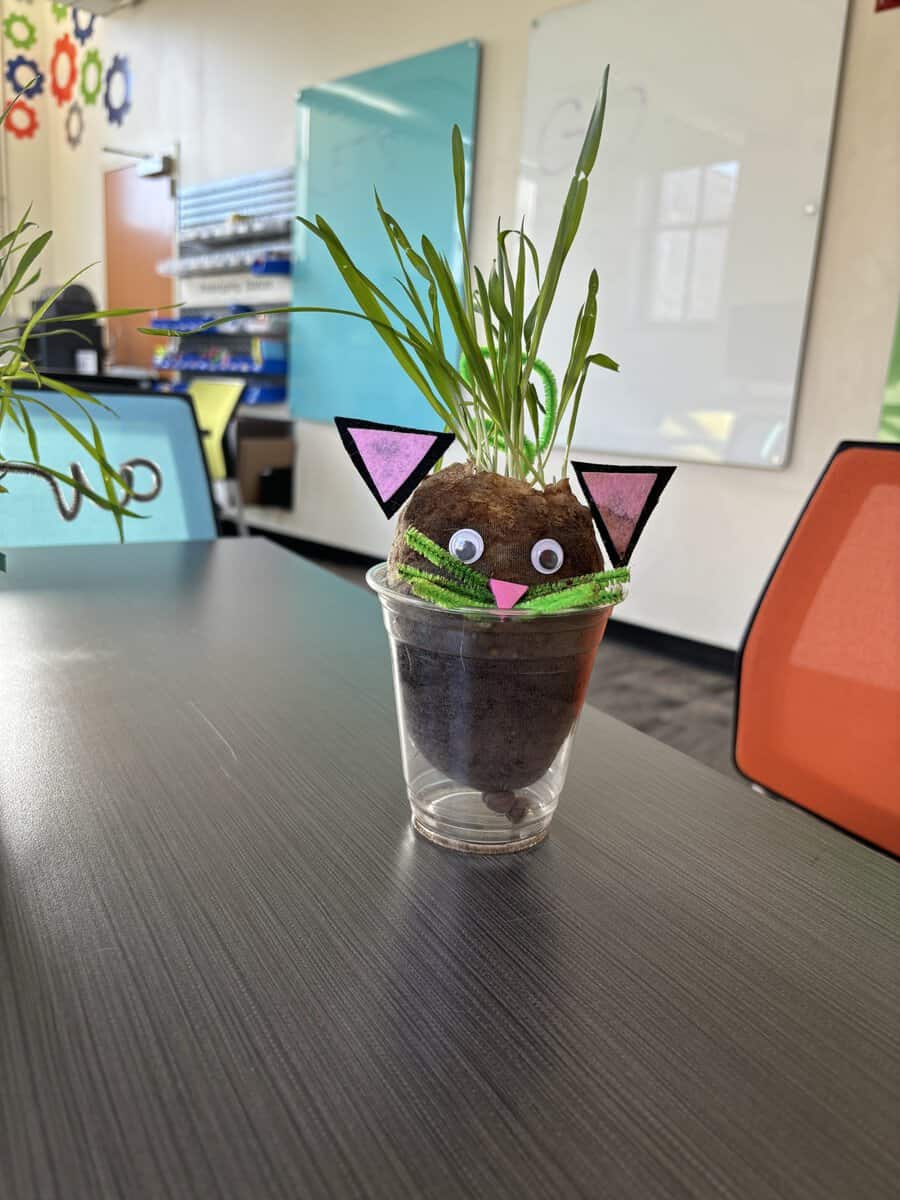
Learn about the history of the Chia Pets trademark and make your own plant buddy 

While perusing a housewares trade show in San Francisco in 1980, advertising and marketing executive Joseph Pedott stumbled upon some curiously popular gifts: terra cotta planters shaped like rams that could be covered with Salvia hispanica (also known as “chia”) seeds. Pedott reached out to the inventor, Walter Houston, and purchased the rights. In 1982, he launched his own gadget company, Joseph Enterprises, brought the chia ram to market with the catchy “Ch-ch-ch-chia” jingle, which was later registered as a trademark by Joseph Enterprises in 2005. 

The year 2000 brought the first Chia Pets modeled on licensed intellectual properties including  Looney Toons, Homer Simpson, and Mr. T. While Chia Pets were popular before, the addition of beloved characters made them really take off. Today you can buy a classic Chia Pet, including a cute kitten, or grow a friend shaped like The Child from The Mandalorian, Willie Nelson, Wednesday Addams, and more!  

Create your own plant buddy with us! 

Monday, April 22, 11:30 a.m.–1:30 p.m., Seamans Center Student Commons 

Celebrate Earth Day and spring with us by building your own chia or cat-grass buddy! Learn how to create your own green “haired” creature and decorate them to match your style. Your buddy should be fully grown just in time to help you with finals! 

Learn More

Chia.com. 2023. “About CHIA – Chia.com.” June 28, 2023. https://www.chia.com/about/. 

Traub, Alex. 2023. “Joseph Pedott, 91, Dies; Made Chia Pets an ‘As Seen on TV’ Sensation.” The New York Times. June 30, 2023. https://www.nytimes.com/2023/06/30/business/joseph-pedott-dead.html. 

Vance, Allison. 2018. “86-year-old Joe Pedott, Promoter of the Chia Pet, Was Here for Commencement.” May 8, 2018. https://blogs.illinois.edu/view/6231/648282

The unsung hero of innovation: why data management is crucial in engineering 

In the world of engineering, a secret hero often goes unnoticed: data management. It might not be as glamorous as the latest design software or cutting-edge materials, but effective data management is the foundation for successful engineering projects. Here are a few reasons why data management is an important part of any engineer’s toolkit: 

  1. It reduces errors.  Engineering relies on accuracy. Data management ensures everything is centralized, organized, and accessible, minimizing errors and the need to rework. 
  2. It streamlines collaboration.  Engineering is a team sport. When multiple teams are working on a project, it is important to have a central hub for all your data. Data management systems allow everyone to access the latest information, streamlining communication and fostering collaboration. 
  3. Data insights aid innovation. Engineering data is a goldmine of insights. By effectively managing and analyzing this data, engineers can identify trends, optimize processes, and make data-driven decisions. 
  4. Management systems keep information secure. Data management systems help ensure that all relevant data is documented, archived, and readily available for audits, keeping your projects on the right side of regulations. 

Interested in finding out more? Join us on Wednesday, April 3, at noon for our upcoming training session, “Lunch and Learn: Better Data Management in 60 Minutes,” in person in 3111 Seamans Center or on Zoom. Lunch will be provided for in-person attendees. Sign up here to save your spot today!  

Sink your teeth into these Pi Day reads

Happy Pi Day (3/14)! Celebrate this captivating constant by reading some books on pi from our collection. There’s a book for every kind of pi fan.  

For the curious newcomer 

Π: a biography of the world’s most mysterious number by Alfred S. Posamentier & Ingmar Lehmann  
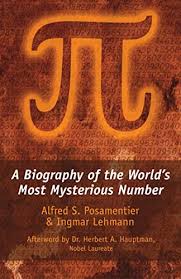
Written for non-mathematicians, the book aims to entertain while enhancing mathematical literacy. It invites readers to appreciate the beauty and intrigue of pi, transcending its simple numerical representation. Prepare to be amused by quirky examples of people’s fascination with pi. Did you know that there was even an attempt to legislate its exact value? The book uncovers such delightful anecdotes. 

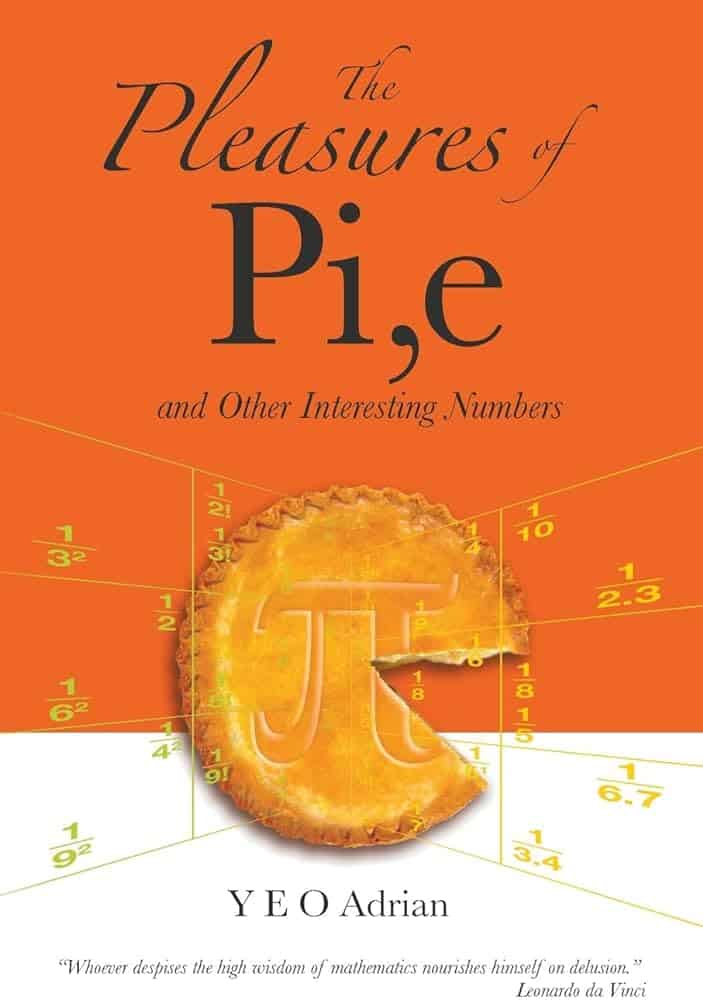
The Pleasures of Pi,e and other interesting numbers by Yeo Adrian 
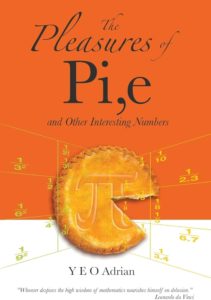
This book offers a delightful blend of mathematical exploration, historical context, and enjoyable storytelling. Whether you’re a math lover or someone who once dreaded math class, this book promises an engaging experience!  

For the mathematics enthusiast 

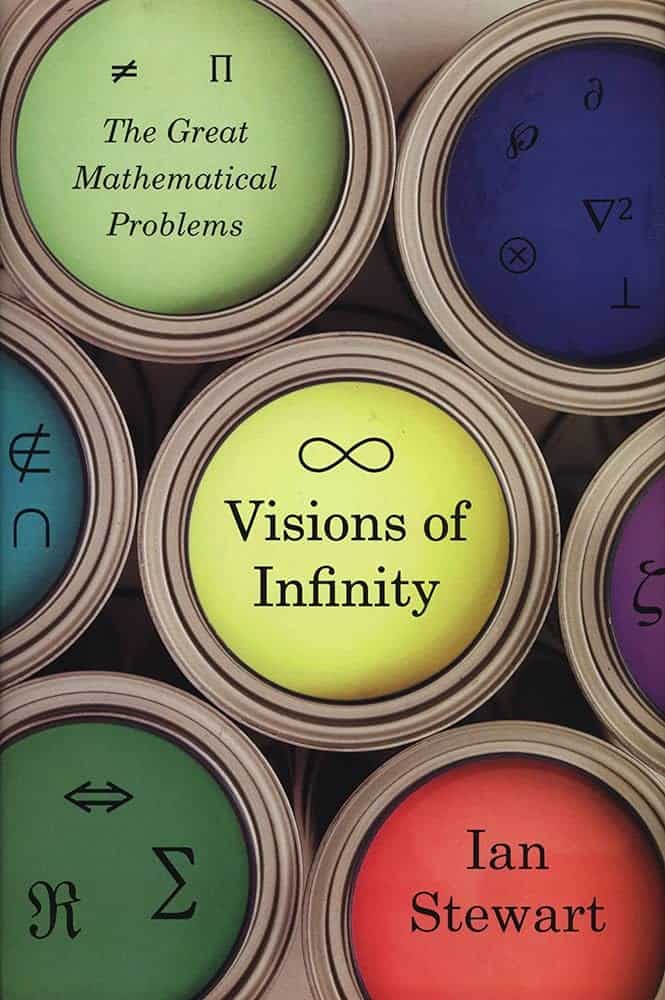
Visions of Infinity: The Great Mathematical Problems by Ian Stewart 
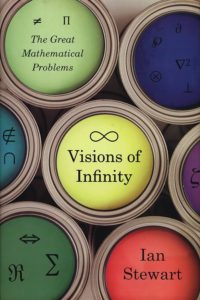
In this illuminating exploration, you’ll encounter historical enigmas like Fermat’s last theorem, which took centuries to crack, and the Poincaré conjecture, pivotal in understanding three-dimensional shapes. While some problems yield to modern techniques, others remain tantalizingly unsolved. 

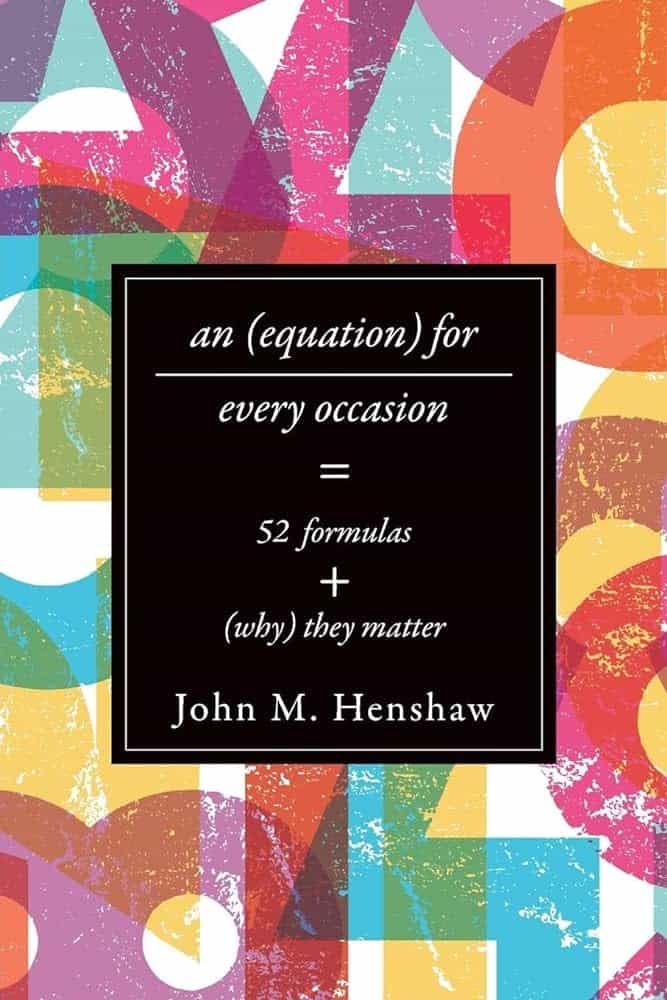
An Equation for Every Occasion: fifty-two formulas and why they matter by John M. Henshaw 
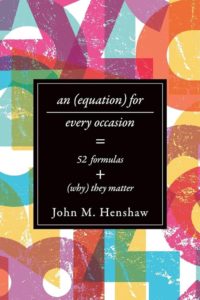
From the famous E = mc² to lesser-known equations like those determining sunscreen SPF, this book reveals the power and utility of math, making it an entertaining read for anyone curious about the far-reaching impact of mathematics. 

For the mathematical historian 

Mathematician William Jones made geometry class easier with the use of the symbol “π” to represent the number then known as Archimedes Constant or even as “quantitas in quam cum multiflicetur diameter, proveniet circumferencia (the quantity which, when the diameter is multiplied by it, yields the circumference)”. The use of the symbol was popularized by influential mathematician Leonhard Euler. Learn more about Euler with these books: 


Leonhard Euler by Emil A. Fellmann 

Read about the life and times of this prodigiously productive mathematician. Follow his work from Basel to Petersburg to Berlin and learn about the people and places who shaped this man, who in turn shaped our modern world. 

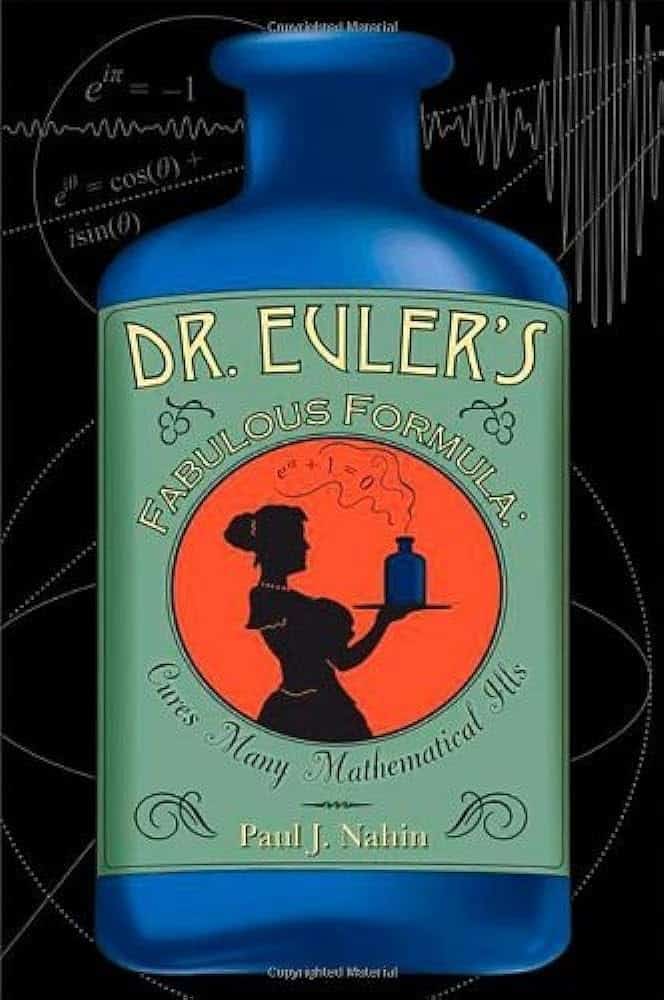
Dr. Euler’s Fabulous Formula Cures Many Mathematical Ills by Paul J. Nahin 
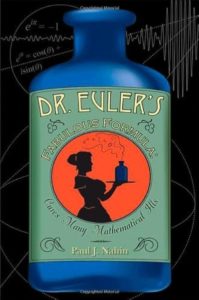
This book shares the fascinating story of a groundbreaking formula that has long been regarded as the gold standard for mathematical beauty. This formula continues to inspire research, discussion, and even the occasional limerick. The book delves into the heart of complex number theory, exploring the many applications of complex numbers alongside intriguing stories from the history of mathematics. 

You can find these books and more in a special Pi Day display on the main floor of the Engineering Library. Drop by and check one out!  

And don’t worry, we’ve planned something special for after the break, too. Join us on March 18 for our Pi Day celebration. We will have individually wrapped apple pie bites (available while supplies last) and you can join us between 11:30 a.m. and 1:30 p.m. in the Seamans Center Student Commons to make your own zoetrope! 

No time wasted: What is Leap Day, anyway?

Every four years, the Gregorian calendar gives us an interesting phenomenon called a “leap year.” The result? Countries that follow the Gregorian calendar end up with an extra day on the calendar: Feb. 29.

So why does this chronological quirk hit every four years? It actually takes Earth 365.242190 days to orbit the sun, leaving an “overflow” of five hours and 49 minutes. As Jackie Faherty, an astronomer at the American Museum of Natural History in New York, told NPR, “…that .242190 days to go around the sun is the entire reason why we have a leap year.”

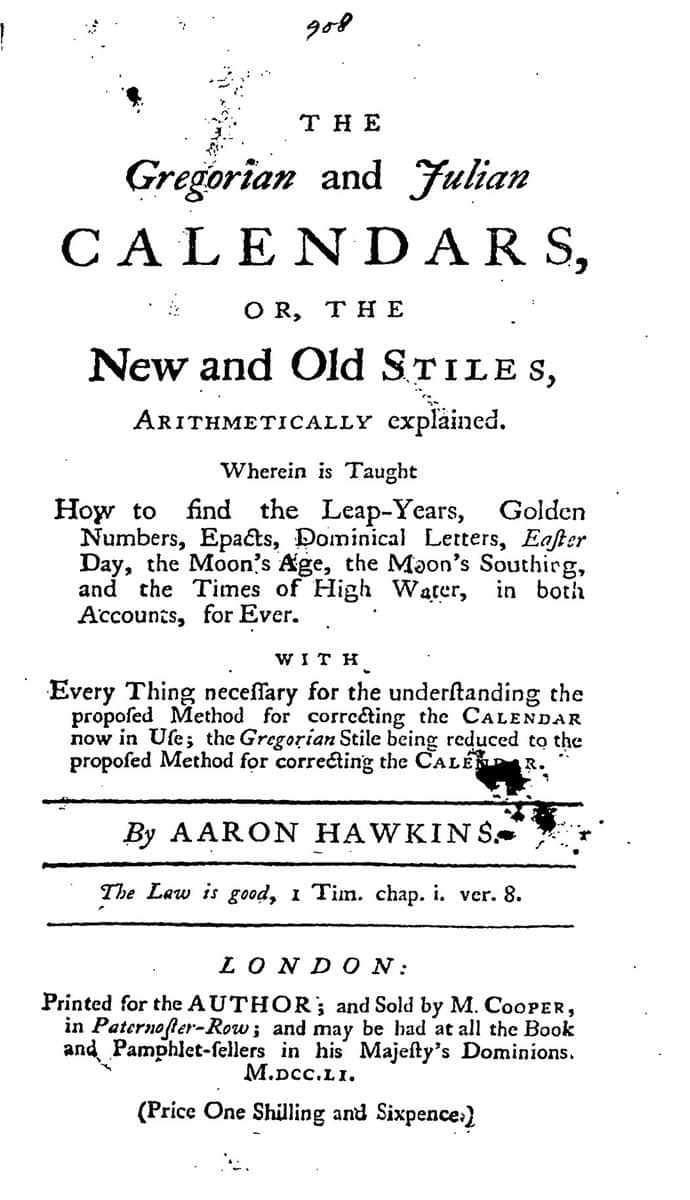
The Gregorian calendar we use today began by papal decree in 1582, and the first Leap Day took place in 1584. In London in 1751, Aaron Hawkins wrote a pamphlet explaining the mathematical basis for the leap year and the need to make up for the five hours and 49 minutes that go uncounted in an ordinary year. 

Both the 16th-century pope and his 18th-century champion were unknowingly preventing a headache for future computer scientists, who now benefit from their precision when programming systems.

Now to shake things up a bit: leap years don’t always occur every four years. The rules are actually slightly more complicated:

  • If the year is evenly divisible by four, it is a leap year, unless
  • …the year is also evenly divisible by 100, in which case it is not a leap year, unless
  • …the same year is also divisible by 400, in which case it is a leap year.

This means that programmers have to create a leap year function that takes a single integral argument (the year) and determines whether the year is a leap year. If programmers did not take this into account when setting up systems, it would throw off entire programs every four years, with a cumulative effect over time. 

In theory, the need for leap years is not limited to Earth; if humanity ever settles on Mars, for example, we’ll have to hash things out all over again. But our calendar says that’s a problem for another day.