Have you ever had a messy computer desktop? Have you ever had trouble finding your research data in a computer directory? Have you ever had a nightmare of recalling some key details of your research because of a lack of documentation? Don’t panic – you are not the only one who faces these problems. We can teach you essential practices of tidying up your digital clutter in a course Research Data Sharing and Management (CEE:5110/OEH:5110)!
We first successfully launched this one-credit course in the Spring 2020 semester and will again offer it in the upcoming Spring 2021 semester. This course is originally designed for the Iowa Superfund Research Program’s trainees but now open to any students currently doing, or planning to do, research.
The course will begin with data management, then moving on to include file organization, data documentation and lab notebook best practices, tabular data structure and cleanup tools. The course will also include how and where to share and publish data, funder and publisher requirements, licensing, and citation.
Here are some comments from students who enrolled in the course in the Spring 2020 semester:
“I think from choosing a repository to creating a data record, including licensing, ownership, preservation of access, reuse, and citation”
“I feel like I have a better grasp of what should go into a data management plan and how data should be prepared for sharing. So that’s great!”
“[The instructor] is very knowledgeable and was able to point us toward good resources.”
Let’s tidy up your research data in Research Data Sharing and Management!
The Instructors are Brian Westra, Data Services Manager, and Qianjin (Marina) Zhang, Engineering & Informatics Librarian. The course supervisor is Keri Hornbuckle, Professor, Civil and Environmental Engineering.
To enroll in CEE:5110/OEH:5110 Research Data Sharing and Management, check out MyUI course catalog.
Individuals with disabilities are encouraged to attend all University of Iowa-sponsored events. If you are a person with a disability who requires a reasonable accommodation in order to participate in this program, please contact Kari Kozak, at kari-kozak@uiowa.edu in advance of the event.
You are watching the latest Sci-Fi movie and something happens and you know that it is impossible. And you really want to talk about how impossible it is – right? Well, now you can!
Join us for Sci-Fi Flix in November!! Sci-Fi Flix will happen on two Sunday evenings! This is your chance to watch a movie and hear what the experts say about the engineering, technology and science! You’ll have the chance to ask questions and comment, too! The movies will be streamed over Zoom and College of Engineering faculty will provide expert commentary through the movie (good and bad).
Sunday, Nov 1st at 7pm: The Martian
A 2015 science fiction survival drama film directed by Ridley Scott and starring Matt Damon. The Martian, a 2011 novel by Andy Weir, served as the screenplay adapted by Drew Goddard. The film depicts an astronaut’s (Matt Damon) lone struggle to survive on Mars after being left behind, and efforts to rescue him and bring him home to Earth.
Expert Commentators: Dr. Er-Wei Bai (Electrical and Computer Engineering), Dr. Charles Stanier (Chemical and Biochemical Engineering), and Dr. Geb Thomas (Industrial Systems Engineering)
Sunday, Nov 15th at 7pm: The Fantastic Voyage
A 1966 American science-fiction film directed by Richard Fleischer and written by Harry Kleiner, based on a story by Otto Klement and Jerome Bixby. The film is about a submarine crew who are shrunk to microscopic size and venture into the body of an injured scientist to repair damage to his brain.
Expert Commentators: Dr. Jennifer Fiegel (Chemical & Biochemical Engineering) & Dr. Ed Sander (Biomedical Engineering).
Head over to our Sci-Fi Flix Lib Guide and get registered for one or both movies today!!
Open Access (OA) refers to the free, online availability of research articles. That helps researchers so they don’t hit a paywall – suddenly get to a point in their research when they are required to pay in order to access the material.
There are three types of OA models, so when you are ready to publish it is good to know which model the OA journal uses. The three models include gold OA, green OA, and hybrid OA. The gold OA model is an ideal publishing model where publishers make articles available for free immediately on the journal’s website. The big advantage of the gold OA model is that the library would not have to pay a subscription fee because an author processing charge (APC) would cover the cost. The green OA model allows authors to archive the articles to author’s professional website or institutional repository with or without an embargo period. It is a mediocre alternative to the gold OA model. The hybrid OA model is the least preferable model in which subscription-based journals allow authors to make individual articles gold open access immediately on payment of an APC. But the disadvantage of the hybrid OA is that both authors and libraries would result in double-paying for the same content
Although academic libraries, global/local coalitions and some academic societies have been advocating OA for a decade, funder mandates are the key to moving the OA wheel forward. In 2008, the National Institutes of Health mandates research papers describing research funded by NIH must be available to the public free through PubMed Central within 12 months of publication. In 2018, a group of national research funders, European and international organizations and charitable foundations launched the Plan S (formally called cOAlition S) requiring full and immediate OA to the research publications. As a result, we see several engineering publishers such as IEEE, ASME, SAE etc., have started offering OA publishing options on a small number of their journals. Among the limited number of OA journals, the green OA and hybrid OA models are the mainstream while there are fewer fully OA journals than the journals in the green OA and hybrid OA models. For example, as of today, IEEE has about 20 fully OA journals while most of its journals and conference proceedings are subscription-based. However, some publishers such as John Wiley & Sons Inc. (Wiley) and the Institution of Engineering and Technology (IET) embrace the gold OA model. In June 2020, Wiley and IET announced their OA publishing partnership to transition the IET journal program to gold OA beginning in January 2021.
It is believed more engineering publishers will embrace the gold OA model or at least the green OA model when more funders set strict requirements on research publications to be freely available in a timely manner.
Here is information for some engineering publishers’ OA publishing policy.
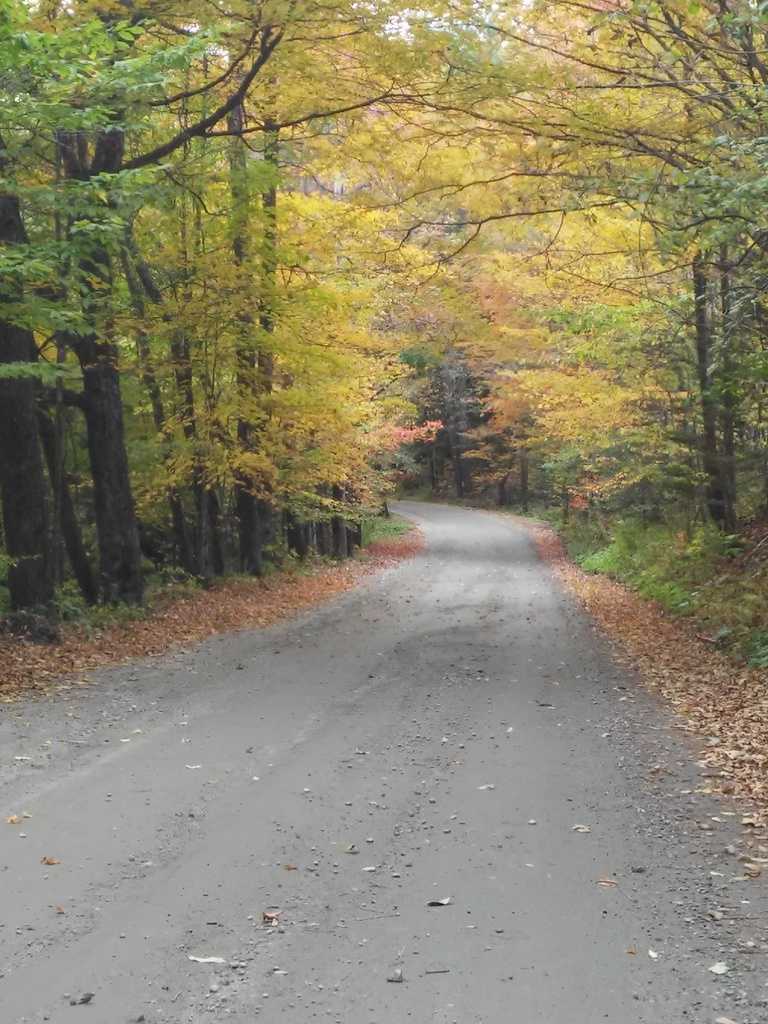
Don’t miss the trees turning those gorgeous colors!
Fall colors in Vermont. Photo Credit: Elissa C. Johnk
The days are shorter and cooler and the trees are changing colors. Beautiful deep reds, oranges, and vibrant yellows…. So, how does that happen, and why in the fall?
Trees that change color are called deciduous (which means it sheds leaves annually) or broad-leaf trees, which have, obviously, broad leaves with a relatively large surface area. Leaves have two purposes – to convert carbon dioxide to oxygen (thank a tree for our fresh air!) and also to convert sunlight into energy for the tree. The large surface area helps the leaves gather more sunlight and therefore, more energy. The leaves “breathe in” carbon dioxide and “exhale” oxygen (for more information about this process check Plant Biochemistry by Florence K. Gleason with Raymond Chollet).
Leaves actually have several other pigments, besides green, which are always present – red, yellow, orange and even purple (beets, carrots, cherries!). The leaves on trees (and many plants) have so much green pigment, however, that the other colors aren’t visible – until fall, that is! The green pigment comes from chlorophyll which is used in photosynthesis (the complex process by which carbon dioxide and water are converted into carbohydrates by using the energy from the sun). The carbohydrates that are formed are then stored in the branches, roots, and buds of the trees.
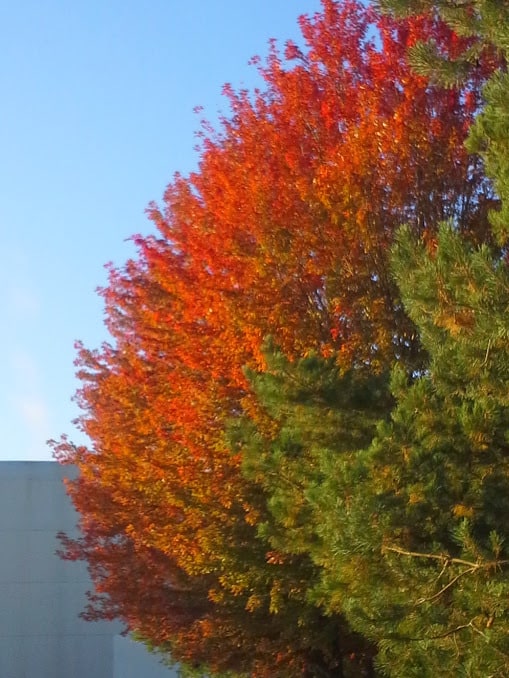
A deciduous tree which has turned red stands next to a coniferous tree which remained green. Photo Credit: Carol Grow Johnk
We all know that, in the fall, days get shorter and cooler and the nights get longer – and cooler! Broadleaf trees are sensitive to sunlight – they need the sunlight to transform the chlorophyll. When there is less sunlight, the leaves make less chlorophyll, which means the trees become less green and the other pigments begin to become visible. Different types of trees have differing amounts of pigment – for example, trees with more anthocynins (the pigment responsible for the red and purple hues) will be more red than those with less. Temperature, sunlight, and soil moisture also influence the quality of the fall colors. A spring and summer with ample moisture followed by a dry, cool, and sunny autumn will produce the brightest fall colors.
Why do leaves fall? Without chlorophyll to help them make energy, they are no longer needed. The energy that they have produced is stored in the tree. The other pigments also eventually break down – when there is even less light, or if they are frozen. The only pigment that then remains is brown (tannins), and at that point the leaves drop off. The tree then lives through the winter on the energy that it has stored. When the days begin to get longer and warmer, the tree grows new leaves and the process begins all over again.
(Why don’t coniferous trees – evergreens, firs, etc. – change color and drop their needles? Briefly, needles are smaller, more watertight, more wind resistant and are able to photosynthesize all year long. Since needles have a reduced surface area, they are harder to destroy – and less tasty for insects!).
Now, go for a walk, hop on your bike or in your car and go see the beauty of fall!
Happy Leaf Peeping!!
Photo Credit: Elissa C. Johnk
RESOURCES:
Beck. Charles B. An introduction to plant structure and development : plant anatomy for the twenty-first century. Cambridge, UK ; New York : Cambridge University Press. Engineering Library QK641 .B38 2010
This Saturday, September 26th is Girls In Aviation Day!
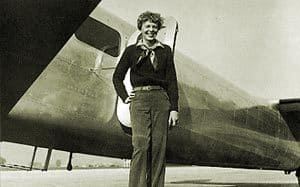
“Flying is so much more than just a quick way to traverse space.
It’s freedom and color and form and style. I am at home in the air.”
Amelia Earhart, Feb. 7, 1934, Christian Science Monitor.
This is the 6th year of the Girls in Aviation Day (GIAD) and will deliver a free, year-round experience for girls ages 8-17 around the world with the launch of a new Aviation for Girls (AFG) App, sponsored by the U.S. Air Force (check our resources, below, for more information about the app).
Since WAI’s first annual international Girls in Aviation Day in 2015, the annual WAI event has grown every year since its first gathering of 32 events and 3,200 participants. In 2019, GIAD met more than 20,000 attendees participating in 119 events in 18 countries.
In honor of Girls in Aviation Day, let’s take a brief look back at the women aviation pioneers!
When we think of women in aviation, we often think of Amelia Earhart. But have you heard of Harriet Quimby, Lores Bonney, Fay Gillis Wells?
Amelia Earheart took her first plane ride in 1920 and began flying lessons in 1921 – buying her first plane that same year. Harriet Quimby was a newspaper reporter/writer and was assigned to cover an airshow in 1910, and she was hooked. On May 11, 1911 – one day before her 36th birthday, she entered flight school. In 1931 Lores Bonney set a new Australian record for a one-day flight by a woman. In 1933 she was the first woman to fly from Australia to England. In 1928 Fay Gillis jumped from a disabled plane in flight, making her the first woman to join the Caterpillar Club – a group composed of pilots who have made life-saving jumps with silk parachutes. Betty Skelton-Frankman won the International Feminine Aerobatic championship in 1948, 1949, and 1950. She was best known for the trick “inverted ribbon cut,” (she flew upside down, 10 feet off the ground, through a ribbon tied between two poles)!
In 1994 Patrice Clarke-Washington was the only African American woman flying with the rank of captain for a major airline. Jean Ross Howard-Phelan is the 13th woman in the world to receive a helicopter’s pilot license. She learned to fly in 1954. Florence Parlett actively flew until she was 83 years old and has operated the Annapolis Flying Service at Lee Airport in Edgewater, Maryland.
In 1993 at age 11, Victoria Van Meter flew across the ocean and then did it again the following year. A flight instructor was required to be with her on both flights because she didn’t meet the age limit to fly alone.
These women, and so many others, laid the groundwork for women to pursue their love of flying in a variety of aviation careers.
Lori Love: crop duster in California.
Madge Minton: joined the WASPs (World War II Women Airforce Service Pilots) and flew fighter planes across the country to various military bases.
Susan Still: 3rd woman trained in combat aircraft for attack missions.
Suzanne Asbury-Oliver: skywriter for Pepsi in 1980.
Evie Washington: flight instructor for the Civil Air Patrol.
Mary Edna Fraser: uses aerial photography to inspire her silk batik artwork. She doesn’t have a pilot’s license, but will take off, land, and maneuver the aircraft into position.
Ellen Paneok: Native American Eskimo pilot – delivering supplies and mail to remote Alaskan villages.
Mayte Greco: Cuban American pilot and founding member of Brothers to the Rescue (Hermanos al Rescate), an organization of pilots who fly search and rescue operations over the ocean between Florid and Cuba searching for Cuban exiles in rafts.
These women paved the way for the participation of women in NASA and space exploration. In the beginning they were “human computers,” then aeronautical engineers, and then astronauts.
Katherine Johnson, Mary Jackson, Dorothy Vaughan, Kathryn Peddrew, Sue Wilder, Eunice Smith and Barbara Holley: African American women mathematicians, worked at NASA during the Civil Rights era. “Human computers.”
Shannon Lucid: one of the original core of women astronauts; in 1997 she held the record for the longest time in space for an American (188 days on board the Russian space station Mir).
Mary Ellen Weber: mission specialist on board space shuttle Discovery in June of 1995.
Vickie Gutierrez: Aerospace Engineering. Began working for NASA in 2002.
Rosalind Cylar: Attorney and advisor in the Office of chief counsel at NASA’s Marshall space Flight Center.
Courtney Ritz: Is blind and works at the Goddard Space Flight Center since 2002. She is the Web Accessibility Coordinator.
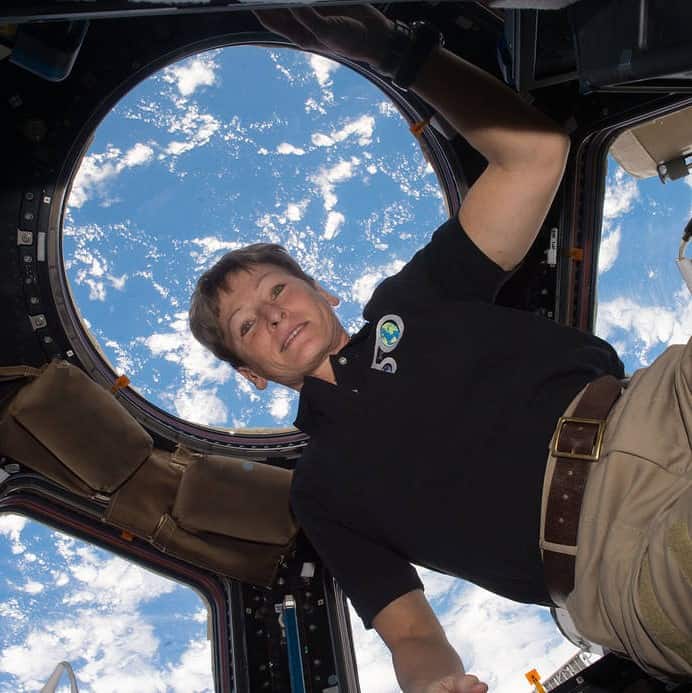
In September 2017, astronaut Peggy Whiton broke NASA’s record for the longest time spent in space – 665 days! She also holds other records – the record for the oldest woman to go to space (57 years old); women’s record for the longest amount of time doing spacewalks – 53 hours & 22 minutes; and the first woman commander of the space station. On her latest mission she traveled 122.2 million miles and went orbited Earth 4,623 times. She was born in Mt. Ayr, Iowa.
All of these women – from the pioneering aviators to the pioneering women in aeronautics – have helped clear the way for this generation, and future generations, to fulfill their dreams of flying!
Interested in finding a chapter of the Women in Aviation International check their website!
Girls in Aviation Day is sponsored by Women in Aviation International. Women in Aviation International (WAI) hold events are being held world-wide. Check their website to find a chapter near you.
Resources:
Michele Wehrwein Albion, editor. 2015. The quotable Amelia Earhart. Albuquerque : University of New Mexico. Engineering Library TL540.E3 A3 2015
Russo, Carolyn. 1997. Women and flight : portraits of contemporary women pilots. Washington, D.C. : National Air and Space Museum, Smithsonian Institution, Boston : Bulfinch Press. Engineering Library FOLIO TL539 .R87 1997
For information about the free Girls in Aviation app, go to their website.
Winters, Kathleen C. 2010. Amelia Earhart : the turbulent life of an American icon. New York : Palgrave Macmillan. Engineering Library TL540.E3 W57 2010
Holt, Nathalia. 2016. Rise of the rocket girls : the women who propelled us, from missiles to the moon to Mars. New York : Little, Brown, and Company. Engineering Library TL862.J48 H65 2016
Eschner, Kat. June 16, 2017. Meet the Rogue Women Astronauts of the 1960s Who Never Flew : But they passed the same tests the male astronauts did – and, yes, in high heels. SMARTNEWS : Keeping you current. Smithsonian Institution.
Riley, Ricky. June 29, 2016. This Black NASA Mathematician Was the Reason Many Astronauts Came Home – Their Life Depended on Her Calculations.Atlanta Black Star.
NASA Women of Stem. August 3, 2017. National Aeronautics and Space Administration. NASA.
Gallentine, Jay. 2016. Infinity beckoned : adventuring through the inner solar system, 1969-1989. Lincoln : University of Nebraska Press. Engineering Library TL795.3 .G355 2016
For information about the free app, go to their website.
Have you received an email indicating you are being billed for a lost item? Don’t panic!
The Library system has had the email notification system turned off until a few days ago. Because the library has been closed to the public for so long a backlog of returned items were waiting to be processed. Once the backlog processing was completed and the system was turned on the backlog of system generated emails “opened the floodgates.”
If you received an email indicating you have been charged for a lost item return the item and the replacement fees you were charged will be refunded. If you still have overdue fines, please email lib-engineering@uiowa.edu to discuss any fines you might have accrued over the summer months.
Building Your Own: Object Avoiding Robot
Rescheduled for
Thursday, October 22nd at 3:30 PM
We apologize for any inconvenience, but the Build Your Own Object Avoiding Robot workshop has been rescheduled for Thursday, October 22nd at 3:30 PM.
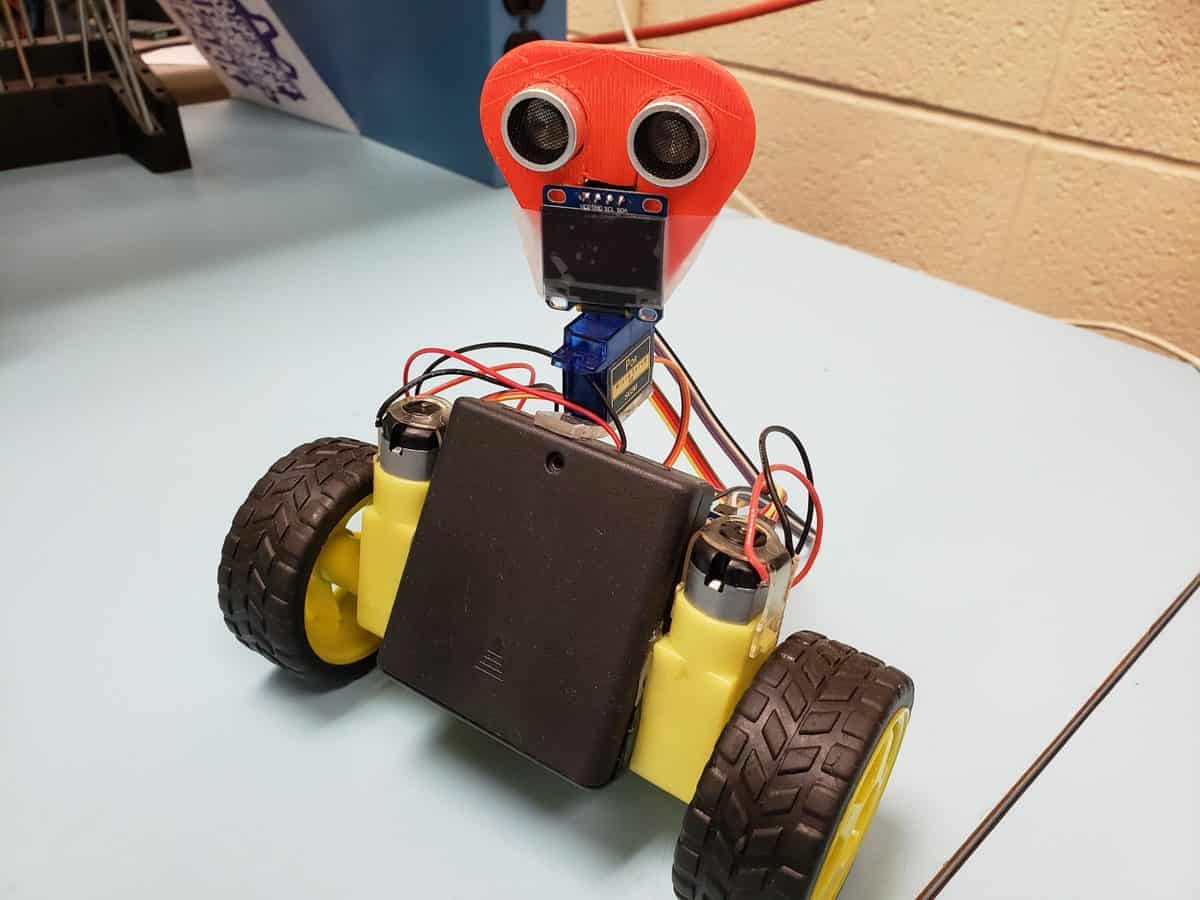
During this workshop, you will learn to incorporate an Arduino with a range finder senor, wheels, and chassis into a great little object avoiding robot. This class will include building the robot and programming it. Taught by Issac Johnson, Institute of Electrical and Electronics Engineers Student Group.
Please note that an optional $55 kit is available from the Electronic Shop for purchase before the workshop, if you want to be able to build along! The kits can be purchased when registering for the workshop. The cost will be applied to your U-Bill and will be available to pick up in the Engineering Library. They must be ordered by October 15th.
One part of this project is the need to solder a few wires together. There will be a workshop on soldering basics the week before. If you prefer, Jeremy Roszell from the Electronics Shop will (for free) solder the wires together for you.
Two items which will be needed but are NOT in the kit, may be checked out from the Tool Library or they are available to purchase from Electronic Shop:
Individuals with disabilities are encouraged to attend all University of Iowa-sponsored events. If you are a person with a disability who requires a reasonable accommodation in order to participate in this program, please contact Kari Kozak, at kari-kozak@uiowa.edu in advance of the event.
Rain, Rain, Go Away?
or
Rain, Rain, Go Away? How about you come and stay?
Okay, we don’t really want the rain to come and stay, and stay, and stay . . . But wouldn’t it be nice to have access to that rainwater when the rain does go away? And the sun comes out and dries up all the rain? (my apologies to the nursery rhymes).
Have you thought about where the rain goes that runs off your roof and down the driveway? Or that seeps (or runs) into your basement? Wouldn’t it be nice to have that rain water available when it is pouring?
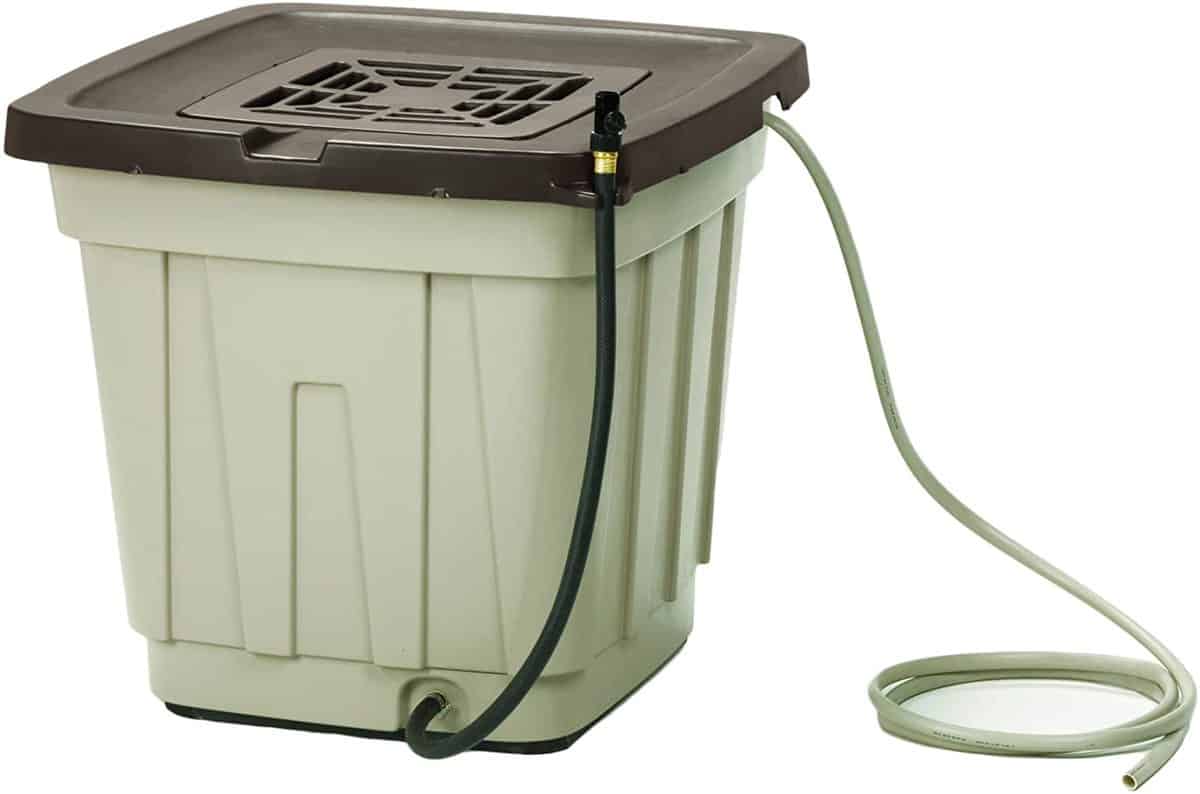
How about planting a rain garden? Creating Rain Gardens: Capturing the Rain for Your Own Water-Efficient Garden can help you do just that! Conservation experts, Cleo Woelfie-Erskine and Apryl Uncapher provide step-by step instructions for planning and building your own rain garden! Why let one of our most precious resources slip down our storm drains? The authors also talk about rain barrels, simple living roofs, permeable patios, and planters that help harvest run-off! There are even ideas about planting an edible rain garden!
Looking for ways to help provide urban water supplies? In Rainwater Tank Systems for Urban Water Supply the editors discuss how rain water tank systems have been adapted for use around the world. They can provide a safe local source of water in underdeveloped rural areas, a substitution for mains water for non potable end uses in water stressed urban areas, as well as providing flooding control.
Water is a finite resource, let’s do our part and use rain barrels and rain gardens.
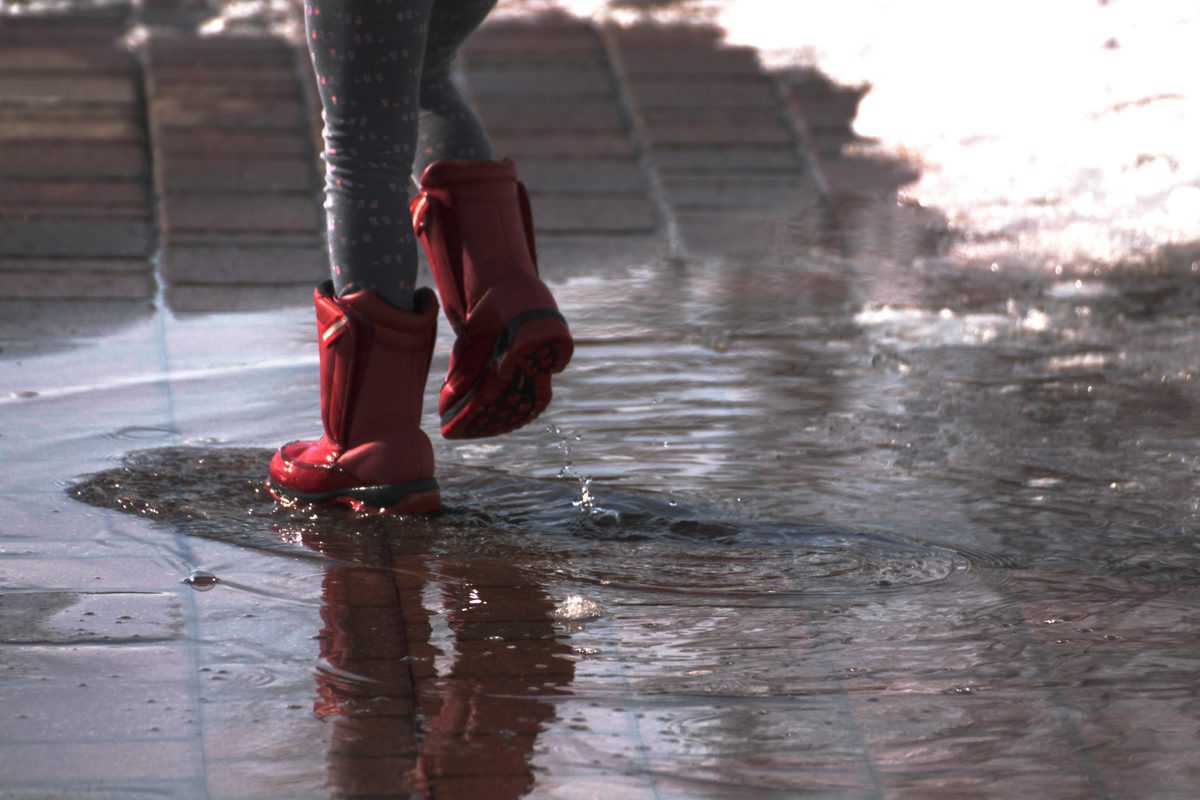
And don’t forget to play a bit, too!
Resources:
Woelfie-Erskine, Cleo; Apryl Uncapher. 2012. Creating rain gardens : capturing rain for your own water-efficient garden. Portland : Timber Press. Engineering Library TD 657.4.W64 2012
Noah Weinstein, editor. 2013. Projects to get you off the grid : rain barrels, chicken coops, and solar panels. Selected by Instructables.com. New York : Skyhorse Publishing. Engineering Library TJ810.5 .P76 2013.
Ashok K Sharma (Ashok Kumar), editor; Donald Begbie, editor; Theordore Roosevelt Gardner, editor. 2015. Rainwater tank systems for urban water supply : design, yield, energy, health risks, economics, and social perceptions. London : IWA Publishing. Engineering Library TD418 .R35 2015
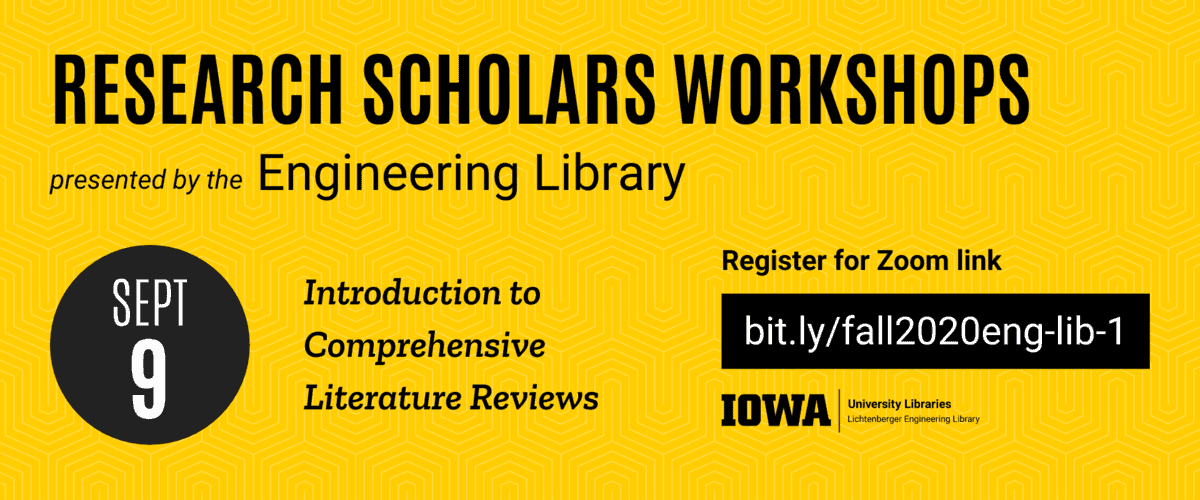
We are excited to be offering a new group of workshops this fall! Our first workshop will be presented on Wednesday, Sept, 9th!
This one-hour workshops will be held on the 9th, at 3:30 pm on Zoom. Anyone is welcome to join these workshops from graduate students, Iowa Honors Program, researchers, staff, and faculty. The Zoom link will be emailed to registered participants a few hours before the workshop starts.
Introduction to Comprehensive Literature Reviews
Have you ever struggled with doing literature reviews? Although you do not have to conduct a literature review as high quality as a systematic review, some strategies from systematic reviews (defined as “a research method that aims to locate and summarize all available evidence for a research question in order to guide decisions and practices”) may help you tackle your research question in a more rigorous way. This workshop will introduce three review types (literature reviews, scoping reviews and systematic reviews), the review process and research question frameworks, search strategy and some available resources and services.
If you have any questions or concerns, please email Marina Zhang (qianjin-zhang@uiowa.edu or lib-engineering@uiowa.edu).
Individuals with disabilities are encouraged to attend all University of Iowa-sponsored events. If you are a person with a disability who requires a reasonable accommodation in order to participate in this program, please contact Kari Kozak, at kari-kozak@uiowa.edu in advance of the event.
Have you gotten an overdue notice from InterLibrary Loan? There has been a glitch in the system! If you are unsure, log into your account to check.
Feel free to email us (lib-engineering@uiowa.edu) with questions!!