During the month of Open Access week (October 23-29, 2017) we will be highlighting a number of guest posts from University of Iowa Faculty and Staff who have personal experience making their work Open Access. We appreciate their contributions.
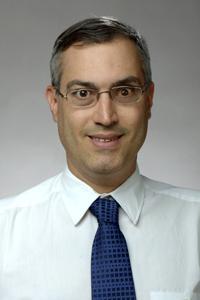
At a personal level Open Access to scientific and technical publications is fundamental to my day-to-day activities as a researcher and educator. Barriers, especially financial, in our ability to access our own cumulative knowledge are detrimental to the growth of our societies, particularly in regions of the world struggling even for basic sustenance. It is good to see ‘open access’ which made its formal appearance at the turn of the century, gain momentum including in my field of computer science. Authors now have varied options as for instance, to retain just copyright or to retain all rights. I became aware – some years ago – of how painful it was to access the literature when I wanted to make thirty copies of my own paper for my graduate class. The publisher asked for several thousand dollars in copyright fees! If it had been a last minute article selection then making copies for free would have been approved under ‘fair use’. But I could not make copies and plan to distribute them say in a month’s time. The whole situation was bizarre. Open access comes to the rescue in this and many other situations. I would like to especially credit the field of physics for our open access opportunities today. Physicists had set the precedent for free sharing of knowledge way before open access came up the horizon. Physics departments and libraries, at least across the US, would with almost clock-work precision exchange pre-prints amongst themselves through the postal service. Each department maintained its mailing lists for sending and receiving these preprints which would be arranged nicely in a reading room. Reliance on the postal services diminished with the arrival of arXiv – a repository for electronic preprints – about thirty years ago. ArXiv continues today even in areas beyond physics. The fact that this ‘free’ exchange model clearly did not impinge on the profits from journals in Physics was part of the winning argument for the spread of Open Access. I also want to acknowledge the strong support offered by Libraries and Universities such as our own; for instance, their support of publication costs associated with Open Access journals is invaluable. These fees are worth it given the long term access options they yield. My students and I have availed of this facility on several occasions and we are grateful for these funds. I know open access will continue to flourish and anything outside will steadily become a dwindling exception.
During the month of Open Access week (October 23-29, 2017) we will be highlighting a number of guest posts from University of Iowa Faculty and Staff who have personal experience making their work Open Access. We appreciate their contributions.
The second guest post is by Carrie Figdor, Associate Professor, Department of Philosophy and Interdisciplinary Graduate Program in Neuroscience, Director of Undergraduate Studies.
Opening doors through open access
The UI Open Access Fund enabled me to publish an article on science journalism at Frontiers in Communication, a fairly recent addition to the Frontiers-in family of online journals, many of which have very high citation rates. This article has since become the third most-viewed article to date of that journal (despite the relative recency of its publication) and the journal editors have approached me to curate a Research Topic in this area. Since its publication I have also been invited to contribute to a forthcoming volume with Oxford in media ethics. I have no idea whether that invitation is attributable to the publication of this paper, but it is undoubtedly true that Open Access publication vastly increases potential exposure due to its immediate accessibility to anyone for free. This is extremely important in a context of very high priced academic journals that get their content for free from academics.
Working with the Libraries’ open access fund staff to obtain funding was a scholar’s dream. The application was straightforward, my DEO, David Cunning, was very supportive, the funds were granted swiftly, and payment to the journal was taken care of quickly and efficiently. Once my article was accepted, the rest was easy.
During the month of Open Access week (October 23-29, 2017) we will be highlighting a number of guest posts from University of Iowa Faculty and Staff who have personal experience making their work Open Access. We appreciate their contributions.
The first guest post is by Stephan Arndt, PhD, Professor of Psychiatry, Professor of Biostatistics.
Maximize Readership with Open Access
Stephan Arndt
Open access journals provide the broadest possible worldwide readership. Anyone in the world can read articles without charge. A piece published in an open access journal can cross over and breakdown financial, proprietary, and regional boundaries. Readers have access to this journal regardless of the financial resources of their region, libraries, or universities.
There are other advantages. Authors usually retain the copyright for their own work when publishing in an open access journal. This is becoming more important over time for a number of reasons. You can freely deposit your work on sites such as ResearchGate, GitHub, or other social sites since you keep the copyright. The paper belongs to you, not a publisher. This further broadens the readership, likelihood of citations, and the usefulness of the paper.
Cost can be an issue, but there are ways around that, too. Whenever possible, I write in publication costs into grants and contracts. It is often an easy sell to funders who what their supported work seen publicly. UI Libraries Open Access Fund helps, too. I have used this to help support student’s papers being published.
Fanzines of science fiction, fantasy and horror available to read and transcribe
What would you do with thousands of fragile leaflets, known as fanzines, that chronicle the history of science fiction? Such fanzines hold rich information too valuable to sit untouched, yet the materials cannot be handled without risking destruction.
At the University of Iowa Libraries, a digitization project is underway to save a large, notable zine collection.
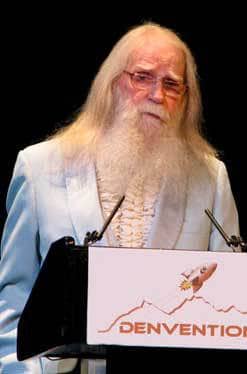
The James L. “Rusty” Hevelin Collection contains over 10,000 science fiction (SF), fantasy, and horror fanzines collected by Rusty Hevelin, famous science fiction fan, collector, dealer, and zine editor.
The Hevelin collection spans decades of science fiction writing and fandom and holds examples of early writing by sci fi greats such as Isaac Asimov, Robert Heinlein, Ray Bradbury, and George R.R. Martin. With documents dating as early as the 1930s, the collection also reveals exchanges between writers and fans.
Enthusiasts and scholars will have online access to the Hevelin collection to study histories of fandom, trace our views of science and technology over decades, and examine fundamental shifts in our ideas of human progress.
Rusty Hevelin (photo by Keith Stokes)
Staff at the University of Iowa Libraries digitize each page of each publication through high-resolution photography. As the fanzines become available online, volunteers can transcribe them through the DIY History participatory archives platform. Once transcribed, the zines are fully searchable online, increasing their value to researchers.
The zines are also accessible in the Iowa Digital Library. As work is completed, more scans will be added to the existing online collections. News about the collection and further information on selected items is available on the Hevelin tumblr.
The term “zine” (derived from the word “fanzine”) refers generally to a small, informal, non-commercial publication. Because zines vary widely in style, they defy singular definition. However, most publications in this unique, often handmade print genre have a small, niche following. Some are circulated via subscription, but they are often distributed informally among interested parties. Zine publishers express a raison d’être driven by a desire to uphold principles of free expression rather than a desire for monetary profit.
With the exception of late 19th century amateur press hobbyists, zines entered the cultural milieu as a specific and noticeable phenomenon in the 1930s, when the emerging science fiction fan community began to create “fanzines” as forums for their own stories and opinions on published SF writing and films.
Four employees have been awarded the UI Libraries Student Employee Scholarship for 2017-18. Congratulations to our winners!
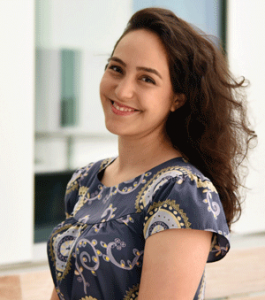
JEIRAN HASAN is a graduate student pursuing a Doctorate of Musical Arts in flute performance and pedagogy. She works at the Rita Benton Music Library. Hasan assists students, faculty, and researchers with a wide variety of questions. “When I began working in 2014, I had no idea how much the library would change my life,” she says. “The most interesting aspect of working in the library is the interactions I encounter with students from different backgrounds and interests. With my familiarity in Turkish, Farsi, Arabic, Russian, and Azerbaijani, I have been able to assist international patrons and patrons interested in ethnomusicology.”
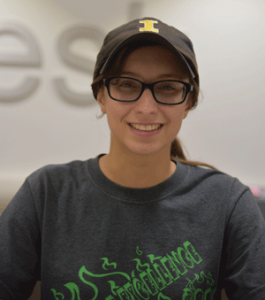
CLARICE KELLINGis a senior majoring in education with a minor in theatre. She works at the Main Library in Access Services (Service Desk and Circulation). Kelling helps reshelve materials and assists patrons at the Service Desk in the Main Library. Kelling began working at the library her freshman year. “Working here has helped me gain knowledge about libraries. As a future educator, I need to be able to find sources easily as well as help others search and handle various materials for their academic goals,” she says. “At the Main Library, I have the opportunity to practice this while also gaining inside knowledge about how libraries aid in education no matter the grade.”
MELISSA LAUER is a sophomore with a triple major in English, creative arts, and studio arts, with a minor in history. She works in Conservation and Preservation. Lauer mends and preserves books at the Main Library, where she “maintains the integrity and availability of the library’s circulating and non-circulating collections, caring for the materials that make the library the invaluable resource that it is. [Working in] the conservation lab has seamlessly united my majors in English and Creative Writing and Studio Arts and minor in History, deepening my appreciation of the physical book, my understanding of its content, and my love of the historic connection that the books I heal perpetuate.”
ELIZABETH RIORDAN is a graduate student pursuing a Master of Arts in library and information science. She works at the Main Library in Special Collections. Riordan feels fortunate to have landed in Special Collections at the UI Libraries. “When I enter work at Special Collections, I consider myself incredibly fortunate to have let the unexpected take me to where I am now,” she says. Riordan supports research through the rich narratives available in Special Collections—the kind of narratives that deepen our understanding of history and allow researchers to interact with source materials in ways that reveal the stories of past eras and help us understand our path forward.
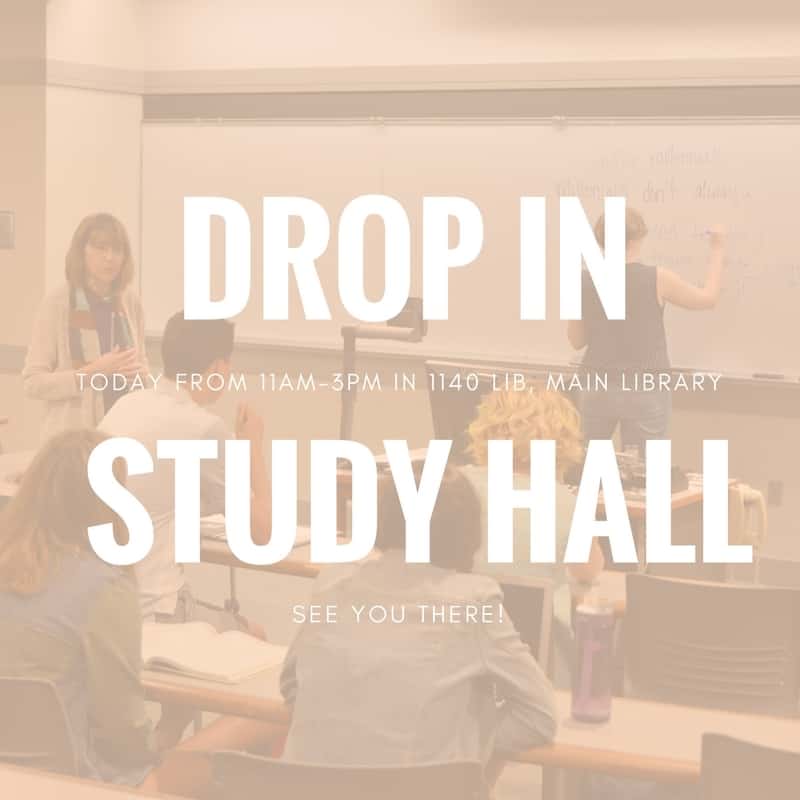
Faculty, TAs, and instructors are invited to stop by for a Study Hall session Wednesday, March 22 from 11am-3pm in 1140 LIB (Main Library). Staff from the University Libraries, Center for Teaching and Learning Commons will be on hand to answer any teaching technology and research questions as you continue to improve your courses! See you there!
During the month of Open Access week (October 24-30, 2016) we will be highlighting a number of guest posts from University of Iowa Faculty and Staff who have personal experience making work Open Access. We appreciate their contributions.
The fourth guest post is by Ed Folsom, the Roy J. Carver Professor of English at The University of Iowa. He is the editor of the Walt Whitman Quarterly Review, co-director of the Whitman Archive, and editor of the Whitman Series at The University of Iowa Press. He is the author or editor of numerous books and essays on Whitman and other American writers.
Ed Folsom
The Walt Whitman Quarterly Review (WWQR) is now in its second year as an online open-access journal, and we could not be more pleased with our new format and open distribution. We are reaching a wider audience than ever before, since scholars, students, and the general public can now freely access the entire thirty-three-year run of the journal. Our third online-only issue, published last fall, was a testament to (and a test of) our new open-access platform. We published the complete book-length text of Whitman’s newly discovered Manly Health and Training along with an introduction by Zachary Turpin, who made the find. The discovery received front-page coverage in the New York Times and was the subject of feature articles in The Guardian, the Los Angeles Times, The Observer, and over a hundred other newspapers and websites around the country and around the world. Interviews about the discovery were broadcast on NPR, BBC, and CBC. Most outlets that reported on the find linked to the WWQR website, where readers and listeners could (and still can!) freely access the complete text of Whitman’s journalistic series. There were over 20,000 downloads of Manly Health during the first weekend following the Friday New York Times story. This meant we had thousands of first-time visitors to WWQR, and we hope many of those folks will return often to check out the latest work on Whitman. The journal is always free and open, and we welcome our new readers from every continent. Our website offers a daily map of downloads from WWQR, which demonstrates that our readers do indeed come from around the world.
While not every issue of WWQR contains a new book by Whitman, every issue contains important new discoveries and readings. The online open-access format of the journal has now allowed us to enhance articles by including high-quality scans of Whitman manuscripts. We are working now to add an HTML version of each new issue along with the PDF format. Our ability to publish longer works, like Manly Health, is a tremendous advantage, and WWQR has another major surprise in store for our forthcoming winter/spring 2017 issue—a discovery that will again generate international media coverage. The details are a secret for now, but everyone should be watching for another dose of big Whitman news this coming February.
One more interesting development resulting from last fall’s publication of Manly Health is worth mentioning. While WWQR offered PDF, Kindle, and eBook versions of the complete text of Whitman’s newly discovered journalistic series, print publishers sensed that there was still a market for a commercial edition of the find—in fact, our 20+ thousand downloads indicated that there were probably many readers who would welcome a print edition of Manly Health for their personal libraries. Regan Arts, a New York publisher, approached WWQR about publishing Manly Health as a book, enhanced with illustrations from nineteenth-century newspapers and periodicals. Stefan Schoeberlein, WWQR’s managing editor, and Stephanie Blalock, Digital Humanities Librarian and Associate Editor of the Walt Whitman Archive, joined Zachary Turpin and me in selecting illustrations. The book will be published in December, and WWQR will receive a modest royalty from the publisher, which will help support the journal, now that we no longer have paying subscribers. The evolving interactions between the new online open-access WWQR and the world of print publishing are fascinating and unpredictable. It’s an exciting new era we have entered into, and we remain optimistic about next thirty years of the journal.
During the month of Open Access week (October 24-30, 2016) we will be highlighting a number of guest posts from University of Iowa Faculty and Staff who have personal experience making their work Open Access. We appreciate their contributions.
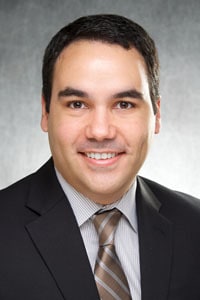
The third guest post is by Leonardo Marchini, DDS, MSD, PhD, Assistant Professor, Department of Preventative and Community Dentistry.
I consider open access publishing a better way to share research findings, since by removing the financial barrier to access it allows for a larger audience to read and use the findings worldwide. It also allows for authors to share their publications more widely, by promoting it in research oriented social media and e-mailing it to groups of researchers in the same field, allowing for even more exposure.
However, most journals in my research field are not open access. In a recent work with a broader focus, I searched for a journal capable of reaching a larger audience and then selected an open access Journal with a higher than average impact factor in my field. The submission process happened as usual, and the peer review was intense, but the manuscript was accepted after a couple review rounds.
However, the publication fees for this journal would be a problem if I was not supported by the UI Libraries Open Access Fund. My experience with the Open Access Fund was amazing! I applied and got funded really fast!
Since then the article has been published and received great attention from the scientific community in many countries, as we had a lot of comments and requests for additional information through channels that would not be available for non-open access articles, like researcher networks. I hope it will reflect in more citations in the near future.
Please join the Libraries in collaboration with the University of Iowa Center for Human Rights and the Communication Studies program in the Main Library this evening for the third & final Presidential Debate!
We’ve got pizza, popcorn, buttons, and cookies and plenty of activities for anyone who might need a break from studying (or from the debate)! We’ll be viewing the debate live in the Food for Thought Café so please join us, even for a few minutes!
During the month of Open Access week (October 24-30, 2016) we will be highlighting a number of guest posts from University of Iowa Faculty and Staff who have personal experience making their work Open Access. We appreciate their contributions.
The second guest post is by Jose Pablo Leone, MD, Clinical Assistant Professor in the Division of Hematology.
My name is Jose Pablo Leone, I am Clinical Assistant Professor in the Division of Hematology and Oncology at the University of Iowa. I have used the University of Iowa Libraries’ OA Fund a number of times and it has been a great resource. The staff at the Library is extremely helpful, they have helped me identify target journals and search the literature several times. Publishing articles in open access journals in my experience has been very gratifying. It allows for a much broader reception of the manuscript, many more researchers around the world are able to read it, making for a wider audience, and as a result of these you become more acknowledged by these researchers. In addition, I have found the free access and the self archiving features very valuable, this allows you to easily share your articles with your peers and collaborators. Researchers often struggle when they cannot access an important manuscript due to non-open access policies. In this regard, the opportunity to publish your work in open access allows creating potential collaborations with researchers that are focusing on your same topic in different countries. I have had the pleasure of being contacted by researchers about some of the articles I published open access and it has been a great experience. Another advantage of open access journals is that as your article gets more reads, it could also get more citations, making the impact of your manuscript stronger. Most journals also offer very user friendly tools to track the reception of your article, such as number of reads, downloads, citations, social media, etc. Finally, there are many misconceptions about open access journals that I would like to mention, for example, many people have the wrong concept that an open access article will not be cited in public databases such as PubMed, this is not true and depends on the journal rather than the open access policy or not. Some researchers believe that the open access journal will not have an impact factor, this is not correct, many open access journals do have established impact factors, however it is important to check this with each journal, as many of the newer journals will not have an impact factor yet. Lastly, some authors do not consider open access journals under the wrong impression that the article will not be peer reviewed, the reality is that submissions to open access journals do undergo a full peer review process and in addition, quite often the timing of this process is faster in open access journals.