The University Libraries is seeking nominations for the Arthur Benton University Librarian’s Award for Excellence. Funded by a generous endowment, this award acknowledges a library staff member’s professional contributions in the practice of librarianship, service to the profession, scholarship, or leadership which has had a significant impact or innovation to the operations of the Libraries or the University of Iowa. The library staff member will receive $1,500 to be used for professional development activities.
Nominations are due by Tuesday, October 30. Please forward this message to faculty and graduate assistants in your department and encourage them to submit nominations. Thank you for your assistance.
*The University Libraries includes the Main Library, Hardin Library for the Health Sciences, and the Art, Business, Engineering, Music, and Science libraries. (Professional staff in the Law Library and other campus departmental library staff are not eligible.)
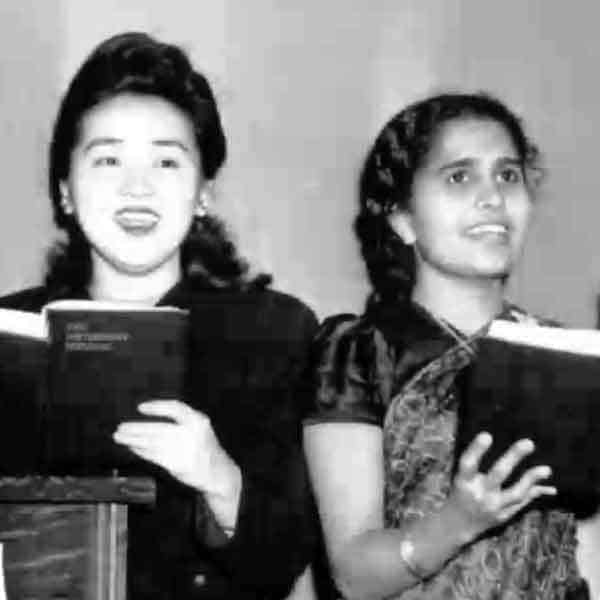
The Iowa Women’s Archives is seeking funding to digitize audiovisual materials in its collections that are no longer accessible because of their obsolete formats. These audiotapes, videotapes, and films document sports, politics, activism, domestic life, and a host of other topics.
Gifts supporting the IWA digitization project will be matched by a generous donor! Double your gift’s impact by donating now at bit.ly/iwa-giving.
If you would like your gift to be used for the IWA digitization project, please follow these steps: 1. Enter the dollar amount in the box next to “OTHER.” 2. In the comment box, type “for the IWA digitization project.”
Thank you!
If you would like to learn more about this match or how you can establish a matching gift, please contact:
Mary L. Rettig Director of Development University of Iowa Center for Advancement mary-rettig@foriowa.org 318-467-3809 or 800-648-6973
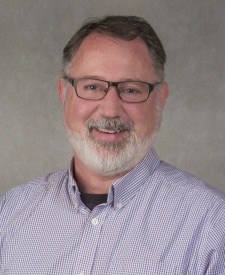
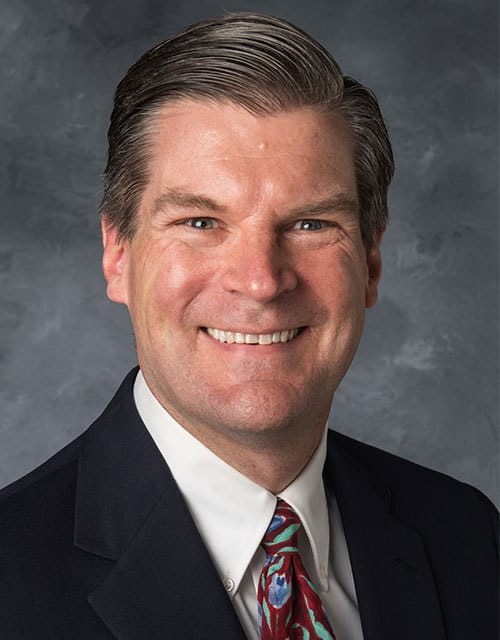
The University of Iowa Libraries has announced the establishment of the Jack B. King University Librarian Chair. Sue Curry, University of Iowa interim executive vice president and provost, appointed current university librarian John P. Culshaw as the first to hold the endowed chair at an investiture ceremony April 19, 2018 in the Old Capitol Senate Chamber.
“The University of Iowa Libraries are at the heart of the university’s academic mission. We are very grateful that the King family understood that and chose to support the Libraries, the university, and our students in this important way,” says Curry. “I am delighted to appoint John Culshaw to this new endowed position, in recognition of his extraordinary leadership of the Libraries and his vision for their future.”
The Jack B. King University Librarian Chair was established and endowed in 2017 through gifts from two generations of the King family, who were long-time advocates of libraries. Jack B. and Geraldine (Jerry) King combined their estate gift with funds from the Iva B. King trust, established by Jack’s parents, Fred (1928 BA) and Iva King. The UI Libraries supplemented the King family gift with funds from the Friends of the UI Libraries to establish the endowed chair.
John P. Culshaw, Jack B. King University Librarian Chair
The endowment will fund critical needs and strategic opportunities within the University of Iowa Libraries.
“I am humbled to serve the University of Iowa Libraries as it establishes its first named chair in honor of Jack and Jerry, especially in light of their lifelong commitment to encouraging careers in academic librarianship,” says Culshaw. “This endowment will enhance the Libraries’ continuing efforts to support research and to teach students to think critically about information sources.”
Culshaw has served as the university librarian since 2013. In addition to his campus duties, he is a member and chair of the Board of Governors of the HathiTrust Digital Library and member of the Executive Committee of the Rosemont Shared Print Alliance. Culshaw was elected in 2017 to the Association of Research Libraries Board of Directors and in 2018 will complete a term as a director-at-large on the Board of the Association of College and Research Libraries.
The University of Iowa Libraries provides one-on-one and classroom support for students, collaborative instruction with faculty, research support for scholars at all levels, digital and material collection management, scholarly publishing support, and assistance with data management. Its archives and special collections hold, preserve, and make available primary source materials that enable scholars to create new knowledge.
For more information about the University of Iowa Libraries, visit www.lib.uiowa.edu.
Iowa Research Online (IRO), the University of Iowa Libraries’ open access research repository, surpassed 10 million downloads in January 2018. IRO preserves and provides access to research and creative scholarship created by the University of Iowa’s faculty, students, and staff. The repository was launched in January 2009, and since then, its materials have been downloaded in 234 countries around the world.
FAQs about Iowa Research Online
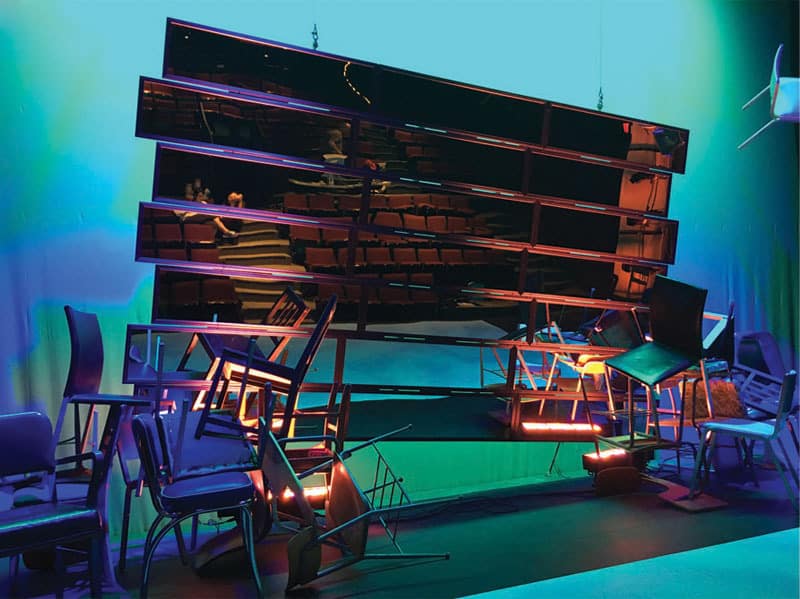
Scenic design for “Baltimore” by Nic Wilson, Spring 2016, UI Theatre Department
Who can contribute to IRO? Any University of Iowa researcher (staff or faculty) can contribute to IRO, as long as copyright allows. The repository also includes some UI student work (theses and dissertations, honors theses, and selected class projects).
What’s the benefit of contributing to IRO? Work appearing in IRO gains wider availability since it’s accessible online without restrictions (no paywall requiring paid membership).
Who can access materials in IRO? Anyone in the world may access for free.
What are the most popular downloads outside the US?
United Kingdom: Design of wind turbine tower and foundation systems: optimization approach http://ir.uiowa.edu/etd/1042/
India: Chemical, physical, and mechanical properties of nanomaterials and its applications http://ir.uiowa.edu/etd/2501/
Philippines: The caregiver’s journey: a phenomenological study of the lived experience of leisure for caregivers in the sandwich generation who care for a parent with dementia http://ir.uiowa.edu/etd/599/
China: Oxidation and reactivity of 3,4-dihydroxyphenylacetaldehyde, a reactive intermediate of dopamine metabolismhttp://ir.uiowa.edu/etd/918/
During the month of Open Access week (October 23-29, 2017) we will be highlighting a number of guest posts from University of Iowa Faculty and Staff who have personal experience making their work Open Access. We appreciate their contributions.
The six, and final post is by Kanchna Ramchandran, Associate Research Scientist, Department of Psychiatry.
One of the ultimate goals of academic publishing is to make the results of robust research available to peers in academia, end-users and society in general, in a timely fashion. OA journals represent the future in smoothly oiling the wheels of this process, which may sometimes appear opaque amongst conventional journals.
An advantage that I have experienced in submitting to an OA journal is the quick turnaround from submission to final editorial decision. It can be quite disheartening to wait for up to 1 year (the longest I have experienced from a tier 1 conventional journal), only to receive a rejection at the end. In comparison, I have received full reviews within a few weeks from an OA journal. Thus, even if rejected, the research can benefit from editorial and peer-reviewed feedback to improve the manuscript, before moving forward in a timely fashion along the publishing assembly line.
I have also appreciated the transparency, and on one occasion the conversational style of the review process between the editor, reviewers and the authors of the manuscript in an OA journal that I have worked with. It embodied egalitarian scientific dialogue, where the authors could engage directly with reviewers under the guidance and direction of the editor. On a subliminal level, this can make a huge difference to all stakeholders involved in the publishing process, keeping peer-reviewers and authors on a level playing field.
An excellent example of a pure OA journal is the Frontiers group, which over a medium range in time, has established a solid reputation of scientific excellence in the quality of peer-reviewed articles it has published. It is also heartening to see conventional journal publishers take a hybrid approach in offering authors the option of early online publication, for a fee albeit. It is hoped that in the medium run, the business model of peer-reviewed publishing amongst OA journals, is able to economically scale itself such that authors do not have to bear the financial cost of getting their research to the public domain. This unfortunate current practice appears to undermine both academic and business ethics. It is in this domain that the OA fund offered at the University of Iowa can bypass these ethically thorny issues while supporting researchers in getting their work published.
In a digital world, OA publishing seems the sensible way forward. Outside of the impact on science, it is an environmental boon as a well, reducing the stress on paper production and the resources required to store these journals. As innovations arise in enhancing digital storage capacity and security, OA publishing could well become the conventional form of scientific reach in the developed world. The challenge will be on OA publishers to provide truly open non-digital access in the near future, to the majority of the world’s population with poor digital access, but nevertheless has a basic human right to literacy and education, about new discoveries, innovations, inventions and ideas.
During the month of Open Access week (October 23-29, 2017) we will be highlighting a number of guest posts from University of Iowa Faculty and Staff who have personal experience making their work Open Access. We appreciate their contributions.
The fifth post is by our own Mahrya Carncross, Scholarly Communication Librarian.
With the proliferation of open access journals, researchers can get their work into the hands of more readers, and readers—especially those who aren’t affiliated with major universities and their vast journal collections—are able to access necessary research for free. This is a good thing. Authors get a boost in their article citations, and scholars of all stripes can get the articles they need. But there are also bad actors who sully the reputation of open access.
Predatory journals, which masquerade as legitimate, are essentially money-making schemes that take advantage of the OA model. They spam scholars with flattering emails, encouraging them to submit manuscripts or serve on editorial boards, often with promises of quick publication and impressive metrics. They flatter researchers with invitations to present their work at conferences in far-off locales. In actuality, it’s all a ruse. Predatory publishers will post your manuscript, but they’ll charge you a high article processing charge (APC) and will conduct no real peer-review.[1] If you agree to serve on an editorial board, you may never actually see an article cross your desk, but your credentials will appear on the journal’s website, adding to its appearance of legitimacy. Often times, the scope of the journal will be impossibly broad, with titles such as American Research Thoughts or International Journal of Arts Humanities and Social Sciences. Sometimes predatory journals will even steal or imitate the name of an existing journal, fooling scholars into thinking they are publishing in a well-known source.
For many years, librarians and academics used Beall’s List to help us call balls and strikes on OA journals. Jeffrey Beall, a librarian and associate professor at The University of Colorado, Denver, maintained a comprehensive list of publishers and standalone journals that he deemed to be predatory. His list was used widely, both by scholars deciding where to publish and the librarians advising them. Beall was and remains a controversial figure. He is a staunch critic of the OA model in general, much to the ire of OA advocates. Others have criticized the lack of transparency in his inclusion criteria for predatory journals. Publishers, such as the suspect medical outfit OMICS, sued Beall and his university when they appeared on the list. Yet Beall’s list served a much-needed purpose. It helped us parse the good from the bad in open access publishing.
Given all the controversy, it may not be surprising that the list was taken down in January, 2017. Beall himself has remained silent on the issue, and there has been speculation about whether his employer had a hand in its removal. But now, those of us who care about identifying predatory journals are left with a Beall-shaped hole. The scholarly analytics company, Cabell’s, has come out with its own list of predatory journals, which it sells to academic libraries for a substantial fee. Anonymous researchers have posted archived versions of Beall’s list, but these remain static—a picture of the predatory landscape as it existed in January, 2017. As time goes on, this list will become less relevant.
So what is a scholar to do? I would recommend a few things. First, enlist the help your department’s library liaison. These librarians know the academic publishing landscape in your field and are familiar with publishing trends. Check with your colleagues, as well. If you’ve never heard of a journal, ask others in your field. Finally, check for warning signs. Did you receive a form email from out-of-the-blue asking you to submit to a journal you’ve never heard of? Does the journal’s website appear to have either very little article content or tons of it? Read some of the articles. Do they seem to be well-written and well-reviewed? Is the journal indexed with reputable sources? Check to make sure the journal is actually indexed where it says it’s indexed. You can check the Directory of Open Access Journals for well-reputed titles, as well.
We’re living in interesting times when it comes to scholarly publishing. Much will change in coming months and years. I would encourage you to explore open options for the sake of making research available to all, but I would also encourage you to think critically about where you submit.
[1] Legitimate open journals also charge APCS, but these are used to fund the operation of the journal, which includes peer review, processing of manuscripts, and editorship. Legitimate journals will tell you up-front about their APCS and how they are being used.
During the month of Open Access week (October 23-29, 2017) we will be highlighting a number of guest posts from University of Iowa Faculty and Staff who have personal experience making their work Open Access. We appreciate their contributions.
The fourth post is by Thomas Gruca, Henry B. Tippie Research Professor of Marketing,
A new path for sharing your research
My path to the world of open access journals was more by accident than intent. I was aware of the “pay to play” model where open access means the journal is “open” to publishing anything the author submits so long as a large fee is paid. I was unaware that there are many open access journals with rigorous review standards and high impact factors.
My journey began, as many do, after my paper was rejected by multiple top-tier journals. This study looked at rural outreach by cardiologists in Iowa and surrounding states. It is an unusual topic for most top medical journals since their primary focus is on clinical research, not issues of access (especially in rural states). The next potential outlet happened to be an open access journal sponsored by a major non-profit organization dedicated to research and treatment of cardiovascular disease. I met with the editor-in-chief who is on the faculty here at Iowa. After looking over the paper, he agreed that it might be a good fit for his journal. He also described the process of choosing another editor to manage the review process to avoid conflicts of interest. [Quick lesson for new researchers – try to talk to editors before submitting a paper that might not fall in the scope of a given journal. It saves time and effort for all involved.]
The reviewers were very prompt, thorough and tough. Now that I have met all of their requirements and answered all of their questions, I have to admit that their input greatly improved the paper. Moreover, one of the new analyses they wanted has given me new ideas for future research.
This work was not supported by grants and there are very few grants supporting research in business. Once the paper was accepted, I was ready to pay the publication fee from the research funding provided by my college. (For this journal, that amount corresponded to 90% of my entire research budget for the year.) Fortunately, I received substantial help from the Libraries and Provost’s Open Access fund.
My experience has a few lessons for other who are considering submitting their work to an open access journal. First, open access journals are not all the same. There are library staff members who can help you identify appropriate publishers and avoid predatory outlets. Second, open access journals are peer-reviewed and rigorously so! High quality journals – open access or not – have a high bar for publication, so make sure you submission is the best it can be. Finally, while the publication charges can be a barrier, the OA Fund may be able to help you share your work freely with anyone and everyone.
During the month of Open Access week (October 23-29, 2017) we will be highlighting a number of guest posts from University of Iowa Faculty and Staff who have personal experience making their work Open Access. We appreciate their contributions.
At a personal level Open Access to scientific and technical publications is fundamental to my day-to-day activities as a researcher and educator. Barriers, especially financial, in our ability to access our own cumulative knowledge are detrimental to the growth of our societies, particularly in regions of the world struggling even for basic sustenance. It is good to see ‘open access’ which made its formal appearance at the turn of the century, gain momentum including in my field of computer science. Authors now have varied options as for instance, to retain just copyright or to retain all rights. I became aware – some years ago – of how painful it was to access the literature when I wanted to make thirty copies of my own paper for my graduate class. The publisher asked for several thousand dollars in copyright fees! If it had been a last minute article selection then making copies for free would have been approved under ‘fair use’. But I could not make copies and plan to distribute them say in a month’s time. The whole situation was bizarre. Open access comes to the rescue in this and many other situations. I would like to especially credit the field of physics for our open access opportunities today. Physicists had set the precedent for free sharing of knowledge way before open access came up the horizon. Physics departments and libraries, at least across the US, would with almost clock-work precision exchange pre-prints amongst themselves through the postal service. Each department maintained its mailing lists for sending and receiving these preprints which would be arranged nicely in a reading room. Reliance on the postal services diminished with the arrival of arXiv – a repository for electronic preprints – about thirty years ago. ArXiv continues today even in areas beyond physics. The fact that this ‘free’ exchange model clearly did not impinge on the profits from journals in Physics was part of the winning argument for the spread of Open Access. I also want to acknowledge the strong support offered by Libraries and Universities such as our own; for instance, their support of publication costs associated with Open Access journals is invaluable. These fees are worth it given the long term access options they yield. My students and I have availed of this facility on several occasions and we are grateful for these funds. I know open access will continue to flourish and anything outside will steadily become a dwindling exception.
During the month of Open Access week (October 23-29, 2017) we will be highlighting a number of guest posts from University of Iowa Faculty and Staff who have personal experience making their work Open Access. We appreciate their contributions.
The second guest post is by Carrie Figdor, Associate Professor, Department of Philosophy and Interdisciplinary Graduate Program in Neuroscience, Director of Undergraduate Studies.
Opening doors through open access
The UI Open Access Fund enabled me to publish an article on science journalism at Frontiers in Communication, a fairly recent addition to the Frontiers-in family of online journals, many of which have very high citation rates. This article has since become the third most-viewed article to date of that journal (despite the relative recency of its publication) and the journal editors have approached me to curate a Research Topic in this area. Since its publication I have also been invited to contribute to a forthcoming volume with Oxford in media ethics. I have no idea whether that invitation is attributable to the publication of this paper, but it is undoubtedly true that Open Access publication vastly increases potential exposure due to its immediate accessibility to anyone for free. This is extremely important in a context of very high priced academic journals that get their content for free from academics.
Working with the Libraries’ open access fund staff to obtain funding was a scholar’s dream. The application was straightforward, my DEO, David Cunning, was very supportive, the funds were granted swiftly, and payment to the journal was taken care of quickly and efficiently. Once my article was accepted, the rest was easy.