Skip to content
Skip to main content

Digital New Book Display – 7-19-22

Welcome to the University of Iowa Libraries’ virtual New Book Shelf. Here we will present new titles for you to browse and check out. Titles listed here will be monographs published in the current year. If you see a title you would like to borrow, please click the link below the item and sign in with your Hawk ID and Password to request a loan.

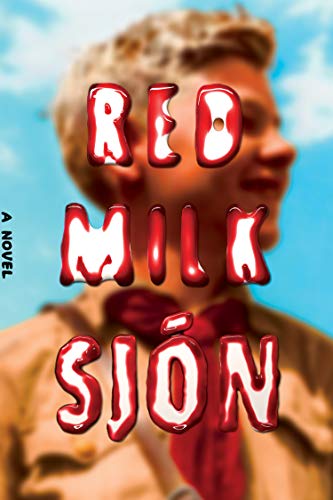
Red Milk: A Novel

A timely and provocative novel about a mysterious Icelandic neo-Nazi and the enduring global allure of fascism.

In England in 1962, an Icelandic man is found dead on a train bound for Cheltenham Spa. In his possession, policemen find a map on which a swastika has been drawn with a red pen. Who was he, and where was he going?

In a novel that reads as both biography and mystery, the internationally celebrated novelist Sjón tells the story of Gunnar Kampen, the founder of Iceland’s antisemitic nationalist party, with ties to a burgeoning network of neo-Nazi groups across the globe. Told in a series of scenes and letters spanning Kampen’s lifetime—from his childhood in Reykjavík during the Second World War, in a household strongly opposed to Hitler and his views, through his education, political radicalization, and final clandestine mission to England—Red Milk urges readers to confront the international legacy of twentieth-century fascism and the often unknowable forces that drive some people to extremism.

Based on one of the ringleaders of a little-known neo-Nazi group that operated in Reykjavík in the late 1950s and early 1960s, this taut and potent novel explores what shapes a young man and the enduring, disturbing allure of Nazi ideology.

https://search.lib.uiowa.edu/permalink/f/9i2ftm/01IOWA_ALMA21843861820002771

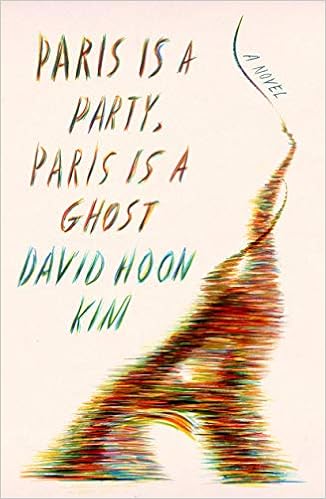
Paris Is a Party, Paris Is a Ghost: A Novel

In a strangely distorted Paris, a Japanese adoptee is haunted by the woman he once loved

When Fumiko emerges after one month locked in her dorm room, she’s already dead, leaving a half-smoked Marlboro Light and a cupboard of petrified food in her wake. For her boyfriend, Henrik Blatand, an aspiring translator, these remnants are like clues, propelling him forward in a search for meaning. Meanwhile, Fumiko, or perhaps her doppelgänger, reappears: in line at the Louvre, on street corners and subway platforms, and on the dissection table of a group of medical students.

Henrik’s inquiry expands beyond Fumiko’s seclusion and death, across the absurd, entropic streets of Paris and the figures that wander them, from a jaded group of Korean expats, to an eccentric French widow, to the indelible woman whom Henrik finds sitting in his place on a train. It drives him into the shadowy corners of his past, where his adoptive Danish parents raised him in a house without mirrors. And it mounts to a charged intimacy shared with his best friend’s precocious daughter, who may be haunted herself.

David Hoon Kim’s debut is a transgressive, darkly comic novel of becoming lost and found in translation. With each successive, echoic chapter, Paris Is a Party, Paris Is a Ghost plunges us more deeply beneath the surface of things, to the displacement, exile, grief, and desire that hide in plain sight.

https://search.lib.uiowa.edu/permalink/f/9i2ftm/01IOWA_ALMA21842900880002771

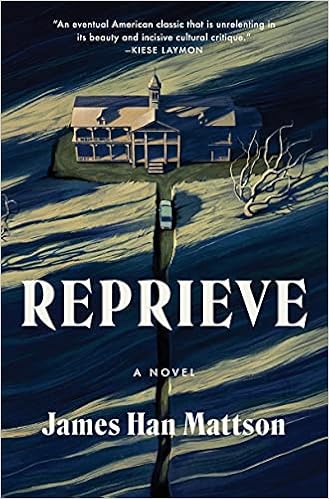
Reprieve: A Novel 

“Like Whitehead’s The Intuitionist, Alyssa Cole’s When No One Is Watching or Zakiya Dalila Harris’ The Other Black GirlReprieve straddles genres in the best possible way. . . . Sure to spark conversation and debate at book clubs across the land.” –LOS ANGELES TIMES

“An eventual American classic that is unrelenting in its beauty and incisive cultural critique.” – KIESE LAYMON

Recommended by New York Times • Los Angeles Times • NPR • Today • Esquire • O Quarterly • Boston Globe • Chicago Tribune • Harper’s Bazaar • Shondaland • Thrillist • The Millions • Crimereads • XTRA • Tor • Literary Hub • and more!

A chilling and blisteringly relevant literary novel of social horror centered around a brutal killing that takes place in a full-contact haunted escape room—a provocative exploration of capitalism, hate politics, racial fetishism, and our obsession with fear as entertainment. 

On April 27, 1997, four contestants make it to the final cell of the Quigley House, a full-contact haunted escape room in Lincoln, Nebraska, made famous for its monstrosities, booby-traps, and ghoulishly costumed actors. If the group can endure these horrors without shouting the safe word, “reprieve,” they’ll win a substantial cash prize—a startling feat accomplished only by one other group in the house’s long history. But before they can complete the challenge, a man breaks into the cell and kills one of the contestants.

Those who were present on that fateful night lend their points of view: Kendra Brown, a teenager who’s been uprooted from her childhood home after the sudden loss of her father; Leonard Grandton, a desperate and impressionable hotel manager caught in a series of toxic entanglements; and Jaidee Charoensuk, a gay international student who came to the United States in a besotted search for his former English teacher. As each character’s journey unfurls and overlaps, deceit and misunderstandings fueled by obsession and prejudice are revealed, forcing all to reckon with the ways in which their beliefs and actions contributed to a horrifying catastrophe.

An astonishingly soulful exploration of complicity and masquerade, Reprieve combines the psychological tension of classic horror with searing social criticism to present an unsettling portrait of this tangled American life.

https://search.lib.uiowa.edu/permalink/f/9i2ftm/01IOWA_ALMA21842913380002771

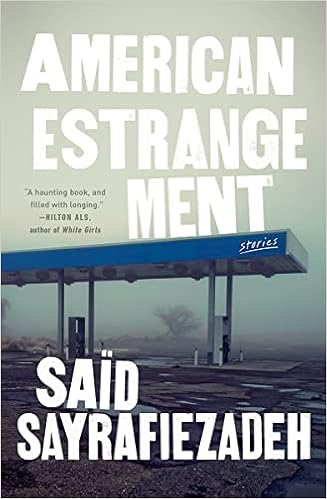
American Estrangement: Stories

Finalist for the 2022 Los Angeles Times Book Prize in Fiction
Longlisted for the 2022 Story Prize
New York Times Editors’ Choice pick
One of 
Literary Hub‘s Most Anticipated Books of 2021

Stories that capture our times by “a young author who has already established himself as a unique American voice” (Elle).

Said Sayrafiezadeh has been hailed by Philip Gourevitch as “a masterful storyteller working from deep in the American grain.” His new collection of stories―some of which have appeared in The New Yorker, the Paris Review, and the Best American Short Stories―is set in a contemporary America full of the kind of emotionally bruised characters familiar to readers of Denis Johnson and George Saunders. These are people contending with internal struggles―a son’s fractured relationship with his father, the death of a mother, the loss of a job, drug addiction―even as they are battered by larger, often invisible, economic, political, and racial forces of American society.

Searing, intimate, often slyly funny, and always marked by a deep imaginative sympathy, American Estrangement is a testament to our addled times. It will cement Sayrafiezadeh’s reputation as one of the essential twenty-first-century American writers.

https://search.lib.uiowa.edu/permalink/f/9i2ftm/01IOWA_ALMA21844003090002771

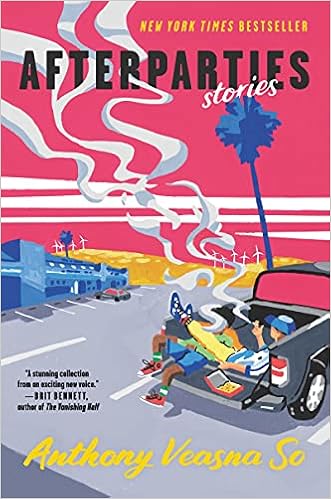
Afterparties: Stories

A vibrant story collection about Cambodian-American life—immersive and comic, yet unsparing—that offers profound insight into the intimacy of queer and immigrant communities

Seamlessly transitioning between the absurd and the tenderhearted, balancing acerbic humor with sharp emotional depth, Afterparties offers an expansive portrait of the lives of Cambodian-Americans. As the children of refugees carve out radical new paths for themselves in California, they shoulder the inherited weight of the Khmer Rouge genocide and grapple with the complexities of race, sexuality, friendship, and family.

A high school badminton coach and failing grocery store owner tries to relive his glory days by beating a rising star teenage player. Two drunken brothers attend a wedding afterparty and hatch a plan to expose their shady uncle’s snubbing of the bride and groom. A queer love affair sparks between an older tech entrepreneur trying to launch a “safe space” app and a disillusioned young teacher obsessed with Moby-Dick. And in the sweeping final story, a nine-year-old child learns that his mother survived a racist school shooter.

The stories in Afterparties, “powered by So’s skill with the telling detail, are like beams of wry, affectionate light, falling from different directions on a complicated, struggling, beloved American community” (George Saunders).

https://search.lib.uiowa.edu/permalink/f/9i2ftm/01IOWA_ALMA21844003480002771

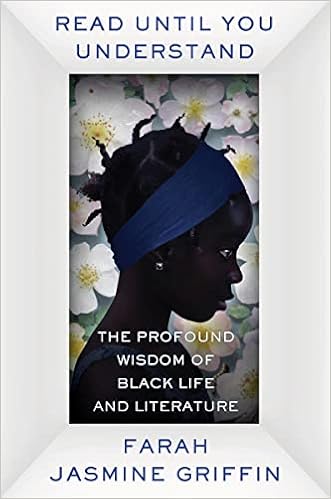
Read Until You Understand: The Profound Wisdom of Black Life and Literature

A PBS NewsHour Best Book of the Year
Publishers Weekly Best Book of the Year in Nonfiction

A brilliant scholar imparts the lessons bequeathed by the Black community and its remarkable artists and thinkers.

Farah Jasmine Griffin has taken to her heart the phrase “read until you understand,” a line her father, who died when she was nine, wrote in a note to her. She has made it central to this book about love of the majestic power of words and love of the magnificence of Black life.

Griffin has spent years rooted in the culture of Black genius and the legacy of books that her father left her. A beloved professor, she has devoted herself to passing these works and their wisdom on to generations of students.

Here, she shares a lifetime of discoveries: the ideas that inspired the stunning oratory of Frederick Douglass and Malcolm X, the soulful music of Marvin Gaye and Stevie Wonder, the daring literature of Phillis Wheatley and Toni Morrison, the inventive artistry of Romare Bearden, and many more. Exploring these works through such themes as justice, rage, self-determination, beauty, joy, and mercy allows her to move from her aunt’s love of yellow roses to Gil Scott-Heron’s “Winter in America.”

Griffin entwines memoir, history, and art while she keeps her finger on the pulse of the present, asking us to grapple with the continuing struggle for Black freedom and the ongoing project that is American democracy. She challenges us to reckon with our commitment to all the nation’s inhabitants and our responsibilities to all humanity.

https://search.lib.uiowa.edu/permalink/f/9i2ftm/01IOWA_ALMA21842913410002771

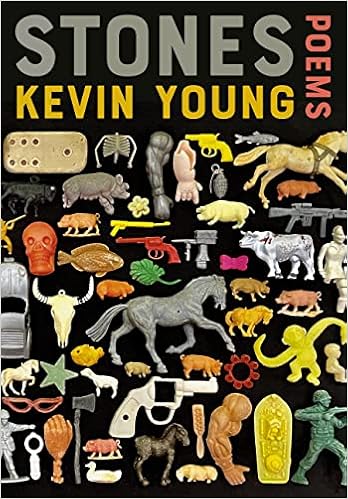
Stones: Poems

A book of loss, looking back, and what binds us to life, by a towering poetic talent, called “one of the poetry stars of his generation” (Los Angeles Times).

“We sleep long, / if not sound,” Kevin Young writes early on in this exquisite gathering of poems, “Till the end/ we sing / into the wind.” In scenes and settings that circle family and the generations in the American South–one poem, “Kith,” exploring that strange bedfellow of “kin”–the speaker and his young son wander among the stones of their ancestors. “Like heat he seeks them, / my son, thirsting / to learn those / he don’t know / are his dead.”
 
Whether it’s the fireflies of a Louisiana summer caught in a mason jar (doomed by their collection), or his grandmother, Mama Annie, who latches the screen door when someone steps out for just a moment, all that makes up our flickering precarious joy, all that we want to protect, is lifted into the light in this moving book. Stones becomes an ode to Young’s home places and his dear departed, and to what of them—of us—poetry can save.

https://search.lib.uiowa.edu/permalink/f/9i2ftm/01IOWA_ALMA21844003630002771

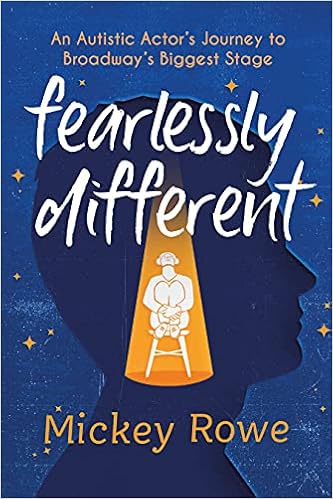
Fearlessly Different: An Autistic Actor’s Journey to Broadway’s Biggest Stage

My name is Mickey Rowe. I am an actor, a theatre director, a father, and a husband. I am also a man with autism. You think those things don’t go together? Let me show you that they do.

Growing up, Mickey Rowe was told that he couldn’t enter the mainstream world. He was iced out by classmates and colleagues, infantilized by well-meaning theatre directors, barred from even earning a minimum wage. Why? Because he is autistic.

Fearlessly Different: An Autistic Actor’s Journey to Broadway’s Biggest Stage is Mickey Rowe’s story of growing up autistic and pushing beyond the restrictions of a special education classroom to shine on the stage. As an autistic and legally blind person, living in a society designed by and for non-disabled people, it was always made clear to Mickey the many things he was apparently incapable of doing. But Mickey did them all anyway—and he succeeded because of, not in spite of, his autism. He became the first autistic actor to play the lead role in the play The Curious Incident of the Dog in the Night-Time, landed the title role in the play Amadeus, co-created the theatre/philanthropy company Arts on the Waterfront, and founded the National Disability Theatre. Mickey faced untold obstacles along the way, but his story ends in triumph.

Many people feel they are locked out of the world of autism—that it’s impossible to even begin to understand. In Fearlessly Different, Mickey guides readers to that world while also helping those with autism to feel seen and understood. And he shows all people—autistic and non-autistic alike—that the things that make us different are often our biggest strengths.

https://search.lib.uiowa.edu/permalink/f/9i2ftm/01IOWA_ALMA21844389300002771

The Sentence

In this New York Times bestselling novel, Pulitzer Prize and National Book Award–winning author Louise Erdrich creates a wickedly funny ghost story, a tale of passion, of a complex marriage, and of a woman’s relentless errors.

Louise Erdrich’s latest novel, The Sentence, asks what we owe to the living, the dead, to the reader and to the book. A small independent bookstore in Minneapolis is haunted from November 2019 to November 2020 by the store’s most annoying customer. Flora dies on All Souls’ Day, but she simply won’t leave the store. Tookie, who has landed a job selling books after years of incarceration that she survived by reading “with murderous attention,” must solve the mystery of this haunting while at the same time trying to understand all that occurs in Minneapolis during a year of grief, astonishment, isolation, and furious reckoning.

The Sentence begins on All Souls’ Day 2019 and ends on All Souls’ Day 2020. Its mystery and proliferating ghost stories during this one year propel a narrative as rich, emotional, and profound as anything Louise Erdrich has written. 

https://search.lib.uiowa.edu/permalink/f/9i2ftm/01IOWA_ALMA21844002460002771

Women vs Hollywood: The Fall and Rise of Women in Film

A call to arms from Empire magazine’s ‘geek queen’, Helen O’Hara, that explores women’s roles  both in front of and behind the camera  since the birth of Hollywood, how those roles are reflected within wider society and what we can do to level the playing field.

Hollywood was born just over a century ago, at a time of huge forward motion for women’s rights. With no rules in place to stop them, there were women who forged ahead in many areas of filmmaking. Yet, despite the work of early pioneers like Dorothy Arzner, Mabel Normand, Mary Pickford and Alice Guy-Blaché, it soon came to embody the same old sexist standards. Women found themselves fighting a system that fed on their talent, creativity and beauty but refused to pay them the same respect as their male contemporaries – until now . . .

The tide has finally begun to turn. A new generation of women, both in front of and behind the camera, are making waves in the industry and are now shaping some of the biggest films to hit our screens.

In Women vs Hollywood: The Fall and Rise of Women in Film, film critic Helen O’Hara takes a closer look at the pioneering and talented women of Hollywood and their work in film since Hollywood began. And in understanding how women were largely written out of Hollywood’s own origin story, and how the films we watch are put together, we can finally see how to put an end to a picture that is so deeply unequal – and discover a multitude of stories out there just waiting to be told.

https://search.lib.uiowa.edu/permalink/f/9i2ftm/01IOWA_ALMA21842738390002771

Digital New Book Display – 7-11-22

Welcome to the University of Iowa Libraries’ virtual New Book Shelf. Here we will present new titles for you to browse and check out. Titles listed here will be monographs published in the current year. If you see a title you would like to borrow, please click the link below the item and sign in with your Hawk ID and Password to request a loan.

What the Amish Teach Us: Plain Living in a Busy World

What do the traditional plain-living Amish have to teach twenty-first-century Americans in our hyper-everything world? As it turns out, quite a lot!

It sounds audacious, but it’s true: the Amish have much to teach us. It may seem surreal to turn to one of America’s most traditional groups for lessons about living in a hyper-tech world―especially a horse-driving people who resist “progress” by snubbing cars, public grid power, and high school education. Still, their wisdom confirms that even when they seem so far behind, they’re out ahead of the rest of us.

Having spent four decades researching Amish communities, Donald B. Kraybill is in a unique position to share important lessons from these fascinating Plain people. In this inspiring book, we learn intriguing truths about community, family, education, faith, forgiveness, aging, and death from real Amish men and women. The Amish are ahead of us, for example, in relying on apprenticeship education. They have also out-Ubered Uber for nearly a century, hiring cars owned and operated by their neighbors. Kraybill also explains how the Amish function in modern society by rejecting new developments that harm their community, accepting those that enhance it, and adapting others to fit their values.

Pairing storytelling with informative and reflective passages, these twenty-two essays offer a critique of modern culture that is provocative yet practical. In a time when civil discourse is raw and coarse and our social fabric seems torn asunder, What the Amish Teach Us uproots our assumptions about progress and prods us to question why we do what we do.

https://search.lib.uiowa.edu/permalink/f/9i2ftm/01IOWA_ALMA21847637850002771

The Black Agenda: Bold Solutions for a Broken System

The Black Agenda mobilizes top Black experts from across the country to share transformative perspectives on how to deploy anti-racist ideas and policies into everything from climate policy to criminal justice to healthcare. This book will challenge what you think is possible by igniting long overdue conversations around how to enact lasting and meaningful change rooted in racial justice.” ―Ibram X. Kendi, #1 New York Times bestselling author of How to Be an Antiracist and Stamped From the Beginning

From ongoing reports of police brutality to the disproportionate impact COVID-19 has had on Black Americans, 2020 brought a renewed awareness to the deep-rootedness of racism and white supremacy in every facet of American life.

Edited by Anna Gifty Opoku-Agyeman, The Black Agenda is the first book of its kind―a bold and urgent move towards social justice through a profound collection of essays featuring Black scholars and experts across economics, education, health, climate, and technology. It speaks to the question “What’s next for America?” on the subjects of policy-making, mental health, artificial intelligence, climate movement, the future of work, the LGBTQ community, the criminal legal system, and much more.

Essayists including Dr. Sandy Darity, Dr. Hedwig Lee, Mary Heglar, and Janelle Jones present groundbreaking ideas ranging from Black maternal and infant health to reparations to AI bias to inclusive economic policy, with the potential to uplift and heal not only Black America, but the entire country.

https://search.lib.uiowa.edu/permalink/f/9i2ftm/01IOWA_ALMA21846513960002771

How We Can Win: Race, History and Changing the Money Game That’s Rigged

A breakdown of the economic and social injustices facing Black people and other marginalized citizens inspired by political activist Kimberly Jones’ viral video, “How Can We Win.”

“So if I played four hundred rounds of Monopoly with you and I had to play and give you every dime that I made, and then for fifty years, every time that I played, if you didn’t like what I did, you got to burn it like they did in Tulsa and like they did in Rosewood, how can you win? How can you win?”

When Kimberly Jones declared these words amid the protests spurred by the murder of George Floyd, she gave a history lesson that in just over six minutes captured the economic struggles of Black people in America. Within days the video had been viewed by millions of people around the world, riveted by Jones’s damning―and stunningly succinct―analysis of the enduring disparities Black Americans face.

In How We Can Win, Jones delves into the impacts of systemic racism and reveals how her formative years in Chicago gave birth to a lifelong devotion to justice. Here, in a vital expansion of her declaration, she calls for Reconstruction 2.0, a multilayered plan to reclaim economic and social restitutions―those restitutions promised with emancipation but blocked, again and again, for more than 150 years. And, most of all, Jones delivers strategies for how we can effect change as citizens and allies while nurturing ourselves―the most valuable asset we have―in the fight against a system that is still rigged.

https://search.lib.uiowa.edu/permalink/f/9i2ftm/01IOWA_ALMA21844822320002771

Blacks and Jews in America: An Invitation to Dialogue

A Black-Jewish dialogue lifts a veil on these groups’ unspoken history, shedding light on the challenges and promises facing American democracy from its inception to the present

In this uniquely structured conversational work, two scholars ― one of African American politics and religion, and one of contemporary American Jewish culture ― explore a mystery: Why aren’t Blacks and Jews presently united in their efforts to combat white supremacy? As alt-right rhetoric becomes increasingly normalized in public life, the time seems right for these one-time allies to rekindle the fires of the civil rights movement.

Blacks and Jews in America investigates why these two groups do not presently see each other as sharing a common enemy, let alone a political alliance. Authors Terrence L. Johnson and Jacques Berlinerblau consider a number of angles, including the disintegration of the “Grand Alliance” between Blacks and Jews during the civil rights era, the perspective of Black and Jewish millennials, the debate over Louis Farrakhan and the Nation of Islam, and the Israel-Palestine conflict.

Ultimately, this book shows how the deep roots of the Black-Jewish relationship began long before the mid-twentieth century, changing a narrative dominated by the Grand Alliance and its subsequent fracturing. By engaging this history from our country’s origins to its present moment, this dialogue models the honest and searching conversation needed for Blacks and Jews to forge a new understanding.

https://search.lib.uiowa.edu/permalink/f/9i2ftm/01IOWA_ALMA21842988100002771

You Sound Like a White Girl: The Case for Rejecting Assimilation

“Unflinching” ―Ms. Magazine • “Phenomenal” ―BookRiot • “An essential read” ―Kirkus, starred review • “Necessary” ―Library Journal • “Powerful” ―Joaquin Castro • “Illuminating” ―Reyna Grande • “A love letter to our people” ―José Olivarez • “I have been waiting for this book all my life” ―Paul Ortiz

Bestselling author Julissa Arce 
calls for a celebration of our uniqueness, our origins, our heritage, and the beauty of the differences that make us Americans in this powerful polemic against the myth that assimilation leads to happiness and belonging for immigrants.

“You sound like a white girl.” These were the words spoken to Julissa by a high school crush as she struggled to find her place in America. As a brown immigrant from Mexico, assimilation had been demanded of her since the moment she set foot in San Antonio, Texas, in 1994. She’d spent so much time getting rid of her accent so no one could tell English was her second language that in that moment she felt those words―you sound like a white girl?―were a compliment. As a child, she didn’t yet understand that assimilating to “American” culture really meant imitating “white” America―that sounding like a white girl was a racist idea meant to tame her, change her, and make her small. She ran the race, completing each stage, but never quite fit in, until she stopped running altogether.

In this dual polemic and manifesto, Julissa dives into and tears apart the lie that assimilation leads to belonging. She combs through history and her own story to break down this myth, arguing that assimilation is a moving finish line designed to keep Black and brown Americans and immigrants chasing racist American ideals. She talks about the Lie of Success, the Lie of Legality, the Lie of Whiteness, and the Lie of English―each promising that if you obtain these things, you will reach acceptance and won’t be an outsider anymore. Julissa deftly argues that these demands leave her and those like her in a purgatory―neither able to secure the power and belonging within whiteness nor find it in the community and cultures whiteness demands immigrants and people of color leave behind.

In You Sound Like a White Girl, Julissa offers a bold new promise: Belonging only comes through celebrating yourself, your history, your culture, and everything that makes you uniquely you. Only in turning away from the white gaze can we truly make America beautiful. An America where difference is celebrated, heritage is shared and embraced, and belonging is for everyone. Through unearthing veiled history and reclaiming her own identity, Julissa shows us how to do this.

https://search.lib.uiowa.edu/permalink/f/9i2ftm/01IOWA_ALMA21846514980002771

Once Upon a Time We Ate Animals: The Future of Food

Combining the ethical clarity of Jonathan Safran Foer’s Eating Animals with the disquieting vision of Alan Weissman’s bestseller The World Without Us, a thought-provoking, entertaining exploration of a future where animal consumption is a thing of the past.

Though increasing numbers of people know that eating meat is detrimental to our planet’s health, many still can’t be convinced to give up eating meat. But how can we change behavior when common arguments and information aren’t working?

 Acclaimed anthropologist Roanne Van Voorst changes the dialogue. In Once Upon a Time We Ate Animals, she shifts the focus from the present looking forward to the future looking back—imagining a world in which most no longer use  animals for food, clothing, or other items. By shifting the viewpoint, she offers a clear and compelling vision of what it means to live in a world without meat.

A massive shift is already taking place—everything van Voorst covers in this book has already been invented and is being used today by individuals and small organizations worldwide. 

Hopeful and persuasive, Once Upon a Time We Ate Animals offers a tantalizing vision of what is not only possible but perhaps inevitable. 

https://search.lib.uiowa.edu/permalink/f/9i2ftm/01IOWA_ALMA21844813110002771

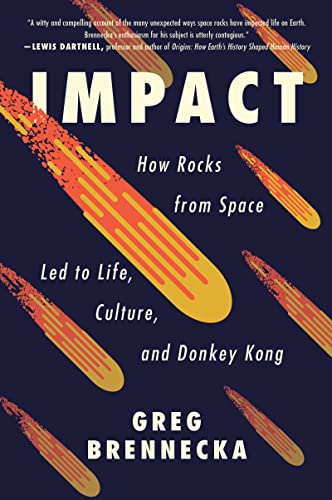
Impact: How Rocks from Space Led to Life, Culture, and Donkey Kong

A Short History of Nearly Everything meets Astrophysics for People in a Hurry in this humorous, accessible exploration of how meteorites have helped not only build our planet but steered the evolution of life and human culture.

The Solar System. Dinosaurs. Donkey Kong. What is the missing link? Surprisingly enough, it’s meteorites. They explain our past, constructed our present, and could define our future.

Impact argues that Earth would be a lifeless, inhospitable piece of rock without being fortuitously assaulted with meteorites throughout the history of the planet. These bombardments transformed Earth’s early atmosphere and delivered the complex organic molecules that allowed life to develop on our planet. While meteorites have provided the raw materials for life to thrive, they have radically devastated life as well, most famously killing off the dinosaurs and paving the way for humans to evolve to where we are today.

As noted meteoriticist Greg Brennecka explains, meteorites did not just set us on the path to becoming human, they helped direct the development of human culture. Meteorites have influenced humanity since the start of civilization. Over the centuries, meteorite falls and other cosmic cinema have started (and stopped) wars, terrified millions, and inspired religions throughout the world. 

With humor and an infectious enthusiasm, Brennecka reveals previously untold but important stories sure to delight and inform readers about the most important rocks on Earth.

https://search.lib.uiowa.edu/permalink/f/9i2ftm/01IOWA_ALMA21846514740002771

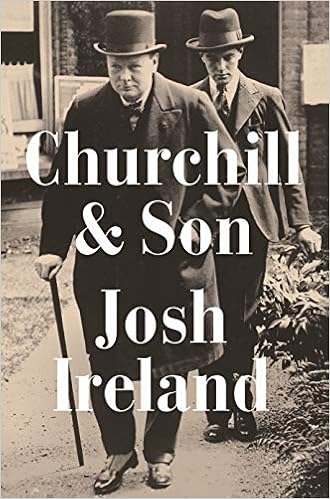
Churchill & Son

The intimate, untold story of Winston Churchill’s enduring yet volatile bond with his only son, Randolph

“Ireland draws unforgettable sketches of life in the Churchill circle, much like Erik Larson did in The Splendid and the Vile.”Kirkus “Fascinating… well-researched and well-written.”—Andrew Roberts • “Beautifully written… A triumph.”—Damien Lewis • “Fascinating, acute and touching.”—Simon Sebag Montefiore

We think we know Winston Churchill: the bulldog grimace, the ever-present cigar, the wit and wisdom that led Great Britain through the Second World War. Yet away from the House of Commons and the Cabinet War Rooms, Churchill was a loving family man who doted on his children, none more so than Randolph, his only boy and Winston’s anointed heir to the Churchill legacy.

Randolph may have been born in his father’s shadow, but his father, who had been neglected by his own parents, was determined to see him go far. For decades, throughout Winston’s climb to greatness, father and son were inseparable—dining with Britain’s elite, gossiping and swilling Champagne at high society parties, holidaying on the French Riviera, touring Prohibition-era America. Captivated by Winston’s power, bravery, and charisma, Randolph worshipped his father, and Winston obsessed over his son’s future. But their love was complex and combustible, complicated by money, class, and privilege, shaded with ambition, outsize expectations, resentments, and failures.

Deeply researched and magnificently written, Churchill & Son is a revealing and surprising portrait of one of history’s most celebrated figures.

https://search.lib.uiowa.edu/permalink/f/9i2ftm/01IOWA_ALMA21844821780002771

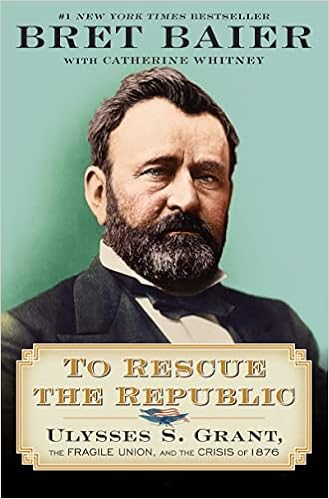
To Rescue the Republic: Ulysses S. Grant, the Fragile Union, and the Crisis of 1876

Fox News Channel’s Chief Political Anchor illuminates the heroic life of Ulysses S. Grant

“To Rescue the Republic is narrative history at its absolute finest. A fast-paced, thrilling and enormously important book.” Douglas Brinkley

An epic history spanning the battlegrounds of the Civil War and the violent turmoil of Reconstruction to the forgotten electoral crisis that nearly fractured a reunited nation, Bret Baier’s To Rescue the Republic dramatically reveals Ulysses S. Grant’s essential yet underappreciated role in preserving the United States during an unprecedented period of division.

Born a tanner’s son in rugged Ohio in 1822 and battle-tested by the Mexican American War, Grant met his destiny on the bloody fields of the Civil War. His daring and resolve as a general gained the attention of President Lincoln, then desperate for bold leadership. Lincoln appointed Grant as Lieutenant General of the Union Army in March 1864. Within a year, Grant’s forces had seized Richmond and forced Robert E. Lee to surrender.

Four years later, the reunified nation faced another leadership void after Lincoln’s assassination and an unworthy successor completed his term. Again, Grant answered the call. At stake once more was the future of the Union, for though the Southern states had been defeated, it remained to be seen if the former Confederacy could be reintegrated into the country—and if the Union could ensure the rights and welfare of African Americans in the South. Grant met the challenge by boldly advancing an agenda of Reconstruction and aggressively countering the Ku Klux Klan. 

In his final weeks in the White House, however, Grant faced a crisis that threatened to undo his life’s work. The contested presidential election of 1876 produced no clear victory for either Republican Rutherford B. Hayes or Democrat Samuel Tilden, who carried most of the former Confederacy. Soon Southern states vowed to revolt if Tilden was not declared the victor. Grant was determined to use his influence to preserve the Union, establishing an electoral commission to peaceably settle the issue. Grant brokered a grand bargain: the installation of Republican Hayes to the presidency, with concessions to the Democrats that effectively ended Reconstruction. This painful compromise saved the nation, but tragically condemned the South to another century of civil-rights oppression.

Deep with contemporary resonance and brimming with fresh detail that takes readers from the battlefields of the Civil War to the corridors of power where men decided the fate of the nation in back rooms, To Rescue the Republic reveals Grant, for all his complexity, to be among the first rank of American heroes.

https://search.lib.uiowa.edu/permalink/f/9i2ftm/01IOWA_ALMA21844812480002771

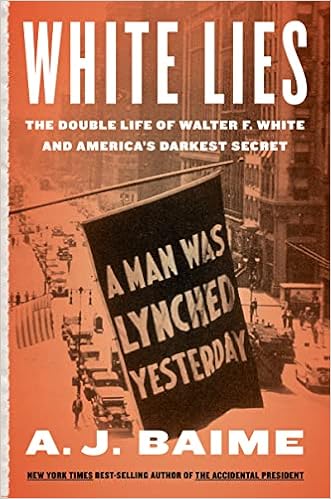
White Lies: The Double Life of Walter F. White and America’s Darkest Secret

An “electrifying” biography of Walter White, a little-remembered Black civil rights leader who passed for white in order to investigate racist murders, help put the NAACP on the map, and change the racial identity of America forever (Chicago Review of Books).

Walter F. White led two lives: one as a leader of the Harlem Renaissance and the NAACP in the early twentieth century; the other as a white newspaperman who covered lynching crimes in the Deep South at the blazing height of racial violence. Born mixed race and with very fair skin and straight hair, White was able to “pass” for white. He leveraged this ambiguity as a reporter, bringing to light the darkest crimes in America and helping to plant the seeds of the civil rights movement.

White’s risky career led him to lead a double life. He was simultaneously a second-class citizen subject to Jim Crow laws at home and a widely respected professional with full access to the white world at work. His life was fraught with internal and external conflict—much like the story of race in America. Starting out as an obscure activist, White ultimately became Black America’s most prominent leader, during his time. A character study of White’s life and career with all these complexities has never been rendered, until now.

By the award-winning, New York Times bestselling author of The Accidental President, Dewey Defeats Truman, and The Arsenal of Democracy, White Lies uncovers the life of a civil rights leader unlike any other.

https://search.lib.uiowa.edu/permalink/f/9i2ftm/01IOWA_ALMA21844813230002771
Digital New Book Display – 7-7-22

Welcome to the University of  Iowa Libraries’ virtual New Book Shelf. Here we will present new titles for you to browse and check out. Titles listed here will be monographs published in the current year. If you see a title you would like to borrow, please click the link below the item and sign in with your Hawk ID and Password to request a loan.

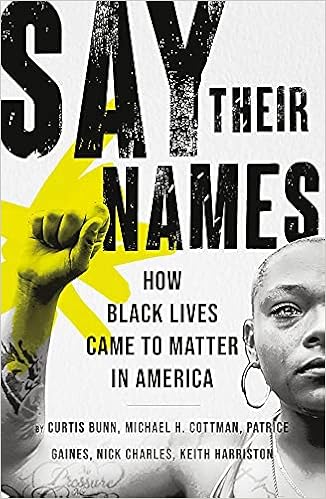
Say Their Names: How Black Lives Came to Matter in America

An incisive, gripping exploration of the forces that pushed our unjust system to its breaking point after the death of George Floyd and a definitive guide to America’s present-day racial reckoning.
  For many, the story of the weeks of protests in the summer of 2020 began with the horrific nine minutes and twenty-nine seconds when Police Officer Derek Chauvin killed George Floyd on camera, and it ended with the sweeping federal, state, and intrapersonal changes that followed. It is a simple story, wherein white America finally witnessed enough brutality to move their collective consciousness. The only problem is that it isn’t true. George Floyd was not the first Black man to be killed by police—he wasn’t even the first to inspire nation-wide protests—yet his death came at a time when America was already at a tipping point.
 
In SAY THEIR NAMES, five seasoned journalists probe this critical shift. With a piercing examination of how inequality has been propagated throughout history, from Black imprisonment and the Convict Leasing program to long-standing predatory medical practices to over-policing, the authors highlight the disparities that have long characterized the dangers of being Black in America. They examine the many moderate attempts to counteract these inequalities, from the modern Civil Rights movement to Ferguson, and how the killings of George Floyd, Breonna Taylor and others pushed compliance with an unjust system to its breaking point. Finally, they outline the momentous changes that have resulted from this movement, while at the same time proposing necessary next steps to move forward.
 
With a combination of penetrating, focused journalism and affecting personal insight, the authors bring together their collective years of reporting, creating a cohesive and comprehensive understanding of racial inequality in America.

https://search.lib.uiowa.edu/permalink/f/9i2ftm/01IOWA_ALMA21846514230002771
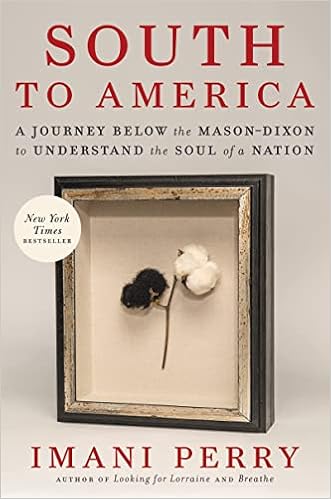
South to America: A Journey Below the Mason-Dixon to Understand the Soul of a Nation

INSTANT NEW YORK TIMES BESTSELLER

“An elegant meditation on the complexities of the American South—and thus of America—by an esteemed daughter of the South and one of the great intellectuals of our time. An inspiration.” —Isabel Wilkerson

An essential, surprising journey through the history, rituals, and landscapes of the American South—and a revelatory argument for why you must understand the South in order to understand America

We all think we know the South. Even those who have never lived there can rattle off a list of signifiers: the Civil War, Gone with the Wind, the Ku Klux Klan, plantations, football, Jim Crow, slavery. But the idiosyncrasies, dispositions, and habits of the region are stranger and more complex than much of the country tends to acknowledge. In South to America, Imani Perry shows that the meaning of American is inextricably linked with the South, and that our understanding of its history and culture is the key to understanding the nation as a whole.

This is the story of a Black woman and native Alabaman returning to the region she has always called home and considering it with fresh eyes. Her journey is full of detours, deep dives, and surprising encounters with places and people. She renders Southerners from all walks of life with sensitivity and honesty, sharing her thoughts about a troubling history and the ritual humiliations and joys that characterize so much of Southern life.

Weaving together stories of immigrant communities, contemporary artists, exploitative opportunists, enslaved peoples, unsung heroes, her own ancestors, and her lived experiences, Imani Perry crafts a tapestry unlike any other. With uncommon insight and breathtaking clarity, South to America offers an assertion that if we want to build a more humane future for the United States, we must center our concern below the Mason-Dixon Line.  

https://search.lib.uiowa.edu/permalink/f/9i2ftm/01IOWA_ALMA21844813020002771

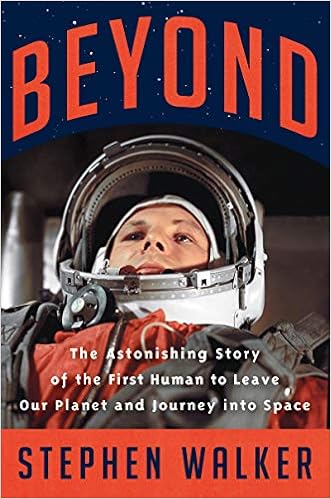
Beyond: The Astonishing Story of the First Human to Leave Our Planet and Journey into Space

“This remarkable account of the 1961 race into space is a thrilling piece of storytelling. . . . It is high definition history: tight, thrilling and beautifully researched.”—The Times, London, Front Page Lead Review

Beyond has the exhilaration of a fine thriller, but it is vividly embedded in the historic tensions of the Cold War, and peopled by men and women brought sympathetically, and sometimes tragically, to life.”—Colin Thubron, author of Shadow of the Silk Road

09.07 am. April 12, 1961. A top secret rocket site in the USSR. A young Russian sits inside a tiny capsule on top of the Soviet Union’s most powerful intercontinental ballistic missile—originally designed to carry a nuclear warhead—and blasts into the skies. His name is Yuri Gagarin. And he is about to make history.

 Travelling at almost 18,000 miles per hour—ten times faster than a rifle bullet—Gagarin circles the globe in just 106 minutes. From his windows he sees the earth as nobody has before, crossing a sunset and a sunrise, crossing oceans and continents, witnessing its beauty and its fragility. While his launch begins in total secrecy, within hours of his landing he has become a world celebrity – the first human to leave the planet.

Beyond tells the thrilling story behind that epic flight on its 60th anniversary. It happened at the height of the Cold War as the US and USSR confronted each other across an Iron Curtain. Both superpowers took enormous risks to get a man into space first, the Americans in the full glare of the media, the Soviets under deep cover. Both trained their teams of astronauts to the edges of the endurable. In the end the race between them would come down to the wire.

Drawing on extensive original research and the vivid testimony of eyewitnesses, many of whom have never spoken before, Stephen Walker unpacks secrets that were hidden for decades and takes the reader into the drama of one of humanity’s greatest adventures – to the scientists, engineers and political leaders on both sides, and above all to the American astronauts and their Soviet rivals battling for supremacy in the heavens.

https://search.lib.uiowa.edu/permalink/f/9i2ftm/01IOWA_ALMA21844822470002771

Russia Upside Down: An Exit Strategy for the Second Cold War

A former CIA officer and the creator of the hit TV series The Americans makes the case that America’s policy towards Russia is failing–and we’ll never fix it until we rethink our relationship.  Coming of age in America in the 1970s and 80s, Joe Weisberg was a Cold Warrior. After briefly studying Russian in Leningrad, he joined the CIA in 1990–just in time to watch the Soviet Union collapse.  But less than a decade after the first Cold War ended, a new one broke out. Russia changed in many of the ways that America hoped it might–more capitalist, more religious, more open to Western ideas. But US sanctions have crippled Russia’s economy; and Russia’s interventions have exacerbated political problems in America. The old paradigm–America, the free capitalist good guys, fighting Russia, the repressive communist bad guys–simply doesn’t apply anymore. But we’ve continued to act as if it does. In this bold and controversial book, Joe Weisberg interrogates these assumptions, asking hard questions about American policy and attempting to understand what Russia truly wants. Russia Upside Down makes the case against the new Cold War. It suggests that we are fighting an enemy with whom we have few if any serious conflicts of interest. It argues that we are fighting with ineffective and dangerous tools. And most of all, it aims to demonstrate that our approach is not working. With our own political system in peril and continually buffeted by Russian attacks, we need a new framework, urgently. Russia Upside Down shows the stakes and begins to lay out that new plan, at a time when it is badly needed.

https://search.lib.uiowa.edu/permalink/f/9i2ftm/01IOWA_ALMA21846554100002771

Losing Our Minds: The Challenge of Defining Mental Illness

A compelling and incisive book that questions the overuse of mental health terms to describe universal human emotions

Public awareness of mental illness has been transformed in recent years, but our understanding of how to define it has yet to catch up. Too often, psychiatric disorders are confused with the inherent stresses and challenges of human experience. A narrative has taken hold that a mental health crisis has been building among young people. In this profoundly sensitive and constructive book, psychologist Lucy Foulkes argues that the crisis is one of ignorance as much as illness. Have we raised a ‘snowflake’ generation? Or are today’s young people subjected to greater stress, exacerbated by social media, than ever before? Foulkes shows that both perspectives are useful but limited. The real question in need of answering is: how should we distinguish between ‘normal’ suffering and actual illness?

Drawing on her extensive knowledge of the scientific and clinical literature, Foulkes explains what is known about mental health problems―how they arise, why they so often appear during adolescence, the various tools we have to cope with them―but also what remains unclear: distinguishing between normality and disorder is essential if we are to provide the appropriate help, but no clear line between the two exists in nature. Providing necessary clarity and nuance, Losing Our Minds argues that the widespread misunderstanding of this aspect of mental illness might be contributing to its apparent prevalence.

https://search.lib.uiowa.edu/permalink/f/9i2ftm/01IOWA_ALMA21846514620002771

Tell Me Everything: The Story of a Private Investigation

Part memoir and part literary true crime, Tell Me Everything is the mesmerizing story of a landmark sexual assault investigation and the female private investigator who helped crack it open.

Erika Krouse has one of those faces. “I don’t know why I’m telling you this,” people say, spilling confessions. In fall 2002, Erika accepts a new contract job investigating lawsuits as a private investigator. The role seems perfect for her, but she quickly realizes she has no idea what she’s doing. Then a lawyer named Grayson assigns her to investigate a sexual assault, a college student who was attacked by football players and recruits at a party a year earlier. Erika knows she should turn the assignment down. Her own history with sexual violence makes it all too personal. But she takes the job anyway, inspired by Grayson’s conviction that he could help change things forever. And maybe she could, too.

Over the next five years, Erika learns everything she can about P. I. technique, tracking down witnesses and investigating a culture of sexual assault and harassment ingrained in the university’s football program. But as the investigation grows into a national scandal and a historic civil rights case, Erika finds herself increasingly consumed. When the case and her life both implode at the same time, Erika must figure out how to help win the case without losing herself.

https://search.lib.uiowa.edu/permalink/f/9i2ftm/01IOWA_ALMA21846514020002771

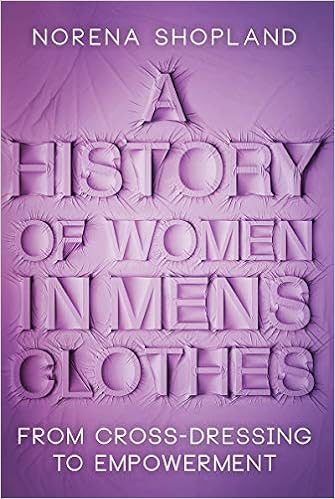
A History of Women in Men’s Clothes: From Cross-Dressing to Empowerment

Traditionally, historic women have been seen as bound by social conventions, unable to travel unless accompanied and limited in their ability to do what they want when they want. But thousands of women broke those rules, put on banned clothing and traveled, worked and even lived whole lives as men. As access to novels and newspapers increased in the nineteenth century so did the number of women defying Biblical and social restrictions. They copied each other’s motives and excuses and moved into the world of men. Most were working-class women who either needed to or wanted to, break away from constricted lives; women who wanted to watch a hanging or visit a museum, to see family or escape domestic abuse, some wanted to earn a decent living when women’s wages could not keep a family. The reasons were myriad. Some were quickly arrested and put on display in court, hoping to deter other women from such shameful behavior, but many more got away with it.

For the first time, A History of Women in Men’s Clothes looks at those thousands of individuals who broke conventions in the only way they could, by disguising themselves either for a brief moment or a whole life.

Daring and bold, this is the story of the women who defied social convention to live their lives as they chose, from simply wanting more independence to move and live freely, to transgender and homosexual women cross-dressing to express themselves, this is women’s fight to wear trousers.

https://search.lib.uiowa.edu/permalink/f/9i2ftm/01IOWA_ALMA21843256370002771

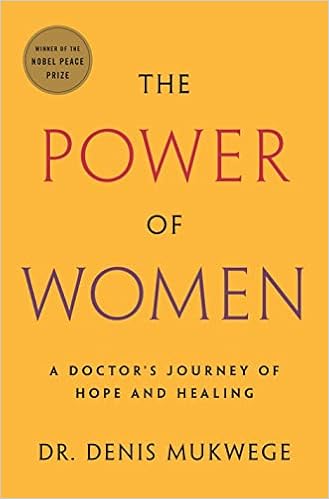
The Power of Women: A Doctor’s Journey of Hope and Healing

From Nobel laureate, world-renowned doctor, and noted human rights activist Dr. Denis Mukwege comes an inspiring clarion call-to-action to confront the scourge of sexual violence and better learn from women’s resilience, strength, and power.

At the heart of Dr. Mukwege’s message will be the voices of the many women he has worked with over the years. Dr. Mukwege will use individual cases to reassure all survivors that, even if their psychological wounds may never fully heal, they can recover and thrive with the right care and support.

Dr. Mukwege’s dramatic personal story is interwoven throughout as he explores the bigger issues that have become a focus of his advocacy. He will seek to explain why sexual violence is so often overlooked during war, and how governments need to recognize and compensate victims. He will also stress the importance of breaking down the taboos surrounding assault, and the necessity of building a system that supports women who come forward.

His words advocate for saying ‘no’ to indifference and he asks readers to reckon with the West’s involvement in perpetuating sexual violence in places like the Democratic Republic of Congo, and to confront the abuse taking place in their own communities.

Sexual violence does not occur in a vacuum. The conflict in the Democratic Republic of Congo, which has raged for over 20 years and has claimed an estimated 5 million lives, is inseparable from Western patriarchy and economic colonization. And this cycle of violence and spoils is not limited to Congo. Dr. Mukwege’s work has led him to South Korea, Latin America, the Middle East, and elsewhere in Africa, where he has found striking similarities in women’s testimonies.

The truth is, through the intricate ties of the global economy, we are all implicated in violence against women – whether it occurs amidst the fighting in the Democratic Republic of Congo or on college campuses in the West. And Dr. Mukwege’s writing will address men as well, encouraging and guiding them to become allies in the fight against sexual abuse, in war and in peace.

Building more inclusive, gender-balanced societies will require developing what he calls “positive masculinity” – a systemic change in male behavior and attitudes towards women. Dr. Mukwege hopes to inspire other men to speak out and join the struggle, rather than leaving women to fight the battle alone. He will also make the case, drawing from his experience and a wealth of research on the topic, that when women are involved as economic and political decision makers, all of society benefits.

The Power of Women will illuminate the enduring strength of women in the face of violence and trauma, and give hope for the potential of individuals to turn the tide.

https://search.lib.uiowa.edu/permalink/f/9i2ftm/01IOWA_ALMA21846514410002771

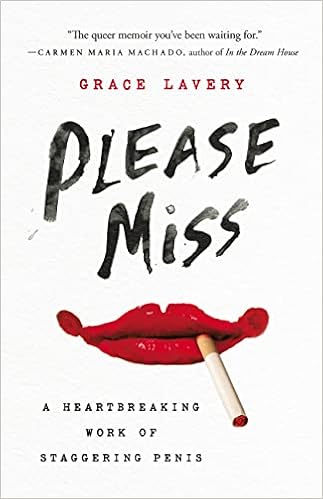
Please Miss: A Heartbreaking Work of Staggering Penis

“The queer memoir you’ve been waiting for”—Carmen Maria Machado

Grace Lavery is a reformed druggie, an unreformed omnisexual chaos Muppet, and 100 percent, all-natural, synthetic female hormone monster. As soon as she solves her “penis problem,” she begins receiving anonymous letters, seemingly sent by a cult of sinister clowns, and sets out on a magical mystery tour to find the source of these surreal missives. Misadventures abound: Grace performs in a David Lynch remake of Sunset Boulevard and is reprogrammed as a sixties femmebot; she writes a Juggalo Ghostbusters prequel and a socialist manifesto disguised as a porn parody of a quiz show. Or is it vice versa? As Grace fumbles toward a new trans identity, she tries on dozens of different voices, creating a coat of many colors.

With more dick jokes than a transsexual should be able to pull off, Please Miss gives us what we came for, then slaps us in the face and orders us to come again.

https://search.lib.uiowa.edu/permalink/f/9i2ftm/01IOWA_ALMA21846514440002771

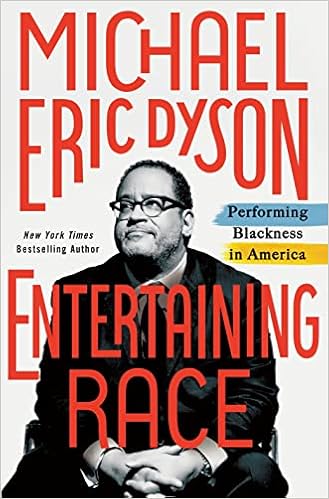
Entertaining Race: Performing Blackness in America

One of Kirkus Review’s Best Books About Being Black in America | On Detroit Free Press‘ Holiday Book Gift List

“Dyson’s work clearly comes from a deep well of love―for his country, for his people and for the intellectual and cultural figures he admires.” ―
New York Times

Entertaining Race is a splendid way to spend quality time reading one of the most remarkable thinkers in America today.”
Speaker Nancy Pelosi

“To read Entertaining Race is to encounter the life-long vocation of a teacher who preaches, a preacher who teaches and an activist who cannot rest until all are set free.”
Senator Reverend Raphael Warnock

For more than thirty years, Michael Eric Dyson has played a prominent role in the nation as a public intellectual, university professor, cultural critic, social activist and ordained Baptist minister. He has presented a rich and resourceful set of ideas about American history and culture. Now for the first time he brings together the various components of his multihued identity and eclectic pursuits.

Entertaining Race is a testament to Dyson’s consistent celebration of the outsized impact of African American culture and politics on this country. Black people were forced to entertain white people in slavery, have been forced to entertain the idea of race from the start, and must find entertaining ways to make race an object of national conversation. Dyson’s career embodies these and other ways of performing Blackness, and in these pages, ranging from 1991 to the present, he entertains race with his pen, voice and body, and occasionally, alongside luminaries like Cornel West, David Blight, Ibram X. Kendi, Master P, MC Lyte, Ta-Nehisi Coates, Alicia Garza, John McWhorter, and Jordan Peterson.

Most of this work will be new to readers, a fresh light for many of his long-time fans and an inspiring introduction for newcomers. Entertaining Race offers a compelling vision from the mind and heart of one of America’s most important and enduring voices.

https://search.lib.uiowa.edu/permalink/f/9i2ftm/01IOWA_ALMA21846514890002771

Digital New Book Display – 7-5-22

Welcome to the University of Iowa Libraries’ virtual New Book Shelf. Here we will present new titles for you to browse and check out. Titles listed here will be monographs published in the current year. If you see a title you would like to borrow, please click the link below the item and sign in with your Hawk ID and Password to request a loan.

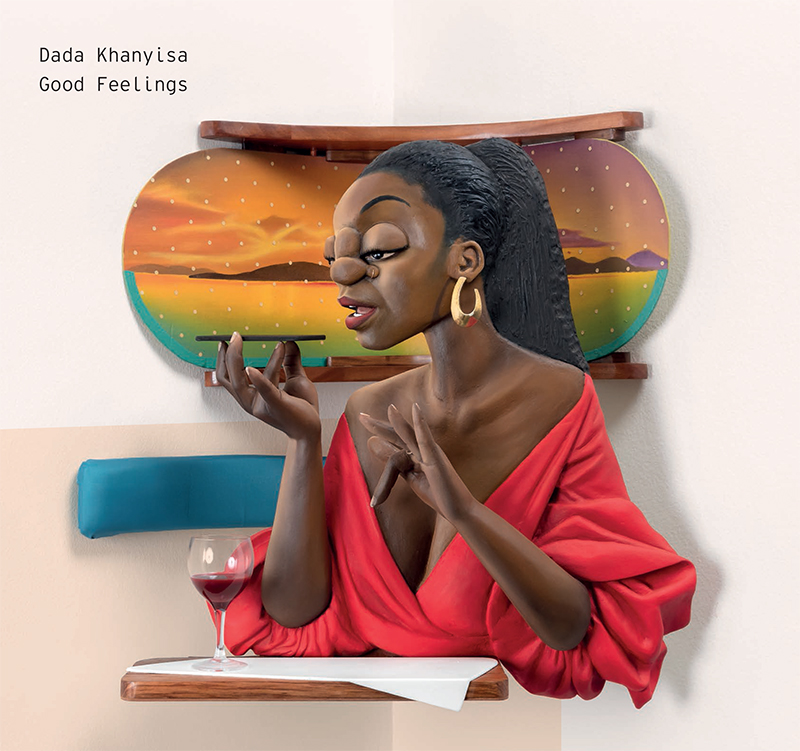
DADA KHANYISA: GOOD FEELINGS

This catalogue is published on the occasion of Dada Khanyisa’s second exhibition with Stevenson, Good Feelings, in which Khanyisa fractures their narrative process, creating solipsistic scenes set against the backdrop of communal living. In this presentation in Khanyisa’s ‘solution-based practice’ – described as nakanjani (‘by whatever means’) – place is foregrounded in an unprecedented way and the multidimensionality of the artist’s paintings is broadened formally, conceptually and referentially.

The catalogue spans early and recent works, and features an essay by Sinazo Chiya, studio notes from an interview by Sisipho Ngodwana and Alexander Richards, and a conversation between Khanyisa and Julie Nxadi looking at process, historical ugliness and the occupation of space. From one exchange:

Nxadi: There’s a lot of things that are going on at the same time and I think siyathanda uku instructor [we love instructing] and sometimes we need to take a break from the instruction and just tell the story.

Khanyisa: Yeah, tell the story. It has to come out. It has to exist, it has to be there, it has to be in the world. I guess that’s the instructive element. But as far as having to carry the load of fixing the social wrongs or social ills …? Because there’s also that thing that as Black cultural practitioners we can’t just focus on fynbos. And ‘they’ are like, okay, we get your fynbos obsession but the hood is burning.

Where is your bucket? The hood is burning, dawg.

We are here and we are doing it. So there is also a need to celebrate that. A need to celebrate the beautiful. Getting back from work and taking off your bra and just chilling – that decompression element – It’s a point of interest to me. I understand why people go out because I go out and it’s interesting the things that play out and what they say about the greater South Africa.

https://search.lib.uiowa.edu/permalink/f/9i2ftm/01IOWA_ALMA21808350950002771

Forms of Persuasion: Art and Corporate Image in the 1960s

In the 1960s, multinational corporations faced new image problems—and turned to the art world for some unexpected solutions.

The 1960s saw artists and multinational corporations exploring new ways to use art for commercial gain. Whereas many art historical accounts of this period privilege radical artistic practices that seem to oppose the dominant values of capitalism, Alex J. Taylor instead reveals an art world deeply immersed in the imperatives of big business.
 
From Andy Warhol’s work for packaged goods manufacturers to Richard Serra’s involvement with the steel industry, Taylor demonstrates how major artists of the period provided brands with “forms of persuasion” that bolstered corporate power, prestige, and profit. Drawing on extensive original research conducted in artist, gallery, and corporate archives, Taylor recovers a flourishing field of promotional initiatives that saw artists, advertising creatives, and executives working around the same tables. As museums continue to grapple with the ethical dilemmas posed by funding from oil companies, military suppliers, and drug manufacturers, Forms of Persuasion returns to these earlier relations between artists and multinational corporations to examine the complex aesthetic and ideological terms of their enduring entanglements.

https://search.lib.uiowa.edu/permalink/f/9i2ftm/01IOWA_ALMA21847169730002771
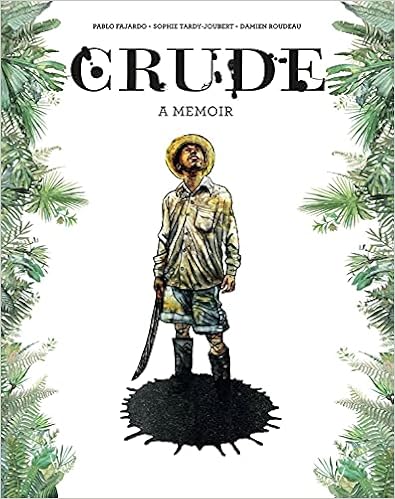
Crude: A Memoir

A gripping, richly illustrated recounting of the battle indigenous Ecuadorians and their allies waged against Texaco/Chevron over the energy company’s destruction of portions of the Amazon. As a teenager, Pablo Fajardo worked in the Amazonian oil fields, where he witnessed the consequences of Texaco/Chevron’s indifference to the environment and to the inhabitants of the Amazon. Fajardo mobilized with his peers to seek reparations and in time became the lead counsel for UDAPT (Union of People Affected by Texaco), a group of more than thirty thousand small farmers and indigenous people from the northern Ecuadorian Amazon who continue to fight for reparations and remediation to this day.

https://search.lib.uiowa.edu/permalink/f/9i2ftm/01IOWA_ALMA21840513980002771
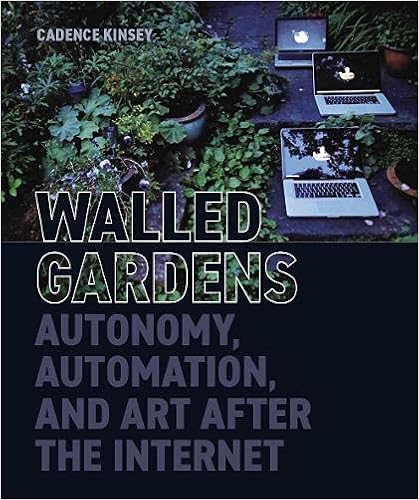
Walled Gardens: Autonomy, Automation, and Art After the Internet 

Walled Gardens: Autonomy, Automation, and Art After the Internet is the study of a young generation of artists characterised by their engagement with new Internet technologies that have come to reorganize life and labour online, from mobile Internet and social media to Cloud Computing. Often
grouped around the much-contested term ‘post-Internet art’, these artists work across a range of genre DS including sculpture, performance, and moving image DS in order to confront the relationship between technology and society in the twenty first century. Focusing on art works produced between 2008
and 2016 in Europe and the US, this book situates the emergence of the field in a historical context of global economic downturn and climate catastrophe, positing that new Internet technologies were developed in a mutually co-constitutive relationship with crisis. Characterised by ease of use,
portability, and accessibility, such technologies are the reason why the Internet has become an ever-increasing part of daily life. Yet they are also examples of ‘walled gardens’: proprietary formats in which one’s control over functionality or content is highly restricted. Strikingly, many artists
have chosen to work with rather than against these technologies and, in so doing, perform complicity with the very structures that they seek to interrogate. Walled Gardens asks how might we make sense of this assimilation with proprietary technologies, and argues that what these artworks reveal is a
model of subjectivity conditioned by a dynamic between autonomy and automation.

https://search.lib.uiowa.edu/permalink/f/9i2ftm/01IOWA_ALMA21847169970002771
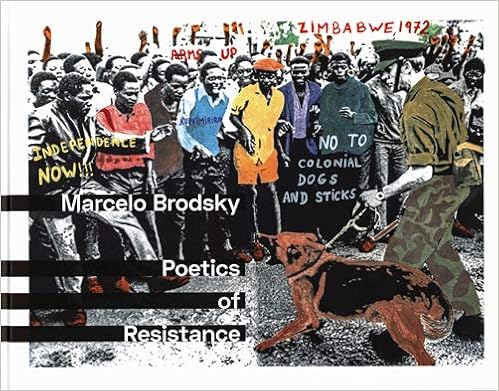
Marcelo Brodsky – Poetics Of Resistance

Marcelo Brodskys practice is situated at the crossroads between visual arts, poetry, and human rights activism. Using images from documentary archives, he manipulates them by adding handwritten comments and highlighting details with bright colours, stimulating a dialogue between the pre-existing narratives conveyed by the original photographs and his own interpretations. Poetics of Resistance features two major groups of works created between 2014 and 2019, on the international protests of 1968 and on the process of decolonisation in Africa in the 20th century, plus ongoing inquiries into anti-Franco resistance in Spain and todays urgent topic of migrants and refugees.

https://search.lib.uiowa.edu/permalink/f/9i2ftm/01IOWA_ALMA21841306790002771
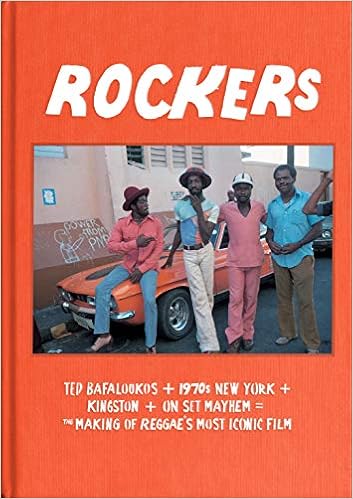
Rockers: The Making of Reggae’s Most Iconic Film

“An incredible reggae backstory; illustrated by spectacular unseen images.” – MOJO Magazine

Set amongst the reggae scene of late 70s Jamaica, the film Rockers achieved instant cult status among music and cinema fans. Rockers’ director, Ted Bafaloukos has received many accolades for his work on the film, but the fact that he was also a fine writer and undercover photographer is often overlooked. Bafaloukos penned this vivid autobiography in 2005 and passed in 2016.

Beyond Bafaloukos’ fascinating story of the “making-of” Rockers, it tells the tale of a Greek immigrant from a family of sailors and his move to New York, eventually rubbing shoulders with the likes of The Velvet Underground, Robert Frank, Jessica Lange and Philippe “Man on Wire” Petit. But there’s a twist to this 1970s’ New York story: Bafaloukos fell in love with reggae when it was still just an underground facet of Jamaican culture in the City. His experiences in New York eventually led him to shoot Rockers, praised for the portrait it paints of Kingston’s late 70s music scene along with its unique style, mentality and fashion.

The director’s intense experiences in Jamaica and New York between ’75 – ’78 provide the substance of the scorching stories within, including; gunshots at his first ever reggae concert in Brooklyn, the director’s bizarre arrest for suspicion of being a CIA operative, paranoia at the Bob Marley compound, musicians-turned actors’ “rude boy” antics, and naturally, sympathetic, highly descriptive recollections of the music that first drew Bafaloukos into Jamaica’s music and culture.

An invaluable collection of photographs taken during the conception, writing and production of the film captures the zeitgeist and breathes life into the book. Production stills and photos taken during the era by Bafaloukos form the visual, cinematic backbone of the tome, faithfully rendering the amazing people, styles, and locations in living, breathing color. Taken all together, the text and images within Rockers will uncover new facets of this all-important era in Reggae music for even the most seasoned reggae aficionados. Beyond reggae circles, this new anthology offers an unparalleled snapshot of a highly fantasized and sought after je-ne sais-quoi: the all-time Jamaican cool.

https://search.lib.uiowa.edu/permalink/f/9i2ftm/01IOWA_ALMA21841863140002771
Ramón Paolini: Caracas: Double Take

A portrait of Caracas by Ramón Paolini, architect, photographer, Venezuela’s director of Cultural Heritage and UNESCO inspector

For more than 30 years, Ramón Paolini (born 1949) has photographed the city of Caracas. This volume collects more than 120 photographs illustrating a modern city of cement, steel and glass surrounded by lush nature, mountains, valleys and rivers.

https://search.lib.uiowa.edu/permalink/f/9i2ftm/01IOWA_ALMA21841019620002771
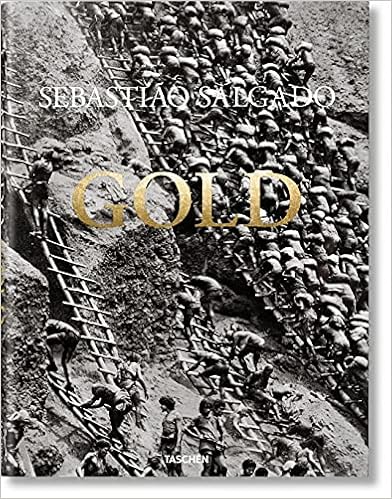
Sebastião Salgado. Gold

“What is it about a dull yellow metal that drives men to abandon their homes, sell their belongings and cross a continent in order to risk life, limbs and sanity for a dream?” – Sebastião Salgado

When Sebastião Salgado was finally authorized to visit Serra Pelada in September 1986, having been blocked for six years by Brazil’s military authorities, he was ill-prepared to take in the extraordinary spectacle that awaited him on this remote hilltop on the edge of the Amazon rainforest. Before him opened a vast hole, some 200 meters wide and deep, teeming with tens of thousands of barely-clothed men. Half of them carried sacks weighing up to 40 kilograms up wooden ladders, the others leaping down muddy slopes back into the cavernous maw. Their bodies and faces were the color of ochre, stained by the iron ore in the earth they had excavated.

After gold was discovered in one of its streams in 1979, Serra Pelada evoked the long-promised El Dorado as the world’s largest open-air gold mine, employing some 50,000 diggers in appalling conditions. Today, Brazil’s wildest gold rush is merely the stuff of legend, kept alive by a few happy memories, many pained regrets―and Sebastião Salgado’s photographs.

Color dominated the glossy pages of magazines when Salgado shot these images. Black and white was a risky path, but the Serra Pelada portfolio would mark a return to the grace of monochrome photography, following a tradition whose masters, from Edward Weston and Brassaï to Robert Capa and Henri Cartier-Bresson, had defined the early and mid-20th century. When Salgado’s images reached The New York Times Magazine, something extraordinary happened: there was complete silence. “In my entire career at The New York Times,” recalled photo editor Peter Howe, “I never saw editors react to any set of pictures as they did to Serra Pelada.”

Today, with photography absorbed by the art world and digital manipulation, Salgado’s portfolio holds a biblical quality and projects an immediacy that makes them vividly contemporary. The mine at Serra Pelada has been long closed, yet the intense drama of the gold rush leaps out of these images.

This book gathers Salgado’s complete Serra Pelada portfolio in museum-quality reproductions, accompanied by a foreword by the photographer and an essay by Alan Riding.

Also available in a signed and limited Collector’s Edition and as an Art Edition.

https://search.lib.uiowa.edu/permalink/f/9i2ftm/01IOWA_ALMA21829570260002771
Digital New Book Display – 6-30-22

Welcome to the University of  Iowa Libraries’ virtual New Book Shelf. Here we will present new titles for you to browse and check out. Titles listed here will be monographs published in the current year. If you see a title you would like to borrow, please click the link below the item and sign in with your Hawk ID and Password to request a loan.

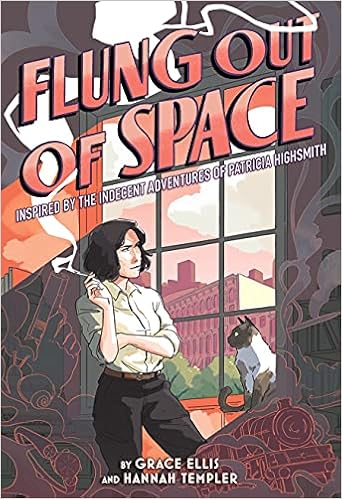
Flung Out of Space: Inspired by the Indecent Adventures of Patricia Highsmith

A fictional and complex portrait of bestselling author Patricia Highsmith caught up in the longing that would inspire her queer classic, The Price of Salt

Flung Out of Space is both a love letter to the essential lesbian novel, The Price of Salt, and an examination of its notorious author, Patricia HighsmithVeteran comics creators Grace Ellis and Hannah Templer have teamed up to tell this story through Highsmith’s eyes—reimagining the events that inspired her to write the story that would become a foundational piece of queer literature. Flung Out of Space opens with Pat begrudgingly writing low-brow comics. A drinker, a smoker, and a hater of life, Pat knows she can do better. Her brain churns with images of the great novel she could and should be writing—what will eventually be Strangers on a Train— which would later be adapted into a classic film by Alfred Hitchcock in 1951.

At the same time, Pat, a lesbian consumed with self-loathing, is in and out of conversion therapy, leaving a trail of sexual conquests and broken hearts in her wake. However, one of those very affairs and a chance encounter in a department store give Pat the idea for her soon-to-be beloved tale of homosexual love that was the first of its kind—it gave the lesbian protagonists a happy ending.

This is not just the story behind a classic queer book, but of a queer artist who was deeply flawed. It’s a comic about what it was like to write comics in the 1950s, but also about what it means to be a writer at any time in history, struggling to find your voice.

Author Grace Ellis contextualizes Patricia Highsmith as both an unintentional queer icon and a figure whose problematic views and noted anti-Semitism have cemented her controversial legacy. Highsmith’s life imitated her art with results as devastating as the plot twists that brought her fame and fortune.

https://search.lib.uiowa.edu/permalink/f/9i2ftm/01IOWA_ALMA21809355910002771
Tunnels

A race for the Ark of the Covenant finds an exploration into the ethics and world of the international antiquity trade

When a great antiquities collector is forced to donate his entire collection to the Hebrew University in Jerusalem, Nili Broshi sees her last chance to finish an archaeological expedition begun decades earlier―a dig that could possibly yield the most important religious artifact in the Middle East. Motivated by the desire to reinstate her father’s legacy as a great archaeologist after he was marginalized by his rival, Nili enlists a ragtag crew―a religious nationalist and his band of hilltop youths, her traitorous brother, and her childhood Palestinian friend, now an archaeological smuggler. As Nili’s father slips deeper into dementia, warring factions close in on and fight over the Ark of the Covenant!

Backed by extensive research into this real-world treasure hunt, Rutu Modan sets her affecting novel at the center of a political crisis. She posits that the history of biblical Israel lies in one of the most disputed regions in the world, occupied by Israel and contested by Palestine. Often in direct competition, Palestinians and Israelis dig alongside one another, hoping to find the sacred artifact believed to be a conduit to God. Two time Eisner Award winner Rutu Modan’s third graphic novel, Tunnels, is her deepest and wildest yet. Potent and funny, Modan reveals the Middle East as no westerner could.

Ishai Mishory is a longtime New York City―and newly Bay Area―based translator and sometimes illustrator. He is currently conducting research for a PhD dissertation on 16th century Italian printing.

https://search.lib.uiowa.edu/permalink/f/9i2ftm/01IOWA_ALMA21839390640002771

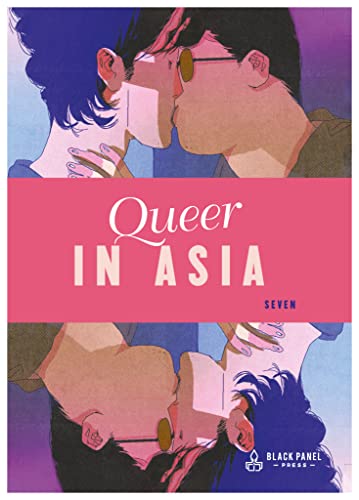
Queer in Asia

Who is Tian Fushi? A misunderstood manga artist, a depraved citizen of Chinese pornography, a young gay man gone astray in an ultraviolent world, a lost boy out of Peter Pan’s Neverland? How will he put the fragments of himself together and discover who he really is? Queer: differing in some way from what is usual or normal; this is definitely the case with this graphic novel. A portrait of a Chinese youth in search of love and meaning. An intimate and striking modern quest for identity.

https://search.lib.uiowa.edu/permalink/f/9i2ftm/01IOWA_ALMA21810447820002771

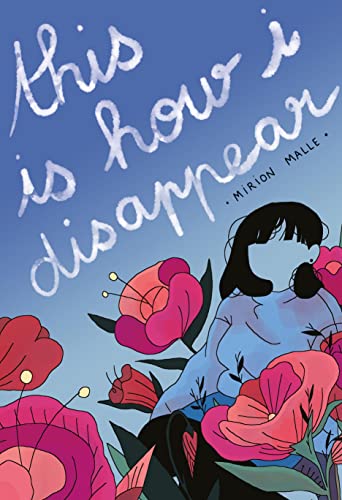
This Is How I Disappear

An affecting glimpse into the ways millennials cope with mental health struggles

Translated by Aleshia Jensen and Bronwyn Haslam

Clara’s at a breaking point. She’s got writer’s block, her friends ask a lot without giving much, her psychologist is useless, and her demanding publishing job leaves little time for self care. She seeks solace in the community around her, yet, while her friends provide support and comfort, she is often left feeling empty, unable to express an underlying depression that leaves her immobilized and stifles any attempts at completing her poetry collection. In This is How I Disappear, Mirion Malle paints an empathetic portait of a young woman wrestling with psychological stress and the trauma following an experience of sexual assault.

Malle displays frankness and a remarkable emotional intelligence as she explores depression, isolation, and self-harm in her expertly-drawn novel. Her heroine battles an onslaught of painful emotions and while Clara can provide consolation to those around her, she finds it difficult to bestow the same understanding unto herself. Only when she allows her community to guide her towards self-love does she find relief.

Filled with 21st century idioms and social media communication, This Is How I Disappear opens a window into the lives of young people as they face a barrage of mental health hurdles. Scenes of sisterhood, fun nights out singing karaoke, and impromptu FaceTime therapy sessions show how this generation is coping, connecting, and healing together.

https://search.lib.uiowa.edu/permalink/f/9i2ftm/01IOWA_ALMA21838356910002771

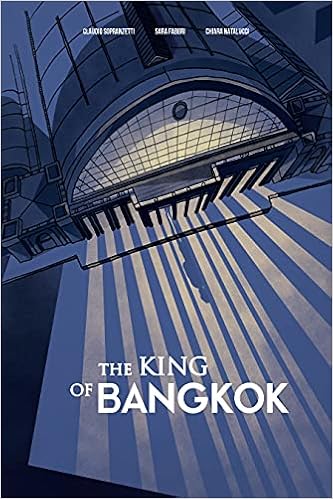
The King of Bangkok (ethnoGRAPHIC)

The English translation of this bestselling graphic novel tells the story of Nok, an old blind man who sells lottery tickets in Bangkok, as he decides to leave the city and return to his native village.Through reflections on contemporary Bangkok and flashbacks to his past, Nok reconstructs a journey through the slums of migrant workers, the rice fields of Isaan, the tourist villages of Ko Pha Ngan, and the Red Shirt protests of 2010.

Based on a decade of anthropological research, The King of Bangkok is a story of migration to the city, distant families in the countryside, economic development eroding the land, and violent political protest. Ultimately, it is a story about contemporary Thailand and how the waves of history lift, engulf, and crash against ordinary people.

https://search.lib.uiowa.edu/permalink/f/9i2ftm/01IOWA_ALMA21841061530002771

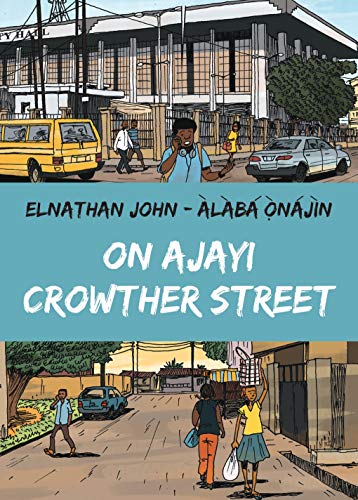
On Ajayi Crowther Street

On the noisy Ajayi Crowther Street in Lagos, neighbours gather to gossip, discuss noise complaints, and faithfully head to church each Sunday. But beneath the surface lies a hidden world of clandestine love affairs, spiritual quackery and hypocrisy that threatens to destroy the community from within.

On Ajayi Crowther Street peels back the curtains on the lives of Pastor Akpoborie and his family, to reveal a tumultuous world full of desires, secrets and lies. His only son, Godstime, is struggling to hide his sexuality whilst his daughter Keturah must hide the truth of her pregnancy to preserve her and her family’s image. But it is the Reverend himself who hides the darkest secret of them all.

https://search.lib.uiowa.edu/permalink/f/9i2ftm/01IOWA_ALMA21839694040002771

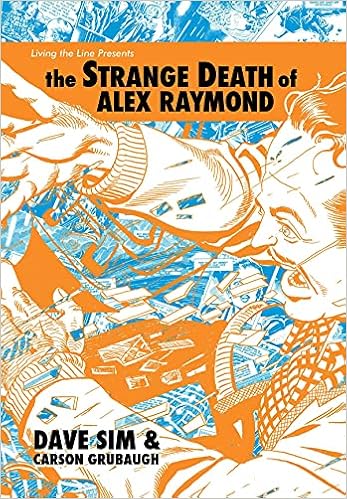
The Strange Death of Alex Raymond

“Comics’ answer to Finnegan’s Wake, an inspired work of obsessive genius that will take a long time to untangle.” – Rob Salkowitz, Senior Contributor, FORBES

“The Strange Death of Alex Raymond is one of the most spectacular comics I have ever read or seen. I can’t recommend it enough, although you may hate it. Bizarre and beautiful and completely unique.” – Jim Rugg, Cartoonist KayfabeStreet Angel, The P.L.A.I.N. Janes

“This is a master work. I’m honoured to have even laid eyes on it.” – E.S. Glenn, author of Unsmooth, cartoonist for The New Yorker

“A must-read for anyone interested in the history and craft of comics” – Brandon Graham, King City, Warhead, Prophet

“Grubaugh provides a brilliant and fitting conclusion to what would have otherwise been one of the most notable unfinished works of recent times. I for one am excited at holding the completed Strange Death of Alex Raymond in my hands.” – Gary Spencer Millidge, Strangehaven, Alan Moore: Portrait of an Extraordinary Gentleman

Legendary creator Dave Sim is renowned world-wide for his groundbreaking Cerebus the Aardvark. Now, in The Strange Death of Alex Raymond, Sim brings to life the history of comics’ greatest creators, using their own techniques. Equal parts Understanding Comics and From HellStrange Death is a head-on collision of ink drawing and spiritual intrigue, pulp comics and movies, history and fiction. The story traces the lives and techniques of Alex Raymond (Flash Gordon, Rip Kirby), Stan Drake (Juliet Jones), Hal Foster (Prince Valiant), and more, dissecting their techniques through recreations of their artwork, and highlighting the metatextual resonances that bind them together.

Foreword by Eddie Campbell.

https://search.lib.uiowa.edu/permalink/f/9i2ftm/01IOWA_ALMA21808122860002771

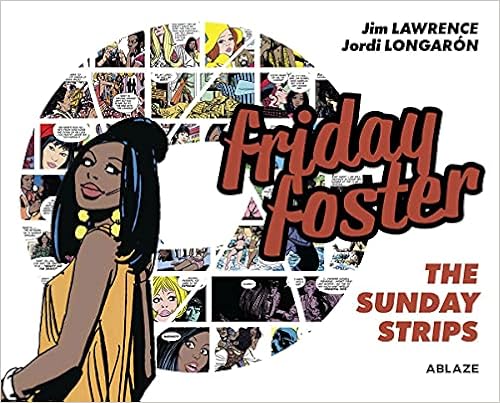
Friday Foster: The Sunday Strips

The Friday Foster comic strip is the story ofa former nightclub “camera bunny” turned photographer’s assistant turned fashion model. With an innate inclination to help others and a natural beauty that makes her a magnet for men, Friday often finds herself in some very sticky situations and world class adventures.

For the FIRST TIME EVER, the classic FRIDAY FOSTER newspaper color comic strip created by James D. “Jim” Lawrence (of Buck Rogers and James Bond fame) and illustrated by Jorge “Jordi” Longarón then later Gray Morrow is collected. The strip ran from 1974-1970 and inspired the 1975 movie of the same name starring Pam Grier. The strip is the first mainstream comic strip starring an African-American character in the title role.

The book will also include a significant bonus section including multiple interviews, an expanded sketchbook section, artwork, photos, essays, articles, behind-the-scenes info, and more!

https://search.lib.uiowa.edu/permalink/f/9i2ftm/01IOWA_ALMA21729191120002771

Digital New Book Display – 6-27-22

Welcome to the University of Iowa Libraries’ virtual New Book Shelf. Here we will present new titles for you to browse and check out. Titles listed here will be monographs published in the current year. If you see a title you would like to borrow, please click the link below the item and sign in with your Hawk ID and Password to request a loan.

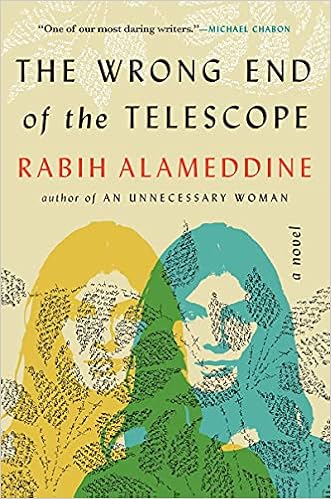
The Wrong End of the Telescope

WINNER OF THE 2022 PEN/FAULKNER AWARD FOR FICTION

By National Book Award and the National Book Critics’ Circle Award finalist for An Unnecessary Woman, Rabih Alameddine, comes a transporting new novel about an Arab American trans woman’s journey among Syrian refugees on Lesbos island.

Mina Simpson, a Lebanese doctor, arrives at the infamous Moria refugee camp on Lesbos, Greece, after being urgently summoned for help by her friend who runs an NGO there. Alienated from her family except for her beloved brother, Mina has avoided being so close to her homeland for decades. But with a week off work and apart from her wife of thirty years, Mina hopes to accomplish something meaningful, among the abundance of Western volunteers who pose for selfies with beached dinghies and the camp’s children. Soon, a boat crosses bringing Sumaiya, a fiercely resolute Syrian matriarch with terminal liver cancer. Determined to protect her children and husband at all costs, Sumaiya refuses to alert her family to her diagnosis. Bonded together by Sumaiya’s secret, a deep connection sparks between the two women, and as Mina prepares a course of treatment with the limited resources on hand, she confronts the circumstances of the migrants’ displacement, as well as her own constraints in helping them.

Not since the inimitable Aaliya of An Unnecessary Woman has Rabih Alameddine conjured such a winsome heroine to lead us to one of the most wrenching conflicts of our time. Cunningly weaving in stories of other refugees into Mina’s singular own, The Wrong End of the Telescope is a bedazzling tapestry of both tragic and amusing portraits of indomitable spirits facing a humanitarian crisis.

https://search.lib.uiowa.edu/permalink/f/9i2ftm/01IOWA_ALMA21843866690002771

Today a Woman Went Mad in the Supermarket: Stories

The uncannily relevant, deliciously clear-eyed collected stories of a critically acclaimed, award-winning “American literary treasure” (Boston Globe), ripe for rediscovery―with a foreword by Elizabeth Strout.

From her many well-loved novels, Hilma Wolitzer―now ninety-one years old and at the top of her game―has gained a reputation as one of our best fiction writers, who “raises ordinary people and everyday occurrences to a new height.” (Washington Post) These collected short stories―most of them originally published in magazines including Esquire and the Saturday Evening Post, in the 1960s and 1970s, along with a new story that brings her early characters into the present―are evocative of an era that still resonates deeply today.

In the title story, a bystander tries to soothe a woman who seems to have cracked under the pressures of her life. And in several linked stories throughout, the relationship between the narrator and her husband unfolds in telling and often hilarious vignettes. Of their time and yet timeless, Wolitzer’s stories zero in on the domestic sphere with wit, candor, grace, and an acutely observant eye. Brilliantly capturing the tensions and contradictions of daily life, Today a Woman Went Mad in the Supermarket is full of heart and insight, providing a lens into a world that was often unseen at the time, and often overlooked now―reintroducing a beloved writer to be embraced by a whole new generation of readers.

https://search.lib.uiowa.edu/permalink/f/9i2ftm/01IOWA_ALMA21842913050002771

Em: A Novel

Emma-Jade and Louis are born into the havoc of the Vietnam War. Orphaned, saved and cared for by adults coping with the chaos of Saigon in free-fall, they become children of the Vietnamese diaspora. Em is not a romance in any usual sense of the word, but it is a word whose homonym–aimer, to love–resonates on every page, a book powered by love in the larger sense. A portrait of Vietnamese identity emerges that is wholly remarkable, honed in wartime violence that borders on genocide, and then by the ingenuity, sheer grit and intelligence of Vietnamese-Americans, Vietnamese-Canadians and other Vietnamese former refugees who go on to build some of the most powerful small business empires in the world. Em is a poetic story steeped in history, about those most impacted by the violence and their later accomplishments. In many ways, Em is perhaps Kim Thúy’s most personal book, the one in which she trusts her readers enough to share with them not only the pervasive love she feels but also the rage and the horror at what she and so many other children of the Vietnam War had to live through.

Written in Kim Thúy’s trademark style, near to prose poetry, Em reveals her fascination with connection. Through the linked destinies of characters connected by birth and destiny, the novel zigzags between the rubber plantations of Indochina; daily life in Saigon during the war as people find ways to survive and help each other; Operation Babylift, which evacuated thousands of biracial orphans from Saigon in April 1975 at the end of the Vietnam War; and today’s global nail polish and nail salon industry, largely driven by former Vietnamese refugees–and everything in between. Here are human lives shaped both by unspeakable trauma and also the beautiful sacrifices of those who made sure at least some of these children survived.

https://search.lib.uiowa.edu/permalink/f/9i2ftm/01IOWA_ALMA21838357480002771

One Kind Favor: A Novel

Based loosely on a tragic real-life incident, One Kind Favor explores the consequences of the lynching of a young black man in rural North Carolina. After the lynching is discovered and subsequently covered up in the small fictional community of Cord, the ghosts who frequent the all-in-one bar and consignment shop take on the responsibility of unearthing the truth and acting as the memory for the town that longs to forget and continues to hate. The down-the-rabbit-hole satirical storytelling of One Kind Favor, Kevin McIlvoy’s sixth novel, echoes Appalachian ghost stories in which haunting presences will, at last, have their way.

https://search.lib.uiowa.edu/permalink/f/9i2ftm/01IOWA_ALMA21840473640002771

Revival Season: A Novel

Every summer, fifteen-year-old Miriam Horton and her family pack themselves tight in their old minivan and travel through small southern towns for revival season: the time when Miriam’s father—one of the South’s most famous preachers—holds massive healing services for people desperate to be cured of ailments and disease. But, this summer, the revival season doesn’t go as planned, and after one service in which Reverend Horton’s healing powers are tested like never before, Miriam witnesses a shocking act of violence that shakes her belief in her father—and her faith.

When the Hortons return home, Miriam’s confusion only grows as she discovers she might have the power to heal—even though her father and the church have always made it clear that such power is denied to women. Over the course of the following year, Miriam must decide between her faith, her family, and her newfound power that might be able to save others, but if discovered by her father, could destroy Miriam.

Celebrating both feminism and faith, Revival Season is a “tender and wise” (Ann Patchett) story of spiritual awakening and disillusionment in a Southern, Black, Evangelical community.Celebrating both feminism and faith, Revival Season is a “tender and wise” (Ann Patchett) story of spiritual awakening an

https://search.lib.uiowa.edu/permalink/f/9i2ftm/01IOWA_ALMA21842913350002771

Sonia Sanchez – Collected Poems

Winner Gish Prize for Lifetime Achievement

A representative collection of the life work of the much-honored poet and a founder of the Black Arts movement, spanning the 4 decades of her literary career.

Gathering highlights from all of Sonia Sanchez’s poetry, this compilation is sure to inspire love and community engagement among her legions of fans. Beginning with her earliest work, including poems from her first volume, Homecoming (1969), through to 2019, the poet has collected her favorite work in all forms of verse, from Haiku to excerpts from book-length narratives. Her lifelong dedication to the causes of Black liberation, social equality, and women’s rights is evident throughout, as is her special attention to youth in poems addressed to children and young adults.

As Maya Angelou so aptly put it: “Sonia Sanchez is a lion in literature’s forest. When she writes she roars, and when she sleeps other creatures walk gingerly.”

https://search.lib.uiowa.edu/permalink/f/9i2ftm/01IOWA_ALMA21844005090002771

The Family Chao: A Novel

An acclaimed storyteller returns with “a gorgeous and gripping literary mystery” that explores “family, betrayal, passion, race, culture and the American Dream” (Jean Kwok).

The residents of Haven, Wisconsin, have dined on the Fine Chao restaurant’s delicious Americanized Chinese food for thirty-five years, content to ignore any unsavory whispers about the family owners. Whether or not Big Leo Chao is honest, or his wife, Winnie, is happy, their food tastes good and their three sons earned scholarships to respectable colleges. But when the brothers reunite in Haven, the Chao family’s secrets and simmering resentments erupt at last.

Before long, brash, charismatic, and tyrannical patriarch Leo is found dead—presumed murdered—and his sons find they’ve drawn the exacting gaze of the entire town. The ensuing trial brings to light potential motives for all three brothers: Dagou, the restaurant’s reckless head chef; Ming, financially successful but personally tortured; and the youngest, gentle but lost college student James. As the spotlight on the brothers tightens—and the family dog meets an unexpected fate—Dagou, Ming, and James must reckon with the legacy of their father’s outsized appetites and their own future survival.

Brimming with heartbreak, comedy, and suspense, The Family Chao offers a kaleidoscopic, highly entertaining portrait of a Chinese American family grappling with the dark undercurrents of a seemingly pleasant small town.

https://search.lib.uiowa.edu/permalink/f/9i2ftm/01IOWA_ALMA21842987530002771

The Mirror Man: A novel (Killer Instinct Book 8)

#1 INTERNATIONAL BEST SELLER • Detective Joona Linna is on the trail of a kidnapper who targets teenage girls and makes their worst nightmares a reality.
 
“Dark, disturbing, and chillingly relentless. Picture Hannibal Lecter sitting down to channel Stieg Larsson and then dial it way, way up!” —Brad Thor, #1 New York Times best-selling author of Black Ice

Sixteen-year-old Jenny Lind is kidnapped in broad daylight on her way home from school and thrown into the back of a truck. She’s taken to a dilapidated house, where she and other girls face horrors far beyond their worst nightmares. Though they’re desperate to escape, their captor foils everyone of their attempts.
 
Five years later, Jenny’s body is found hanging in a playground, strung up with a winch on a rainy night. As the police are scrambling to find a lead in the scant evidence, Detective Joona Linna recognizes an eerie connection between Jenny’s murder and a death declared a suicide years before. And when another teenage girl goes missing, it becomes clear to Joona that they’re dealing with a serial killer—and his murderous rampage may have just begun.

https://search.lib.uiowa.edu/permalink/f/9i2ftm/01IOWA_ALMA21843334030002771

The Morning Star: A Novel

One of NPR’s Best Books of 2021

“Knausgaard is among the finest writers alive.” —Dwight Garner, New York Times

The international bestseller from the author of the renowned My Struggle series, The Morning Star is an astonishing, ambitious, and rich novel about what we don’t understand, and our attempts to make sense of our world nonetheless

One long night in August, Arne and Tove are staying with their children in their summer house in southern Norway. Their friend Egil has his own place nearby. Kathrine, a priest, is flying home from a Bible seminar, questioning her marriage. Journalist Jostein is out drinking for the night, while his wife, Turid, a nurse at a psychiatric care unit, is on a night shift when one of her patients escapes. 
 
Above them all, a huge star suddenly appears blazing in the sky. It brings with it a mysterious sense of foreboding.
 
Strange things start to happen as nine lives come together under the star. Hundreds of crabs amass on the road as Arne drives at night; Jostein receives a call about a death metal band found brutally murdered in a Satanic ritual; Kathrine conducts a funeral service for a man she met at the airport – but is he actually dead? 
 
The Morning Star is about life in all its mundanity and drama, the strangeness that permeates our world, and the darkness in us all. Karl Ove Knausgaard’s astonishing new novel, his first after the My Struggle cycle, goes to the utmost limits of freedom and chaos, to what happens when forces beyond our comprehension are unleashed and the realms of the living and the dead collide.

https://search.lib.uiowa.edu/permalink/f/9i2ftm/01IOWA_ALMA21838893400002771

Sleepless – A Novel

Dark secrets past and present collide in Sleepless, a haunting novel of guilt and retribution from Romy Hausmann, the international bestselling author of Dear Child.

It’s been years since Nadja Kulka was convicted of a cruel crime. After being released from prison, she’s wanted nothing more than to live a normal life: nice flat, steady job, even a few friends. But when one of those friends, Laura von Hoven–free-spirited beauty and wife of Nadja’s boss–kills her lover and begs Nadja for her help, Nadja can’t seem to refuse.

The two women make for a remote house in the woods, the perfect place to bury a body. But their plan quickly falls apart and Nadja finds herself outplayed, a pawn in a bizarre game in which she is both the perfect victim and the perfect murderer…

https://search.lib.uiowa.edu/permalink/f/9i2ftm/01IOWA_ALMA21838893610002771

Digital New Book Display – 6-23-22

Welcome to the University of Iowa Libraries’ virtual New Book Shelf. Here we will present new titles for you to browse and check out. Titles listed here will be monographs published in the current year. If you see a title you would like to borrow, please click the link below the item and sign in with your Hawk ID and Password to request a loan.

(S)kinfolk: Chimamanda Ngozi Adichie’s AMERICANAH (…AFTERWORDS)

Literary Nonfiction. African & African American Studies. When Did You First Realize You Were Black? Provoked by the fraught relationship between the African continent and American culture in Chimamanda Ngozi Adichie’s Americanah; acclaimed Nigerian-American novelist Tochi Onyebuchi takes an emotional and intellectual journey through his own education in Blackness–his first loves; his introduction to politics; and his eventual commitment to the struggle.

Ranging from Paris to a Connecticut boarding school to a harrowing walk through the streets of Palestine; and touching on lessons from Frantz Fanon; Sylvia Wynter; Mohsin Hamid; August Wilson; Dear White People; and Black Panther; Onyebuchi blends memoir and cultural criticism to explore the ways in which identities; like diamonds; are pressurized into existence by suffering; and how “the other side of suffering is self-determination.”

(S)KINFOLK culminates in a trip to Nigeria; the homeland; where the author realizes that “we share a future;” as Black Americans and Africans; on this “asymptotic journey” toward self-actualization.

https://search.lib.uiowa.edu/permalink/f/9i2ftm/01IOWA_ALMA21840473510002771

An Orange

Poetry. “It would be too easy to say love vanished from the earth…” begins Ted Dodson’s AN ORANGE, his thoughtful, experiential second collection of poems. It’s a provocation to which AN ORANGE wholeheartedly responds. Dodson’s work reroutes essay, narrative, and confessionalism, detouring from criticism into bisexual desire and navigating modernity as fluently as it imagines speculative destinations for language. From the graceful realism of the opening travelogues to its final long poem, “The Language the Sky Speaks,” AN ORANGE guides memory and affect into cosmopolitan forms: disalienating, expansive, and tonic.

https://search.lib.uiowa.edu/permalink/f/9i2ftm/01IOWA_ALMA21840472290002771

The Employees: A workplace novel of the 22nd century

Shortlisted for the International Booker prize, The Employees reshuffles a sci-fi voyage into a riotously original existential nightmare

Funny and doom-drenched, The Employees chronicles the fate of the Six-Thousand Ship. The human and humanoid crew members complain about their daily tasks in a series of staff reports and memos. When the ship takes on a number of strange objects from the planet New Discovery, the crew becomes strangely and deeply attached to them, even as tensions boil toward mutiny, especially among the humanoids.

Olga Ravn’s prose is chilling, crackling, exhilarating, and foreboding. The Employees probes into what makes us human, while delivering a hilariously stinging critique of life governed by the logic of productivity.

https://search.lib.uiowa.edu/permalink/f/9i2ftm/01IOWA_ALMA21843334060002771

Phototaxis

Translated from the French, Phototaxis is a fragmentary, darkly-humorous, and apocalyptic novel from a leading young voice from Montreal from Montreal centered around questions of friendship, the commodification of globalized tragedy, ecological crisis, the griefs of migration, and the possibility of political coherence in today’s world.

In a city mysteriously overflowing with meat, a museum is bombed, a classical piano player hooked on snuff films throws himself off a building, a charismatic but misled political organizer has disappeared, and a young immigrant navigates a crumbling continent. In the fallout of their friendship, Olivia Tapiero’s Phototaxis deploys a fugal language at turns surreal, scathingly comic, poetic, and revolutionary to dismantle our world and construct one even closer to its breaking point, or further along in its breaking. Here, voice and event surge up like reflux from the exhausted throats of nature and urban spaces, sounding out an architecture of failure within a suspiciously steady rise of fascism and its persistent counterpoints. A dystopic work of hope that carries its own disintegration, Phototaxis (translated by Kit Schluter) is Tapiero’s first novel to appear English.

https://search.lib.uiowa.edu/permalink/f/9i2ftm/01IOWA_ALMA21838357180002771

CORRECTION (Open Rose)

Fiction. Literary Nonfiction. Gabriel Blackwell’s CORRECTION is a book of recognition and reckoning, fiction in its newest form. These 101 short story-essays (what are they?) plunge out of the dizzying, devastating, truthy world of social media and into the depths of our daily lives. The result is relentlessly precise, ferociously ethical, damning, sly and essential. Blackwell is at the height of his powers as one of the most innovative prose writers working today. To this hyper-mediated world, its texts swollen with absent facts and bad intent, we offer 

https://search.lib.uiowa.edu/permalink/f/9i2ftm/01IOWA_ALMA21840474010002771

Low Rent Prophet

Low Rent Prophet is poetry for anyone who has ever wanted to burn it all down. This book is about what’s left to be saved and the possibility of change and resurrection in our world today.

“A Midwestern mystic, a rustbelt bard, a poet of mystical insight and existential illumination, George Looney is, to my mind, a rare virtuoso. His poems are full of wit and despair, lyrical beauty and heartbreaking longing, honesty, and hope. He is the kind of poet who can take you to the edge of your consciousness, addressing mortality and loss, and then back home again–or to a bar, a coffee shop, a diner. Reading his work, I feel I am in the presence of a voluminous consciousness and a great heart.”–Nin Andrews

https://search.lib.uiowa.edu/permalink/f/9i2ftm/01IOWA_ALMA21840409740002771

Pregrets

Poetry. New poems by Anselm Berrigan.

“In the world of Anselm Berrigan sketchiness is next to godliness and repeated heavy-lifting becomes a pleasure. PREGRETS has the feel of wandering a giant armory filled with enigmatic objects and pointed memories. Dust motes in daylight betray a thin path forward so the ‘tongue’ of the book seems in constant peril, addictively so. ‘Red copter rises slicing a scraper into outer cubicle dreams…’ Possessed of a haunted style that moves beyond surface. Fathomless.”–Cedar Sigo

https://search.lib.uiowa.edu/permalink/f/9i2ftm/01IOWA_ALMA21840409320002771

Ways to Beg

The poems in Ways to Beg are in constant conversation. They speak to and of each other, to ancestors, gods, pets, strangers on planes, and, most often, directly to the reader. Their aim is mutual inquiry. They want to swap stories and jokes and secrets, to stay up all night, refilling your beverage of choice, diligently pursuing the unsaid, the unsayable. In short, they want to ask the right questions. To deliberate how we’ve come to inhabit our bodies, our families, our grief, our country, our planet–and how we intend to make good on that lonesome and curious responsibility.

https://search.lib.uiowa.edu/permalink/f/9i2ftm/01IOWA_ALMA21840472510002771

Everything I Don’t Know

“What good luck to finally have in English the writings of the brilliant Jerzy Ficowski, the poet who lived at least seventeen lives, fighting in the Warsaw Uprising, and later traveling for years with the Roma people through the roads of Poland, opposing his government, and watching the authorities ban his poems, a poet who translated from Spanish and Romanian and Yiddish and Roma, but most of all from the tongue of silence…Beautifully translated by Jennifer Grotz and Piotr Sommer, these poems also document the tragedy of the Holocaust, with the direct and uncompromising voice with which he reminds us of the great poets such as Różewicz and Świrszczyńska, while remaining, all the while, himself. Read a piece such as ‘I was unable to save / a single life’ in a bookstore, and I guarantee you will want to take this book with you, to keep it for the rest of your life.”–Ilya Kaminsky

https://search.lib.uiowa.edu/permalink/f/9i2ftm/01IOWA_ALMA21839940420002771

City of Skypapers

Poetry. Jewish Studies. On writing CITY OF SKYPAPERS: “CITY OF SKYPAPERS was an effort of daily writing in Tel Aviv for a span of about three years during which time I tried to inhabit and reconcile Jewish sacred time (holidays, Shabbat, daily prayer rituals) with private, social, and civil secular time–two wars with their worries and missiles, explosions, and a sense of solidarity, as well, with beloved friends in Gaza or West Bank, a custody lawsuit, daily small-scale agriculture, running along the Yarkon river, riding public transportation in Tel Aviv and Ramat-Gan, teaching, friendship, love and its disappointments, mothering. It attempts an openness to the daily world, and an attention to these details, charged by an interpenetration of the sacred and the secular, aspirations and reality. I wanted to mimic in writing the way the mind works, the reality its imagination builds, the relationships it creates, among people, objects, and geography.

https://search.lib.uiowa.edu/permalink/f/9i2ftm/01IOWA_ALMA21840472230002771

Women and Other Hostages

Poetry, “If you, like the speaker in Laura McCullough’s poem, ‘Almost Nothing Something [stars / plates / cells]’ have grown ‘tired & suspicious of poetry’ WOMEN AND OTHER HOSTAGES will absolutely revitalize you. These are riveting, wholly moving narratives of a life lived. Out of sorrow McCullough invokes a stunning grace where ‘What is stripped from you’ becomes a gift because ‘what’s left behind is all your own.’ Women of all circumstances inhabit these poems. They shed their skin like snakes, ‘memory in flesh,’ and consider the bones of what holds us together in these divisive times. This beautiful book will knock loose what is lodged in your heart.”–Suzanne Frischkorn

https://search.lib.uiowa.edu/permalink/f/9i2ftm/01IOWA_ALMA21840472410002771

Clamor

Literary Nonfiction. African & African American Studies. Music. Translated by Olivia C. Harrison and Teresa Villa-Ignacio. Artwork by Julie Simon-Titecat. Hocine Tandjaoui’s poetic memoir, CLAMOR, is a gripping testimonial to the transnational solidarities forged across the decolonizing world in the 1950s and 60s, from the rarely heard perspective of a child. Set against the backdrop of one of the bloodiest wars of decolonization, CLAMOR offers an account of the colonial soundscape and a dazzling poetic evocation of Tandjaoui’s discovery of African-American music during his childhood in colonized Algeria. A gorgeously written and translated poetic text or “proème,” CLAMOR reckons with the music that shaped Tandjaoui’s childhood, the soundtrack of the Black liberation movements in the US, and the voices of artists of the African diaspora that rise above the din of war, becoming the soundbox and sounding board of decolonization in Algeria.

Presented bilingually in French and English.

https://search.lib.uiowa.edu/permalink/f/9i2ftm/01IOWA_ALMA21840472810002771

Digital New Book Display – 6-20-22

Welcome to the University of Iowa Libraries’ virtual New Book Shelf. Here we will present new titles for you to browse and check out. Titles listed here will be monographs published in the current year. If you see a title you would like to borrow, please click the link below the item and sign in with your Hawk ID and Password to request a loan.

An Elderly Lady Must Not Be Crossed

Don’t let her age fool you. Maud may be nearly ninety, but if you cross her, this elderly lady is more sinister than sweet. 

Just when things have finally cooled down for 88-year-old Maud after the disturbing discovery of a dead body in her apartment in Gothenburg, a couple of detectives return to her doorstep. Though Maud dodges their questions with the skill of an Olympic gymnast a fifth of her age, she wonders if suspicion has fallen on her, little old lady that she is. The truth is, ever since Maud was a girl, death has seemed to follow her.

In these six interlocking stories, memories of unfortunate incidents from Maud’s past keep bubbling to the surface. Meanwhile, certain Problems in the present require immediate attention. Luckily, Maud is no stranger to taking matters into her own hands . . . even if it means she has to get a little blood on them in the process.

*Includes cookie recipes*

https://search.lib.uiowa.edu/permalink/f/9i2ftm/01IOWA_ALMA21838893520002771

One-Way Street

One-Way Street is a thoroughfare unlike anything else in literature―by turns exhilarating and bewildering, requiring mental agility and a special kind of urban literacy. Presented here in a new edition with expanded notes, this genre-defying meditation on the semiotics of late-1920s Weimar culture offers a fresh opportunity to encounter Walter Benjamin at his most virtuosic and experimental, writing in a vein that anticipates later masterpieces such as “On the Concept of History” and The Arcades Project.

Composed of sixty short prose pieces that vary wildly in style and theme, One-Way Street evokes a dense cityscape of shops, cafes, and apartments, alive with the hubbub of social interactions and papered over with public inscriptions of all kinds: advertisements, signs, posters, slogans. Benjamin avoids all semblance of linear narrative, enticing readers with a seemingly random sequence of aphorisms, reminiscences, jokes, off-the-cuff observations, dreamlike fantasias, serious philosophical inquiries, apparently unserious philosophical parodies, and trenchant political commentaries. Providing remarkable insight into the occluded meanings of everyday things, Benjamin time and again proves himself the unrivalled interpreter of what he called “the soul of the commodity.”

Despite the diversity of its individual sections, Benjamin’s text is far from formless. Drawing on the avant-garde aesthetics of Dada, Constructivism, and Surrealism, its unusual construction implies a practice of reading that cannot be reduced to simple formulas. Still refractory, still radical, One-Way Street is a work in perpetual progress.

https://search.lib.uiowa.edu/permalink/f/9i2ftm/01IOWA_ALMA21838215690002771

Smile: The Story of a Face

From the MacArthur genius, two-time Pulitzer Prize finalist, and playwright, this “captivating, insightful memoir” (Kirkus Reviews, starred review) is “a beautiful meditation on identity and how we see ourselves” (Real Simple).

With a play opening on Broadway, and every reason to smile, Sarah Ruhl has just survived a high-risk pregnancy when she discovers the left side of her face is completely paralyzed. She is assured that 90 percent of Bell’s palsy patients experience a full recovery—like Ruhl’s own mother. But Sarah is in the unlucky ten percent. And for a woman, wife, mother, and artist working in theater, the paralysis and the disconnect between the interior and exterior brings significant and specific challenges. So Ruhl begins an intense decade-long search for a cure while simultaneously grappling with the reality of her new face—one that, while recognizably her own—is incapable of accurately communicating feelings or intentions.

In a series of piercing, profound, and lucid meditations, Ruhl chronicles her journey as a patient, wife, mother, and artist. She explores the struggle of a body yearning to match its inner landscape, the pain of postpartum depression, the story of a marriage, being a playwright and working mom to three small children, and the desire for a resilient spiritual life in the face of illness.

An intimate and “stunning” (Publishers Weekly, starred review) examination of loss and reconciliation, “Ruhl reminds us that a smile is not just a smile but a vital form of communication, of bonding, of what makes us human” (The Washington Post). Brimming with insight, humility, and levity, Smile is a triumph by one of America’s leading playwrights.

https://search.lib.uiowa.edu/permalink/f/9i2ftm/01IOWA_ALMA21844003930002771

Lean Your Loneliness Slowly Against Mine: A Novel

NEW YORK TIMES GLOBETROTTING PICK!

A remarkable and heartbreaking debut novel with the lyrical beauty and emotional resonance of By Grand Central Station I Sat Down and Wept and the thematic complexity of Asymmetry, that combines fractal mathematics and classical music to explore the infinitely complex patterns of love and the thin border between great passion and great loneliness.

Rakel has always been more comfortable with numbers than with people. A gifted woman with a rare talent for math, she has never mastered the art of making friends. At nineteen, she moves to Oslo to attend university. There she meets Jakob, a brilliant older teacher who becomes fascinated by Rakel’s quick mind. 

Jakob is struck by the similarities between Rakel and Sofja Kovalevskaja, the first woman to become a professor of mathematics, and the subject of the novel he is writing. Just as Kovalevskaja was close to her much older advisor, Rakel and Jakob are drawn to each other and eventually become lovers, although he is already married.

In the years to come, Rakel’s academic career soars, but her health declines, and from her bedside she spends hours imagining Sofja’s life while trying to understand her own. With a gaze both naive and mercilessly sharp, she examines what may be her life’s only love story, looking for patterns and answers in numbers, music, and literature. 

Extraordinarily wise and penetrating, Lean Your Loneliness Slowly Against Mine explores the intricacies of the human heart, the complicated equation that is love, and the search to find meaning and connections when you need them most.

Translated from the Norwegian by Alison McCullough

https://search.lib.uiowa.edu/permalink/f/9i2ftm/01IOWA_ALMA21838994140002771

After the Sun

From a major new international voice, mesmerizing, inventive fiction that probes the tender places where human longings push through the cracks of a breaking world.

Under Cancún’s hard blue sky, a beach boy provides a canvas for tourists’ desires, seeing deep into the world’s underbelly. An enigmatic encounter in Copenhagen takes an IT consultant down a rabbit hole of speculation that proves more seductive than sex. The collapse of a love triangle in London leads to a dangerous, hypnotic addiction. In the Nevada desert, a grieving man tries to merge with an unearthly machine.

After the Sun opens portals to our newest realities, haunting the margins of a globalized world that’s both saturated with yearning and brutally transactional. Infused with an irrepressible urgency, Eika’s fiction seems to have conjured these far-flung characters and their encounters in a single breath. Juxtaposing startling beauty with grotesquery, balancing the hyperrealistic with the fantastical—“as though the worlds he describes are being viewed through an ultraviolet filter,” in one Danish reviewer’s words—he has invented new modes of storytelling for an era when the old ones no longer suffice.

https://search.lib.uiowa.edu/permalink/f/9i2ftm/01IOWA_ALMA21838894150002771

Damnation Spring

A stunning novel about love, work, and marriage that asks how far one family and one community will go to protect their future.

Colleen and Rich Gundersen are raising their young son, Chub, on the rugged California coast. It’s 1977, and life in this Pacific Northwest logging town isn’t what it used to be. For generations, the community has lived and breathed timber; now that way of life is threatened.

Colleen is an amateur midwife. Rich is a tree-topper. It’s a dangerous job that requires him to scale trees hundreds of feet tall—a job that both his father and grandfather died doing. Colleen and Rich want a better life for their son—and they take steps to assure their future. Rich secretly spends their savings on a swath of ancient redwoods. But when Colleen, grieving the loss of a recent pregnancy and desperate to have a second child, challenges the logging company’s use of the herbicides she believes are responsible for the many miscarriages in the community, Colleen and Rich find themselves on opposite sides of a budding conflict. As tensions in the town rise, they threaten the very thing the Gundersens are trying to protect: their family.

Told in prose as clear as a spring-fed creek, Damnation Spring is an intimate, compassionate portrait of a family whose bonds are tested and a community clinging to a vanishing way of life. An extraordinary story of the transcendent, enduring power of love—between husband and wife, mother and child, and longtime neighbors. An essential novel for our times.

https://search.lib.uiowa.edu/permalink/f/9i2ftm/01IOWA_ALMA21842900940002771

Camera Man: Buster Keaton, the Dawn of Cinema, and the Invention of the Twentieth Century

In this genre-defying work of cultural history, the chief film critic of Slate places comedy legend and acclaimed filmmaker Buster Keaton’s unique creative genius in the context of his time.

Born the same year as the film industry in 1895, Buster Keaton began his career as the child star of a family slapstick act reputed to be the most violent in vaudeville. Beginning in his early twenties, he enjoyed a decade-long stretch as the director, star, stuntman, editor, and all-around mastermind of some of the greatest silent comedies ever made, including Sherlock Jr., The General, and The Cameraman.

Even through his dark middle years as a severely depressed alcoholic finding work on the margins of show business, Keaton’s life had a way of reflecting the changes going on in the world around him. He found success in three different mediums at their creative peak: first vaudeville, then silent film, and finally the experimental early years of television. Over the course of his action-packed seventy years on earth, his life trajectory intersected with those of such influential figures as the escape artist Harry Houdini, the pioneering Black stage comedian Bert Williams, the television legend Lucille Ball, and literary innovators like F. Scott Fitzgerald and Samuel Beckett.

In Camera Man, film critic Dana Stevens pulls the lens out from Keaton’s life and work to look at concurrent developments in entertainment, journalism, law, technology, the political and social status of women, and the popular understanding of addiction. With erudition and sparkling humor, Stevens hopscotches among disciplines to bring us up to the present day, when Keaton’s breathtaking (and sometimes life-threatening) stunts remain more popular than ever as they circulate on the internet in the form of viral gifs. Far more than a biography or a work of film history, Camera Man is a wide-ranging meditation on modernity that paints a complex portrait of a one-of-a-kind artist.

https://search.lib.uiowa.edu/permalink/f/9i2ftm/01IOWA_ALMA21843334390002771

Palmares

The epic rendering of a Black woman’s journey through slavery and liberation, set in 17th-century colonial Brazil; the return of a major voice in American literature.

First discovered and edited by Toni Morrison, Gayl Jones has been described as one of the great literary writers of the 20th century. Now, for the first time in over 20 years, Jones is ready to publish again. Palmares is the first of five new works by Gayl Jones to be published in the next two years, rewarding longtime fans and bringing her talent to a new generation of readers.

Intricate and compelling, Palmares recounts the journey of Almeyda, a Black slave girl who comes of age on Portuguese plantations and escapes to a fugitive slave settlement called Palmares. Following its destruction, Almeyda embarks on a journey across colonial Brazil to find her husband, lost in battle.

Her story brings to life a world impacted by greed, conquest, and colonial desire. She encounters a mad lexicographer, desperate to avoid military service; a village that praises a god living in a nearby cave; and a medicine woman who offers great magic, at a greater price.

Combining the author’s mastery of language and voice with her unique brand of mythology and magical realism, Jones reimagines the historical novel. The result is a sweeping saga spanning a quarter century, with vibrant settings and unforgettable characters, steeped in the rich oral tradition of its world. Of Gayl Jones, the New Yorker noted, “[Her] great achievement is to reckon with both history and interiority, and to collapse the boundary between them.” Like nothing else before it, Palmares embodies this gift.

https://search.lib.uiowa.edu/permalink/f/9i2ftm/01IOWA_ALMA21843865910002771

Moon and the Mars: A Novel

In Moon and the Mars, set in the impoverished Five Points district of New York City in the years 1857-1863, we experience neighborhood life through the eyes of Theo from childhood to adolescence, an orphan living between the homes of her Black and Irish grandmothers. Throughout her formative years, Theo witnesses everything from the creation of tap dance to P.T. Barnum’s sensationalist museum to the draft riots that tear NYC asunder, amidst the daily maelstrom of Five Points work, hardship, and camaraderie. Meanwhile, white America’s attitudes towards people of color and slavery are shifting—painfully, transformationally—as the nation divides and marches to war.

As with her first novel, The Castle Cross the Magnet Carter, which was praised by Viet Thanh Nguyen, Robin D.G. Kelley, and Angela Y. Davis, among many others, Corthron’s use of dialogue brings her characters to life in a way that only an award-winning playwright and scriptwriter can do. As Theo grows and attends school, her language and grammar change, as does her own vocabulary when she’s with her Black or Irish families. It’s an extraordinary feat and a revelation for the reader.
 
Moon and the Mars, [Corthron’s] latest masterpiece, is an absorbing story of family and community, of Africans and Irish, of settler and native, of slavery and abolition, of a city and a nation wracked by Civil War and racist violence, of love won and lost.” —Robin D. G. Kelley, author of Thelonious Monk: The Life and Times of an American Original.

https://search.lib.uiowa.edu/permalink/f/9i2ftm/01IOWA_ALMA21838484650002771

Echo

Nature is calling—but they shouldn’t have answered.

Travel journalist and mountaineer Nick Grevers awakes from a coma to find that his climbing buddy, Augustin, is missing and presumed dead. Nick’s own injuries are as extensive as they are horrifying. His face wrapped in bandages and unable to speak, Nick claims amnesia—but he remembers everything.
He remembers how he and Augustin were mysteriously drawn to the Maudit, a remote and scarcely documented peak in the Swiss Alps.
He remembers how the slopes of Maudit were eerily quiet, and how, when they entered its valley, they got the ominous sense that they were not alone.
He remembers: something was waiting for them…
But it isn’t just the memory of the accident that haunts Nick. Something has awakened inside of him, something that endangers the lives of everyone around him…
It’s one thing to lose your life. It’s another to lose your soul.
Also by Thomas Olde Heuvelt
Hex
At the Publisher’s request, this title is being sold without Digital Rights Management Software (DRM) applied.

https://search.lib.uiowa.edu/permalink/f/9i2ftm/01IOWA_ALMA21843861970002771