Skip to content
Skip to main content

Digital New Book Display – 6-16-22

Welcome to the University of  Iowa Library’s virtual New Book Shelf. Here we will present new titles for you to browse and check out. Titles listed here will be monographs published in the current year. If you see a title you would like to borrow, please click the link below the item and sign in with your Hawk ID and Password to request a loan.

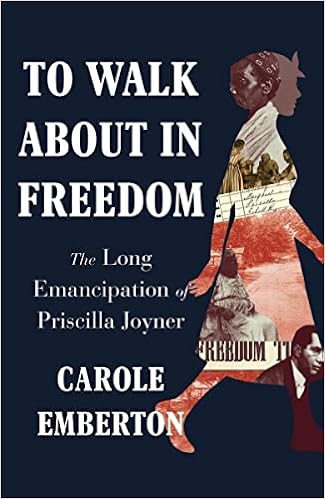
To Walk About in Freedom: The Long Emancipation of Priscilla Joyner

The extraordinary life of Priscilla Joyner and her quest―along with other formerly enslaved people―to define freedom after the Civil War.

Priscilla Joyner was born into the world of slavery in 1858 North Carolina and came of age at the dawn of emancipation. Raised by a white slaveholding woman, Joyner never knew the truth about her parentage. She grew up isolated and unsure of who she was and where she belonged―feelings that no emancipation proclamation could assuage.

Her life story―candidly recounted in an oral history for the Federal Writers’ Project―captures the intimate nature of freedom. Using Joyner’s interview and the interviews of other formerly enslaved people, historian Carole Emberton uncovers the deeply personal, emotional journeys of freedom’s charter generation―the people born into slavery who walked into a new world of freedom during the Civil War. From the seemingly mundane to the most vital, emancipation opened up a myriad of new possibilities: what to wear and where to live, what jobs to take and who to love.

Although Joyner was educated at a Freedmen’s Bureau school and married a man she loved, slavery cast a long shadow. Uncertainty about her parentage haunted her life, and as Jim Crow took hold throughout the South, segregation, disfranchisement, and racial violence threatened the loving home she made for her family. But through it all, she found beauty in the world and added to it where she could.

Weaving together illuminating voices from the charter generation, To Walk About in Freedom gives us a kaleidoscopic look at the lived experiences of emancipation and challenges us to think anew about the consequences of failing to reckon with the afterlife of slavery.

https://search.lib.uiowa.edu/permalink/f/9i2ftm/01IOWA_ALMA21844813410002771

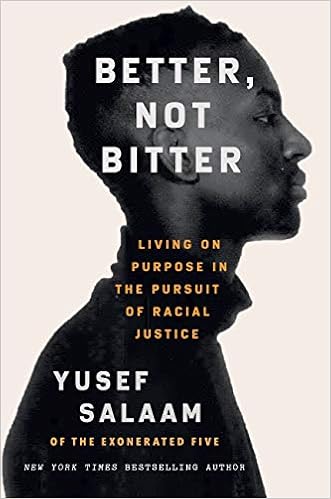
Better, Not Bitter: Living on Purpose in the Pursuit of Racial Justice

This inspirational memoir serves as a call to action from prison reform activist Yusef Salaam, of the Exonerated Five, that will inspire us all to turn our stories into tools for change in the pursuit of racial justice.

They didn’t know who they had.

So begins Yusef Salaam telling his story. No one’s life is the sum of the worst things that happened to them, and during Yusef Salaam’s seven years of wrongful incarceration as one of the Central Park Five, he grew from child to man, and gained a spiritual perspective on life. Yusef learned that we’re all “born on purpose, with a purpose.” Despite having confronted the racist heart of America while being “run over by the spiked wheels of injustice,” Yusef channeled his energy and pain into something positive, not just for himself but for other marginalized people and communities.

Better Not Bitter is the first time that one of the now Exonerated Five is telling his individual story, in his own words. Yusef writes his narrative: growing up Black in central Harlem in the ’80s, being raised by a strong, fierce mother and grandmother, his years of incarceration, his reentry, and exoneration. Yusef connects these stories to lessons and principles he learned that gave him the power to survive through the worst of life’s experiences. He inspires readers to accept their own path, to understand their own sense of purpose. With his intimate personal insights, Yusef unpacks the systems built and designed for profit and the oppression of Black and Brown people. He inspires readers to channel their fury into action, and through the spiritual, to turn that anger and trauma into a constructive force that lives alongside accountability and mobilizes change.

This memoir is an inspiring story that grew out of one of the gravest miscarriages of justice, one that not only speaks to a moment in time or the rage-filled present, but reflects a 400-year history of a nation’s inability to be held accountable for its sins. Yusef Salaam’s message is vital for our times, a motivating resource for enacting change. Better, Not Bitter has the power to soothe, inspire and transform. It is a galvanizing call to action.

https://search.lib.uiowa.edu/permalink/f/9i2ftm/01IOWA_ALMA21842905370002771
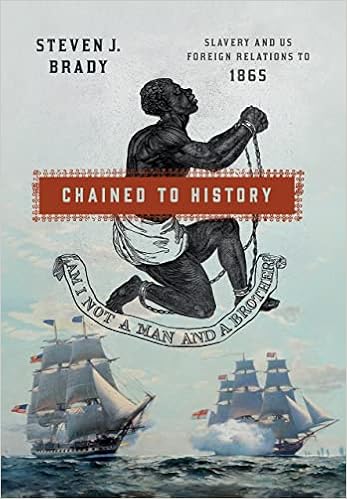
Chained to History: Slavery and US Foreign Relations to 1865

In Chained to History, Steven J. Brady places slavery at the center of the story of America’s place in the world in the years prior to the calamitous Civil War. Beginning with the immediate aftermath of the War of the American Revolution, Brady follows the military, economic, and moral lines of the diplomatic challenges of attempting to manage, on the global stage, the actuality of human servitude in a country dedicated to human freedom. Chained to History shows how slavery was interwoven with America’s foreign relations and affected policy controversies ranging from trade to extradition treaties to military alliances.

Brady highlights the limitations placed on American policymakers who, working in an international context increasingly supportive of abolition, were severely constrained regarding the formulation and execution of preferred policy. Policymakers were bound to the slave interest based in the Democratic Party and the tortured state of domestic politics bore heavily on the conduct of foreign affairs. As international powers not only abolished the slave trade but banned human servitude as such, the American position became untenable.

From the Age of Revolutions through the American Civil War, slavery was a constant factor in shaping US relations with the Atlantic World and beyond. Chained to History addresses this critical topic in its complete scope and shows the immoral practice of human bondage to have informed how the United States re-entered the community of nations after 1865.

https://search.lib.uiowa.edu/permalink/f/9i2ftm/01IOWA_ALMA21842987860002771
Fear of Black Consciousness

Lewis R. Gordon’s Fear of Black Consciousness is a groundbreaking account of Black consciousness by a leading philosopher

In this original and penetrating work, Lewis R. Gordon, one of the leading scholars of Black existentialism and anti-Blackness, takes the reader on a journey through the historical development of racialized Blackness, the problems this kind of consciousness produces, and the many creative responses from Black and non-Black communities in contemporary struggles for dignity and freedom. Skillfully navigating a difficult and traumatic terrain, Gordon cuts through the mist of white narcissism and the versions of consciousness it perpetuates. He exposes the bad faith at the heart of many discussions about race and racism not only in America but across the globe, including those who think of themselves as “color blind.” As Gordon reveals, these lies offer many white people an inherited sense of being extraordinary, a license to do as they please. But for many if not most Blacks, to live an ordinary life in a white-dominated society is an extraordinary achievement.

Informed by Gordon’s life growing up in Jamaica and the Bronx, and taking as a touchstone the pandemic and the uprisings against police violence, Fear of Black Consciousness is a groundbreaking work that positions Black consciousness as a political commitment and creative practice, richly layered through art, love, and revolutionary action.

https://search.lib.uiowa.edu/permalink/f/9i2ftm/01IOWA_ALMA21843256670002771
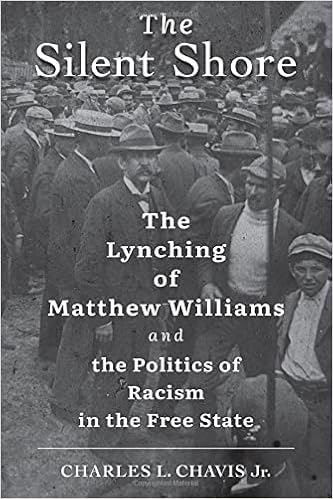
The Silent Shore: The Lynching of Matthew Williams and the Politics of Racism in the Free State

The definitive account of the lynching of twenty-three-year-old Matthew Williams in Maryland, the subsequent investigation, and the legacy of “modern-day” lynchings.

On December 4, 1931, a mob of white men in Salisbury, Maryland, lynched and set ablaze a twenty-three-year-old Black man named Matthew Williams. His gruesome murder was part of a wave of silent white terrorism in the wake of the stock market crash of 1929, which exposed Black laborers to white rage in response to economic anxieties. For nearly a century, the lynching of Matthew Williams has lived in the shadows of the more well-known incidents of racial terror in the deep South, haunting both the Eastern Shore and the state of Maryland as a whole. In The Silent Shore, author Charles L. Chavis Jr. draws on his discovery of previously unreleased investigative documents to meticulously reconstruct the full story of one of the last lynchings in Maryland.

Bringing the painful truth of anti-Black violence to light, Chavis breaks the silence that surrounded Williams’s death. Though Maryland lacked the notoriety for racial violence of Alabama or Mississippi, he writes, it nonetheless was the site of at least 40 spectacle lynchings after the abolition of slavery in 1864. Families of lynching victims rarely obtained any form of actual justice, but Williams’s death would have a curious afterlife: Maryland’s politically ambitious governor Albert C. Ritchie would, in an attempt to position himself as a viable challenger to FDR, become one of the first governors in the United States to investigate the lynching death of a Black person. Ritchie tasked Patsy Johnson, a member of the Pinkerton detective agency and a former prizefighter, with going undercover in Salisbury and infiltrating the mob that murdered Williams. Johnson would eventually befriend a young local who admitted to participating in the lynching and who also named several local law enforcement officers as ringleaders. Despite this, a grand jury, after hearing 124 witness statements, declined to indict the perpetrators. But this denial of justice galvanized Governor Ritchie’s Interracial Commission, which would become one of the pioneering forces in the early civil rights movement in Maryland.

Complicating historical narratives associated with the history of lynching in the city of Salisbury, The Silent Shore explores the immediate and lingering effect of Williams’s death on the politics of racism in the United States, the Black community in Salisbury, the broader Eastern Shore, the state of Maryland, and the legacy of “modern-day lynchings.”

https://search.lib.uiowa.edu/permalink/f/9i2ftm/01IOWA_ALMA21842987980002771
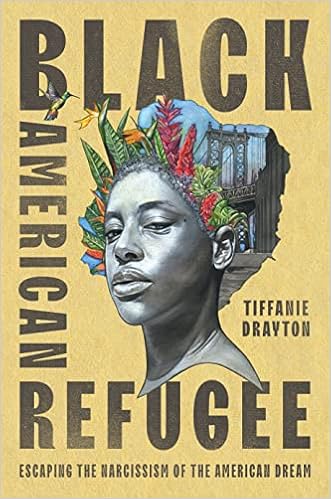
Black American Refugee: Escaping the Narcissism of the American Dream

After following her mother to the US at a young age to pursue economic opportunities, one woman must come to terms with the ways in which systematic racism and resultant trauma keep the American Dream inaccessible to Black people.

In the early ’90s, young Tiffanie Drayton and her siblings left Trinidad and Tobago to join their mother in New Jersey, where she’d been making her way as a domestic worker, eager to give her children a shot at the American Dream. At first, life in the US was idyllic. But chasing good school districts with affordable housing left Tiffanie and her family constantly uprooted–moving from Texas to Florida then back to New Jersey. As Tiffanie came of age in the suburbs, she began to ask questions about the binary Black and white American world. Why were the Black neighborhoods she lived in crime-ridden, and the multicultural ones safe? Why were there so few Black students in advanced classes at school, if there were any advanced classes at all? Why was it so hard for Black families to achieve stability? Why were Black girls treated as something other than worthy?

Ultimately, exhausted by the pursuit of a “better life” in America, twenty-year old Tiffanie returns to Tobago. She is suddenly able to enjoy the simple freedom of being Black without fear, and imagines a different future for her own children. But then COVID-19 and widely publicized instances of police brutality bring America front and center again. This time, as an outsider supported by a new community, Tiffanie grieves and rages for Black Americans in a way she couldn’t when she was one.

An expansion of her New York Times piece of the same name, Black American Refugee examines in depth the intersection of her personal experiences and the broader culture and historical ramifications of American racism and global white supremacy. Through thoughtful introspection and candidness, Tiffanie unravels the complex workings of the people in her life, including herself, centering Black womanhood, and illuminating the toll a lifetime of racism can take. Must Black people search beyond the shores of the “land of the free” to realize emancipation? Or will the voices that propel America’s new reckoning welcome all dreamers and dreams to this land?

https://search.lib.uiowa.edu/permalink/f/9i2ftm/01IOWA_ALMA21842987890002771
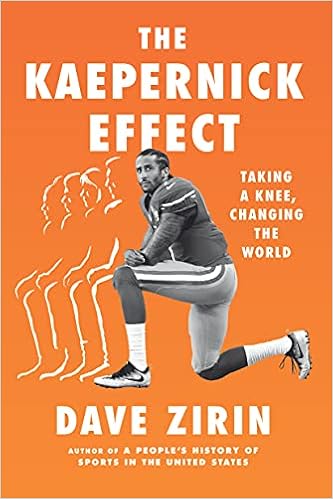
The Kaepernick Effect: Taking a Knee, Changing the World

In 2016, amid an epidemic of police shootings of African Americans, the celebrated NFL quarterback Colin Kaepernick began a series of quiet protests on the field, refusing to stand during the U.S. national anthem. By “taking a knee,” Kaepernick bravely joined a long tradition of American athletes making powerful political statements. This time, however, Kaepernick’s simple act spread like wildfire throughout American society, becoming the preeminent symbol of resistance to America’s persistent racial inequality.

Critically acclaimed sports journalist and author of A People’s History of Sports in the United States, Dave Zirin chronicles “the Kaepernick effect” for the first time, through interviews with a broad cross-section of professional athletes across many different sports, college stars and high-powered athletic directors, and high school athletes and coaches. In each case, he uncovers the fascinating explanations and motivations behind a mass political movement in sports, through deeply personal and inspiring accounts of risk-taking, activism, and courage both on and off the field.

A book about the politics of sport, and the impact of sports on politics, The Kaepernick Effect is for anyone seeking to understand an essential dimension of the new movement for racial justice in America.

https://search.lib.uiowa.edu/permalink/f/9i2ftm/01IOWA_ALMA21842906180002771
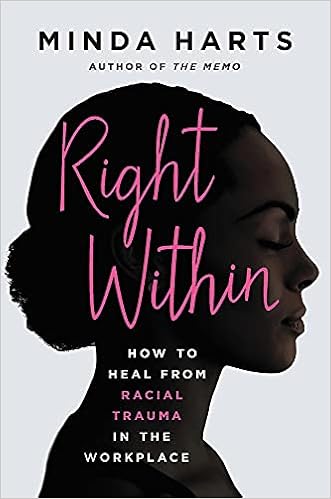
Right Within: How to Heal from Racial Trauma in the Workplace

From the powerhouse author of  The Memo, the essential self-help book for women of color to heal—and thrive—in the workplace  

In workplaces nationwide, women of color need frank talk and honest advice on how to deal with microaggressions, heal from racialized trauma, and find relief from invisible workplace burdens. Filled with Minda Harts’s signature wit and warmth, Right Within offers strategies for women of color to speak up during racialized moments with managers and clients, work through past triggers they may not even know still cause pain, and reframe past career disappointments as opportunities to grow into a new path. Through action points, exercises, and clear-eyed coaching, Harts encourages women to summon hidden reserves of strength and courage. She includes advice from therapists and faith leaders of color on a full range of ways to heal. Right Within will help women of color strengthen their resolve across corporate America, ensuring that we can all, finally, rise together.

https://search.lib.uiowa.edu/permalink/f/9i2ftm/01IOWA_ALMA21842905670002771
Against White Feminism: Notes on Disruption

A radically inclusive, intersectional, and transnational approach to the fight for women’s rights.

Upper-middle-class white women have long been heralded as “experts” on feminism. They have presided over multinational feminist organizations and written much of what we consider the feminist canon, espousing sexual liberation and satisfaction, LGBTQ inclusion, and racial solidarity, all while branding the language of the movement itself in whiteness and speaking over Black and Brown women in an effort to uphold privilege and perceived cultural superiority. An American Muslim woman, attorney, and political philosopher, Rafia Zakaria champions a reconstruction of feminism in Against White Feminism, centering women of color in this transformative overview and counter-manifesto to white feminism’s global, long-standing affinity with colonial, patriarchal, and white supremacist ideals.

Covering such ground as the legacy of the British feminist imperialist savior complex and “the colonial thesis that all reform comes from the West” to the condescension of the white feminist–led “aid industrial complex” and the conflation of sexual liberation as the “sum total of empowerment,” Zakaria follows in the tradition of intersectional feminist forebears Kimberlé Crenshaw, Adrienne Rich, and Audre Lorde. Zakaria ultimately refutes and reimagines the apolitical aspirations of white feminist empowerment in this staggering, radical critique, with Black and Brown feminist thought at the forefront.

https://search.lib.uiowa.edu/permalink/f/9i2ftm/01IOWA_ALMA21842905580002771

Digital New Book Display – 6-13-22

Welcome to the University of Iowa Libraries’ virtual New Book Shelf. Here we will present new titles for you to browse and check out. Titles listed here will be monographs published in the current year. If you see a title you would like to borrow, please click the link below the item and sign in with your Hawk ID and Password to request a loan.

Nice White Ladies: The Truth about White Supremacy, Our Role in It, and How We Can Help Dismantle It

An acclaimed expert illuminates the distinctive role that white women play in perpetuating racism, and how they can work to fight it 

In a nation deeply divided by race, the “Karens” of the world are easy to villainize. But in Nice White Ladies, Jessie Daniels addresses the unintended complicity of even well-meaning white women. She reveals how their everyday choices harm communities of color. White mothers, still expected to be the primary parents, too often uncritically choose to send their kids to the “best” schools, collectively leading to a return to segregation. She addresses a feminism that pushes women of color aside, and a wellness industry that insulates white women in a bubble of their own privilege.

Daniels then charts a better path forward. She looks to the white women who fight neo-Nazis online and in the streets, and who challenge all-white spaces from workplaces to schools to neighborhoods. In the end, she shows how her fellow white women can work toward true equality for all.

https://search.lib.uiowa.edu/permalink/f/9i2ftm/01IOWA_ALMA21842905910002771

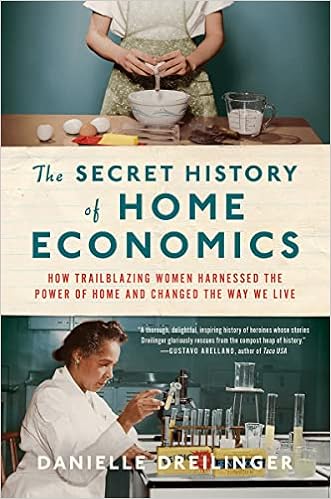
The Secret History of Home Economics: How Trailblazing Women Harnessed the Power of Home and Changed the Way We Live

An NPR Favorite History Book of 2021

The surprising, often fiercely feminist, always fascinating, yet barely known, history of home economics.

The term “home economics” may conjure traumatic memories of lopsided hand-sewn pillows or sunken muffins. But common conception obscures the story of the revolutionary science of better living. The field exploded opportunities for women in the twentieth century by reducing domestic work and providing jobs as professors, engineers, chemists, and businesspeople. And it has something to teach us today.

In the surprising, often fiercely feminist and always fascinating The Secret History of Home Economics, Danielle Dreilinger traces the field’s history from Black colleges to Eleanor Roosevelt to Okinawa, from a Betty Crocker brigade to DIY techies. These women―and they were mostly women―became chemists and marketers, studied nutrition, health, and exercise, tested parachutes, created astronaut food, and took bold steps in childhood development and education.

Home economics followed the currents of American culture even as it shaped them. Dreilinger brings forward the racism within the movement along with the strides taken by women of color who were influential leaders and innovators. She also looks at the personal lives of home economics’ women, as they chose to be single, share lives with other women, or try for egalitarian marriages.

This groundbreaking and engaging history restores a denigrated subject to its rightful importance, as it reminds us that everyone should learn how to cook a meal, balance their account, and fight for a better world.

https://search.lib.uiowa.edu/permalink/f/9i2ftm/01IOWA_ALMA21842362550002771

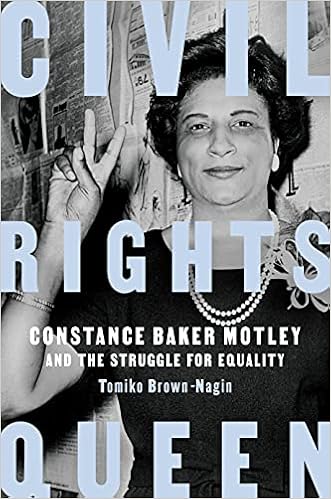
Civil Rights Queen: Constance Baker Motley and the Struggle for Equality

With the US Supreme Court confirmation of Ketanji Brown Jackson, “it makes sense to revisit the life and work of another Black woman who profoundly shaped the law: Constance Baker Motley” (CNN). The first major biography of one of our most influential judges—an activist lawyer who became the first Black woman appointed to the federal judiciary—that provides an eye-opening account of the twin struggles for gender equality and civil rights in the 20th Century.

“A must-read for anyone who dares to believe that equal justice under the law is possible and is in search of a model for how to make it a reality.” —Anita Hill

Born to an aspirational blue-collar family during the Great Depression, Constance Baker Motley was expected to find herself a good career as a hair dresser. Instead, she became the first black woman to argue a case in front of the Supreme Court, the first of ten she would eventually argue. The only black woman member in the legal team at the NAACP’s Inc. Fund at the time, she defended Martin Luther King in Birmingham, helped to argue in Brown vs. The Board of Education, and played a critical role in vanquishing Jim Crow laws throughout the South. She was the first black woman elected to the state Senate in New York, the first woman elected Manhattan Borough President, and the first black woman appointed to the federal judiciary.
    
Civil Rights Queen captures the story of a remarkable American life, a figure who remade law and inspired the imaginations of African Americans across the country. Burnished with an extraordinary wealth of research, award-winning, esteemed Civil Rights and legal historian and dean of the Harvard Radcliffe Institute, Tomiko Brown-Nagin brings Motley to life in these pages. Brown-Nagin compels us to ponder some of our most timeless and urgent questions–how do the historically marginalized access the corridors of power? What is the price of the ticket? How does access to power shape individuals committed to social justice? In Civil Rights Queen, she dramatically fills out the picture of some of the most profound judicial and societal change made in twentieth-century America.

https://search.lib.uiowa.edu/permalink/f/18gddib/TN_cdi_proquest_reports_2618798640

The Generation Myth: Why When You’re Born Matters Less Than You Think

Millennials, Baby Boomers, Gen Z—we like to define people by when they were born, but an acclaimed social researcher explains why we shouldn’t.

Boomers are narcissists. Millennials are spoiled. Gen Zers are lazy. We assume people born around the same time have basically the same values. It makes for good headlines, but is it true?

Bobby Duffy has spent years studying generational distinctions. In The Generation Myth, he argues that our generational identities are not fixed but fluid, reforming throughout our lives. Based on an analysis of what over three million people really think about homeownership, sex, well-being, and more, Duffy offers a new model for understanding how generations form, how they shape societies, and why generational differences aren’t as sharp as we think.

The Generation Myth is a vital rejoinder to alarmist worries about generational warfare and social decline. The kids are all right, it turns out. Their parents are too. 

https://search.lib.uiowa.edu/permalink/f/9i2ftm/01IOWA_ALMA21842905520002771

How Should A Government Be?: The New Levers of State Power

Global in scope, approachable and upbeat in tone, this book explores the new technological capacities of government with clear eyes and an open mind. When the art of government itself is changing, the old political divisions no longer make sense. Now, with revolutions in technology and organisational structure and a world transformed by Covid-19, a revolution is also coming in the essential business of government – whether we like it or not.

https://search.lib.uiowa.edu/permalink/f/9i2ftm/01IOWA_ALMA21843257330002771

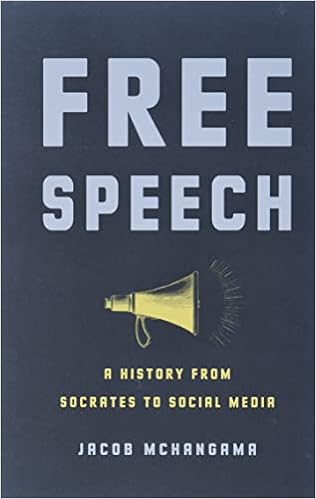
Free Speech: A History from Socrates to Social Media

“The best history of free speech ever written and the best defense of free speech ever made.” —P.J. O’Rourke

Hailed as the “first freedom,” free speech is the bedrock of democracy. But it is a challenging principle, subject to erosion in times of upheaval. Today, in democracies and authoritarian states around the world, it is on the retreat.

In Free Speech, Jacob Mchangama traces the riveting legal, political, and cultural history of this idea. Through captivating stories of free speech’s many defenders—from the ancient Athenian orator Demosthenes and the ninth-century freethinker al-Rāzī, to the anti-lynching crusader Ida B. Wells and modern-day digital activists—Mchangama reveals how the free exchange of ideas underlies all intellectual achievement and has enabled the advancement of both freedom and equality worldwide. Yet the desire to restrict speech, too, is a constant, and he explores how even its champions can be led down this path when the rise of new and contrarian voices challenge power and privilege of all stripes.

Meticulously researched and deeply humane, Free Speech demonstrates how much we have gained from this principle—and how much we stand to lose without it.

https://search.lib.uiowa.edu/permalink/f/9i2ftm/01IOWA_ALMA21843256430002771

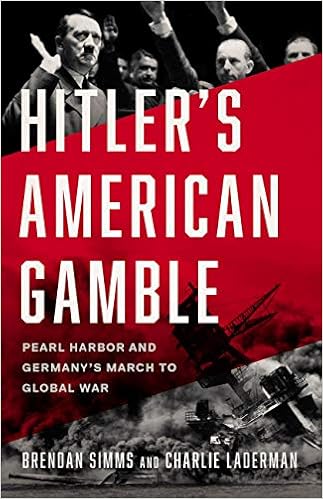
Hitler’s American Gamble: Pearl Harbor and Germany’s March to Global War

A riveting account of the five most crucial days in twentieth-century diplomatic history: from Pearl Harbor to Hitler’s declaration of war on the United States

By early December 1941, war had changed much of the world beyond recognition. Nazi Germany occupied most of the European continent, while in Asia, the Second Sino-Japanese War had turned China into a battleground. But these conflicts were not yet inextricably linked—and the United States remained at peace.

Hitler’s American Gamble recounts the five days that upended everything: December 7 to 11. Tracing developments in real time and backed by deep archival research, historians Brendan Simms and Charlie Laderman show how Hitler’s intervention was not the inexplicable decision of a man so bloodthirsty that he forgot all strategy, but a calculated risk that can only be understood in a truly global context. This book reveals how December 11, not Pearl Harbor, was the real watershed that created a world war and transformed international history.

https://search.lib.uiowa.edu/permalink/f/9i2ftm/01IOWA_ALMA21842751010002771

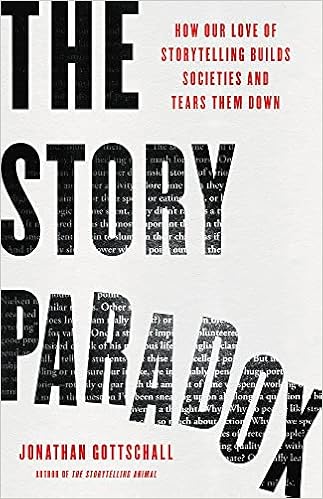
The Story Paradox: How Our Love of Storytelling Builds Societies and Tears them Down

Storytelling, a tradition that built human civilization, may soon destroy it

Humans are storytelling animals. Stories are what make our societies possible. Countless books celebrate their virtues. But Jonathan Gottschall, an expert on the science of stories, argues that there is a dark side to storytelling we can no longer ignore. Storytelling, the very tradition that built human civilization, may be the thing that destroys it.

In The Story Paradox, Gottschall explores how a broad consortium of psychologists, communications specialists, neuroscientists, and literary quants are using the scientific method to study how stories affect our brains. The results challenge the idea that storytelling is an obvious force for good in human life. Yes, storytelling can bind groups together, but it is also the main force dragging people apart. And it’s the best method we’ve ever devised for manipulating each other by circumventing rational thought. Behind all civilization’s greatest ills—environmental destruction, runaway demagogues, warfare—you will always find the same master factor: a mind-disordering story.

Gottschall argues that societies succeed or fail depending on how they manage these tensions. And it has only become harder, as new technologies that amplify the effects of disinformation campaigns, conspiracy theories, and fake news make separating fact from fiction nearly impossible.

With clarity and conviction, Gottschall reveals why our biggest asset has become our greatest threat, and what, if anything, can be done. It is a call to stop asking, “How we can change the world through stories?” and start asking, “How can we save the world from stories?” 

https://search.lib.uiowa.edu/permalink/f/9i2ftm/01IOWA_ALMA21842584980002771

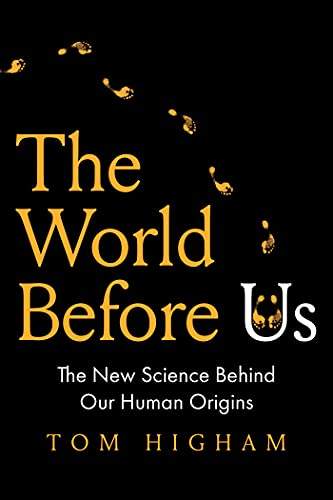
The World Before Us: The New Science Behind Our Human Origins

A fascinating investigation of the origin of humans based on incredible new discoveries and advanced scientific technology

Fifty thousand years ago, Homo sapiens was not the only species of humans in the world. There were also Neanderthals in what is now Europe, the Near East, and parts of Eurasia; Hobbits (H. floresiensis) on the island of Flores in Indonesia; Denisovans in Siberia and eastern Eurasia; and H. luzonensis in the Philippines. Tom Higham investigates what we know about these other human species and explores what can be learned from the genetic links between them and us. He also looks at whether H. erectus may have survived into the period when our ancestors first moved into Southeast Asia.

Filled with thrilling tales of recent scientific discoveries, this book offers an engaging synopsis of our current understanding of human origins and raises new and interesting possibilities—particularly concerning what contact, if any, these other species might have had with us prior to their extinction.

https://search.lib.uiowa.edu/permalink/f/9i2ftm/01IOWA_ALMA21843257240002771

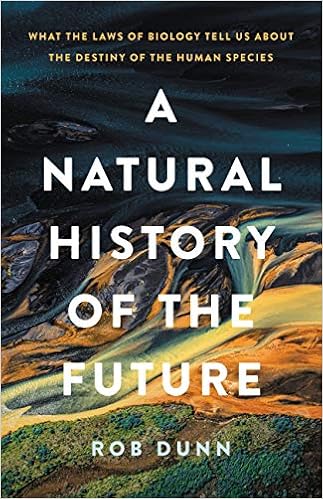
A Natural History of the Future: What the Laws of Biology Tell Us about the Destiny of the Human Species

“An arresting vision of this relentless natural world”—New York Times Book Review

A leading ecologist argues that if humankind is to survive on a fragile planet, we must understand and obey its iron laws

Our species has amassed unprecedented knowledge of nature, which we have tried to use to seize control of life and bend the planet to our will. In A Natural History of the Future, biologist Rob Dunn argues that such efforts are futile. We may see ourselves as life’s overlords, but we are instead at its mercy. In the evolution of antibiotic resistance, the power of natural selection to create biodiversity, and even the surprising life of the London Underground, Dunn finds laws of life that no human activity can annul. When we create artificial islands of crops, dump toxic waste, or build communities, we provide new materials for old laws to shape. Life’s future flourishing is not in question. Ours is.

As ambitious as Edward Wilson’s Sociobiology and as timely as Elizabeth Kolbert’s The Sixth ExtinctionA Natural History of the Future sets a new standard for understanding the diversity and destiny of life itself.

https://search.lib.uiowa.edu/permalink/f/9i2ftm/01IOWA_ALMA21843256340002771

Digital New Book Display – 6-7-22

Welcome to the University of Iowa Libraries’ virtual New Book Shelf. Here we will present new titles for you to browse and check out. Titles listed here will be monographs published in the current year. If you see a title you would like to borrow, please click the link below the item and sign in with your Hawk ID and Password to request a loan.

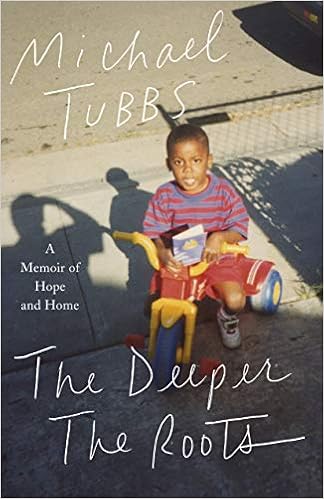
The Deeper the Roots: A Memoir of Hope and Home

The making of a visionary political leader―and a blueprint for a more equitable country

“Don’t tell nobody our business,” Michael Tubbs’s mother often told him growing up. For Michael, that meant a lot of things: don’t tell anyone about the day-to-day struggle of being Black and broke in Stockton, CA. Don’t tell anyone the pain of having a father incarcerated for 25 years to life. Don’t tell anyone about living two lives, the brainy bookworm and the kid with the newest Jordans. And also don’t tell anyone about the particular joys of growing up with three “moms”―a Nana who never let him miss church, an Auntie who’d take him to the library any time, and a mother, “She-Daddy”, who schooled him in the wisdom of hip-hop and taught him never to take no for an answer.

So for a long time Michael didn’t tell anyone his story, but as he went on to a scholarship at Stanford and an internship in the Obama White House, he began to realize the power of his experience, the need for his perspective in the halls of power. By the time he returned to Stockton to become, in 2016 at age 26, its first Black mayor and the youngest-ever mayor of a major American city, he knew his story meant something.

The Deeper the Roots is a memoir astonishing in its candor, voice, and clarity of vision. Tubbs shares with us the city that raised him, his family of badass women, his life-changing encounters with Oprah Winfrey and Barack Obama, the challenges of governing in the 21st century and everything in between―en route to unveiling his compelling vision for America rooted in his experiences in his hometown.

https://search.lib.uiowa.edu/permalink/f/9i2ftm/01IOWA_ALMA21842751130002771

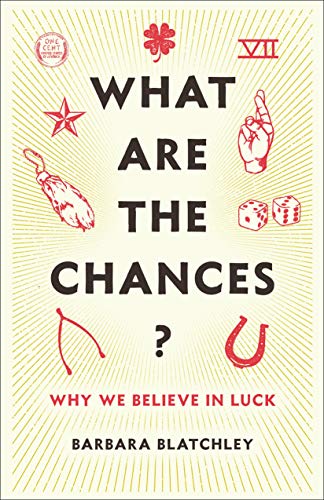
What Are the Chances?: Why We Believe in Luck

Most of us, no matter how rational we think we are, have a lucky charm, a good-luck ritual, or some other custom we follow in the hope that it will lead to a good result. Is the idea of luckiness just a way in which we try to impose order on chaos? Do we live in a world of flukes and coincidences, good and bad breaks, with outcomes as random as a roll of the dice—or can our beliefs help change our luck?

What Are the Chances? reveals how psychology and neuroscience explain the significance of the idea of luck. Barbara Blatchley explores how people react to random events in a range of circumstances, examining the evidence that the belief in luck helps us cope with a lack of control. She tells the stories of lucky and unlucky people—who won the lottery multiple times, survived seven brushes with death, or found an apparently cursed Neanderthal mummy—as well as the accidental discoveries that fundamentally changed what we know about the brain. Blatchley considers our frequent misunderstanding of randomness, the history of luckiness in different cultures and religions, the surprising benefits of magical thinking, and many other topics. Offering a new view of how the brain handles the unexpected, What Are the Chances? shows why an arguably irrational belief can—fingers crossed—help us as we struggle with an unpredictable world

https://search.lib.uiowa.edu/permalink/f/9i2ftm/01IOWA_ALMA21844235220002771

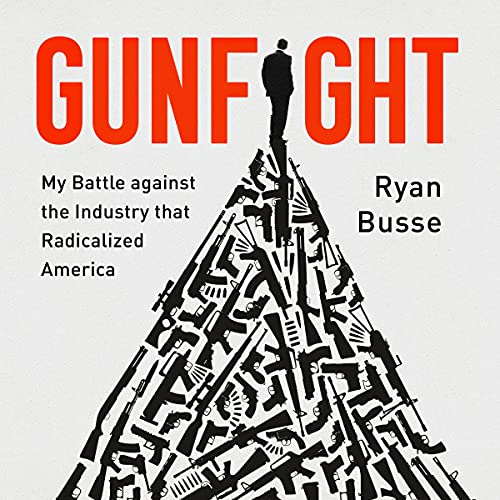
Gunfight: My Battle Against the Industry That Radicalized America

A former firearms executive pulls back the curtain on America’s multibillion-dollar gun industry, exposing how it fostered extremism and racism, radicalizing the nation and bringing cultural division to a boiling point.

As an avid hunter, outdoorsman, and conservationist – all things that the firearms industry was built on – Ryan Busse chased a childhood dream and built a successful career selling millions of firearms for one of America’s most popular gun companies.

But blinded by the promise of massive profits, the gun industry abandoned its self-imposed decency in favor of hardline conservatism and McCarthyesque internal policing, sowing irreparable division in our politics and society. That drove Busse to do something few other gun executives have done: He’s ending his 30-year career in the industry to show us how and why we got here.

Gunfight is an insider’s call-out of a wild, secretive, and critically important industry. It shows us how America’s gun industry shifted from prioritizing safety and ethics to one that is addicted to fear, conspiracy, intolerance, and secrecy. It recounts Busse’s personal transformation and shows how authoritarianism spreads in the guise of freedom, how voicing one’s conscience becomes an act of treason in a culture that demands sameness and loyalty. Gunfight offers a valuable perspective as the nation struggles to choose between armed violence or healing.

https://search.lib.uiowa.edu/permalink/f/9i2ftm/01IOWA_ALMA21842356260002771

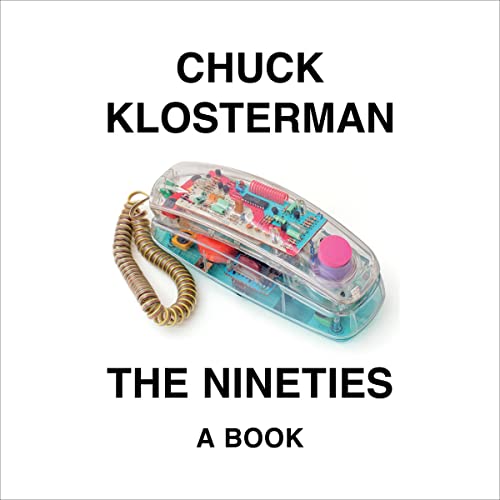
The Nineties: A Book

An instant New York Times best seller!

From the New York Times best-selling author of But What if We’re Wrong, a wise and funny reckoning with the decade that gave us slacker/grunge irony about the sin of trying too hard, during the greatest shift in human consciousness of any decade in American history.

It was long ago, but not as long as it seems: The Berlin Wall fell and the Twin Towers collapsed. In between, one presidential election was allegedly decided by Ross Perot while another was plausibly decided by Ralph Nader. In the beginning, almost every name and address was listed in a phone book, and everyone answered their landlines because you didn’t know who it was. By the end, exposing someone’s address was an act of emotional violence, and nobody picked up their new cell phone if they didn’t know who it was. The ’90s brought about a revolution in the human condition we’re still groping to understand. Happily, Chuck Klosterman is more than up to the job.

Beyond epiphenomena like “Cop Killer” and Titanic and Zima, there were wholesale shifts in how society was perceived: the rise of the internet, pre-9/11 politics, and the paradoxical belief that nothing was more humiliating than trying too hard. Pop culture accelerated without the aid of a machine that remembered everything, generating an odd comfort in never being certain about anything. On a ’90s Thursday night, more people watched any random episode of Seinfeld than the finale of Game of Thrones. But nobody thought that was important; if you missed it, you simply missed it. It was the last era that held to the idea of a true, hegemonic mainstream before it all began to fracture, whether you found a home in it or defined yourself against it. 

In The Nineties, Chuck Klosterman makes a home in all of it: the film, the music, the sports, the TV, the politics, the changes regarding race and class and sexuality, the yin/yang of Oprah and Alan Greenspan. In perhaps no other book ever written would a sentence like, “The video for ‘Smells Like Teen Spirit’ was not more consequential than the reunification of Germany” make complete sense. Chuck Klosterman has written a multi-dimensional masterpiece, a work of synthesis so smart and delightful that future historians might well refer to this entire period as Klostermanian.

https://search.lib.uiowa.edu/permalink/f/9i2ftm/01IOWA_ALMA21842987410002771

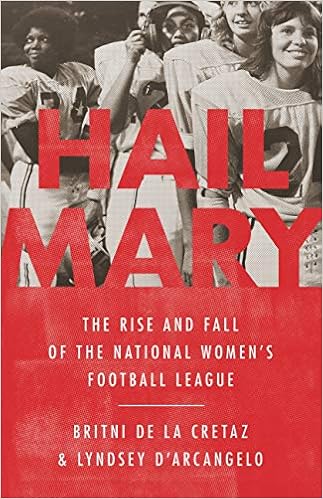
Hail Mary: The Rise and Fall of the National Women’s Football League

The groundbreaking story of the National Women’s Football League, and the players whose spirit, rivalries, and tenacity changed the legacy of women’s sports forever.

In 1967, a Cleveland promoter recruited a group of women to compete as a traveling football troupe. It was conceived as a gimmick—in the vein of the Harlem Globetrotters—but the women who signed up really wanted to play. And they were determined to win.

Hail Mary chronicles the highs and lows of the National Women’s Football League, which took root in nineteen cities across the US over the course of two decades. Drawing on new interviews with former players from the Detroit Demons, the Toledo Troopers, the LA Dandelions, and more, Hail Mary brings us into the stadiums where they broke records, the small-town lesbian bars where they were recruited, and the backrooms where the league was formed, championed, and eventually shuttered. In an era of vibrant second wave feminism and Title IX activism, the athletes of the National Women’s Football League were boisterous pioneers on and off the field: you’ll be rooting for them from start to finish.

https://search.lib.uiowa.edu/permalink/f/9i2ftm/01IOWA_ALMA21842751040002771

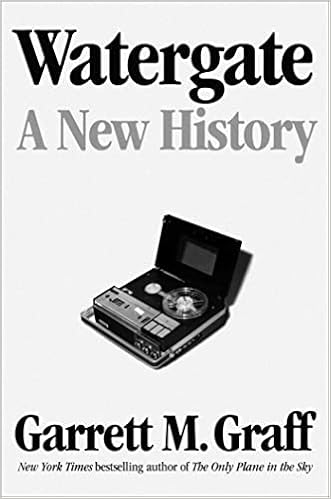
Watergate: A New History

NEW YORK TIMES BESTSELLER * “Do we need still another Watergate book? The answer turns out to be yes—this one.” —Len Downie, Jr., The Washington Post * “Dazzling. —Douglas Brinkley, The New York Times Book Review

From Garrett​ Graff, the New York Times bestselling author of The Only Plane in the Sky, comes the first definitive narrative history of Watergate—“the best and fullest account of the crisis, one unlikely to be surpassed anytime soon” (Kirkus Reviews, starred review)—exploring the full scope of the scandal through the politicians, investigators, journalists, and informants who made it the most influential political event of the modern era.

https://search.lib.uiowa.edu/permalink/f/9i2ftm/01IOWA_ALMA21843328750002771

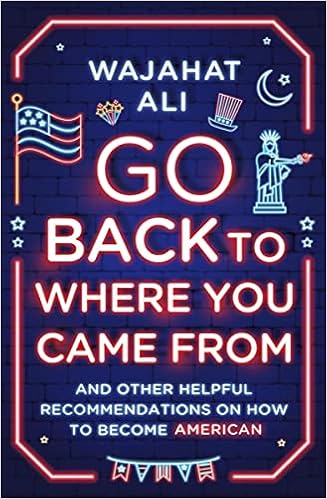
Go Back to Where You Came From

“Go back to where you came from, you terrorist!”

This is just one of the many warm, lovely, and helpful tips that Wajahat Ali and other children of immigrants receive on a daily basis. Go back where, exactly? Fremont, California, where he grew up, but is now an unaffordable place to live? Or Pakistan, the country his parents left behind a half-century ago?

Growing up living the suburban American dream, young Wajahat devoured comic books (devoid of brown superheroes) and fielded well-intentioned advice from uncles and aunties. (“Become a doctor!”) He had turmeric stains under his fingernails, was accident-prone, suffered from OCD, and wore Husky pants, but he was as American as his neighbors, with roots all over the world. Then, while Ali was studying at University of California, Berkeley, 9/11 happened. Muslims replaced communists as America’s enemy #1, and he became an accidental spokesman and ambassador of all ordinary, unthreatening things Muslim-y.

Now a middle-aged dad, Ali has become one of the foremost and funniest public intellectuals in America. In Go Back to Where You Came From, he tackles the dangers of Islamophobia, white supremacy, and chocolate hummus, peppering personal stories with astute insights into national security, immigration, and pop culture. In this refreshingly bold, hopeful, and uproarious memoir, Ali offers indispensable lessons for cultivating a more compassionate, inclusive, and delicious America.

https://search.lib.uiowa.edu/permalink/f/9i2ftm/01IOWA_ALMA21842988550002771

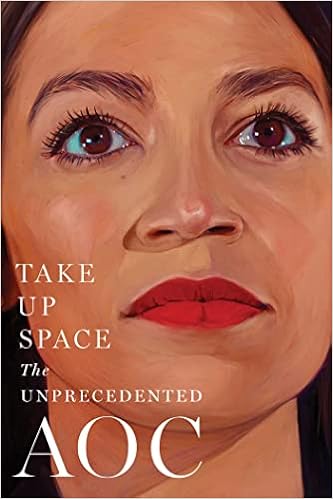
Take Up Space: The Unprecedented AOC

A stunning four-color biography of Congresswoman Alexandria Ocasio-Cortez in the bestselling tradition of Notorious RBG and Pelosi that explores her explosive rise and impact on the future of American culture and politics.

The candidate was young—twenty-eight years old, a child of Puerto Rico, the Bronx, and Yorktown Heights. She was working as a waitress and bartender. She was completely unknown, and taking on a ten-term incumbent in a city famous for protecting its political institutions. “Women like me aren’t supposed to run for office,” Alexandria Ocasio-Cortez said in a video launching her campaign, the camera following her as she hastily pulled her hair into a bun. But she did. And in perhaps the most stunning upset in recent memory, she won. At twenty-nine, she was sworn in as the youngest member of the 116th Congress and became the youngest woman to serve as a representative in United States history.

Before long, Ocasio-Cortez had earned her own shorthand title—AOC—and was one of the most talked-about public figures (loved and loathed) in the world. Her natural ability to connect with everyday people through the social media feeds grew her following into the multimillions. Every statement she made, every tweet and Instagram Live, went viral, and her term had barely begun before people were speculating that she could one day be president. The question seemed to be on everyone’s mind: How did this woman come from nowhere to acquire such influence, and so fast?

Now, in Take Up Space, that question is answered through a kaleidoscopic biography by the editors of New York magazine that features the riveting account of her rise by Lisa Miller, an essay by Rebecca Traister that explains why she is an unprecedented figure in American politics, and multiform explorations (reportage, comic, history, analysis, photography) of AOC’s outsize impact on American culture and politics. Throughout, AOC is revealed in all her power and vulnerability, and understood in the context of the fast-changing America that made her possible—and perhaps even inevitable.

https://search.lib.uiowa.edu/permalink/f/9i2ftm/01IOWA_ALMA21843328990002771

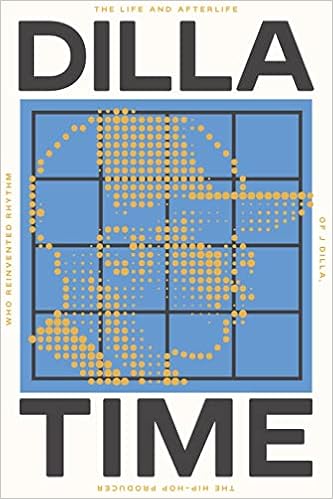
Dilla Time: The Life and Afterlife of J Dilla, the Hip Hop Producer Who Reinvented Rhythm

“This book is a must for everyone interested in illuminating the idea of unexplainable genius.” ―QUESTLOVE

Equal parts biography, musicology, and cultural history, 
Dilla Time chronicles the life and legacy of J Dilla, a musical genius who transformed the sound of popular music for the twenty-first century.

He wasn’t known to mainstream audiences, even though he worked with renowned acts like D’Angelo and Erykah Badu and influenced the music of superstars like Michael Jackson and Janet Jackson. He died at the age of thirty-two, and in his lifetime he never had a pop hit. Yet since his death, J Dilla has become a demigod: revered by jazz musicians and rap icons from Robert Glasper to Kendrick Lamar; memorialized in symphonies and taught at universities. And at the core of this adulation is innovation: a new kind of musical time-feel that he created on a drum machine, but one that changed the way “traditional” musicians play.

In Dilla Time, Dan Charnas chronicles the life of James DeWitt Yancey, from his gifted childhood in Detroit, to his rise as a Grammy-nominated hip-hop producer, to the rare blood disease that caused his premature death; and follows the people who kept him and his ideas alive. He also rewinds the histories of American rhythms: from the birth of soul in Dilla’s own “Motown,” to funk, techno, and disco. Here, music is a story of Black culture in America and of what happens when human and machine times are synthesized into something new. Dilla Time is a different kind of book about music, a visual experience with graphics that build those concepts step by step for fans and novices alike, teaching us to “see” and feel rhythm in a unique and enjoyable way.

Dilla’s beats, startling some people with their seeming “sloppiness,” were actually the work of a perfectionist almost spiritually devoted to his music. This is the story of the man and his machines, his family, friends, partners, and celebrity collaborators. Culled from more than 150 interviews about one of the most important and influential musical figures of the past hundred years, Dilla Time is a book as delightfully detail-oriented and unique as J Dilla’s music itself.

https://search.lib.uiowa.edu/permalink/f/9i2ftm/01IOWA_ALMA21842072610002771