The following post was written by IWA Student Digitization Lead and School of Library and Information Science student, Christian Riddle.
“No person in the United States shall, on the basis of sex, be excluded from participation in, be denied the benefits of, or be subjected to discrimination under any education program or activity receiving Federal financial assistance” – Title IX of the Education Amendments of 1972
In a new student position funded by the Three Women for Equality Fund, I work on examining the audiovisual material in the University of Iowa Women’s Archives’ athletics collections. The Three Women for Equality Fund was made possible due to gifts by Lark Birdsong, Iowa’s first women’s basketball coach and others. The fund honors the trailblazing efforts of Peggy Burke, Bonnie Slatton, and Christine Grant, three women that have made significant contributions towards the push for equality in women’s athletics and this fund seeks to recognize the efforts of other women.
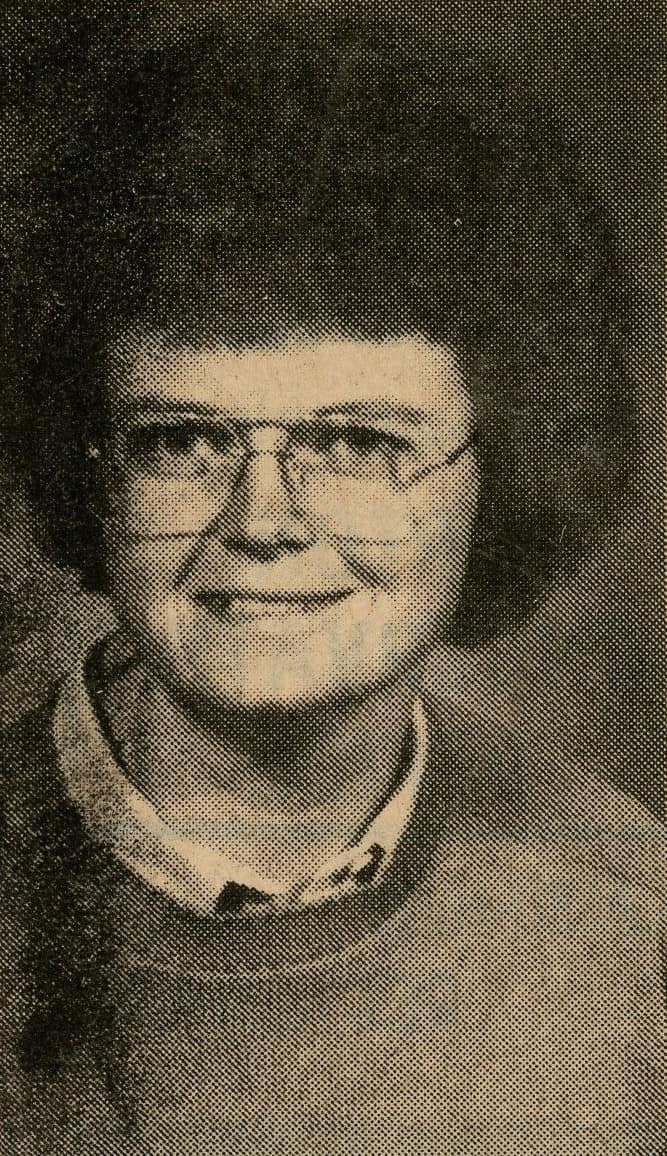
My latest project was reviewing the transcripts of Patricia Geadelmann’s newly digitized interviews that she conducted for her master’s thesis. These interviews can be separated into two groups: one with elementary students about their own perceptions of gender roles in sports and recreation, and one with physical education instructors and administrators about how Title IX was being implemented into the high schools of Iowa. This work was necessary because when we receive the transcripts back, they are not always entirely accurate in recording everything that was said. When people talk over each other or are not as clear, things get missed and it is my job to make sure that the transcript more accurately reflects the spoken dialogue. Furthermore, ensuring that the transcripts are accurate significantly improves the accessibility of the tapes, as these will be used as research material at some point.
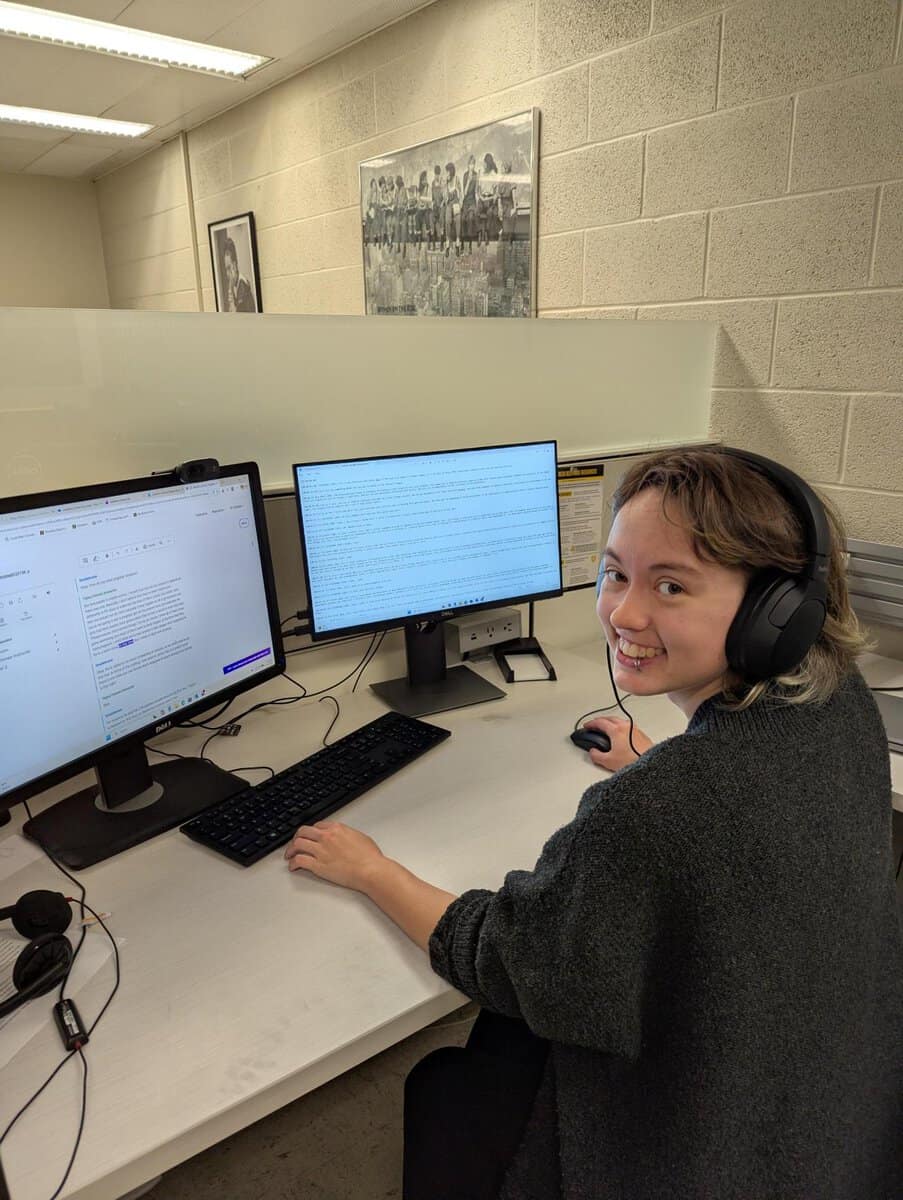
That said, there were a few challenges that I encountered during the process of reviewing the Geadlemann transcripts. Besides checking the spelling of any towns, schools, or names, I had to grapple with the sound quality. Because of the age of the recordings, background noises, and older equipment used for recording, the quality was varied and inconsistent. The tapes frequently made noise that made it difficult to hear the conversation recorded on it. Thankfully, I was given a pair of noise-cancelling headphones that alleviated the difficulty. Secondly, to improve clarity and legibility of the transcripts, any stutters or misspoken words were excluded. Finally, as the central focus of these interviews concerned the effects of Title IX, I had to research more about the topic to be able to understand the full context for the new requirements being posed to schools in the interviews.
Title IX—a bill included with the larger Education Department Bill of 1972— disallowed discrimination based on sex in education. Prior to its passing by then president Richard Nixon, there were several executive orders that mentioned not allowing discrimination by sex. When institutions were challenged with them via complaints filed by Berenice Sandler, however, many were unaware of them and only acted once hundreds of complaints had been filed.
When Title IX was passed, while grievance procedures now had legal backing, enforcement mechanisms of these rights were unreliable and unclear. The Office for Civil Rights (OCR) was a cabinet made within the government tasked with the writing and enforcing of law regulations, many of which were civil rights laws. However, they were not always a neutral party and often had to be heavily encouraged to enact positive change. In an interview with the male physical education instructor from DIKE high school, Geadelmann discusses the challenges that schools faced in complying with the regulations, and the lack of resources provided by the government.
“They really haven’t made money available for Title IX. That’s one of a lot people’s complaints. Is that the federal government has the law and said that you have to do this, but so far, they haven’t provided money to help schools do it. So that’s been a complaint of a lot of schools, particularly some of the smaller ones who face budget problems anyway.” – male PE teacher at Dike High School, Dike, Iowa, in interview with Patricia Geadelmann, 1978.
A within the faculty interviews Geadelmann conducted, the proscribed material interpreting Title IX was not robust nor led to a clear interpretation of the bill, some of it being contradictory to outright confusing. Despite the new regulation that high schools had to implement co-ed physical education classes, many were left trying to understand what that looked like. Did it have to be 100% co-ed? Could they do 50% while being separated for the other half of the year? How much did it apply to sports? In Geadelmann’s interviews, she finds that many schools had different systems for how they interpreted the new rules, with some even being nearly completely separate or completely co-ed at the time of the interviews.
“For this year, it would be very little co-ed activities. It would be pretty much spent separately.” – School principal in Tipton, Iowa in interview with Patricia Geadelmann, 1978.
“Just seems to me like everything else has been co-educational…As a rule, I think we have co-educational just about for all of our classes with exception of the touch football or soccer…” – male PE teacher at Dike High School, Dike, Iowa, in interview with Patricia Geadelmann, 1978.
One of the things that I really appreciated while listening to these interviews is the variety of perspectives. Some instructors were apprehensive of co-educational classes because they had tried it and it didn’t work, had budget or facility issues preventing integration, and others who had experimented with co-ed classes years before the Title IX requirements were made mandatory and found it improved their programs.
“I guess my conern is that I don’t see the need for it and if somebody could prove to me that there’s a need and a reason for coed activities, then maybe I could see that. And somebody told me once, well, look at it from the social viewpoint and I see enough socializing going on during the day that I don’t see that. I don’t see much carryover with the exception of say bowling for example or golf maybe, where a husband and wife are involved. Tennis may be the same, but I don’t see much carryover in any activity afte a kid gets out that coed is necessary.” – Jennifer, PE Head, in interview with Patricia Geadelmann, 1978.
“God, it is terrible when you have to go to class day after day after day and you know you’re going to have a discipline problem. I went throug that y first year here. Every day, you knew there was going to be someone that would challenge your ideas, challenge you being in charge of the class, and that’s completely gone with me in boys’ phys. ed. There’s never a problem, ever. I have not had one.” – Male PE department head, Tipton, Iowa, in interview with Patricia Geadelmann, 1978.
“I feel that within the last two years, the quality has really been stepped up and it’s just, I think because we’re working more and more towards offering a better variety, even though there’s only two of us, but a better variety, trying to give them choices whenever we can but it’s not just because of the co-ed situation.” – Female faculty, Clear Lake, Iowa school, in interview with Patricia Geadelmann, 1978.
Geadelmann had asked several insightful questions concerning the topics of uniform requirements, liability issues, discipline problems, if high-contact sports were being made co-ed, and what the facilities were, to name a few. She was very interested in the facilities and administration side of things and not just how students were performing in class or whether or not the classes were co-ed, which is why several principals and department heads were also included in her interviews. Understanding the functionality of the school helped towards understanding why their classes were set up the way they were, and what their constraints for complying with the co-ed regulations looked like.
In short, the Geadelmann transcripts serve as great research material for anyone interested in learning more about the effect of Title IX on public school physical education classes, specifically in Iowa. When Title IX passed, it was a great boon for many, and young girls now had a future in education and athletics previously barred to them. However, it may have been more successful had additional resources and funding been granted to these schools in order to accommodate. I remember even in my own high school experience, there were inequities between the boys’ and girls’ locker rooms. That said, I likely would not have been able to participate in as many classes and sports as I did were it not for Title IX, which continues to protect against sexual discrimination even to this day. For more information on collections related to Patricia Geadelmann, Christine Grant, Peg Burke, or Bonnie Slatton, please visit the Iowa Women’s Archives or contact us at lib-women@uiowa.edu.