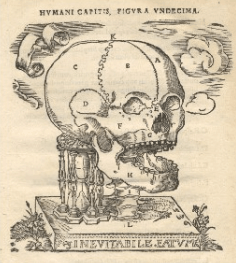
JOHANNES DRYANDER (ca. 1500-1560). Anatomiae. Marburg: Apud Eucharium Ceruicornum, 1537. Dryander (also known as Eichmann), professor of surgery at Marburg, was a friend of Vesalius and among the first anatomists who made illustrations after their own dissections. This Anatomiae appeared six years before Vesalius’ great work. This was the first significant book on the anatomyContinue reading “Johannes Dryander | June 2016 Notes from the John Martin Rare Book Room @Hardin Library”
Category Archives: Rare Book Room
New Acquisition: Aristotle’s Compleat Masterpiece
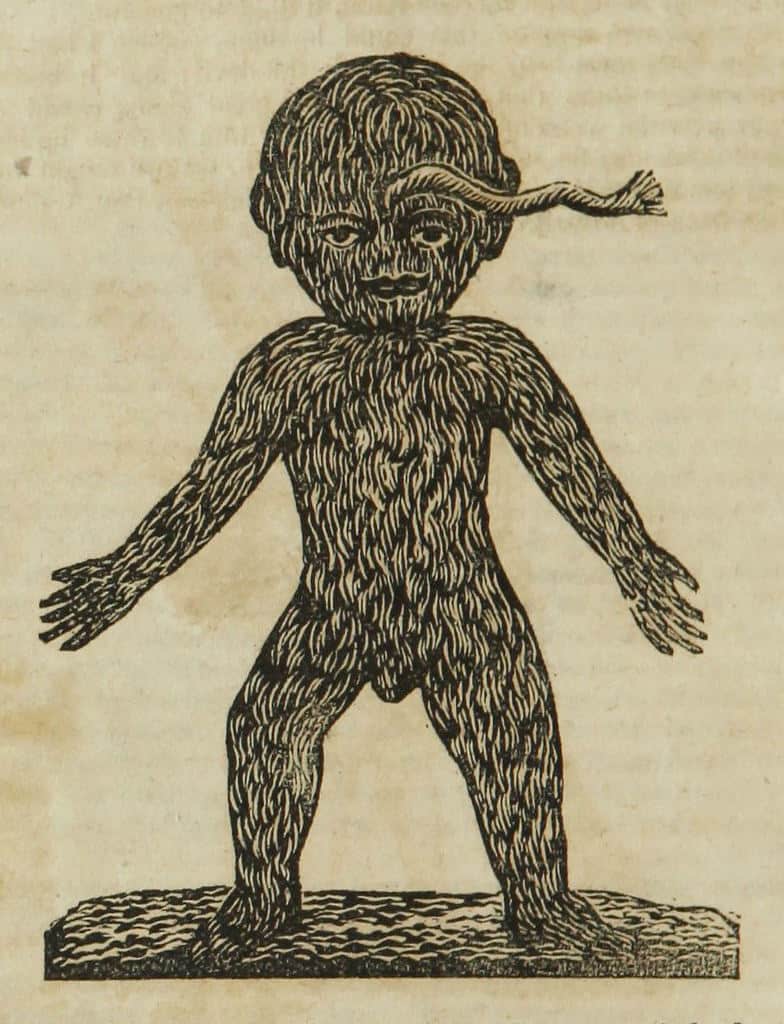
Newly acquired by the University of Iowa for the John Martin Rare Book Room, Aristotle’s Compleat Masterpiece and the other works included here — considered “the first sex manual in the English language” — were not, in fact, authored by Aristotle. Rather, attribution of the works to him was a way to gain an air ofContinue reading “New Acquisition: Aristotle’s Compleat Masterpiece”
February Notes from the John Martin Rare Book Room @Hardin Library | Henri de Mondeville
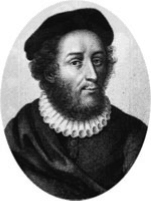
Henri De Mondeville (ca 1260- ca 1320). Chirurgie. Paris: Felix Alcan, 1892. Mondeville was born in Normandy and studied medicine in Paris and Montpellier before going to Bologna. Italian surgeons were at a much higher status than in France at this time. Mondeville’s chief work, the Cyrurgia, was written between 1306-1320 and contains his basicContinue reading “February Notes from the John Martin Rare Book Room @Hardin Library | Henri de Mondeville”
January 2016 Notes from the John Martin Rare Book Room @ Hardin Library | Charles Estienne (1504-1564)
Charles Estienne (1504-1564). De dissectione partium corporis humani libri tres. : Apud Simonem Colinaeum, 1545. Estienne was a member of the famous Estienne family of printers. He received his medical degree from the University of Paris in 1542, but had been at work on this anatomical magnum opus for many years, as some of the platesContinue reading “January 2016 Notes from the John Martin Rare Book Room @ Hardin Library | Charles Estienne (1504-1564)”
December Notes from the John Martin Rare Book Room @Hardin Library | Jacopo Berengario Da Carpi
JACOPO BERENGARIO DA CARPI (1470-1530). Isagoge breves, perlucide ac uberime, in anatomia humani corporis. [Bologna: Impressum per Benedictum Hectoris, 1522]. Berengario was a serious student of Mondino and followed him in all matters pertaining to anatomy. He wrote Commentaria on Mondino’s Anothomia in 1521, and corrected many of Mondino’s shortcomings and added in his own observations. HeContinue reading “December Notes from the John Martin Rare Book Room @Hardin Library | Jacopo Berengario Da Carpi”
August Notes from the John Martin Rare Book Room @Hardin Library
MARCELLO MALPIGHI (1628-1694). De pulmonibus observationes anatomicae. In Thomas Bartholin’s De pulmonum substantia & motu diatribe, Copenhagen, 1663 Anatomist, embryologist, physiologist, and microscopist, Malpighi was instrumental in the development of embryology and histology and also a great microscopic anatomist. Malpighi made many scientific contributions, but many consider his discovery of the pulmonary circulation the most important. De pulmonibusContinue reading “August Notes from the John Martin Rare Book Room @Hardin Library”
Birthing, Midwifery, Obstetrics books available in the John Martin Rare Book Room
Bibliography of books featured in the John Martin Rare Book Room Open House, March 26, 2015 1. Eucharius Roeslin (ca. 1490-1526). De partu hominis, et quae circa ipsum accidunt, adeoque, de parturientum & infantium morbis atque cura. Frankfurt: Apud Chr. Egenolphum, [1551]. First published in German in 1513 as, “Der swangern Frauwen und hebammen Rosegarten,” thisContinue reading “Birthing, Midwifery, Obstetrics books available in the John Martin Rare Book Room”
Notes from the John Martin Rare Book Room, October 2014 – Crooke’s Description of the Body of Man, 1615
HELKIAH CROOKE (1576-1635). Mikrokosmographia [Greek title transliterated]: A description of the body of man. London: Printed by William Jaggard, 1615. Crooke received his medical degree from Cambridge and was prone to be a quarrelsome individual of sometimes dubious character, especially when financial matters were involved. He had several clashes with London’s College of Physicians over questions ofContinue reading “Notes from the John Martin Rare Book Room, October 2014 – Crooke’s Description of the Body of Man, 1615”
Notes from the John Martin Rare Book Room – Jean Pecquet
At the beginning of the 17th century, it was widely believed that food was converted into blood as it passed through the digestive system. The blood was then carried to the liver where it was imbued with natural spirits and passed on to the heart for distribution through the body. Since only the blood vesselsContinue reading “Notes from the John Martin Rare Book Room – Jean Pecquet”
Notes from the John Martin Rare Book Room, July 2014: Nathaniel Highmore
Nathaniel Highmore (1613-1685) Corporis Humani Disquisitio Anatomica The Hague: Ex oficina Samuelis Brown, 1651. [Image via Fisher Library Digital Collections, University of Toronto]. Nathaniel Highmore of Dorset, England was a British surgeon known for his 1651 treatise on anatomy, the first of its kind to give an accurate account of the circulatory system. Highmore studiedContinue reading “Notes from the John Martin Rare Book Room, July 2014: Nathaniel Highmore”