Skip to content
Skip to main content

Iowa Digital Library adds interactive collection of Madurese folk tales

The University of Iowa Libraries and a UI linguistics scholar have taken an important step toward preserving the culture of an often overlooked Indonesian ethnic group while at the same time opening worldwide access for students and scholars interested in delving deeper into the study of the Madurese language and culture.

William Davies, UI professor of linguistics and one of the world’s leading scholars on Madurese language, has completed the Madurese Storytellers digital collection, which features storytellers from the Island of Madura telling traditional stories along with accompanying English or Indonesian subtitles.

Davies and Surachman Dimyati, a professor at Universitas Terbuka in Jakarta and a UI alumnus, recorded native storytellers performing “carèta ra’yat Madhurâ,” traditional Madurese folk tales and historical narratives. These creation tales, tales of the introduction of Islam to the island, and love stories shed light on the historical and cultural development of the Madurese.

The Madurese are indigenous to Madura, a small island located a few miles off the northeast coast of Java, the main Indonesian island (with a population of more than 100 million.) Government census figures from 2005 put the Madurese population at roughly 7 million, while other estimates range up to 15 million. Regardless of the precise number, the Madurese language is the fourth most widely spoken language in Indonesia, the fourth most populous country in the world. Despite this, the Madurese language and people are not widely studied, in large part due to negative stereotyping by the ethnic majority groups in the country.

This lack of study of the Madurese and their language has left little textual material available to scholars or even to the Madurese people themselves. What exists of original Madurese folk and historical narratives are largely disparate manuscripts held by some individuals or in small collections at regional museums throughout Madurese-speaking areas.

The new digital archive includes an interactive interface to allow the Madurese videos to be viewed with English and Indonesian subtitles. Verbatim transcripts can also be viewed in English, Indonesian, Madurese, and morpheme-by-morpheme glosses used for linguistic analysis. The project is ongoing and as more narratives are recorded and transcribed, they will be added to the collection.

As is the case with folk tales from any tradition, tales can give insights into the roles of men and women, the social hierarchy in society at large, the behavioral expectations for children, values, belief systems, anxieties and fears, and much more that was considered important in society.

The historical narratives not only help keep the language and culture of the Madurese vital, but the video and accompanying text in the electronic archive make these primary source materials directly accessible to scholars in the U.S. and internationally. Researchers in linguistics and across the humanities will benefit from the availability of these unique materials. This multimedia archive embraces new methods of scholarly communication by creating and delivering a resource that would not be possible through traditional publishing modes.

This project has been funded by a generous grant from the Toyota Foundation, as well as the US Department of Education (through a Fulbright-Hays award) and several UI programs. Institutional support in Indonesia has come from Universitas Kristen Petra in Surabaya and Universitas Atma Jaya in Jakarta, as well as Kementerian Negara Riset dan Teknologi and Lembaga Ilmu Pengetahuan Indonesia.

Davies’ project was a UI Libraries’ Creative Scholarship Innovation Award winner in 2010, which provided modest support for a graduate assistant and included a project team of librarians and technologists.

The video and transcriptions are the latest edition to the Iowa Digital Library, which features more than 400,000 digital objects created from the holdings of the UI Libraries and its campus partners. Included are illuminated manuscripts, historical maps, fine art, political cartoons, scholarly works, audio and video recordings, and more. The UI Libraries is a staunch supporter of new forms of scholarly publishing, digital humanities, data curation, and open/linked data.
Teetotalers vs. Bootleggers – the 100-year road to Prohibition

Looking for primary resources for your speech or paper, but don’t have lots of time? Join librarian Marianne Mason for 15 minutes of “brainfood.” This week’s focus is on primary resources documenting the Temperance Movement, the passage of Prohibition and its repeal.

Learn transferable skills that can be applied to nearly all topics. These mini-workshops are like veggies for your brain!

Thursday, October 13
12:00 – 12:15 p.m.
Main Library, rm 2032 (next to ITC)

Snacks provided.

http://guides.lib.uiowa.edu/skill_builder

Organize your citations and learn to use RefWorks in two workshops

The University of Iowa Libraries will offer two introductory workshops on RefWorks. RefWorks is a web-based service that enables you to save bibliographic citations from the library catalog and other library databases. Both workshops will be held in 1015A LIB (1st floor, northwest corner of Main Library, located in the Digital Studio for Public Humanities).

Wednesday, Oct 12, 12:15-1:45 p.m.

Friday, Oct 14, 12:15-1:45 p.m.

In this workshop you will learn to:

* Export citations from a data service

* Create, edit, and delete citations in RefWorks

* Organize your citations and share them with colleagues at UIowa and beyond

* Use RefWorks to easily create and format bibliographies

Librarians will show you how to use RefWorks, and then give you the opportunity to practice with it at the end of the workshop. No registration is required, but seating is limited, so latecomers may be turned away.

Participants should have created personal accounts in RefWorks prior to the workshop. To do this, follow the “Connect to RefWorks” link on the UI Libraries RefWorks web page: http://www.lib.uiowa.edu/find/refworks.

For additional RefWorks training options, including workshops held at the Hardin Library for the Health Sciences, see http://www.lib.uiowa.edu/find/refworks/workshops.html

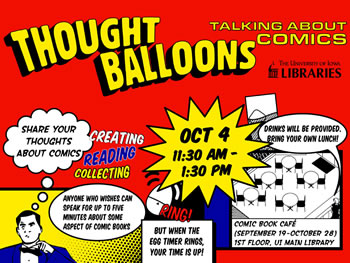
Thought Balloons: Talking about Comics, Oct 4

Thought Balloons: Talking about Comics

Drop in at the Main Library’s Comic Book Café and share your thoughts about comics: creating them, reading them, collecting them. Tell us what your favorite comic is (and why). Bring your own creations, or listen to others talk about journaling through comics, or the history of comics, or the comic book industry. Learn about the growing collection of comics and graphic novels in the UI Libraries and some of the comics created by the Federal Government. Anyone who wishes can speak for up to five minutes about some aspect of comic books, but when the egg timer rings, your time is up.

Tuesday, October 4, 2011 “Thought Balloons: Talking about Comics”
11:30 a.m – 1:30 p.m.
Comic Book Café, 1st floor, UI Main Library

Drinks will be provided. Bring your own lunch.

Sponsored by the University of Iowa Libraries.

Chemistry: It’s FUN-damental

A demonstration on the Wonders of Chemistry will take be conducted by Lou Messerle, Chemistry Professor

Thursday, September 8th
4pm
Main Library North Exhibition Hall

The University of Iowa Libraries has compiled an exhibit celebrating the International Year of Chemistry 2011 as well as emphasizing how fundamental chemistry is and how it can be seen in everyday life. The exhibit will be on display from July to December 2011.

Wherever we look, the work of the chemist has raised the level of our civilisation and has increased the productive capacity of the nation.

— John Calvin Coolidge

Welcome to the University of Iowa Libraries

During these first couple weeks of the semester, everything will be new again, whether you are a returning student or this is your first day at the University of Iowa. You’ll be learning new information, meeting new friends, finding new resources. And the UI Libraries can be one place for you escape all the new or embrace it.

We have librarians for every major at the University, which means we have a librarian for you. If you’re a new student and involved with a Living Learning Community, you’ll have opportunities throughout the year to meet your personal librarian and work with that person.

Though this may be the largest library you’ve ever visited (we’re among the top 30 research libraries in the country), you are welcome here. You don’t need to know all the answers here, we can help you with your questions. All you have to do is ask.

Have a great year and we look forward to working with you.

Nancy L. Baker, University Librarian

Recycle it in the Main Library

Papers, bottles and boxes are cluttering our landfills, when we can easily divert those used materials to a new life by recycling them. With this in mind, 20 large recycling bins were placed throughout the five floors of the Main Library this summer. In addition to providing locations to recycle redeemable cans and bottles, and waste that should go to the landfill; these recycling bins compliment the UI Office of Sustainability efforts at Single-Stream Recycling.

Acceptable Materials

  • Cardboard Boxes
  • Magazines / Catalogs /  Phone Books
  • Newspapers and Inserts
  • Office Paper (Shredded / UnShredded)
    • All White, Colored, and Coated Papers
    • Brochures and Pamphlets
    • Correspondence Papers (Letterhead, Direct Mail Pieces and Advertising)
    • Envelopes (With Plastic Windows or  Labels)
    • Folders (Manila, Coated, or Colored) Manuals with Glued Bindings
    • Paper from Legal Pads, Steno Note Pads
    • Posters / Receipts
    • Scratch, Message, and Memo Pads / Self-Adhesive Notes
    • Soft-Covered Books / Paperback Books
  • Boxboard / Chipboard / Brown Paper Bags
    • Cereal Boxes / Pop Boxes
    • Frozen Food Boxes
  • Plastic Containers #1 through #7 (Except Styrofoam)
    • Plastic Bottles
    • Plastic Food Containers, Yogurt  Containers (Rinsed Out)
  • Aluminum Beverage Containers
  • Steel Food and Beverage Containers
    • Soup and Food Tin Cans

Winet new director of Digital Studio for Public Humanities

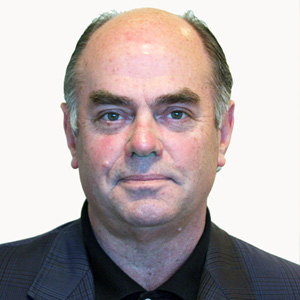
Jon Winet, Director of the Digital Studio for Public Humanities at the University of Iowa

Jon Winet has been named the inaugural director of the Digital Studio for Public Humanities at the University of Iowa.

The new Studio is a campus-wide initiative based in the Main Library that will encourage and support public digital humanities research and scholarship by faculty, staff, and students, including those involved in “Public Humanities in a Digital World,” one of the interdisciplinary faculty “clusters” that have been established so far under the UI Cluster Hire Initiative.

Provost P. Barry Butler Professor stated in a note to faculty late last week:

“Winet has long been a strong advocate and practitioner of public digital humanities and art. Many of you may know him as one of the driving forces behind the online art and literature project The Daily Palette. He directs The University of Iowa UNESCO City of Literature Mobile Application Development Team, which last fall launched ‘City of Lit,’ an iPhone app that highlights Iowa City’s rich literary history. He has engaged in a series of collaborative projects around politics, art, language, and image in the Information Age, including ‘Novel Iowa City,’ an experimental community writing project created and presented via Twitter during the 2011 Iowa City Book Festival. He is currently in pre-production on ‘First in the Nation,’ a New Media documentary project on the run-up to the 2012 Iowa Caucuses. In 2007, he received the UI President’s Award for State Outreach and Public Engagement.”

The Libraries is excited to have the Digital Studio located on the first floor of Main Library and we look forward to partnering with Jon and others on this exciting initiative. You will hear more about the Digital Studio in the months ahead, as it gets up and running under Jon’s leadership. Welcome, Jon!

Iowa City Book Festival seeks volunteers – July 16 & 17

The Iowa City Book Festival is seeking volunteers Saturday, July 16 and Sunday, July 17 to direct visitors, assist authors and work in the information booth.

For a complete list of volunteer needs and to sign up to volunteer, see http://www.iowacitybookfestival.org/volunteers-2.

See the Iowa City Book Festival schedule of events at http://www.iowacitybookfestival.org. For more information, contact festival co-directors Kristi Bontrager at kristi-r-bontrager@uiowa.edu and Greg Prickman at greg-prickman@uiowa.edu.

Civil War crowdsourcing project goes viral

Woo, hoo! We’ve been slashdotted.

This is when a popular website (in this case, Reddit.com, an enormous online community where contributors share web content that others may find interesting, enlightening, etc.) links to a smaller site (in this case, our Civil War Diaries transcription project) causing a huge influx of web traffic that overwhelms the site.

Despite the temporary collateral damage caused to the rest of the Iowa Digital Library, we love that the site is getting so much attention. Our staff is busily upping the RAM on the server and doing all they can to accommodate this onslaught of traffic. (One administrator describes the effort as putting a bandaid on a large flesh wound.) Today we’ve had more than 15,000 visits and more than 30,000 page views as of 3 p.m., where typically we might have 1,000. As someone Haiku’d in the Reddit comments:

Reddit the giant
Wants to pet the small website
Squishes it instead

Transcription is an expensive and laborious process, but the Internet allows us to experiment with “crowdsourcing,” or collaborative transcription of manuscript materials, in which members of the general public with time and interest conduct the transcription. We were inspired by crowd-sourcing efforts like Zooniverse, which enlists “citizen scientists” to help transcribe historic data. But unlike such well-heeled efforts, we lacked a stock of computer programmers or specialized software to manage the job. Instead, we opted for the experimental, low-tech route. Our crack webmaster wrote some PHP code that pulled diary pages into the transcription site, she added a form and some navigation, and just like that the site was born. It’s a homegrown solution that requires staff members to check the transcriptions for accuracy and add them manually to the digital collection.

The end result? A more useful and user-friendly resource, allowing full-text searching of the diary entries, along with easier browsing and reading. Now that an actual crowd has found our crowdsourcing project, we’re well on our way to making this goal a reality.

Nicole Saylor
Head, Digital Library Services