During the month of Open Access week (October 19-25) we will be highlighting a number of guest posts from University of Iowa Faculty and Staff who have personal experience making their work Open Access. We appreciate their contributions.
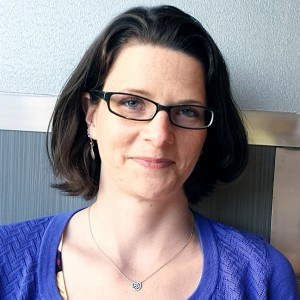
The second guest post is by Frederick Domann, PhD; Director, Molecular & Cellular Biology Graduate Program; Co-director, Radiation and Antioxidant Enzyme Core Service; Co-director, Free Radical Cancer Biology Program; Professor of Radiation Oncology; Professor of Pathology, Surgery
There is little doubt that the open access (OA) model for publishing scientific literature has revolutionized the academic approach to publishing and the publication industry itself. Since the advent of OA publishing there has been an exponential proliferation of OA journals which currently number greater than 10,000 (https://doaj.org). I personally receive countless requests to serve on the editorial boards of these journals which I typically ignore and promptly delete. Academic institutions have embraced the OA model since traditional journals can cost as much as $20,000 per year for an institutional subscription. Indeed, universities such as the University of Iowa offer incentives in the form of payment of publication fees for their faculty to publish in OA journals. Indeed my trainees and I have benefitted from these incentives and have published several papers in OA journals within the last several years. One of these (http://www.ncbi.nlm.nih.gov/pubmed/24672806), published two years ago in the reputable Dove Press journal Hypoxia is currently the most viewed and downloaded paper since the journal’s inception. Clearly this has provided a brilliant showcase for our work and we have benefitted from the university’s OA policy. Open access allows free and ready access to its readers, while passing the costs of production and publication off to the contributors of literary content. And while this “pay to publish” approach opens opportunities for investigators to quickly and broadly disseminate their findings, OA publishing also has a dark side. This dark side is manifest in the proliferation of “predatory” journals that accept work that may be of questionable quality and significance. Such journals should be actively avoided and are identified on Beall’s list of predatory journals which can be found at http://scholarlyoa.com/publishers/. One of the perils of the pay to publish model are the presentation of opportunities for blatant conflicts of interest in the publication process http://www.nejm.org/doi/full/10.1056/NEJMc1307577). For example, pharma businesses might take advantage of the lower rejection rates and relaxed journal standards in OA journals to publish prematurely or incompletely to promote the interests of their company. Another troubling aspect of the proliferating OA model is the pressure to provide qualified competent reviewers from a limited pool of knowledgeable experts, the demands on whose time are typically already overextended, to review the avalanche of submitted manuscripts. Since the material in OA journals is disseminated digitally there are essentially no page limits and so the numbers of papers and rate of papers published is astronomical. Already more than 2 million papers are published in the greater than 10,000 OA journals mentioned above. Almost certainly the rigor of review that is afforded these papers is on average substantially below that of traditional journals. These acknowledgements appear to have led to an improved perception of the value of publications in traditional journals for the communication of highly reliable and reproducible results. Other digital resources such as ArXiv (http://arxiv.org/) enable investigators to disseminate their own findings before they are peer-reviewed in pre-print form known as e-prints, so the information can be distributed to interested parties without delays or compromising the quality of the finally published work. And while ArXiv may have downsides of its own (http://mathoverflow.net/questions/65090/downsides-of-using-the-arxiv) it may present a viable alternative to OA publishing, and at minimal or no expense. Hopefully this discussion highlighting the two-faced nature of OA publishing will leave the reader with a better sense of risks and benefits of both publishing in and reading from OA journals.
The University Libraries is seeking nominations for the Arthur Benton University Librarian’s Award for Excellence. Funded by a generous endowment, this prestigious award acknowledges a library staff member’s professional contributions in the practice of librarianship, service to the profession, scholarship, or leadership which has had a significant impact or innovation to the operations of the Libraries or the University of Iowa. The library staff member will receive $1,500 to be used for professional development activities.
Many graduate students and faculty work closely with our librarians to locate and procure curriculum and research resources. The Benton Award is a great opportunity to recognize that collaborative relationship.
*The University Libraries includes the Main Library, Hardin Library for the Health Sciences, and the Art, Sciences, Business, Engineering, and Music libraries. (Professional staff in the Law Library and other campus departmental library staff are not eligible.)
During the month of Open Access week (October 19-25) we will be highlighting a number of guest posts from University of Iowa Faculty and Staff who have personal experience making their work Open Access. We appreciate their contributions.
The first guest post is by Associate Professor, Rachel Marie-Crane Williams, Ph.D. University of Iowa, Departmental Executive Officer of the Department of Gender, Women’s and Sexuality Studies, Faculty member of the School of Art and Art History/Media, Social Practice, and Design
Open Access is the way that new knowledge is made…easier
October 19-25 is International Open Access Week all across the world. As a scholar I have directly benefited from participating in the Iowa Research Online open access platform. One of my articles has been downloaded over 12,000 times. The ripple effects of this can be seen easily on Google Scholar. That particular article is cited numerous times by other people who are pursuing similar questions in countries like Albania and Spain. If not for open access and my participation in the Iowa Research Online program I doubt those scholars would have found my work.
As a public servant at a public university I feel that an open access system for all of the scholarship that we produce is important. Print journals are expensive to produce, subscriptions are costly for individuals and libraries, and people without access to the journal can’t use the information. Ultimately as researchers we want to engage in conversations with other people about our work and trends or ideas in our field. My own research often appeals to people who are not directly connected with a university. It gives me great pleasure to know that they can still find and read my scholarship even if they can’t afford a subscription to a journal, they live in a place where the journal is not available, or they are not aware of what journals to consult in order to find information about a particular topic.
We are always standing on the shoulders of giants. Climbing up to those places in order to survey the world stretched out before us should be easy, free, and independent of our connections in academia. It is important to find what came before us with regard to a history of ideas. I wrote my dissertation at a time when printed journals were still the way that scholarship was disseminated. Google was still five years away from launching Google Scholar. As a doctoral student I traveled to university libraries all over the country to browse stacks, read journals, and find information. It was a slow, expensive, and arduous process. Now, I can simply use the internet to find information from the comfort of my own couch. With open access I can still read that information even if my university does not subscribe to the journal or I don’t have funding to purchase the articles. Having easy and free access to the ideas of others can spark our creativity, help us formulate new ideas and approaches, keep us from being redundant, and make collaboration easier, thus creating new knowledge.
Open access also levels the playing field. As an educator I care deeply about equality. Students from schools with small budgets or in developing countries can access the work of others without barriers As a teacher, it broadens the possibilities of ideas and research that I can share with students. Nothing is more frustrating than finding an abstract that seems relevant to your lecture only to discover you can’t access it without paying for it. This has real relevance for my colleagues in medicine where people’s lives might depend on access to the latest research about procedures or pharmaceuticals.
If we are committed to making new knowledge and advancing the act of discovery we must all commit ourselves to open access and to the possibilities it offers to everyone who has the technological ability to surf the web.
The University of Iowa Libraries’ Preservation and Conservation presents:
The William Anthony Conservation Lecture Thursday, October 8, 2015, 6:00 p.m.-8:00 p.m. Adler Journalism Building, E105 Gary Frost, guest lecturer “Great Legacy, Great Prospects — The Historical Bookbinding Model Collection at Iowa”
A reception will follow. All UI students, faculty, staff and Iowa City area community members are invited to attend.
At this event, you can expect to learn about the art and craft of bookbinding over the centuries. Discover the University of Iowa Libraries’ unique role in helping to document and teach these techniques.
The Main Library Learning Commons invites you to attend the faculty workshop Talk About Just Living: Classroom Strategies for Social Justice Learning in the Public Sphere on Friday, September 18th from 1:30-4:30pm.
Take advantage of the second annual Theme Semester Just Living in Spring 2016 to infuse your assignments with social justice issues that will resonate with your students. Give students the opportunity to engage in dialogue about social justice in public using your curriculum as their voice. Faculty can use assignments and projects to encourage students to engage with social justice issues and to learn what it means to participate in a public conversation.
This workshop will provide instructors the opportunity to reimagine how they can incorporate social justice into their curriculum and learn about opportunities for their students to showcase their work in public spaces. Participants will:
Discover opportunities and resources available for showcasing student work connected to the spring 2016 theme semester Just Living.
Learn how faculty and campus partners have promoted student work in public using the Learning Commons.
Revamp a current or previous assignment into something that can be displayed or performed in public.
Infuse social justice themes into a current or previous assignment.
Learn how to use the Just Living website to market courses related to social justice.
Experienced guest instructors will share their insights and experiences in using the Learning Commons to promote their students’ work and will demonstrate future opportunities on campus to showcase student work publicly. Participants will leave with a variety of project ideas for classroom use and will have the opportunity to return for an optional, drop in working session the following week where colleagues from the University Libraries, Learning Commons, and Office of Teaching, Learning, and Technology will be available for one-on-one consultation.
The workshop will be held in Group Rooms 1103/1105 in the Main Library Learning Commons on Friday, September 18th from 1:30-4:30pm with an optional, drop-in work session on Friday, September 25 from 1:30-4:30pm. The institute is open to all faculty and instructors. There is no cost to attend, although pre-registration to the institute is required. Please register here.
To improve findability for the journals held in the Main Library, the math collection journals are being moved from the 2nd floor to the 3rd floor and will be located adjacent to the other journals. Bookstacks staff are beginning to move these materials upstairs and in a few months you will be able to find the math collection journals in the northeast corner of the third floor. In the meantime, if you have problems locating a title, please contact the Service Desk staff on the 1st floor.
In addition to the University Holiday, Saturday, July 4th, the Pomerantz Business Library will be closed two additional Saturdays this summer: June 20th and August 1st.
Beginning January 1, 2016, WorldCat is being upgraded with a different look and feel. The University of Iowa Libraries has access to this new version of WorldCat ahead of time, to help with a smooth transition. If you encounter problems or need help with the new interface, please contact your library liaison.
Due to construction on the Main Library Exhibit Space, the north entrance to the Main Library will be closed starting May 18th. The entrance is expected to reopen on Tuesday, May 26th. The third floor Graduate Study Room will also be closed Monday-Wednesday, May 18-20.
We apologize for any inconvenience and thank you for your patience.