Skip to content
Skip to main content

Ibn Butlan’s Tacuini Sanitatis (1531)

The Maintenance of<br /><br />
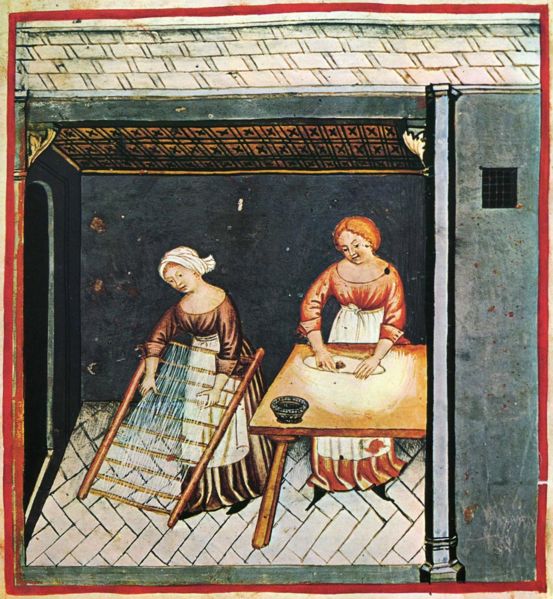
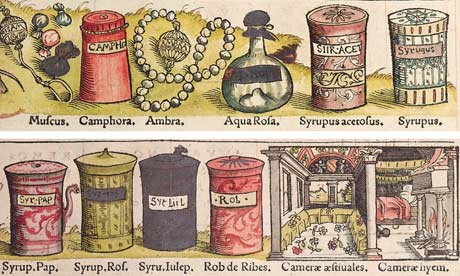
The Maintenance of Health by Ibn ButlanImage via the guardian.com, credit Royal Society

This images are from a 14th century translation of Arabic doctor Ibn Butlan, who died circa 1068. Butlan’s title roughly translates to “health report.” The report addresses the impact of nature, emotional states, daily life, and meteorological conditions on health. Butlan wrote that his book concerned “the six things that are necessary for every man in the daily preservation of his health.” These included:

1. “The treatment of air, which concerns the heart.”

2. “The right use of foods and drinks.”

3. “The correct use of movement and rest.”

4. “The problem of prohibiting excessive wakefulness.”

5. “The correct use of elimination and retention of humors.”

6. “The regulating of the person by moderating joy, anger, fear, and distress.”

Illustration from the 15th century edition of Tacuinum Sanitatis by Ibn Butlan.Wine. Image via offi.fr                                                                                                                        Making spaghetti. Image via spaghettiforever.wordpress.com
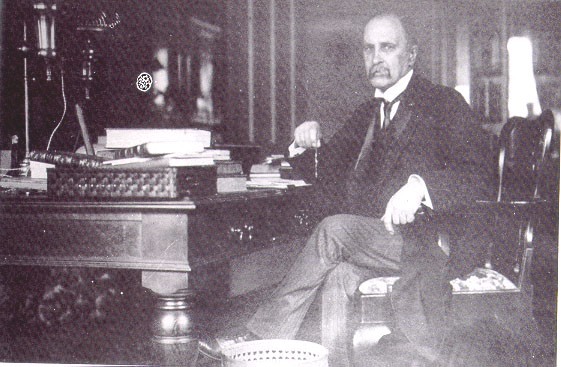
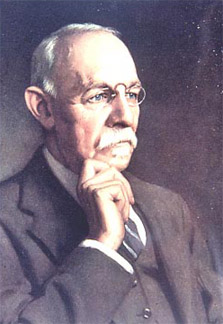
William Stewart Halsted, Father of American Modern Surgery: a retrospective

The University of Iowa History of Medicine Society invites you to hear:

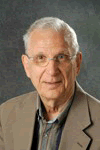
Nicholas P. Rossi, M.D.

Nicholas P. Rossi, Emeritus Professor, Department of Cardiothoracic Surgery, University of Iowa College of Medicine. Rossi will provide a fascinating look at the life and medical achievements of William Stewart Halsted, considered the father of modern American surgery.

Halsted, who lived from 1852-1922, was one of the “Big Four” professors who founded John Hopkins Hospital. Halsted was an early pioneer for anesthesia and for aseptic technique in surgery, including the use of rubber gloves. Halsted also led a fascinating personal life: he was addicted to cocaine and morphine (which were not illegal during his lifetime) and was considered eccentric by his students. Throughout his lifetime, he was responsible for several innovations and advances in his field, including:

  • Halsted’s law, which states that transplanted tissue will grow only if the host lacks that tissue
  • Halsted mosquito forceps, a type of hemostat
  • Halsted’s operation I, a procedure for inguinal hernia
  • Halsted’s operation II, radical mastectomy for breast cancer
  • Halsted’s sign, used to detect breast cancer
  • Halsted’s suture, a mattress suture for wounds which minimized scarring

Attend this lecture to learn how the major preceding events of Halsted’s time and character ushered in one of the great eras of modern medicine.

This event will be held on Thursday, February 27 from 5:30-6:30 pm in Room 401 at Hardin Library for the Health Sciences. Find out more here or contact the Rare Book Room with questions at 335-9154 or by emailing donna-hirst@uiowa.edu. Want to know more about this fascinating figure? Read about Halsted at Hopkins Medicine or see his documentary.

Literature Searching for a Systematic Review Free class Friday 10-11am

This class will focus on tips and techniques for carrying out a successful literature search in support of a systematic review.

Topics will include techniques for developing search strategies, deciding which databases to search and how to seek out grey literature for a given topic. There will also be discussion on selecting journals for hand searching, documenting search strategies, and saving and organizing references.

Our next session:

Friday, September 27th  10:00-11:00am (Location: East Information Commons, Hardin Library)

Register online or by calling 319-335-9151.

No time for a class? Contact your librarian for individual instruction.

Notes from the John Martin Rare Book Room, September 2013

HANS VON GERSDORFF (ca. 1455-1529). Feldtbuch der Wundartzney. Strasbourg: Bey Hans Schotten, 1530.

Gersdorff was a milGersdorff-149-lxxii-001itary surgeon who gained wide experience during forty years of campaigning and was an expert in the treatment of battlefield injuries. His work covers anatomy, surgery, leprosy, and glossaries of anatomical terms, diseases, and medications. Gersdorff emphasized a well-founded knowledge of anatomy because the surgeon was frequently called on to deal with extensive bodily trauma. He derived his anatomy from Arabic authors and works of Guy de Chauliac. The surgical portion of the work was devoted to wound surgery and covers the methods he employed for extracting foreign objects and amputating limbs. He used a tourniquet to control bleeding when amputating and covered the stump with the bladder of a bovine to help control postoperative hemorrhaging. Of special interest are the sedatives and analgesics, although he appears not to have used them in his practice. The section on leprosy is given over largely to remedies for a disease he did not believe could be cured.


Univ. of Iowa College of Medicine Historical Photographs

University of Iowa College of Medicine Historical Photograhs are now available through the Iowa Digital Library.  The collection includes 194 images from 1844-2010.  The collection is a composite of several collections held at the Hardin Library including two boxes of lantern glass slides from ca. 1910.  The original slides are now housed in the University Archives.  Work to document and compile these images has been active in the Rare Book Room since 2012.  It is with great pleasure that we can now make these images broadly available.

Donna Hirst, Curator
John Martin Rare Book Room   June 26, 2013
comU of Ia College of Medicine images-1848-01 small jpegcom-1901-03 small

Notes from the John Martin Rare Book Room

Notes from the John Martin Rare Book Room,  June 2013

STEVEN BLANKAART (1650-1702). Anatomia reformata, sive Concinna corporis humani dissection… Leiden, 1695.

Blankaart, Dutch pharmacist, physician, and anatomist, initially practiced pharmacy and later medicine in Amsterdam. He studied medicine and philosophy at Franeker where he graduated in 1674. He was a prolific writer and was the first to edit and publish a medical journal in Holland. Blankaart is also known for his use of the injection technique to study the details of blood vessel distribution. This technique was first suggested by Leonardo da Vinci and later used by such prominent anatomists as Graaf, Swammerdam, and Ruysch. Blankaart first published this popular anatomical text at Leiden in 1687. In this comprehensive work, he cited nearly seventy authors whose works he had consulted. The finely engraved plates in this profusely illustrated work attest to Blankaart’s keen observational powers.  A plate depicts some of the apparatus used in the embalming process.

Blankaart-676-fp-001