Skip to content
Skip to main content

News from the John Martin Rare Book Room – Activities of Daily Living

Activities of Daily Living–

While fads and fancies in health and medicine come and go, the underlying essentials of wellbeing, including, rest, nutrition, exercise, and moderation have gone unchallenged for millennia.
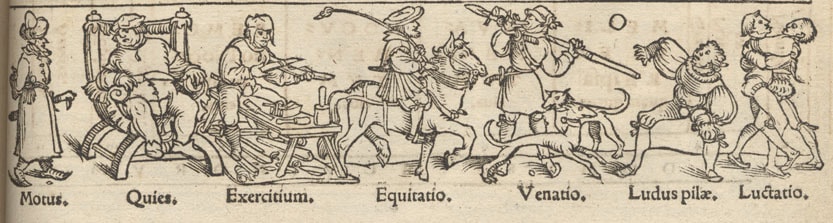
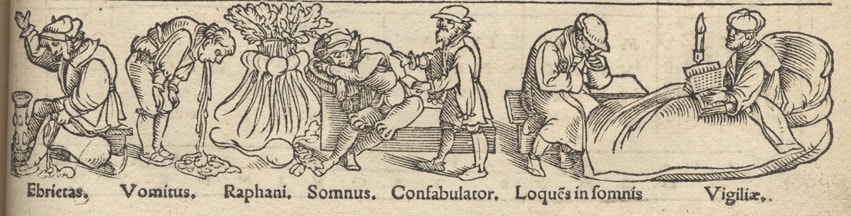
One of the more popular works outlining keys to basic fitness is the Tacuini sanitatis by the eleventh century Iraq physician, Ibn Butlān (d. ca. 1068). Before the age of printing, Ibn Butlān’s writings were incorporated into stunning illuminated manuscripts.  However, the early printed editions are attractive in their own way.

This 1531 edition, for instance, shows the early use of tabular formatting to codify items such as trees, foods, and flowers. However, its most charming feature is the fanciful set of miniature woodcuts showing everyday activities involved in the maintenance of health.

Ibn Bultān practiced in Mossul, Egypt, Constantinople and Antioch where he entered a monastery and converted to Christianity.

The John Martin Rare Book Room also includes facsimiles of early brilliantly colored codices based on Ibn Butlān’s texts.


Iowa City Flood Digital Collection Now Online

The University of Iowa Libraries is pleased to announce that the Iowa City Flood Digital Collection is now available for viewing online.

The collection uses mixed multimedia, including photographs and audio interviews, to document the flood that many on campus are still feeling the effect of today, over six months later.

The collection can be viewed at: http://digital.lib.uiowa.edu/flood

Notes from the John Martin Rare Book Room

L’orthopédie

The simple image of a crooked tree splinted to a wooden pole is one of the most recognizable symbols in medicine. Its first appearance was as an engraving in Andry de Bois-Regard’s 1741publication, L’orthopédie; ou, “L’art de prévenir et de corriger dan les enfans, les difformités du corps*

*Orthopaedia: or the Art of Correcting and Preventing Deformities in Children.

In naming his book, Andry (1658-1742) coined the word “orthopaedics.”

Born in Lyon, Andry was a physician and administrator at the College of Medicine in Paris but was eventually forced to resign as dean because of his spiteful and irascible nature. Much of his scorn was directed at the barber-surgeons of his day whom he forbade to operate unless in the presence of a physician.

Andry’s earlier and somewhat curious work on worms in humans (a book also in the Martin collection) while earning him the title of the “father of parisitology” in some circles, also prompted his detractors to label him the “worm man.”

L’orthopédie is more overview than original. It includes sections on surface anatomy, postural and limb deformities and abnormalities of the head. The accompanying engravings give the work an added measure of charm.

JOHN MARTIN RARE BOOK ROOM


Notes from the Rare Book Room – Bleeding by the Numbers

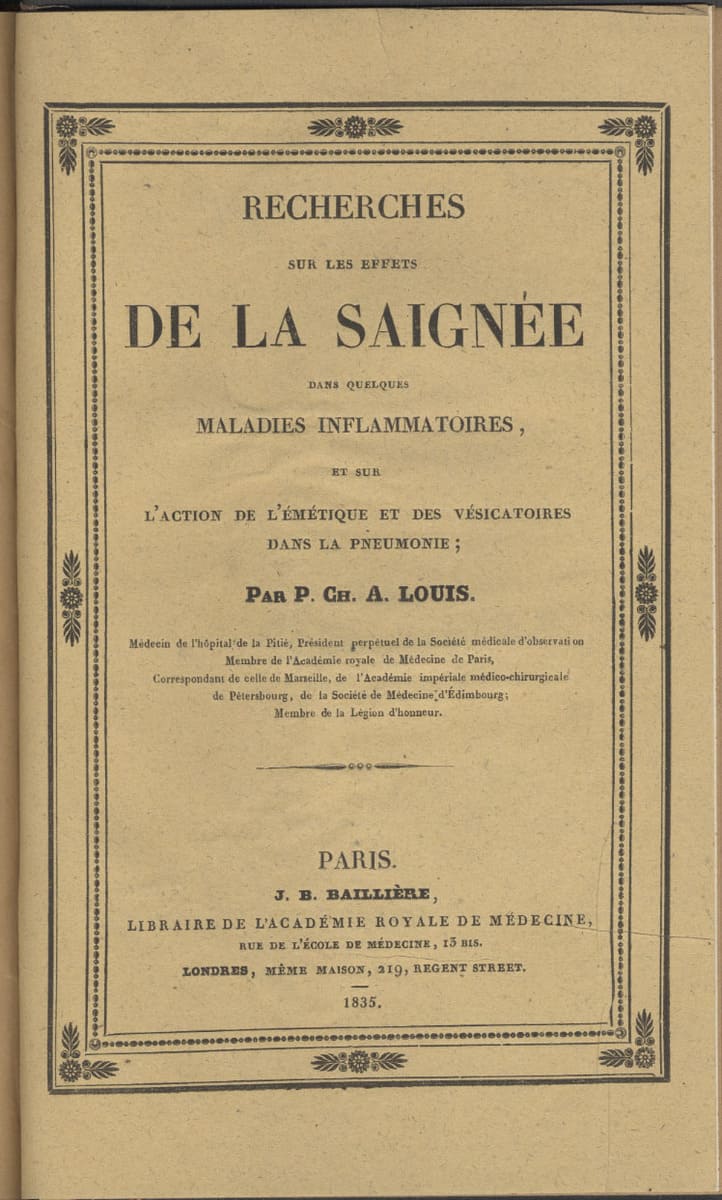
Pierre Louis’ 1835, Recherches sur les effets de la saignée dans quelques maladies inflammatoires, et sur l’action de l’émétique et des vésicatoires dans la pneumonie is one of the less impressive looking books in the John Martin Rare Book Room, but it was instrumental in laying the foundation for what we now term, “evidence based medicine.” For over 2000 years the practice of bloodletting (phlebotomy) was a mainstay of therapeutics. In fact it is difficult to identify a disease for which this practice was not recommended at some time. Bleeding had its roots in the classical Hippocratic/Galenic medical paradigm which held that the cause of illness was the result of an imbalance of humors (blood, phlegm, bile, and black bile). Just as important as the volume of blood removed was the site of the bleeding; some of the earliest medical illustrations depict the most appropriate bleeding points for various ailments. When Pierre Louis (1787-1872) placed the practice under statistical scrutiny, using “la methode numerique” he was thus swimming against the tide of centuries of tradition and authority. In Recherches sur les effets de la saignée…, Louis measured the effectiveness of bloodletting in pneumonia in 77 previously healthy patients and came to the general conclusion that bloodletting had no benefit and was even deleterious in certain groups. Just as importantly, Louis lays down in a few simple sentences the rationale large scale evaluation and in so doing paves the way for the modern clinical trial:

“Let us further remark that the objection made to the numerical method, to wit, the difficulty or impossibility of forming classes of similar facts, is alike applicable to all the methods that might be substituted. It is impossible to appreciate each case with mathematical exactness, and it is precisely on this account that enumeration becomes necessary. By so doing, the errors (which are inevitable) being the same in the two groups of patients subjected to different treatments, mutually compensate each other, and they may be disregarded without materially affecting the exactness of the results”

Louis’ methods and conclusions were lambasted by the medical establishment and it was several decades before bloodletting stopped for good and statistical analysis found its way into mainstream medical thinking.

UI Professor to discuss history of health reform in U.S.

Prepare to vote using insider knowledge!

This is your chance to quickly review the history of Health Care Policy interactions with U. S. Elections and what the two current Presidential candidates’ proposals will potentially mean for health care in the U.S. in the next four to 8 years.

Professor of History Colin Gordon’s second book, Dead on Arrival: The Politics of Health in Twentieth Century America is a history of health care policy in the United States across the twentieth century. Please plan to join the University of Iowa History of Medicine Society, Tuesday evening, October 28th, as Professor Gordon presents, Raising the Dead?  History, Health Reform and the 2008 Election.”  Professor Gordon will provide a brief background on health care policy and its interaction with Presidential politics, prior to facilitating what we hope will be a lively discussion by all those in attendance.

Date and Time:  5:30 to 6:30, Tuesday, October 28th

Place: Hardin Library for the Health Sciences, Information Commons, 2nd floor. 

For more information, see:  http://hosted.lib.uiowa.edu/histmed/index.html

Come, learn, discuss, opine!

Notes from the Rare Book Room — The Nuremberg Chronicle

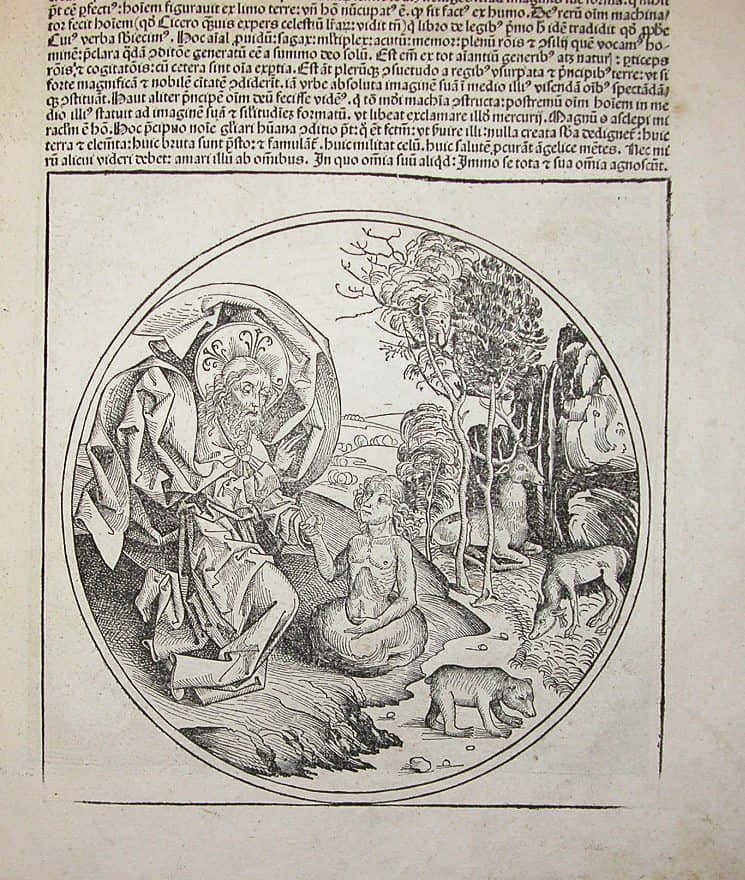
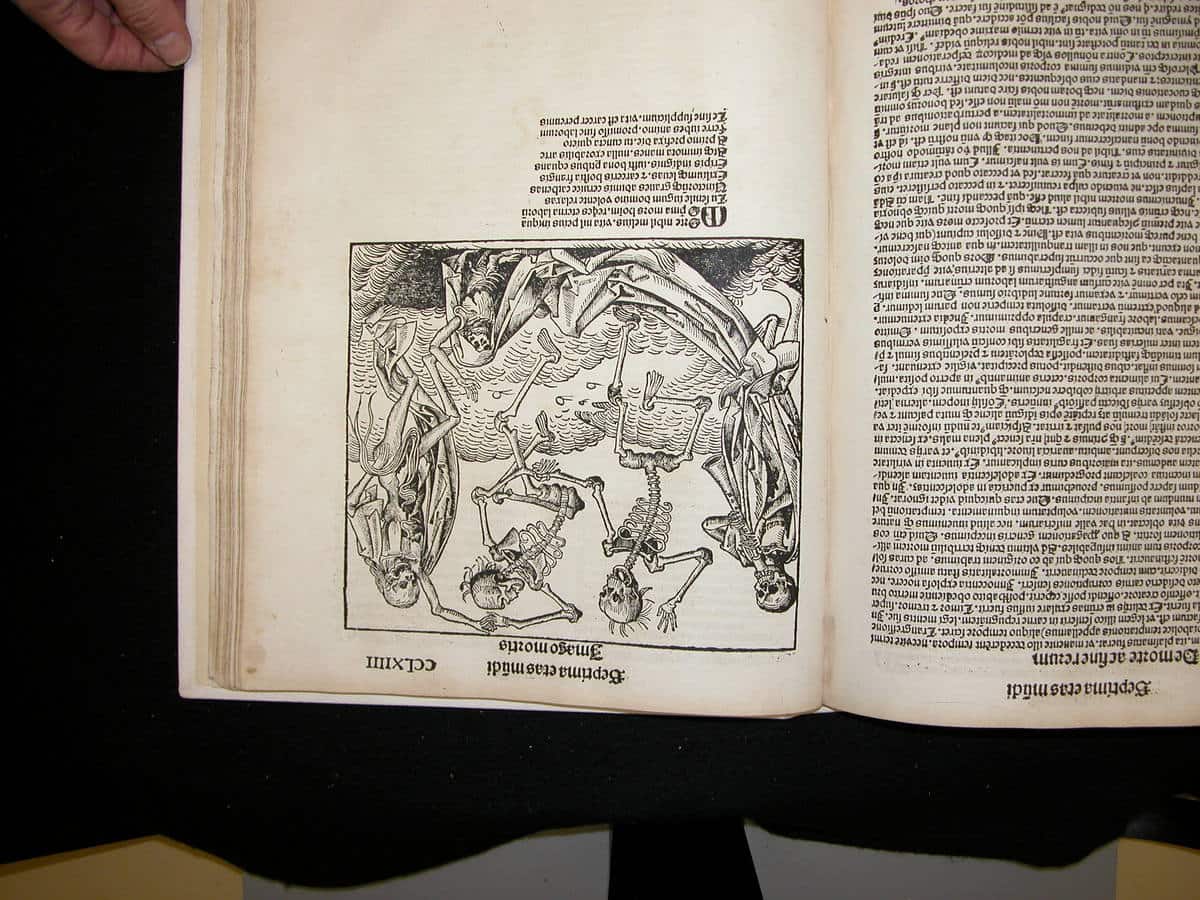
While the production of the Guttenberg Bible in the mid 15th century constitutes the most important milestonetemp in the history of printing, the happy marriage of moveable type and mechanized illustration is best represented by the 1493 book, Liber Chronicarum, more popularly known as the Nuremberg Chronicle. The University Libraries is fortunate to have not one but two copies of this splendid work, both of them in Latin (A German version was published later the same year). The first is located in the Special Collections Department at the Main Library while the second resides in the John Martin Rare Book Room. The text (a seven part history of the world) is the work of Hartmann Schedel (1440-1514), a German physician and scholar, while the hundreds of woodcuts come from the workshop of Michael Wolgemut (1434 – 1519), a German printmaker. 
Birth of Adam
Birth of Adam

It is probable that many of the illustrations were the work of Albrecht Dürer (1471-1528) one of the most important artists of the renaissance. Because wood-cut blocks (like metal type) employ a raised printing surface (unlike engravings), the metal type and the wood blocks can be set in the same printing chase. The impressions made using this arrangement allow text and illustration to be shown side-by-side. The Nuremberg Chronicle contains over 645 distinct illustrations (with many illustrations used more than once), including a variety of biblical scenes, stylized cityscapes, iconic genealogic trees, battle depictions, and maps (the New World being conspicuous by its absence). The Hardin Library’s copy is available for examination in the rare book room.

Wiley Encyclopedia of Clinical Trials – new e-book

The Wiley Encyclopedia of Clinical Trials is now available online.  The encylopedia is a compendia of basic concepts, methodologies, and applications in clinical trials.

Topics include:

  • overview & basic statistical concepts
  • concepts of design and analysis of clinical trials
  • methodologies and issues for clinical data analysis

Faculty Proxy for Interlibrary Loan

On August 1st, faculty members will be able to authorize a designated person (proxy) to request and pick-up materials in their name for Interlibrary Loan materials. Proxies are able to submit requests online as well as in person. An online request form is available at http://www.lib.uiowa.edu/hardin/illa.html. Look for the “Interlibrary Loan and Document Delivery Request System” box.

All notices will be sent to the faculty member and to the proxy.

A list of items checked out or requested via the Proxy card can be viewed by logging in to the Interlibrary Loan/Document Delivery system.

To access the proxy account, use the three sets of three numbers from the pink barcode number on the Circulation-issued proxy card as the Hawk ID. The password will be emailed to you shortly after submission of this form.

If you later wish to have the account cancelled, please contact interlibrary loan staff to cancel the account and prohibit any further checkouts or requests.

Hardin Library Staff offer their expertise on Iowa Public Radio

Talk@12, an Iowa Public Radio news program that hosts a mix of guests and newsmakers across the state, recently interviewed Linda Walton, Director of Hardin Library, and Janna Lawrence, Assistant Director for Collections & Outreach. Their conversation with the radio show’s host, Katherine Perkins, addresses finding reliable medical information online. Originally aired on July 7, this show is now accessible via podcast by visiting Talk@12’s website.