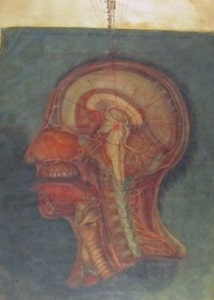
 JACQUES FABIAN GAUTIER D’AGOTY (1717-1785). Anatomie de la tête. Paris: Chez le sieur Gautier, M. Duverney, Quillau, 1748.
Gautier, a French printmaker, was an assistant to Le Blon and, like Ladmiral, claimed the color printing process as his own. Gautier published some ten collections of colored plates of various portions of the anatomy, and he was the first person to print anatomical plates in color on a large scale.
Choulant writes that “his anatomic illustrations . . . impress the critical observer with their arrogance and charlatanry and do not recommend themselves to the student of anatomy either for their faithfulness and reliability or for their technique” (Choulant-Frank, p. 270).
The dissections and preparations for the eight large figures in this atlas of the anatomy of the head were prepared by Joseph Guichard Du Verney, and some of the plates are among the most elaborate produced by Gautier, especially notable for the intricate network of blood vessels which are meticulously indicated by direct color printing.
This extremely rare work is an important piece of book and anatomic illustration. You may view this work in the John Martin Rare Book Room, Hardin Library for the Health Sciences. Make a gift to the Hardin Library for the Health Sciences by donating online or setting up a recurring gift with The University of Iowa Foundation.
 Amy Blevins, Clinical Education Library at Hardin Library for the Health Sciences and adjunct faculty in the Department of Internal Medicine edited Curriculum-Based Library Instruction: From Cultivating Faculty Relationships to Assessment. The book is part of the Medical Librarian Association Book Series published by Rowman and Littlefield.
 Chris Childs, Clinical Education and Outreach Librarian, has been elected President-Elect of the


![An inmate of Bethlem Hospital in 1814, who has been identified as William Norris, from Jean-Étienne Dominique Esquirol's Des maladies mentales. Brussels: Libraire médicale et scientifique de JB Tircher, 1838 [Institute of Psychiatry Historical Collection h/Esq]](http://www.kingscollections.org/_assets/components/archiosgallery/connector.php?action=web/phpthumb&w=225&zc=C&far=C&q=85&src=%2Fmedia%2Fexh_spc%2Fimages%2F006971%2Fpatient1.jpg)

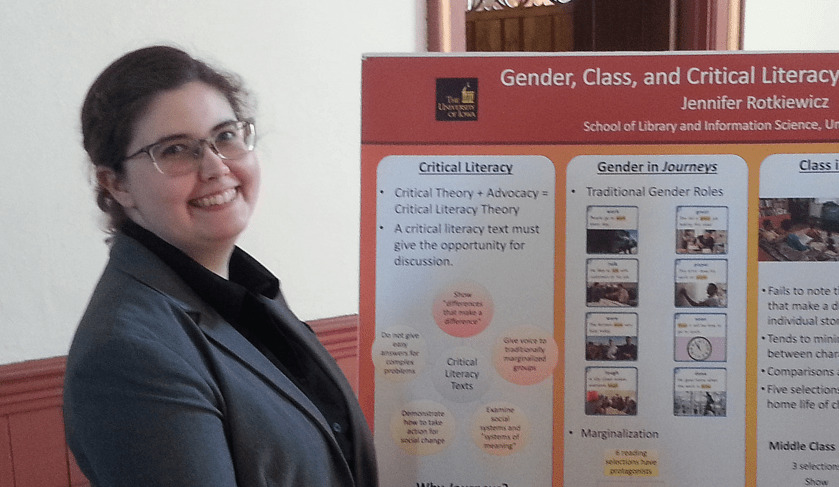
 [/ezcol_1half] [ezcol_1half_end]Alyssa Grigsby will be graduating with a Master of Arts in Library & Information Science. She is currently searching for a librarian position in an academic library.[/ezcol_1half_end]
 [/ezcol_1half] [ezcol_1half_end]Madde Hoberg will be graduating with a BA in English, Creative Writing track, and a BA with honors in Gender, Women’s, and Sexuality Studies.[/ezcol_1half_end]

 [/ezcol_1half] [ezcol_1half_end]Mitch O’Neill is graduating with a BS in Human Physiology and a BA in Spanish. He plans to attend University of Iowa’s Carver College of Medicine in the fall.[/ezcol_1half_end]

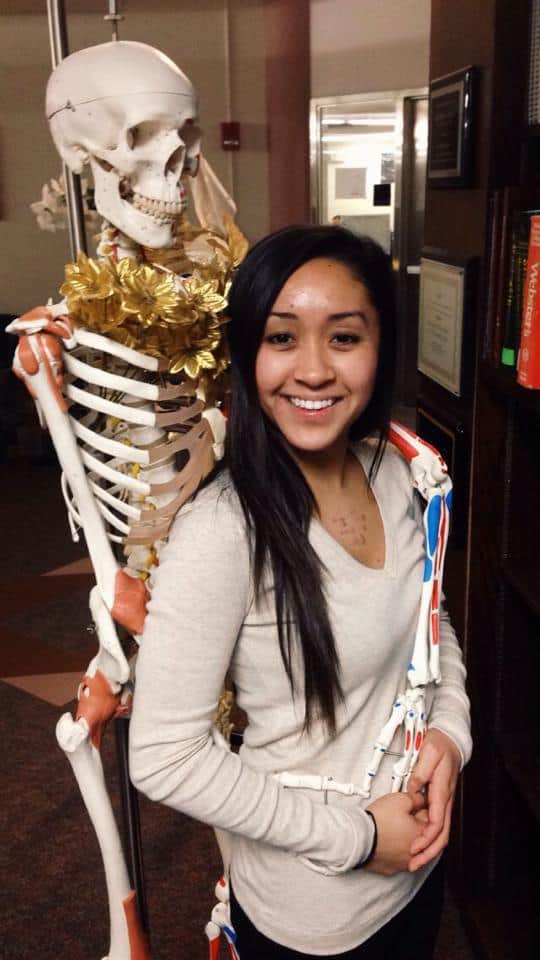
 [/ezcol_1half] [ezcol_1half_end]Liz Zaretsky will be receiving a BA in English and a BA in Political Science with honors. She has been accepted for a position in the White House Office of Digital Strategy.[/ezcol_1half_end]