An Invitation to Explore the Past Visit us before, during or after the holidays and bring a friend. To insure that the room is open email donna-hirst@uiowa.edu or call 335-9154.
Category Archives: Notes from the Rare Book Room
Notes from the John Martin Rare Book Room
Nicholas Culpeper (1616–1654) was an English botanist, herbalist, physician, and astrologer. His published books, The English Physician (1652) and the Complete Herbal (1653), contain a rich store of pharmaceutical and herbal knowledge. Culpeper spent the greater part of his life in the English outdoors cataloging hundreds of medicinal herbs. He criticized what he consideredContinue reading “Notes from the John Martin Rare Book Room”
Notes from the John Martin Rare Book Room, Sept 2010
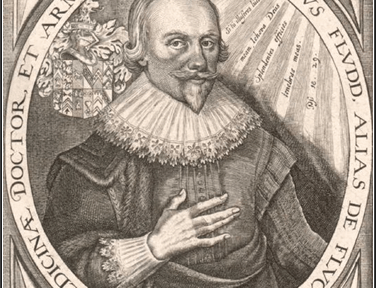
What Goes Around, Comes Around Robert Fludd (1574-1637) was a prominent English Paracelsian physician, astrologer,and mathematian. He was the first person to discuss the circulation of the blood, and did in fact arrive at the correct conclusion. His conclusion was based on the macrocosm-microcosm analysis, a theory in which all occurrences in the microcosm (man)Continue reading “Notes from the John Martin Rare Book Room, Sept 2010”
Notes from the Rare Book Room, July 2010
Thursday, September 23, 2010, 5:30-6:30 Scamman, Franklin, M.D. Prof. Dept. of Anesthesiology, University of Iowa The Anesthesia for the First Heart Transplant: Cape Town 1967 Thursday, October 28, 2010, 5:30-6:30 George W. Beran, D.V.M., Ph.D., Prof. Emeritus Vet. Microbiol. & Prev. Med., ISU One Health: Human & Animal Rabies, an issue in human & animalContinue reading “Notes from the Rare Book Room, July 2010”
Notes from the Rare Book Room
Since 1971 EDWIN HOLTUM has worked for the Hardin Library for the Health Sciences, the University of Iowa Libraries and as Curator of the John Martin Rare Book Room. He retires June 30, 2010. Ed Holtum’s retirement party is 3:00-4:30 Wednesday, June 30, 2010 in the 1st floor Staff Lounge of the Main Library. YouContinue reading “Notes from the Rare Book Room”
Notes from the Rare Book Room: Healing by laying on of hands, 1628-1683
Although born in Ireland, Valentine Greatrakes was English, his ancestors having settled there in the late sixteenth century. In 1641, the family was forced to flee England during an Irish revolt. He was privately educated in theology and the humanities in Devon where the family lived. When he was nineteen, Greatrakes returned to Ireland, determinedContinue reading “Notes from the Rare Book Room: Healing by laying on of hands, 1628-1683”
Notes from the John Martin Rare Book Room; James Medicinal Dictionary
ROBERT JAMES (1705-1776). A medicinal dictionary. 3 vols. London: T. Osborne, 1743-1745. James studied at Oxford and was granted his M.D. from Cambridge by royal mandate in 1728. He settled in London after practicing at Sheffield, Lichfield, and Birmingham. A successful physician, he became quite wealthy and famous when his “fever powder” became the most popular nostrumContinue reading “Notes from the John Martin Rare Book Room; James Medicinal Dictionary”
Notes From the Rare Book Room –A Private Pestilence
Puerperal fever, often called childbed fever, ravaged obstetrics patients in the U.S., Britain, and Europe throughout the 18th and 19th centuries. Its symptoms included severe abdominal pain, fever, and debility and carried a mortality rate as high as seventy percent during some epidemics. Even though the greatest incidences occurred in close-quartered “lying-in hospitals,” (state-supported maternityContinue reading “Notes From the Rare Book Room –A Private Pestilence”
Notes from the Rare Book Room “Anatome animalium”
Gerardus Blasius (1626?-1692?). Anatome animalium. Amsterdam, 1681. Although Blasius was a practicing physician in Amsterdam, his real interest lay in anatomy and, in particular, comparative anatomy. He worked closely with philosophers and scientists such as John Locke, Jan Swammerdam, and Niels Stensen to promote the study of anatomy and to widen the availability of bothContinue reading “Notes from the Rare Book Room “Anatome animalium””
Notes from the Rare Book Room “Histoire de medicine”
Daniel Le Clerc (1652-1728). Histoire de la médecine. Nouvelle ed. Amsterdam: Aux depens de la Compagnie, 1723. Swiss physician, Daniel Le Clerc was born at Geneva and studied medicine at Montpellier and Paris. He received the M.D. degree at Valencia in 1670 and returned to Geneva to enter private practice. Although successful as a physician,Continue reading “Notes from the Rare Book Room “Histoire de medicine””