 The Hardin Library for the Health Sciences extends a hearty welcome to Donna Hirst, its newest staff member. Donna is a University of Iowa librarian of longstanding, having worked in the Main Library and Law Library in the area of automation for over 25 years. In fact, Donna spearheaded the University Libraries first automation efforts and subsequently guided its progress toward the library information system now in use by University faculty, staff, and students. Donna holds the M.A. degree in Library and Information Science from the University of Iowa and the Master of Public Health Degree from the University of Oklahoma. Her duties at the Hardin Library center largely on the collections and services of the John Martin Rare Book Room as she prepares to take over responsibility for this important resource when the current Curator, Ed Holtum, retires at the end of June. When not enjoying books and reading, Donna enjoys travel, attending plays, and, “stalking her children.”
Notes from the John Martin Rare Book Room; James Medicinal Dictionary
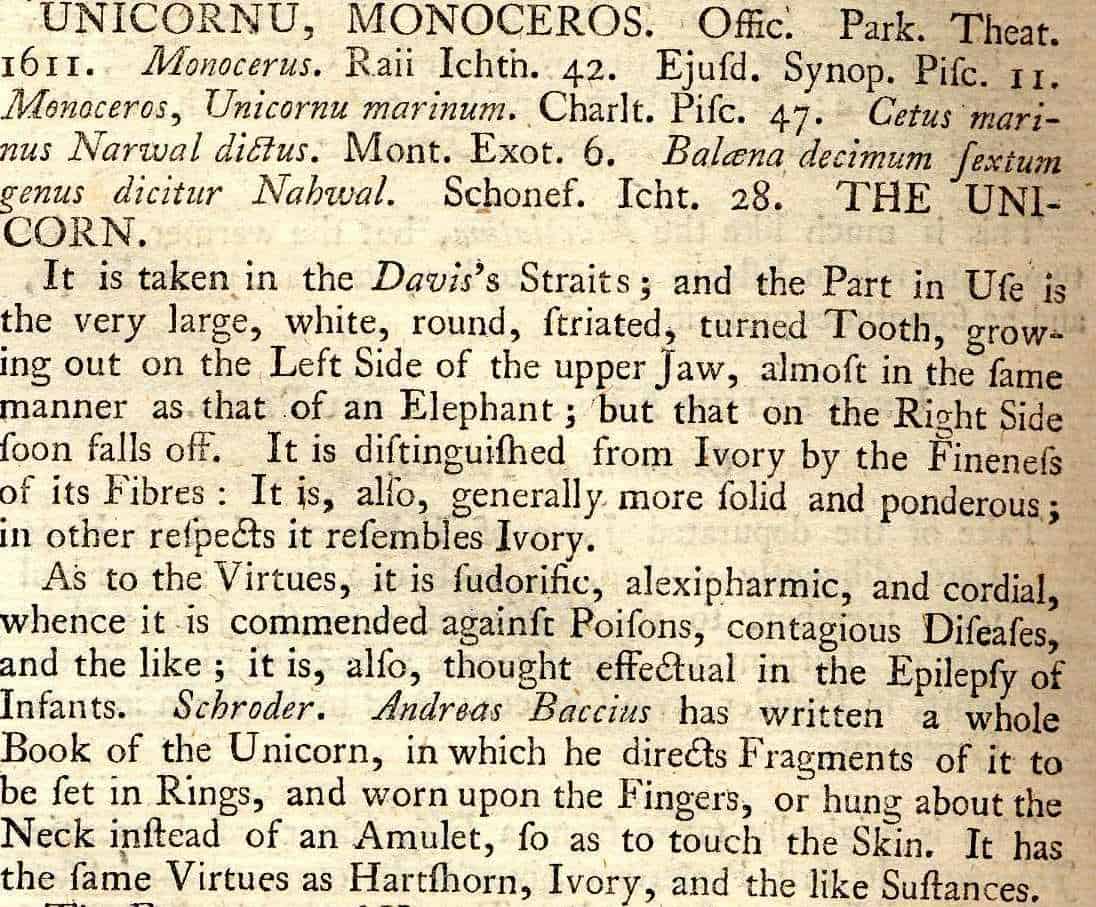 ROBERT JAMES (1705-1776). A medicinal dictionary. 3 vols. London: T. Osborne, 1743-1745.
James studied at Oxford and was granted his M.D. from Cambridge by royal mandate in 1728. He settled in London after practicing at Sheffield, Lichfield, and Birmingham. A successful physician, he became quite wealthy and famous when his “fever powder” became the most popular nostrum of the day. The chief ingredients were lime phosphate and antimony oxide and the medicine was used as an emetic, purgative, diaphoretic, or alterative depending on the dose and condition of the patient. James authored a number of books but the present work is the one for which he is best remembered.
It remains the largest, most exhaustive, and most erudite English language medical dictionary written before the nineteenth century. It was published in weekly installments beginning in 1742 and ending in August of 1745. Although never identified or acknowledged by name, there is ample evidence that Samuel Johnson, a close friend and student of James, contributed to the dictionary.
It is interesting that James includes a detailed entry on the unicorn horn (shown here) at a time when most scientists had begun to doubt its existence.
NIH now requires shorter grant applications
NIH changed their application forms and instructions with shorter page limits. This also applies to resubmissions.
More information is available online.
Transitions: scholarly communication news for the UI Community, January 2010
January 2010
Issue 1.10
Welcome to the winter issue of Transitions.
The purpose of this irregular electronic newsletter is to bring to readers’ attention some of the many new projects and developments informnig the current system of scholarly communication, with emphasis on new products and programs, the open access movement, and other alternative publishing models. Scholarly communication refers to the full range of formal and informal means by which scholars and researchers communicate, from email discussion lists to peer-reviewed publication. In general, authors are seeking to document and share new discoveries with their colleagues, while readers–researchers, students, librarians and others–want access to all the literature relevant to their work.
While the system of scholarly communication exists for the benefit of the world’s research and educational community and the public at large, it faces a multitude of challenges and is undergoing rapid change brought on by technology. To help interested members of the UI community keep up on these challenges and changes we plan to put out 4 issues per year of this newsletter. Please visit our web site, Transforming Scholarly Communication, to find out more about this topic.
This newsletter is designed to reflect the interests of its readers so please forward comments, suggestions and entries to include to karen-fischer@uiowa.edu.
Visit our newsletter to read the articles:
Public Access to Federally Funded Research – Public input
University Press survival… through open access
Compact for Open Access Publication Equity (COPE)
PLoS One to be indexed by Web of Science
Optical Society of America – a pioneer in scholarly publishing innovation
Nobel Prize-winning scientists urge Congress to act
Open Access Encyclopedias
Who will pay for Arxiv?
Studies on Access – a review
Medical Schools Quizzed on Ghostwriting
Scholarly and Research Communication, a new OA journal
Wellcome Trust calls for greater transparency
Presentation on the History of Malaria and DDT
The University of Iowa History of Medicine Society invites you to hear Patrick T. O’Shaughnessy, PhD, Associate Professor, Department of Occupational and Environmental Health, University of Iowa, speak on “Malaria and DDT: the History of a Controversial Association” on Tuesday, January 19th, 5:30 to 6:30, room 2032 Main Library.
Dr. O’Shaughnessy observes: “Although it helped prevent millions of cases of malaria after its widespread use in the 1950’s, the pesticide DDT was banned from use in the United States and fell out of favor as an agent to reduce cases of malaria around the world. This history of the events associated with the effort to eradicate malaria, as well as the environmental movement that led to the ban on DDT, will center on the story of a story that incorporated both issues and grew into a modern myth still seen in books and multiple websites today.”
The session is free and open to the public. Light refreshments will be served.
Notes From the Rare Book Room –A Private Pestilence
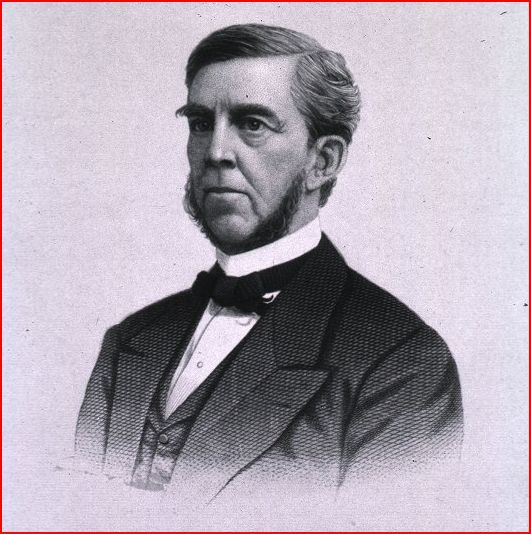 Puerperal fever, often called childbed fever, ravaged obstetrics patients in the U.S., Britain, and Europe throughout the 18th and 19th centuries. Its symptoms included severe abdominal pain, fever, and debility and carried a mortality rate as high as seventy percent during some epidemics. Even though the greatest incidences occurred in close-quartered “lying-in hospitals,” (state-supported maternity hospitals) only rarely did the notion of contagion figure into the arguments and these were largely ignored.
In 1843, Oliver Wendell Holmes (1809-1894) published, The contagiousness of puerperal fever,in The New England quarterly journal of medicine and surgery. In this moving, lucid, and somewhat acerbic paper, Holmes, then a prominent Boston physician and lecturer, demonstrated conclusively the contagious nature of childbed fever and, based on his and his colleagues experiences, showed that the dreaded disease was carried on the unwashed hands of the physician from patient to patient. Holmes also set forth strict guidelines with regard to hand-washing, cleanliness, and physician isolation to avoid and cut short epidemics. Sadly, Holmes’ warnings went largely unheeded partly due to the fact that his paper was published in a little-known journal but mostly because the medical establishment was unwilling to entertain the notion that “gentlemen physicians” could harbor disease. Several years later, Vienna physician, Ignac Semmelweis (1818-1865), independently, verified Holmes’ conclusions by means of a controlled study based on hand-washing. Even so, the contagiousness of puerperal fever was denied by many prominent physicians until the acceptance of the germ theory of disease in the late 1800’s at which time Holmes’ words from 1843 finally rang true:
Whatever indulgence may be granted to those who have heretofore been the ignorant cause of so much misery, the time has come when the existence of a private pestilence in the sphere of a single physician should be looked upon not as a misfortune but a crime.
Congratulations to our graduating student employees
Barbara Harvey, Reference student assistant received her M.A. in Library and Information Sciences. Barbara currently teaches Biology at Kirkwood Community College in Cedar Rapids and will eventually pursue a position as an academic librarian.
Ashley Croghan received a B.S. in Integrative Physiology with a minor in Spanish. Ahsley will be working with Campus Crusade for Christ by Fall, 2010.
Amber Skoglund, Go Local graduate assistant received her M.A. in Library and Information Science. Amber will start working towards an M.S. in Health Informatics in January.
Notes from the Rare Book Room “Anatome animalium”
 Gerardus Blasius (1626?-1692?). Anatome animalium. Amsterdam, 1681.
Although Blasius was a practicing physician in Amsterdam, his real interest lay in anatomy and, in particular, comparative anatomy. He worked closely with philosophers and scientists such as John Locke, Jan Swammerdam, and Niels Stensen to promote the study of anatomy and to widen the availability of both animal and human remains for closer study. Balsius’ 1681 work is his most ambitious project and, according to historian Francis J. Cole, is the “first comprehensive manual of comparative anatomy based on the original researches of a working anatomist…” While the author provides meticulously detailed descriptions of 119 species, it is the eye-catching images that capture the reader’s attention.

- Anatome animalium
As usual during this period, the artists and engravers receive no recognition and remain unknown, with the exception of the highly emblematic frontispiece which is the work of the Dutch illustrator and engraver Jan Luyken (1649-1712).
New PubMed Interface Back
PubMed‘s new interface is back, after a few technical issues Monday and Tuesday. The new look is streamlined, but all of the previous functionality is there — just click Advanced Search. The University of Washington has developed a great tipsheet comparing the old and new interfaces, and NLM has updated the help files found in PubMed to reflect the new version.
Questions? Give us a call at 335-9151 or email us at lib-hardin@uiowa.edu.
Norwegian Folk Medicine on the American Prairie –
The University of Iowa History of Medicine Society Invites You to Hear: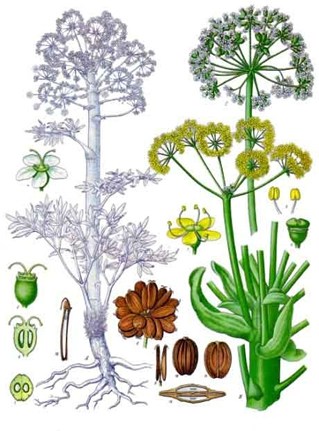
Kathleen M. Stokker, PhD, Director of Scandinavian Studies, Luther College speak on:
Norwegian Folk Medicine on the American Prairie
5:30 p.m. Tuesday, October 27, 2009
Main Library, University of Iowa, Room 2032
Free and open to the public
Light refreshments will be served