This article is part of “Students Investigate,” a series featuring the work and research of UI students. The following was written by Cecil Campbell, exhibition and engagement student lead for the Main Library Gallery.
Jay N. “Ding” Darling was a conservationist, an environmental activist, and most famously, a two-time Pulitzer Prize winning political cartoonist. The role that the political cartoonist has played throughout history is an important one, characterized in equal parts by political landscape, audience, and the actions (and reactions) of the politicians that feature in these cartoons. To understand what made Ding’s cartoons so impactful, we must first understand three concepts: humor, audience, and message.
On the role of humor in political cartoons, scholar Abu Abraham writes, “Unlike the written or the spoken word, the effectiveness of the cartoon depends chiefly on the element of humour it contains.” It is important to remember that the political cartoon is just that: political. The partisan nature of politics, along with the editorial nature of the cartoon, means that when a cartoonist takes a stance on an issue (in politics, there’s always an “issue”), there’s also a group they take a stance against. The goal isn’t necessarily to provoke this opposing group into anger so much as it is to provide the cartoonist’s own perspective, for which humor acts as both argument and a shield of sorts. Abraham continues, “satire can often hurt deeper than a verbal assault; it can also have a softening effect on one’s opponent. Simple criticism or abuse may provoke, but satire persuades.” This is a point that Ding—as well as many other cartoonists—understood very well. For example, let’s look at a cartoon that seems at first glance to be making a joke at the expense of another political party.
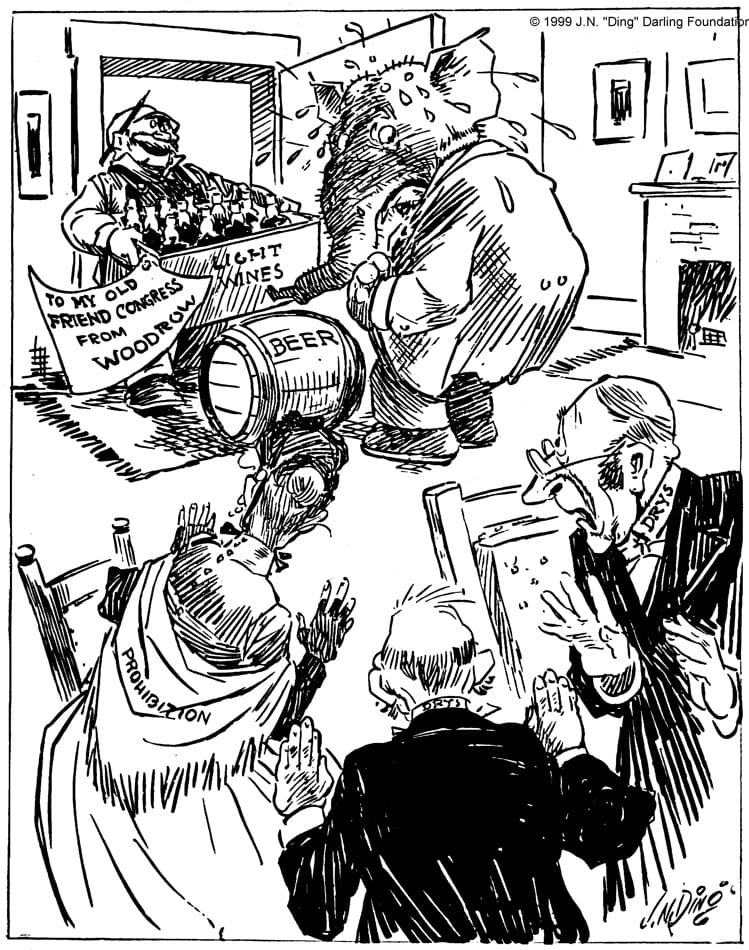
This cartoon depicts an elephant (a stand-in for the Republican Party) looking back in embarrassment after answering the door to a large delivery of beer and wine while in the midst of entertaining a group of Prohibitionists. A note attached to the delivery identifies Woodrow Wilson as its sender. It might be easy to take this cartoon as an attack on the honesty of Republican members of congress—who are implied to have been sympathizing with prohibitionists and bootlegging alcohol at the same time—but the joke here isn’t quite so simple. The narrative is that someone’s been caught in a lie, and the exaggerated guilt and embarrassment shown by the elephant representing Republican Congress tells us that they’re the liars. We might take this to mean that we’re meant to sympathize with Wilson’s administration, or perhaps with the Prohibitionists who have been lied to. However, the friendly note addressed to Congress, as well as the incidental nature of the joke, places both political parties on the same side. If anything, the aged and comically scandalized Prohibitionists make up the punchline; their pearl clutching only adds to the humor. Abraham’s point about the softening effect of satire shines vividly through this cartoon. Ding tucks his message—being the commonplace refusal to abide by Prohibition—safely behind comedy, allowing an audience affiliated with any of the sides in this cartoon, be they Democrats, Republicans, or Prohibitionists, to acknowledge a truth that they may not have had it been portrayed critically.
The second concept we must understand is the role that the audience plays related to political cartoons. Scholar Larry Bush refers to fellow author Raymond Morris’s term “skimmer” when discussing readers of political cartoons: “Most cartoons are a combination of illustration and text and are best understood by the person who skims the entire piece in order to grasp its meaning. For lack of a better term, ‘skimmer’ refers to a person who reads cartoons, while ‘reader’ refers to someone who is literate.” This term is useful when identifying what must go into a cartoon to make it skimmable. Because, as Bush mentions, cartoons are combinations of illustrations and text, the illustrations and text must relate to each other in a way that makes the whole cartoon easy to understand. The most common methods Ding used to do this were narrative elements like metaphors, symbols, and signage. The cartoon below contains all three:
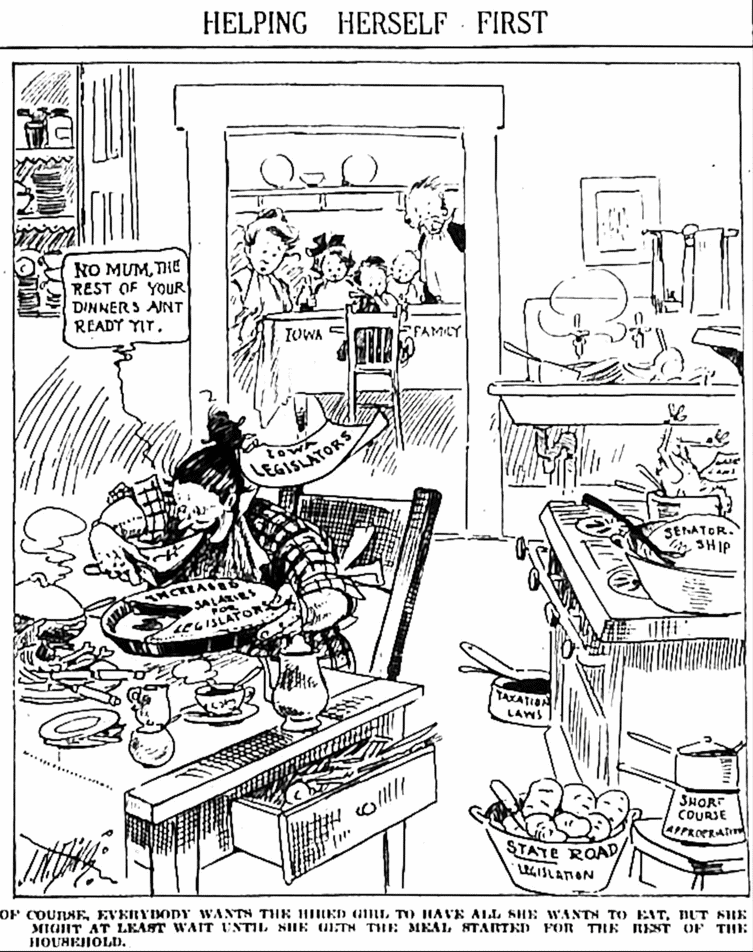
The public-facing nature of political cartoons requires them to be understandable to even the least politically conscious reader, while still retaining the message intended by the cartoonist. “Helping Herself First” translates legislative corruption into cartoon format: a “hybrid of text, pictorial representations, symbols, shadings, and humor that become a puzzle…that is affectively engaging to skimmers.” This cartoon is full of symbols and pictorial representations, showing us how Ding uses metaphor to explain complicated topics from his perspective. Ding depicts the legislators—not as politicians with the power to control Iowa’s political future, but as a greedy housemaid. The family that this maid works for represents the citizens of Iowa. Reframing the relationship between legislators and their constituents in this way significantly changes who holds the power in that relationship: the legislators are people who work for and are employed by the citizens of Iowa. In other words, they work for us.
Bush writes about “two types of symbols” described by E.H. Gombrich: “the natural metaphor and the ad hoc symbol. Natural metaphors are symbols that humans automatically understand…[these] include beauty versus ugliness and big versus small. These are especially useful for cartoonists in that they simplify the communication process.” We can see how Ding has used ugliness to negatively portray the legislators and prohibitionists in the last two cartoons. In the illustration below, we see an example of one of the many ways one could use the big versus small metaphor:
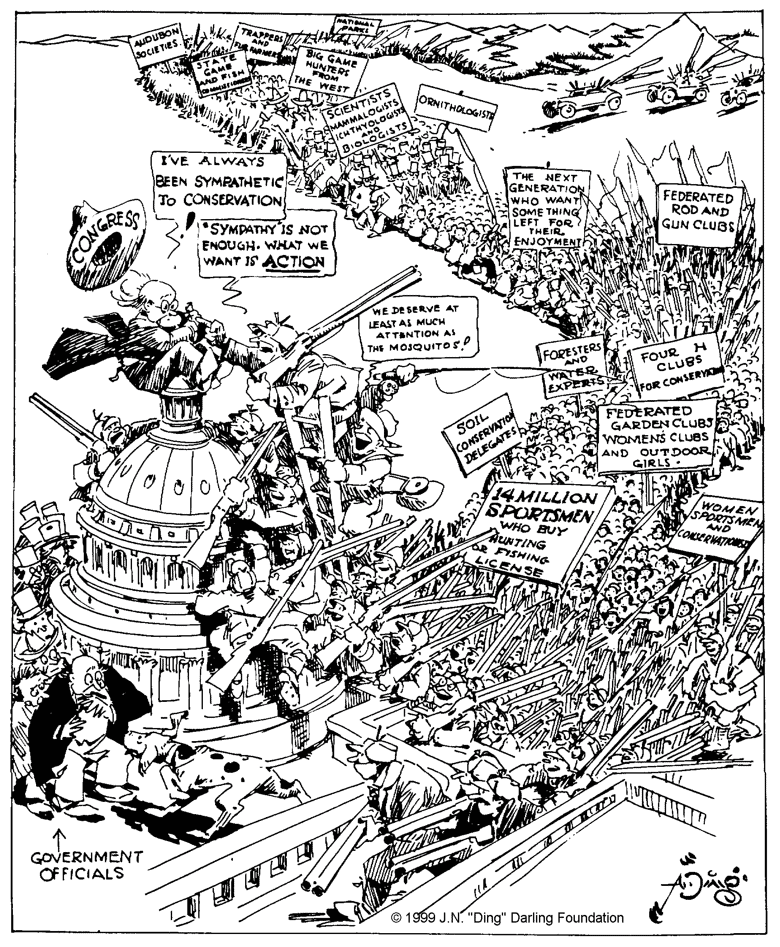
The size of the crowd in this cartoon completely dwarfs the two politicians the crowd is converging on, proving how quickly natural metaphors communicate information to readers. The size of the crowd communicates two things when compared with the size of the two politicians: the first being that the politicians have done something to make the crowd angry, the second being that the crowd has much more power than the politicians do. Natural metaphors play on the associations that audiences will automatically make, for example: big equals strong, small equals weak. The subject of this cartoon is the lack of support in Congress for environmental conservation. By arranging the two sides of this issue so that the conservationists take up as much space as they do, Ding is persuading the audience to take their side. Signs distinguish the different groups of people making up the crowd, and this has the benefit of both telling the audience who might care about conservation and giving them a chance to personally identify with a group that they might belong to.
Though cartoons require a more interpretive approach for properly communicating their ideas than words do, author Sylvie Cannon writes, “if it is effective, the cartoon will synthetize perfectly the ideas and feelings that words will sometimes imperfectly convey. This is often achieved at the expense of complexity: issues will be reduced to simple terms as the cartoonist distills his material until the essence remains. The cartoon then makes us comprehend instantly the point the artist wants to make.” There are many ways of doing this, but few methods are as instantly comprehended as the use of shock value.
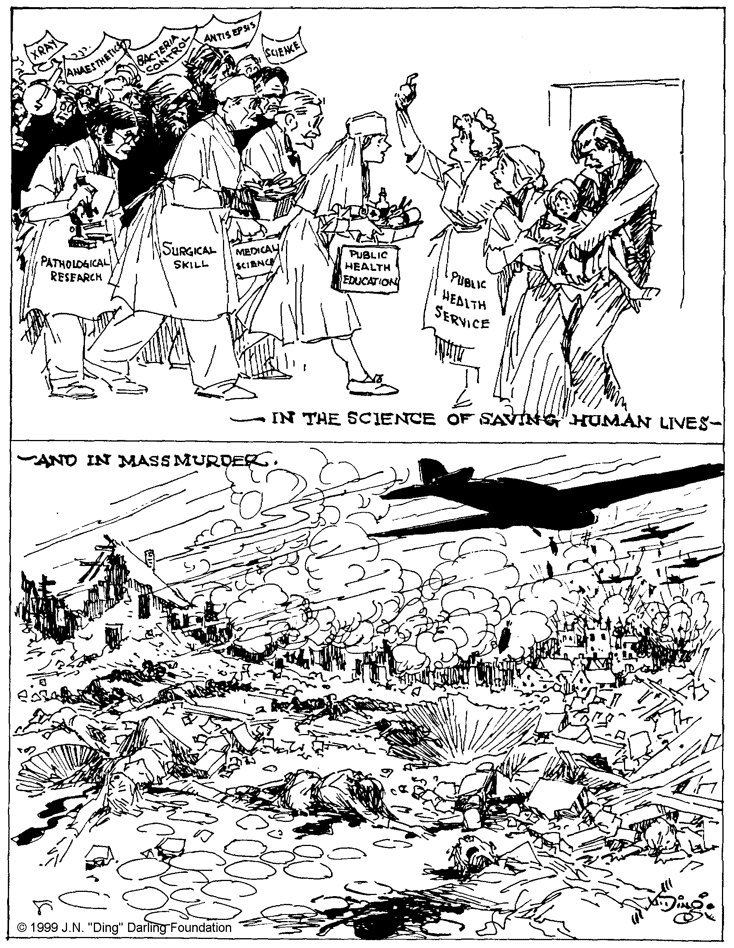
It is plainly obvious which part of this cartoon is meant to convey shock, but that doesn’t lessen its effect. Shock can be a controversial tactic to use for getting an audience’s attention, as it usually involves showing the audience something upsetting, often unexpectedly. When used correctly, shock value doesn’t need to exaggerate the upsetting aspects of what it shows us to be effective; it simply needs to be honest.
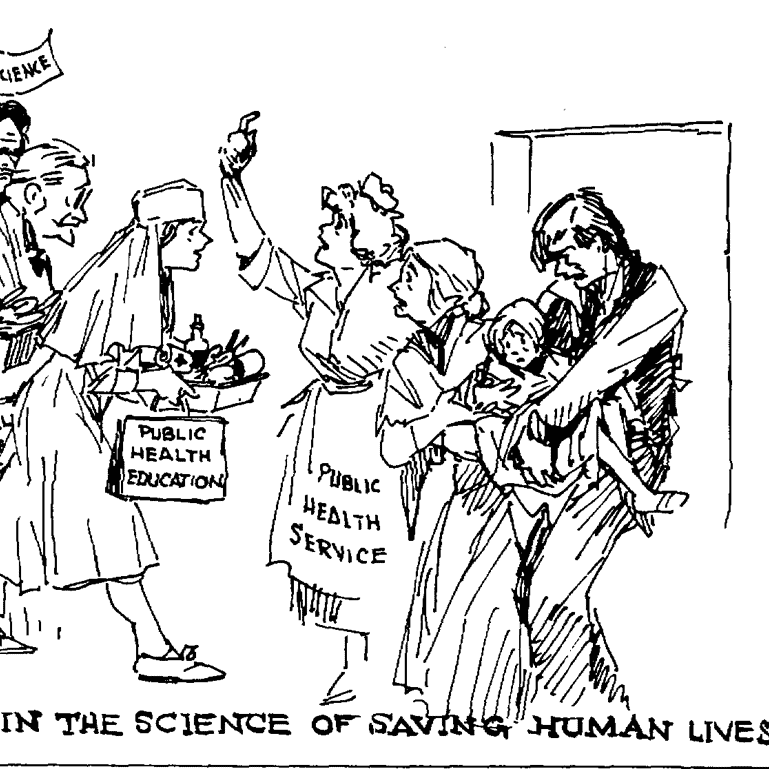
The first panel of this cartoon highlights different milestones in medical science as a crowd of doctors and nurses approach a sickly-looking family. The contrast between this panel and the second is stark. A bomber plane flies over the wreckage of a town destroyed by war; mangled corpses lay gape-mouthed next to craters and rubble as the plane drops missiles on more buildings in the distance. Ding did not have a reputation for shying away from harsh truths, and this cartoon is only one of many that prove that. The text at the top of this panel, reading “…and in mass murder,” bluntly states what cannot be sanitized for the reader’s comfort. The honesty in this scene is what makes the shock of it so effective, leaving an impression that stays with the reader even after they’ve turned the page.
The political cartoon is a deceptively simple thing, one that only gets more complicated the closer it’s examined. It takes a unique understanding of both visual and narrative storytelling for the cartoonist to translate their opinion into an image or two that tells an audience exactly what they mean, using as few words as possible. The examples in this article highlight a few of Ding Darling’s methods for achieving this, but something that cannot be ignored is the personality that comes through in every cartoon. Ding gained the notoriety that he had not just because of the cartoons he drew, but because there was something about his wit, humor, and style that kept readers coming back to read more. In Ding’s case, the cartoons he drew weren’t only expressions of his opinion; they were extensions of himself.
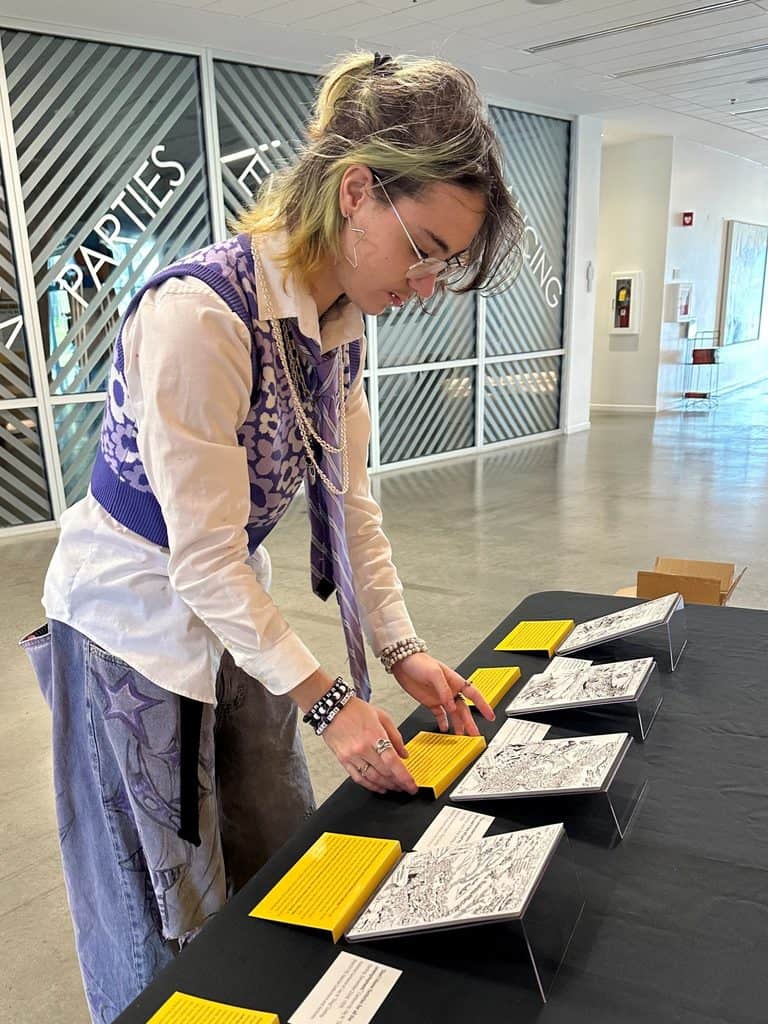
This article is a companion to Cecil Campbell’s pop-up exhibit at the 2026 Refocus Film Festival at FilmScene in Iowa City. Ding Darling: How Art Shapes a Message is in conversation with the fall 2026 Main Library Gallery exhibition, It’s Been Wonderful Knowing You: Wildlife Conservation and Advocacy Through the Lens of Jay N. “Ding” Darling.
Bibliography:
Abraham, A. (1975). “Anatomy of the Political Cartoon.” India International Centre Quarterly, 2(4), 273–279. http://www.jstor.org/stable/23001883
Bush, L. (2013). “More than Words: Rhetorical Constructs in American Political Cartoons.” Studies in American Humor, (27), 63–91. http://www.jstor.org/stable/23823980
Cannon, S., & Cannon, S. (1990). “Editorial cartoons and the American involvement in Vietnam.” Revue Française d’études Américaines, (43), 59–83. http://www.jstor.org/stable/20872048