This article is part of “Students Investigate,” a series featuring the work and research of UI students. The following was written by graduate student Adelina Pineda Canganelli (English PhD and MA, library and information science) to accompany the fall 2026 Main Library Gallery exhibition, It’s Been Wonderful Knowing You: Wildlife Conservation and Advocacy Through the Lens of Jay N. “Ding” Darling.
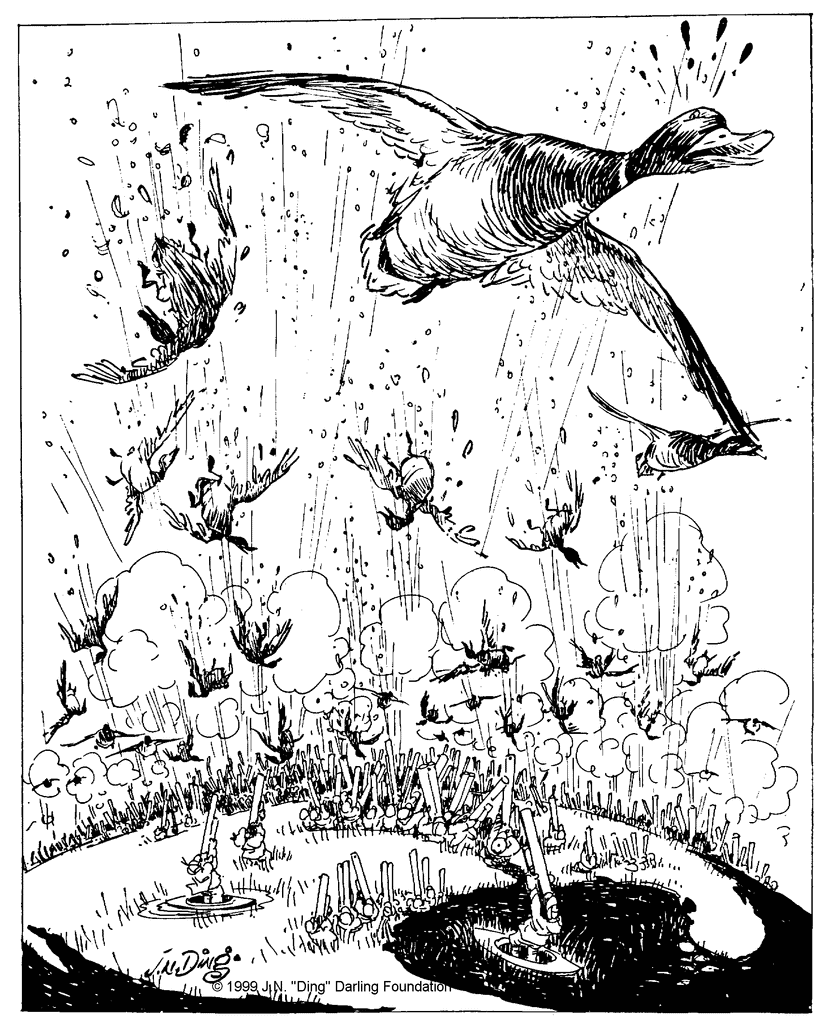
In 1927, Jay Norwood “Ding” Darling published a cartoon in The Des Moines Register titled “What does mere man know about the perils of nonstop flight?” The panel features a wildlife landscape on two planes: crowds of hunters on the ground seemingly taking up every inch of land with massive shotguns, and a flight of mallards in the sky, shot down as they attempt to pass over the land.
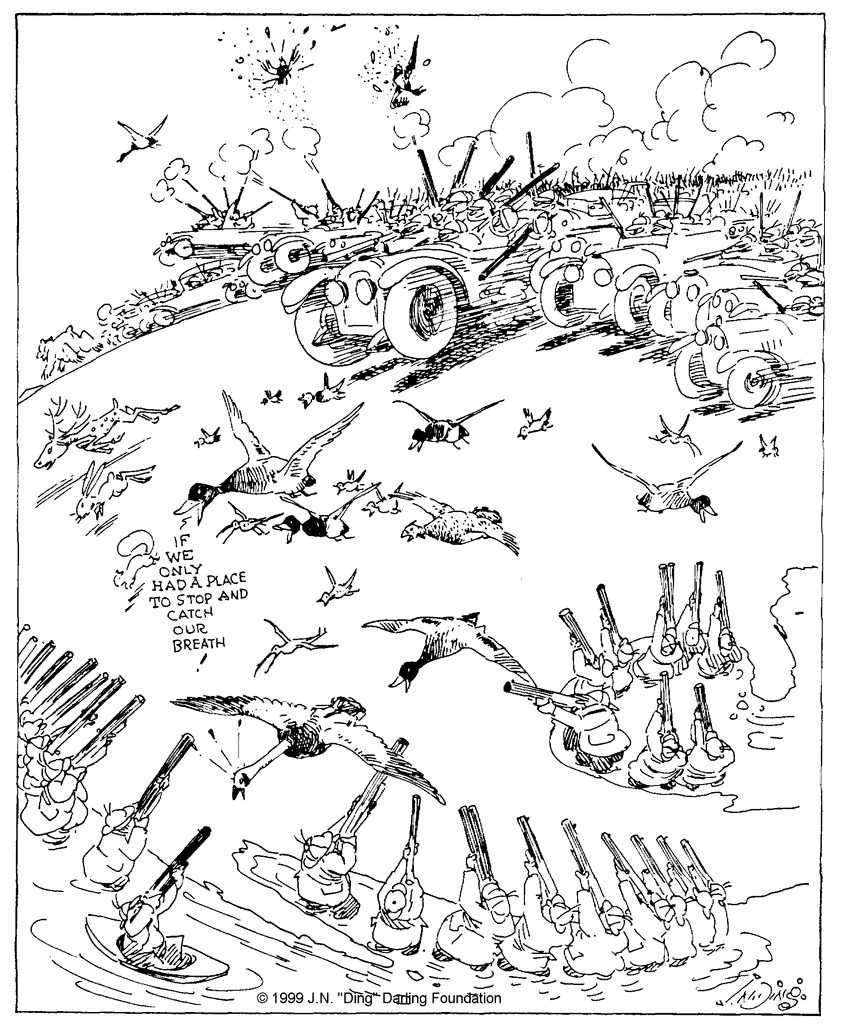
In 1928, Darling published “Wanted – more and better game refuges.” The singular panel features a landscape of chaos—various species of migratory birds fly between two landmasses, away from an army of automobiles filled with gun-wielding hunters and toward lines of shotguns across the water. As birds are shot down in the background, a terrified mallard exclaims, “If we only had a place to stop and catch our breath!”
Often, the most impactful conservationist mindsets come from deep meditation on the experiences of other species in our ecological sphere, outside of their immediate utility to human recreation. A species can be protected on paper, defended by legislation, celebrated by conservationists, and still have nowhere to land. For Darling, protecting wildlife meant protecting the places wildlife depended on, particularly during long migratory trips. Through both his editorial work and political activism, Darling asks us to consider: if migratory birds depend on a chain of habitats spanning thousands of miles, what does it mean to protect them if we safeguard only one link? How do we work toward protecting the paths they’ve followed for millennia?
Not satisfied with merely raising awareness through his cartoons, Darling transitioned from cartoonist to conservationist in the early 1930s. After becoming active in the State of Iowa Fish and Game Commission and personally funding the Cooperative Wildlife Research Unit at Iowa State University, Darling became chief of the U.S. Biological Survey, setting the foundation for the U.S. Fish and Wildlife Service. His activism established some of the most important and successful conservation projects in the U.S., such as the first Federal Duck Stamp which began the primary funding program for waterfowl management. The U.S. Fish and Wildlife Services reports that, today, 98% of money raised from duck stamps (over $1.3 billion) are directly used to acquire wetlands and conservation easements for the National Wildlife Refuge System.
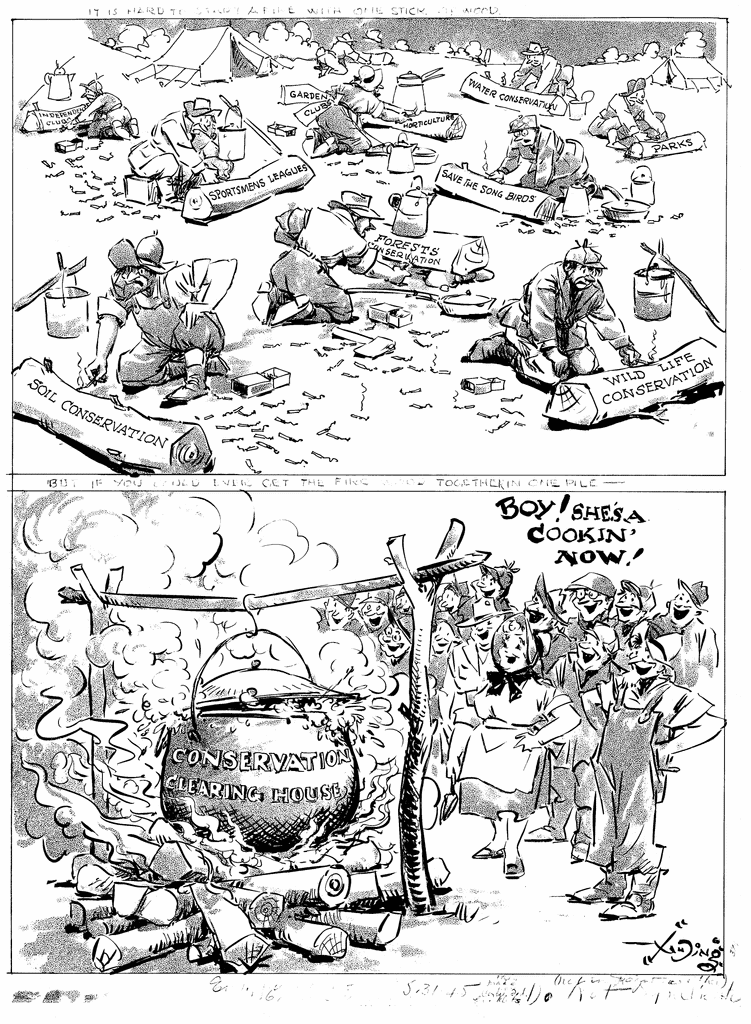
Darling’s conservation success seems to be due in a large part to his innate understanding of the concept of ecology – not only considering the roles of various species together in a landscape, but the roles of various humans with differing experiences in the project of wildlife conservation. Alongside President Franklin D. Roosevelt, Darling held the first North American Wildlife Conference in 1936, inviting thousands of hunters, anglers, and conservationists to share perspectives on land stewardship. This meeting led to the establishment of wildlife refuges and federations in individual states, often with Darling as a trusted advisor, and the eventual establishment of the National Wildlife Federation. It was this unique mixing of perspectives and priorities that made the expansion of refuges so successful—again, best described by Darling himself in a later cartoon.
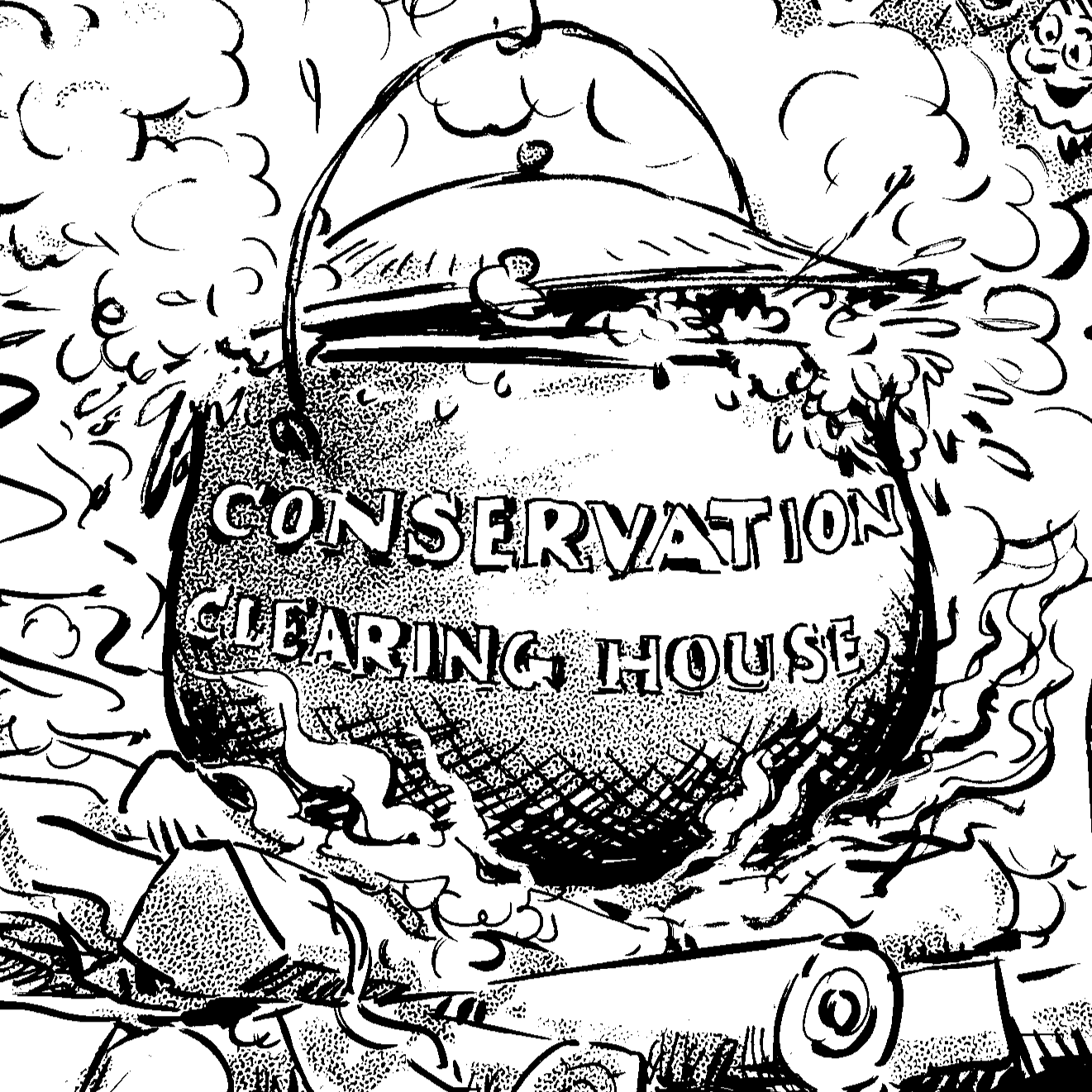
A 1945 piece features two panels: the first, titled “It is hard to start a fire with one stick of wood” depicts various men attempting to cook over logs labeled with various individual conservation projects; matches are littered on the ground, and the men are unable to start fires to heat their small, solitary pots. The second panel, titled “But if you would ever get the fire wood together in one pile -” features the same group, now gathered around a large fire made up of all their projects together, heating a massive pot labeled, “Conservation clearing house.” The crowd, now united in their unique perspectives toward a common goal, exclaims, “Boy! She’s a cookin’ now!”
This idea of participation is still incredibly important today. The U.S. Environmental Protection Agency reports over 1,300 endangered or threatened species in North America under the U.S. Endangered Species Act, which has faced massive retractions and revisions that narrow the definition of “harm,” limit habitat protections, and require intentional targeting of species for violations. Conservationists worry that these actions will put species in more significant danger and undermine nearly a century of work toward widely successful land conservation through governmental programs. However, there is a great deal of inspiration we can take from Darling to continue protecting the land for future generations. Thanks to the foundation that Darling and early conservationists worked tirelessly to establish, there are wildlife refuges in every state, with a network of over 570 spanning the country. We can continue Darling’s work by protecting these areas, teaching our children about ecological citizenship, and even just learning the names of the waterfowl that still pass over us in the millions, who finally find a place to catch their breath in protected lands.