Over 40 million adults each year in the U.S. contend with mental health issues, many of whom do not receive quality treatment (NAMI 2018; NIMH 2015). These individuals are often subjected to stigmatization: the social process within social relationships involving the devaluing of someone through ‘conferring labels and stereotyping’ (Pescosolido and Martin 2015). While stigma can take several forms, it consistently contributes to negative social, personal, and emotional outcomes for individuals with mental illness and their families (Pescosolido and Martin 2015).
My research aims to shed light on some of the key mechanisms that influence how stigmatizing beliefs are formed, sustained, or dismantled over time, so that effective strategies can be developed to reduce stigma and subsequently improve the social, health, and economic experiences of those with mental health issues and the people they associate with. This Fellowship project stems from a portion of my dissertation that investigates mental health stigma via deliberate and automatic cognition processes. Members of a culture develop cognitive associations between concepts over time that help individuals quickly navigate complex social environments and interpret social stimuli (DiMaggio 1997). These implicit cognitive associations, however, can also reify cultural stereotypes and influence discriminatory behaviors. For example, the public may implicitly associate having mental illness with ‘being violent’ and avoid them socially, despite the fact that people with mental illness account for less than 5% of gun violence in the United States (Desmarias et al. 2014; Metzl and MacLeish 2016; Pescosolido, Manago, and Monahan 2019).
During my Fellowship, I am developing network maps depicting how people implicitly associate health conditions and stigmatized concepts (e.g., the public associates ‘being violent’ and ‘being a bad co-worker’ with ‘having depression’ but not with ‘having cancer’) with the goal of juxtaposing public perceptions of stigmatized and non-stigmatized health conditions in a way that highlights negative stereotyping. These maps will be presented alongside information (1) disconfirming negative health stereotypes displayed in the visualization (e.g., people with mental illness are at greater risk of experiencing violent victimization than being violent themselves) and (2) conveying the harmful effects of mental health stigma.
Thus far, I have spent most of my time exploring various software packages to create network visualizations. While I have substantial experience with Stata, learning about various network mapping and visualization tools has been a rewarding task, albeit a challenging and time-consuming one. I have spent most of my time reading about network visualization, taking advantage of online resources, trying things out via trial and error, and brainstorming new ideas. During this process, I have been grateful for our class discussions about the feasibility of projects and the importance of flexibility with regards to setting timelines and goals. I remain hopeful that these network maps will become effective tools for teaching about and countering mental health stigma and have learned that engaging in this type of work is an important and long-term endeavor.
In the upcoming weeks, I look forward to gaining more data visualization skills while using R, as well as brainstorming ways to incorporate stereotype-disconfirming information alongside the network maps in a clear, reader-friendly style. I am sure more trial and error awaits me; hopefully I will make small steps forward along the way.
I have been working on an accessible version of my dissertation research on Anishinaabe Two-Spirit history. I’ve spent the last year learning and expanding my skills with audio editing and podcast hosting as well as managing a website, so I did not realize how steep the learning curve for setting up another podcast would be. Now, a month into the project, I recognize several important factors.
By tracking my hours, I have learned that an episode of my previous “Bagpipe and History” podcast takes 30-60 hours to create. The new show will take longer, as it involves scheduling meetings and researching guests as well as getting extended readings of primary sources from voice actors. I have a new appreciation for project management and the importance of completing most of these components before I begin releasing episodes. I have also learned how much Digital Scholarship for historians involves conventional archival research.
The largest number of written records that exist from the time and place I am studying were created by European fur traders. My archive of their records is not computer-searchable; previously I spent a full semester transcribing a single handwritten journal (see figure 1) into a spreadsheet so I could begin to ask questions of it digitally. While that would lead to some fruitful scholarship, it is unclear how helpful it would be for gaining a better understanding of Two-Spirit history.
Figure 1: The First Page of Thomas Miller’s 1797-1798 Post Journal from the Red River.
I chose to transcribe a post journal from a time and place in which I knew a Two-Spirit person lived. Ozaawindib was Naagokwe (a being who appears as a woman) and was generally just referred to as a woman by her fellow Anishinaabeg. That entire transcribed post journal refers to only one woman, and not by name, and there is no reference to Ozaawindib in any recognizable way. The authors of these records were so blinded by their rigid colonial heteropatriarchy that even if they observed relationships or people who might identify as Two-Spirit today, they may not have recognized that. This does not mean it is not important to analyze them.
For example, fur trader John Sutherland’s trading post journal from the Saskatchewan River in 1795 is typical of Hudson’s Bay Company records in that all the women he wrote of were described solely through relationships to men or children, with one exception. (see figure 2)Figure 2: John Sutherland’s Entry for August 2nd 1795, Indian Elbow post Journal.
Figure 2: John Sutherland’s Entry for August 2nd 1795, Indian Elbow post Journal.
On August 2nd Sutherland wrote about meeting “…two Indian women” who “Traded one Beaver skin … for powder and shot.”3 In an archive filled with monotonous discussions of the weather and trade with men, this entry stands out.
This evidence goes against popular understandings of Indigenous women and their roles in the fur trade. Although some historians argue both trading furs and buying ammunition would be men’s activities, these women did both. Sutherland’s description is so short that it is difficult to interpret, but this account may show a same-sex couple trading furs they trapped to get ammunition to go hunting, or this could be two women who are merely buying ammunition for a man who is indisposed. While brief and ambiguous, this may be the only reference to a “lesbian” Two-Spirit Anishinaabe household which has survived in the colonial record. I hope this is not the case and as I conclude looking through my archive, I will be able to add a more robust entry for my dissertation and public-facing podcast.
-Jeremy Kingsbury
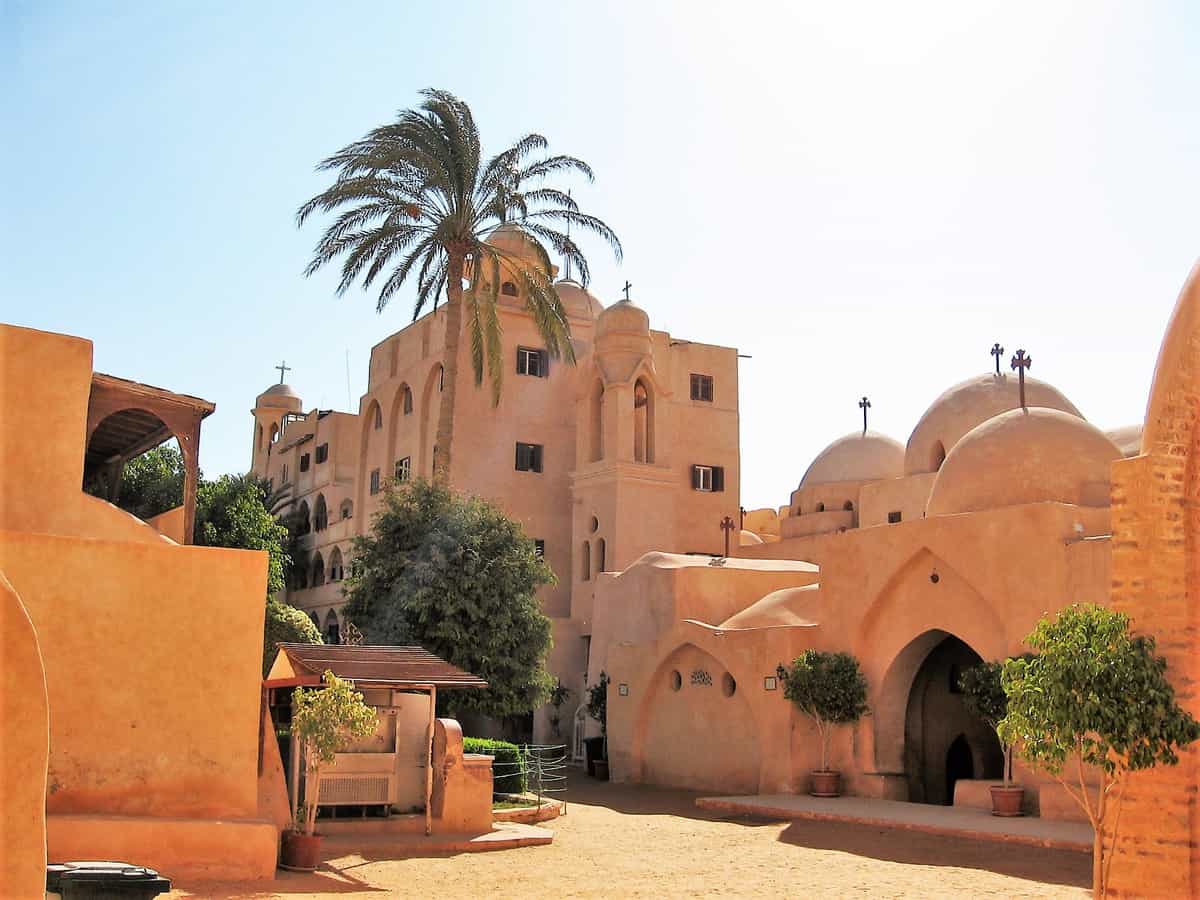
In the year 925, a new governor of Egypt imposed taxes that previously did not affect the Christian clergy of monasteries. The head of a monastery known as Dayr al-Suryan (pictured below), or the Monastery of the Syrians, then went on a journey to Baghdad to attempt to appeal and remove the tax burden from the monks of Egypt. This abbot was named Moses of Nisibis, and during his years of travel, he brought back around 250 books in the Syriac language to be housed in the monastic library. These books were filled not only with diverse texts including translations of Aristotle, moral maxims attributed to Menander and Homer, local histories of Mesopotamian monasteries, and Biblical manuscripts, but also with notes from previous owners and scribes about where the books were made, who read them, and when they were sold.
When we think of monks and nuns, we often think of cloistered people who do not leave their adopted home in pursuit of religious devotion. But the notes in these books hint at a lively trade in books and movement of monks all across Egypt, Syria, Turkey, Iraq, and Iran. Moses of Nisibis is just one example of how Christian monks who spoke and prayed in an Aramaic dialect known as Syriac (so named for its origin in the Syrian city of Edessa) visited new places and exchanged books and stories. When Moses deposited his library of over 200 books at Dayr al-Suryan in the 900s, he had no way of knowing that most of these texts would eventually be sold in bulk to the British Library, where librarians and scholars are now digitizing these texts for viewing by the public. But Moses did make a note in most of these texts as a reminder to the reader that he was the one responsible for their movement.
Other books from this collection tell different stories. Several of these manuscripts contain small notes from readers and bearers of the texts. A few even give us a glimpse into the lives of otherwise unknown historical figures. BL Add. 14,442 contains a copy of the Biblical books of Samuel. In the pages of this sacred text, we find a note from three brothers named Matthew, Abraham, and Theodore from the city of Tagrit that they owned this book at one point.
With these tantalizing pieces and courtesy of the diligent notes made by Syriac scribes, my goal this summer is to compile the geographic data from the British Library collection that tells the story of how these books were composed, traded, and read. Through mapping the known monasteries and regions, I am working to illustrate the surprisingly mobile lives of Syriac books. My work so far has been focused on turning the descriptive data of archival records into a table that can mark where these manuscripts were and when. From here, I will begin mapping both where these books were and when, with the goal of visualizing the migration of books across the Syriac world.
I have been working on a short documentary film-essay that explores China’s independent queer cinema and its production context during the past two decades. Focusing on gender, sexuality, and politics, my project addresses multiple related topics. For example, I am identifying a set of common features that may be said to characterize this queer cinema. An important part of my process is analyzing how this cinema reflects China’s 21st-century LGBTQ+ political and cultural developments. In my analysis, embattled queer activists play a key role in the face of traditional gender and sexual norms—which have seen pronounced reinforcement in the form of state-driven censorship, propaganda, and denunciations. In addition, I explore how China’s LGBTQ+ cinema interacts with the global LGBTQ+ media landscape that remains dominated by Western, predominately white nations. To that end, my project identifies one set of China’s queer cinema that approximates an indigenous Chinese notion of queerness and another that explicitly employs the language and other signifiers of Western queer culture.
To explore these questions, I have been carrying out a task that is exciting yet also daunting: finding and watching countless hours of Chinese content with LGBTQ+ themes. The task is daunting because I must be thorough. Even if I can never do a truly comprehensive survey, I am motivated by the worry that I might miss something crucial. Fortunately, my search has been aided by generous staff at queer film festivals in Taiwan and Mainland China. As important havens and curators of Asia’s LGBTQ+ cinematic culture, these festivals have pointed me to films and filmmakers that I never would have discovered otherwise. This summer, I am fortunate to serve on the selection committee for the upcoming Beijing Queer Film Festival. This has given me the privilege of watching the latest LGBTQ+ films originating in China!
I watch all of these films with my guiding questions in mind as I make notes on spreadsheets. With the aim of gathering material for my final “product” (the documentary film essay), I must annotate excerpts from the films that correspond to the various themes that my project explores. Along with these film excerpts, I am gathering a set of news media and user-generated footage related to LGBTQ+ political/cultural developments in China, such as videos from Douyin (the Chinese name for TikTok). Finally, my original contribution to this area of study is a series of virtual interviews that I am conducting with LGBTQ+ activists, scholars, and film professionals from or within China.
In the 1969 MGM film, The Trouble with Girls, a fedora-clad Elvis Presley steps off of a train in 1920s Iowa. As the manager of a touring chautauqua program, Elvis’s character is tasked with maintaining the show’s ongoing commercial viability while also wooing a love interest played by Marlyn Mason. The premise and setting may seem strange for audiences in the late-1960s: a midcentury rock-n-roll superstar dropped into rural Iowa during the Roaring Twenties to oversee a ragtag tent show named for a lake in upstate New York. For those typically accustomed to the flappers, speakeasies, and fast-talking gangsters that typify depictions of American life in the 1920s, small towns, canvas tents, and prayer meetings are likely to cause some confusion. Yet, for many moviegoers of a certain age in the 1960s, the former ubiquity of tent chautauqua was still a recognizable feature of a nostalgic, bygone era.
During its height between 1920 and 1925, touring circuit chautauquas attracted upwards of twenty million attendees throughout the rural U.S. with week-long programs of lectures, plays, and musical acts. The circuit model, first organized successfully in Iowa in 1908, proved to be a major money-making breakthrough for what was once exclusively a Methodist education center on the shores of Lake Chautauqua, and any given circuit would supply tents and talent to more than one hundred towns annually. With its rural audiences and Protestant underpinnings, circuit chautauqua operated apart from some of the more recognizable aspects of the so-called Jazz Age and, as such, has largely slipped from cultural memory. However, the University of Iowa Special Collections holds some 648 linear feet of materials related to the largest of the once-dominant chautauqua organizers, the Redpath Bureau. From programs to postcards, operational documents to itineraries, the University’s Redpath collections document a largely forgotten cultural phenomenon that touched much of the Midwest and its inhabitants.
During the summer, I will begin the process of digitally mapping annual chautauqua tours with the intent to create engaging visualizations of performance documents held within the collections. Using a geographic information system (GIS), I am currently exploring the possibilities for creating interactive maps of the touring opera companies related to my dissertation work. While these will form the basis for digital tools that will directly aid the completion of my dissertation work, they will also help to develop to generate a draft of a public-history website for those interested in Chautauqua’s importance to local histories. Currently, I have created the beginnings of a map and I will be spending the next few weeks refining and adding to its contents with the hopes of launching a preliminary site.
-C.A. Norling
Blind accumulation of material is far easier than selection, and the roadmap is subject to change—these have been my first lessons in developing an online exhibit on “Dispatches from the Cockney School: The Romantics for Our Time.” During the latter half of June, I waded through the Special Collections’ digitized Leigh Hunt collection, trying to piece together modern-day meaning-making from hundreds of pieces of correspondence between various members of Hunt’s social circle. This meant that as a nineteenth-century British literature scholar, I was spoiled for choice—personal letters and photographs passed between some of the people whose influential stories I want to help preserve and pass on.
The challenge has been to decide which of these letters are relevant to the project, both in terms of content and public interest—on one hand, in a project about journalism, illness, and politics, a letter from Charles Dickens where he wittily turns down an invitation to tea as a conversation opener is not as directly relevant as correspondence where Hunt explains his recent illness and difficulty meeting a deadline. On the other hand, it’s a humanizing and fun moment between long-dead and often distant-seeming writers, the kind of moment which I consider foundational to academic work and public-facing scholarship. I have decided to keep this letter on the site, but other such darlings may have to be more carefully chosen from and some discarded.
I believed at the start of the project, as I do now, that the Romantics are at their most accessible today, when—like 200 years ago—conversations are full of fears of illness, journalistic quandaries, and political upheaval, all woven into everyday life and concerns. Although discussions of sickness and health are a consistent theme in these notes, I also want now to explore mental health in the Cockney School. The famously social Hunt was literally isolated from the outside world during his imprisonment, and the tone of his periodical writing and some letters often reflect a sense of loneliness and frustration. We have only begun scratching the surface of the pandemic’s long-term effect on mental health, and I want to shift the tone of the health and illness narrative to include discussions of how these Victorians dealt with their mental health in isolation.
As part of my MFA thesis project I have been working on a short story collection that portrays the daily life in coffee plantations in Pluma Hidalgo, Oaxaca, México. Given the intensity of the emotional connection I feel to this area, not only because it is my great source of inspiration, I started asking certain questions regarding its history.
I found out that during the XIX century, Oaxaca experienced an economical crisis due to the devaluation of the cochineal, a natural dye that had been the most important product of the states’ trading even before the Colonial era. When this industry was affected by artificial dyes, and Oaxaca lost the monopoly over the production of cochineal, it was necessary to look for a new possibility that would save the state from ruin. A group of traders from Miahuatlán left everything behind, and traveled across the Sierra Sur looking for a place to plant coffee, founding in 1974 the first finca in the area: La Providencia. It was this journey that triggered my interest in historical narrative.
My first idea —when this project was just that, an idea— was to use create a digital story map that would work as a notebook that could gather all the information of the journey, the exact location of the stops the travelers did on the way to Pluma Hidalgo, photographs and legal documents. I imagined this as an opportunity to share the information as well as a way to have certain aspects clear to start, later on, a fictional text around it. However, as I realized the amount of resources offered by the software I would be learning to work with, QGIS, Leaflet and ArcGIS, I decided to take advantage of this experience to step out of the comfort zone of my narrative. My personal challenge transformed into finding the way to incorporate interactive maps, images, movements and transitions allowed by scrollytelling to the idea I have of narrative itself.
The working title for this story is “Transformations in red”, because this journey goes from the cochineal —the insect from which different shades of red are obtained— to coffee —that is, in its natural state, a red berry hanging on small trees. It is thanks to the weekly discussions that are part of the fellowship experience that I now allow myself to talk more about possibilities rather than certainties. Something that I have valued in the first half of the summer is that we are constantly thinking about processes instead of final products; and how interesting these processes are since they are the part that involve the most learning experience, the most growth.
Thanks to our discussions and readings, I have had the possibility of asking questions such as how can digital resources challenge the idea of individual authorship? How can we take more advantage of the democratization of the digital work? How should this help me rethink certain aspects of my work as a writer?
I am looking forward to venturing answers in the following weeks, but mostly, to formulating more questions.
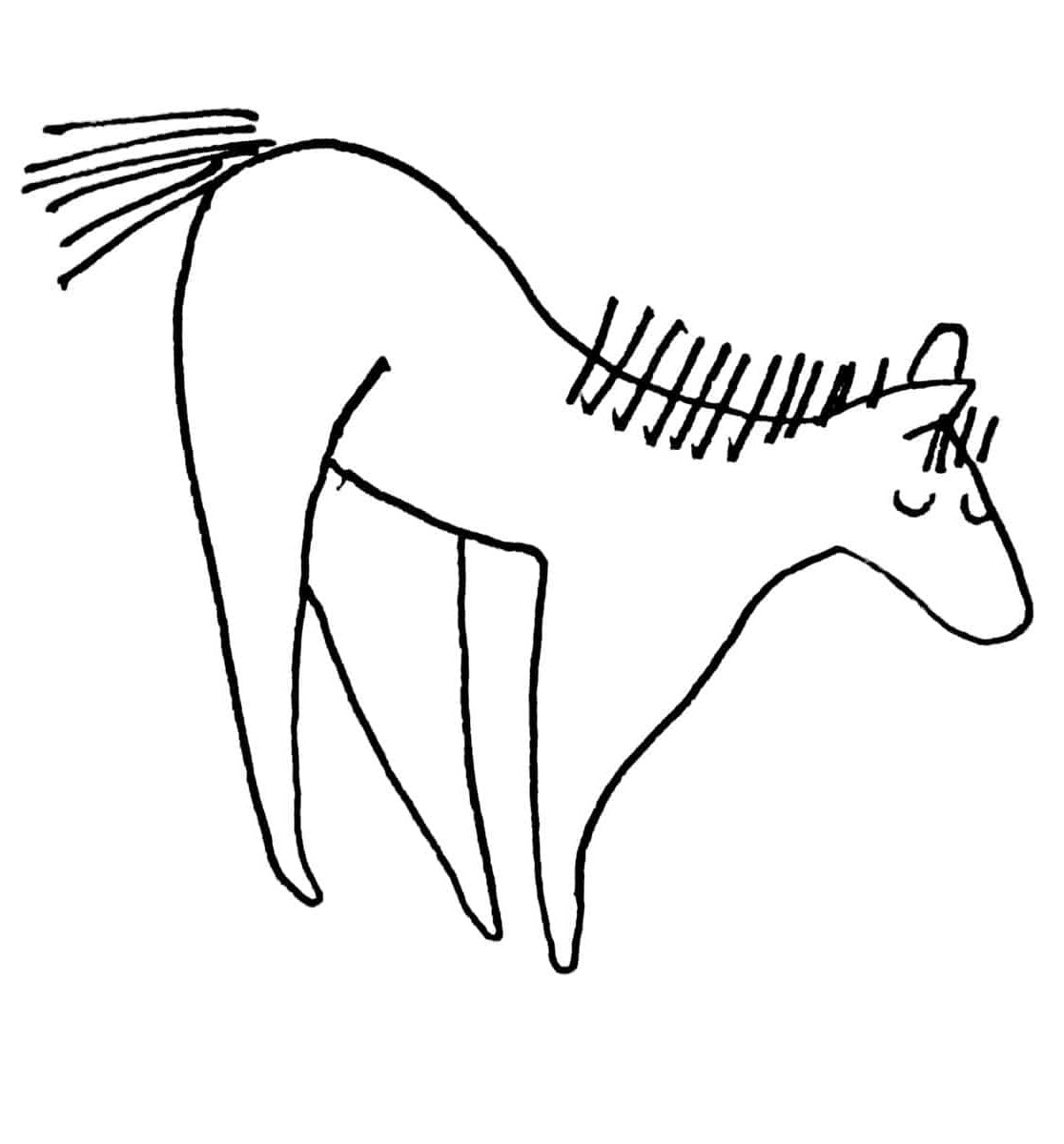
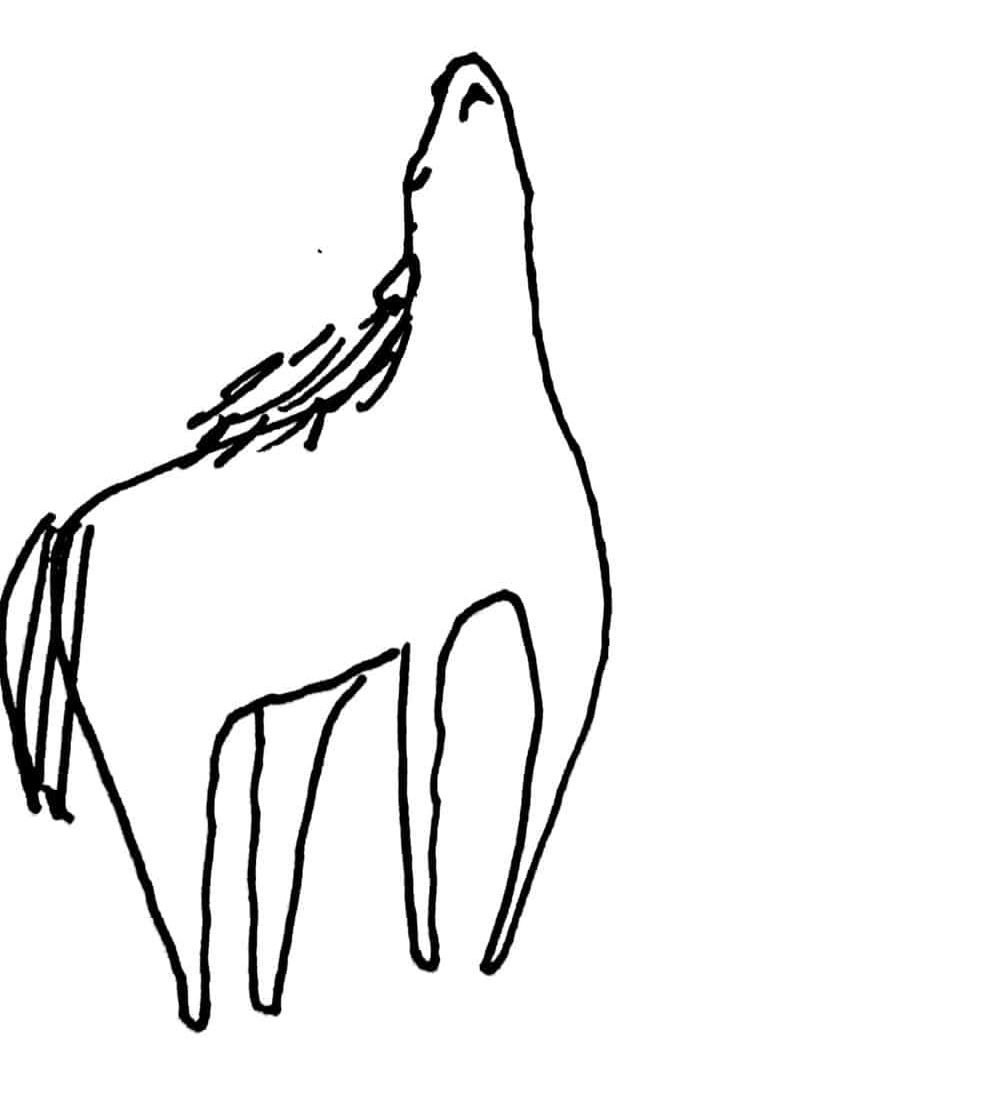
I’m having trouble with a horse. Or trouble with its essay.
As a writer in the Nonfiction Writing Program, I deal in words. As a pen and ink illustrator, I deal in image.
My project this summer with the support of the Digital Publishing Studio is integrating these modes in a way that their union yields fruit that diminishes neither and enhances both — a third way forward. A marrying of my two arts in the digital realm and an integrated way to pursue my research (various depending on the essay, but this year for my thesis, problems with the narrative of flight, early and future human-powered aviation, the ways insects and birds fly badly, how Amelia Earhart used to be very cautious about contracting measles as a child, and other things, etc.).
Horses are not about flying. But I needed to finish up work on this horse manuscript for an early summer deadline, and shuffling it around has been a way to cut my teeth on Adobe skills I’ll need moving forward.
With the simple addition of Adobe skills to my person, I thought, slip slap bam, I would be able to illustrate essays all summer and beyond into a bright multimedia future. All I’d need to do is both things I already, but more or less at the same time.
This has proven more difficult than I imagined. I have words. 900 words of an essay that feel complete and ready to roll. I have pictures. A dozen illustrations primed to the task and tenor of the essay’s lyric. What’s more, I have InDesign and Photoshop skills. With which I have discovered is an infinite variation of possible layouts for these text and images that all feel wrong. And not just a little wrong, but completely wrong. Like I had taken two hunks of precious gem and, setting them together in their jewelry yielded that each turned to rock, just gravel, when placed adjacent to the other.
In many ways, this feels like the struggle of editing I find in prose alone. It is exciting to realize, bodily, through trial and error, the gestures of intuiting the relation of text and image in the same way one does the shape of a line or the syntax of a sentence. When two materials, however fully developed alone, are put into relation, the main focus becomes their relationship, and not the single voice of either. Meaning, one star is point of light and two stars are inevitably a constellation.
Some early conclusions:
Positioning this horse text with these horse images feels like being stuck in the beginning of a movie where the two people do not yet know how to be in love.
There is a difference between thinking about making a thing, and that thing seeming good in theory, and making the thing the way one imagined making it, and realizing the idea was not wholly sound.
I am wary of marrying the illustration with prose because I don’t want the illustration to be redundant to the revelations of its poetry.
I worry the metaphor of the horse will be overcome by an image of the horse.
Just because a person might write and illustrate, does not mean every writing they do is best illustrated.
Learning basic InDesign and Photoshop skills, I realize my belief was that these skills would make layouts obvious. As it stands, I know very well how to move the images and text around on the page and absolutely no idea where to put them.
I think the needs of the horse text and the needs of the horse images are mutual, in fact, but perhaps too mutual, so mutual, that they are filling the same need on the page itself, and telling a story two times that wants to be told once. It can be difficult to balance the needs of two parties.
In these cases I find problems remain which technical skills and even a greater agility of intuition may not assuage.
Like indecision in artmaking, indecision in life is something I contend with daily. It is very difficult for me to shop for large purchases. I bought and returned a used car last week. The gas pedal hurt my right leg. It is one of the great embarrassments of my life. The car was perfect in all other aspects. But this hangup made the whole thing nonviable.
Some things can only be done alone. Like writing, and placing images. Deciding to return a car.
Talking about doing a thing, and worrying about doing a thing, and doing a thing, are all very different things.
When I am working with layout I am thinking: how close to the text should the image be, is this distracting, what happens when there are two horses on the spread, do they seem like a herd? is this too social? if I evoke a horse in mind, and then present a horse in image, do I rob someone of the joy of imagining the horse, or the work of imagining the horse? In an essay about absence, should this essay contain no images at all?
My essay about a horse is currently titled “Horse Essay”, but I suspect it should be called “The Task of the Body” or “Hold Your Horse” or “Horse Essay One” (which I find to be the funny title—but I guess I’m not making a joke, I’m making an essay about longing, ultimately, so maybe in trying to be too clever I could be losing something there. I think that’s often a risk with titles, in writing generally, of being too clever. Being too clever, because cleverness feels good, but that cleverness ultimately being obscuring or impenetrable or unrelated or some diversion that confuses the aim of knowledge being related. Cleverness can be quite ungenerous and Against the Aim of a Thing. And images, too, maybe, can be too clever if not deployed with great care.
14. Should I return this horse?
15. Could I really have spent so many hours with text and image only to choose to end up exactly where I’d begun — with a strictly textual essay?
16. I think, yes. It took a few weeks of trotting around, but this baby is words only. Not a horse in sight.
At times the amount of ideas, and possible outcomes for this project have felt overwhelming. But it has started to feel more manageable as I transfer my ideas into paper, shape those ideas into a more concrete project, and draft the script of my video essay.
I have felt inspired by the presentations of the guest speakers and the ideas shared by the other fellows during our zoom meetings. Some of the thoughts shared have challenged how I envision my project, and they have also inspired me to learn new skills.
A skill that I have spent time learning is how to use video-editing software. In previous projects I had always used iMovie, and the last time I did a video essay I felt that the software was very stiff. In our second Zoom meeting, we talked about developing skills, giving ourselves the opportunity to fail, and following the things you feel passionate about. After that, I decided that it was worth my time to learn the basics of a completely new software since it is a core element of my future scholarly work. The reason I questioned myself was because this skill is not related to my academic background, and having a discussion about it gave me a different perspective about the topic.
One of the things that our last session made me reflect about is the importance of communities. My project does not involve any major interaction with a community; however, I have started to take into consideration what significance my project can have for the music community in Costa Rica. Are other professional musicians and college students interested in the topic of Costa Rican musical identity? Is anyone else interested in what music our National Orchestra plays and promotes?
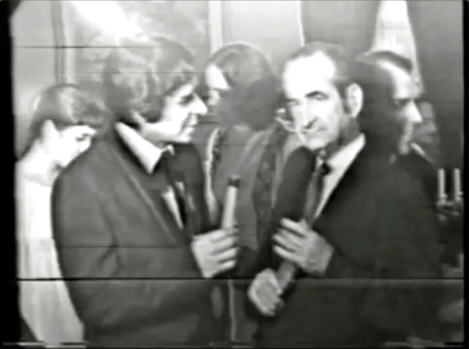
Nelson Brenes & Costa Rican former President Jose Figueres Ferrer.
The still image is from an interview of Costa Rican former President Jose Figueres Ferrer after a concert of the National Orchestra of Cost Rica in 1971 at the National Theatre. This was a crucial period in the development of the Orchestra, and Jose Figueres Ferrer’s Eurocentric vision defined the outcome of music and music education over the next 50 years in Costa Rica.
As a Costa Rican artist, I don’t share that Eurocentric vision of music making and I advocate for a more inclusive approach that takes into consideration our context as a Latin American nation. This disagreement makes me ask myself: What are the consequences of creating content that does not celebrate, but criticizes Costa Rican music institutions? Especially when those institutions made possible my upbringing as a professional musician.
I deeply appreciate the opportunities that accessing a low-cost music education for 15 years has given me. I have concluded that because I care about the vision and future of the music practice in Costa Rica, I want to speak about this topic. In recent private conversations with Costa Rican professional musicians some have expressed that it is not easy to talk about this, and that this is controversial. But I keep thinking the most about something that one of them told me: “Mae alguien lo tiene que hacer.” Someone has to do it.
As a writer and scholar from Venezuela, I identify myself from the fringes of my language. For this reason, writing in Spanish while living in the United States is my way of giving order and meaning to the feeling of being adrift I experienced when I decided to leave my country. In her book “Living Between Languages” (2013), writer and professor Sylvia Molloy explained how she had lived her life through the mirrors of bilingualism. She emphasizes that, for her, those who speak only one language know only one world, and everything outside that world comes —perilously— from translation.
With that premise, I had accepted that my life in Iowa City is one of transition and movement. Every year, writers worldwide come to the city to attend programs such as the International Writing Program, the MFA in Spanish Creative Writing, and the Iowa Writers’ Workshop. Coming to the United States with a student visa means that you will leave the country once you are done with your programs. For people like me, who need to stay in this country for humanitarian reasons, life in the city starts to be one of a spectator: I stay but I have to see people —and my friends— leave. As the person who stays, I feel the need to capture part of what life was for them in Iowa City: the houses where they once lived, the furniture and the books they have to leave behind, the traces of the space once contained their creative worlds.
For my project entitled “Voces in Iowa,” I would like to design a website that recognizes Spanish as a writing language in Iowa City. Since 2019, I have been taking photographs and conducting oral interviews with Spanish-speaking writers who lived in Iowa City to complete their MFAs, and who had come as visiting writers for the International Writing Program. Since then, I have wanted to design and publish a digital project that gathers their creative voices. Through the support of this fellowship, I will create a website that would be part of the library’s digital archives, a place that would represent an important legacy from some of the Spanish-speaking writers who found a place to develop their literary universes in Iowa City.

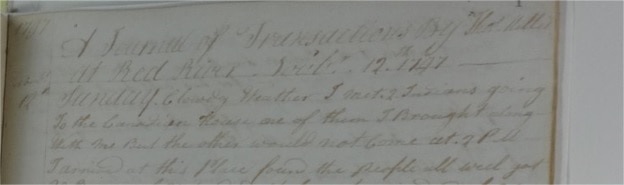 Figure 1: The First Page of Thomas Miller’s 1797-1798 Post Journal from the Red River.
I chose to transcribe a post journal from a time and place in which I knew a Two-Spirit person lived. Ozaawindib was Naagokwe (a being who appears as a woman) and was generally just referred to as a woman by her fellow Anishinaabeg. That entire transcribed post journal refers to only one woman, and not by name, and there is no reference to Ozaawindib in any recognizable way. The authors of these records were so blinded by their rigid colonial heteropatriarchy that even if they observed relationships or people who might identify as Two-Spirit today, they may not have recognized that. This does not mean it is not important to analyze them.
For example, fur trader John Sutherland’s trading post journal from the Saskatchewan River in 1795 is typical of Hudson’s Bay Company records in that all the women he wrote of were described solely through relationships to men or children, with one exception. (see figure 2)Figure 2: John Sutherland’s Entry for August 2nd 1795, Indian Elbow post Journal.
Figure 1: The First Page of Thomas Miller’s 1797-1798 Post Journal from the Red River.
I chose to transcribe a post journal from a time and place in which I knew a Two-Spirit person lived. Ozaawindib was Naagokwe (a being who appears as a woman) and was generally just referred to as a woman by her fellow Anishinaabeg. That entire transcribed post journal refers to only one woman, and not by name, and there is no reference to Ozaawindib in any recognizable way. The authors of these records were so blinded by their rigid colonial heteropatriarchy that even if they observed relationships or people who might identify as Two-Spirit today, they may not have recognized that. This does not mean it is not important to analyze them.
For example, fur trader John Sutherland’s trading post journal from the Saskatchewan River in 1795 is typical of Hudson’s Bay Company records in that all the women he wrote of were described solely through relationships to men or children, with one exception. (see figure 2)Figure 2: John Sutherland’s Entry for August 2nd 1795, Indian Elbow post Journal.

 When we think of monks and nuns, we often think of cloistered people who do not leave their adopted home in pursuit of religious devotion. But the notes in these books hint at a lively trade in books and movement of monks all across Egypt, Syria, Turkey, Iraq, and Iran. Moses of Nisibis is just one example of how Christian monks who spoke and prayed in an Aramaic dialect known as Syriac (so named for its origin in the Syrian city of Edessa) visited new places and exchanged books and stories. When Moses deposited his library of over 200 books at Dayr al-Suryan in the 900s, he had no way of knowing that most of these texts would eventually be sold in bulk to the British Library, where librarians and scholars are now digitizing these texts for viewing by the public. But Moses did make a note in most of these texts as a reminder to the reader that he was the one responsible for their movement.
 I’m having trouble with a horse. Or trouble with its essay.
 It can be difficult to balance the needs of two parties.