The following was compiled by Cecil Campbell, exhibition and engagement student lead for the Main Library Gallery, and features select exhibition text by Sarah Suhadolnik and Katie Buehner.
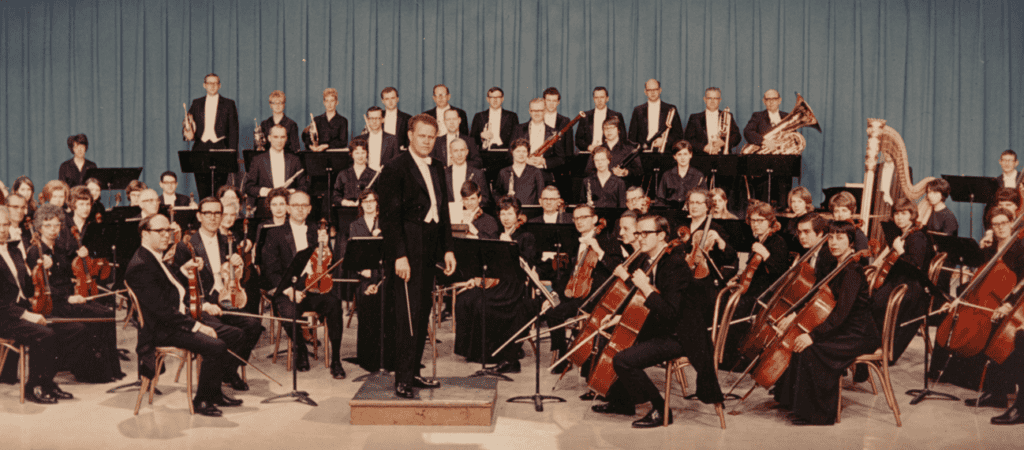
In 1916, the Tri-Cities area—Rock Island, Illinois; Moline, Illinois; and Davenport, Iowa—was the smallest community in the country to support a full symphony orchestra. Now the Quad City Symphony Orchestra (QCSO), it is one of the oldest continuously operating orchestras in the United States.
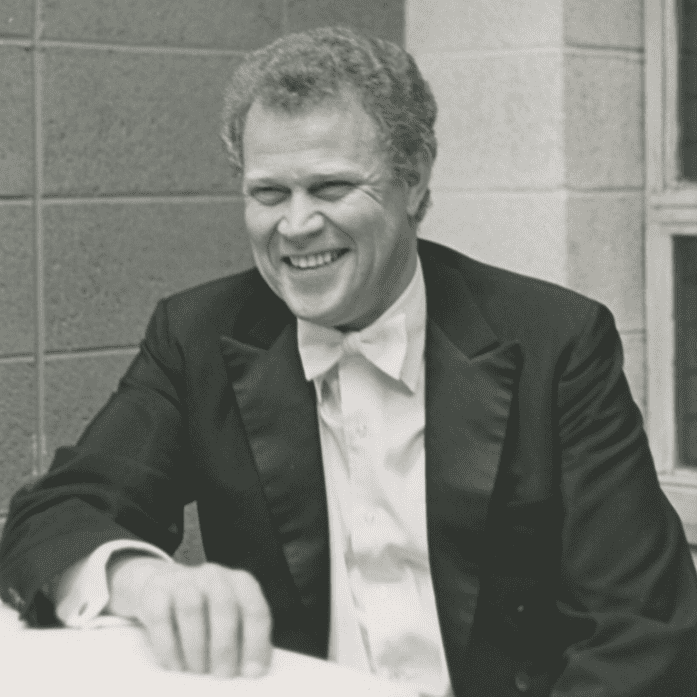
In 1965, 37-year-old James Dixon was hired as the music director, appointing him steward of this legacy and the most recent director in a line of (at the time) seven before him. Although Dixon’s programming choices initially tested the tastes of audiences and administrators alike, he quickly garnered a reputation for steady leadership.
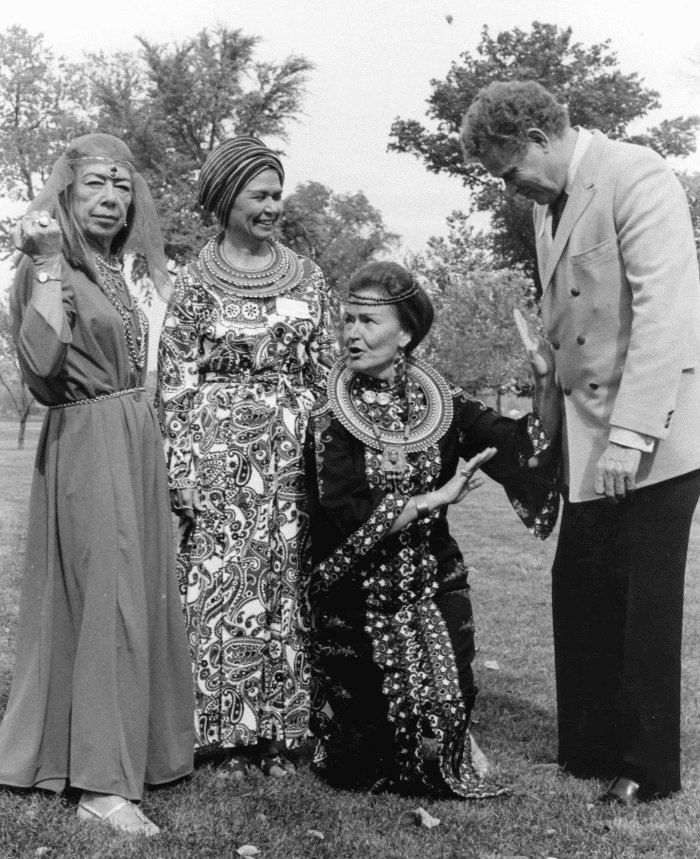
While learning to work with professional musicians, Dixon also grew into his role in the organization’s ongoing efforts to secure subscribers—members of the community who provide essential annual support. The care and discipline Dixon brought to his work transformed him into a local celebrity. While that may seem like high praise, Dixon’s celebrity status could be seen in more than just reputation. For example, at the time Dixon joined the QCSO as conductor, the organization had a modest budget. By the time he retired in 1994, budgets were significantly larger owing to his fundraising efforts.
Dixon’s—and the QCSO’s—long-term investment in local community has paid large dividends. When one considers not only how important the orchestra is—and was—to its audiences, but to the musicians themselves, it makes his level of commitment stand out all the more. As one of the Quad Cities’ oldest community groups, it makes sense that the QCSO has played a significant role not just in the lives of area residents, but in many of its members’ lives as well.
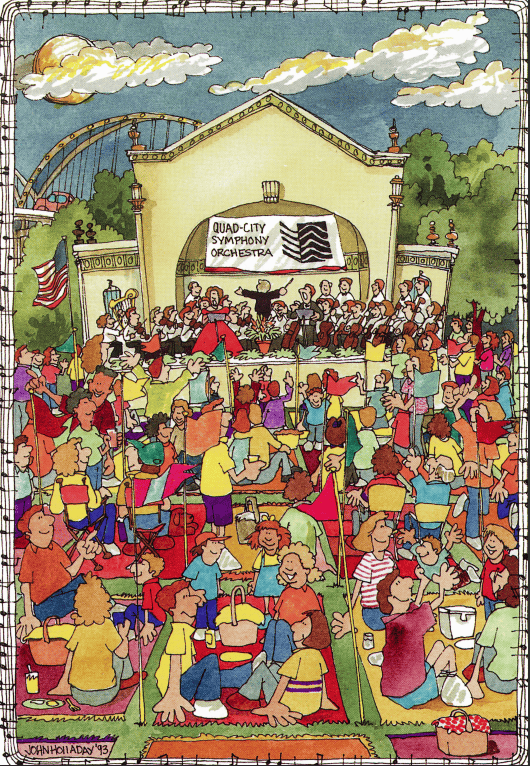
In a now-archived blog post from the Davenport Public Library’s website, special collections librarian Sarah J. Wesson wrote, “The Symphony has remained a cohesive group, weathering storms and uncertainties together. Though none of the original [early] musicians remain, of course, many of the current members have been with the orchestra for a remarkable length of time.”
After 29 years with the QCSO, James Dixon left an impression as significant as his orchestra. Former QCSO executive director Lance Willett said, “I think it’s something that rarely, if ever, will be seen again in most communities. That kind of dedication and connection to a community…is the sort of relationship that exists very, very, rarely.”
Learn more about James Dixon and his local impact in the spring 2026 Main Library Gallery exhibit, Orchestrating Community: The Public Service of Iowa Conductor James Dixon, which closes June 26.