On this date in 2000, Vice President Al Gore reluctantly conceded defeat to Texas Governor George W. Bush in his bid for the presidency. View more Des Moines Register cartoons on the 2000 election here.

On this date in 2000, Vice President Al Gore reluctantly conceded defeat to Texas Governor George W. Bush in his bid for the presidency. View more Des Moines Register cartoons on the 2000 election here.

Snow is falling in Iowa City, and it’s early enough in the season that we don’t hate it yet. In these historic images from the Iowa Digital Library, Iowa Child Welfare Research Station students demonstrate the proper way to appreciate a snowfall. View more wintry scenes of Iowa City here.


It can be interesting to see how views of education have changed since the late 19th century. The journal Educational Weekly, published from 1877–1881, opens a window onto teaching methodology of the era. One article, from the April 7, 1881 issue, offers some interesting thoughts from Dr. A. R. Benton, including the following snippets:
“The pettiness of pedantic specialism” is the bane of teaching and the death of all inspiration and contagious enthusiasm.
There is much in a liberal education that cannot be learned well and orderly from books alone.
… the teacher should be a trusty guide through the mazes of hypothesis and speculation, moderating the intoxication begotten of new and surprising glimpses of knowledge, and conducting, as a faithful Mentor, the learner through all difficulties, into the safe moorage of truth, verified by experiment or established by a sound philosophy.
My favorite quotation is:
In former times, the living teacher was a necessity, because of the scarcity and costliness of books. In the present, books are spawned with the fecundity of Egyptian frogs, sometimes as disgusting and pernicious, making the function of the teacher no less important and vastly more varied and complex.
The complete essay follows:
METHODS IN EDUCATION
We take the following on methods from a lecture on “Liberal Education,” delivered before the Indiana College Association, by Dr. A. R. Benton, of Butler University :
In liberal education method is no inconsiderable factor. The pressing question among college instructors of our time is not so much what to teach as how to teach. The practice of our best teachers is much below the inculcations of the best thinkers on education. It is an infelicity of our work, that it is hard to realize even our own ideal. A change of studies, for which the New Education clamors, to the exclusion of those which have been approved by the suffrages of educators, is no remedy for bad methods. The gerundgrinder, as the teacher of ancient languages is facetiously called, is not a whit less faulty in method, than he who teaches the English language, or one who drones through a text-book of hard, technical names, with a bewildering cumulation of insignificant and uninteresting details. “The pettiness of pedantic specialism” is the bane of teaching and the death of all inspiration and contagious enthusiasm. This defect is not peculiar to our times. Two hundred years ago John Locke wrote, in the spirit of sharp criticism, words that have an amazing fitness and pertinence in our day. Says he, “If any one among us has a felicity or purity more than ordinary in his mother tongue, it is owing to chance or genius, or anything, rather than to his education or any care of his teacher.” I have no wish to stay the hand of any educational reformer who wishes to hew to pieces this modem Agag of false method in teaching. But let this avenging zeal be impartial, and according to knowledge. If the abuse of method is hoary with age, let it claim some of the privileges of honorable age ; but smite with the hammer of the iconoclast every false image set up for homage in the name of the new education. If I may be allowed a certain freedom of utterance, and without offence, I opine that the chief defect in method is personal. The reliance which modern method places on the machinery and appliances of instruction is quite disproportioned to their merit. The personality of the teacher is retired, the method stands in the foreground. It is one thing for a teacher to master the machinery of method; it is quite another to master that for which all method exists—the mind and heart of the student, and the approaches to them. It occurs to me that the chief word in the method of liberal education is inspiration. From the time of Socrates to that of Dr. Arnold of Rugby this has been the “primum mobile.” A learned Englishman, in the Contemporary Review for March, 1878, has pertinently inquired, “In what does the gift of teaching consist ? Assuredly not in the possession of a large body of solid learning. It consists infinitely more in the power of sympathy, the ability to place oneself in the exact position of the learner, to see things as he sees them, and to feel difficulties as he feels them, and to be able to present the solution precisely in the form that will open the understanding of the pupil, and enable him in gathering the new piece of knowledge to comprehend its nature and value.” This method stands out in sharp contrast with what may be called the impersonal method. This latter sends the student out to browse in the field of knowledge, and from time to time examines his intellectual growth, and marks it on the intellectual scale with scrupulous exactness and pretentious significance. The student is left largely to himself, to organize painfully, and to correlate imperfectly the various facts and principles of his research into such unity as science or philosophy demands. Or, forgetting that “the subtilty of nature is forever beyond the subtilty of man,” impersonal teaching often requires some marvelous feat of memory in which an infinity of detail, dry as the clown’s “remainder biscuit after a voyage,” is made the test of knowledge and culture. There is much in a liberal education that cannot be learned well and orderly from books alone. Many subjects need the vivifying, directing mind of the teacher. This needs to be active, comprehensive and judicial. The personal element must so handle both the matter and manner of teaching as to compel confidence. In the matter, the teacher should be a trusty guide through the mazes of hypothesis and speculation, moderating the intoxication begotten of new and surprising glimpses of knowledge, and conducting, as a faithful Mentor, the learner through all difficulties, into the safe moorage of truth, verified by experiment or established by a sound philosophy. Such a one will discard the speculating, romancing style of teaching, which catches at half truths, having, perhaps, a nebulous grandeur, exciting wonder, rather than imparting exact information. This question of the matter, which shall enter into liberal education, has been distinctly raised in Germany in the well known controversy between Professors Virchow and Haeckel. In the highest reaches of thought belonging to history, ethics and biology, and kindred subjects, the personal power, and, in some sense, the authoritative and discriminating judgment of the living teacher is indispensable. In former times, the living teacher was a necessity, because of the scarcity and costliness of books. In the present, books are spawned with the fecundity of Egyptian frogs, sometimes as disgusting and pernicious, making the function of the teacher no less important and vastly more varied and complex. The instinct of every well constituted mind impels the learner to reconcile contrarieties and to explain paradoxes, so as to reduce all his knowledge to a seemingly consistent and concordant system. The mind strives to organize its knowledge, so that it may be scientific in fact, as well as in form. In this respect the office of a wise, comprehensive, judicious instructor is of great moment.
With books, as with companions, it is of more consequence to know which to avoid than which to choose.
Beginning tomorrow, a series of events will take place on campus examining the black experience at The University of Iowa. Two sessions in the “Iowa and Invisible Man: Making Blackness Visible” project have an online component in the Iowa Digital Library.
View the digital collection inspired by Breaux’s research: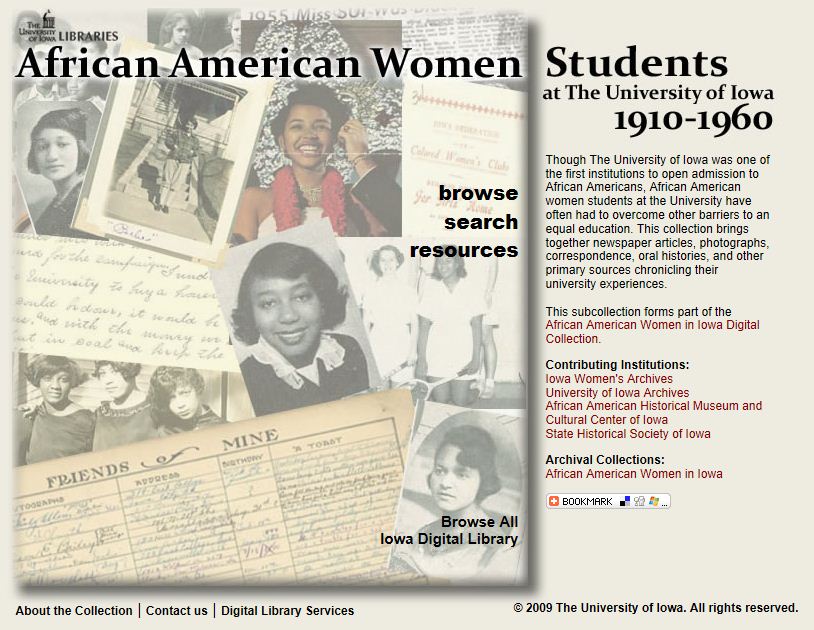
View digitized versions of Catlett’s work in the University of Iowa Museum of Art digital collection: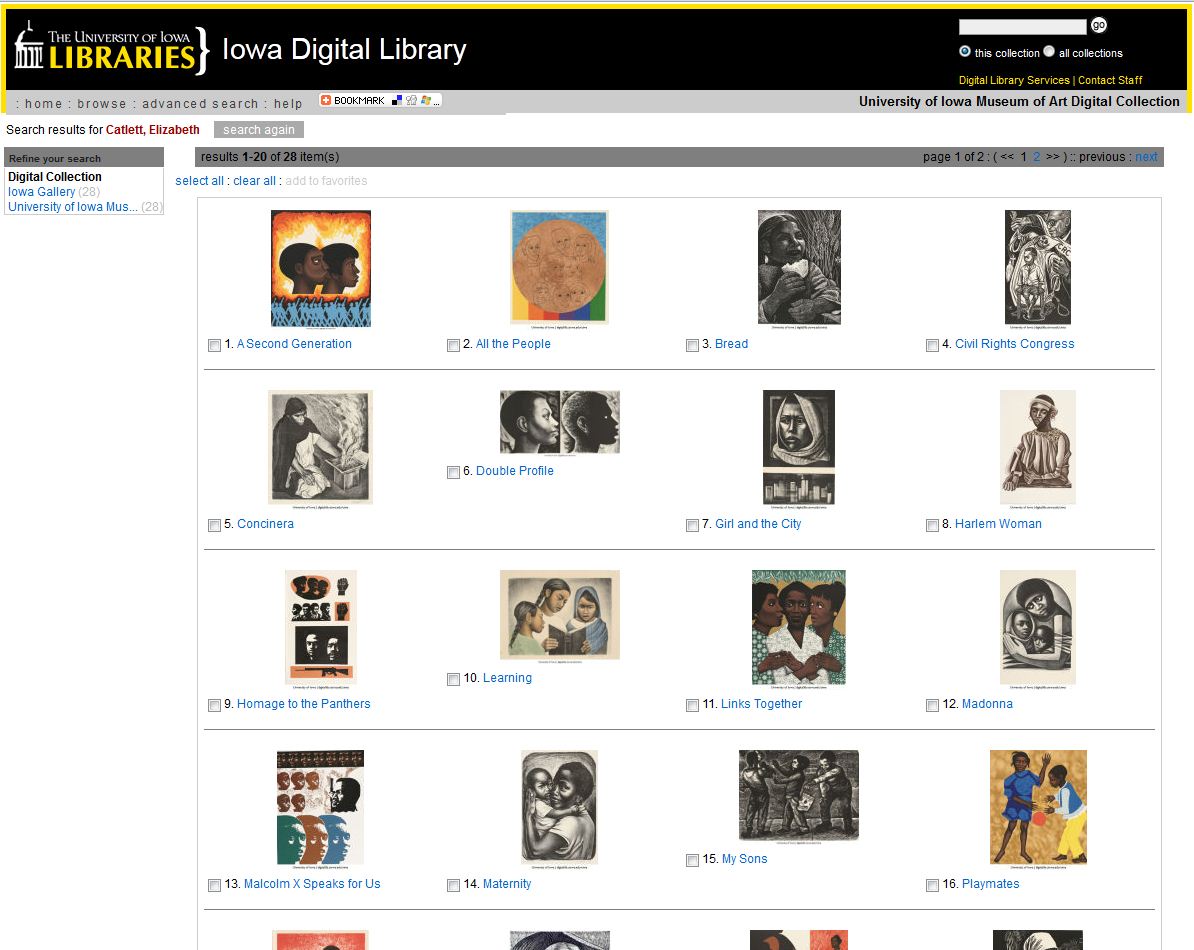

Below are the Thanksgiving entries from our Civil War Diaries and Letters digital collection featured on our transcripts Twitter account this week. The holiday traditions weren’t fully established during the Civil War — it hadn’t been declared a national holiday until Lincoln’s proclamation of Oct. 1863 — so soldiers were as likely to celebrate Thanksgiving dinner with chicken or apples as with turkey. But Dr. Asa Bean, serving as a surgeon in the Union Army, managed to engage in the traditional family squabble; in a letter to his wife, his description of the holiday meal was immediately followed by a harangue about finances:
“I have Not Received any Money Since I came here Not a dollar. Do you see the point, one point You will Readily see The point of My Not sending any Home Pay Day Must come sooner or Later – May be I shall come home before Long.”
Sadly, that trip home never happened; Bean died in service the following spring.
—-

Yesterday was “Thanksgiving Day.” We observed it by having chicken & some few other nice things for dinner.
—

Thanksgiving day, went to town, heard an excellent discourse by an army chaplain at the Presbyterian church; no drill today.
—

This being Thanksgiving day the Sanitary Commission issued three fine apples to every man.
—

The Brigade Commissary issued Sanitary rations, for thanksgiving, consisting of Chickens, Turkey &c. It was intended by the Sanitary Commission that they should be issued on thanksgiving day but they did not arive on time. The boys enjoyed the feast just as well today.
—

There has been a surprise party here to Day for the Benefit of Soldiers & Nurses they were furnishd with a Choice thanksgiving Dinner Roast Turkey; Chicken & pigeon & Oysters Stewed. The Ladies were here before [12 M?] Thus Displacing the Hospital Dinner; Common; Eclipsing it Entirely. I had a good dinner of Baked Chicken & Pudding Boiled potatoes, Turnip, Apple butter, cheese Butter, Tea & trimmings – Vide we live well Enough, but cannot Eat Much without being sick.

“The fire was a disaster that destroyed the original tower of a treasured landmark for the UI, community, and the State of Iowa,” associate museum director Shallah Ashworth notes. “But as with any disaster, the fire gave the Old Capitol Museum the opportunity to literally rise from the ashes and to move into the 21st century with new life.” —“Rebirth of a landmark” news release
As the University marks the 10th anniversary of the Old Capitol fire, we’re featuring these contemporary accounts of the event from Iowa Digital Library.


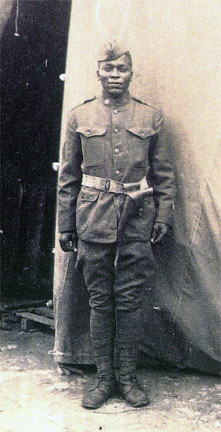

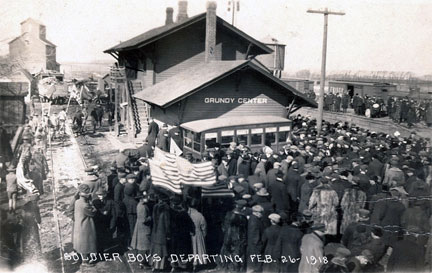



Today marks the 20th anniversary of the November campus shootings at The University of Iowa. A full account of the event is available in this special edition from our Daily Iowan Historic Newspapers digital collection:


Selections from the Des Moines Register Cartoonists digital collection