Skip to content
Skip to main content

Crowdsourcing continued

Expanding our manuscript transcription crowdsourcing site to include materials outside of the Civil War collections is taking longer than expected — apparently digitizing thousands of pages of manuscript cookbooks dating from the 17th century is not quite as straightforward as one would wish. But the scanning is finally underway, and we’re using the extra time it’s taken to investigate Scripto, a specialized tool that could help us manage our crowdsourcing workflows more efficiently. Meanwhile transcription on the Civil War materials is still going strong — we expect to receive our 10,000th submission within a month and we’re picking up new users all the time, such as Pinterest member Alicia Lea, who wrote the lovely testimonial below.

Pinterest entry on Civil War crowdsourcing transcription
Pinterest


Reach for your rights

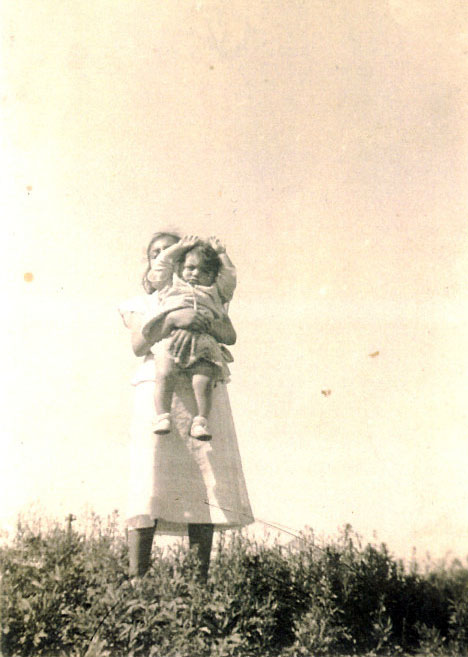
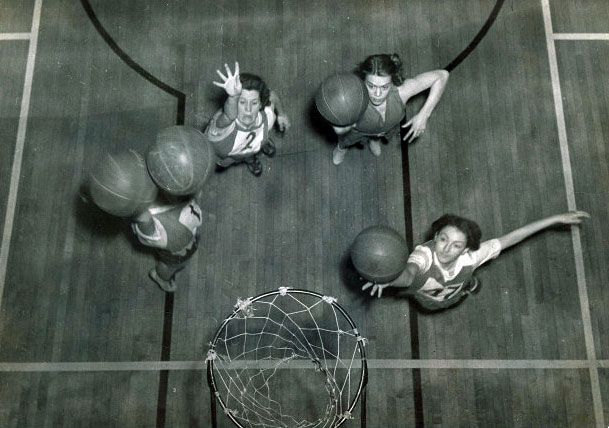
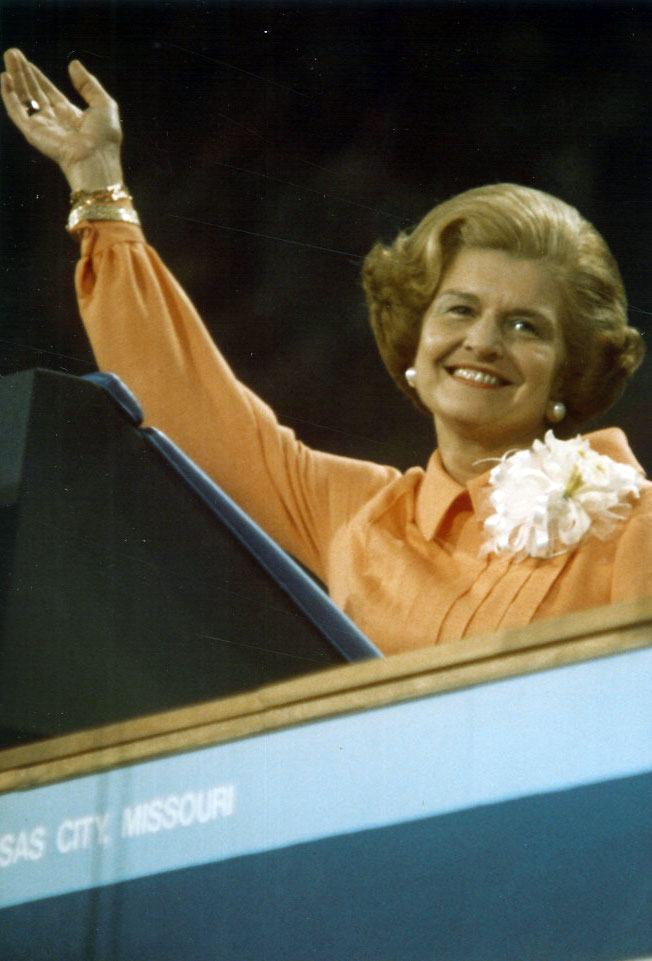
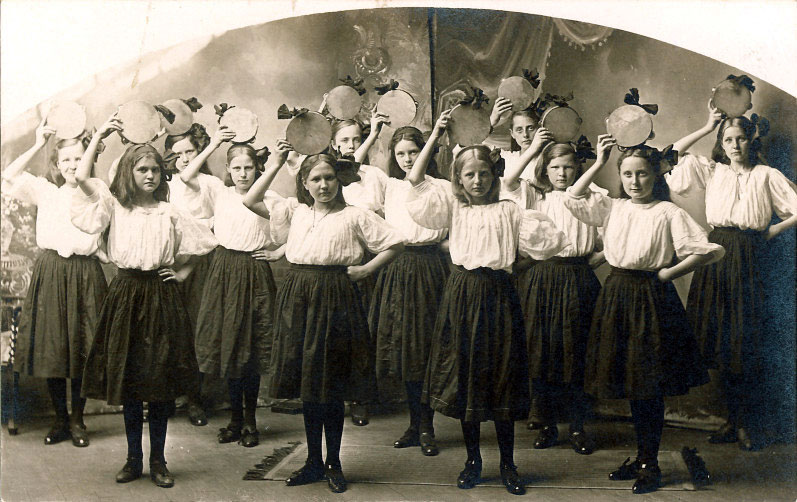
In celebration of International Women’s Day, we’re featuring a few of the thousands of artifacts in our Iowa Women’s Archives Digital Collections:

Holy City residents, Bettendorf, Iowa, 1920s | Mujeres Latinas
Basketball practice, 1938 | University of Iowa Physical Education for Women
Betty Ford at the National Republican Convention, Kansas City, 1976 | Iowa Women's Archives Founders
Girls' dance troupe, Roland, Iowa, 1910s | Noble Photographs
Fence climbing, The University of Iowa, 1920s | African American Women in Iowa

Civil War transcription tips

For the sake of consistency in the transcriptions of the Civil War diaries and letters, here are a few more guidelines and a short list of some common abbreviations and older spellings:

  • Enter line breaks to indicate sections of the letter – salutations, paragraphs, signatures, postscripts
  • Do not transcribe text that has been crossed out, and simply transcribe interpolations above or below the line as if they were part of the text without special symbols
  •  If you are unsure of a word or phrase, please use square brackets with a question mark between them, or your best guess followed by a question mark
  • Common abbreviations and their full spellings include: inst. = a date in this month (e.g. the 15th inst.); ult. = a date in the previous month (5th ult.); &c = et cetera; QM = Quarter Master; Capt. = Captain; Lieut. or Lt. = Lieutenant; Maj. = Major; Col. = Colonel; Prov.Gen. = Provost General; Adjt. = Adjutant; Regt. = Regiment; Brig. = Brigade; Cav. = Cavalry; Inf. = Infantry; Vols. = Volunteers; Col. Inf. = Colored Infantry; R.R. = railroad; HdQrs. = Head Quarters
  • Common “misspellings” and writing conventions: ware = were; thare = there; very = very; evry = every; evening = evening; perhapse = perhaps; attacted = attacked; fiew = few; greaddeal or great eal or gread eal = great deal; fs = ss (e.g. mifses = misses)


William T. Rigby letter, May 23, 1864 | Civil War Diaries and Letters

Love & war

Over on the Twitter account for the Libraries’ Civil War transcription crowdsourcing project, we’re taking a break from our Black History Month tweets to highlight some Valentine’s Day content, such as Albert Cross’s 1862 diary entry indicating a conflicted relationship with the holiday: “I wish the mail would come as this is Valentine’s Day. I am expecting some valentines though I can’t say I crave any.” By the next day, this ambivalence appears to have cleared up after the arrival of — spoiler alert! — the expected valentines from a not-so-secret admirer: “Yesterday I received two valentines whitch was very Interesting Indeed. I have a very good idea who they came from and I shall call on them in a few evenings and talk to them about the matter.”

James B. Weaver’s 1861 love letter to his wife is no less passionate for having been written on September 3rd rather than February 14th — romantic excerpt below, lovingly transcribed by our crowdsourcing volunteers:

James B. Weaver letter to wife, 1861 | Civil War Diaries and Letters

…I am now writing by Candlelight, & I would be the happiest man living could I get one sweet kiss from you this night. Darling you will pardon me won’t you for writing you so much about my love for you, for I really do not feel like writing about anything else. I think of you all the time. You are constantly in my mind. O darling how much good it does my very soul to prove true to such a true woman as you are. I pledge you my word before God that I am all yours and that I would rather die at once than prove unfaithful to you. I always thought that you had more attractions for me than any woman I ever saw long yes years before I married you, but now I know you, and indeed you are tenfold more woman than I ever imagined you in my love dreams. God love you my own true, honorable, highminded wife. Darling you know that I am a man of very, very strong passions, but I pledge you my honor & my very soul before God that I am all yours, every whit. You are mine thank God. O what a [pinnacle?] love is. I am happy in loving you…
[he goes on for two more pages]

Skipping ahead a few wars, our Valentine’s slideshow linked below features a cherubic Stalin and Hitler among more familiar symbols of love:

XOXO, The Libraries: romantic artifacts from our research collections

Happy Valentine’s Day!

Dickens’ bicentenary

Self portrait with Charles Dickens, by James Louis Steg, 1964 | University of Iowa Museum of Art

Today the University will be marking the 200th anniversary of Charles Dickens’ birth with a presentation hosted by the Obermann humanities center. Along with lectures on Dickens by UI and community experts, the event will feature selections from the Libraries’ Dickensiana holdings, including some of the correspondence digitized for our Leigh Hunt Letters collection:

Charles Dickens correspondence, 1842-1870 | Leigh Hunt Letters

Charles Dickens letter to Leigh Hunt, May 24, 1844 | Leigh Hunt Letters

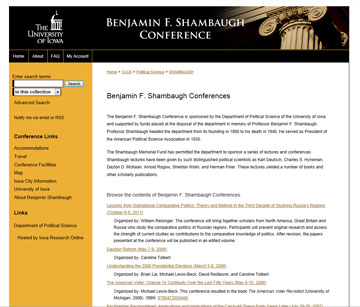
New site broadcasts the cumulative impact of the UI Political Science Department’s Shambaugh Conferences

Access to lectures and academic papers from the Benjamin F. Shambaugh Conference is now available at http://ir.uiowa.edu/shambaugh/. The conferences, sponsored by the Department of Political Science of the University of Iowa, are supported by funds in memory of Professor Benjamin F. Shambaugh, who headed the department from its founding in 1900 to his death in 1940.

“In preparing to organize the most recent Shambaugh conference, in October 2011, I realized that our department lacked any way to broadcast the cumulative impact of the Shambaugh conferences—the variety of topics addressed and the quality of the resulting publications,” said Political Science Prof. Bill Reisinger. “I also knew that the quality of my conference would be enhanced with a web-based location for conference information and the papers.”

Reisinger partnered with The Libraries to develop the site that allows users to manage various phases of the a conference process from proposal submissions and agenda posting to paper and presentation archiving. All proceedings managed on this platform are accessible through Iowa Research Online (IRO), a dynamic archive of the research produced by faculty, researchers, and students, from published articles in peer-reviewed journals to presentations, theses, dissertations, and unpublished papers.

The conference is among a growing stable of local conferences using the IRO conference management platform can accommodate one-time-only and repeat scholarly events, large multi-track events and single session symposia, new content as well as content from past events. This service is part of a larger one at the Libraries to help advance scholarly publishing.

For more information about the service please visit Digital Research & Publishing’s conference page or contact lib-ir@uiowa.edu.

— Nicole Saylor
Head, Digital Research & Publishing

Wisława Szymborska, 1923-2012

Wisława Szymborska, Nobel-prize winning Polish poet, died on February 1, 2012. According to The Telegraph:

The Nobel award committee’s 1996 citation called her the “Mozart of poetry,” a woman who mixed the elegance of language with “the fury of Beethoven” and tackled serious subjects with humor. While she was arguably the most popular poet in Poland, most of the world had not heard of the shy, soft-spoken Szymborska before she won the Nobel prize.

She has been called both deeply political and playful, a poet who used humor in unforeseen ways. Her verse, seemingly simple, was subtle, deep and often hauntingly beautiful. She used simple objects and detailed observation to reflect on larger truths, often using everyday images – an onion, a cat wandering in an empty apartment, an old fan in a museum – to reflect on grand topics such as love, death and passing time.

On May 6, 2011, Prairie Lights hosted a poetry reading celebrating the work of older poets, including Szymborska.  You can hear her poems, as well as selections from Elizabeth Bishop, Donald Justice, Stanley Kunitz, W.S. Merwin, and W.B. Yeats in this recording: http://digital.lib.uiowa.edu/u?/vwu,2897

Our collection also includes a discussion with Bronislaw Maj on the difficulties of translating Szymborska’s idiomatic language and colloquialism into an international literary language: http://digital.lib.uiowa.edu/u?/vwu,448

And if you’d rather remember her by reading one of her books, you can check those out too!

Art Building West back in business

Art Building West flooded, The University of Iowa, June 2008

The UI’s Art Building West, winner of a 2007 American Institute of Architects Honor Award, was open for less than two years when it sustained severe damage in the floods of 2008. With original construction costs of $21.5 million, the building recently completed its $14.2 million refurbishment and is finally back in business. Check out these images of ABW from the Iowa Digital Library before stopping by to see it in all its newly restored glory:

Construction, 2005 | University Communication and Marketing Photographs

Flood damage and repair, 2008 | Iowa City Flood

Deadline near for UI public digital humanities grants

The deadline for the new Digital Studio for Public Humanities (DSPH) grant is next week. Launched in August 2011 by the Office of the Provost, the Digital Studio for the Public Humanities  encourages and supports public digital humanities research, scholarship and learning.

All proposals must be submitted electronically to the Office of the Vice President for Research via the UIRIS website. Applicants are advised to submit applications a few business days in advance of the Monday, February 6, 2012, due date, as problems can arise in the electronic submission process.  OVPR staff is available between 8:00 a.m. and 4:00 p.m. daily to assist with submissions, according to the grant guidelines.

DSPH projects must be designed to result in the applicant developing research that will result in a digital project with a public dimension. Projects should make a significant contribution to the field, and enhance the applicant’s scholarly reputation among their peers.

The funds are for research conducted June 1, 2012 – September 1, 2013. If you have questions, please direct them to Cheryl Ridgeway (384-3332; ifi-questions@uiowa.edu).