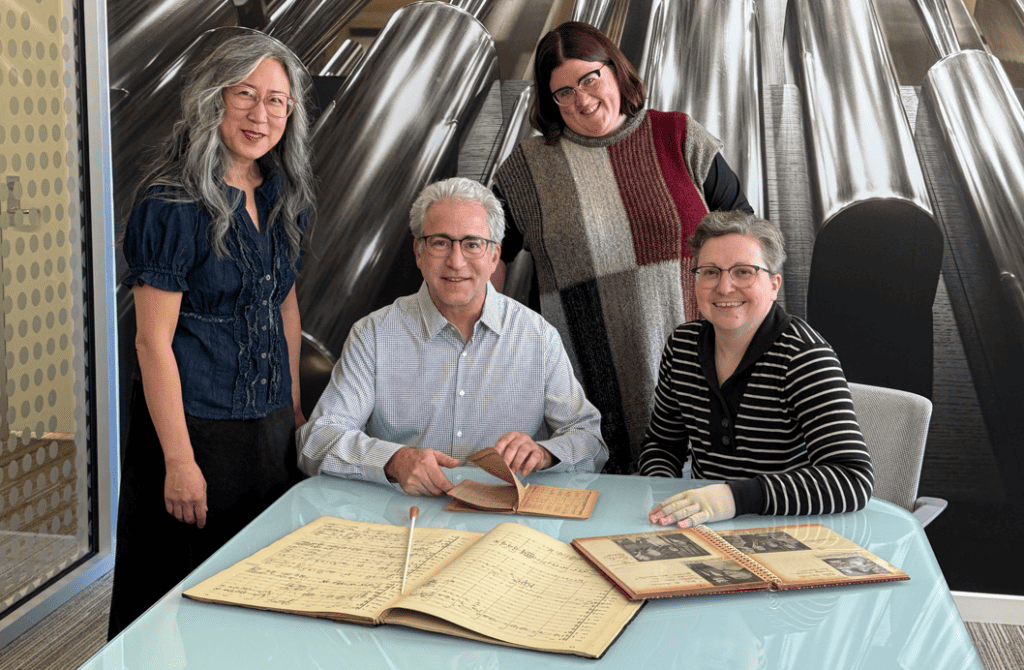
Orchestrating Community: The Public Service of Iowa Conductor James Dixon, the spring 2026 exhibition in the University of Iowa Main Library Gallery, provides a glimpse into the life of its namesake through stories and objects from the recently donated James Dixon Papers. From newspaper clippings and photographs to official documents and correspondence, each item on display helps piece together his adventurous international career as an orchestra conductor while celebrating his roles as a longtime director of both the University of Iowa Symphony Orchestra and the Quad City Symphony Orchestra.
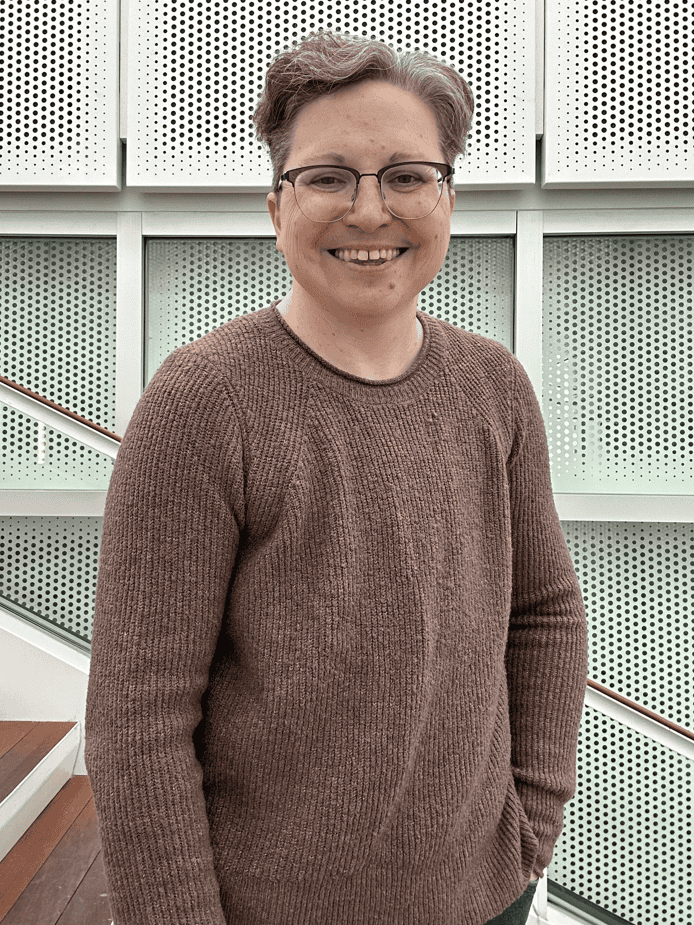
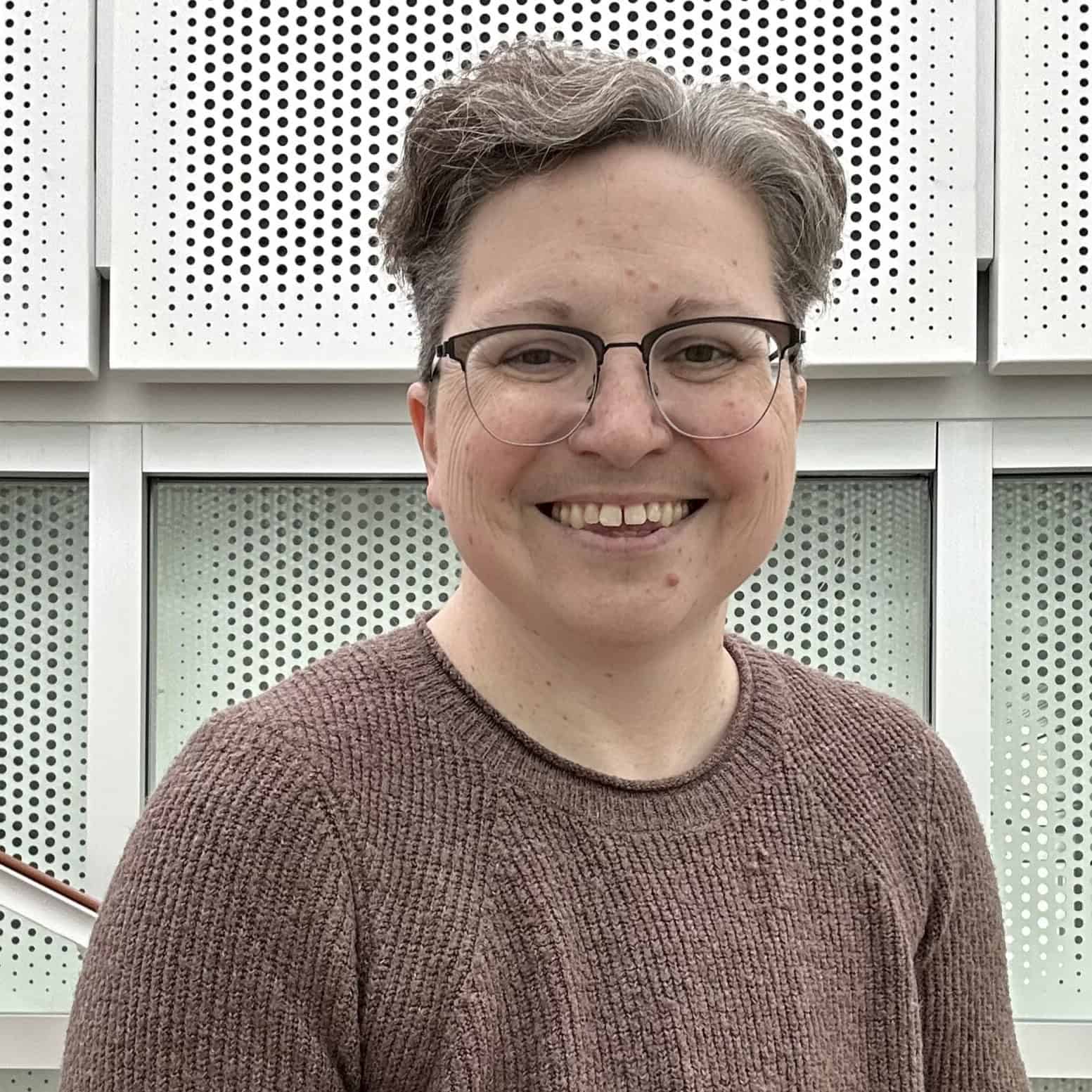
Katie Buehner, director of the Rita Benton Music Library, co-curated the exhibition with Sarah Suhadolnik, assistant professor of instruction at the University of Iowa School of Music. Buehner played an important role in facilitating the donation of the Dixon Papers to the Libraries.
Question: What inspired you to co-curate this exhibition?
Answer: When the Libraries received the donation of James Dixon’s papers, I knew they would make for a great exhibit. It’s a big collection—over 1,200 music scores to start, and we’re still working our way through the papers portion—and so there’s been a great deal of content from which to tell this story. When I met with the donors Carey Bostian and Miera Kim, one of our stated aims was to get the collection into the public eye so that they could use it for research and to spur their own creativity. An exhibit is a great way to start that process.
Q: What drew you into the story of James Dixon (1928–2007)?
A: I think listening to the stories from people who played under Dixon’s baton really drew me into wanting to know more about him and his philosophy of music-making. There’s great admiration for him as a skilled conductor and musician, even if he could be gruff and demanding. I also was so impressed by his mentor, Dimitri Mitropoulos, who despite being a world-class conductor lived such a humble, simple existence. One thing I feel I share with Dixon is the statement he made at his retirement party: he learned to love teaching, and that’s where he really felt he’d left something enduring behind.
Q: What has curating this exhibit meant to you as both a librarian and musician?
A: I haven’t seen many exhibits about music, especially centered on classical music stories, and that’s a world I’ve inhabited for decades now. It’s very easy to say that classical music or orchestras are passe and not accessible to the average person, but I think this exhibit tells a different story. It shows how orchestras can and are community-rich organizations that connect people with all kinds of music and experiences.
Q: How did the Dixon Papers come to Iowa?
A: I moved to Iowa in 2014 to become the music librarian, and a colleague at the Libraries—Christine Bellomy—introduced me to local musicians Carey Bostian and Miera Kim. Carey waited about two seconds before telling me all about Dixon’s score collection and other papers he had stored in every hidey-hole in their house, and it’s possible that my jaw hit the floor when I saw what they had. It would be another five years before we started moving the collection to the Rita Benton Music Library and another couple before the donation was completed. I’ve been humbled by the trust of Carey and Miera in the Libraries to steward this collection, and I’m also so glad to call them friends.
We’ve been able to process most (so close to all) of the collection, partially due to financial support from Carey and Miera, and I’m hopeful we’ll be announcing a completed finding aid soon.
Q: Why is it important to have this exhibit in the Main Library Gallery?
A: The Main Library Gallery opened not long after I was hired at Iowa, and it’s a fabulous space for exhibits. I’ve seen the gallery mature during the last decade, and the exhibits staff have found so many clever ways to present content. I’m constantly impressed. The space allowed us to tell a story of a particular size that suited the collection and narrative well. The Main Library is also open more hours than the Rita Benton Music Library, so there’s time for people to experience it.
Q: What are some of the most surprising things you learned during your research for this project?
A: Dixon’s time in the U.S. Army is such an interesting corner of his history, and the history of the United States in post-World War II Europe. There’s a book about the Seventh Army Symphony, Uncle Sam’s Orchestra, for anyone who is equally fascinated by the topic.
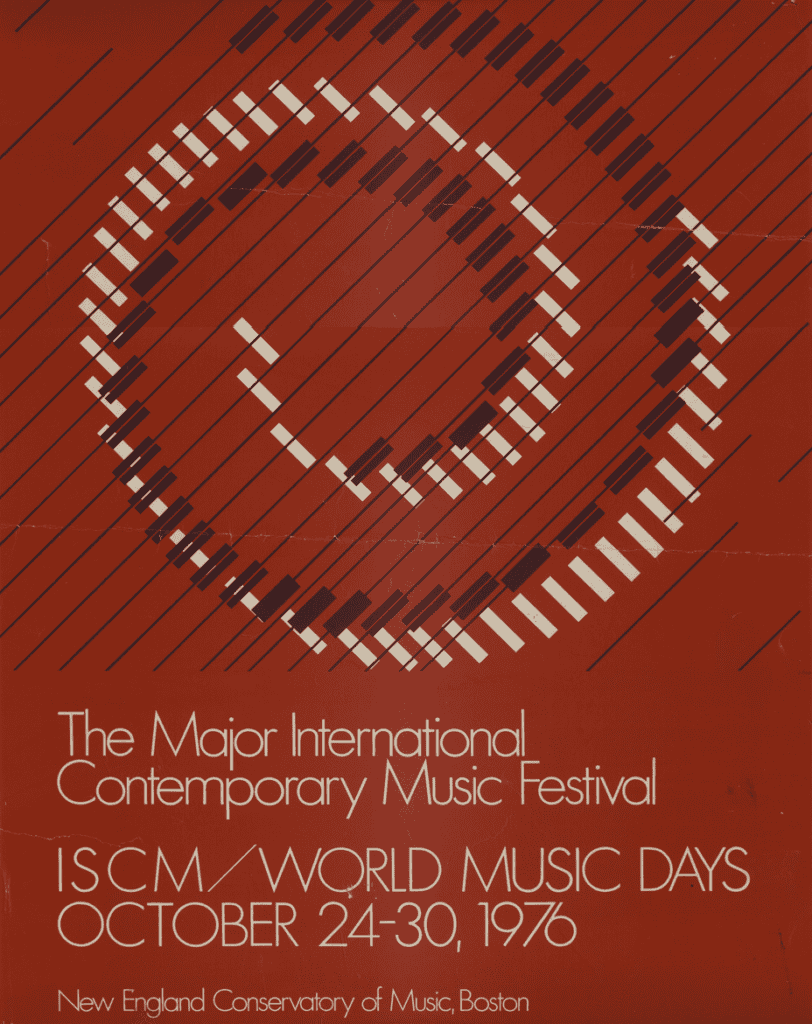
The International Society for Contemporary Music festival in Boston was also a bright spot in researching Dixon’s time at Iowa. We found a reel from the event that had an interview with Dixon, and then the performances by the orchestra. As I listen to these recordings, I cannot believe it’s a college orchestra performing such complicated music. University of Iowa alumnus Greg Eriksen, who played in that concert, drove to Iowa City this spring to see the exhibit and let us scan a really cool poster from that event, which you can see here. Iowa was one of only two college orchestras to perform at that event, with the New England Conservatory orchestra being the other. ISCM has only been held in the United States that one time in 1976. And Iowa was there.
Q: What is your favorite object in the exhibit?
A: While I’m a sucker for telegrams, and I really like the one we have in the exhibit, I’m going to say the letter Dixon wrote to Maxon P. Roller. Roller was a symphony patron who wrote to Dixon lamenting the programming of contemporary works. Dixon responded with grace and a clear statement of his approach to programming and the importance of playing new music. He’s not snide or judgmental—he’s thoughtful but unapologetic. It’s a handwritten, muti-page letter, and I find it exemplary that he would take the time to respond so thoughtfully to this one audience member.
Q: What do you hope visitors will take away from their time in Orchestrating Community?
A: I hope visitors take away new ideas about orchestras and how they inhabit their own communities. But I also like when exhibits lead people to ask questions of themselves and others, so I hope some of that happens, too.
Q: Is there anything else you would like to share?
A: I’m so glad I worked with a co-curator on this exhibit. Sarah Suhadolnik created the community frame for the narrative, and it beautifully anchors Dixon’s story and the story of his many orchestras. Exhibit work is highly collaborative, and I am grateful to every person who contributed to this project. Take a look at the credits and see how many cooks were in the kitchen as well as all the people who supported this endeavor. And, come back to the Main Library Gallery this fall for the Ding Darling exhibit, which, from what I’m hearing, sounds like it will be amazing.
Orchestrating Community: The Public Service of Iowa Conductor James Dixon will be on display through June 26, 2026. The Main Library Gallery is open daily. Plus, hear audio clips from Dixon’s conducting career online.