This series features the work and research of UI students. The following was written by Cecil Campbell, exhibition and engagement student lead for the Main Library Gallery.
There are a number of hallmarks that we look for when identifying children’s media: big pictures, bold and eye-catching colors, large fonts. Children’s books especially are known for these traits, and have been since the 19th century, when they first became their own market and genre. Much like kid’s television shows today, stories often included a moral, or lesson, that extolled virtues like selflessness, patience, and kindness.
Orbis Pictus by Johannes Amos Comenius was published in 1658. As one of the first instructional picture books for children, Comenius’s approach leaned heavily on visual learning and the use of instructional pictures and drawings. The goal was to teach learning comprehension through association: pairing words with images by placing them next to each other, until reading the given word independently recalled the corresponding image. Scholar Andrea Korda, in their journal article “Thinking with Pictures: Memory, Imagination, and Colour Illustration in Victorian Teaching and Learning,” writes that pictures were essential to Comenius’s methods not only because of their familiarity as iconic representations, but also because, according to Comenius, “children (even from their infancy almost) are delighted with pictures.”
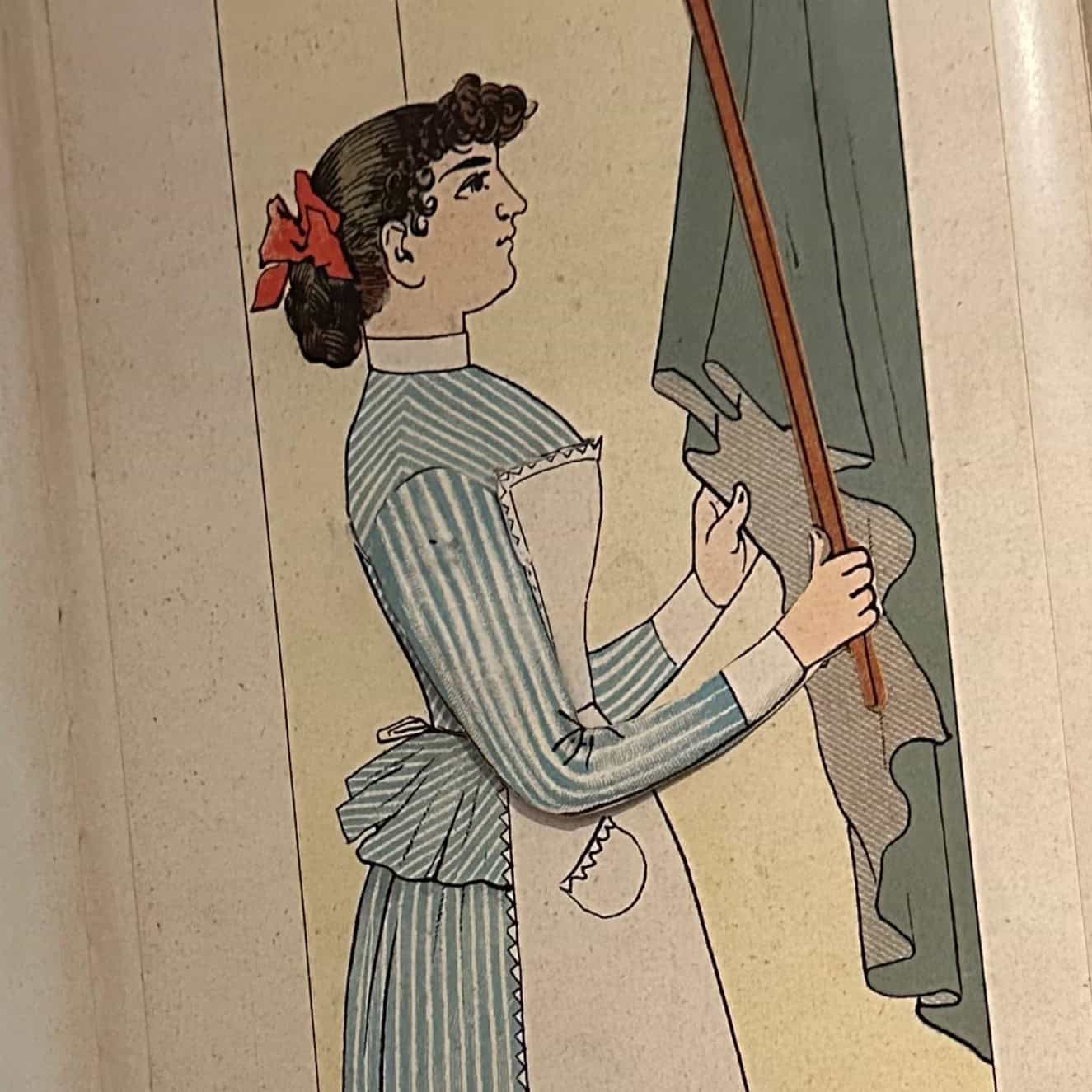
An important and equally iconic aspect of early children’s books was the chromolithograph. The process of the chromolithograph involved drawing a picture using an oil or grease-based ink and transferring that image to stone or metal plates and then printing over that image multiple times using differently colored versions of the same image. When put together fully, the colors of the different layers would produce a fully colored and detailed image that evoked the feeling of an oil painting, but at a fraction of the cost. Depending on how much detail a chromolithographer wanted in their picture, they might use anywhere from as little as eight plates to as many as forty to complete an image. Though used many times in children’s books, the chromolithograph was also used in collectible trading cards, Christmas cards, and calendars.
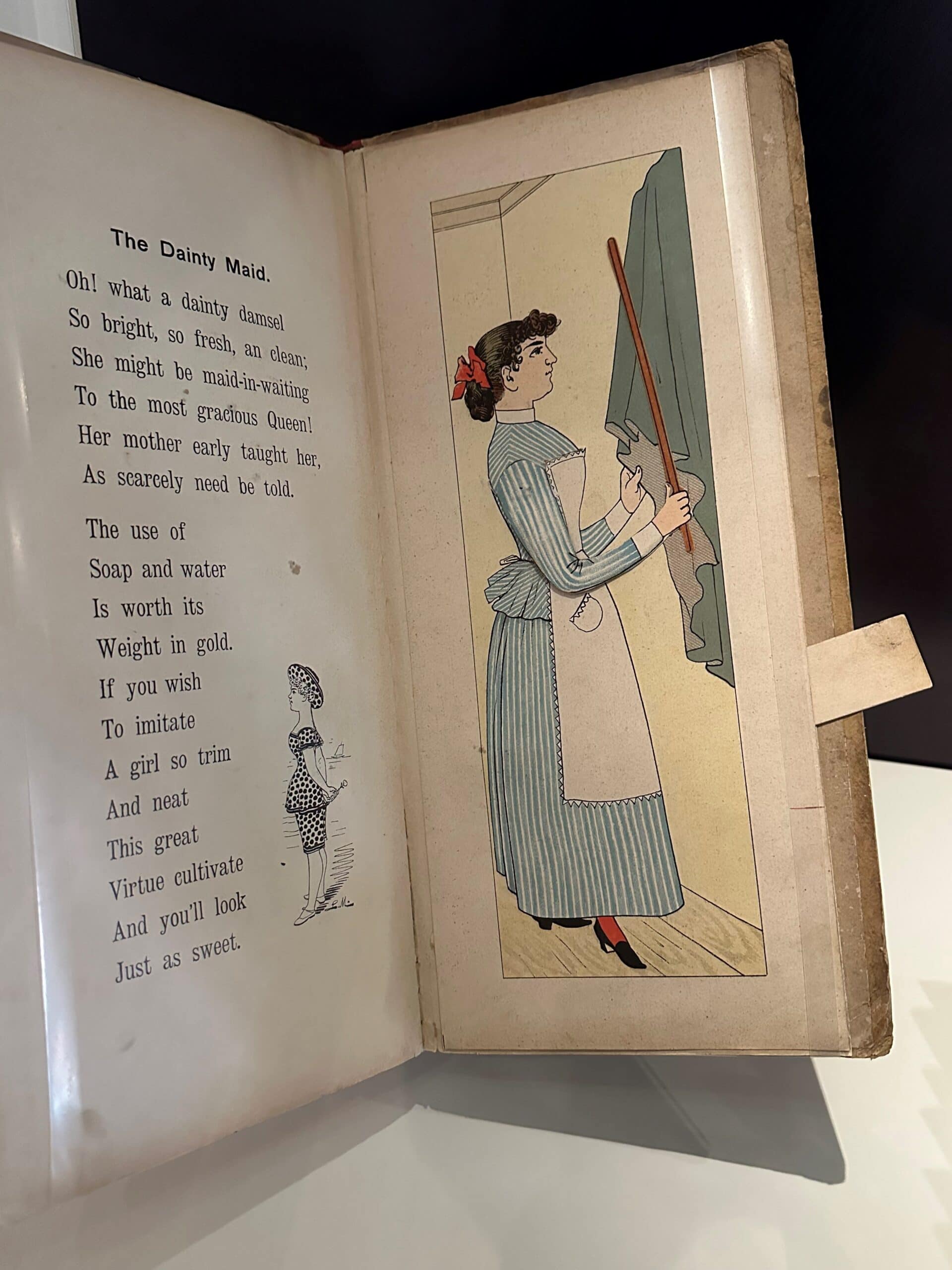
Children’s books such as A Party of Six: A Movable Toybook by notable 19th-century author and bookmaker Lothar Meggendorfer also boasted interactive elements. These took the shape of flaps, pull tabs, and pop-up pictures that gave the book a feeling as though it were alive, as though it were a small puppet theatre instead of a book. These types of books enchanted children. Due to the significant amount of effort and detail they took to produce, these books typically were affordable only to richer and more affluent families.
As both time and the children’s book industry progressed, chromolithography fell out of style, making way for modern machine color printing, which made color printing both cheaper and easier. Because of this, brightly colored children’s books, trading cards, calendars, and the like became much cheaper and accessible to people outside of the upper classes.
A Party of Six is on display in the Main Library Gallery’s Paper Engineering in Art, Science, and Education exhibition, which showcases the fascinating world of paper technologies. Curated by Giselle Simón, Damien Ihrig, and Elizabeth Yale, this interactive exhibition invites visitors to explore paper dolls, flap books, pop-ups, tunnel books, volvelles, and books that use paper to make sounds while learning about their historical and contemporary significance. It is open to the public through Dec. 19, 2025.
Further reading:
Korda, Andrea. 2020. “Thinking with Pictures: Memory, Imagination, and Colour Illustration in Victorian Teaching and Learning.” Paedagogica Historica 56 (3): 269–92. doi:10.1080/00309230.2018.1550520.
Visit the University of Iowa Libraries Special Collections and Archives to view editions of Orbis Pictus and other historic children’s books.