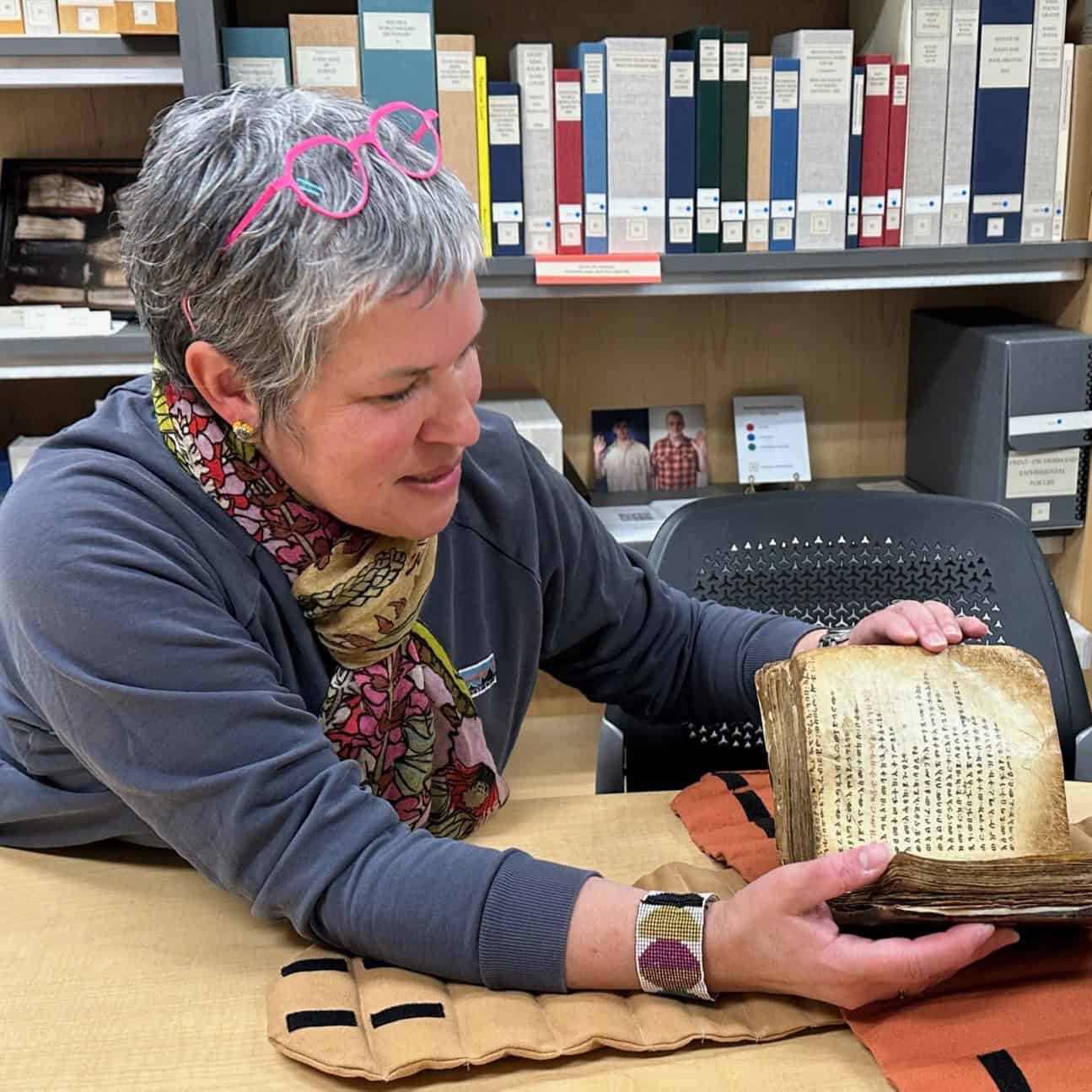
Paper Engineering in Art, Science, and Education, the fall 2025 exhibition in the Main Library Gallery, features an array of unique items from University of Iowa Libraries collections that share the history of paper technologies and movable books. Giselle Simón, university conservator and director of Conservation and Collections Care at the Libraries, co-curated the exhibition with Damien Ihrig and Elizabeth Yale. Her expertise in paper conservation and experience as an artist both contributed to her vision for the exhibition.
In the following questions and answers, Giselle shares her thoughts on curating for the Main Library Gallery and some of her favorite discoveries.
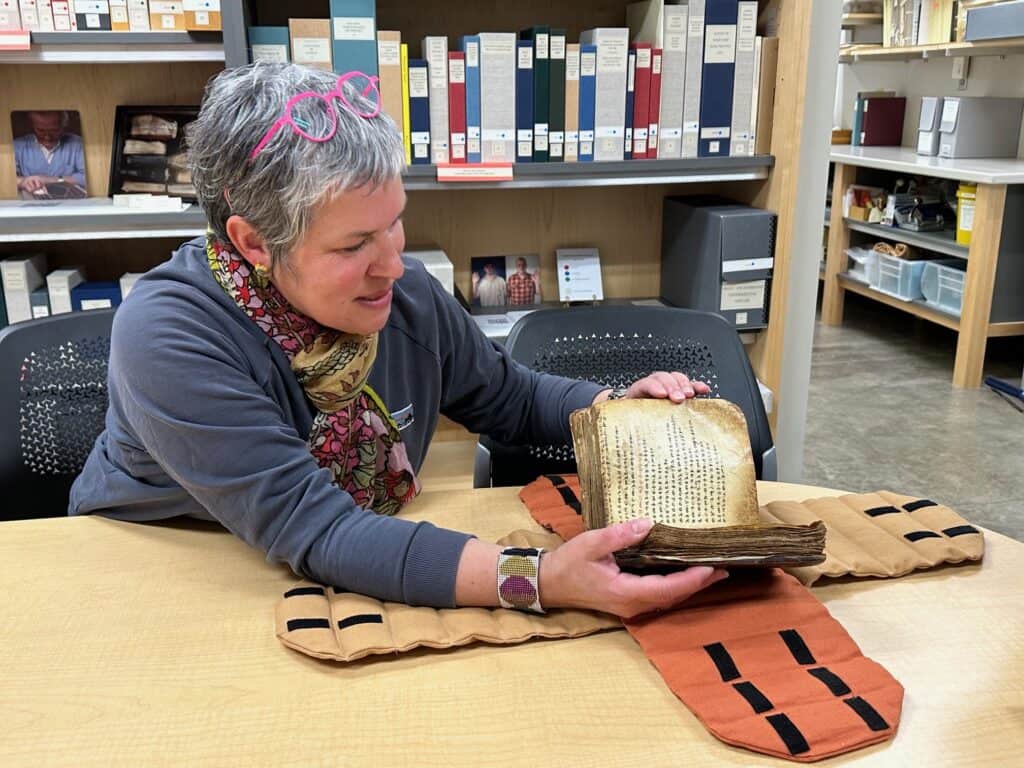
Question: What inspired you to co-curate this exhibition?
Answer: My initial interest in researching materials for a paper engineering exhibit was quite simple: I thought these things were cool! This one-sided view led me to realize I needed some expertise and thoughtful perspectives. Co-curators Beth Yale, associate professor of history and at the University of Iowa Center for the Book, and Damien Ihrig, curator of the John Martin Rare Book Room, brought this in spades.
Q: As a conservator, what does this exhibit mean to you personally?
A: As a book conservator and sometimes visual artist, I’ve always been in love with paper. So much so I’ve recently learned how to make it. It’s a constant in my work, whether through conservation treatment or my own art investigations. As with any craft, there are layers of history, science, and skill. The technical aspects of understanding paper—down to the actual forming of sheets—reinforce and inform my conservation treatment decisions. Beauty, strength, translucency, and flexibility are all qualities I look for in both conservation and art making.
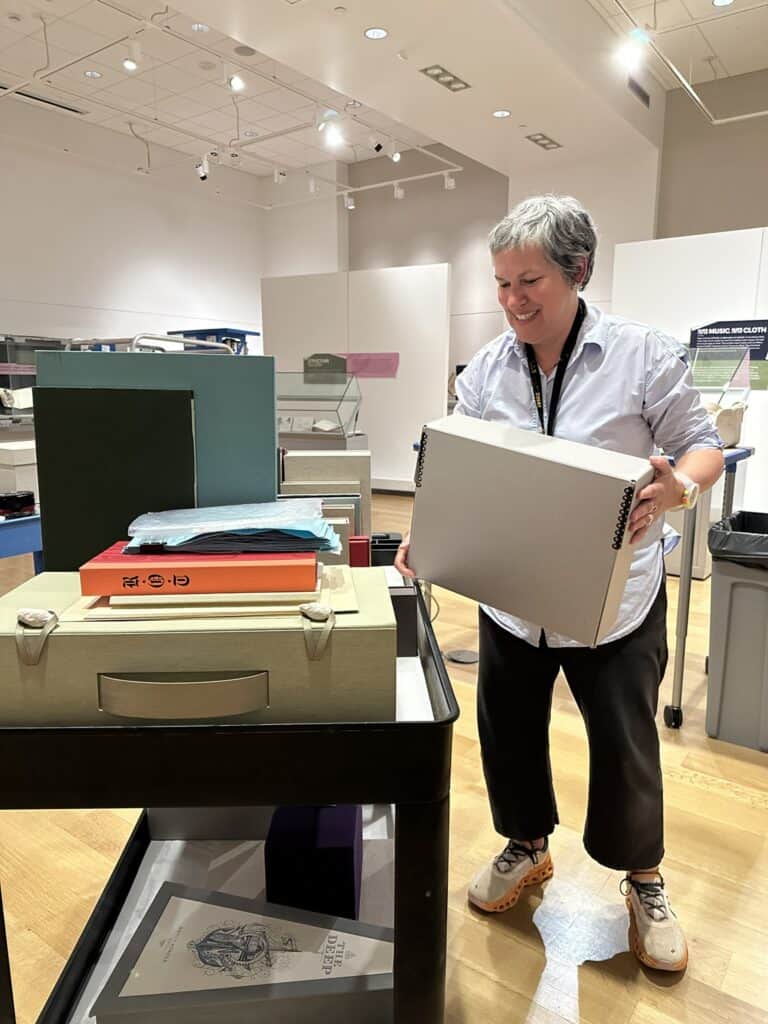
Q: What do you like about having this exhibit in the Main Library Gallery on campus?
A: The initial inspiration for this exhibition was the anatomical and medical flap books in the John Martin Rare Book Room (JMRBR) at Hardin Library for the Health Sciences. This treasure trove of unique and fantastic printed materials immediately caught my attention when I first arrived at the UI Libraries in 2012. I was also on the team that helped design and open the Main Library Gallery in 2016. So it’s terrific to see a project featuring the JMRBR’s flap books materialize in this space. It’s the exhibit I envisioned in my own mind when we were brainstorming about the future of our library exhibitions.
Q: What are some of the most surprising things you learned during your research for the exhibit?
A: One of the surprising things to me was the fact that the different objects we were interested in made sense together, and that there was ease in choosing. Thanks to Damien and his knowledge of the collection of the JMRBR’s medical flap books—which I feel are at the core of the show—everything came together easily. It seems like the content and connections we found grew from those selections.
Q: What are some of your favorite objects in the exhibit?
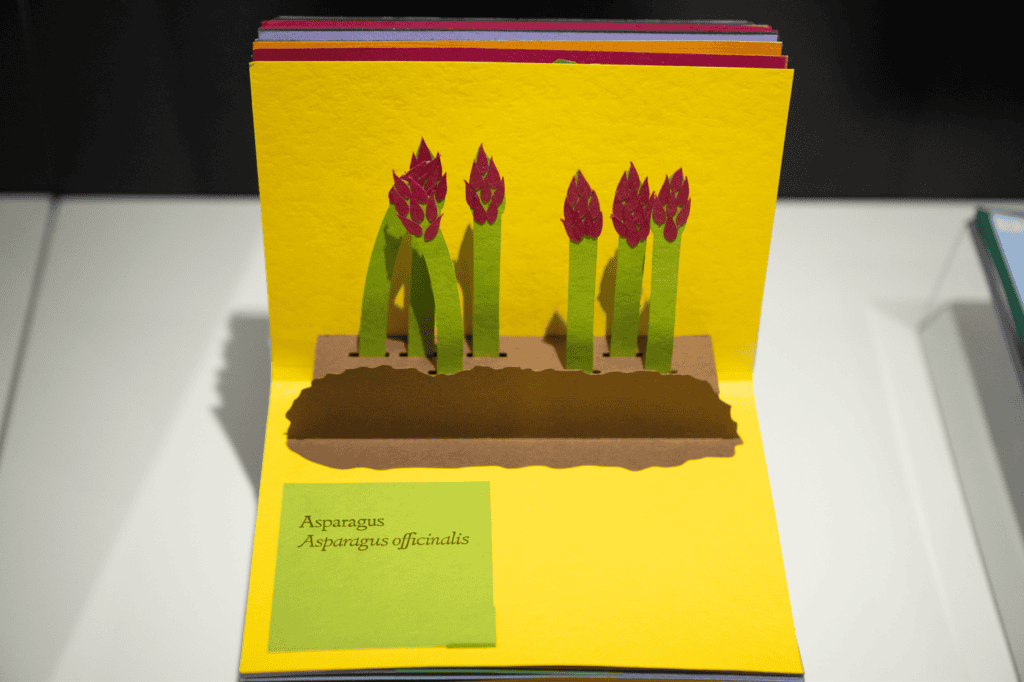
A: There are so many favorites. I’d like to point out Shawn Sheehy’s A Pop-Up Culinary Herbal [N7433.4.S5355 P82 2013] from the Szathmary Collection in Special Collections and Archives. His expertise can be seen in this delightful romp through the garden. The genius is in the paper engineering and the subtle and simple movements that identify each plant. The paper comes alive. We were fortunate to partner with the University of Iowa Center for the Book (UICB) this fall to bring Shawn to campus as the Nadia Sophie Seiler Visiting Artist in November 2025. Shawn presented a public lecture, conducted demonstrations for students, and worked on his own project in the UICB studios.


Q: Is there anything especially unique about the juxtapositions you have made?
A: The historical examples of the medical flap books in the exhibit gave way to the inclusion of 19th- and 20th-century mass printed “toy” movable books, so certainly there was a lot of content to explore across many time periods. Being a historian, Beth had a knack for pairing seemingly unrelated objects. She found the visual connections from one century to the next, even if the intention of the objects were very different. To place a modern photographic pop up next to a 1688 flap book never would have occurred to me! What a pleasure to have that perspective in this exhibit.
Q: What do you hope visitors will take away from their time in the exhibit?
A: Beth, Damien, and I are grateful to the many modern book and paper artists represented in the exhibition, and especially those who have shared their thoughts about process and inspiration. I hope this illuminates the fact that many contemporary artists are utilizing paper engineering in their work and that it has a rich history of artists and craftspeople figuring out inventive ways to express ideas through paper. Indeed, there are many more works of paper to explore in the UI Libraries collections and beyond.
Q: Is there anything else you would like to share?
A: We were all very much inspired by the work of Suzanne Karr Schmidt, curator of rare books and manuscripts at the Newberry Library in Chicago. Suzanne has done extensive research into Renaissance movable book elements, such as volvelles and other early paper mechanisms. She supported our research and had some wonderful insights for us when she visited our Remmelin flap book on campus in 2024. Suzanne invited us to present virtually at a Movable Book Society meeting last year, and the reactions from the group were reassuring: there were others out in the world excited about flaps and movable paper parts!
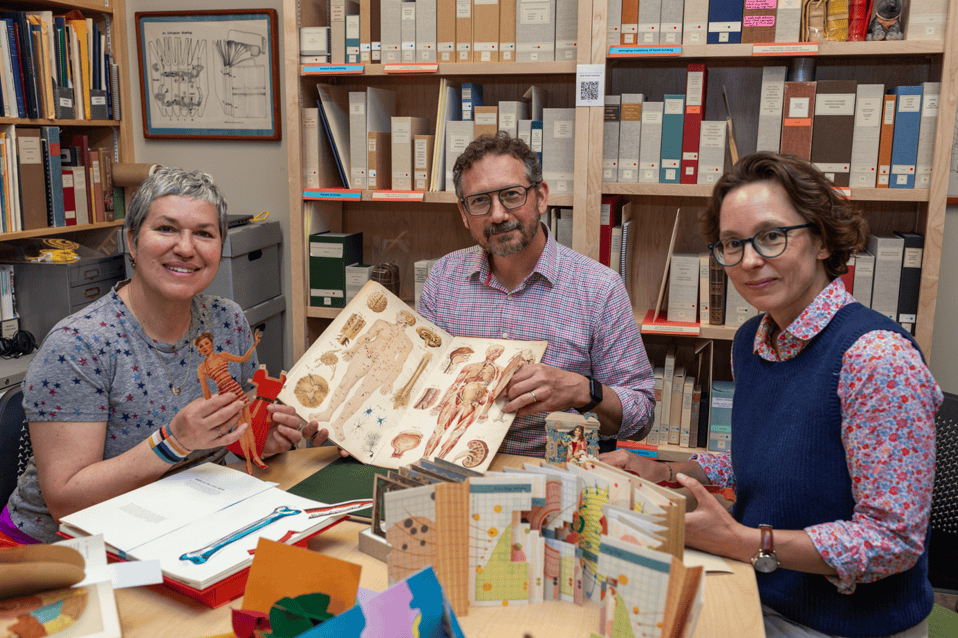
Photo: Barry Phipps.
Photo: Barry Phipps.
Photo: Barry Phipps.
Paper Engineering in Art, Science, and Education invites visitors to explore paper dolls, flap books, pop-ups, tunnel books, volvelles, and books that use paper to make sounds while learning about their historical and contemporary significance. It is open to the public through Dec. 19, 2025.