This series features the work and research of UI students. The following was written by Cecil Campbell, exhibition and engagement student lead for the Main Library Gallery.
Everyone can relate to the experience of playing with toys as a little kid. Whether Barbie dolls or action figures, dump trucks or Hot Wheels, the toys we played with were vehicles for our imagination and the stories we wanted to tell. Of course, this is far from a new phenomenon. Dolls specifically have been around for thousands of years, with the oldest examples being made of stone and clay and more recent examples being made of plastic or porcelain. One of the first commercially available paper dolls was made in 1810 by S & J Fuller. Her name was Little Fanny, and she quickly sparked a whole genre of children’s toys of a similar style.
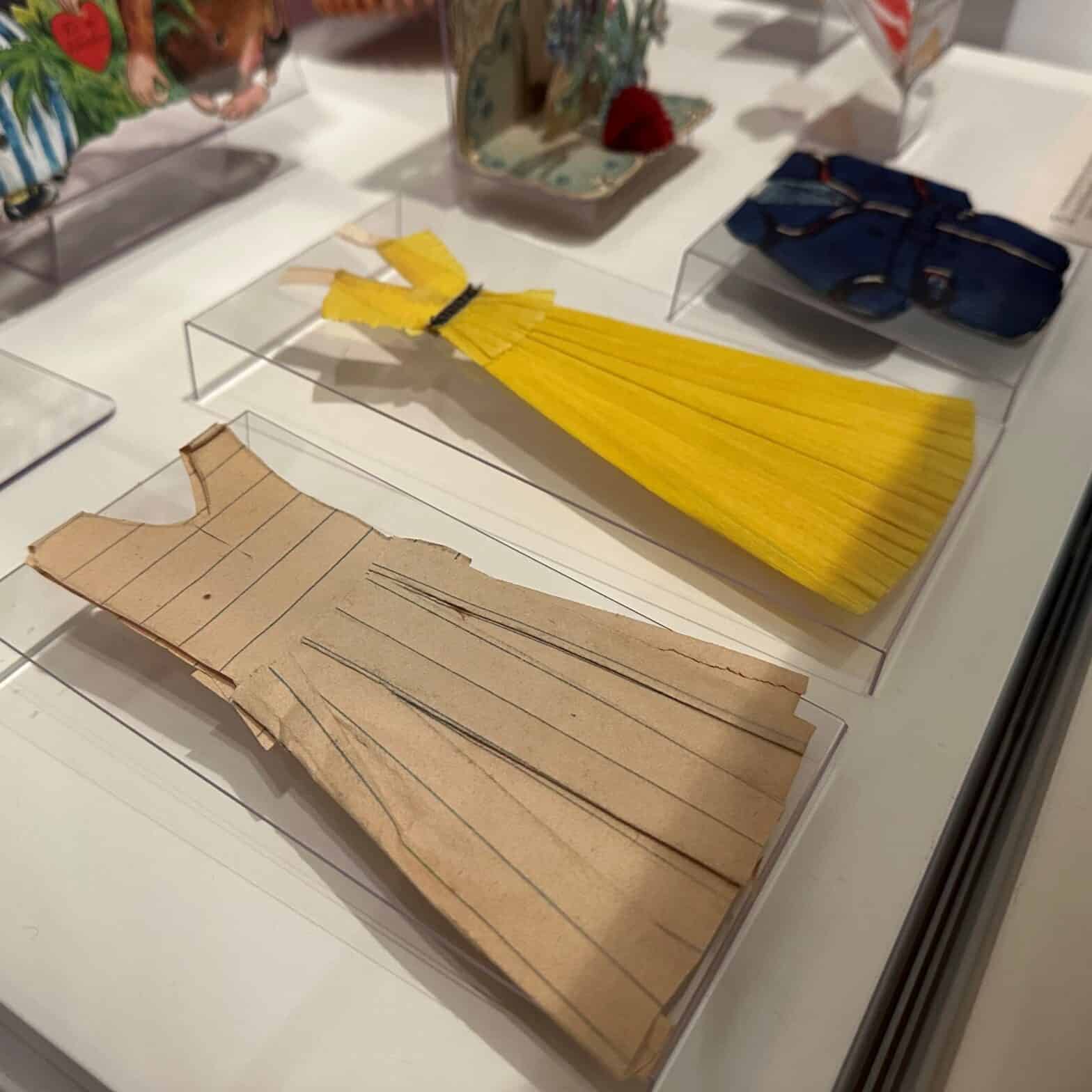
For those who couldn’t afford the luxury cost of a porcelain doll or for those who simply couldn’t sew, paper dolls offered an easily accessible alternative, with both everyday people as well as large corporations making their own versions. The paper clothing pictured below was handmade by Lois Crasper Thor from Clinton, Iowa circa the mid-20th century. While commercial versions of paper dolls certainly existed during the time these were made, dolls like these were perhaps the most common sort. Anyone could make their own dolls with whatever clothes they liked, and often a profession and life story to match. Paper dolls were, and continue to be, an outlet for childhood storytelling and imagination. Part of what they represented was possibility—the idea that you really could be anything.
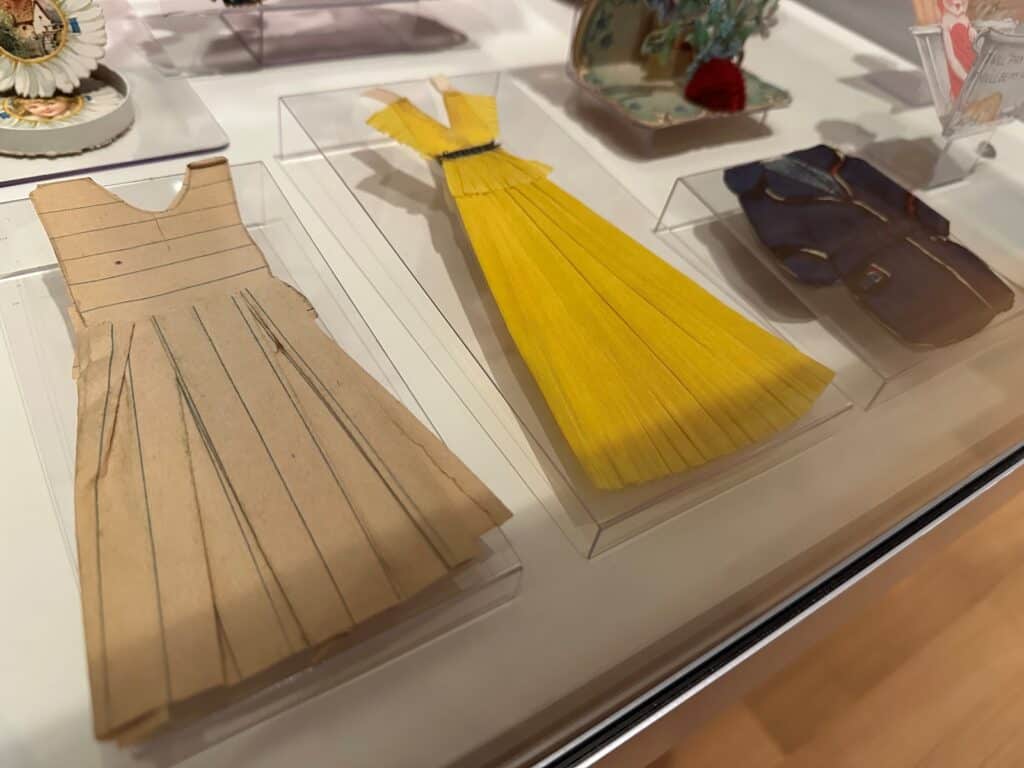
Of course, the existence of handmade paper dolls didn’t mean that the commercial doll industry was suffering. In Old Paper Dolls: Popular Adult Collectibles, Anne Gilbert writes about the rise of the paper doll: “By 1859 Godey’s Lady’s Book began publishing a complete series of paper dolls; six boys and six girls, with a set of their own newest fashions.” Like all dolls, paper dolls were equally influential in terms of both gender roles and clothing trends, the two were often intertwined. By the early 20th century, popular fashion and homemaking newspapers and magazines such as McCall’s, Ladies’ Home Journal, and Woman’s Home Companion were publishing their own paper doll families. Dolls have a history of reflecting pop culture at the time—current fashion trends, as well as popular occupations or hobbies. Movie stars, horse jockeys, tennis players, artists, and more can all be found represented in different paper dolls.
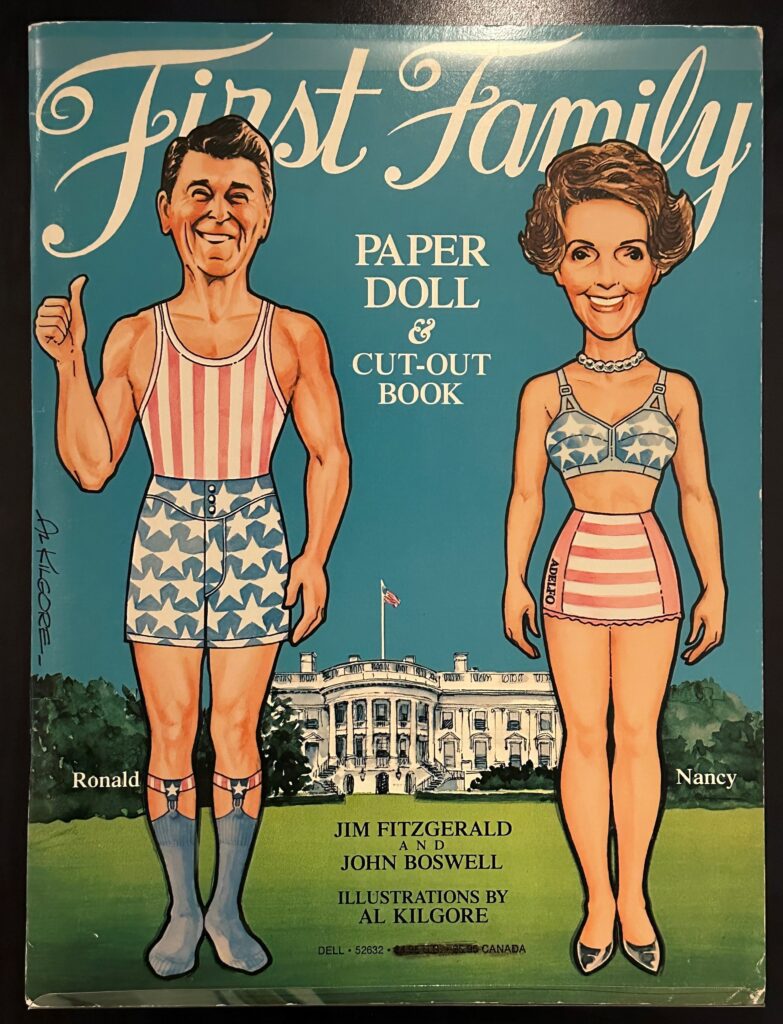
Just as we might find different toy franchises featuring modern celebrities with their own toys or dolls today, celebrities and public figures have also historically been represented by paper dolls. Though women were made into dolls more often than men, certain exceptions, like this 1981 copy of The First Family Paper Doll & Cut-Out Book featuring Ronald and Nancy Reagan, serve as small reminders that the demographic wasn’t completely singular. Though there were certainly more paper dolls fashioned around women and girls, dolls fashioned around boys and men existed and were in some cases highly prized by their owners, much like the Ken dolls of today.
The materials in this article are on display in the Main Library Gallery’s Paper Engineering in Art, Science, and Education exhibition, which showcases the fascinating world of paper technologies. Curated by Giselle Simón, Damien Ihrig, and Elizabeth Yale, this interactive exhibition invites visitors to explore paper dolls, flap books, pop-ups, tunnel books, volvelles, and books that use paper to make sounds while learning about their historical and contemporary significance. It is open to the public through Dec. 19, 2025.