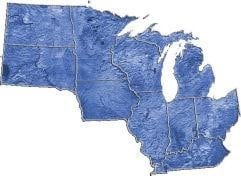
 The Greater Midwest Region (GMR) of the National Network of Libraries of Medicine (NN/LM) has now been operating from the University of Iowa for six months! If you’re curious as to what we’ve been working on, we put together a short recap, just for you.
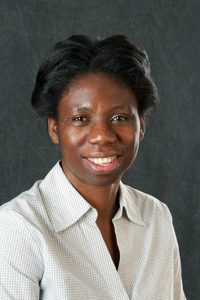
Our team was fully staffed as of October 17th! Liz Kiscaden joined as the GMR’s Associate Director, along with Director Linda Walton, in April 0f 2016. Darlene Kaskie followed, joining as an Outreach Specialist, then we hired on Jacqueline Leskovec as our Network Librarian. In July, Molly Olmstead was hired as the Finance and Communications Coordinator and Bobbi Newman as the Community Engagement and Outreach Specialist. Our most recent hire, Derek Johnson, joined the staff as the Health Professionals Outreach Specialist in mid-October. The new GMR staff is compiled from a diverse array of backgrounds, including health science, law, and public librarianship, public health consulting, nursing, and libraries administration.
Associate Director, Liz Kiscaden, visited many of the Network’s Resource Libraries during these first six months. She traveled, with Linda Walton, to the Chicago Area to visit several institutions, including the University of Illinois at Chicago, Northwestern University and Loyola. Liz has also traveled to visit Resource Libraries in Minnesota, Michigan, and Kentucky.
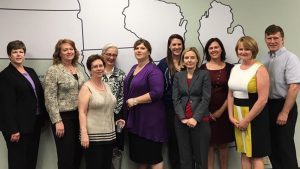 In early September, staff from the National Office of the NN/LM visited the GMR’s newly renovated office space in the Hardin Library for the Health Sciences. NLM Associate Director Diane Babski, Project Scientists Margaret McGhee and Renee Bougard, and Division of Extramural Programs representative Allen VanBiervliet traveled from Washington DC to meet with the newly assembled GMR staff. The GMR hosted a dessert reception for the National Office visitors and the University of Iowa Libraries staff.
Our staff have exhibited across the region, promoting funding opportunities and demonstrating National Library of Medicine resources to librarians. Exhibits have included the North Dakota Library Association, Minnesota Library Association, the Iowa Library Association, and the Health Sciences Librarians of Illinois conference. Our staff also exhibited at the Midwest Chapter of the Medical Library Association, sponsoring two activities on the program.
During these first six months, our office sponsored several educational webinars, including the first installment NN/LM Resource Picks Webinar series, titled “Don’t Wait, Communicate about Disaster Preparedness!” Additionally, we presented an outstanding webinar on data management and another on emergency planning for collections, collaborating with our own Nancy Kraft from the University of Iowa libraries. Educational offerings have reached nearly 200 members across the ten-state region.
The GMR has already funded 16 outreach projects across seven states, allocating over $75,000 of funding toward this outreach. One example of a funded project is awarded to the Oakland University Kresage Medical Library, for their project titled “Health Information Outreach to Homeless Patients at the HOPE Recuperative Care Center.” The Kresage Library Staff, led by principal investigator Misa Mi, will use funding to provide computer and health information access to homeless patients discharged from the HOPE Adult Shelter. By providing these individuals computer access they will be able to use NLM Resources, such as MedlinePlus or NIHSeniorHealth.gov to seek valuable information and learn information searching skills.
Our office is currently planning for the second year of funding, which will offer more awards and educational opportunities. Upcoming awards will place an emphasis on providing health literacy outreach to medically underserved areas and populations. We’re looking forward to continuing to support the mission of the NN/LM and will share our activities with you!
To keep up with the GMR’s latest activity, follow our Facebook, Twitter, or join our listserv (GMRLIST@list.uiowa.edu).
Update by Elizabeth Kiscaden and Molly Olmstead.



 by Willow Fuchs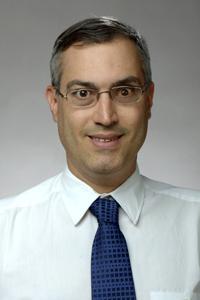

 You may view this book in the