Need to learn PubMed? Free workshop Tuesday 10-11am
Do you need to use PubMed but aren’t sure how to start? Hardin Library has a free hands-on workshop to help you!
Sign up for this or other workshops online.

Do you need to use PubMed but aren’t sure how to start? Hardin Library has a free hands-on workshop to help you!
Sign up for this or other workshops online.
Did you know that access to some scholarly journals can cost as much as buying a new car…every year? That is a price that UI Libraries cannot afford, but it is a research tool that YOU can’t afford to work without. So what do we do? Open Access: it means more readers, more recognition and more impact for new ideas.
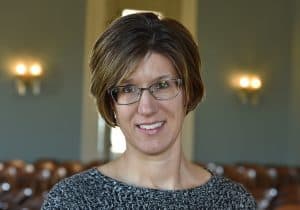
We invite you to join us to hear Molly Kleinman, Special Assistant to the Dean of Libraries at the University of Michigan and a copyright specialist, talk about it: “Open Access or: How I learned to stop worrying and love the Internet” at noon on Tuesday, Oct. 20th in the Bijou at the Iowa Memorial Union.
This event is part of UI Libraries’ celebration of Open Access Week, October 19-23, 2009. Also that week, we’ll be posting more useful information about open access including our UI colleagues own experiences with open access.
For more information about scholarly communication and your role in creating a
sustainable system, check the Libraries website (www.lib.uiowa.edu/scholarly).
Co-sponsors of this event include the University of Iowa Libraries, Department of Communication Studies, Graduate Student Senate, the UI Center for Human Rights, College of Public Health, Widernet, Executive Council of Graduate and Professional Students, and the Project on the Rhetoric of Inquiry (POROI).
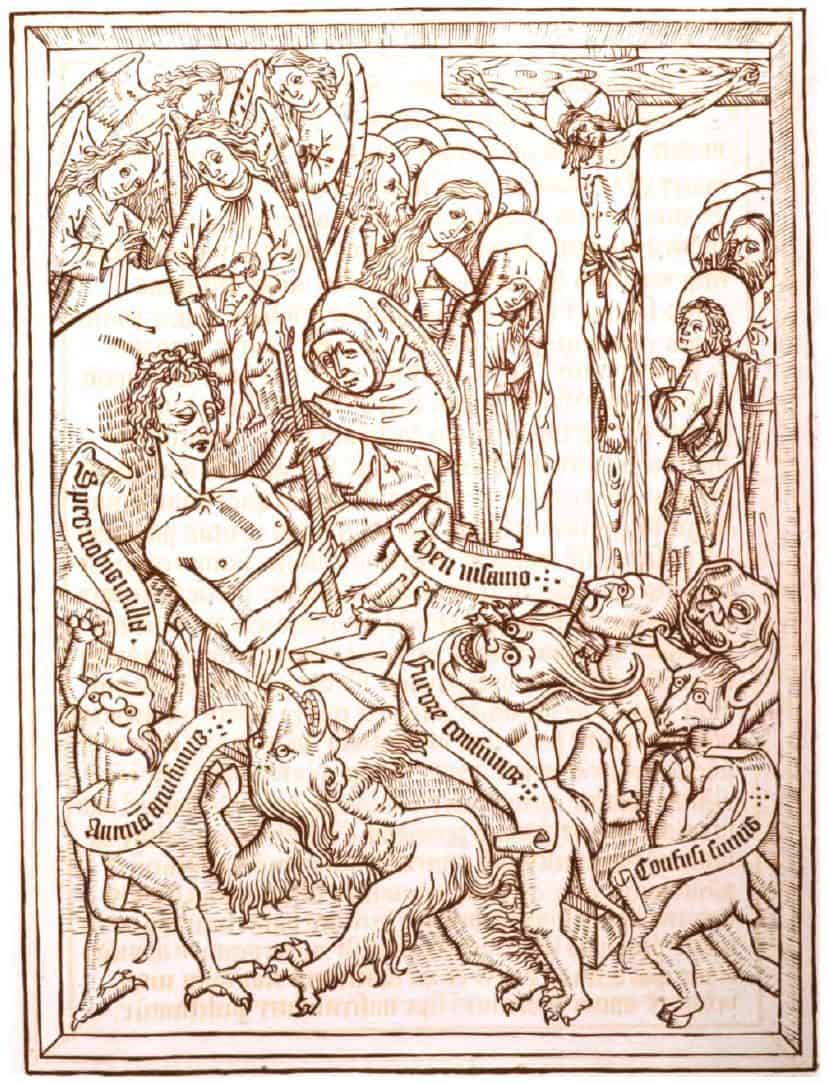
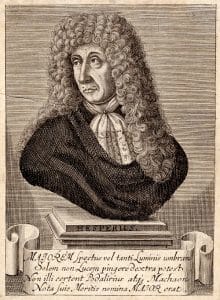
Daniel Le Clerc (1652-1728). Histoire de la médecine. Nouvelle ed. Amsterdam: Aux depens de la Compagnie, 1723.
Swiss physician, Daniel Le Clerc was born at Geneva and studied medicine at Montpellier and Paris. He received the M.D. degree at Valencia in 1670 and returned to Geneva to enter private practice. Although successful as a physician, and later as a politician, Le Clerc expended great energy in writing and scholarship.
Considered by many authorities to be the father of the history of medicine, Le Clerc is best known for his monumental Histoire de la médicine. The first edition was published in 1696 and, after the second edition had been exhausted, Le Clerc found it expedient to write a third edition, which he updated to the middle of the seventeenth century. Most striking is his inclusion of ten finely executed engravings depicting various personalities associated with medical history.
The National Library of Medicine has posted a preview of the new PubMed interface. To try it out, go to PubMed as usual, through the Library’s website (so that the links to full-text will work), then click on Try the redesigned PubMed. Notice that features like Limits, Details, and History that were previously available through tabs are now available by using Advanced Search.
Questions? Feel free to call Hardin Reference staff at 319-335-9151, but please realize that we are just now becoming acquainted with the new interface, too!
Hardin Library’s newest exhibit traces the history of the dubious attempts to divine personality characteristics by analyzing the size, shape, structure, and composition of the human head. It was Aristotle who coined the term, “physiognomy” to support his own writings and inclinations on the subject. Since that time the notion that character and personality are somehow imprinted in facial features has received considerable attention through a variety of approaches, nearly all of them unsupported by empirical evidence of any kind and many of them used for such nefarious purposes as racial stereotyping and the outright support of bigotry. The exhibit is located near the 3rd floor entrance to the library.
Improvements you requested are happening this fall.
Lighting has been increased on the 3rd floor, and will soon be increased on the 4th floor as well.
More outlets for your laptops are coming soon! Electrical construction will be noisy.
But she has taen the broken lance,
And washed it from the clotted gore,
And salved the splinter o’er and o’er.
—Sir Walter Scott: Lay of the Last Minstrel—1805
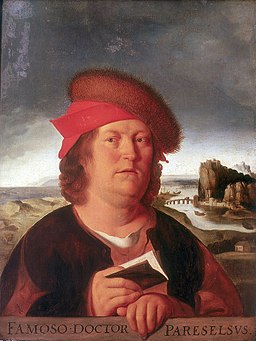
The notion that wounds can be healed from a distance dates back hundreds, perhaps thousands of years and is retained in some folk remedies today. However, the idea reached its zenith in the form of weapon salve or , Unguentum armariu, the origin of which goes back at least as far as the Swiss physician-iconoclast Paracelsus (1493-1541). The idea was simple: rather than dressing the wound, the physician applies salve to the weapon that caused it while the wound is simply washed and left unattended. Among the many variants of the recipe is the following:
Take skull-mosse, two ounces, mummy, halfe an ounce, mans fat, two ounces, mans blood, halfe an ounce, linseed oyle, two drames, oyle of roses, and bole armoniack, of each one ounce. Mixe them together and make an oybtment: into the which hee puts a stick, depp’d in the blood of the woundd person, and dryed, and bindeth up the wound with a rowler dept every day in the hot urine of the of the wounded person. The annoointing of the weapon hee addes moreover; honey, one ounce, bulls fat, one drame.”
While the treatment appears farcical to the modern mind, there was considerable support among many serious philosophers of the 16th and 17 centuries. Even Francis Bacon (1561—1626), while skeptical, stopped well short of dismissing the idea out of hand.
The firmest adherent was Robert Fludd (1574-1637), English physician and mystic who explained that the salve worked as a result of the “mystical anatomy of the blood.”
Some of Fludd’s contemporaries pronounced the salve to be nonsensical while others condemned it as the devil’s work. Later writers, most notably, Oliver Wendell Holmes, have suggested that anointing the weapon rather than the wound simply allowed the tissue the chance to heal naturally.
The weapon salve fell out of favor by the 18th century it but remains as one of the more curious episodes in the history of medicine.
Russell Martinez won the first Student Fan of the Year award at Hawkapalooza on September 3, 2009.
Martinez in a Junior majoring in Informatics and works in information technology support at the Hardin Library.
For more information, please review the complete job announcement.
Reporting to the Hardin Library’s Coordinator, Education and Research, the Clinical Education Librarian plans, promotes and provides information services that support the needs of faculty, researchers, staff and students of the university’s five health sciences colleges and affiliated hospitals and clinics. The incumbent:
Required Qualifications
PubMed open enrollment workshops available this fall. There is no charge, but pre-registration requested.