Skip to content
Skip to main content

New Books – Dec. 16, 2020

Welcome to the Library’s virtual New Book Shelf. Here we will present new titles for you to browse and check out. Titles listed here will be monographs published in the current year. If you see a title you would like to borrow, please click the link and use the website to request a loan.

Radiant Emptiness
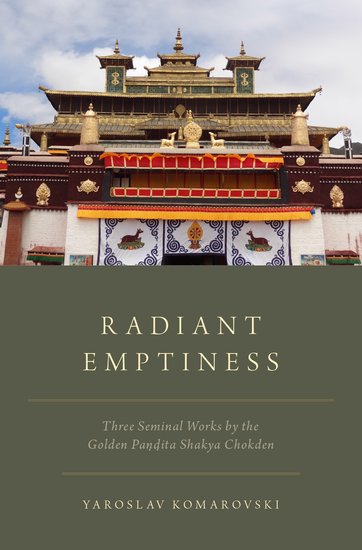
Three Seminal Works by the Golden Pandita Shakya Chokden

Yaroslav Komarovski

Offers annotated translation of never before translated seminal works of a controversial and influential Tibetan thinker

Explores the relationship between conceptual models of reality and Buddhist contemplative practices

Critically appraises philosophical commitments and interpretive frameworks involved in accessing and describing realization of reality

https://search.lib.uiowa.edu/permalink/f/9i2ftm/01IOWA_ALMA21732804260002771

Political Quiestism in Islam
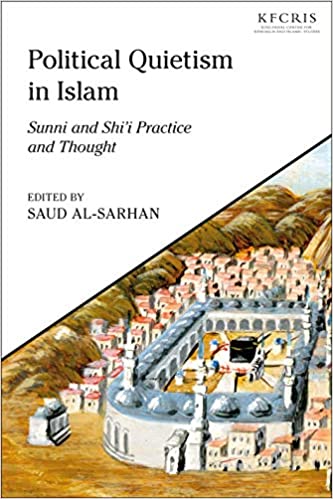
In recent years, Islam – whether via the derivatives of ‘Political Islam’ or ‘Islamism’ – has come to be seen as an ‘activist’ force in social and political spheres worldwide. What such representations have neglected is the strong countervailing tradition of political quietism. Political quietism in Islam holds that it is not for Muslims to question or oppose their leaders. Rather, the faithful should concentrate on their piety, prayer, religious rituals and personal quest for virtue.

This book is the first to analyze the history and meaning of political quietism in Islamic societies. It takes an innovative cross-sectarian approach, investigating the phenomenon and practice across both Sunni and Shi’i communities.

https://search.lib.uiowa.edu/permalink/f/7nh330/01IOWA_ALMA21732842450002771

The Making of a Miracle

On the fortieth anniversary of the historic “Miracle on Ice,” Mike Eruzione—the captain of the 1980 U.S Men’s Olympic Hockey Team, who scored the winning goal—recounts his amazing career on ice, the legendary upset against the Soviets, and winning the gold medal.

It is the greatest American underdog sports story ever told: how a team of college kids and unsigned amateurs, under the tutelage of legendary coach—and legendary taskmaster—Herb Brooks, beat the elite Soviet hockey team on their way to winning the gold medal at the 1980 Lake Placid Olympics. No one believed the scrappy Americans had a real shot at winning. Despite being undefeated, the U.S.—the youngest team in the competition—were facing off against the four-time defending gold medalist Russians. But the Americans’ irrepressible optimism, skill, and fearless attitude helped them outplay the seasoned Soviet team and deliver their iconic win.

https://search.lib.uiowa.edu/permalink/f/7nh330/01IOWA_ALMA21732614910002771

Chinese Urbanism
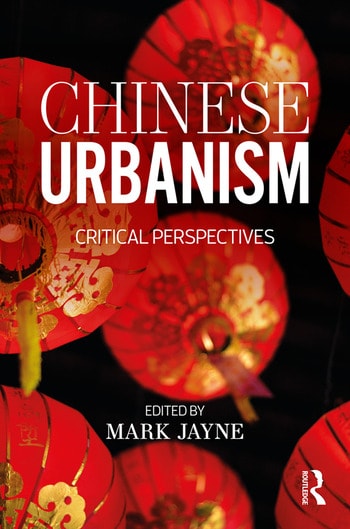
This book provides a definitive overview of contemporary developments in our understanding of urban life in China. Multidisciplinary perspectives outline the most significant critical, theoretical, methodological and empirical developments in our appreciation of Chinese cities in the context of an increasingly globalized world. Each chapter includes reviews and appraisals of past and current theoretical development and embarks on innovative theoretical directions relating to Marxist, feminist, post-structural, post-colonial and ‘more-than-representational’ thinking. The book provides an in-depth insight into urban change and considers in what ways theoretical engagement with Chinese cities contributes to our understanding of ‘global urbanism’. Chapters explore how new critical perspectives on economic, political, social, spatial, emotional, embodied and affective practices add value to our understanding of urban life in, and beyond, China.

https://search.lib.uiowa.edu/permalink/f/7nh330/01IOWA_ALMA21768471370002771

Crossing Baptist Boundaries

This collection of essays is dedicated to William Henry Brackney, one of the leading Baptist historians in North America for the past four decades. Few, if any, Baptist historians of any era have written more extensively, more broadly, or more insightfully on the Baptist people in North America than Brackney.

https://search.lib.uiowa.edu/permalink/f/7nh330/01IOWA_ALMA21732820270002771

Why We’re Polarized
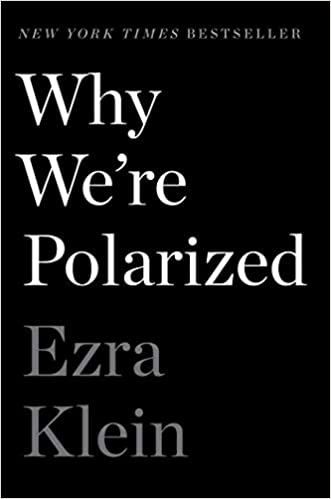
This New York Times and Wall Street Journal bestseller shows us that America’s political system isn’t broken. The truth is scarier: it’s working exactly as designed. In this “superbly researched” (The Washington Post) and timely book, journalist Ezra Klein reveals how that system is polarizing us—and how we are polarizing it—with disastrous results.

https://search.lib.uiowa.edu/permalink/f/7nh330/01IOWA_ALMA21732611640002771

Sleight of Mind
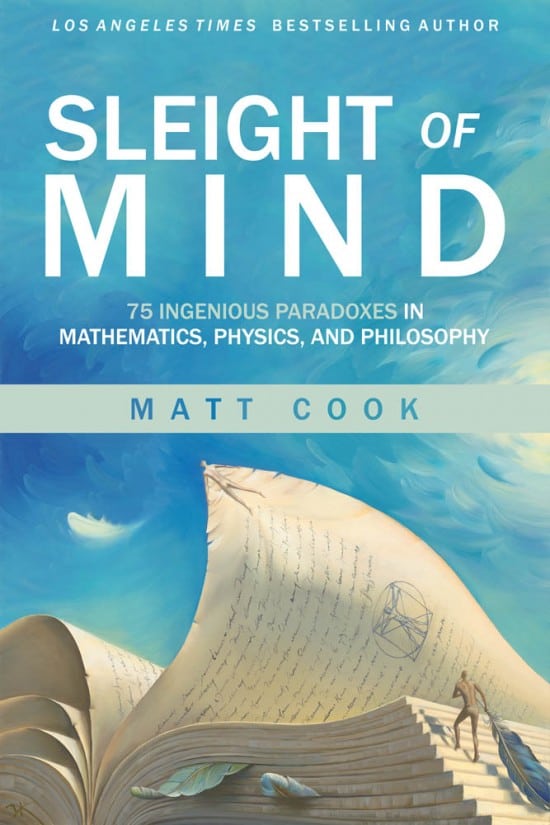
Exploring more than seventy-five well-known paradoxes in mathematics, philosophy, physics, and the social sciences showing how reason and logic can dispel the illusion of contradiction.

The journey begins with “a most ingenious paradox” from Gilbert and Sullivan’s Pirates of Penzance. Readers will then travel from Ancient Greece to cutting-edge laboratories, encounter infinity and its different sizes, and discover mathematical impossibilities inherent in elections. They will tackle conundrums in probability, induction, geometry, and game theory; perform “supertasks”; build apparent perpetual motion machines; meet twins living in different millennia; explore the strange quantum world—and much more.

https://search.lib.uiowa.edu/permalink/f/7nh330/01IOWA_ALMA21733147320002771

A Jewish Jesuit in the Eastern Mediteranean

In A Jewish Jesuit in the Eastern Mediterranean, Robert Clines retraces the conversion and missionary career of Giovanni Battista Eliano, the only Jewish-born member of the Society of Jesus. He highlights the lived experience of conversion, and how converts dealt with others’ skepticism of their motives. Clines uses primary sources, including Eliano’s personal letters, missionary reports, and autobiography, together with scholarship on conversion in the early modern Mediterranean world to illustrate how false and sincere conversion often mirrored each other in outward performance. Devout converts were not readily taken at face value and needed to prove themselves in the moment and over the course of their lifetimes. Consequently, Eliano’s story underscores that the mystical, introspective nature of religious belief and the formulation of new spiritual selves came into direct confrontation with the ways in which converts needed to present themselves to others in an age of political and religious turmoil.

https://search.lib.uiowa.edu/permalink/f/7nh330/01IOWA_ALMA21732816140002771

The Martyrdom of the Franciscans
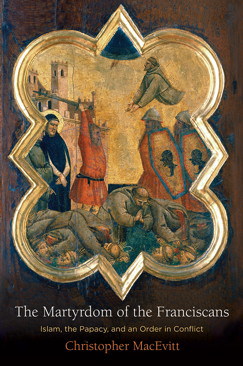
While hagiographies tell of Christian martyrs who have died in an astonishing number of ways and places, slain by members of many different groups, martyrdom in a Franciscan context generally meant death at Muslim hands; indeed, in Franciscan discourse, “death by Saracen” came to rival or even surpass other definitions of what made a martyr. The centrality of Islam to Franciscan conceptions of martyrdom becomes even more apparent—and problematic—when we realize that many of the martyr narratives were largely invented. Franciscan authors were free to choose the antagonist they wanted, Christopher MacEvitt observes, and they almost always chose Muslims. However, martyrdom in Franciscan accounts rarely leads to conversion of the infidel, nor is it accompanied, as is so often the case in earlier hagiographical accounts, by any miraculous manifestation.

If the importance of preaching to infidels was written into the official Franciscan Rule of Order, the Order did not demonstrate much interest in conversion, and the primary efforts of friars in Muslim lands were devoted to preaching not to the native populations but to the Latin Christians—mercenaries, merchants, and captives—living there. Franciscan attitudes toward conversion and martyrdom changed dramatically in the beginning of the fourteenth century, however, when accounts of the martyrdom of four Franciscans said to have died while preaching in India were written. The speed with which the accounts of their martyrdom spread had less to do with the world beyond Christendom than with ecclesiastical affairs within, MacEvitt contends. The Martyrdom of the Franciscans shows how, for Franciscans, martyrdom accounts could at once offer veiled critique of papal policies toward the Order, a substitute for the rigorous pursuit of poverty, and a symbolic way to overcome Islam by denying Muslims the solace of conversion.

https://search.lib.uiowa.edu/permalink/f/7nh330/01IOWA_ALMA21732832540002771

Regional Literature and the Transmission of Culture
Regional Literature and the Transmission of Culture provides a richly textured picture of cultural transmission in the Qing and early Republican eras. Drum ballad texts (guci) evoke one of the most popular performance traditions of their day, a practice that flourished in North China. Study of these narratives opens up surprising new perspectives on vital topics in Chinese literature and history: the creation of regional cultural identities and their relation to a central “Chinese culture”; the relationship between oral and written cultures; the transmission of legal knowledge and popular ideals of justice; and the impact of the changing technology of the late nineteenth and early twentieth centuries on the reproduction and dissemination of popular texts.

https://search.lib.uiowa.edu/permalink/f/7nh330/01IOWA_ALMA21727960010002771
New Books Dec. 8 2020

Welcome to the Library’s virtual New Book Shelf. Here we will present new titles for you to browse and check out. Titles listed here will be monographs published in the current year. If you see a title you would like to borrow, please click the link and use the website to request a loan.

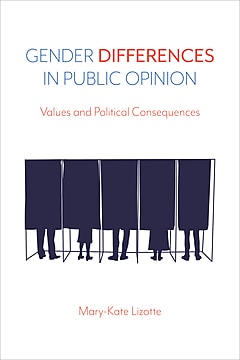
Gender Differences in Public Opnion

In this era in which more women are running for public office—and when there is increased activism among women—understanding gender differences on political issues has become critical. In her cogent study, Mary-Kate Lizotte argues that assessing the gender gap in public support for policies through a values lens provides insight into American politics today. There is ample evidence that men and women differ in their value endorsements—even when taking into account factors such as education, class, race, income, and party identification.

In Gender Differences in Public Opinion, Lizotte utilizes nationally representative data, mainly from the American National Election Study, to study these gender gaps, the explanatory power of values, and the political consequences of these differences. She examines the gender differences in several policy areas such as equal rights, gun control, the death penalty, and the environment, as well as social welfare issues. The result is an insightful and revealing study of how men and women vary in their policy positions and political attitudes.

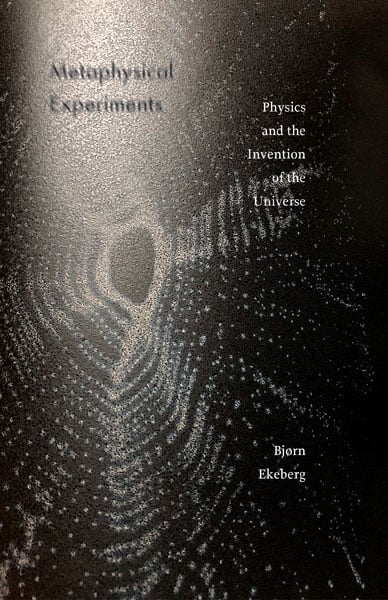
Metaphysical Experiments

https://search.lib.uiowa.edu/permalink/f/7nh330/01IOWA_ALMA21733144920002771

Focusing on the nonmathematical assumptions underlying significant events in modern science, Bjørn Ekeberg offers a critical history of contemporary physics that demystifies such concepts as singularity, blackbody radiation, the speed of light, natural constants, black holes, dark matter, and more. His reading of the metaphysical underpinnings of scientific cosmology offers an account of how we understand our place in the universe.

Circuit Listening

https://search.lib.uiowa.edu/permalink/f/7nh330/01IOWA_ALMA21768471700002771

How the Chinese pop of the 1960s participated in a global musical revolution

What did Mao’s China have to do with the music of youth revolt in the 1960s, and how did the Beatles and Bob Dylan sound on the front lines of the Cold War in Asia? Andrew F. Jones listens in on the 1960s beyond the West, suggesting how transistor technology, decolonization, and the Green Revolution transformed the sound of music globally.

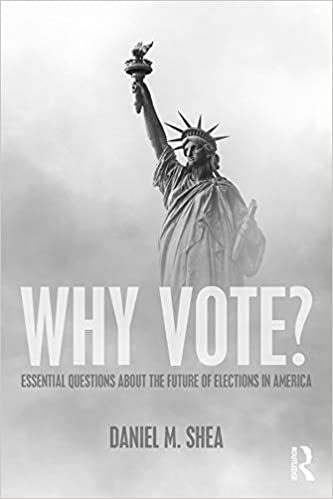
Why Vote?

https://search.lib.uiowa.edu/permalink/f/7nh330/01IOWA_ALMA21728753740002771

Written by one of the nation’s leading parties and elections scholars, Why Vote? Essential Questions About the Future of Elections in America explores a range of topics. Each chapter is set by a guiding question, and concludes with a novel, often surprising argument. Who or what is to blame for the rise of rabid, hate-centered polarization? Can a third party really save our system? Should we even try to limit money in campaigns? Do elections stifle other, more potent forms of engagement? Who’s to blame for the growing number of voter access restrictions? Might attitudes toward immigration and race form a “unified theory” of voter coalitions?

Back To America

https://search.lib.uiowa.edu/permalink/f/7nh330/01IOWA_ALMA21728753080002771

Back to America is an ethnography of local activist groups within the Tea Party, one of the most important recent political movements to emerge in the United States and one that continues to influence American politics. Though often viewed as the brainchild of conservative billionaires and Fox News, the success of the Tea Party movement was as much, if not more, the result of everyday activists at the grassroots level. William H. Westermeyer traces how local Tea Party groups (LTPGs) create submerged spaces where participants fashion action-oriented collective and personal political identities forged in the context of cultural or figured worlds. These figured worlds allow people to establish meaningful links between their own lives and concerns, on the one hand, and the movement’s goals and narratives, on the other. Collectively, the production and circulation of the figured worlds within LTPGs provide the basis for subjectivities that often nurture political activism.

Westermeyer reveals that LTPGs are vibrant and independent local organizations that, while constantly drawing on nationally disseminated cultural images and discourses, are far from simple agents of the larger organizations and the media. Back to America offers a welcome anthropological approach to this important social movement and to our understanding of grassroots political activism writ large.

Goodbye, My Havana

https://search.lib.uiowa.edu/permalink/f/7nh330/01IOWA_ALMA21729082400002771

An eyewitness account of idealism, self-discovery, and loss under one of the twentieth-century’s most repressive political regimes

Set against a backdrop of world-changing events during the headiest years of the Cuban Revolution, Goodbye, My Havana follows young Connie Veltfort as her once relatively privileged life among a community of anti-imperialist expatriates turns to progressive disillusionment and heartbreak. The consolidation of Castro’s position brings violence, cruelty, and betrayal to Connie’s doorstep. And the crackdown that ultimately forces her family and others to flee for their lives includes homosexuals among its targets―Connie’s coming-of-age story is one also about the dangers of coming out. Looking back with a mixture of hardheaded clarity and tenderness at her alter ego and a forgotten era, with this gripping graphic memoir Anna Veltfort takes leave of the past even as she brings neglected moments of the Cold War into the present.

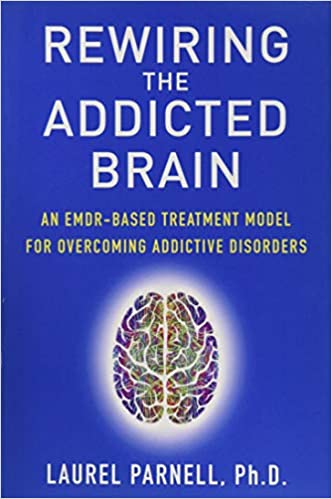
Rewiring the Addicted Brain with Emdr-Based Treatment

https://search.lib.uiowa.edu/permalink/f/7nh330/01IOWA_ALMA21727451010002771

As a clinical psychologist specializing in the treatment of trauma, Dr. Laurel Parnell has found that many people who have suffered the effects of trauma use addictive substances or behaviors in an effort to relieve their pain.

In Rewiring the Addicted Brain, Dr. Parnell applies her extensive expertise in Attachment- Focused EMDR and Resource Tapping to the clinical challenge of addictions recovery. It is filled with brain-wise, compassionate, resilience-supporting EMDR-based techniques that can be easily integrated into all levels of addictions treatment.

Therapists and substance abuse counselors will find this a useful guidebook to help them navigate the difficult and complex terrain of addiction treatment—one that recognizes and addresses trauma and integrates repair of attachment deficits.

Case material is interwoven throughout the text; also included are chapters presenting in-depth cases which illustrate the techniques. These cases include history and background of the clients as well as actual sessions employing the interventions specific to rewiring the addicted brain.

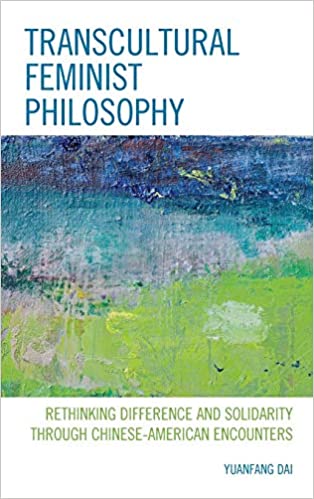
Transcultural Feminist Philosphy

https://search.lib.uiowa.edu/permalink/f/7nh330/01IOWA_ALMA21768471190002771

The question of difference—how to accommodate the complexity and diversity of women’s experiences—remains a central point of reference in debates among feminist thinkers. In Transcultural Feminist Philosophy: Rethinking Difference and Solidarity Through Chinese-American Encounters, Yuanfang Dai addresses influential approaches to the feminist difference critique. Acknowledging that gender oppression assumes different forms in different social and cultural locations, Dai denies that this rules out generalizing about women’s experiences. She proposes a category of women that captures and respects differences and dynamics among women and that can inform possibilities for women in the future. Through a critical examination of multicultural and postcolonial feminisms, she argues that we need both to rethink the concept of culture and to rework multiculturalism as an analytical and political idea. Developing a notion of transculturalism, she draws on Chinese feminist scholarship as she explores how a transcultural approach can address tensions between cultural differences and feminist solidarity. Transcultural thought and action offers a new way to explore the conditions of women’s collective struggles.

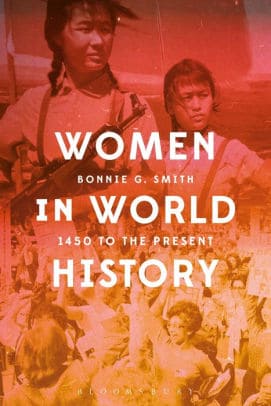
Women in World History

https://search.lib.uiowa.edu/permalink/f/7nh330/01IOWA_ALMA21732615330002771

Women in World History brings together the most recent scholarship in women’s and world history in a single volume covering the period from 1450 to the present, enabling readers to understand women’s relationship to world developments over the past five hundred years.

Women have served the world as unfree people, often forced to migrate as slaves, trafficked sex workers, and indentured laborers working off debts. Diseases have migrated through women’s bodies and women themselves have deliberately spread religious belief and fervor as well as ideas. They have been global authors, soldiers, and astronauts encircling the globe and moving far beyond it. They have written classics in political and social thought and crafted literary and artistic works alongside others who were revolutionaries and reform-minded activists.

Historical scholarship has shown that there is virtually no part of the world where women’s presence is not manifest, whether in archives, oral testimonials, personal papers, the material record, evidence of disease and famine, myth and religious teachings, and myriad other forms of documentation. As these studies mount, the idea of surveying women’s past on a global basis becomes daunting. This book aims to redress this situation and offer a synthetic world history of women in modern times.

Archiving the movement

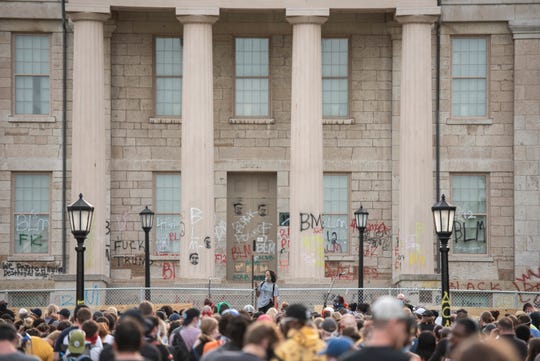
Black Lives Matter protest at Old Capitol
Protesters speak during a rally in front of the Old Capitol as protests for racial justice entered their eighth day in Iowa City on Saturday,  June 6, 2020. Photo by Nick Rohlman for The Press Citizen

We’re living in unprecedented times. Protesters are speaking out against the murder of George Floyd, police brutality, and systemic racism. The UI Libraries’ Special Collections plans to pursue a careful approach toward archiving the protests in our community. We recognize potential pitfalls in a white institution rushing to collect materials about marginalized communities of color, problems such as collecting to “check the box” or collections that hurt or mischaracterize communities of color. We also recognize the problems with archival silence. Our efforts will be a three-tiered approach designed to expand authentically and ethically over time:

  1. Gather photos.We are both taking and collecting photographs of graffiti around town and campus. These are photos of protest evidence that do not include people. We are not soliciting photographs of protests or protesters out of concern for protecting their identities.
  2. Listen by reaching out to existing relationships within communities of color.We are working with pre-existing institutional and individual connections through three staff members who have long-established relationships with individuals in our community.
    • Erik Henderson, a student worker in Iowa Women’s Archives (IWA) and Special Collections, is reaching out to his connections, including campus and community groups.
    • David McCartney, the UI Libraries’ University Archivist, is reaching out to several connections.
    • Janet Weaver, assistant curator in IWA is reaching out to LULAC (League of United Latin American Citizens).
  1. Wait for material to come in down the road.This is a tried-and-true measure for us that allows us to expand our collections organically as we build connections with individuals and with organizations over time, not overnight.