Special Collections Category

0

UI Libraries’ Artists’ Books Exhibited at Drake University

A group of more than 30 artists’ books from The University of Iowa Libraries’ collection will be exhibited from September 11th through October 9th in the Anderson Gallery at Drake University, Des Moines.  The exhibition, “The Book in Time & Place,” was curated by alumnus Sarah McCoy and Julie Leonard from the staff of The University of Iowa Center for the Book will offer a guest lecture in the Fine Art Center at Drake on September 9th.

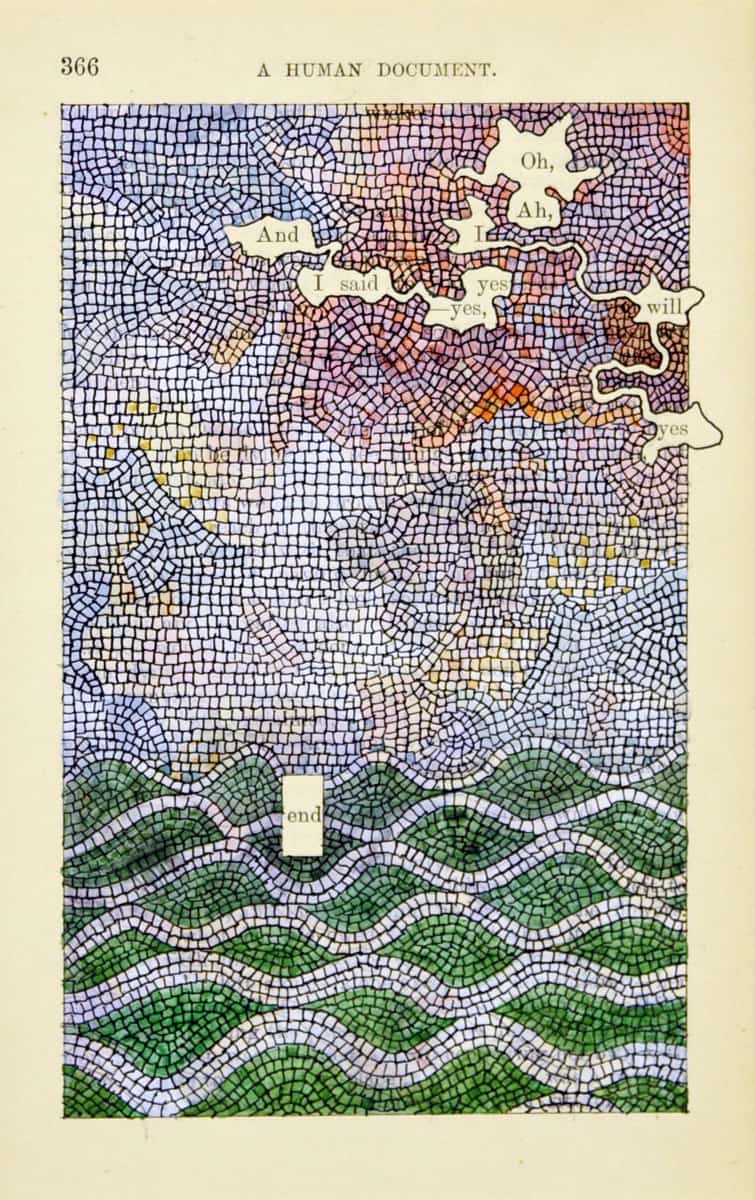
Most of the loaned books were displayed in Old Cap during this past January, but several additional books were included in the loan, notably several items from the Charlotte M. Smith Collection of Miniature Books.  Included in the exhibit are books printed on hand-set type and printed by hand on fine papers.  Some are illustrated with images created in various techniques, including etchings, engravings, woodblocks, and lithographs. Apart from their artistic quality, many of the books look like conventional books, albeit more carefully made, but others play with the idea of “bookness” and have been created to express an artist’s statement.  One small “book,” for example, collects images of belly buttons from well-known classical paintings; it is, course, bound in a pair of buttons.  Another, a meditation on make-up and self-image, is printed on accordion-folded paper and bound into a cheap plastic compact which in turn resides in a glittering purse.

“Artists’ books are typically produced in only a few copies – even 50 copies is a large edition,” said Sid Huttner, head of Special Collections & University Archives at The University of Iowa, “and consequently few people have experienced them.  It also takes considerable effort to select and mount an exhibition, so we were delighted to have Drake propose a display of books in Des Moines that could build on one earlier seen in Iowa City.”

The University of Iowa has a long tradition of teaching and supporting fine printing and book arts, and the Libraries has assembled over many years a collection that documents books design and construction from the 15th century to the present in great depth.  Artists’ books are a fairly new genre, developing largely in the 1970s, and the Libraries collects examples of current work that support academic programs in Art & Art History, Art Education, and The Center for the Book.

“As Google digitizes its way through libraries here and abroad, and the Kindle is said to be about to replace paper and ink entirely, it is perhaps surprising how many artists are finding they can best communicate their artistic vision via book formats,“ said Huttner. “But this is a vigorous, lively, enchanting corner of the contemporary art community.”

0

UI Libraries acquires sci-fi fanzine collection; includes ‘Star Trek’ and ‘Star Wars’ pieces

The University of Iowa Libraries has announced the acquisition of the Mariellen (Ming) Wathne Fanzine Archive Collection. This large collection of some 3,000 science fiction fanzines is an important accumulation of fan-created work and a significant addition to the fanzine holdings of the University Libraries.

The Fanzine Archive Collection contains thousands of fanzines focused on popular media properties such as “Star Trek” and “Star Wars.” Those related to “Star Wars” were originally collected by Lucasfilm Ltd., producer of the Star Wars series. This collection was offered back to fans in the 1990s, and a California fan named Mariellen Wathne accepted it and began a lending library to distribute ‘zines among fans. In addition to “Star Wars” fanzines, there are also many fanzines related to “Star Trek,” including some of the most important early pieces.

Since the 1960s, when television series such as “The Man From U.N.C.L.E.” and “Star Trek” cultivated large followings, fans have produced their own publications developing stories involving their favorite characters. These fanzines provide a unique perspective on participatory culture—rather than passively consuming media, fans actively interacted with it and developed complex spin-off works that were distributed at conventions and through the mail, says Greg Prickman, assistant head of Special Collections at the UI Libraries.

“In many ways, fan culture pre-dates and anticipates our modern remix mash-up internet culture,” said Prickman. “And there is a great deal of scholarly interest in this type of activity today. “

The collection was acquired with the help of the Organization for Transformative Works (OTW), a non-profit advocacy group dedicated to preserving and protecting works created by media science fiction fans. As part of a concerted effort to collect fanzines and other artifacts of fandom, the University Libraries has established a joint effort with the OTW called the Fan Culture Preservation Project. The Libraries and the OTW will work together to identify important collections and bring them to the UI.

These fanzine collections help make the UI Libraries one of the country’s leading research centers for the study of 20th-century popular culture, adding to important collections documenting filmmaking, vaudeville and theatre, underground art, independent music, and science fiction fandom.

0

Live from Prairie Lights Recordings in Special Collections

On June 14, 1990 Mary Swander and Jane Anne Straw read from their book Parsnips in the Snow at Prairie Lights Bookstore in Iowa City. This was the first broadcast of “Live from Prairie Lights” on Iowa Public Radio. Today Swander is Iowa’s poet laureate, and this recording, and thousands of others like it, is now at the University of Iowa Libraries.

Iowa Public Radio has donated all of the original recordings of Live from Prairie Lights to the UI Libraries. Eighteen years and 1,800 programs were captured on CD, mini disc and reel-to-reel. Stewardship of these materials is part of the Libraries’ ongoing commitment to record and make accessible the intellectual output of the University.

“These recordings document an outstanding series of readings,” said Greg Prickman, Assistant Head of Special Collections. “We are grateful to Iowa Public Radio for ensuring their long-term preservation by making this donation.”

Special Collections is already home to the Julie Englander Collection of Contemporary Literature, which contains books inscribed by authors interviewed by the programs’ host, Julie Englander. “It’s wonderful that the series will be available for the public to enjoy in perpetuity,” Englander said.

“We are proud to partner with the University Libraries on this project,” said Joan Kjaer, Iowa Public Radio Director of Communications. “This partnership provides an exceptional opportunity for all kinds of people – scholars, writers, readers, fans of the show – to have permanent access to conversations with the world’s best authors.”

Currently 250 of these recordings, including the first reading with Mary Swander and Jane Anne Straw, are available online in the Iowa Digital Library (http://digital.lib.uiowa.edu/vwu) and the Virtual Writing University (www.writinguniversity.org). Eventually the entire series will be digitized and freely available via the Iowa Digital Library.

0

Iowa s First Lady Donates Book to Special Collections

Iowa’s First Lady Mari Culver recently donated a signed copy of Entertaining at Terrace Hill to the Louis Szathmary II Culinary Arts Collection at the University of Iowa Libraries. 

Culver made the donation on a visit to Iowa City in April for a Prairie Lights book-signing event. The cookbook features over 200 recipes from around the state and displays of food photographed at Terrace Hill. The latest in the series of Iowa First Lady cookbooks, it includes recollections by F.M. Hubbell family descendents who were part of the Terrace Hill legacy for many years before the home was presented to the state. For more information, visit http://www.governor.iowa.gov/news/2008/11/5_2.php.

This book joins one of the most wide-ranging culinary collections in the world, with some 12,000 volumes dating from 1499 to 2009, says David E. Schoonover, curator of rare books at the UI. See http://www.lib.uiowa.edu/spec-coll/bai/szathmary.htm for more on the archives.

0

Have a Taste for the Exotic? Check out Special Collections Exhibit about Asian Food

To celebrate the upcoming Asian Pacfic Heritage Month, Special Collections has collaborated with the Asian American Coalition (AAC) to create a display of cookbooks from the Szathmary Collection.

The exhibition showcases ten Asian countries: Malaysia, Thailand, India, Vietnam, Japan, Korean, Laos, Philippines, Indonesia, and China. AAC members added their own personal momentos and souvenirs to the exhibition, as well as artifacts from the Thompson Travel and Ethnic Art Artifacts.

  • Izakaya: The Japanese Pub Cookbook by Mark Robinson.
  • East Meets West Cuisine: An American Chef Redefines the Foodstyles of Two Cultures by Ken Hom (China).
  • Discovering Korean Cuisine: Recipes from the Best Korean Restaurants in Los Angeles, Allisa Park editor.
  • Simple Laotian Cooking by Penn Hongthong.
  • Indonesian Regional Cooking by Sri Owen.
  • Filipino Cuisine: Recipes from the Islands by Gerry G. Gelle.
  • Cracking the Coconut: Classic Thai Home Cooking by Su-mei Yu.
  • The Best of Nicole Routhier (Vietnam)
  • Cook Malaysian by Lee Sook Ching.
  • Indian Home Cooking: A Fresh Introduction to Indian food, with more than 200 recipes by Suvir Saran and Stephanie Lyness.

Asian American Coalition (AAC) is an umbrella organization which is dedicated in building a stronger Asian American community both on and off campus. Asian Pacific Heritage Month (APAH) located in April, is a month-long event promoting and celebrating Asian awareness and culture.

Acknowledgements
Exhibition Planning: Lilly Chen and the Asian American Coalition
Installation: Lilly Chen, Chiaki Sakai, Greg Prickman and the Asian American Coalition
Special Thanks: Greg Prickman, Kathy Hodson and the Special Collections.

0

Birth of Primetime TV was at the Univ of Iowa’s W9XK

The switch to digital telecasts is on, and to mark the occasion the Iowa Digital Library has released a new online collection celebrating the birth of American prime-time TV more than 75 years ago.

This “birth” didn’t happen in a laboratory at AT&T, General Electric or RCA, however. Instead, regularly scheduled TV programs were launched on the University of Iowa campus, in a building at the corner of Iowa Avenue and Dubuque Street in Iowa City.

W9XK, as the experimental TV station was known, went on the air in 1933. For six years the station presented a two-nights-per-week schedule of “sight and sound” lectures, musical performances, and drama. A small but loyal audience using special receivers viewed the telecasts from as far away as Pennsylvania and Oklahoma.

Television was in its infancy in the 1930′s when the U.S. government licensed about 30 such experimental stations around the country, mostly in large cities. What set W9XK apart from the others was its pioneering schedule of programs, according to university archivist David McCartney.

“While other stations were airing test signals to prove the viability of certain types of transmission systems under development, W9XK went one step further and offered programs on a regular basis,” he said. “It was not only a technical effort of the College of Engineering but faculty from the School of Music, the Department of Speech and Theatre Arts, and other areas of campus also collaborated.”

The online collection is at http://digital.lib.uiowa.edu/w9xk. It features photographs, correspondence, and newspaper clippings from the University of Iowa Archives.

0

Special Collections Item of the Month

Behind the Scenes by Elizabeth Keckley, 1868.

Elizabeth Keckley was Mary Todd Lincoln’s seamstress at the White House, and became a close confidant of the First Lady. She was born in Virginia and for thirty years was a slave, before she was able to purchase her freedom while working as a dressmaker. She met Mary Todd Lincoln on the day of Abraham Lincoln’s first inauguration as President, and was hired to make dresses for her the following day.

Learn more about this item…

0

Lincoln Collection Online

In celebration of the bicentennial of Abraham Lincoln’s birth, the University of Iowa Libraries has digitized over 1,000 artifacts related to Lincoln and his time for its new Abraham Lincoln Digital Collection that explores the life and legacy of one of the nation’s most notable presidents.

The digital collection at http://digital.lib.uiowa.edu/lincoln provides integrated access to a variety of Lincoln materials across three manuscript collections held in the University of Iowa Libraries’ Special Collections department.. Highlighted are two defining issues of Lincoln’s presidency—the Civil War and railroad expansion—as well as his tremendous legacy revealed in materials amassed during the last 100 years by noted Lincoln collectors.

Over 800 items drawn from the James W. Bollinger collection are are featured in the digital collection. Bollinger (1867-1951) was a lawyer and judge from Davenport who spent a lifetime amassing books, journals, letters, pamphlets and memorabilia by or about Lincoln. Upon his death, the collection was bequeathed to the UI Libraries, where it has been continually developed.

“This digital collection allows us to bring some of the many fascinating pieces collected by Judge Bollinger to a much wider audience,” says Greg Prickman, assistant head of the Libraries’ Special Collections Department. “The items Bollinger collected show how Lincoln has been depicted over the years, but rather than simply focus on this visual legacy, we decided to include items from two other collections to provide a more detailed look into Lincoln’s era.”

One example the items in the Lincoln Digital Collection is a hand-written 1856 letter by Lincoln and addressed to an abolitionist group in Muscatine:

“…It would be very pleasant to strike hands with the Fremonters of Iowa, who have led the van so splendidly, in this grand charge which we hope and believe will end in a most glorious victory — All thanks, all honor to Iowa!! But Iowa is out of all danger, and it is no time for us, when the battle still rages, to pay half-day visits to Iowa . I am sure you will excuse me for remaining in Illinois, where much hard work is still to be done .”

The collection also includes items documenting major historic events of Lincoln’s time:

  • Letters and diaries featuring contemporary, first-hand accounts written by Iowans who served as soldiers, nurses, and administrators during the war.
  • Photographs and documents concerning important early railroads in Illinois and Iowa, and the construction of the Union Pacific Railroad and its expansion westward from Iowa.

The Abraham Lincoln Digital Collection was made available through the generosity of Mary Calkin, in memory of Homer Calkin, in recognition of his life-long interest in Abraham Lincoln. With her support, the Libraries was able to purchase specialized equipment with which many of these fragile artifacts could be digitized.

This collection is part of the Iowa Digital Library (http://digital.lib.uiowa.edu/ ), more than 225,000 digital photographs, maps, sound recordings, and documents from libraries and archives at the University of Iowa and their partnering institutions.

0

1,000 Leigh Hunt Letters Online

We are very pleased to announce a milestone just passed:  the thousandth letter has been added to the Leigh Hunt Online .  While we have about 600 to go, the project has already been offered a few letters held by other institutions – and even some that remain in private hands.

This project was funded by the Gladys Krieble Delmas Foundation and got underway a year ago.  Through June, it was headed by Nana Holtsnider, then Ruth Bywater Olson Fellow, and since July it has been headed by Juli McLoone, Robert Olson Fellow.  A highly productive group of student assistants have scanned letters and transcriptions, edited transcripts, and built CONTENTdm records.

0

Special Collections on Display at Old Capitol Museum

Old Capitol Museum will present an exhibition of handmade artist books from Tuesday, Jan. 6, to Sunday, Feb. 1, in the museum’s second-floor rotunda.

The exhibit, The Book in Time and Place, was organized by the University of Iowa Center for the Book in conjunction with the first College Book Art Association biennial conference, which will be hosted by the Center for the Book in Iowa City Thursday–Saturday, Jan. 8–10.

The exhibit is free and open to the public. Regular hours at Old Capitol Museum are 10 a.m.–3 p.m., Tuesday, Wednesday, and Friday; 10 a.m.–5 p.m. Thursday and Saturday; and 1–5 p.m., Sunday. Old Capitol is closed Mondays and national holidays.

Curated by UI Libraries’ assistant conservator Kristin Baum and Center for the Book lecturers Sara Langworthy and Julia Leonard, The Book in Time and Place features 30 artist books from the UI Libraries Special Collections dating from the 1960s to the present.