This past spring was a good season for acquisitions in Special Collections, Leigh Hunt material not least among them. Not only did we pick up Percy Shelley’s personal copy of Hunt’s Feast of the Poets—a spectacular association copy, as Hunt and Shelley were remarkably close friends—but we acquired four Leigh Hunt manuscripts.
Two of these are copies of his most famous poems: “Abou Ben Adhem” and “Rondeau.” Perhaps the poem most beloved by posterity, “Rondeau” (more commonly known as “Jenny Kissed Me”) shares the poet’s excitement after having kissed Jane Carlyle, wife of the archetypal Victorian Thomas and neighbor of the Hunts.
The third manuscript is a draft fragment of The Palfrey. Only a few of the lines from this draft found their way into the published version, betraying the significant revisions the poem underwent at the author’s hand.
A transcript of “Velluti to his Revilers” is perhaps the most interesting manuscript in the lot. It’s not one of Hunt’s best known poems, but the transcript is thought to be in the hand of Julia, the author’s eighth child. While “Velluti” may not make the cut for the latest Norton anthology, Leigh Hunt writes at the end of these lines, “I think them the best (in rhyme) that I ever wrote—if I am old enough to be allowed to talk of my ‘best.’”
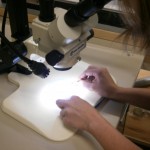
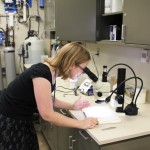
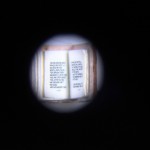
The University of Iowa Special Collections and University Archives is home to the Charlotte Smith Collection of miniature books with more than 4,000 tiny tomes. Most perplexing has been this microscopic Bible that remained unidentified, likely because we lacked the tools to adequately magnify the page with the publisher’s information. Highlighting this tiny book yesterday on our social media pages brought it to the attention of our conservator, Giselle Simon, who suggested that we try the microscope that recently arrived in the conservation lab.
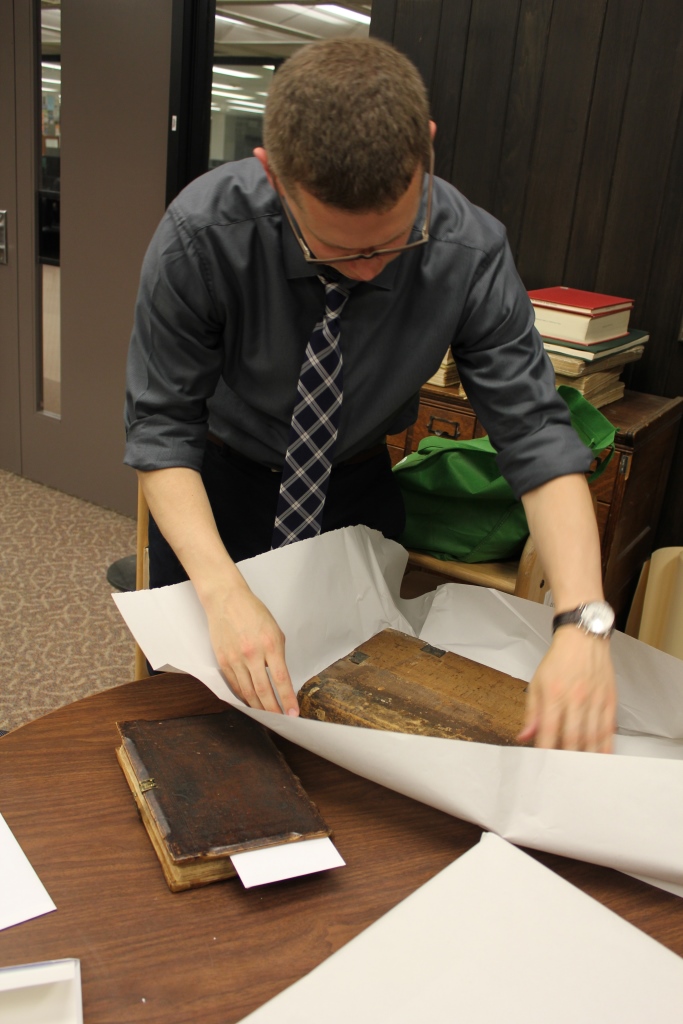
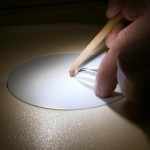
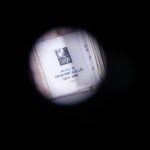
Handling it safely proved to be no easy task! With some extra sets of hands we were able to read the name of the publisher – Toppan Printing Co. (You can see the damage on this page from earlier attempts to read it).
Text viewed under the microscope
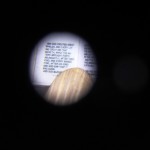
Text viewed under the microscope
Microscope view of publisher’s information
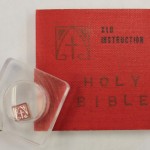
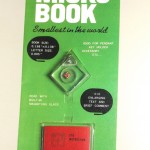
Following the trail we were able to identify the item as being a set of two books sold at the 1965 World’s Fair in New York. In fact, the larger miniature book in the set was already in the collection, unassociated with the ultra microminiature that could not be read.
Now the two have been reunited and they will be cataloged together.
The two books in the collection, reunited.
Books as they appeared for sale at the 1965 World’s Fair. (Image from “Miniature Books” by Anne C. Bromer)
Citation as included in Anne C. Bromer’s excellent reference book, Miniature Books: 4,000 Years of Tiny Treasures from 2007.
Holy Bible, Tokyo: Toppan Printing Company, 1964. 4x4mm. Published to coincide with the New York World’s Fair in 1965, this Bible was printed by a new process called “microprinting.”
In Of Gardens, Francis Bacon praises gardening as “the purest of human pleasures; it is the greatest refreshment to the spirits of man […].” Having just moved here from Bozeman, MT, and left my garden behind to start the Library and Information Science master’s program, I have been sorely missing the simple pleasure of watching something grow. The jar of green onions growing on the windowsill of my basement apartment window does not seem to refresh my spirits in quite the same way as Bacon intended. He says that only a 30 acre garden will do—clearly, Bacon never had to live in a basement apartment. So while the corn continues to grow to as high as an elephant’s eye and squash vines consume other people’s backyards, I have decided to scour Special Collections for gardening books in order to vicariously experience “the purest of human pleasures.”
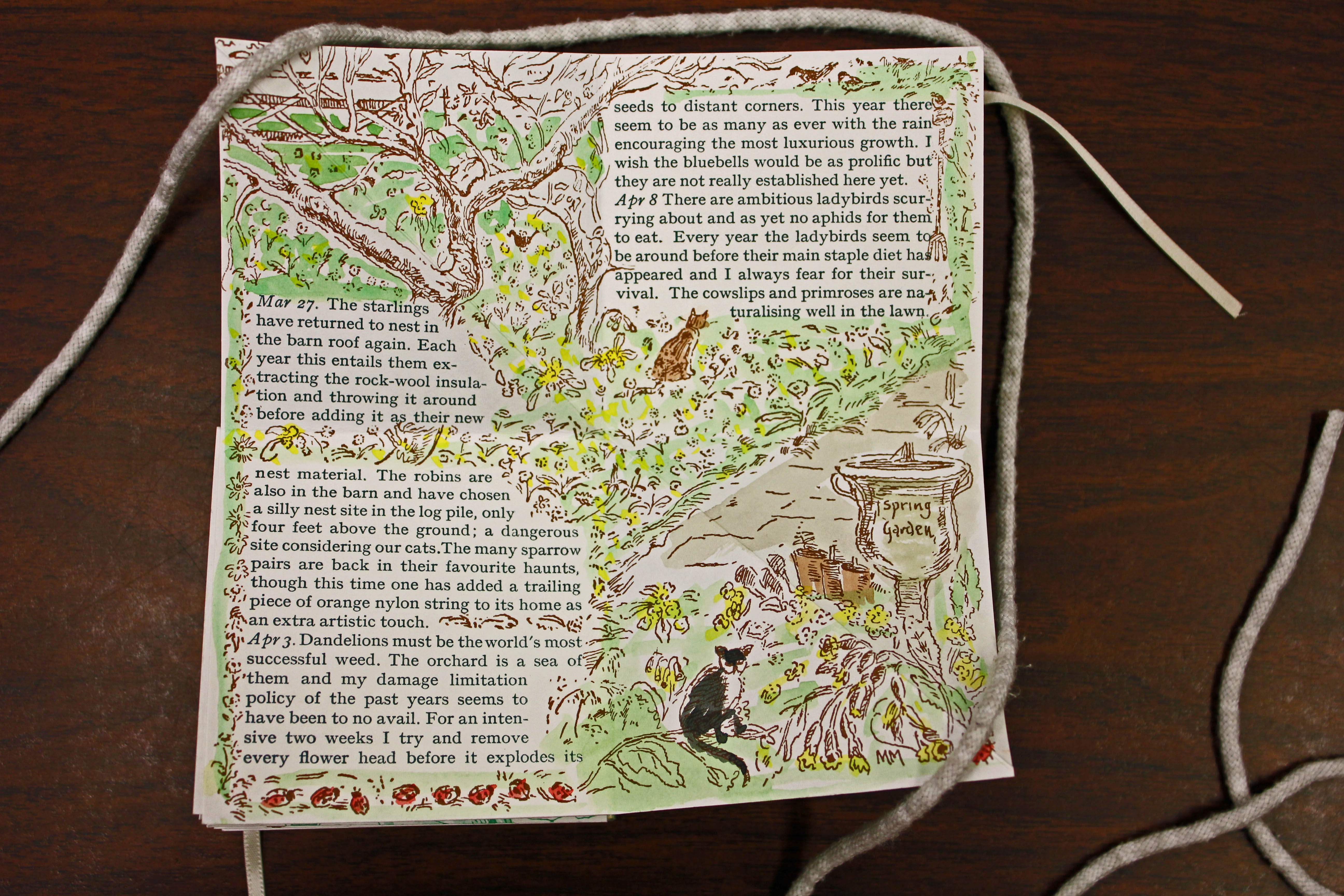
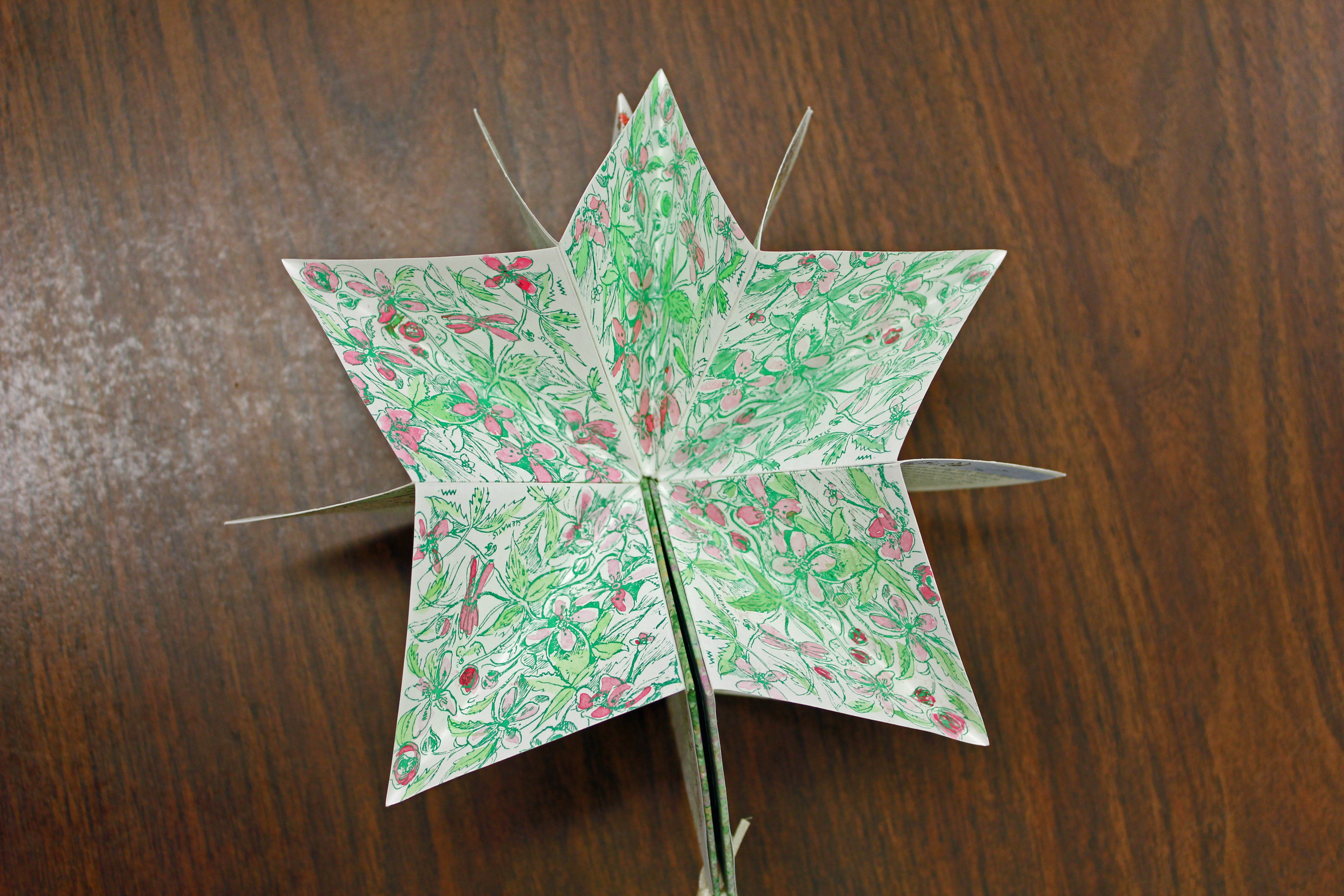
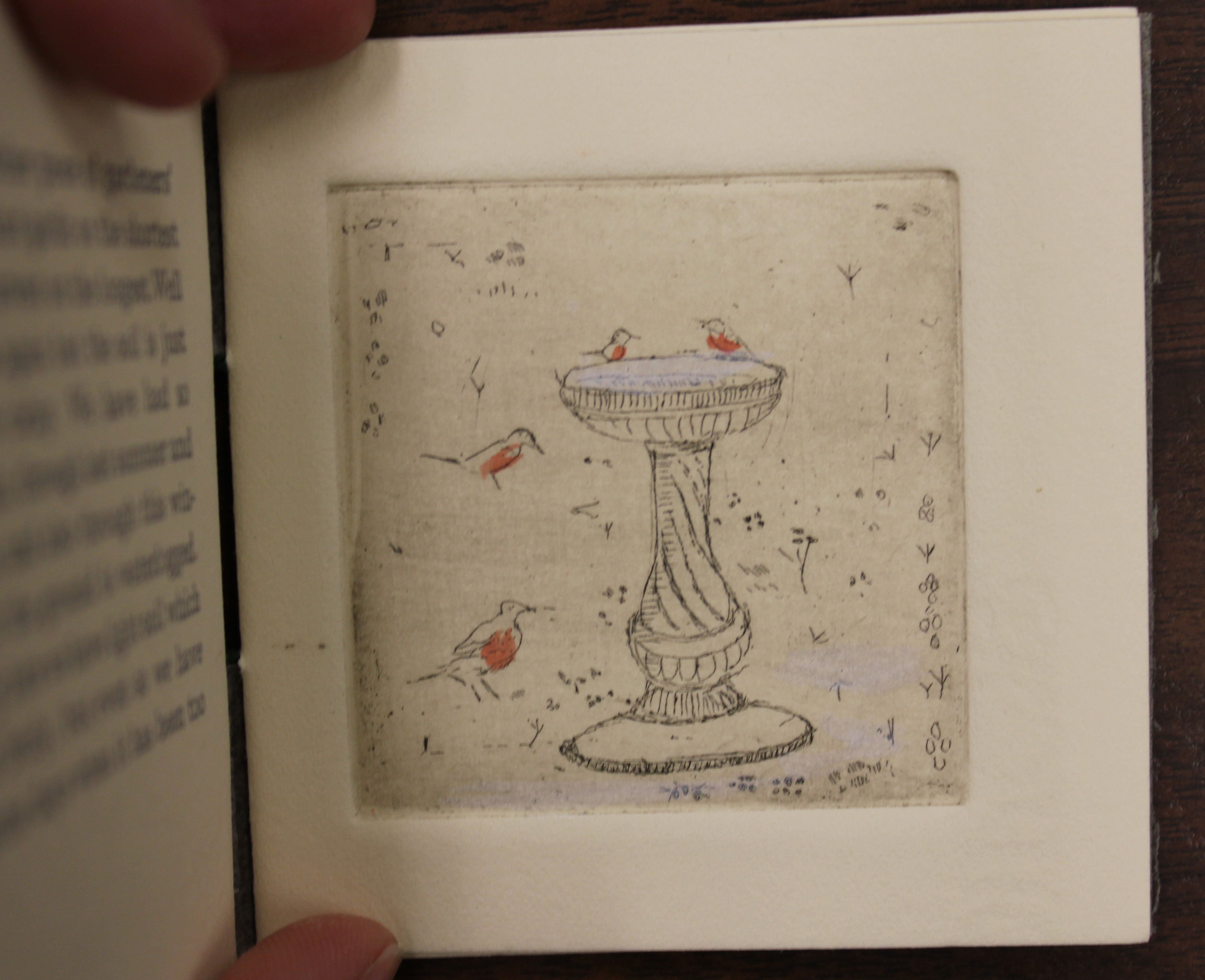
During my search, I chanced upon Claire Lawson-Hall’s diary of a single year of gardening. She has separated her story by season: A Spring Garden (1999), A Summer Garden (1999), An Autumn Garden (2000), and A Winter Garden (2001), illustrated by Muriel Mallows and printed at The Alembic Press, Marcham, UK. The design of each miniature evokes the season Lawson-Hall chronicles. In A Spring Garden she describes the progress of her garden February through May. The blackbirds, starlings, and robins have all returned and set up various camps. The bulb flowers are blooming and ladybirds(bugs) have made an early appearance. Like every other gardener Lawson-Hall must battle snails and weeds, although I have to disagree with her unfavorable opinion of dandelions—dandelion wine and salads are delightful! The pages of this book are folded like a cootie catcher and they spring open much like the flowers in her garden. When the book covers are tied together there are beautiful floral designs on either underside.
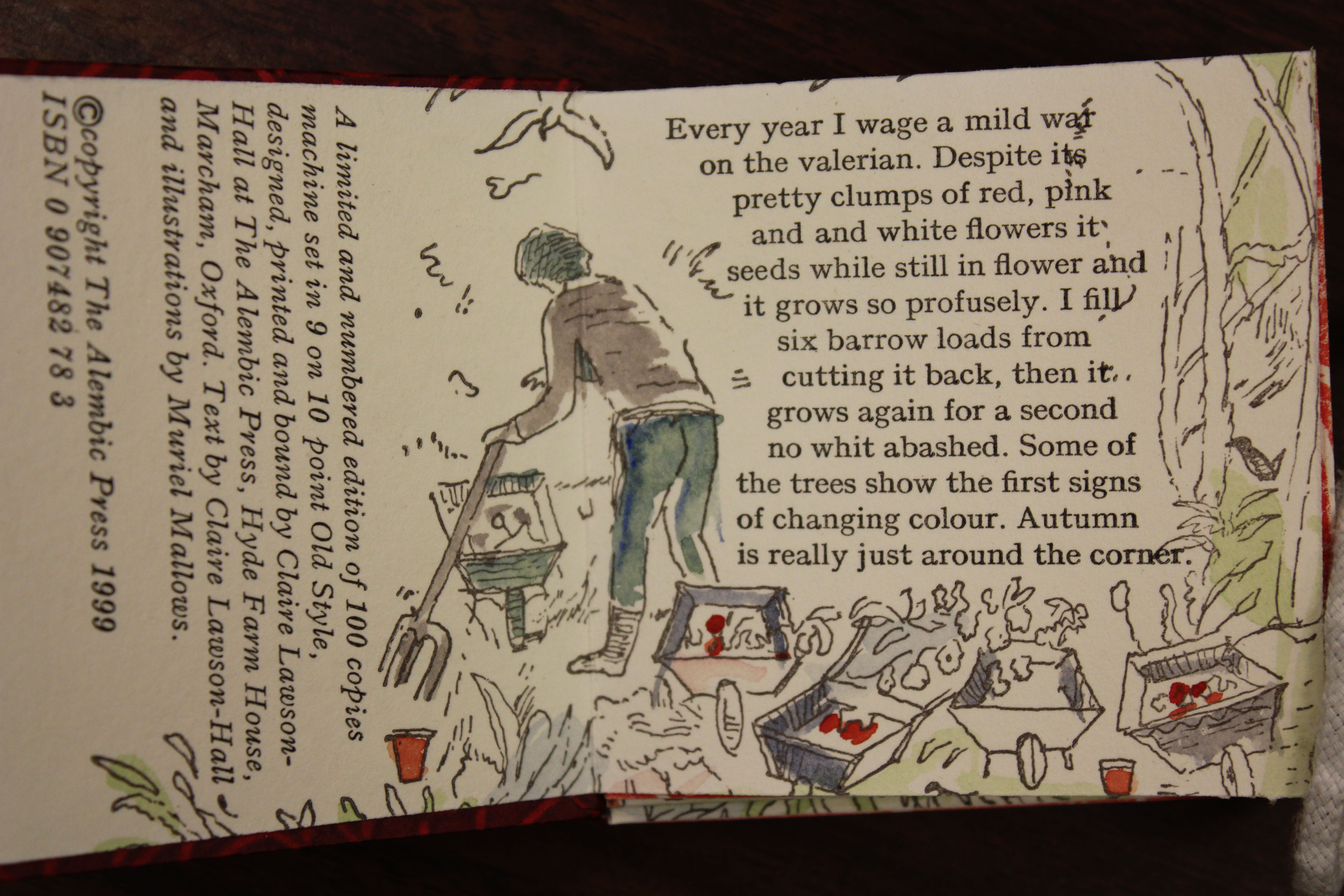
May through August summer returns and swallows take center stage in her narrative. Lawson-Hall describes their nest making and the birth of the first set of chicks and their departure. Her orchard is in bloom and volunteer poppies have sprung up on the edges of the garden. In August she worries about drought, like most of us now, and hints at the first signs of autumn. To me the design of this book conjures the image of wandering around her garden as the text winds from vertical columns to horizontal and back again. I love the final image where we can see Lawson-Hall doing battle with the valerian.
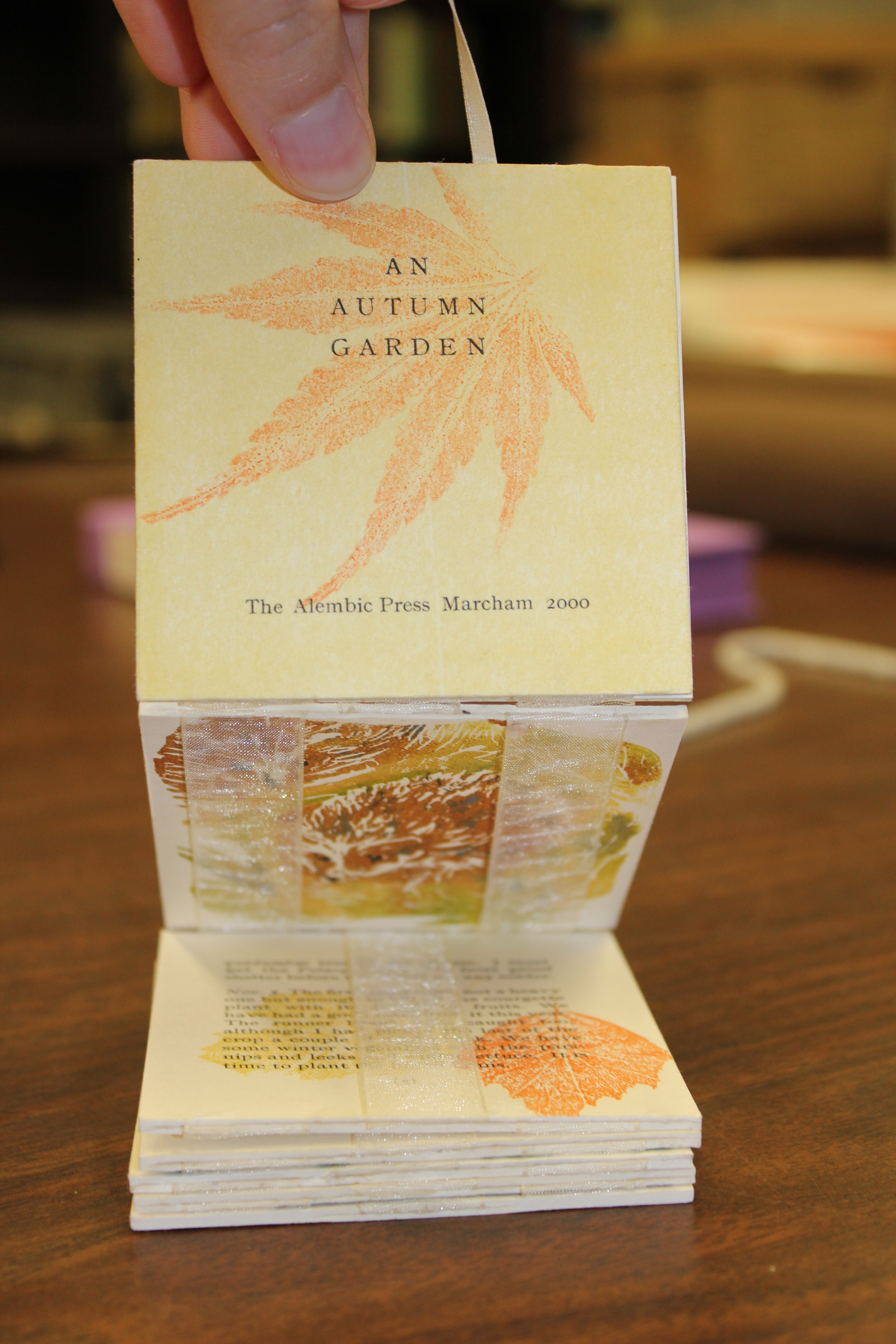
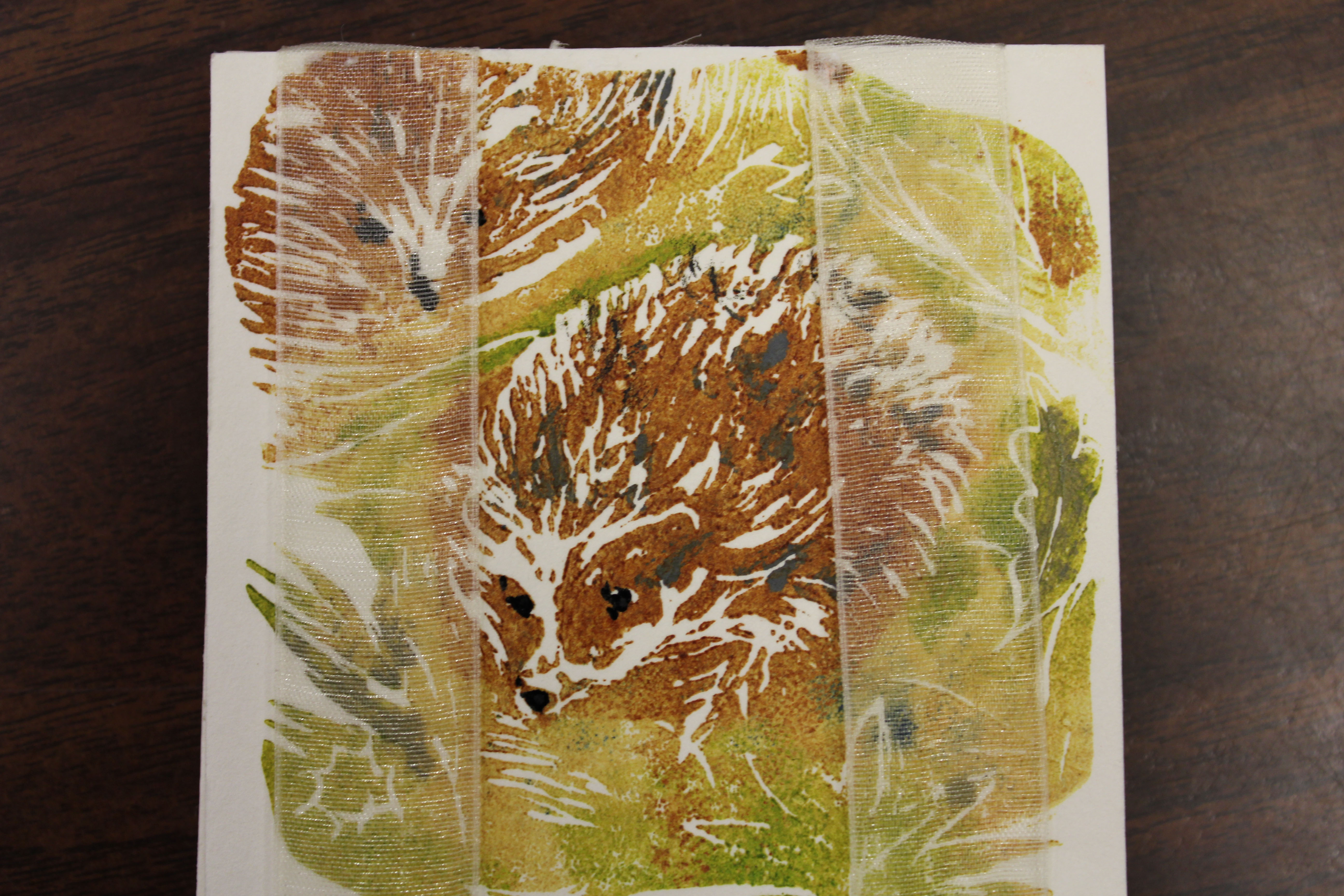
In autumn the last of the swallows leave and September through November Lawson-Hall focuses on preserving her harvest and making jams. Hedgehogs mosey about the property and mowing the lawn and raking leaves are given constants in this season. This book design might be my favorite. It works like a Jacob’s ladder and the pages tumble down and become disarranged when I try to figure out the best way to read her diary. I think this is her cleverest representation of a season; the descending pages perfectly represent the falling leaves. Where the other illustrations are colored by watercolors, this book features real fall leaves stamped onto the squares of cardboard.
Lawson-Hall admits that winter is her least favorite season, perhaps this distaste accounts for her own tardiness when planting her broad beans and garlic. The unassuming design of this miniature also suggests that she was less inspired by the season, but I think it mimics winter quite well. The book is bound as a codex (curiously 2 gatherings have been bound out of order in our copy) which creates a more static feeling rather than the active unfolding, turning, or picking up motions involved with reading the other three works. This more passive reading conveys to me a sense that the reader and author have moved indoors and that we are no longer rambling through the garden. The illustrations this time bear heavy plate marks which give the impression of looking through a window pane at the flora and fauna outside.
If Bacon read these little books, I am sure he would change his view that pleasure from a garden can only be derived if experienced by wandering through 30 acres or more of land. These 3x3in. books take the reader on a memorable and tactile journey. Now I am inspired to expand my windowsill garden from just green onions in a jar to maybe some kitchen herbs too—then I will have an excuse to create my own cute garden books.
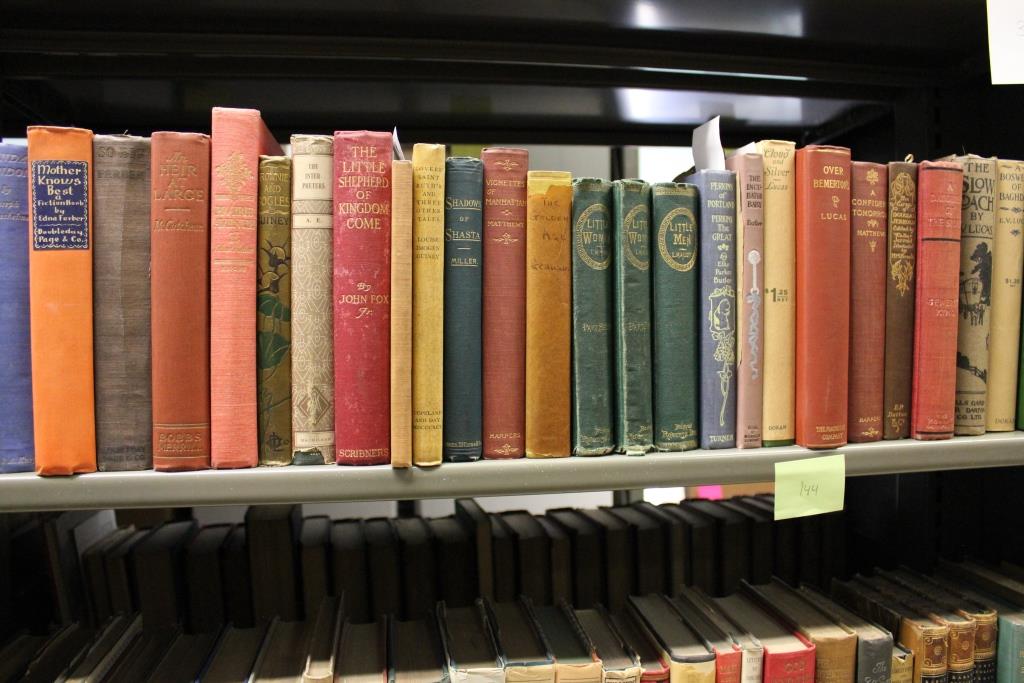
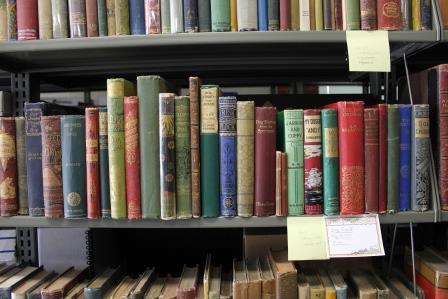
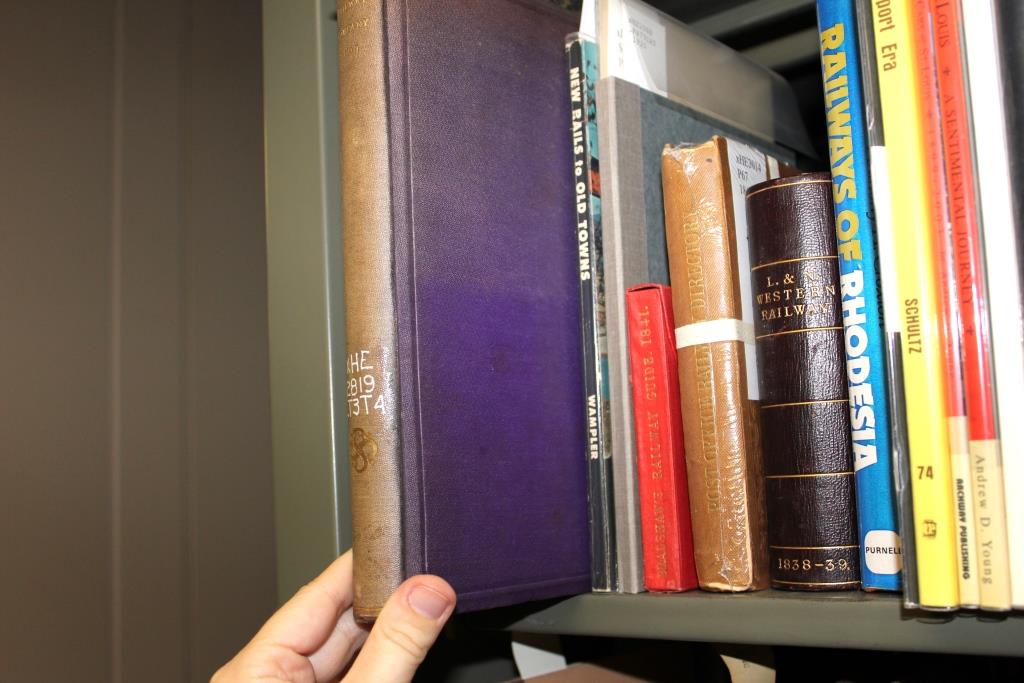
Can you tell that the red book used to be next to the purple one? That the tall books between are newer? And the spine used to be purple but has the most exposure so there is no color left.
Exposing an object to light, whether it is a book or flat item, causes damage that is cumulative over the lifetime of the object. The damage done by light cannot be restored and the item is permanently altered. By keeping the light levels as low as possible while still allowing for adequate viewing of the item, the rate degradation is reduced. This includes color fading and the physical breaking down of the item. Minimizing the amount of time something is exposed to light, even if the levels are low, will also control damage. So we must control the quantity and quality of light exposure to minimize the cumulative damaging effects of light on objects.
Another point to remember is that not only visible light does damage, but also light outside the visible range, such as ultraviolet and infrared. All light will cause permanent chemical changes in the item, so it is important to monitor light, especially in an exhibit setting, and choose the most appropriate light level for each item.
Some objects are more light-sensitive than others, and require lower light levels. Within archival collections this may include photographic materials, textiles, and color media (printed color, watercolor, tempera, etc.). In an exhibit you may see that these types of materials have lower lights levels than perhaps oil paintings or metal objects.
Here we see a book and its protective box. The spine label is made of the same material as the book cover and was once the same color. The book retains its original color, but the spine label on the box reveals ambient light damage.
This past weekend, the Zine Librarian (un)Conference happened here in Iowa City! Amongst the lively discussions and seminars was a Historical Zine Making Technologies Workshop demonstrating and using obsolescent printing techniques including hectography, spirit duplication, and mimeography. You may be asking yourself, at this point, what the heck a hectograph is…and we’re here to show you. By the end of this post, you too, could be on your way to zine making madness!
First, a hectograph a.ka. a gelatin duplicator or jellygraph, is a smooth piece of gelatin used to make multiple prints off a single master sheet. We’ve got great examples in many of our zine collections, including, but not limited to the Hevelin collection.
Second, making and using is a hectograph is incredibly simple. The only difficulties I had in using this out-moded technology was locating a couple of the supplies. I recommend using internet shopping sites to track down the harder to find materials.
.
.
1 oz unflavored gelatin
6 oz liquid glycerin (sometimes in the first aid aisle of the drugstore or supermarket…most easily obtained online)
about 1.5 cups of water
a pan slightly larger than 8.5″ x 11″ – I used an aluminum disposable pan
non-thermal transfer sheets (can be obtained from a tattoo supplier online, also referred to as Spirit transfer sheets)
paper (of the plain white copier variety, but I encourage experimenting with other types of paper)
optional: transfer stencil pencils (also purchased from a tattoo supplier online)
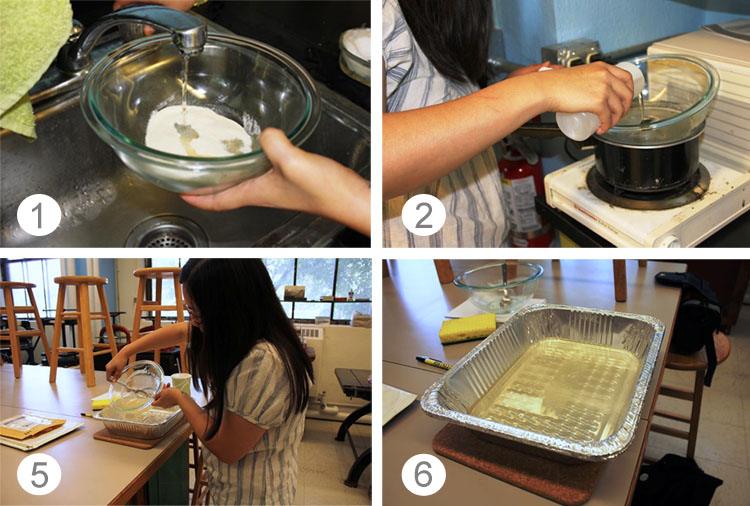
Prior to beginning, pour the water over the gelatin and let it sit for a few hours (overnight is best)
Heat the glycerin over medium/low heat – it just needs to be hot enough to melt the soaked gelatin
Add the gelatin to the glycerin and gently stir until the gelatin is completely melted
The mixture you end up with should be transparent and slightly yellow in color.
Pour this mixture into the pan you want to print from – pour gently as to avoid making bubbles in the surface
Let the pan sit and cool for a couple of hours until the gelatin has solidified…I got antsy and put the pan in the refrigerator for 20 minutes, which did the trick…
Printing
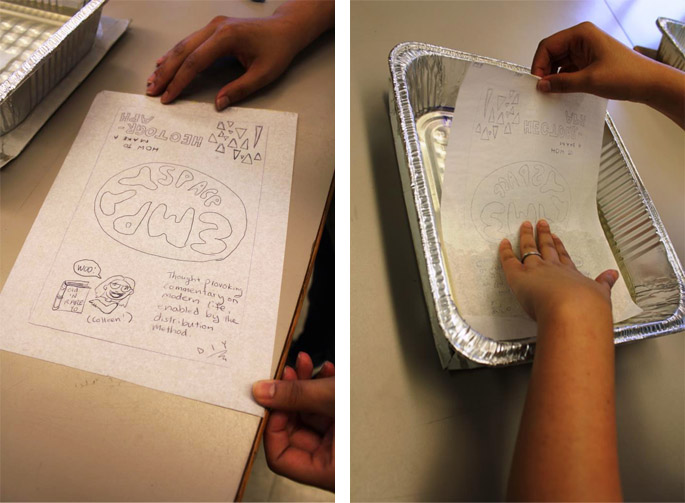
Take your transfer paper and draw whatever you want to print on it with a firm hand and a hard stylus (a pen usually works). Make sure that your lines are being transferred to your master sheet. You can also use the transfer pencils to add designs directly to the master sheet.
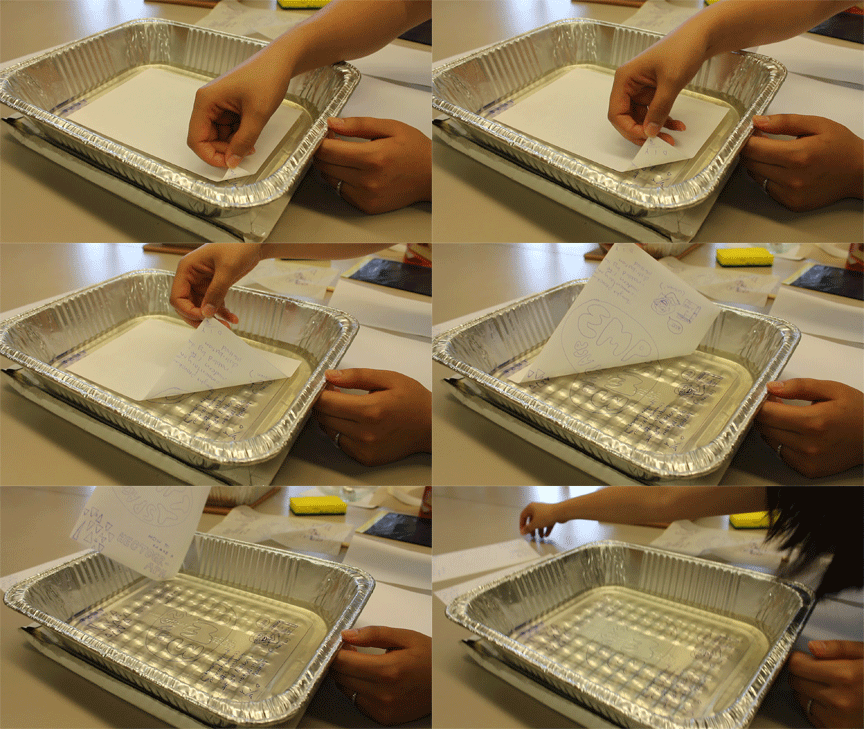
Take your master sheet and place it FACE down on the solidified gelatin surface, making sure there are no bubbles and that there’s good contact between the gelatin and the master. Let the master sit for awhile – I read somewhere that 1 second of sitting for every copy you want to make is a good rule of thumb.
Pull up your master sheet slowly – sometimes it helps to fold up a corner when placing it down so you have a tab to pull it up from
You’re ready to print! Place your paper on the gelatin surface and rub the back, much like the master sheet. Pull the sheet up and voila – you should have a duplicate of your master!
Keep going until the prints get too light to read.
The master copy on transfer paper getting placed face down onto the gelatin surface.Pulling off a print
Look at this awesome gif that Colleen made of pulling up a print off the hectograph here.
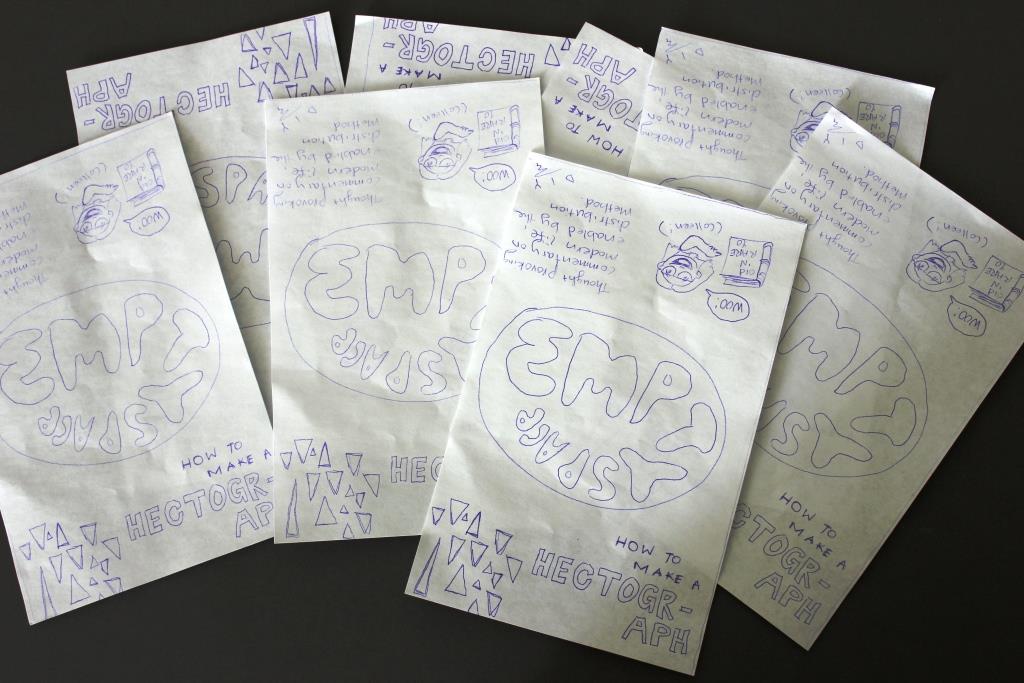
Here’s a sweet pile of prints we pulled from the hectograph!
Patrick Olson joined us at the beginning of last semester as a new Special Collections Librarian in charge of collections analysis and acquisitions. Patrick was most recently a rare book cataloger at M.I.T and came to Special Collections librarianship via the rare book trade. Stop by and ask him about rare books or climbing mountains!
With Patrick in place, Special Collections has seen a flurry of activity this semester with boxes arriving almost daily with new donations and purchases. The items are in various stages of being catalogued and processed so what follows here is an overview of new arrivals, with more announcements to follow soon.
Books:
Most recently we announced an extremely important purchase of twelve incunables (books from ~1450-1501). Read our blog post and stay tuned, we’ll have updates as they are cataloged and ready for research.
W.Morris proof (left)
Morris, William, Poems by the Way [corrected proof pages], 1891, X – PR5078.P4 1891a Infohawk record Blog post
Huxley, Aldous, After Many a Summer [inscribed to H.G. Wells], 1939, X – PR6015.U9 A68 1939, Infohawk record
Asturias, Miguel Angel, Leyendas de Guatemala, 1930. Infohawk record
Hunt, Leigh, A Day by the Fire [Luther Brewer’s copy], 1870.
Baskerville title page
Von Siebold, Philipp Franz, Manners and Customs of the Japanese, 1841. X – DS809.M28 1841 Infohawk record
Byron, Lord, English Bards and Scotch Reviewers [extra-illustrated], 1818.
Virgil, Bucolica,Georgica, et Aneis [Baskerville Virgil], 1757. X Folio – AC4.E28 1757. Infohawk record
West, Wallace, Alice in Wonderland [novelization of the 1933 film], 1934. X – PR4611.A73 W47 1934 Infohawk record
Gifford, Thomas, Praetorian, 1993. Iowa Authors Collection. Infohawk record
Rogers, Bruce (OUP), [Prospectus for the 1935 Oxford Lectern Bible], 1935. Infohawk record
Wilcox, Daniel, Ernie the Cave King, 1975. X – PZ5.W698 1975 Infohawk record
Miniature books:
Carroll, Lewis, Alice’s Adventures in Wonderland [miniature book with Rackham illustrations], 2011. Smith – PR4611.A73 2011 Infohawk record
Pit and the Pendulum
Poe, Edgar Allan, [J. & J. Sobota Press] The Pit and the Pendulum [miniature book], 2005. Mab – PS2618.P5 2005a Infohawk record (Tumblr post)
Dante Alighieri, La Divina Commedia [miniature book], 1878. (Blog post)
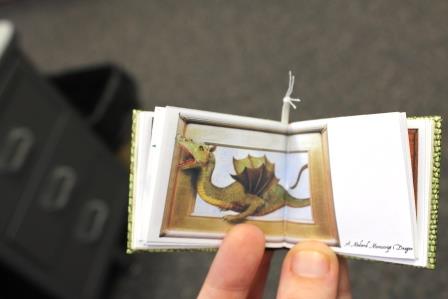
Sweet, Pat, The Dragon Gallery [miniature book], 2010, Smith – GR830.D7 S944 2010, Infohawk record (Tumblr post)
Amato, Christina, Tale of Herville [miniature book], 2010. Smith – PS3551.M183 T354 2010 Infohawk record
The Dragon Gallery
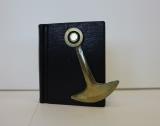
Amato, Christina, Swells & Spines, or, The Man Who Bound at Sea [miniature book], 2011. Smith – PS3551.M183 S94 2011 Infohawk record
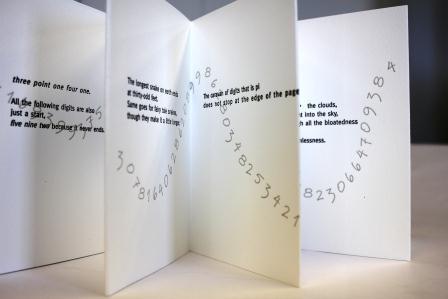
Szymborska, Wislawa and Susan Angebranndt of GreenChairPress, Pi, 2003. [artist’s book] X – PG7178.Z9 A222 2003 Infohawk record (Facebook post)
Reed, Justin James, 2013 [invisible ink], 2012. [artist’s book] X Folio – N7433.4.R424 T8 2012 Infohawk record This text can only be viewed using a black light [included].
Hanmer, Karen, Letter Home, 2004. [artist’s book] X – N7433.4.H35 L48 2004 Infohawk record
Hanmer, Karen, Nevermore, Again, 2010, [artist’s book] Mab – PS2633.K372 2010 Infohawk record
Szathmary Collection:
Rowley Cook Book and Sunshine Cook Book [early 20th century community cookbooks]
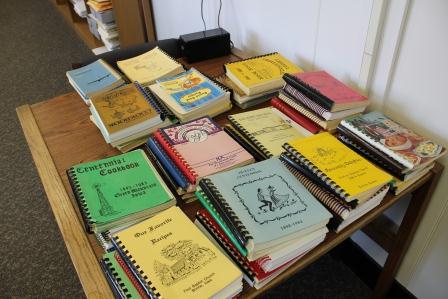
64 community cookbooks
64 community cookbooks [mostly Iowa] (Facebook post)
Hayward, A., The Art of Dining [railroad edition], 1852. Infohawk record
Locke, John and Henry, Commercial Cookery Archive (English Catering Company), [Mid 1800s bulk dates], Szathmary Culinary Manuscripts, Collection Guide
Chicago Sun Times, Three original photos of Chef Louis Szathmary, 1970s (Facebook post)
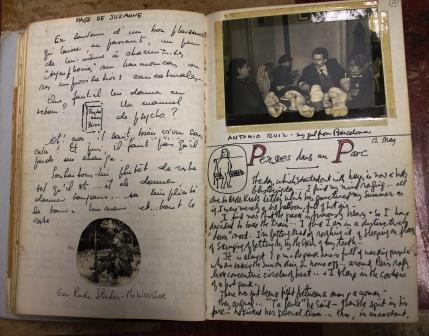
Arthur Asa Berger Papers [University of Iowa alum and professor emeritus of Broadcast and Electronic
Communication Arts at San Francisco State University, where he taught between 1965 and 2003 and author of more than 60 books.]. More than 90 journals with a mix of drawings, photographs, personal life, and plans for books.
Joshua Glenn Collection, 1980s-1990s music fanzines, letters from zine publishers, and zine ephemera. (Joshua Glenn’s Blog). (Tumblr).
Peter Thomas collection of papermaking and paper sample books.
Continuing fanzine acquisitions from the Organization for Transformative Works from many donors including a large donation of early Star Trek fanzines.
Morgan Dawn Collection addendum. [Zines for many TV shows and movies – Dr. Who, Harry Patter, Lord of the Rings, The Professionals, Quantum Leap, Star Trek & more].
George Ludwig papers. [Graduate Student under James Van Allen] (Two blog posts here and here)
George Ludwig Papers
Dave Morice Collection [1970s Actualist movement. Poet, illustrator, and performance artist.] Large addendum including personal papers and lesser known comic books such as Cosmic Boy
and Power of the Atom. Spanish language comic books, including Condorito.
Janine Canan papers [Publications, CDs and DVDs of the feminist poet].
Cloe Mayes Yocum, [Hollywood scripts].
Marquis Childs [Iowa Author]. Manuscript for Cabin.
Sam Becker, [Emeritus faculty], we received a copy of a Saroyan lay Western Awakening. This was Sam’s copy from a production at the University of Wyoming and is signed by Saroyan.
Adam Boyce. Collections relating to Charles Taggart, a Chautauqua performer, for our Redpath Chautauqua collection.
Beatrice Abrahamson’s WWII diary
Letter from Marion, Iowa [Regarding settling in to a new life in 19th c Iowa]
Glowgramme, [1933 glow in the dark theater program] X – FOLIO PN2093 .G59 1933 Infohawk record
Stein Collection
2 photo albums:
Trip to India c. 1900 [professional souvenir in lacquered Japanese binding]
Trip to Fiji & area c. 1920s [amateur photos]
Stein Collection, Muscatine Business owner’s diverse “gentleman’s library.” This collection will be kept together.
Brian Harvey Collection of 2000+ 19th and early 20th century dog books.
Dog books
Records of the Progressive Party, and we got an addendum of Pennsylvania Progressive Party papers. [Papers and press releases].
If you have been following any of our social media feeds over the past few days, you may have noticed photos popping up of newly-acquired incunables. So, what’s going on here? First, some background:
Incunables are books printed in Europe during the fifteenth century, between 1450 and 1501, examples of the earliest printed books. The incunabula period is the focus of a great deal of study—the development of printing, and how it affected the design, distribution, and reception of books, remains central to our understanding of book history.
Here at Iowa, we have long held a respectable collection of incunabula, and these books are frequently called for in classes and exhibitions. In recent years, these books have been examined extensively by Tim Barrett for his study of early papermaking, and Iowa is also home to the Atlas of Early Printing, an interactive overview of the spread and development of printing in Europe. The UI Center for the Book continues to pass along the art and craft of letterpress printmaking that first flourished in the incunabula period.
Our recent acquisitions are an attempt to add examples of books and subjects in the incunabula period that we have not had previously. This collection development has been made possible due to the support of the University Libraries acquisitions fund and the Libraries’ Collection Management Committee.
Special Collections Librarian Pat Olson took charge of this opportunity and identified an outstanding mix of possibilities that enhance our collection in many ways. Among these dozen new titles is the first illustrated edition of Dante printed in Venice. Until now, our incunables largely represented just a single language: Latin. The occasional ancient Greek was the only exception. Our new Dante, however, is in Italian, and so it’s one of our first incunables printed in a vernacular language. The other, also just acquired, is Monte dell’orazione, a private devotional text intended specifically for women. The copy we just acquired is particularly notable for retaining the very rare illustrated wrapper—or to risk oversimplification, the original illustrated paperback binding.
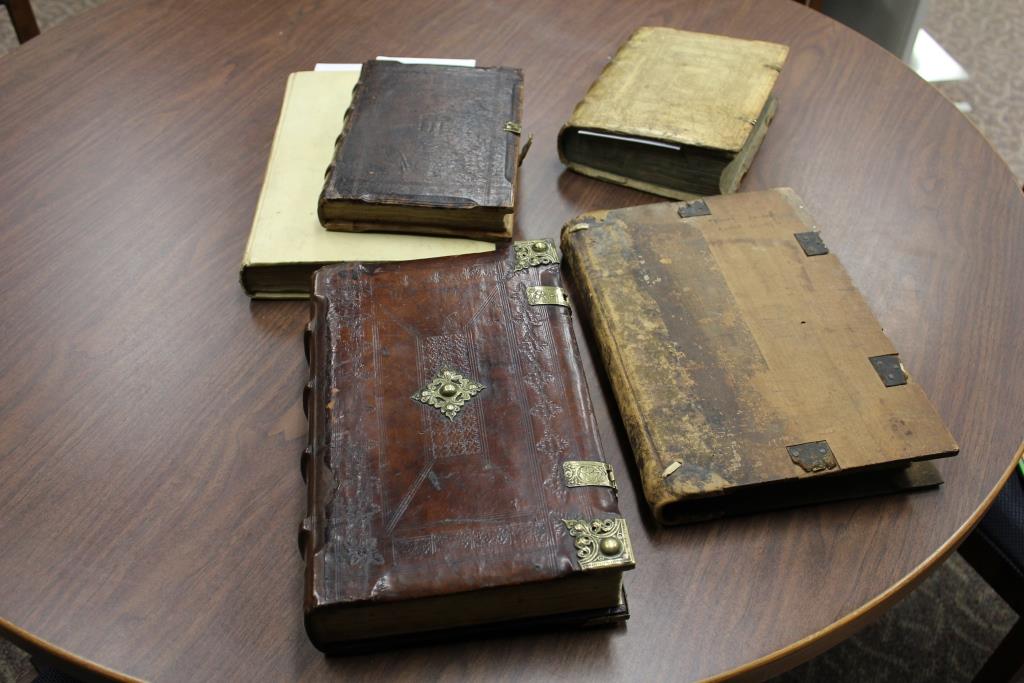
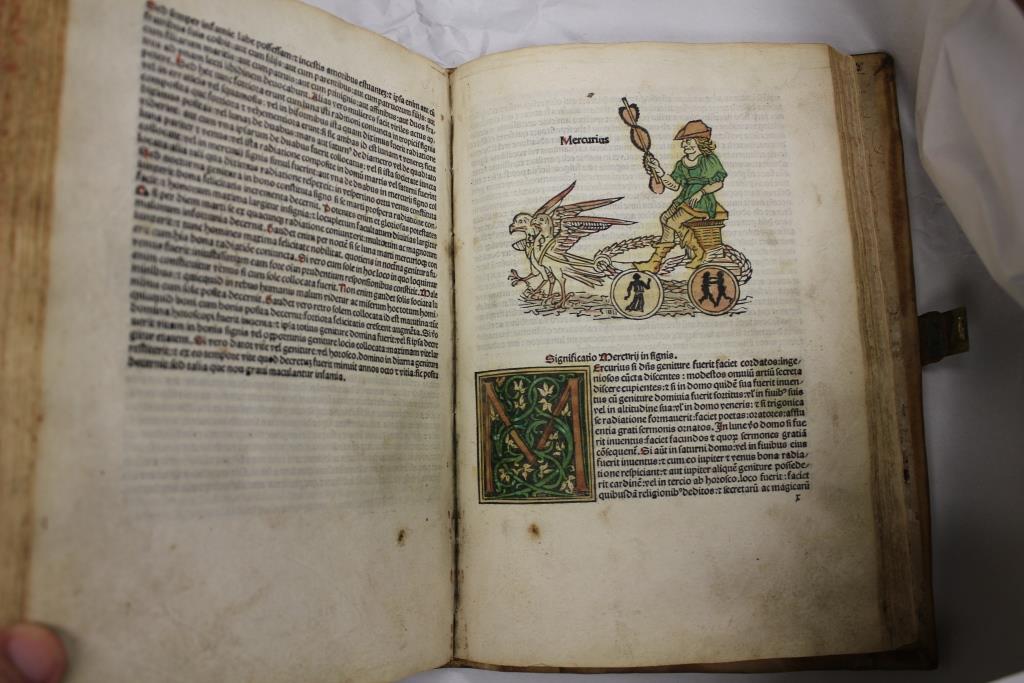
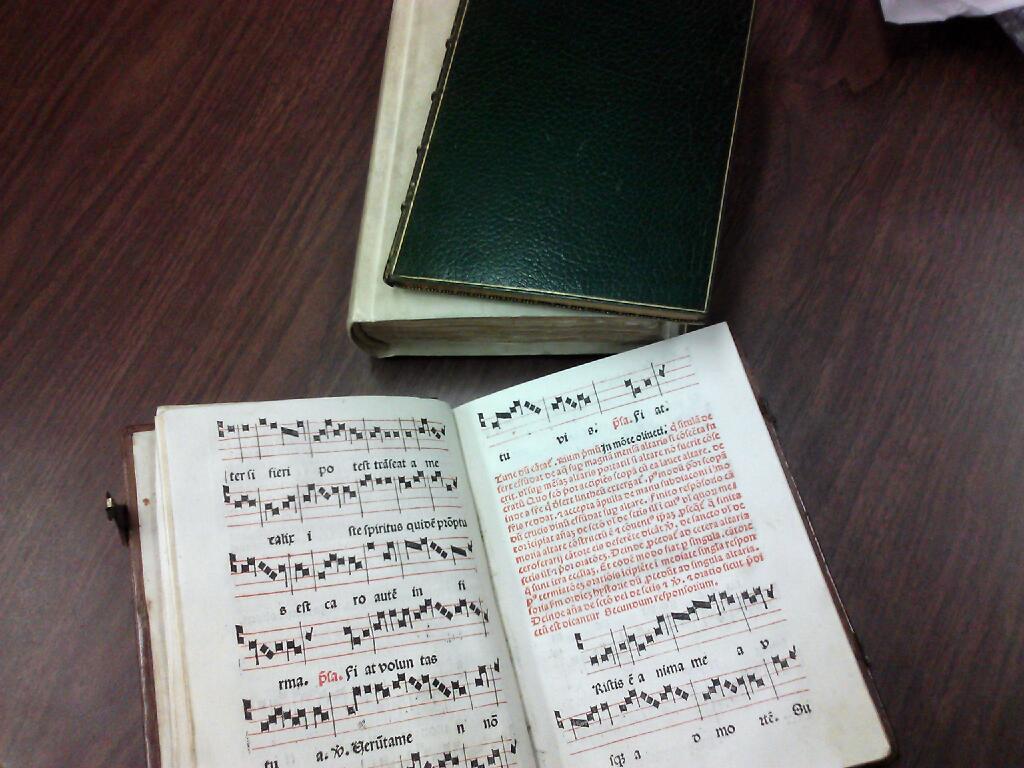
We filled one of our more significant gaps with the acquisition of our first 15th-century Bible, and in an early pigskin binding to boot. Another first for us is our first Spanish incunable, a book of music printed in red and black at Seville in 1494. We purchased our first 15th-century edition of Ovid, too, here in its original leather-covered wooden boards and retaining its original brass furniture. Early science has been another sparsely covered subject for us, so we acquired a lavishly illustrated astrological text. (NB: What passed for science in the 1400s may not pass for science today.) We also acquired a rather crude dialogue intended for children and the less sophisticated—a rare survival, insofar as such texts were less commonly printed and more commonly read to pieces.
In all cases, we sought books in early (if not original) bindings. Given the serious interest in early papermaking here at Iowa, we made it a point to pursue books with untrimmed leaves, which serve as uncommon witnesses to original paper sizes. We searched for books with valuable marginalia, interesting provenance, and varying degrees of decoration by hand. Most of these books do have early marginalia, an invaluable resource to support the growing scholarship on the history of reading. Perhaps the most remarkable in terms of provenance is a sammelband (multiple books bound together) printed by the famous scholar-printer Johann Amerbach. Our copy is not just a well preserved example of a 15th-century sammelband, but it contains an inscription noting its donation to a local monastery by the printer himself. As far as textual decoration is concerned, these new acquisitions run the gamut from crude DIY initials to professionally executed penwork and illumination.
There really is something for everyone, and we can’t wait to share them. Once they have been catalogued and properly housed, these books may be viewed by request in our reading room during regular hours. And keep an eye out for an announcement coming at a later date of an opportunity to view these new acquisitions in person, while learning about how incunables are being studied today.
New at the UI Archives: 1970s-era posters for events at Hancher Auditorium, the Iowa Memorial Union and the UI Fieldhouse. For a brief but intense time in 1973 and ’74 there was a move afoot to rename the Field House for the Allman Brothers Band, which had a memorable gig there on Nov. 9, 1973. The posters are evidence of this unofficial, ill-fated, but totally sincere effort. CUE, the Commission for University Entertainment, was a student organization that encouraged the campaign. Many thanks to Tim Meier of the Hancher Auditorium office for arranging for transfer of these materials to the Dept. of Special Collections and University Archives.
This is the first of a long string of announcements of new acquisitions that we will be announcing, so follow our blog to hear all the latest!
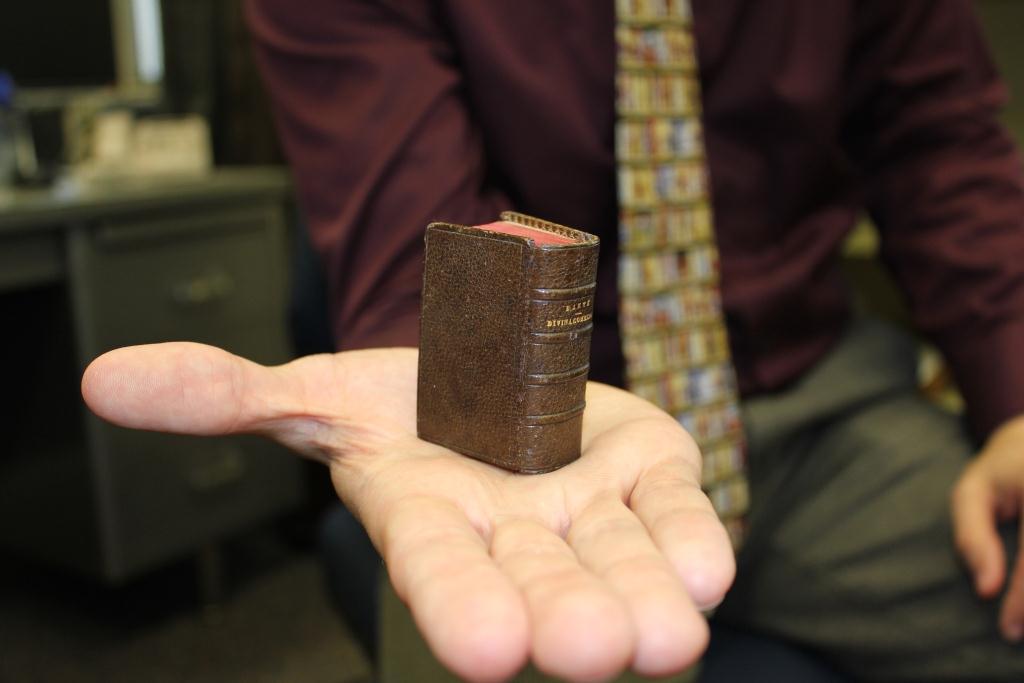
Tiny is the only word to describe this 58mm volume La divina commedia di Dante. This is the second smallest edition of Dante ever printed and is notable for using the smallest movable type ever cast. It was printed in Milan in 1878 by Ulrico Hoepli.
If you want to test your eyesight, stop by to give this one a try.
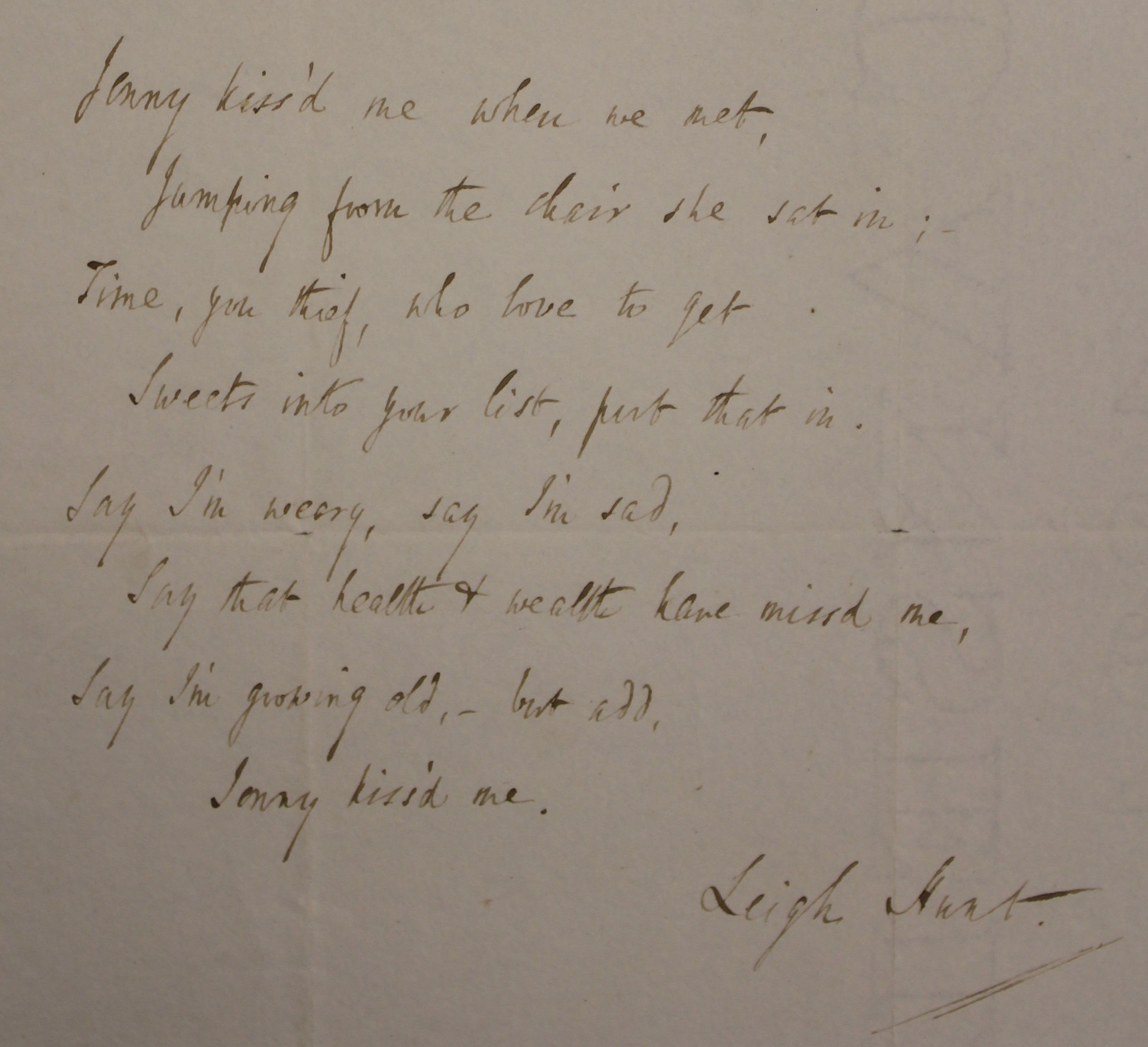 This past spring was a good season for acquisitions in Special Collections, Leigh Hunt material not least among them. Not only did we pick up Percy Shelley’s personal copy of Hunt’s Feast of the Poets—a spectacular association copy, as Hunt and Shelley were remarkably close friends—but we acquired four Leigh Hunt manuscripts.
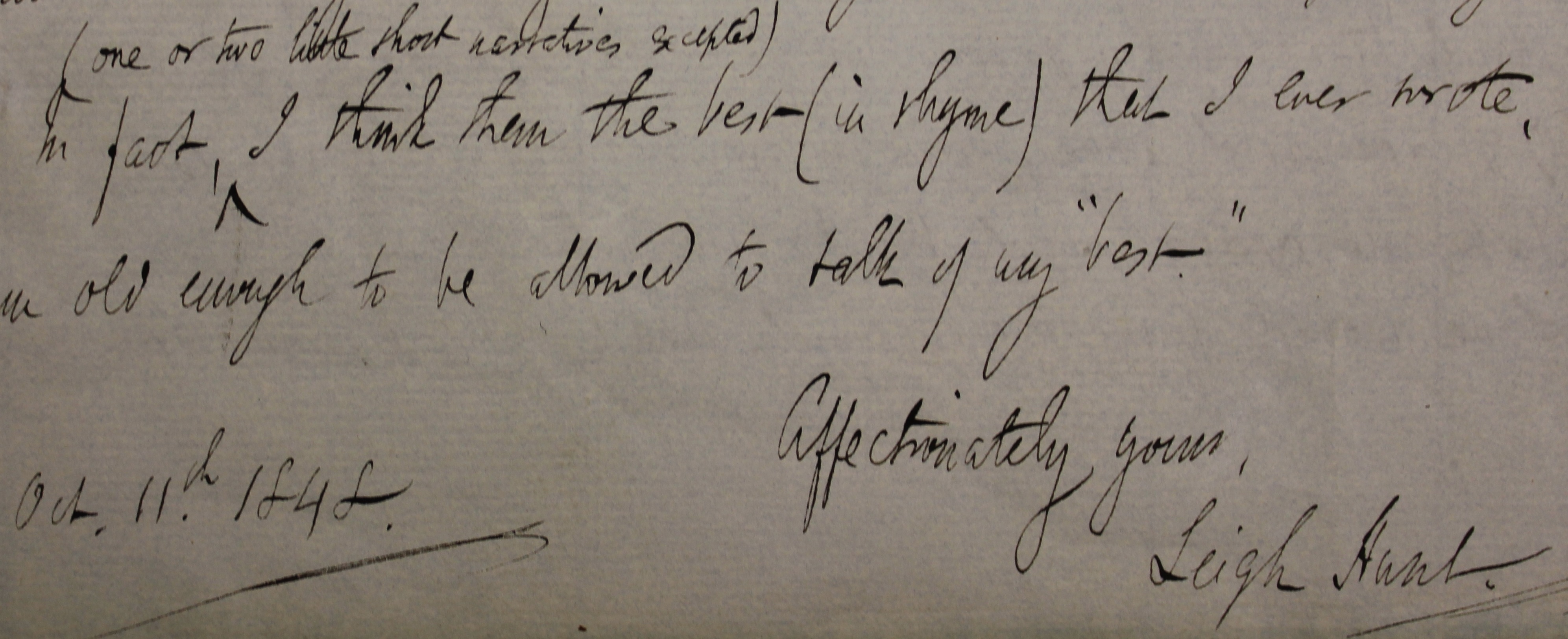 It’s not one of Hunt’s best known poems, but the transcript is thought to be in the hand of Julia, the author’s eighth child. While “Velluti” may not make the cut for the latest Norton anthology, Leigh Hunt writes at the end of these lines, “I think them the best (in rhyme) that I ever wrote—if I am old enough to be allowed to talk of my ‘best.’”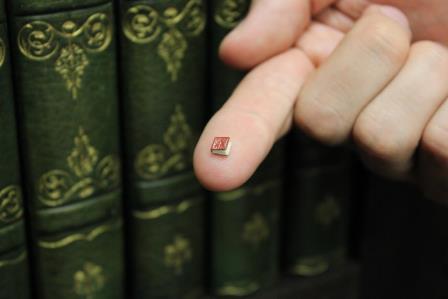

 Some objects are more light-sensitive than others, and require lower light levels. Within archival collections this may include photographic materials, textiles, and color media (printed color, watercolor, tempera, etc.). In an exhibit you may see that these types of materials have lower lights levels than perhaps oil paintings or metal objects.