New Acquisitions Category

0

1878 Dante: Smallest Movable Type

Miniature book resting on the palm of a handThis is the first of a long string of announcements of new acquisitions that we will be announcing, so follow our blog to hear all the latest!

Tiny is the only word to describe this 58mm volume LinkLa divina commedia di Dante.  This is the second smallest edition of Dante ever printed and is notable for using the smallest movable type ever cast.  It was printed in Milan in 1878 by Ulrico Hoepli.

If you want to test your eyesight, stop by to give this one a try.

Miniature2


1

Earliest Known Simon Estes Recording Restored

Dec1997_IowaAlumniQuarterly_0030

Simon Estes and the Old Gold Singers – Courtesy UI Alumni Association


This story starts in 1959 when a UI undergraduate student from Centerville, IA, named Simon Estes auditioned for, and joined, the Old Gold Singers, a university chorus made up of non-music majors. The Old Gold Singers was a new organization, formed just two years before. It quickly established itself as a highly-talented goodwill ambassador of the University, thanks in no small part to Simon Estes’ rich baritone voice.


 The University Archives had no recordings of the singers from those early seasons until only recently. In 2010, UI alumnus James Crook, a professor emeritus of journalism at the University of Tennessee at Knoxville, donated to the archives a set of phonograph disks featuring the troupe. Mr. Crook was a founding member of the Old Gold Singers and participated in its first three seasons. Mr. Estes, a classmate of Crook’s, went on to an acclaimed operatic and solo vocal career, after completing his UI degree and studies at the Julliard School. He has performed with the New York Metropolitan Opera, the Lyric Opera of Chicago, and throughout Europe in a career spanning over 50 years.


CDAmong the phonograph records that Mr. Crook donated is one featuring Mr. Estes as a soloist during his first season with the Old Gold Singers, while a sophomore. The rare recording was made in a Cedar Rapids recording studio in 1959 or 1960, and playing it on a turntable more than 50 years later yielded a lot of scratches and pops with the music. Still, it was a valuable addition to the archives, believed to be the earliest-known recording of a young singer at the dawn of a remarkable and distinguished career.


The UI Libraries’ Preservation Department cleaned the record thoroughly and shipped it to the Media Preserve, a Pittsburgh firm specializing in recovery of audiovisual recordings. There, staff produced a digitally-reformatted version of the recording, one that sounds as good as new. The University Archives now has a digital copy of this rare recording, along with the original phonograph disk.


EstesBut the story doesn’t end there. On Sunday, March 17, Mr. Estes performed in Osage, Iowa, at a special dedication program recognizing that community’s new Krapek Family Fine Arts Center. The program was also part of his Roots and Wings tour in which he hopes to eventually perform in each of Iowa’s 99 counties. High school choruses from Osage and nearby Riceville and St. Ansgar also performed with Mr. Estes that afternoon.


Following the performance, UI Archivist David McCartney, representing the UI Libraries, presented Mr. Estes with a CD copy of the recording, housed in a case made for the occasion by staff in the Conservation Lab. The audience of over 600 also heard a one-minute excerpt, featuring a 21-year-old Mr. Estes singing a selection from “Porgy and Bess,” a number he coincidentally sang earlier in the afternoon as part of the program.


 The UI Libraries’ Department of Special Collections and University Archives is pleased to honor Mr. Estes and to preserve an early and important part of his outstanding career.

1

Kelmscott Proof Among Our Recent Acquisitions

Poems by the WayAsk three different people why we remember William Morris, and you just might get three different answers. The social activist might mention his work in leftist politics. The designer might recall—with varying degrees of affection—his vivid wallpapers. The literature professor might quote a few lines of verse from the man who, upon the death of Tennyson, politely refused his country’s Poet Laureateship.

Those of us in special collections, however, best remember William Morris for his pioneering work with the Kelmscott Press. And pioneering is just the word. Morris bemoaned the state of bookmaking in Victorian England. (To be sure, he bemoaned just about anything made by machine.) Put off by the industrialization of book production, he returned to the roots of his craft, adopting as role models some of Europe’s earliest and greatest printers, and even tapping into the manuscript tradition that preceded them. His books were produced entirely by hand. In bucking the machine-made trend, Morris founded what has come to be called the fine press movement.

As you might imagine, Morris was a meticulous printer. Lucky for us, Special Collections recently acquired a rare witness to his attention to detail: twenty-two pages of proofs for his Poems by the Way. A proof is a copy of a text run off the press before the first printing intended for publication. Printers and authors would review the proofs and make needed changes. In this case, William Morris was both printer and author. Poems by the Way was only the second book to come off his Kelmscott Press, and the first in which he used both black and red ink.

Some changes aren’t surprising: a typo corrected, an ampersand spelled out. Others betray a much more careful attention to detail. Compare, for example, the decorative initials below. The letter used in the proof (on the left) and that used in the published version (on the right) are remarkably similar. But to a craftsman like Morris, those nuances were the difference between a good book and a great book. Subtle though they are, the changes we see between the proof and the published text offer a rare glimpse into the process behind some of Morris’s earliest book design.

Decorative Initial O

0

New Artist’s Books from UI Center for the Book Faculty

OVideo of Romeo and Juliet movingur two newest book arts acquisitions both come from instructors from the University of Iowa Center for the Book.

Romeo and Juliet (Naughty Dog Press) is a new book from Emily Martin, who teaches bookbinding and book arts classes here at the Center for the Book. Romeo and Juliet includes one line of dialogue to represent the story being told in each of the five acts, emphasizing the timelessness of the play through repetition of the chorus, and insertion of modern equivalents for Verona.  This carousel book uses a format that Emily Martin devised to allow for scenes and separate text panels. The spine tabbing, also of her devising, functions both to hold the book together and to balance the thickness at the fore-edge. The text lines were letterpress printed onto Mohawk Superfine 100 lb Text paper. The images were made with an ink transfer monoprinting technique. The covers are printed on a handmade flax, abaca and linen paper from papermaker Mary Hark. Edition of 9 with one artist’s proof.  (Adapted from the artist’s colophon).

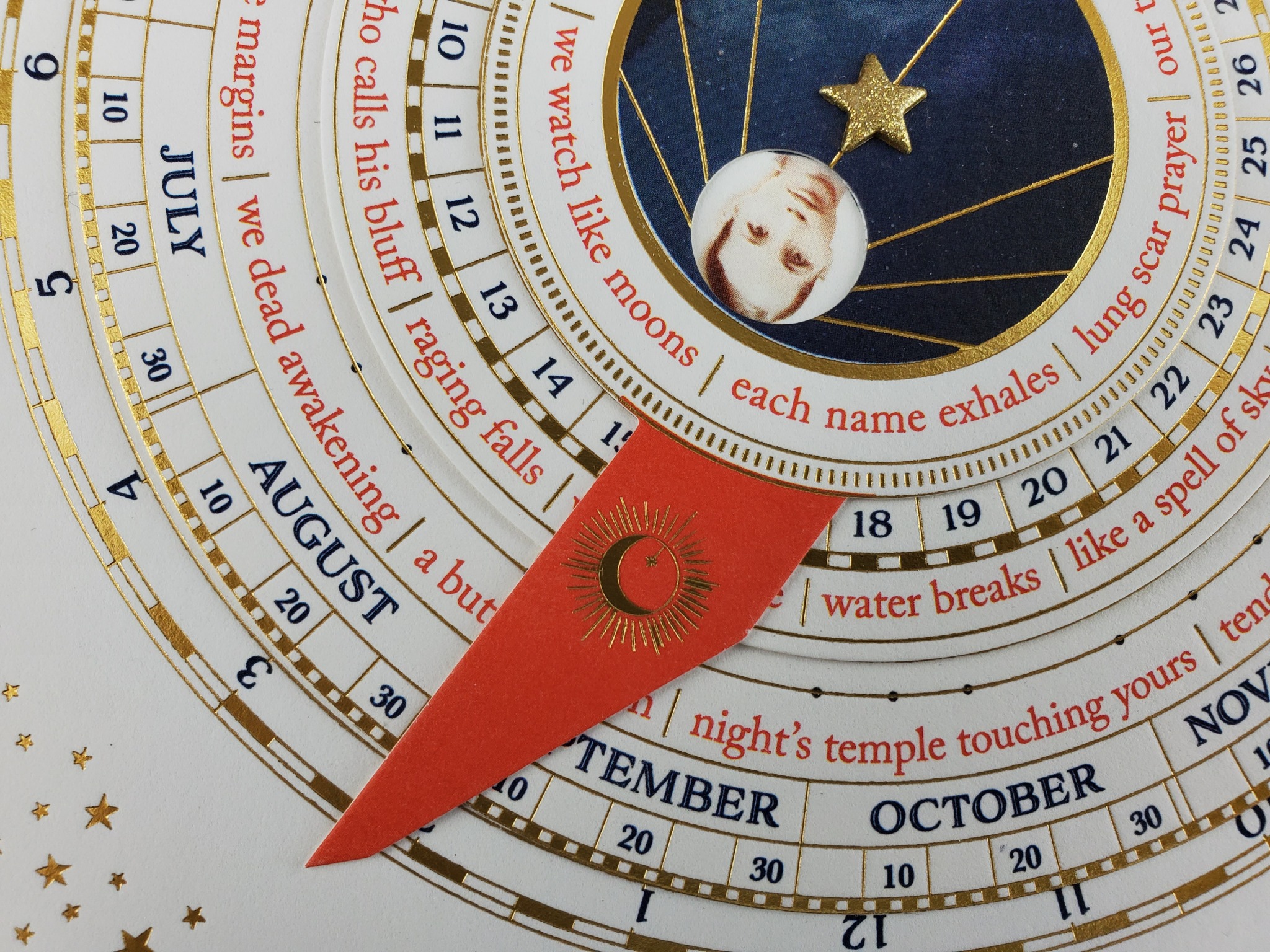
Small parchment book with leater girdle book bindingNest of Patience is a new acquisition from Kristin Alana Baum (Blue Oak Bindery) and Cheryl Jacobsen, calligraphy instructor at the Center for the Book. A collaboration based on a medieval girdle book, Nest of Patience is a contemporary Book of Hours contemplating the concept of patience by way of words, poetry, fortunes, and nature. The book begins with a spiritual calendar of days and proceeds with eight sections, each headed with a totem animal. Full vellum text block includes hand-stitched indigo-dyed slunk panels, hand-lettered texts, illuminations, and sewn-in found objects relating to patience. Wooden board binding, sewn on hemp cords and laced into beech boards.

Nest of Patience is currently on the New Acquisitions shelf in the Reading Room and Romeo and Juliet will be joining the shelf just after Christmas.  Stop by to enjoy these two new works from U of I faculty!

0

New Acquisition to the University Archives – George Ludwig Papers

Portrait of George LudwigWe depend on weather satellite images daily for our forecasts and travel plans. Without the groundwork laid by the National Earth Satellite Service beginning in 1972, though, these images would not be possible today. A distinguished UI alumnus, George H. Ludwig (BA ’56, MS -59, Ph.D. ’60) was a founding director of NESS and led its operations throughout the 1970s. It is part of Mr. Ludwig’s long and significant career in physics and environmental research, now documented in his papers recently donated to the University Archives.

Mr. Ludwig, a native of rural Johnson County, Iowa, was a graduate student under James Van Allen during the pioneering Explorer space exploration missions in the late 1950s. He was the principal developer of the cosmic ray and radiation belt instruments for the successfully launched Explorers I, III, IV, and VII. He was also a research engineer at the Jet Propulsion Laboratory in Pasadena, California for a five month period following the 1957 launch of Sputnik I by the Soviet Union.

His papers chronicle his research in physics as a doctoral candidate at UI as well as the many projects he supervised or consulted while with NASA, the National Oceanic and Atmospheric Administration, and other organizations throughout his 40-plus year career. The guide to his papers is at http://www.lib.uiowa.edu/spec-coll/archives/guides/RG99.0004.html; the guide does not yet account for the most recent materials received by the Archives.

George Ludwig’s contributions to space exploration and environmental research are invaluable, and the University Archives is honored to document his achievements.


You can see a remarkable image of George Ludwig with his Cosmic Ray detector on NASA’s Jet Propulsion Lab web site:  http://www.jpl.nasa.gov/missions/details.php?id=5873#3

0

New Acquisitions: KRUI, Oakdale Scrapbook and Artists’ Books

Here are some featured items that have recently arrived in both Special Collections and in the University Archives. Researchers interested in the history of local radio, advertising, tuberculosis, and artist’s books should particularly take note of our recent arrivals.

The University Archives now includes additional documents from KRUI.  KRUI 89.7, the University of Iowa student radio station, began as a dormitory-only service in the early 1950’s, expanding to FM in 1984. Recently the UI Archives received an additional 14 linear feet of material from the station: Brochures, staff schedules, correspondence, photographs and other documents, to add to the archives existing collection described at http://www.lib.uiowa.edu/spec-coll/archives/guides/RG02.02.08.htm. Dave Long, a member of the KRUI board of directors, helped arrange for transfer of the materials.

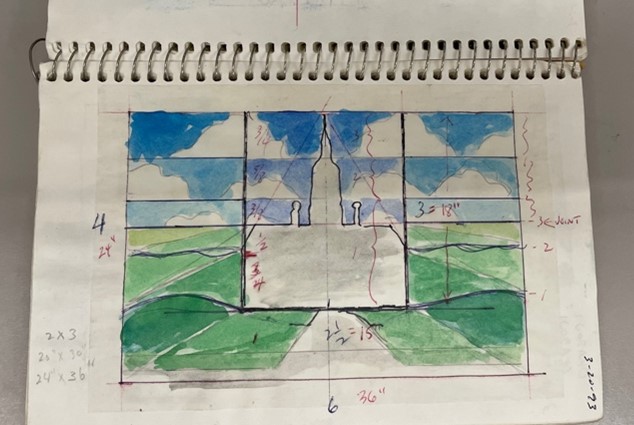
Logo design sketches

Logo design sketches, KRUI, University of Iowa Archives

Oakdale Sanatorium was established in Johnson County in 1907 to house and care for patients diagnosed with tuberculosis. Over time, the facility accommodated patients with other needs as well. From 1945 to 1947, Ruth Harris, a dietician from Ames, IA, was employed as Director of Dietetics there. Earlier this year, Ruth Solmonson of St. Paul, MN, a relative of Ms. Harris’, donated a scrapbook to the UI Archives which contains scores of photographs, newspaper clippings, and other items depicting life at the facility. In 2011 Oakdale Hall, the original and largest structure on the campus, was razed to make way for new development, making Ms. Harris’ photographs even more valuable to researchers.

Oakdale Sanatorium Scrapbook, University Archives

Oakdale Sanatorium Scrapbook, University of Iowa Archives

The newest arrivals in the department of Special Collections include a shipment of eleven impressive artists’ books from Vamp & Tramp Booksellers, LLC.  Three of the books are highlighted below.

Body of Inquiry is from Casey Gardner and Set in Motion Press.   With inspiration drawn from anatomical models and instructional documents this amusing work draws you in to discover a “corporeal codex” with intricately folded organs.

Statement from Set in Motion Press:  “This book is a triptych opening to a sewn codex within the subject’s torso. It is a structure of display and intimacy. The scale is large and unfolding and the details are numerous and intricate, accurate and outlandish. The instruments on the outer panels are from the 19th- and 20th-century scientific catalogs. The rest of the images are drawings the artist made and transferred into photopolymer plate for letterpress. The scientific panels explore the miracle of our physicality and are sequenced beginning with atoms, moving to cells, and to genetic structure. The interior codex tells the story of the artist’s anatomical model and investigates the permeable borderline between material and immaterial in our bodies and life.”


Corpus codex

Detail from Body of Inquiry, U. of Iowa Special Collections

Al Mutanabbi Street, March 5,  from Al Hazelwood is one item that is part of a project to “re-assemble” some of the “inventory” of the reading material that was lost in the car bombing of al-Mutanabbi Street on 5th March 2007. Originally the intention was for 130 book artists to join in honouring al-Mutanabbi Street so that one artist’s work would stand in for each of the 30 killed and 100 wounded through creating work that holds both “memory and future,” exactly what was lost that day.  However in the end the response was so great that 262 artists participated in the project, soon to be completed.

Stement from artist Al Hazelwood: “This book is based on the car bombing of a street of booksellers in Baghdad. Beau Beausoleil, a bookseller in San Francisco, initiated this project to memorialize this attack on the culture of the book and prevent it from slipping into forgetting among the many atrocities of the Iraq War. He’s asked 130 book artists to contribute — the number of books matching the number of victims that day. This is my contribution. Three from the edition go to the project one of which will be offered to the Iraq National Library in Baghdad.  My book, starts with an image of the booksellers street. The next page begins a foldout which begins with the explosion in a death head cloud. Books flying are labeled with different bookseller areas of the world”.

Al Mutanabbi Street, March 5

Al Mutanabbi Street, March 5, U. of Iowa Special Collections

Shelter by Phil Zimmerman of Spaceheater Editions is an intricately constructed floating hinge format book-within-a-book.

Statement from artist Phil Zimmermann: “Shelter came out of an exploration of losing faith and questioning on of its opposites: the process of finding religion. This text came out of watching my dying father, who was never religious when I was growing up, become increasingly interested in faith and salvation as he became sicker from heart disease and cancer. I saw the desert with its unfriendly flora and harsh environment as a metaphor for the difficult world towards the end of many people’s lives. The desert is also used in many religious tracts as a place for contemplation and mortification. In this work roadside shelters and gospel ministries were used as signifiers of ways and places where people look (vainly?) to relive prospects of their approaching death.”


Shelter

Shelter, U of Iowa Special Collections

0

Montgomery Sheet Music Give Cultural Panorama of Early 20th Century America

Donated to Special Collections in March 2012 by Linda Yanney, the Beluah Yanney Montgomery Sheet Music Collection has been processed by our outgoing Olson Fellow Gyorgy “George” Toth and is being added to our Sheet Music Collection (http://www.lib.uiowa.edu/spec-coll/msc/ToMsC900/MsC873/MsC873_sheetmusic.html). Covering the late 19th through middle 20th centuries, the Montgomery addendum complements our current collection of sheet music with the major themes of its songs.


Popular Music

Much of the popular music of the early 20th century was sentimental, and concerned topics like landscape and romance. Not so Edith Maida Lessing’s “Just as the Ship Went Down” from 1912, which remembers the sinking of the Titanic. As we are observing the 100th anniversary of this disaster, we can view this song as an early effort to memorialize the event in U.S. popular culture. Reading, playing and singing songs like this was also part of people’s coming to grips with national and historic events.


“Just as the Ship Went Down.” Edith Maida Lessing, Gibson & Adler. Chicago: Harold Rossiter Music Company, 1912.


Music about the American South

The Montgomery addendum also contains a small group of songs written about the American South. These songs were often introduced by famous singers and actors like Al Jolson on the vaudeville stage and in minstrel shows, where they used African American characters to paint a sentimental picture of antebellum Southern plantations.


Mother, Dixie and You. Howard Johnson, Joe Santly. New York: Leo Feist Inc., 1927.


With today’s standards, these songs were racially charged if not outright racist towards blacks, and they presented a view of the South that culturally attempted to roll back the achievements of the Thirteenth Amendment. Even as some questioned their credibility, many contemporary Americans treated these songs as entertainment, listened to them on the popular stage, and played and sang them in their parlors.


Songs from World War One

In two years, we will be observing the centenary of World War One. After the entry of the United States, American society changed as it participated in the war effort. Popular songs from this era reflect how Americans engaged with “the Great War” – emotionally, socially, and culturally. In popular culture form these songs answered the question of ‘why we are fighting over there,’ they boosted the morale on the home front, helped American families endure the absence of their fathers, sons, brothers and husbands, and they depicted relationships between American servicemen and -women and the Europeans they encountered during the war. Americans listened to these songs in recorded form, but they also played them on the piano and sang them in their own living rooms and parlors.


Wee, Wee, Marie (Willl You Do Zis for Me). Alfred Bryan, Joe Mc. Carthy, Fred Fisher. New York: McCarthy & Fisher, Inc., 1918.


Theatre Music

Other songs in the Montgomery addendum were linked to specific stage productions. In the early 20th century, Al Jolson was one of the artists whose name sold musical plays and their sheet music like candy. Another piece, “I’ll Build a Stairway to Paradise” comes from the Broadway production George White’s Scandals, which ran all through the interwar period and launched the career of several major figures in entertainment.


You’re a Dangerous Girl. Grant Clarke, Jimmie Monaco. New York: Leo Feist, 1916.


Film Music

The early 20th century saw the overlapping development of old and new entertainment forms, which included the popular stage, gramophone records, the piano in the parlor, the radio, and film. Depending on their social class and wealth, Americans could enjoy many of these. For example, they could go to see a stage production of the famous Siegfried’s Follies Broadway musical, buy its music on recordings, listen to them on the radio, go to the cinema to see a film remake with Fred Astaire, and purchase its songs to play and sing them in their homes.


This Heart of Mine. Arthur Freed, Harry Warren. New York: Triangle Music Corporation, 1943.


The Beluah Yanney Montgomery Sheet Music Collection will be an important part of our holdings of sheet music from the 19th and 20th centuries. For researchers and fans of U.S. popular culture, these songs say something about the larger American society and the ways people creatively used music for entertainment, social life, education, and emotional expression.

0

Help Document Student Life in the University Archives

The University Archives has two announcements: A new acquisition and an ongoing project, both of which have an embedded call to help document student life here at the University of Iowa. 

Janet Pease, who earned her undergraduate and graduate degrees (including the Ph.D.) in history from The University of Iowa, donated to the University Archives her scrapbook documenting her first year on campus, a delightful compilation of photographs, keepsakes, and notations highlighting special events of that year. Entering the University in the fall 1962 semester, Ms. Pease distinguished herself as an outstanding student, earning recognition as a member of Phi Beta Kappa honor society. Her career in education spanned some 40 years, all of that time devoted to teaching history at the high school level in Arvada, Colorado.  The UI Archives is pleased to add this item to its growing inventory of student life-related collections, and encourages you to contact us if you or a family member may have UI-related items of interest for us to preserve and share with our researchers.

 By any measure, Stephen Smith was the all-American boy. The Marion, Iowa, native lettered in high school football, basketball, track and wrestling and was a class officer, honor student and Boys State participant. He entered the University of Iowa in the fall 1963 semester as an ROTC student with hopes of joining the Air Force. He was also moved to protest what he saw as wrongs of the time: Racial segregation and growing U.S. military involvement in Viet Nam. In July 1964, while in Canton, Mississippi, with other Freedom Riders to help blacks register to vote, Mr. Smith was detained by local authorities and brutally beaten while in custody. The following year he was arrested for burning his draft card at the Iowa Memorial Union, only the second person in the nation to do so under a then-new federal law criminalizing such action. He was sentenced to three years’ probation. Mr. Smith died in 2009, several years after suffering a nearly-fatal heart attack. His adult life was, at times, both challenging and rewarding. For 10 years, until his health failed, he was an instructor of computer science at Kirkwood Community College in Cedar Rapids. The UI Archives is now attempting to learn more of Mr. Smith’s life and is in contact with friends and family members to develop a collection to help preserve his memory. If you were on campus at that time and recall the incidents, knew Stephen Smith, or know of somebody who did, please contact David McCartney, UI Archivist (david-mccartney@uiowa.edu). Thank you.

0

Life of Napoleon Extra-Illustrated and Vincent Fitzgerald & Co. Acquisitions

Napoleon Letter and booksOur collections continue to grow through the generosity of our donors, who have made it possible for impressive new resources to become available to our community. 

Recently acquired is an extra-illustrated copy of The Life of Napoleon Bonapart by William Sloane, which joins an extra-illustrated set of the same biography that has been part of our collection for over 100 years, and thought to be the only one of its kind.  The original set is Monastery Hill bookbinder Ernst Hertzberg’s own extra-illustrated copy of The Life of Napoleon.  Hertzberg transformed the set from four to twelve volumes with the addition of portraits, engravings, maps, original letters and more. The set, completed with his own beautiful fine bindings, earned him a gold medal for binding at the 1904 Louisiana Purchase Exposition in St. Louis.   It was purchased by Martha Ranney and donated to the University in 1907.  A descendant of the Hertzberg family, Fritz James, CEO of LBS in Des Moines, has now purchased for the UI Libraries another extra-illustrated Life of Napoleon, which was also bound by Monastery Hill.  This copy, from Michigan supreme court judge and Napoleon scholar Thomas Weadlock, is bound in 10 volumes and with its numerous illustrations are not only more than a dozen letters from generals and historic figures but also three handwritten and signed letters from Napoleon himself.  The two copies together open up countless avenues for scholarship and admiration through their beauty and historic context, through the documents and artifacts bound inside, but also through the study of the collectors and binders responsible for such unique pieces of art and history. 

Mirrored book with transparent lazer cut textA generous donation from the Angora Ridge Foundation has made it possible for us to complete our collection of works from Vincent Fizgerald & Co., a New York based publisher founded in 1980 that produces limited edition artist’s books.  Most of the works from this publisher are hand-printed with handset type, using handmade paper and images created through linocut, itaglio, lithography, silkscreen and photogravure.  Several of the new aquisitions are available on our browseable new aquisitions shelf for artist’s books in the reading room.  Stop by and unfold the layers of this (remarkably difficult to photograph) sculptural book called Fragments of Light 5 by Linda Schrank that features the poetry of Rumi translated by Partovi.

0

New Aquisitions from The University Archives

Foam maskThe University Archives recently received an unusual object from donor Emil Rinderspacher, a UI alumnus: A human head-shaped plastic form, created by students in the UI School of Art and Art History as part of an anti-war protest over 40 years ago. Students created hundreds of these “heads,” which were placed on trees on the Pentacrest one spring morning in 1970. This item accompanies papers from Mr. Rinderspacher which document campus activism at the time. The materials are now part of the student life collections of the University Archives.


military documentOver two dozen resource guides help University Archives researchers find what they’re looking for. These guides may be found at http://www.lib.uiowa.edu/spec-coll/archives/faq/index.htm. A recent addition is our guide to military and wartime service collections, at http://www.lib.uiowa.edu/spec-coll/archives/faq/faqmilitary.htm. This guide lists such collections as the Records of the Department of Military Science and Records of the Civilian Pilot Training Program, 1942-1944.


Box of Captain Crunch

 Once in a while, the University Archivist donates material to the Archives. After chowing down several bowls of Cap’n Crunch cereal, David McCartney donated his empty box featuring former UI student Brandon Routh as Superman in the 2006 blockbuster movie of the same name. Hooray for Hollywood!


1893 yearbook coverYearbooks and student newspapers are two of the University Archives’ most popular resources. Nearly daily researchers’ questions are answered by consulting one or both of these collections. Now, both are online as part of the Iowa Digital Library. The Hawkeye yearbook, published from 1892 to 1992, is at http://digital.lib.uiowa.edu/yearbooks/. You may browse by decade and year by using the drop-down menu at the left of the screen. The Daily Iowan newspaper (previous names include The Vidette, The University Reporter, and the Vidette-Reporter) collection spans 1868, its first year of operation, to the present. It can be accessed at http://dailyiowan.lib.uiowa.edu/. Both online collections are text-searchable, though the Daily Iowan search feature is still being refined.