
JOHN HUNTER (1728-1793). The natural history of the human teeth. London: Printed for J. Johnson, 1771. John Hunter was an anatomist and surgeon, practicing in London. His tireless energy helped him to overcome whatever obstacles his educational and cultural lacks may have provided. “Hunter remains one of the great all-round biologists like Haller and Johannes Müller, andContinue reading “John Hunter | History of the Human Teeth | January 2017 Notes from the John Martin Rare Book Room @Hardin Library”
Category Archives: Notes from the Rare Book Room
The birth of mankinde , othwise named the woman’s booke | December 2016 Notes from the John Martin Rare Book Room @Hardin Library
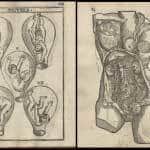
EUCHARIUS RÖSSLIN (d. 1526). The birth of mankinde, otherwise named the woman’s booke. Set foorth in English by Thomas Raynalde. London: Thomas Adams, [1604]. Based on the Latin version, De partu hominis was translated and published by Richard Jonas (fl. 1540). The next English edition to appear was published by Thomas Raynalde. Raynalde borrowed freelyContinue reading “The birth of mankinde , othwise named the woman’s booke | December 2016 Notes from the John Martin Rare Book Room @Hardin Library”
Francis Glisson | Anatomia Hepatis | November 2016 Notes from the John Martin Rare Book Room @Hardin Library
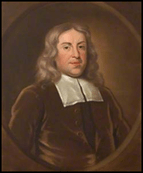
FRANCIS GLISSON (1597-1677). Anatomia hepatis. London: Typis DuGardianis, 1654. Glisson was a graduate of Cambridge and Regius professor of physic there for more than forty years, although he was almost never in residence, as he carried on a busy medical practice in London. Glisson was a founder of the Royal Society and one-time president ofContinue reading “Francis Glisson | Anatomia Hepatis | November 2016 Notes from the John Martin Rare Book Room @Hardin Library”
Vieussens, Neurographia Universalis | October 2016 Notes from the John Martin Rare Book Room
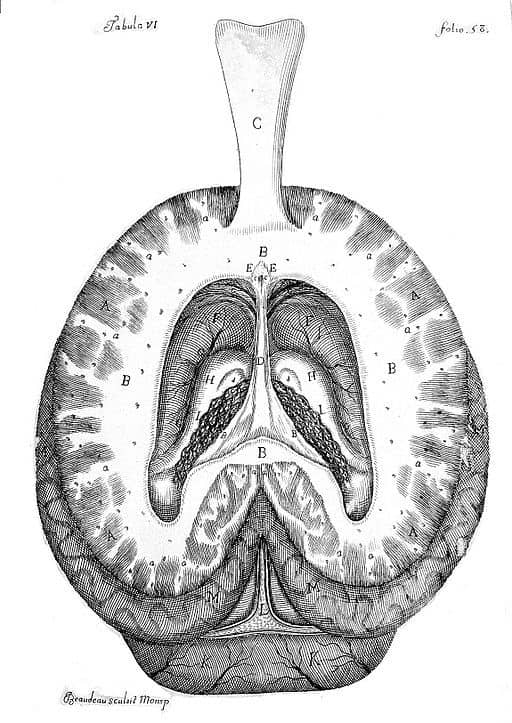
RAYMOND VIEUSSENS (1641-1715?). Neurographia universalis. Lyons: Apud Joannem Certe, 1685 The son of a French army officer, Vieussens provided his own support, studying philosophy at Rhodez and medicine at Montpellier. As physician to the hospital of Saint Eloy in Montpellier,performed over five hundred postmortem examinations. He made a number of anatomical discoveries during these exams. ThisContinue reading “Vieussens, Neurographia Universalis | October 2016 Notes from the John Martin Rare Book Room”
AVICENNA | September 2016 Notes from the John Martin Rare Book Room @Hardin Library
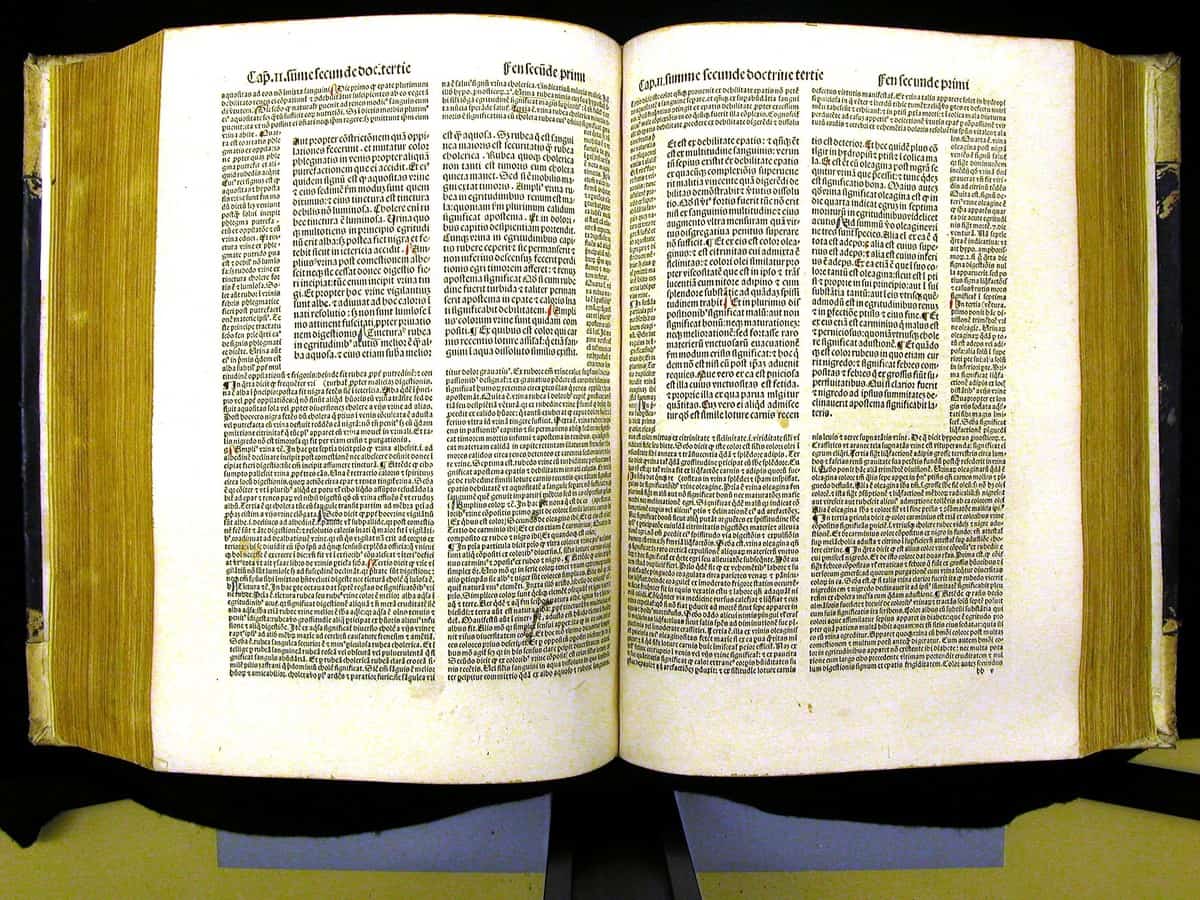
AVICENNA (980-1037). Canon medicinae. 4 vols. in 3. Lyons: Johannes Trechsel, completed by Johannes Clein, 1498. Known in the Persian world as the Chief or the Second Doctor (Aristotle having been the first), Avicenna (Arabic Ibn Sīnā) was an accomplished physician as well as a noted philosopher. He wrote widely on theology, metaphysics, astronomy, philosophy, law,Continue reading “AVICENNA | September 2016 Notes from the John Martin Rare Book Room @Hardin Library”
Andrés de Laguna de Laguna | August 2016 Notes from the John Martin Rare Book Room @Hardin Library
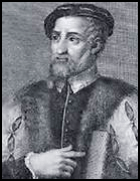
ANDRES DE LAGUNA (1499-1560). Anatomica methodus, seu De sectione humani corporis contemplatio. Paris: Apud Ludovicum Cyaneum, 1535. Laguna, a native of Segovia, Spain, began his education in medicine at Paris in 1532. While in Paris he published his first three books and became acquainted with Vesalius. By 1539, Laguna published over 30 books, many on medical botany–oneContinue reading “Andrés de Laguna de Laguna | August 2016 Notes from the John Martin Rare Book Room @Hardin Library”
Bernardino Genga |July 2016 Notes from The John Martin Rare Book Room @Hardin Library
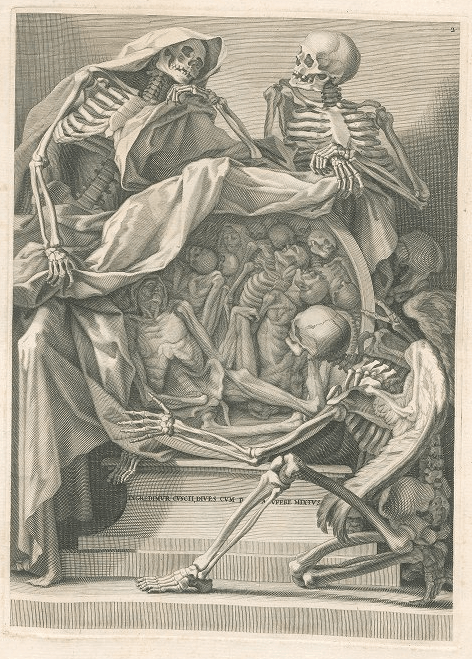
BERNARDINO GENGA (1620-1690). Anatomia per uso et intelligenza del disegno; ricercata non solo su gl’ossi, e muscoli del corpo humano… Rome: Domenico de Rossi, 1691. An authoritative anatomist and surgeon in Rome, Genga stressed the importance of solid anatomical knowledge for the surgeon. Genga wrote the first book devoted entirely to surgical anatomy which remained aContinue reading “Bernardino Genga |July 2016 Notes from The John Martin Rare Book Room @Hardin Library”
John Dix Fisher | May 2016 Notes from the John Martin Rare Book Room @Hardin Library

JOHN DIX FISHER (1797-1850). Description of the distinct confluent, and inoculated small pox, varioloid disease, cow pox, and chicken pox. 2nd ed. Boston, 1834 Our copy has six vaccination needles inserted into the margins of two of the pages, seemingly indicating the book may have been used as a treatment room reference tool. FisherContinue reading “John Dix Fisher | May 2016 Notes from the John Martin Rare Book Room @Hardin Library”
February Notes from the John Martin Rare Book Room @Hardin Library | Henri de Mondeville
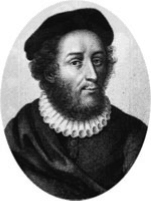
Henri De Mondeville (ca 1260- ca 1320). Chirurgie. Paris: Felix Alcan, 1892. Mondeville was born in Normandy and studied medicine in Paris and Montpellier before going to Bologna. Italian surgeons were at a much higher status than in France at this time. Mondeville’s chief work, the Cyrurgia, was written between 1306-1320 and contains his basicContinue reading “February Notes from the John Martin Rare Book Room @Hardin Library | Henri de Mondeville”
January 2016 Notes from the John Martin Rare Book Room @ Hardin Library | Charles Estienne (1504-1564)
Charles Estienne (1504-1564). De dissectione partium corporis humani libri tres. : Apud Simonem Colinaeum, 1545. Estienne was a member of the famous Estienne family of printers. He received his medical degree from the University of Paris in 1542, but had been at work on this anatomical magnum opus for many years, as some of the platesContinue reading “January 2016 Notes from the John Martin Rare Book Room @ Hardin Library | Charles Estienne (1504-1564)”