The following is written by academic outreach coordinator Kathryn Reuter.
On Tuesday, October 4th, 2022, join the Stanley Museum of Art & the University of Iowa Libraries’ Special Collections and Archives as they celebrate the 123rd birthday of artist Lil Picard! Crafts and cake will be available in the Stanley Museum lobby from 12-2pm, and there will be a pop-up exhibit of Picard’s artworks and items from her archives in the Visual Laboratory (third floor of the museum). Learn more about the event here.
Lil Picard was born Lilli Elisabeth Benedick in Germany on October 4th, 1899. She got her start as an artist and performer by singing and dancing in cabarets in Berlin in the 1920s.
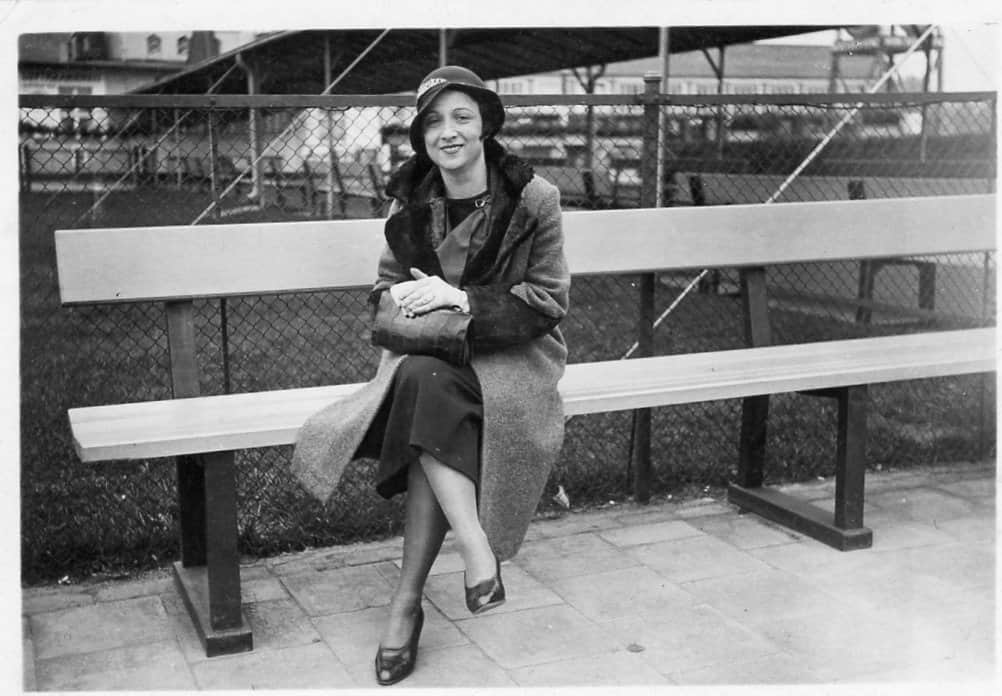
Lil Picard, 1920s
Later she worked as a fashion editor for German publications until the anti-Semitic policies of the National Socialist Party caused her and her second husband, Henry Odell, to immigrate to the United States in 1936.
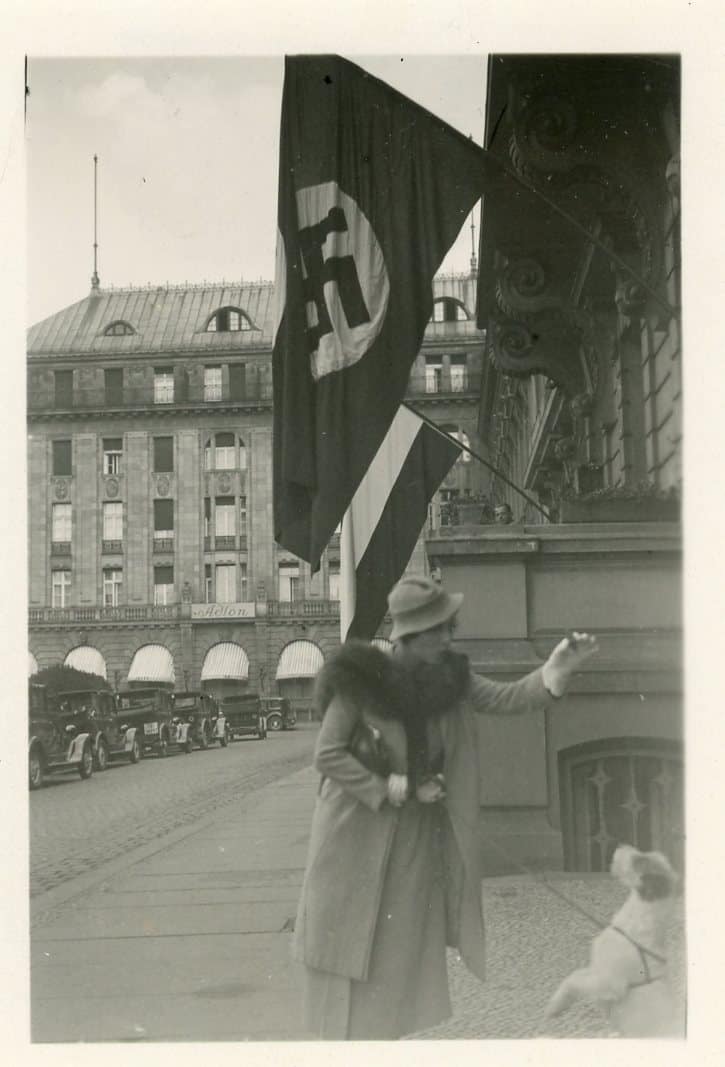
Lil and dog. Note on back of this photo reads: 1933-1934 Berlin, Lil Picard
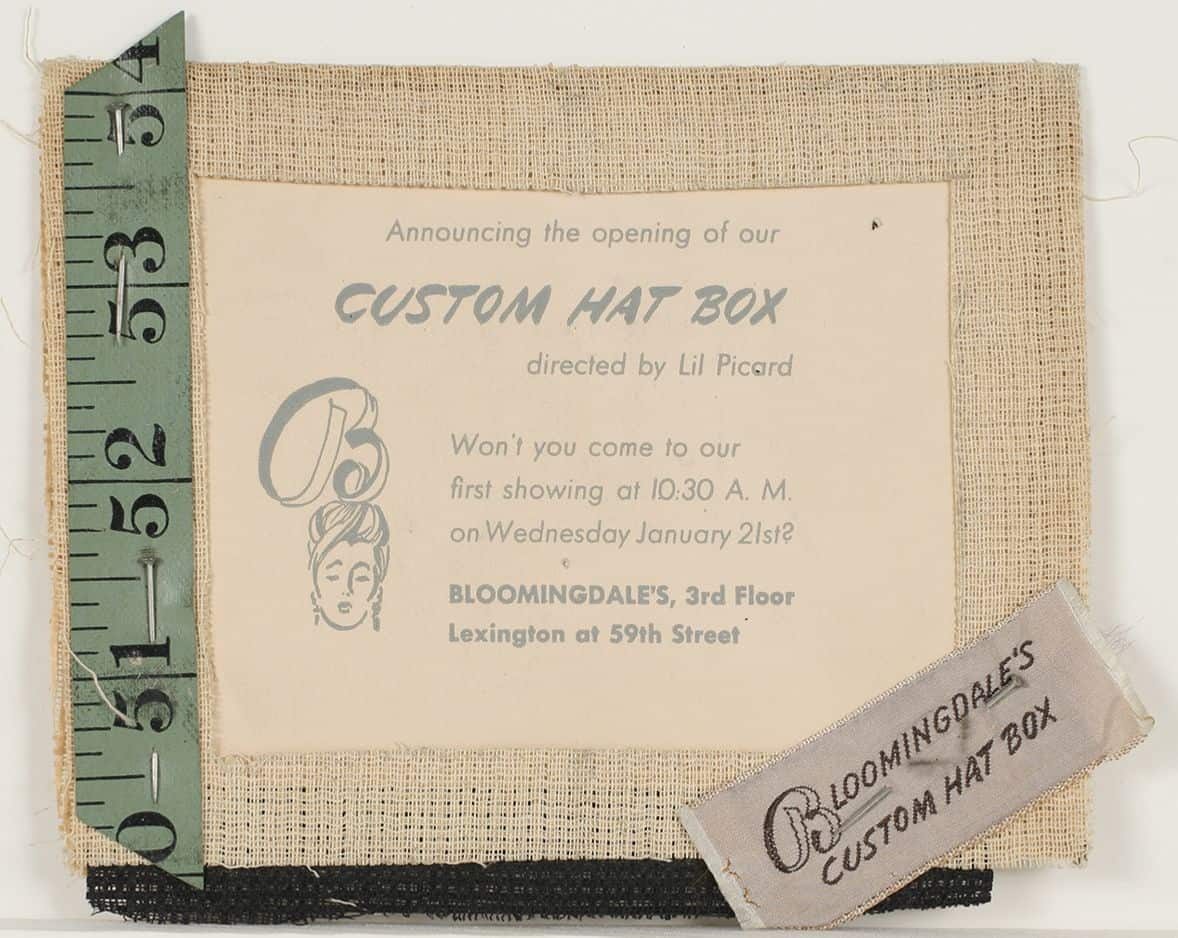
In their new home in New York City, Lil Picard took English lessons as well as design and lettering classes. She began selling her accessories and jewelry designs to department stores before establishing her own milliner studio at 555 Madison Avenue in 1939. In 1942, she opened “Custom Hat Box”, a milliner counter in Bloomingdale’s.
Untitled, by Lil Picard. Assemblage – Stanley Museum of Art, Lil Picard Collection. Accession Number 2012.892
In addition to her hat making, Lil Picard supported herself as a journalist, writing for German newspapers and art magazines as well as American publications such as Art Magazine, Andy Warhol’s Interview, and The East Village Other.
As an artist, Lil Picard worked in a variety of mediums including painting, sculpture, watercolor and drawings, collages, assemblages, and performance art. Her performance art, especially, was an avenue for expressing her militant views on the Vietnam War and on social and environmental issues.
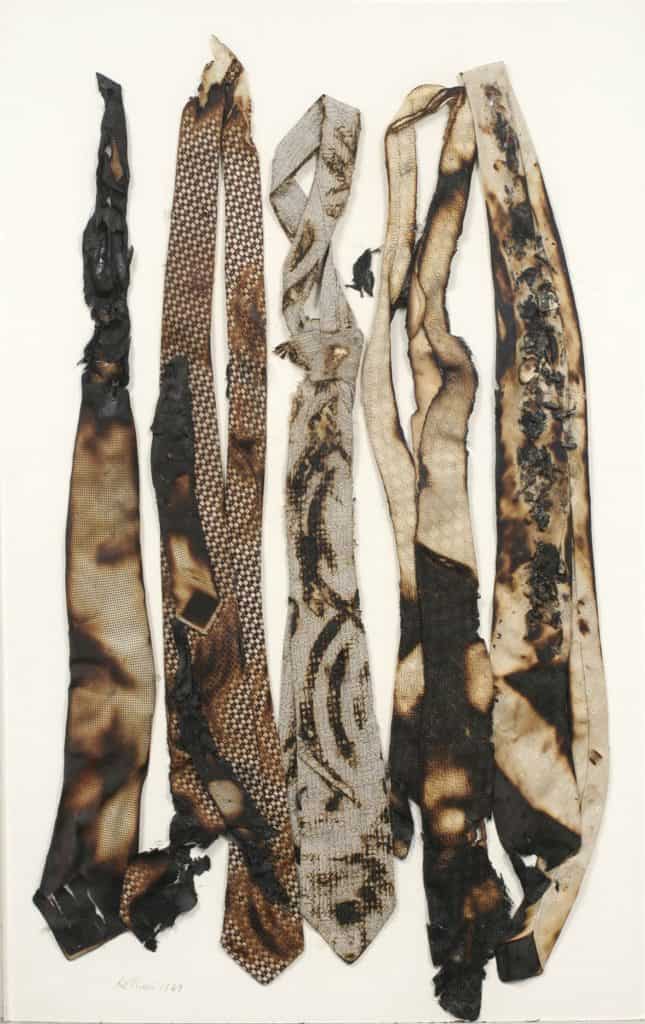
Lil Picard during Construction – Destruction – Construction Performance, 1967Burned Tie by Lil Picard, Silk on Board. 1968. Stanley Museum of Art Lil Picard Collection. Accession Number 2012.202
From 1955-1981, Lil Picard had fifteen solo exhibitions (in both the United States and Germany) and her work was included in more than forty group shows. She participated in six Avant Garde Festivals of New York between 1967 and 1975. Increasingly blind during her last years, Lil Picard became reclusive, dying without descendants on May 10, 1994.
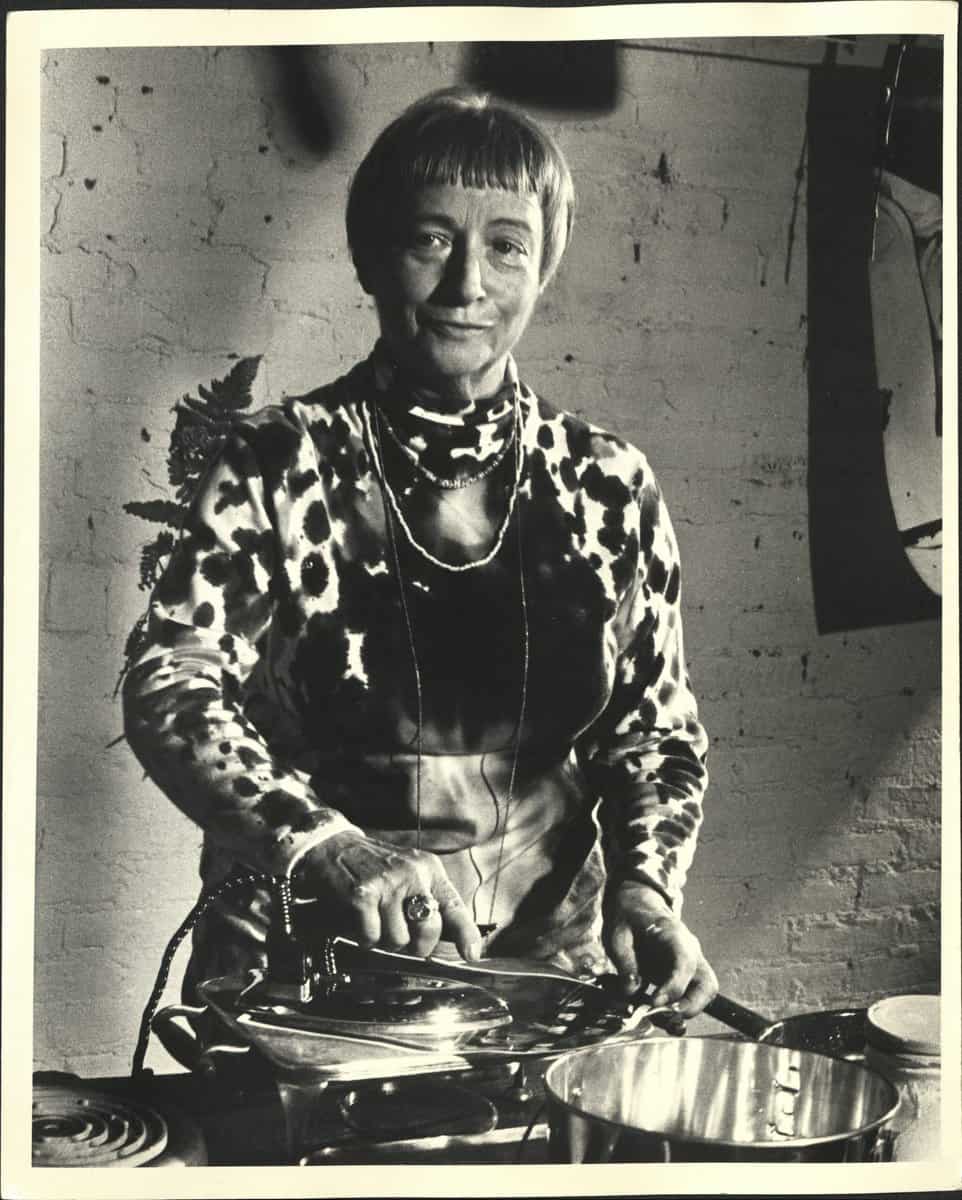
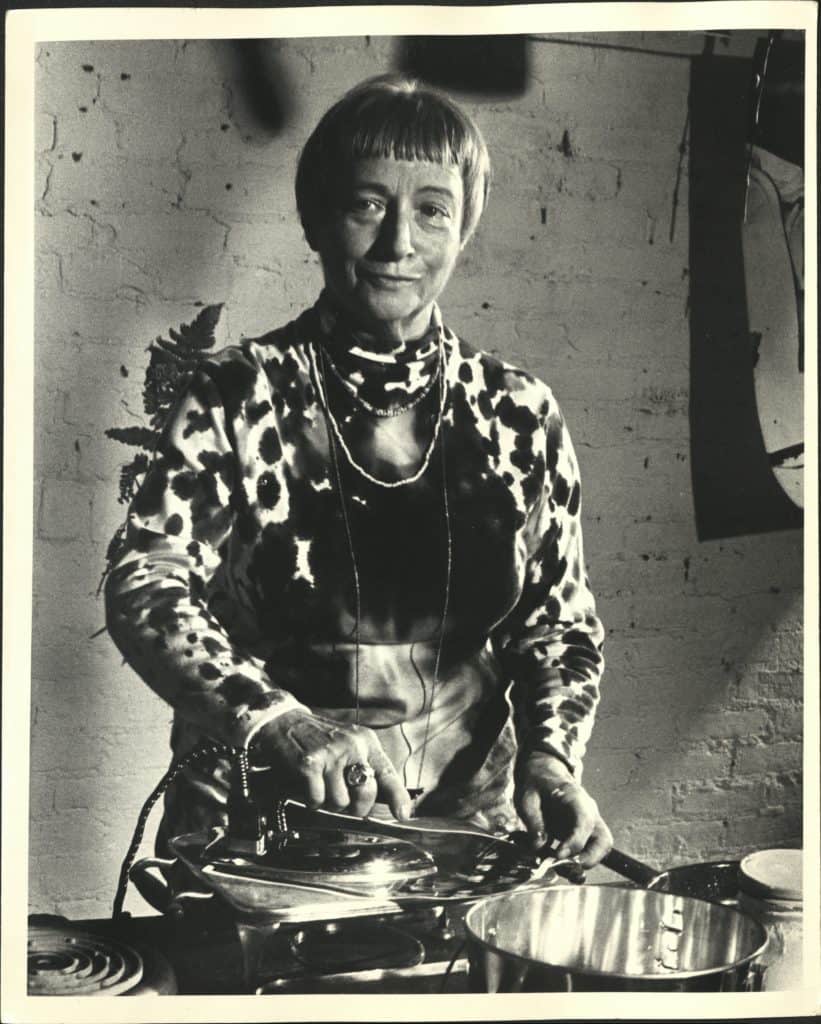
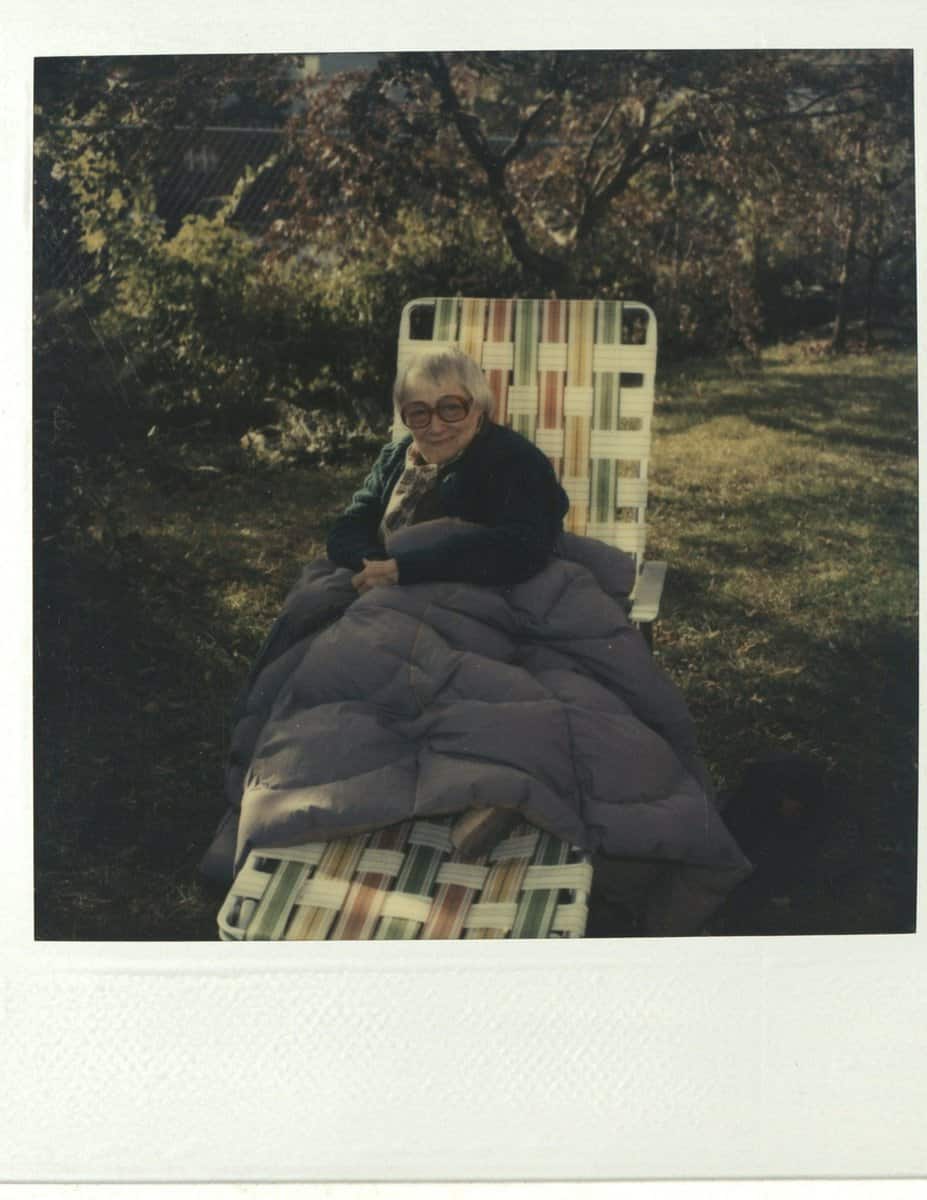
Lil Picard, 1980s
Lil Picard bequeathed her entire estate to the University of Iowa. Her artworks are in the collection of the University of Iowa Stanley Museum of Art, and her archives (where most of these photos are from) are part of the University of Iowa Libraries’ Special Collections and Archives, as the Lil Picard Papers, MsC0817
A new exhibit bound to make you feel warm and fuzzy is up in the Special Collections & Archives reading room.
Curated by lead outreach and instruction librarian Elizabeth Riordan and academic outreach coordinator Kathryn Reuter, the exhibit A Tale of Tails: Pets in the Archives explores the pets found in Special Collections & Archives, expanding on how the notion of the “pet” continues to grow and morph with the changing years while recognizing some of the aspects of pet ownership that remain constant.
As Riordan explained, “at the beginning of the pandemic I saw so many people on social media adopting new pets. And studies have shown a huge increase in pet adoption at the beginning of the pandemic. I myself adopted a kitten in May of 2020. It made me really think about the comfort pets bring during difficult times.”
When Riordan returned to working in person at the library, it was hard not to notice the pets that seemed to be everywhere in the collections. Whether featured in family photos, on the margins of an image, or companions in a story, pets were there. While theseanimal companions were nothing new to the collections, recent events and personal experiences put these archived pets in a whole new light.
As Riordan and Reuter write in their curator statement:
“Despite some of the reportssaying many people returned those animals they adopted once the pandemic started to slow down, it should be noted that an overwhelming majority chose to keep their pets. They join the billions of humans across time and space who see pet keeping as an extraordinary yet common human experience. “
The curators hope that those who visit the exhibit see some of their own pet history in the stories on display and reflect on our bond with animals we choose to bring into our homes and lives.
To get to know the exhibit, Riordan and Reuter have selected 10 items from the exhibit that they are particularly fond of:
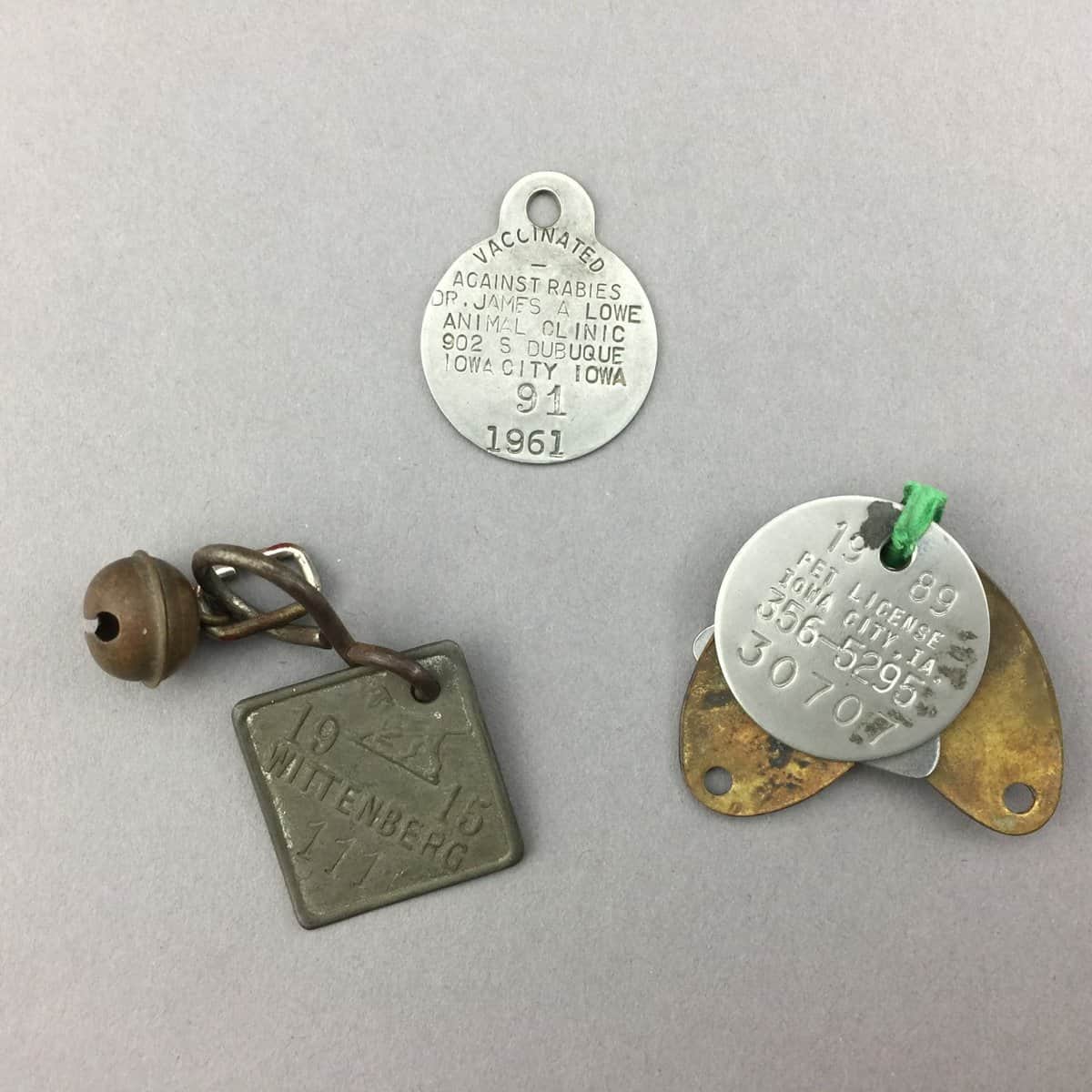
1.Dog Tags from the Ruth Salzmann Becker Collection, IWA 0123
Licensing a pet is one of the more concrete ways humans assert official ownership over an animal. Dog tags also demonstrate the potential dangers of living with animals – as dogs must be vaccinated against rabies before receiving a license. The oldest dog tag displayed in the exhibit is from 1915, it was the license of a dachshund that belonged to Ruth Salzmann Becker’s cousin.
2. The complete idiot’s guide to Pet Psychic Communication
If you’ve ever wished you could tell your pet just how much you love them- or, if you’ve ever really needed your pet to get on board with the house rules – this book is for you!
3. SNACKS by PAS DE CHANCE,
This zine is a compilation of Lost Pet posters readers photographed and sent in from around the globe. We hope that many of the posters resulted in reunions between pet and owner.
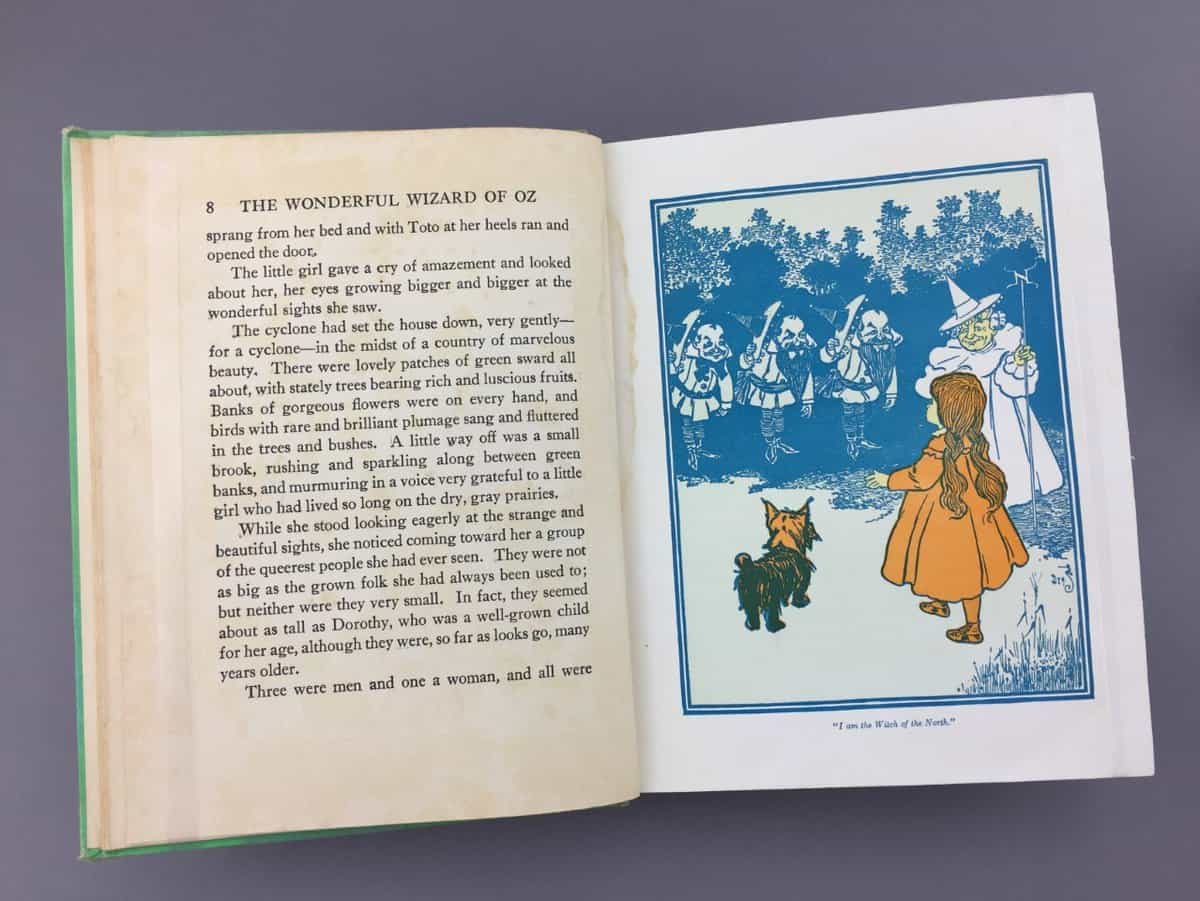
4. The Wizard of Oz
In the Wizard of Oz, most animals in the land of Oz have the ability to speak. For the first four books of the Oz series, Toto, unlike the other animals, does not have the gift of speech. In the eighth book, Toto reveals that while he is able to talk, he simply chooses not to.
5. This is the Story of Little Cat
The illustrations in this picture book are all so sweet, it was difficult to choose just one page to display for the exhibit.
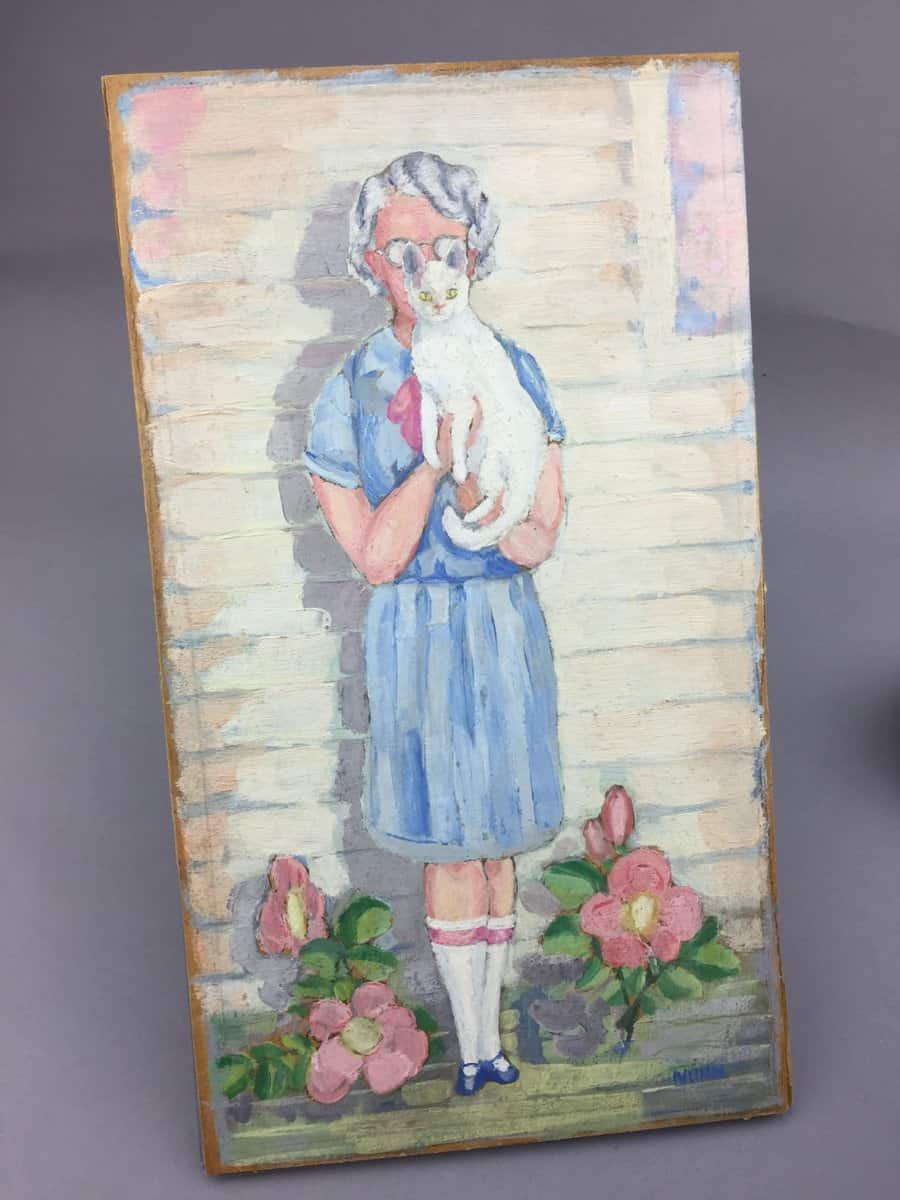
6. Portrait of Ruth and cat from Ruth Suckow Papers, MsC0706
Ruth Suckow’s papers include a whole photo album dedicated to her cats. But it is this painting done by Ruth’s husband Ferner Nuhn that really demands attention. An older Ruth, somehow still exhibiting a youthful aura due to her clothes, holds up a white cat, obscuring much of her face. The relationship of the woman and her cat comes strongly across to viewers.
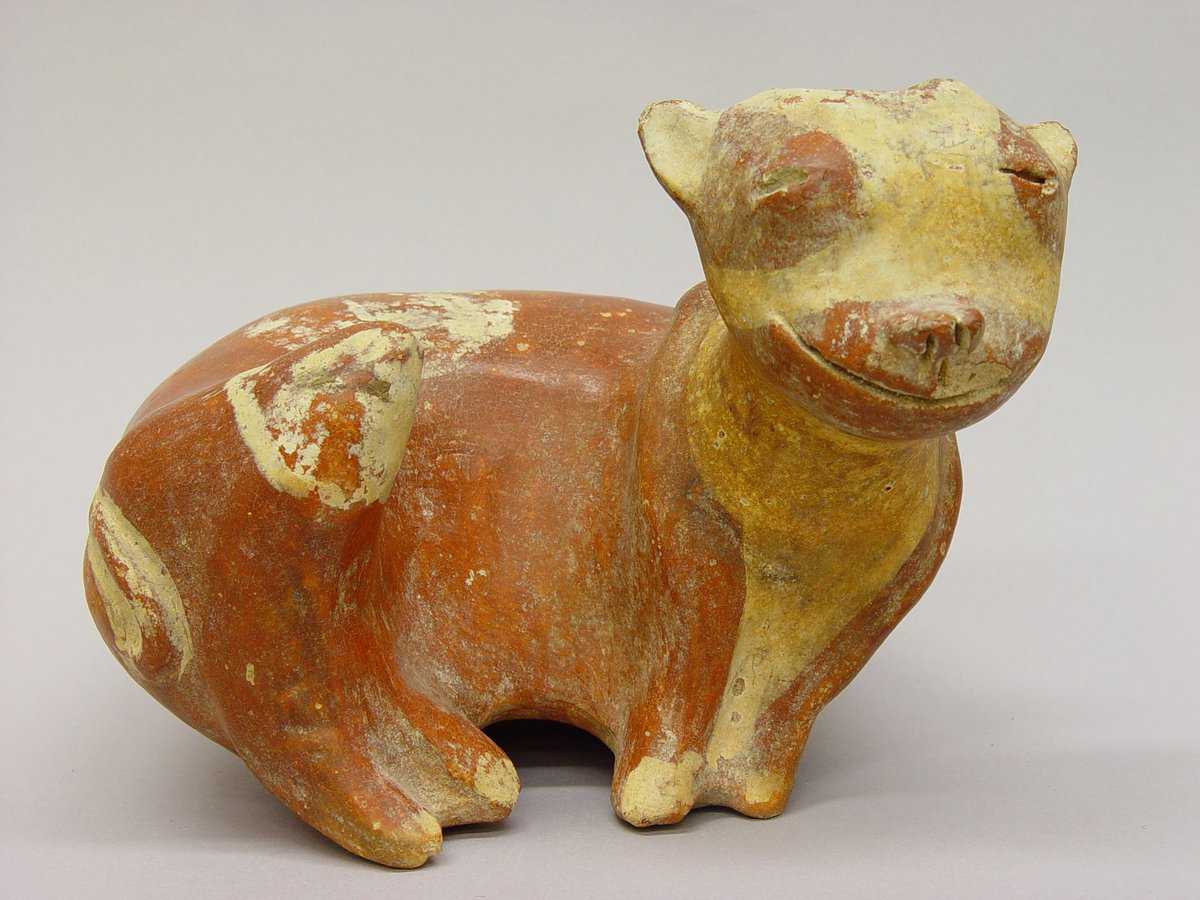
Honestly, this isn’t even in Special Collections, it’s an image from Stanley Museum of Art. And even though we just have a picture of it for this exhibit (you’ll have to go next door to the Museum to see the real thing), we can’t help but smile ourselves when we see it.
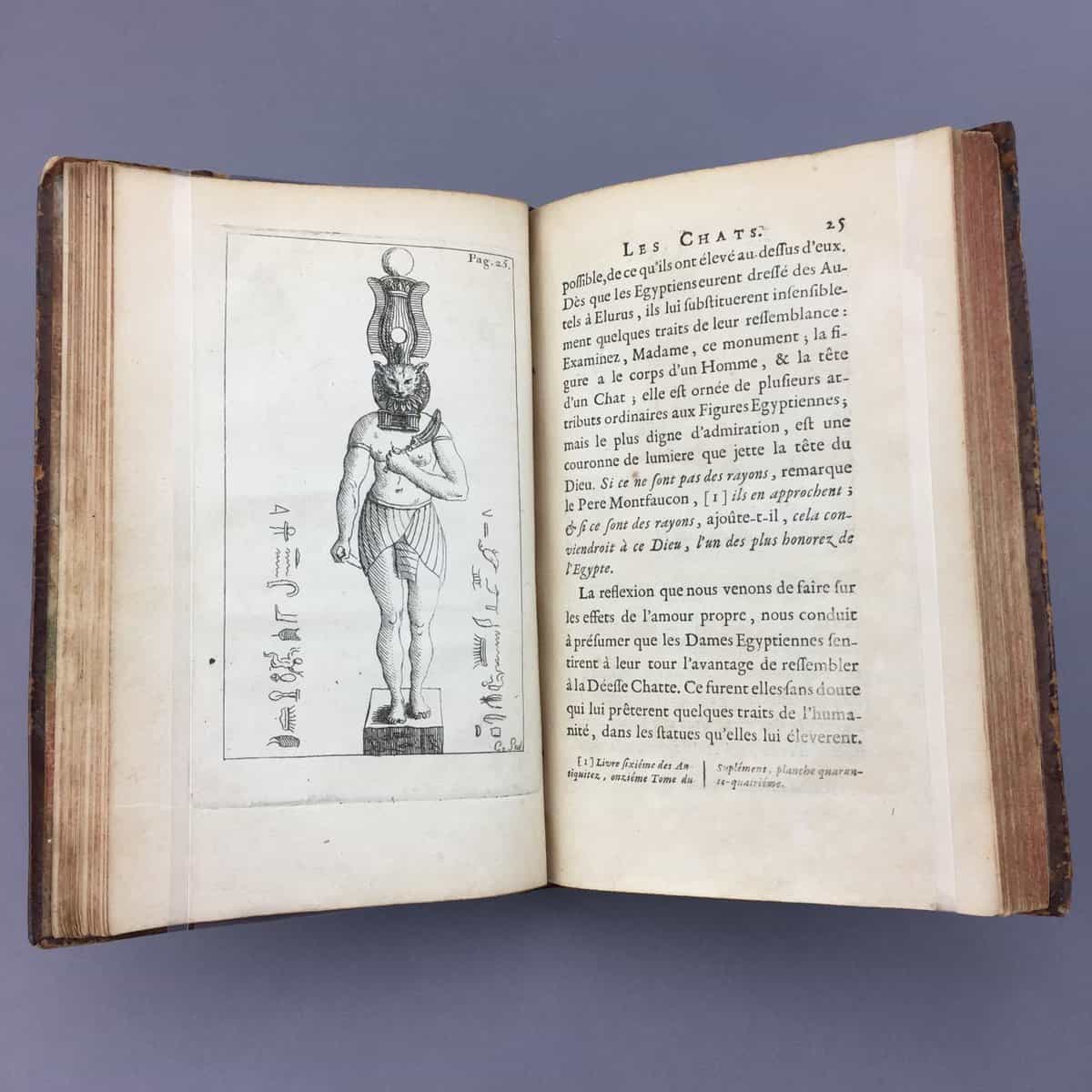
8. Les Chats
Les Chats by François-Augustin Paradis de Moncrif is considered one of Western Europe’s first books devoted to cats. The book contains several fantastic images of cats from ancient Egypt to “modern day” (18th century) France.
9. Andy Warhol cat books
We have two books from Andy Warhol about his cats. Warhol is famous for having several cats at once, all named Sam. The exhibit features his 25 Cats named Sam and One Blue Pussy and a book he did with his mother Julia called Holy Cats by Andy Warhol’s Mother.
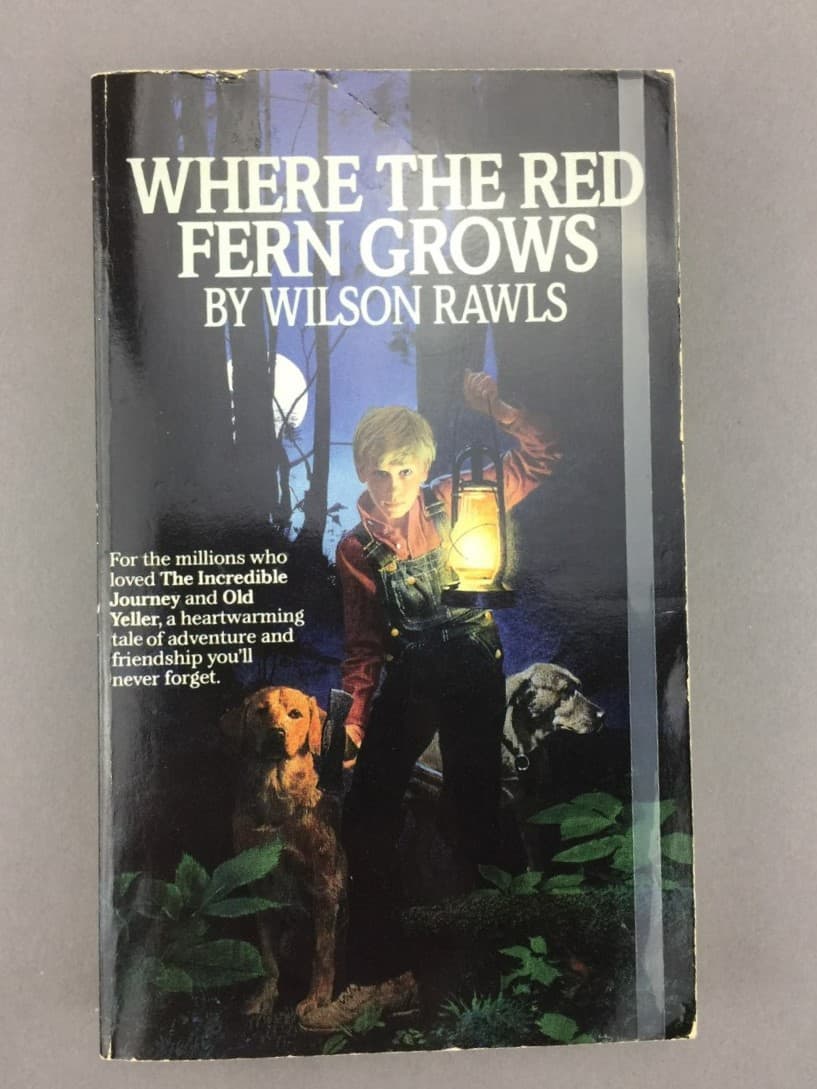
10. Where the Red Fern Grows
This was put in there purely for sentimental reasons. As a child, this book was read aloud in class, and memories of crying as we reached the end of the story are still vivid in the mind. It is a devastating tale, but that sorrow was because Wilson Rawls painted such a real relationship between a boy and his dogs. Those who have experienced the loss of a beloved pet probably still will cry ugly tears over this book.
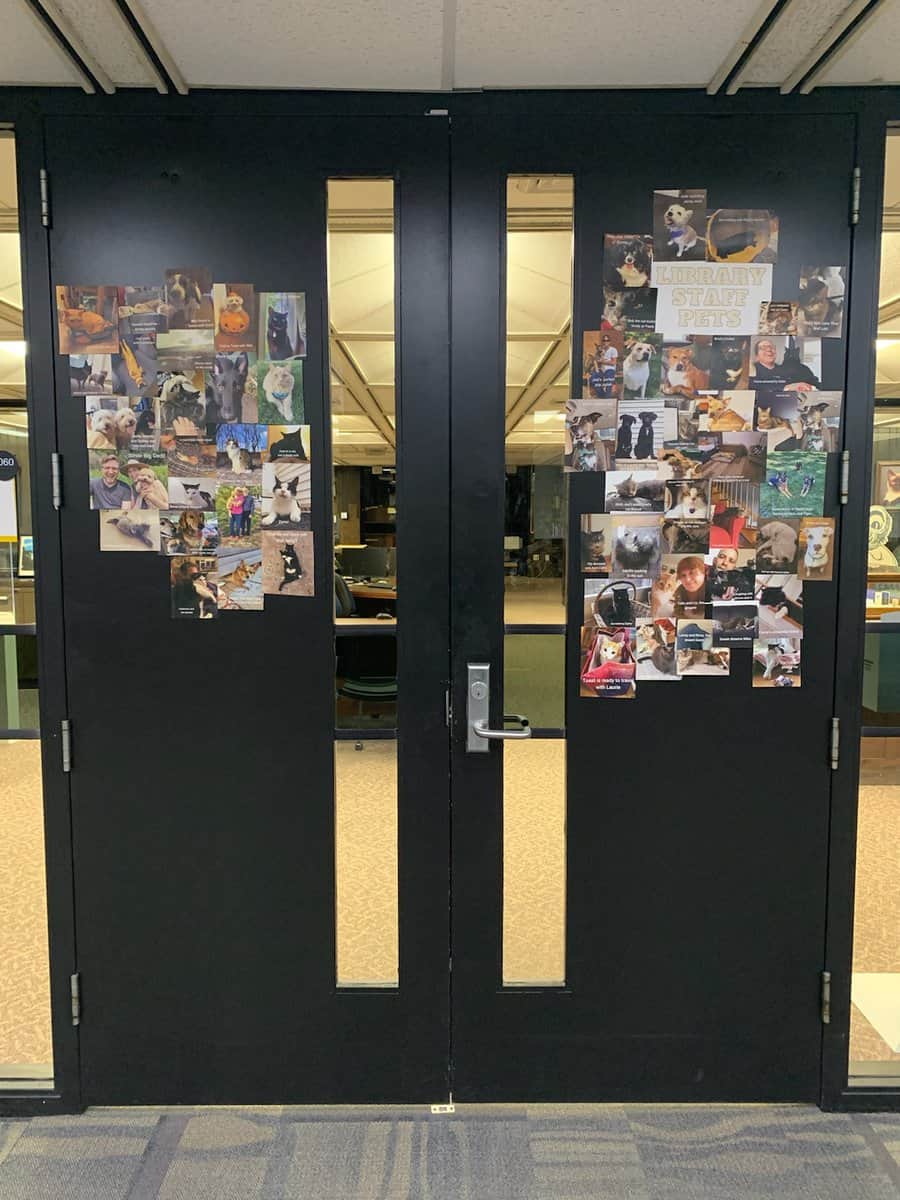
Perhaps the best part of the exhibit, however, is the growing wall of library staff pet photos. This part of the exhibit has already caught the eye of several students and patrons passing our doors. It is a testament to the power of pets when you see strangers smiling at pictures of your own pets.
We are pleased to announce Rich Dana as Special Collections and Archives’ Sackner Archive Project coordinator librarian.
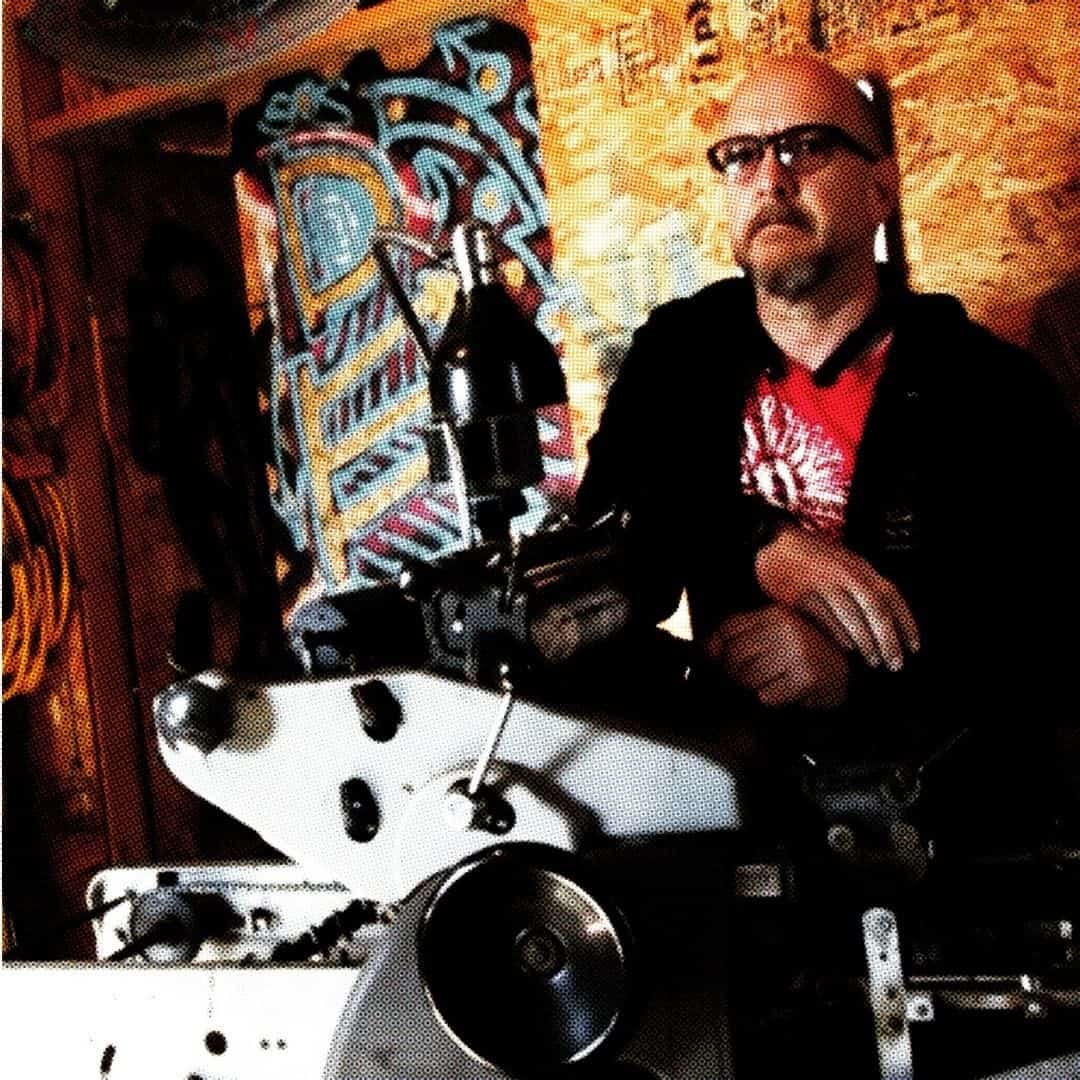
Rich Dana earned his MFA from the University of Iowa Center for the Book in 2021 and his MA from the School of Library and Information Science in 2020. He has worked as an art mover, art fabricator and art installer, and curator for a variety of New York City galleries and institutions, and has served as a freelance instructor and workshop leader for several years. He has also held various roles at Special Collections and Archives: as curatorial assistant for the Hevelin Collection, the Olson graduate research assistant, and temporary project registrar for the Ruth and Marvin Sackner Archive of Concrete and Visual Poetry.
In addition to his past work with the Sackner Archive, Dana is himself a copier artist (one of his works is included in the Sackners’ collection) and independent publisher. His 2021 book Cheap Copies! describes some of the techniques used by artists in the collection, and he frequently leads workshops on copier art techniques.
When asked what he enjoys about the Sackner Archive, Dana stated, “Because the Sackners were enthusiastic autodidacts and made personal connections to many of the artists whose work they collected, the archive has a very lively and idiosyncratic quality. It’s not only an astounding collection of visual poetry, it’s also a remarkable historical record of the movement.”
Dana looks forward to raising awareness of this amazing resource and making the materials in the collection more accessible to patrons and researchers. We are so glad to have him on the team.
We are pleased to welcome Sarah Keen as our new university archivist in Special Collections & Archives.
Sarah joined the Libraries at the start of the fall semester. She comes to Iowa from upstate New York, where she served as Colgate University Libraries’ university archivist and head of Special Collections and University Archives. Previously, she was technical services archivist and American Association of Family and Consumer Sciences project archivist at Cornell University Library, and archivist for the Jane Harman Congressional Papers Project at Smith College. She earned her MSI from the University of Michigan and her BA from Alma College.
As an archivist, Sarah says that she enjoys “learning about people’s lives and their experiences as individuals and with the organizations they create.” She looks forward to learning about the University, its complex history, and its wide range of activities while collaborating with colleagues across campus.
When not digging through the archives, Sarah enjoys rowing, crocheting, and listening to music. She is also a Red Sox fan, and she enjoys reading mystery books and watching mystery/detective shows. Have we already told her about the culinary murder mystery books in Szathmary’s collection? You bet we have.
Welcome Sarah! We’re excited to have you on the team.
The following is written by Rachel Miller-Haughton, former Olson Graduate Research Assistant and curator of All Women Welcome exhibit
All Women Welcome: Voices of Activist Iowa Women is the summer 2022 exhibit in the Special Collections Reading Room. The culmination of my time as the 2020-2022 Olson Graduate Research Assistant, the exhibit features images, documents, and materials from the collections of interesting, trailblazing Iowa women. Writing our #VoicesfromtheStacks series allowed me insight into previously unseen collections from people of all backgrounds. The goal is to expand our holdings in all directions to reflect the diversity of the University of Iowa and this community.
The women featured in this exhibit made an impact in the causes they worked for, both within their communities of identity and for all human rights. While these women’s lives did not often overlap, the positive changes they made touched many lives. Ayako Mori Costantino’s family immigrated from Japan, Florence Vallejo Terronez’s from Mexico. They worked to better their communities of origin, but also advocated for human rights, as did Virginia Harper. Pearl McGill fought for all worker’s rights. Corita Kent and Lil Picard turned to art for their messages. Picard was a journalist, as was Judy Hoit, whose writings on disability in the workplace made Iowa more accessible. Tess Catalano fought for women’s rights in the 80s as well as gay rights. The intersectionality of these activists’ work was necessary. All saw themselves as part of a lineage of advocates. My hope is for this lineage to continue with new voices at Special Collections. These are just some of the many diverse stories told in the archives, and more voices will join them in the future.
Here are the women featured in the All Women Welcome exhibit:
LIL PICARD
(Lil Picard Papers, MSC 0817)
Lil Picard (1899-1994) was born in Landau, Germany. She lived in Berlin, and was involved with writers, artists, composers, filmmakers, and actors. Lil Picard appeared in cabaret performances, then turned to journalism, fashion designing and modeling. Lil and her husband Hans Jüdell immigrated to the United States in 1936, alarmed by the anti-Semitic policy of the national socialist government.
She learned English and took design and lettering classes, opened a milliner studio, and from the 1950s forward she worked as a journalist and artist. She had exhibitions of paintings, sculptures, watercolors, and photos. She participated in Avant Garde Festivals of New York. She was financially independent when few women were, tested boundaries, and committed her writing and art to social justice, equality, and peace.
JUDY HOIT
(Judy Herron Hoit papers, IWA 0373)
Judy Herron Hoit (1945-2019) was born on a farm south of Coon Rapids, Iowa. When she was four, she contracted polio. In 1952 she received six months of treatment at a polio facility built by Franklin Delano Roosevelt in Warm Springs, Georgia. Hoit spent six years at Warm Springs, returning to her home when she was thirteen. She graduated from Guthrie Center High School in 1964. In 1977 Hoit and her sons moved to Iowa City where she worked as a receptionist and typist. Though many people suggested she request disability status, she resisted the idea. Hoit authored several articles explaining disability access and disability awareness. Judy won the Handicapped Woman of Iowa Pageant in 1991, which led to many speaking engagements for her throughout the state. She created a consulting business which addressed accessibility and awareness issues for people with disabilities. In 1996 Hoit was named Ms. Wheelchair Iowa. She was state coordinator for Ms. Wheelchair Iowa in 1997 and 1998.
PEARL McGILL
(McGill Family papers, IWA 0543)
Button worker, early twentieth century labor activist, and teacher, Ora Pearl McGill (1894-1924), was born on a small farm in Louisa County, Iowa. Known as Pearl, she left her home at the age of sixteen to work at a Muscatine, IA button factory, intending to save her wages and become a schoolteacher. She quickly became involved in a union organizing drive that was underway in the Muscatine button factories and served as recording secretary of the Button Workers Protective Union (BWPU) No. 12854, an affiliate of the American Federation of Labor (AFL).
She became a strike worker, making countless speeches to local unions in industrial cities across the country, including St. Louis, New York City and Boston, to raise money to support the striking button workers in Muscatine. Later she joined the Industrial Workers of the World (IWW) and was an outspoken activist and organizer during the Lawrence textile strike of 1912. In 1913 she taught at a rural school in Lone Tree, Iowa. On April 30, 1924, she was murdered by Ed Vance (her ex-husband), following his release from a mental institution. Pearl McGill was inducted into the Iowa Labor Hall of Fame at the 2006 convention of the Iowa Federation of Labor.
FLORENCE VALLEJO TERRONEZ
(Florence Vallejo Terronez papers, IWA 0577)
Florence Vallejo Terronez was born in Horton, Kansas, in 1924 to Martina Morado and Julio (Julius) R. Vallejo. Martina Morado was born in Guanajuato, Mexico, and came to the United States in 1910 when she was thirteen years old with her mother, Angela Morado, and her brother. The family settled in the railroad town of Horton, Kansas, where the children helped their mother run a boarding house. Julio Vallejo, like many railroad workers, was laid off during the Depression, and for two seasons the entire family worked the beet fields in Minnesota. In 1941, when the railroad in Horton closed, the family moved to West Des Moines, Iowa, where Julio Vallejo continued to work as a pipefitter for the Rock Island Railroad. Florence Vallejo attended school in West Des Moines. During the 1940s and 1950s she continued to live with her family, working as a nurse’s aide at Broadlawns Medical Center and as a long-distance telephone operator for the Northwestern Bell Telephone Company. In 1956, Florence Vallejo married Antonio (Anthony) Terronez.
Florence Terronez became a full-time mother, managing the household and caring for her four stepchildren and two more children who were born later. She was involved in her children’s school and church activities, sang in the church choir, and later worked as a nurse’s aide at St. Anthony’s Hospital in Rock Island, Illinois. Following her retirement she volunteered with the Genesis Medical Center in Silvis, Illinois, and served on the community service auxiliary of the Veterans of Foreign Wars post in East Moline, Illinois.
Human rights activist and singer-songwriter Theresa Mary “Tess” Catalano (1959-1999) was active in organizations such as the Women’s Resource and Action Center (WRAC) and Common Lives/Lesbian Lives that supported feminists and lesbians. She was born in Athens, Ohio, in 1959. She attended Allegheny College for one year, then came to Iowa City and completed a BA at the University of Iowa in 1985. She organized Take Back the Night rallies, was arrested for protesting South African apartheid, and sang at benefits for the causes she cared most about.
Catalano supported herself during her undergraduate years by driving city and school buses and working at the University of Iowa’s accounting and maintenance departments. Catalano became a certified massage therapist after completing training at the Desert Institute of the Healing Arts in Phoenix, Arizona, in 1994. She returned to Iowa City where she practiced massage until she and her partner, Rebecca Teasdale, moved to Oregon in 1997. After a year in Portland, the couple moved to Eugene, Oregon, where Tess Catalano died suddenly in 1999. Memorial services were held in both Eugene and Iowa City as hundreds of people mourned her passing and remembered her contributions to their communities.
AYAKO ‘A. MORI’ COSTANTINO
(Ayako ‘A. Mori’ Costantino papers, IWA 0905)
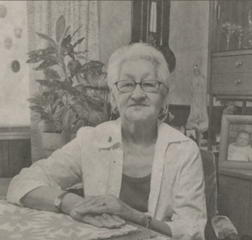
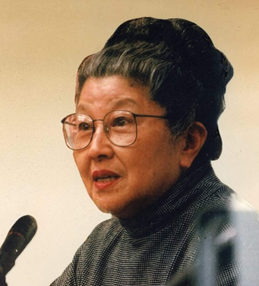
Ayako “A. Mori” Mori Costantino (1924-2020) was born in Sacramento, California. As a child, she and her family were interned at Tule Lake in 1942, one of thousands of Japanese-American families whose lives and farms were taken away from them because of their heritage during the Second World War. She was heavily involved in activism and worked towards redress for those who had been interned, as well as women’s, minority, and civil rights–especially when she lived in Iowa City. In October 1946 after the end of World War II, Costantino, working with occupation forces, travelled to Japan for a stenography job. While in Japan she met and married a military serviceman, Anthony “Tony” Costantino, in 1948. Costantino and her husband had two children, son Mori, and daughter Toni.
Integral to the creation of the Iowa City Human Relations Commission in 1963, Mori Costantino assisted in drafting the Iowa City Human Rights Ordinance. She also spearheaded a project to investigate housing discrimination with a League of Women Voters volunteer task force of 47 women. The housing investigation led to the passage of a fair housing law in 1964 mandating non-discriminatory housing practices and establishing enforcement procedures. In 1977, Costantino was elected to represent Iowa at the National Women’s Conference in Houston, Texas. In addition to her service to multiple organizations, Mori Costantino has also helped campaign for multiple Democratic candidates and volunteered her time and efforts to the Johnson County Democrats.
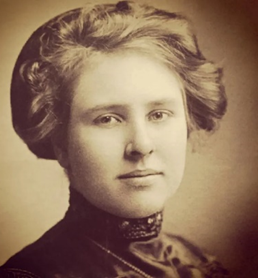
Lillie Virginia Harper (1929-1997) was born in Fort Madison, Iowa. Harper studied at the State University of Iowa (now the University of Iowa) for three years, at Howard University, and graduated from the College of Medical Technology in Minneapolis. She was an x-ray technician and medical assistant in her family’s clinic until it closed in 1977. In 1946, when only twenty African-American women were enrolled at the University of Iowa, Harper was one of the five chosen to live on campus, in Currier Hall.
In 1971 Governor Robert Ray appointed Harper the first African-American woman to serve on the state Board of Public Instruction. In that position she worked towards instituting a human relations course requirement for teachers. In 1979 she was the first Black woman appointed to the Iowa Board of Parole. In 1978 Harper was president of the Fort Madison branch of the National Association for the Advancement of Colored People (NAACP). Her other civic activities included work as a volunteer at the Fort Madison penitentiary and as a member of both the Fort Madison Human Rights Commission and the Library Board of Trustees. In 1992 Harper was inducted into the Iowa Women’s Hall of Fame in recognition of her commitment to equal rights.
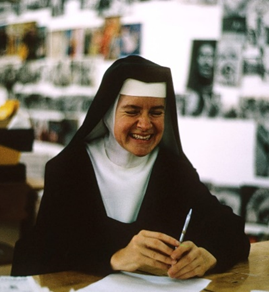
Corita Kent (1918–1986) was an artist, educator, and advocate for social justice. At age 18 she entered the religious order Immaculate Heart of Mary, eventually teaching in, and then heading up, the art department at Immaculate Heart College. Her work evolved from figurative and religious to incorporating advertising images and slogans, popular song lyrics, biblical verses, and literature. Throughout the ‘60s, her work became increasingly political, urging viewers to consider poverty, racism, and injustice. In 1968 she left the order and moved to Boston.
After 1970, her work evolved into a sparser, introspective style, influenced by living in a new environment, a secular life, and her battles with cancer. She remained active in social causes until her death in 1986. At the time of her death, she had created almost 800 serigraph editions, thousands of watercolors, and innumerable public and private commissions. Her works are held in the Stanley Museum of Art as well as in Iowa Women’s Archives.
Be sure to check out the exhibit through the end of August in Special Collections & Archives Reading Room, located on the 3rd floor of the Main Library.
The following is written by Academic Outreach Coordinator Kathryn Reuter
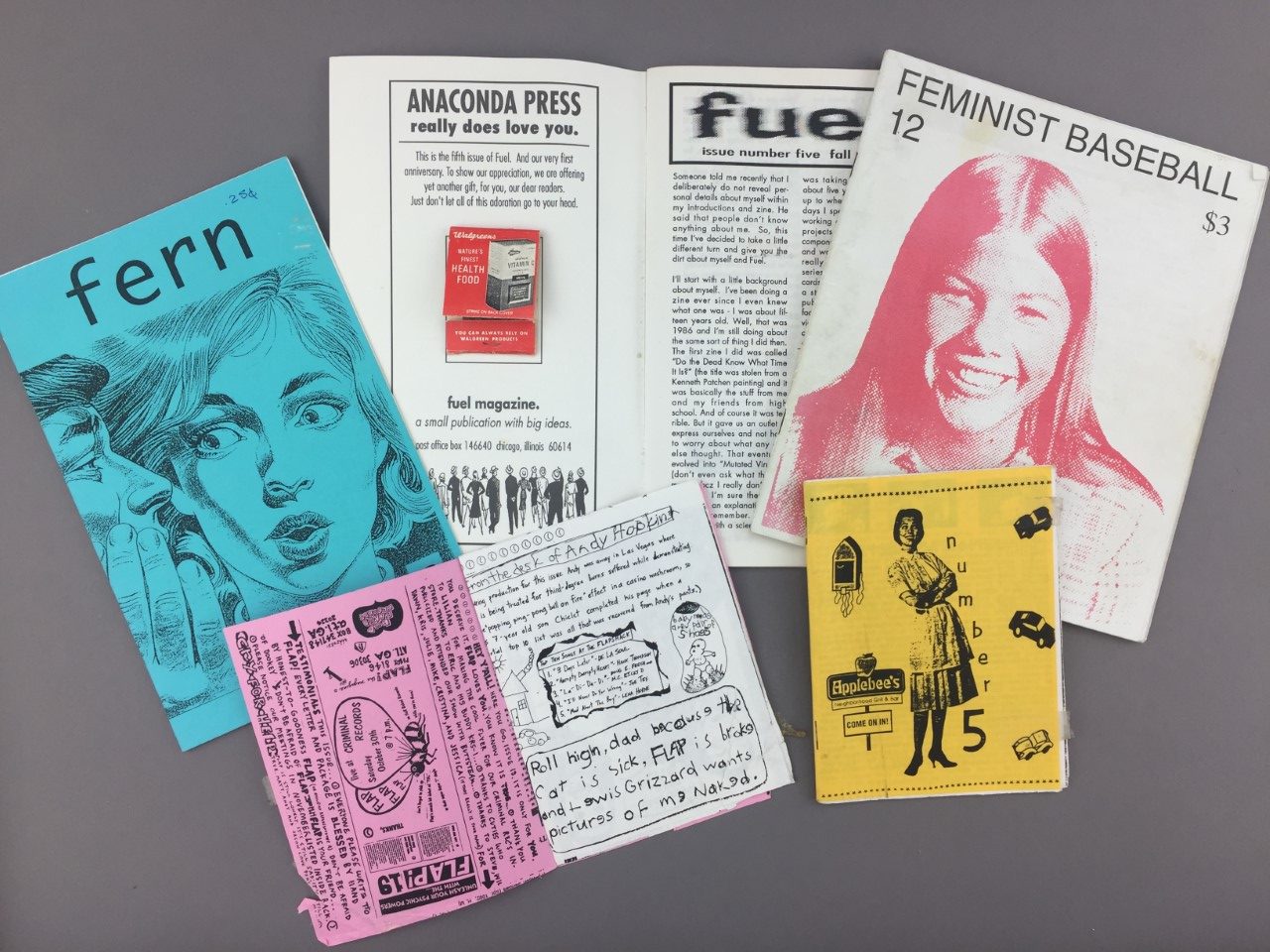
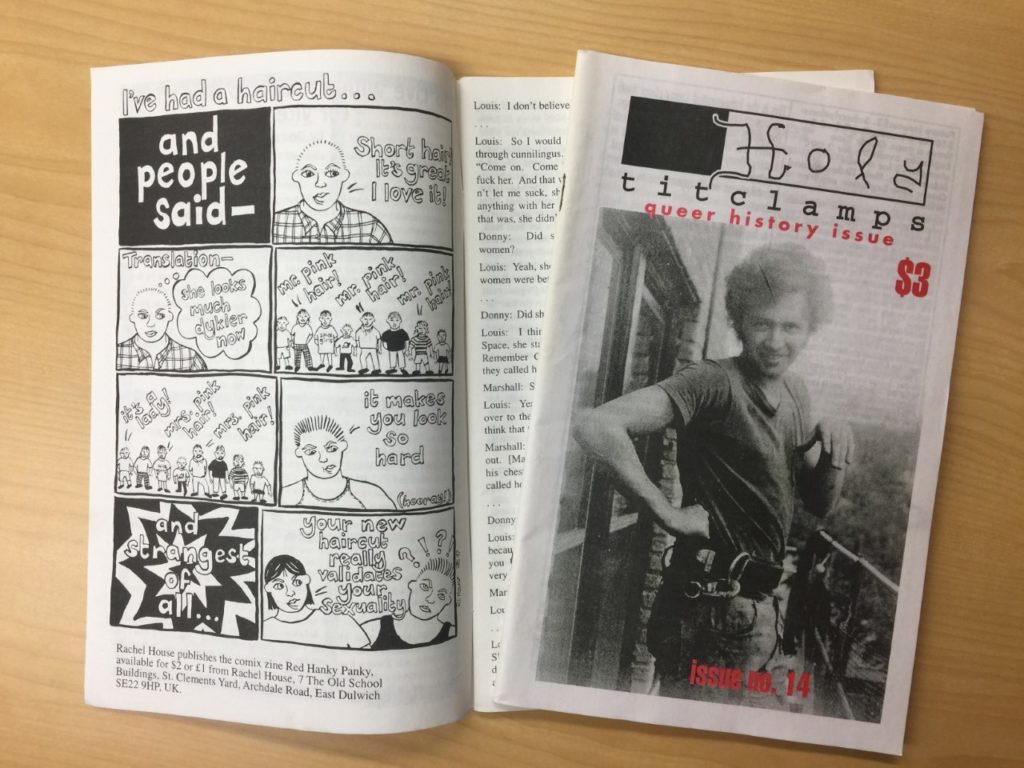
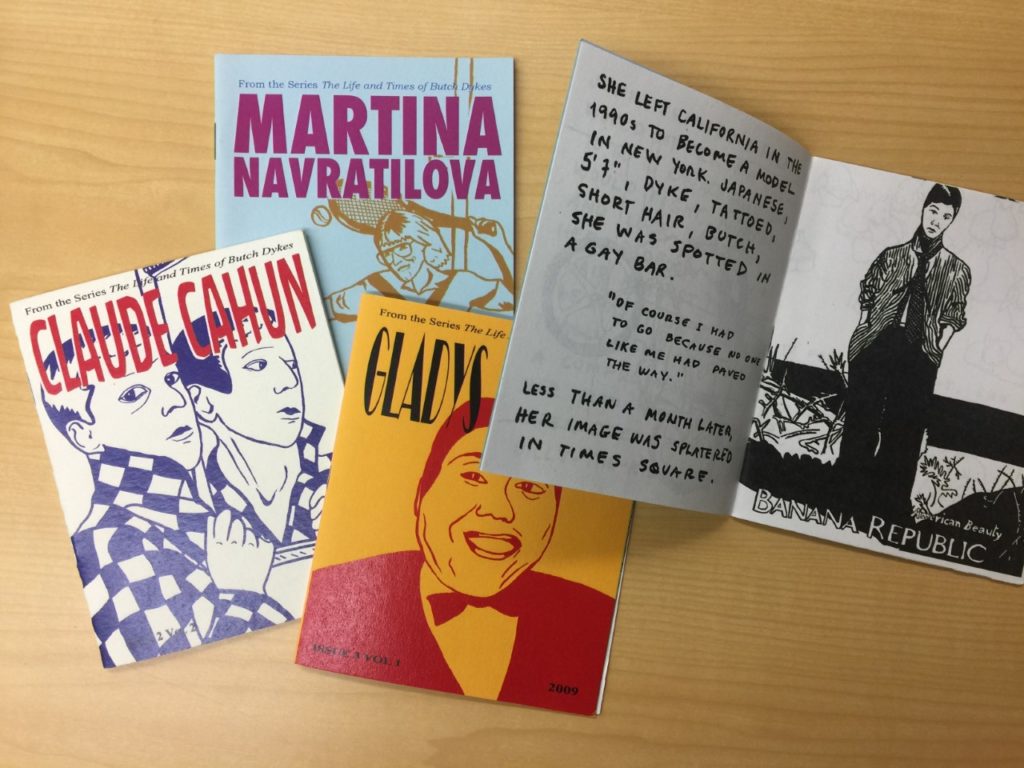
In honor of Pride month, we are highlighting some queer zines in our collections.
A zine is a hand-made and self-published pamphlet that can contain writings, collages, comics, illustrations, and other artwork. Zines are made in a variety of styles and cover endless types of content; makers are motivated by the possibilities of self-expression and creativity in this medium. For a brief history of zines, and to find more zines in our collections you can refer to this resource from the University of Iowa Special Collections & Archives.
Various zines from the Sarah and Jen Wolfe Zine collection, MsC0878
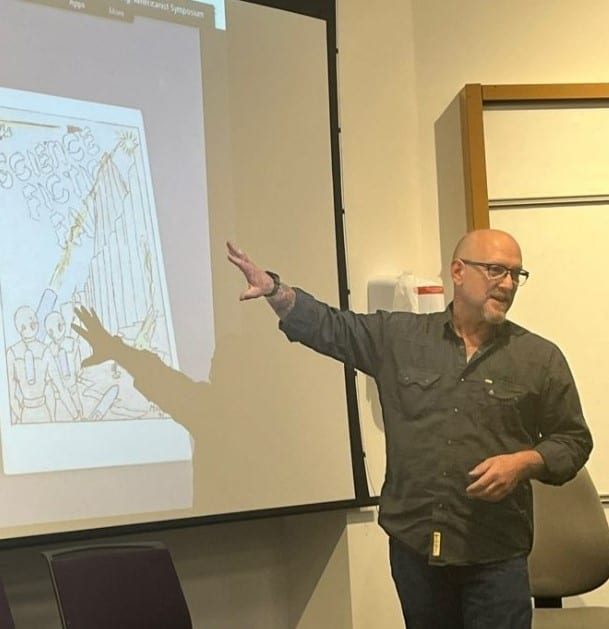
Because of their low production cost and the lack of oversight and censorship in making a zine, zines can be especially appealing to members of marginalized communities or counter-culture movements. An early subculture that embraced zines was the Science Fiction Fan community; fans would produce zines with newsletters, fan art, and fan fiction to share with others in the fandom.
In self-publishing their own work, people who are intentionally excluded from traditional media and who have barriers to accessing the institutions of publishing and academia can “take the mic” and make a zine on any topic they are passionate about. Other subcultures that adopted the counterculture self-expression of zines include the punk music movement and the riot grrrl movement. Alongside these movements, queer folks have been making and reading zines for decades.
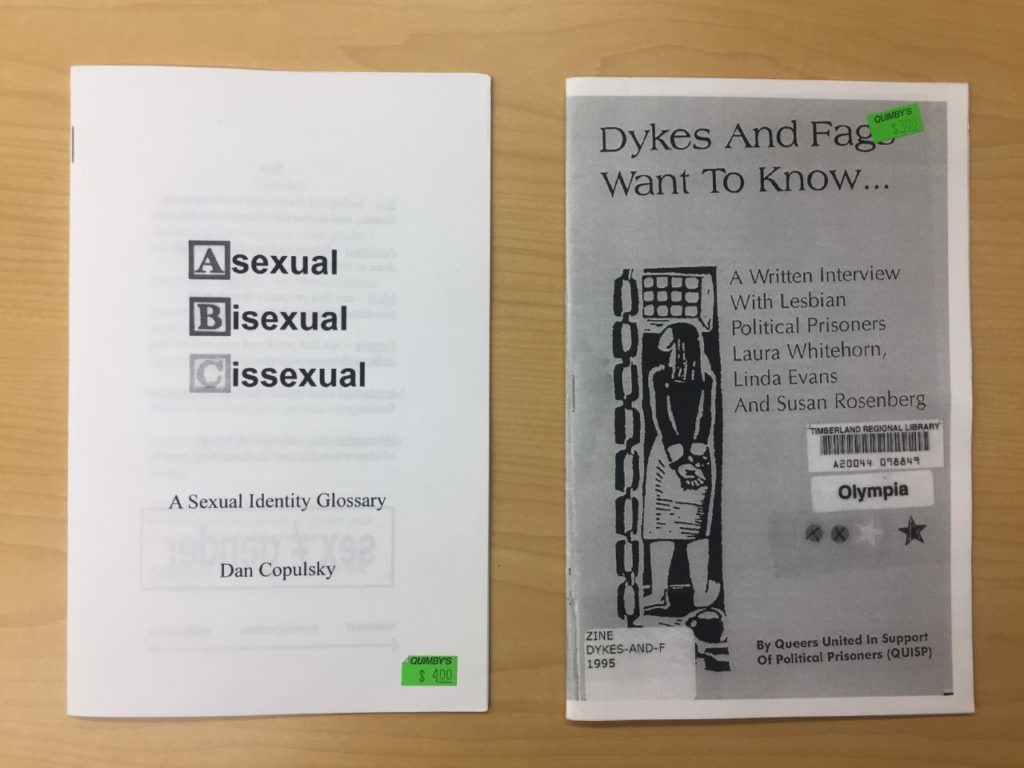
Some of the queer zines in our collections have an informative bent to them, such as Asexual, Bisexual, Cissexual: A Sexual Identity Glossary and Dykes and Fags Want to Know, which features interviews with lesbian political prisoners. Here we can see an example of how queer zine culture frequently blends with other movements for social/ political justice, including the Prisoners’ Rights Movement and the movement for Prison Abolition.
In the same collection – ZINES AND FANZINES (MsC0331) – we came across the zine series The Life and Times of Butch Dykes which features wonderfully illustrated brief biographies of lesbians you probably did not learn about in history class.
Holy Titclamps Queer Histories EditionThe Life and Times of Butch Dykescovers of Asexual, Bisexual, Cissexual: A Sexual Identity Glossary and Dykes and Fags Want to Know
Queer history is a subject that mainstream society for years has intentionally overlooked. By producing and spreading zines that share queer histories, zine makers are emphatically stating: we are here, we have always been here, and we belong here.
Even with the positive and inclusive messages in queer zines, their makers acknowledged that the content of their creations would not be accepted by all. In the front matter of the zine Homocore, the editors explain how to subscribe to the zine and reassure readers that issues are “mailed in a plain envelope to accommodate your oppressive environment.” Queer people were at risk of being discriminated against by landlords, neighbors, roommates, or even family members who may have seen their mail.
Despite this risk, queer zine makers and readers were leveraging the postal system as a tool for community building. Zines like Holy Titclamps and Homocore featured sections for printing letters from folks seeking pen pals, people who were interested in zine swaps and subscriptions, and even people looking to swap records and share music.
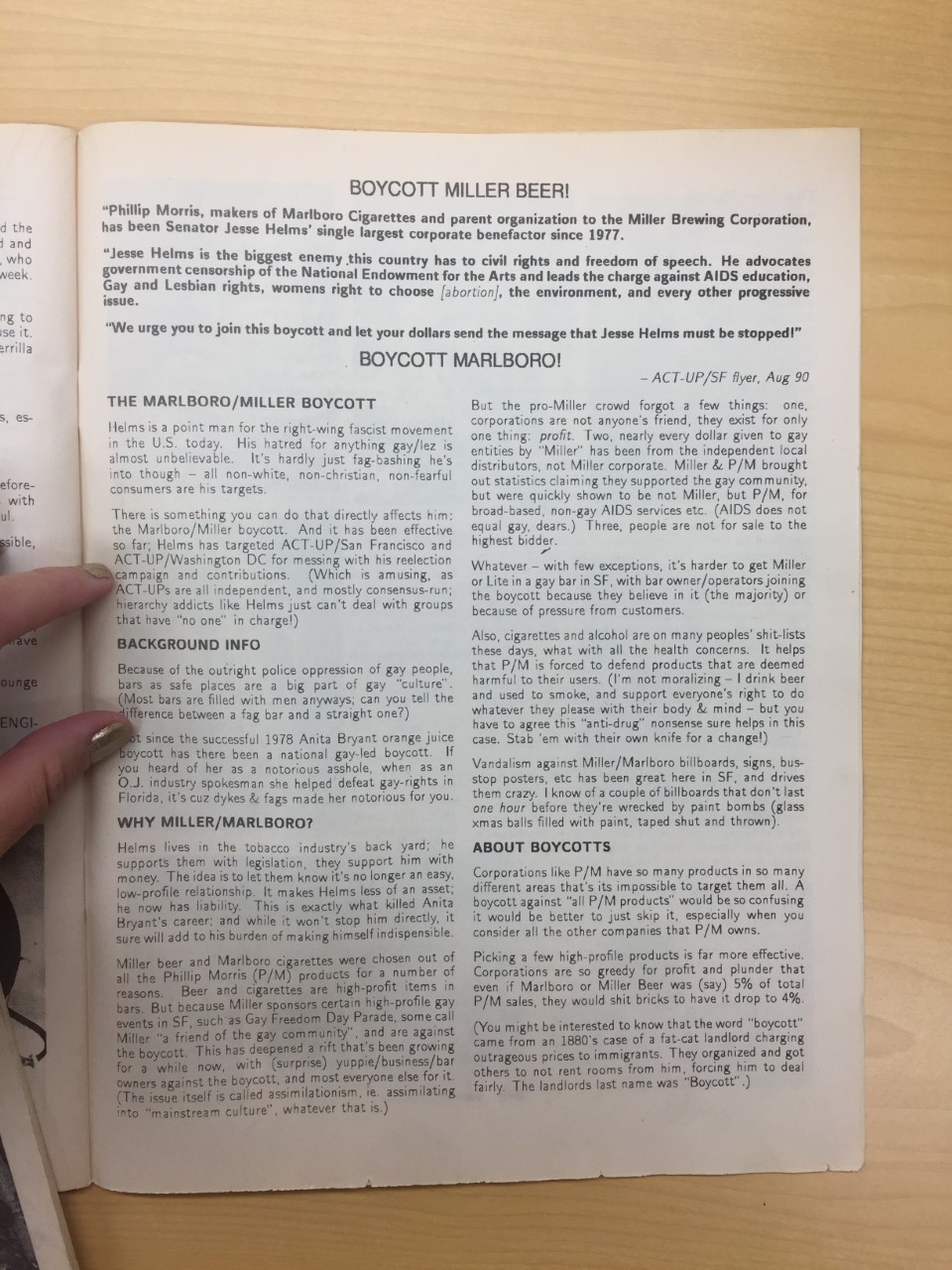
Boycott Miller Beer/Marlboro page
In addition to building personal relationships, zines offered the opportunity to organize readers in social justice efforts. For example, Issue 7 of Homocore includes a full page outlining the Marlboro/ Miller Boycott of 1990-1991. The boycott, organized by ACT-UP/San Francisco and ACT-UP/Washington DC, aimed to unseat conservative Senator Jesse Helms (who was a vocal opponent of gay rights and feminism). Helms received hefty political donations from Phillip Morris, makers of Marlboro cigarettes and then-parent company of Miller Brewing. Homocore writes, “Helms lives in the tobacco industry’s back yard; he supports them with legislation, they support him with money” and outlines reasons to participate in the boycott. For decades, zine editors have used their zines as a political tool to amplify the efforts of queer organizers and queer rights campaigns.
If you can’t stop by Special Collections & Archives to read zines this summer, we highly recommend the Queer Zine Archive Project – an online archive “to preserve queer zines and make them available to other queers, researchers, historians, punks, and anyone else who has an interest in DIY publishing and underground queer communities.”
The following is written by student worker Jack Menzies
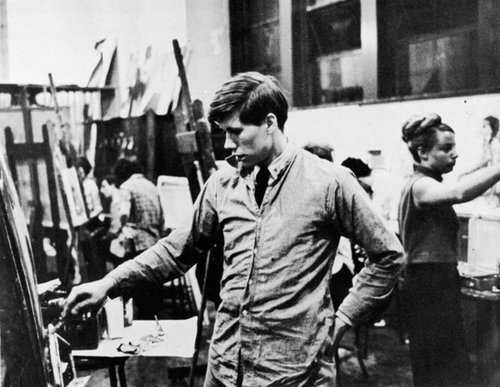
Thor Rinden at work. Image from the Thor Rinden website
Thor Rinden was an artist born in Marshalltown, Iowa in 1937 and studied at the University of Iowa before attaining his Master of Arts at Hunter College, New York, NY. Living with his wife, Jane,the couple spent decades renovating their home in Brooklyn, which garnered substantial media attention and brought focus to his artwork.
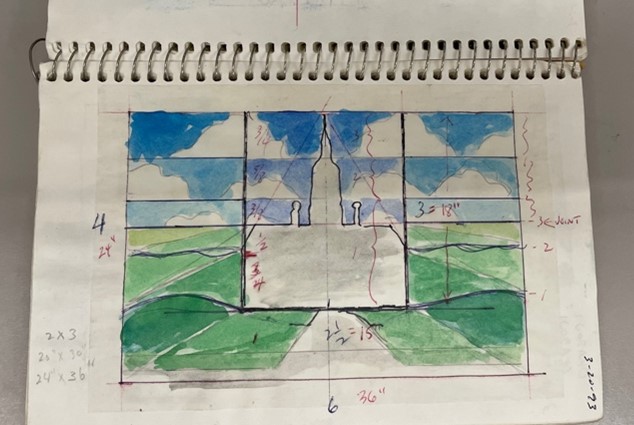
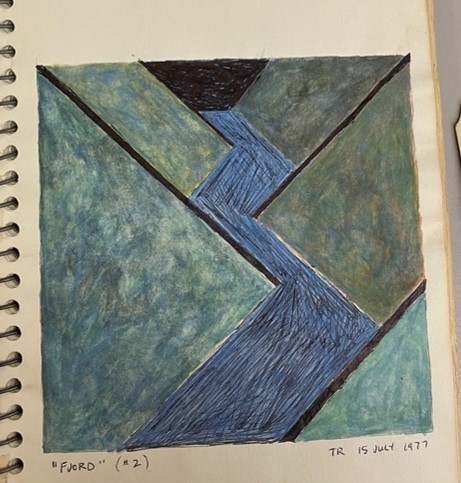
Combining elements of geometry and architecture with the organic influence of his Iowa roots, Thor Rinden created little worlds within his pieces. Employing differences in texture, as can be seen in his “wovens,” interlocking strips of canvas and other materials to create textured designs, and “slab paintings,” in which smaller canvas paintings are placed within a larger canvas frame, his work invites viewers to not only view the art but interact with it and unfold its meanings. Check out examples of woven and slab paintings on the Thor Rinden website.
The combination of mediums with which he worked perfectly marries his Iowa origins and appreciation for New York abstraction. Farmland scenes and quiltlike patterns juxtapose with the clean lines and sharp angles of a modern skyline. To better understand the artist, I took the opportunity to talk with Thor and Jane Rinden’s close friends Samuel Scheer and Rosetta Cohen, who helped shed more light on Rinden’s work. Scheer described Rinden’s art as “lucidly geometrical,” a study in how things are exquisitely and imperfectly joined in the world. His work is deliberately imperfect and showcases his humorous side, thus showcasing humanity alongside mechanical precision.
Though Rinden loved his homes in Iowa and New York, he was an avid world traveler, and his travels hugely impacted his work. He was especially influenced by his experiences in Asia and his introduction to Buddhist culture. Though not quite mandalas, his woven work showcases some similarity with the intricate sand paintings created by Buddhist monks. Creating art was a spiritual experience for Rinden, and that spirituality can be seen within the inter-animated aspects of his paintings and wovens. He appreciated both agrarian and industrial development and his work showcased his dual appreciation. Much of his work can be plotted as grids, like neat Iowa cornfields or the network of New York streets, perfectly exemplifying his desire to portray the interconnectedness of all things and places.
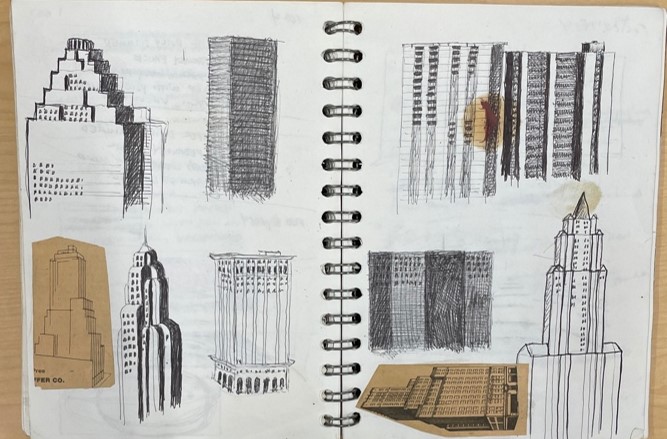
Sketch of building on an open landscapeStudy of New York buildingsdrawing of a geometric depiction of river in a valley
Some of Rinden’s work has come back to Iowa and is housed at theStanley Museum of Art.His collection here at Special Collections & Archives contains 25 sketchbooks that include his blueprints for paintings, many sketches and life studies, plans for his renovations, and poetry. A common factor with all of these is his connection to Iowa and its landscapes. His collection will resonate with anyone who feels a connection to their homes and those who are moving into a new phase in their lives. His collection speaks to the integral and involuntary connection we have to our origins and invites people to carry their roots with them even as they move out into the world. It asks the question, “What will you bring with you as you enter the world?”
Cover of Subway Seizures: Poems
Also included in the collection is a book of his poems titled Subway Seizures: Poems. The poems are accompanied by sketches, and they showcase the humor and left-handedness of Rinden’s character.His poetry can be seen as a dialogue with his wife Jane, who was a poet herself and an English teacher. Subway Seizures is seen as a “language of love” in which he embraces her love of language. As his friends describe, when coupled with the originality and innovative artwork, his poems reveal satirical elements within his paintings and open new ways of approaching his work.
While Rinden never created art with the specific intent of showcasing it at museums and exhibits, several of his paintings were showcased during his life, and over 20 pieces have been placed in museums since his death in 2009. Rinden was an artist who created out of need to express himself, not desire for acclaim or recognition. However, his work deserves to be shared and perfectly captures the ideas of home and forward progression.
The following is written by graduate student worker Emily Schartz
As we get ready for warmer weather and summer vacation, we look longingly at a group of travelers 90 years ago who were preparing to start a 137 day-long worldwide cruise on their own vacation to much warmer places.
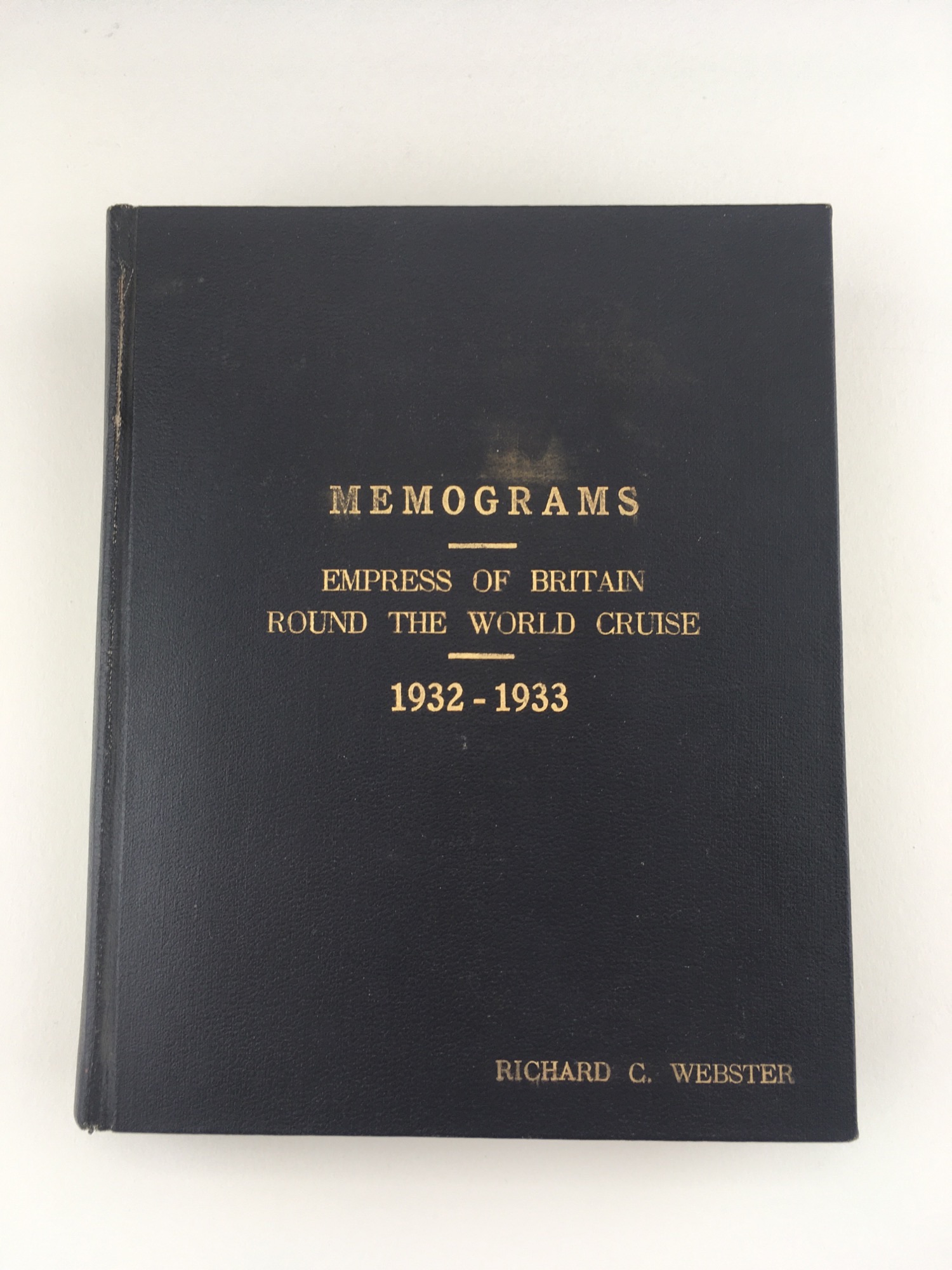
Bound copy of Memograms
This epic vacation is recorded in a book now found in Special Collections & Archives. This book is a bound collection of colorful memograms, created during the Empress of Britain’s Round the World Cruise. The memograms were created while the ship was at sea and distributed to the travelers on board. A bound copy, like this one, could then be purchased at the end of the trip as a souvenir. Read together these memograms create a “pictorial record” of the crew and travelers’ “journey around the world.”
The 1932 cruise featured in this particular book was the 10th annual cruise by Canadian Pacific and the second completed by the Empress of Britain liner. Around 300 cruisers left aboard the ship on Saturday, December 3, 1932 at “noon sharp” and would not finish their cruise until April 19, 1933, when they arrived back at Cherbourg and Southampton. Over the course of their journey, the Empress of Britain would cover 30,000 miles, stopping in 81 ports across 23 countries. Truly a world-wide cruise.
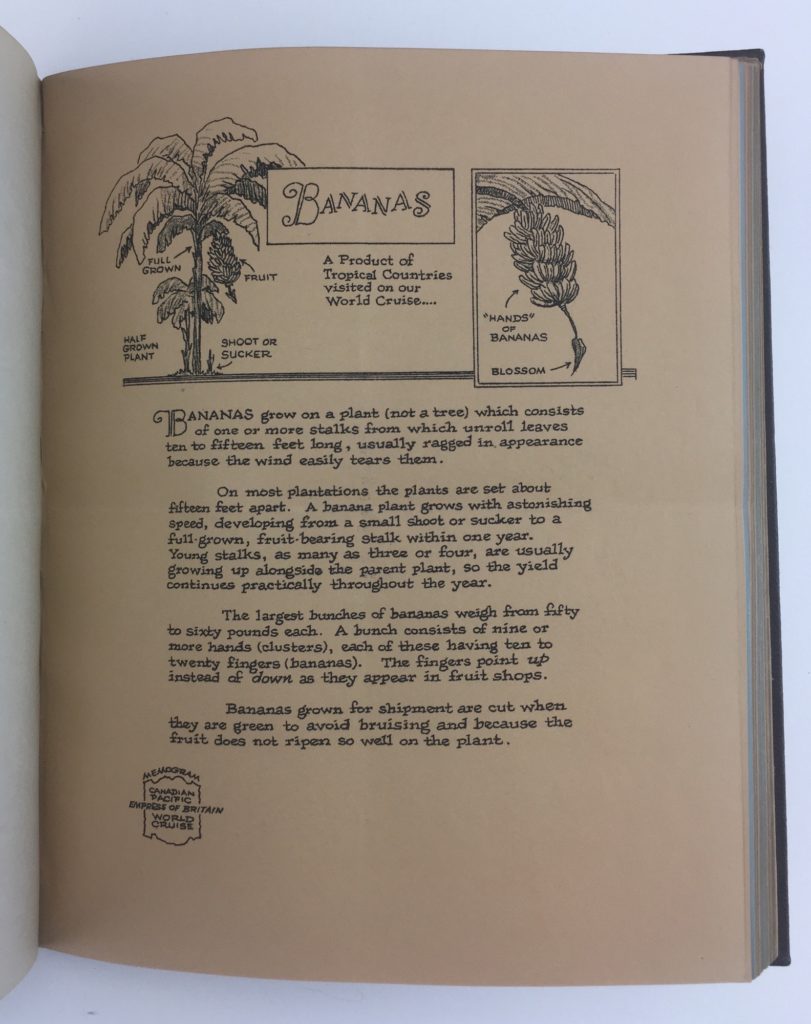
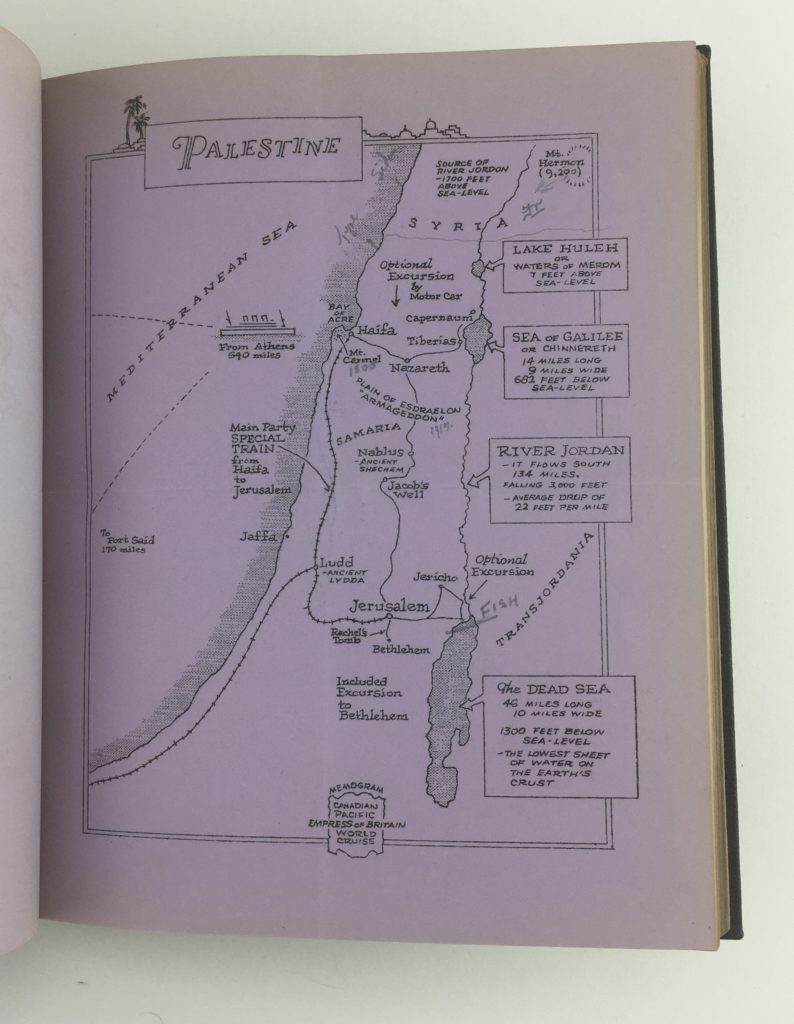
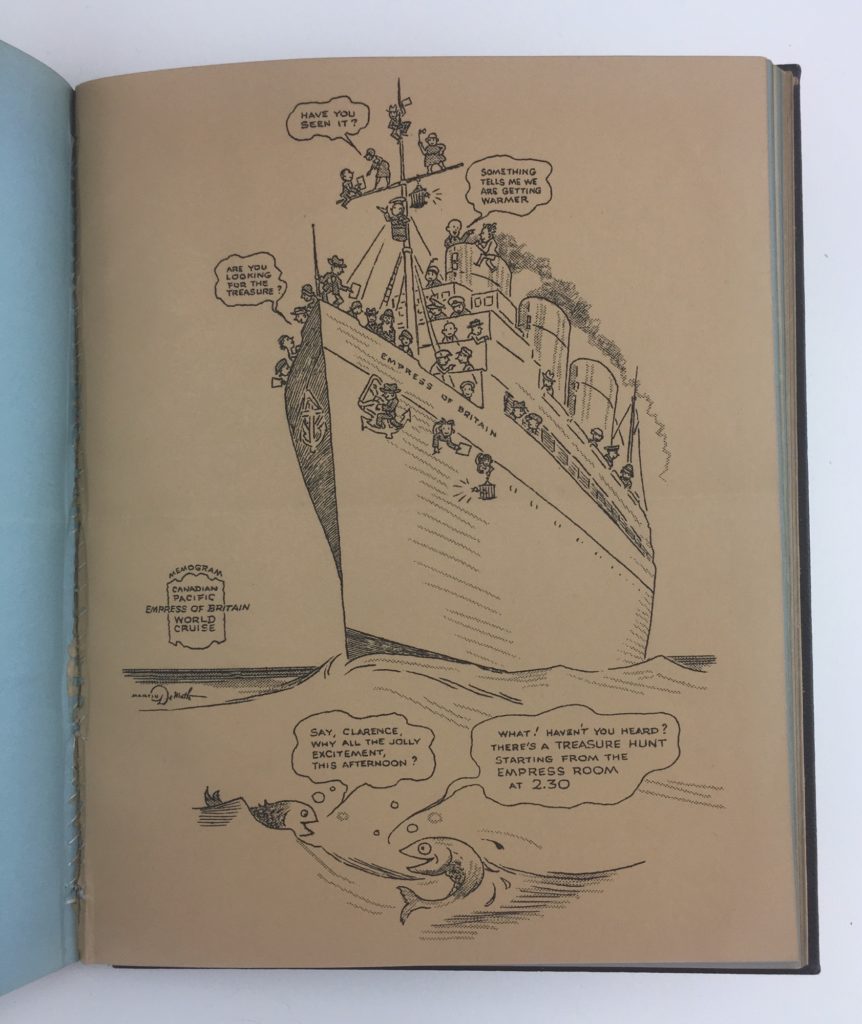
Each memogram is a colorful sheet with information and illustrations for the travelers and they cover a variety of topics. There are maps and itineraries for travelers to use when planning their day-to-day excursions, information about the places they were visiting and their cultures, and posters for ship-wide events, such as a treasure hunt and a Christmas party. The level of detail in the sketches varies from page to page, some are barely more than stick figure cartoons, while others are detailed drawings of specific locations. Many of the memograms within this particular copy show signs of their use. Some are folded as if they were slipped into a pocket or have notes in the margins and sketched out additions to the maps. Some additions are a mystery, such as the bold line added to a map of Palestine helpfully labeled “FISH.”
The memograms are as diverse as the activities the travelers participated in. Listed on the calendar pages are sightseeing excursions, educational lectures, concerts, and dinners with dancing aboard the boat in the evening. There are also pages that depict anecdotes and “remember when” moments from the cruise.
There is a whole page dedicated to bananas from the ship’s time in Ceylon and another page devoted to the “Tropical Fruits of Java” that mentions fruits that definitely don’t grow in Iowa, such as doekoes and mangoesteens.
The Empress of Britain continued her annual cruises until 1939 and eventually ended her career when the liner was sunk in an attack by German forces in 1940 while being used for wartime service as a transport vessel. She certainly left behind a legacy, carrying hundreds of travelers on trips around the globe.
Sources:
By PERCIVAL KNAUTH Wireless to THE NEW YORK TIMES. “EMPRESS OF BRITAIN REPORTED BOMBED: FORMER CANADIAN PACIFIC LINER REPORTED SUNK BY BERLIN.” New York Times, Oct 27, 1940, pp. 1. ProQuest, https://www.proquest.com/historical-newspapers/empress-britain-reported-bombed/docview/105285677/se-2?accountid=14663.
“New Empress of Britain Sails Friday on Maiden Trip.” New York Times, Apr 18, 1956, pp. 62. ProQuest, https://www.proquest.com/historical-newspapers/new-empress-britain-sails-friday-on-maiden-trip/docview/113884909/se-2?accountid=14663.
Special Cable to THE NEW YORK TIMES. “BRITISH ANNOUNCE EMPRESS SHIP LOSS: ADMIRALTY FIXES DEATH TOLL AT 45 OUT OF 643 ABOARD CANADIAN PACIFIC LINER TORPEDOES FINISH JOB U-BOAT OVERTAKES BURNING SHIP IN TOW AND COMPLETES TASK STARTED BY BOMBER SHIP ATTACKED THREE TIMES WOMEN AND CHILDREN CALM.” New York Times, Oct 29, 1940, pp. 11. ProQuest, https://www.proquest.com/historical-newspapers/british-announce-empress-ship-loss/docview/105415046/se-2?accountid=14663.
“WORLD CRUISE STARTS WITH NOTABLES TODAY: EARL OF CADOGAN AND PRINCESS DE LIGNE AMONG PASSENGERS WHOM SHAW WILL JOIN LATER.” New York Times, Dec 03, 1932, pp. 14. ProQuest, https://www.proquest.com/historical-newspapers/world-cruise-starts-with-notables-today/docview/99789304/se-2?accountid=14663.
The following is written by Academic Outreach Coordinator Kathryn Reuter
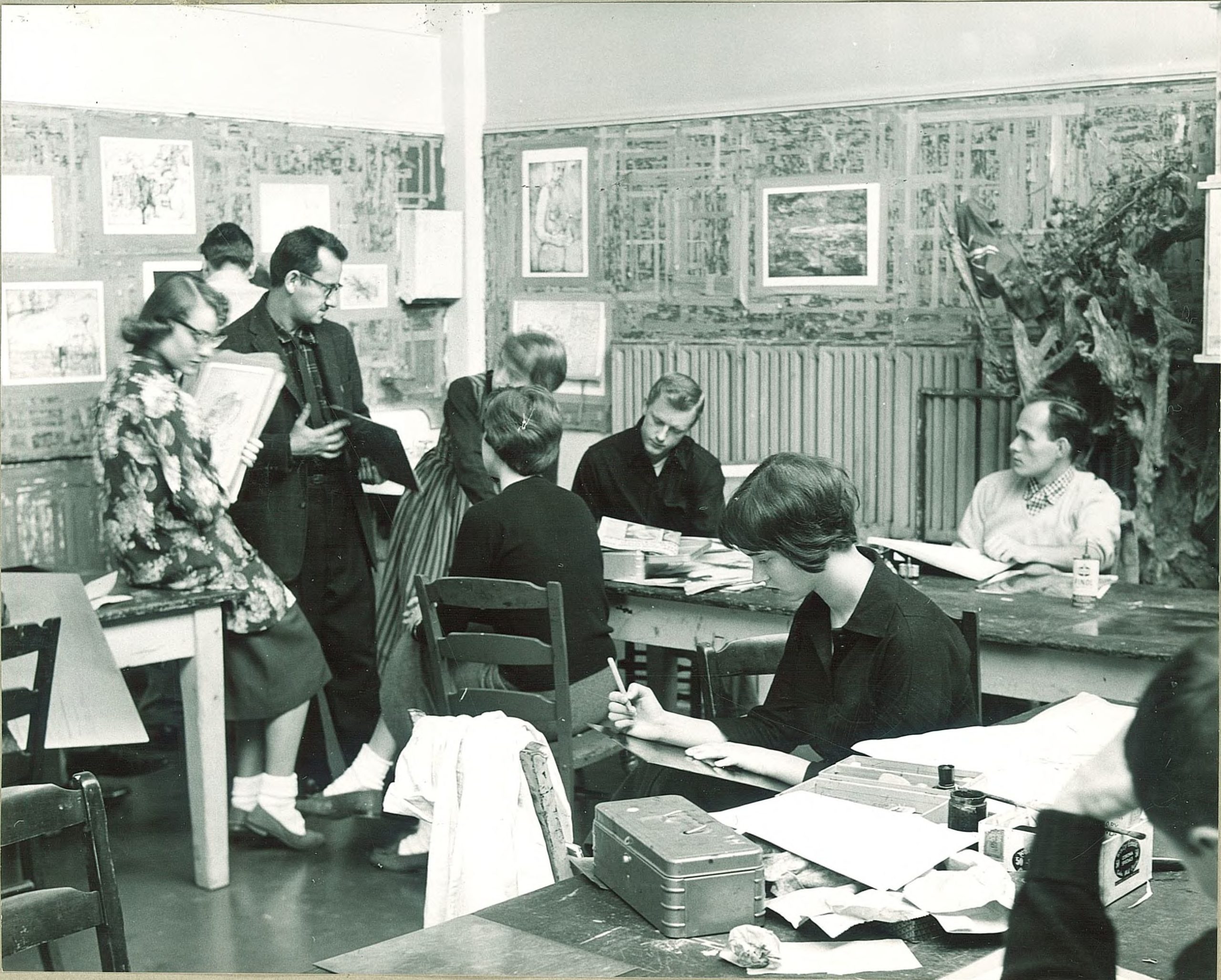
Mauricio Lasanky was born in Buenos Aires, Argentina in 1914 to Jewish immigrants from Lithuania. Lasansky showed artistic skill from a young age — printmaking was his preferred medium, a choice perhaps influenced by his father, who worked as a printer of banknote engravings. After completing high school, Lasansky studied printmaking at the Superior School of Fine Arts and after just three years, was named director of the Free School of Fine Arts in Cordoba, Argentina. His work caught the attention of Henry Francis Taylor, who was then director of the Metropolitan Museum of Art. Taylor recommended Lasansky for a Guggenheim Fellowship, a distinction Lasansky was awarded in 1943—with a renewal in 1944. This fellowship allowed Lasansky to travel to New York City, where he worked at the famed printmaking workshop Atelier 17 and, over the course of two years, reportedly studied every. single. print. of the old masters in the collection of the Metropolitan Museum of Art’s Department of Drawings and Prints (an estimated 150,000 works!).
In 1944, as Lasansky’s Guggenheim Fellowship was coming to a close, University of Iowa president Virgil Hancher was looking for a Printmaker in Residence as part of the development of the University Art Department. Mauricio Lasansky accepted the position and while he initially planned on being in Iowa City for “just a year”, Lasansky taught at the University for forty years and established one of the most respected printmaking workshops in the country. By all accounts Lasansky was an exceptionally dedicated teacher; in his farewell letter to the director of the University Art Department in 1984, he wrote:
“Somehow I will miss teaching since I don’t recall one day in my teaching one-to-one that was not enjoyable. For that I am grateful to the University, the Art Department, and above all to my students, who are scattered all over the world as you know. I can honestly say that I did the best I could. Was it good enough? Time will say.”
-Letter to the Director of School of Art & Art History. Oct. 31, 1984 file: Lasansky, Mauricio. Vita and Farewell Correspondence, 1983-1984 collection: Iowa Print Group Records
Throughout his time teaching, Lasansky continued to earn accolades for his own work – in fact, in 1961, Time magazine called him “the nation’s most influential printmaker”.
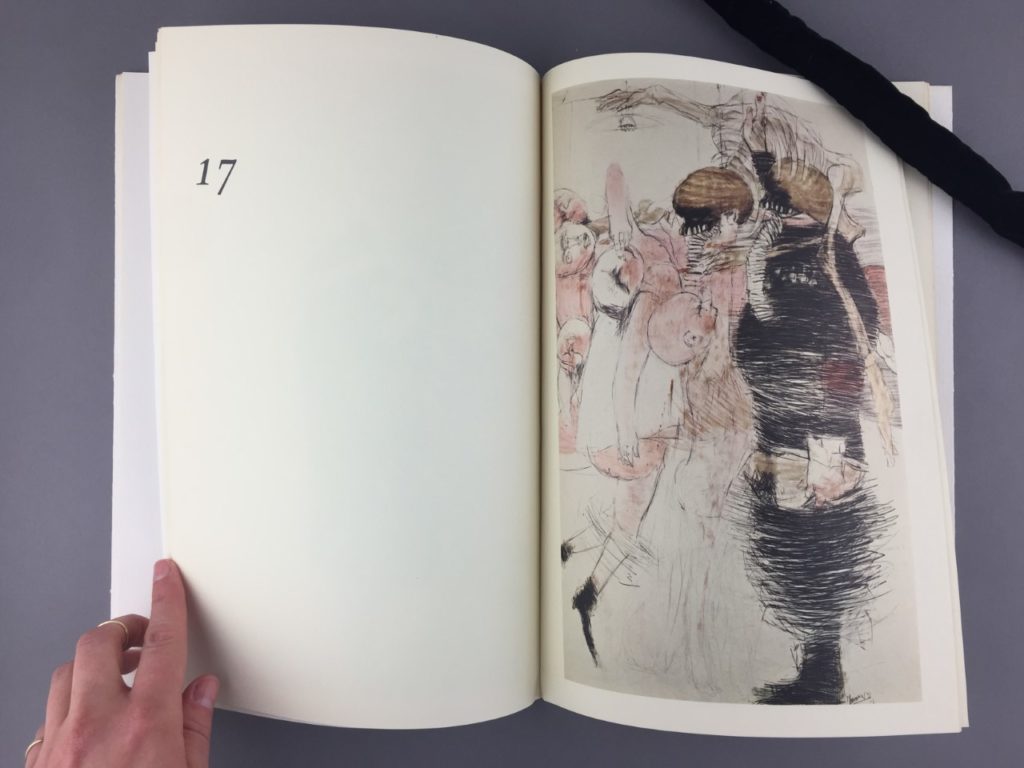
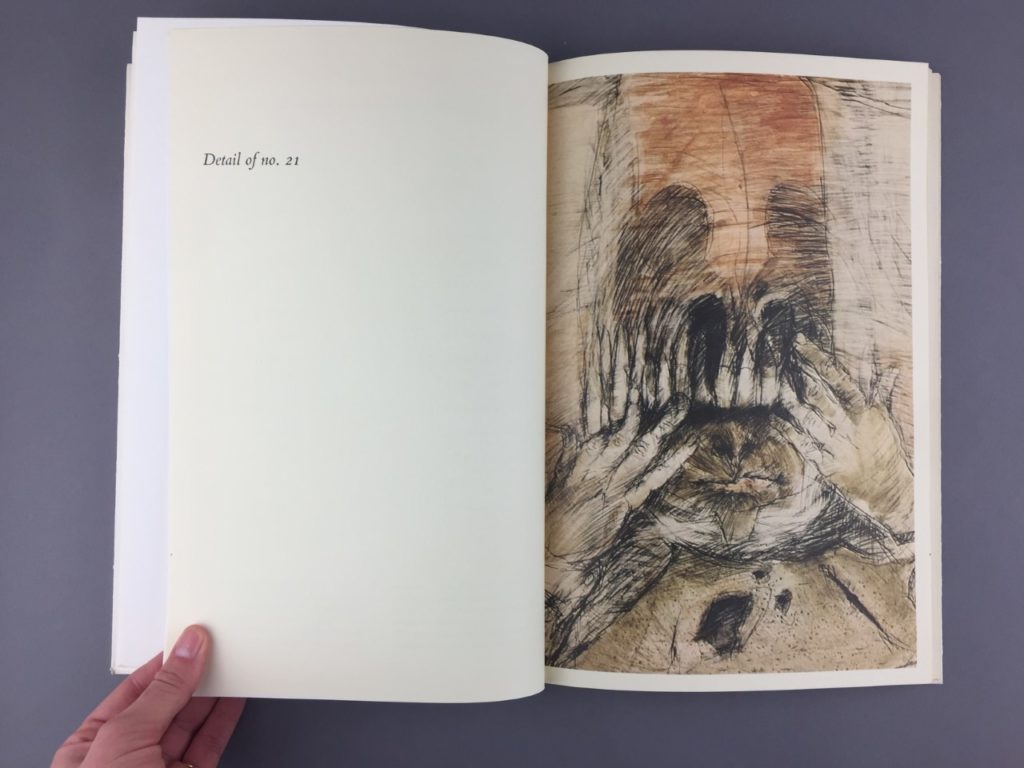
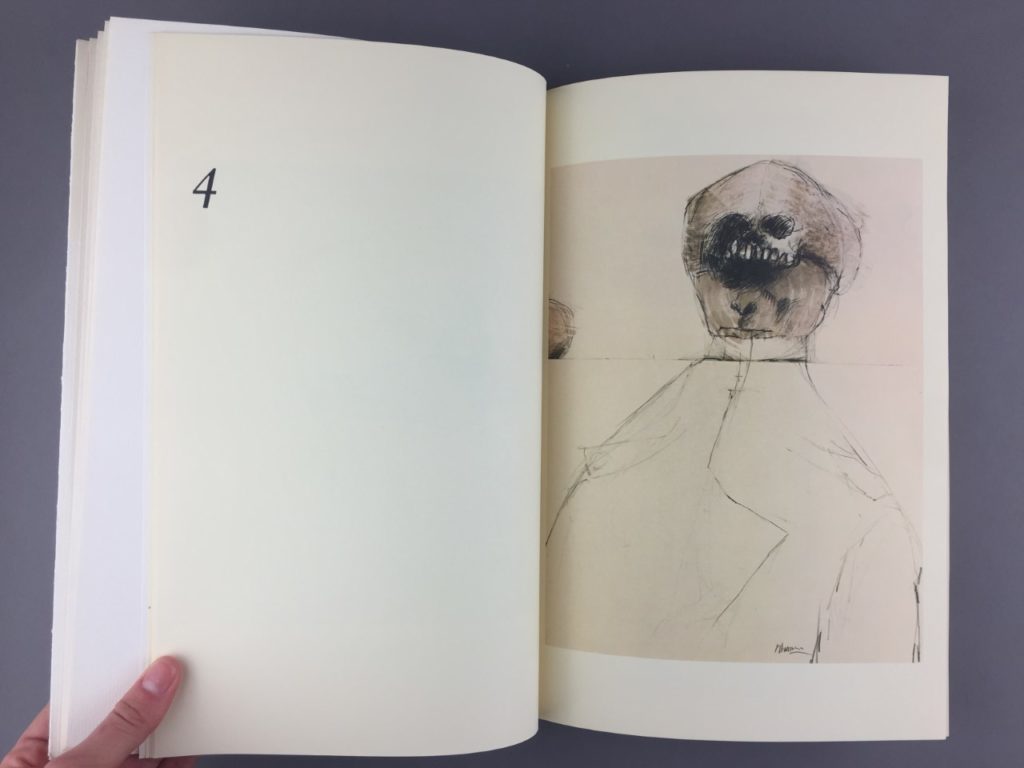
Because of his skill and success as a printmaker, it is somewhat surprising that Lasansky’s most famous works are a suite of drawings. The Nazi Drawings — a set off 33 portraits of Nazis, other perpetrators of the Holocaust, and bystanders — are haunting depictions of the disgust and pain that Lasansky felt about the Holocaust and atrocities of World War II. Created over a period of five years, the drawings are made primarily with pencil on paper, with some treatments of turpentine, earth colors, and collaged newspaper. With simple materials, Lasansky was able to conjure a thick layer of horror and tragedy onto paper. The drawings vary in size: a few measure about two feet in height, but the majority are around five feet—and the largest is almost seven feet tall. The scale of these works makes them feel unescapable, they violently confront the viewer with deeply dark depictions of humanity. To see a grotesque image as a sketch on a page is one thing, but these large drawings force us to see the figures as the same size as us. They are fully disturbing.
Although the end of World War II and the liberation of concentration camps occurred in 1945, Lasansky would not begin work on his drawings until 1961. This gap in time is because, like many people around the world, he did not fully know the extent of the tragedy until decades after the war. Immediately following the war, media attention on the Holocaust was minimal, and it was only years later that stories of the persecution and genocide of Jewish people and other groups were introduced into wider public consciousness.
As an example, one of the most famous works of literature to come out of the Holocaust, Anne Frank’s The Diary of a Young Girl, would not be published in Amsterdam until 1947 – and only after great effort by her father Otto Frank. As a post by the Anne Frank House explains, “It was not easy to find a publisher so soon after the war, because most people wanted to look to the future.” Similarly, an English translation of the book for publication in the United States was turned down by 10 publishers before Doubleday Publishers agreed to publish the translation in 1952. The diary is undoubtedly a vital piece of history, but the writings are about Anne’s quiet life in hiding — the reality of genocide and the horrors of labor and death camps were not included in the published volume. The climate of the 1950s was heavy with post-war optimism and American society at large was saturated with a culture of positivity; most people preferred not to grapple with the tragedy and grief of the Holocaust.
For many, full recognition of the horrors of the Holocaust was spurred by the widely publicized 1961 trial of Adolf Eichmann, a German Nazi officer and one of the major organizers of the Holocaust. Eichmann was responsible for the logistical planning of genocide and escaped capture at the end of the war. In 1960, Nazi hunters found Eichmann living in Argentina and brought him to Israel to stand trial for 15 criminal charges. This trial was broadcast around the world, from April to October of 1961, and people watched on their televisions as over 90 Holocaust survivors gave testimony about the horrors of the Holocaust and the brutality of the Nazis. There had never before been this level of exposure for Holocaust survivors and the terrible truth of their experiences. During the Nuremberg Trials, for example, only 3 Holocaust survivors gave testimony because the prosecution decided to rely on documentary evidence in building their case. The Eichmann trial was widely followed by the media and exposed many people, including Mauricio Lasansky, to the truth about the horrors of the Holocaust.
In The Nazi Drawings, Lasansky was putting his rage and grief onto paper. In a biographical essay, scholar Alan Fern summarizes:
“Both the formal and the iconographic development of Lasansky’s work reached a climax in The Nazi Drawings of 1961-1966. For Lasansky, this was both an artistic watershed and an emotional catharsis, during which he turned his major creative energies away from the print to give physical embodiment to his seething reaction against the Nazi holocaust. He saw the unleashing of bestiality in Germany during the 1930s and 1940s as a brutal attack on man’s dignity, and felt it carried the potential seeds of man’s self-destruction.”
– “The Prints of Mauricio Lasansky” by Alan Fern (page 17) in Lasansky: Printmaker John Thein, Phillip Lasansky – University of Iowa Press 1975
Number 17 from Lasansky’sNazi DrawingsDetail of no. 21 from Lasansky’s Nazi DrawingsNumber 4 from Lasansky’s Nazi Drawings
Even with greater public awareness of the Holocaust, The Nazi Drawings were difficult for many to stomach. In 1967 Time magazine noted that the works were on display at the Whitney Museum and called them “as unsettling a set of drawings as any museum has shown in years” and reported “the impact of the drawings is so devastating that the Chicago Institute of Art declined to show them altogether…” With just pencil and paper, Lansky managed to illustrate intensely uncomfortable images and convey the immense tragedy of the Holocaust. The Nazi Drawings are an example of the power of art as process – they were a way for Lasansky to lance the wound and pour out the heavy emotions he felt. The drawings have also endured as an example of the power of art to unsettle viewers; to provoke emotional reactions from an audience. No one would venture to call these drawings beautiful, but there is no mistaking their power.
The entire set of drawings are currently on display for the first time in over 15 years at the Minneapolis Institute of Art. This exhibit, on display until June 26th, pairs the drawings with archival media of the Eichmann trials as well as contemporary prints by Lasansky.
Undoubtedly significant to the rise of printmaking in the United States, Mauricio Lasansky’s legacy is also deeply imprinted on Iowa City. The tradition of excellence he established continues in the University of Iowa’s printmaking program, and members of Laskansky’s family run The Lasansky Corporation Gallery on Washington Street in downtown Iowa City.
————
As another way of remembering this difficult time in history, on April 29th, 2022 the University of Iowa will plant a new tree on the Pentacrest: a sapling propagated from the old chestnut tree that grew behind the Amsterdam annex where Anne Frank and her family hid during WWII. Learn more about the event here.
Books in Special Collections:
– The Nazi Drawings / by Mauricio Lasansky FOLIO NE539.L3 N3 1976
– Lasansky, Printmaker FOLIO NE594.L3 T44
Material in University Archives:
– Papers of Mauricio Lasansky University Archives RG 99.0030
– Iowa Print Group Records RG 06.0007.002
– Howard N. Sokol Papers (RG 99.0017) Subject Files – L. Lasansky, The Nazi Drawings 1972.
Box 3.
View more digitized photos of Lasansky (from the University Archives) as well as digitized prints (from the collection of the Stanley Museum of Art) at the Iowa Digital Library
“From the Classroom” is a series that features some of the great work and research from students who visit our collections. Below is a blog by Lisa Tuzel from Dr. Jennifer Burek Pierce’s class “Reading Culture History & Research in Media” (SLIS:5600:0001).
It isn’t hoarding if it’s books – or is it?
By Lisa Tuzel
Image from boredpanda.com
In her NYT Best Seller The Life-Changing Magic of Cleaning Up, Marie Kondo made headlines with her strategy for minimizing belongings, including books. Kondo claimed to winnow down her own collection to just 30 titles (93 – 95). Book lovers and readers on social media had a visceral reaction to Kondo’s plan – “30 books, you mean on my nightstand, right?” Kondo’s tendency toward minimalism is one that has been common in the United States since World War II, however, this tendency is at odds with an older aspect of book culture: bibliomania.
Bibliomania, the passion for collecting books, was coined by John Ferriar, a physician at the Manchester Royal Infirmary, in an 1809 poem dedicated to his friend, Richard Heber. The term was commonly used through the nineteenth century to describe obsessive book collecting. It is widely agreed that a tense bidding war over Giovanni Boccaccio’s Decamerone between Lord Spencer and the marquis of Blandford in 1812, which ended in a staggering price of £2,260, marks the “central, defining moment in what was known as the ‘bibliomania’” (Connell 25). From this moment, writings concerning the trend of book collecting flourished. In them, the obsession of book collecting by the upper classes in the 19th century is optimistically attributed to saving the literary and cultural history of a nation, to a more cynical view of “book gluttony” that saw collectors “preserve learning … almost in spite of themselves” (Connell 36).
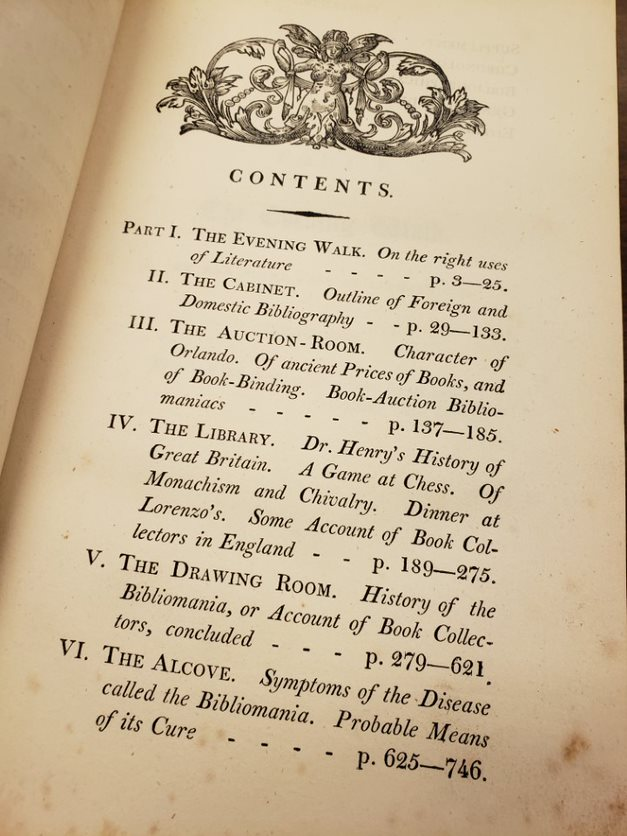
Table of Contents in Bibilomania or Book Madness (Z99.D56 1811, x collection)
One of the seminal works regarding bibliomania is Rev Thomas Frognall Dibdin’s Bibliomania or Book Madness (1811), of which two editions can be found in the University of Iowa Special Collections & Archives. Written as a series of dialogues about book collecting, the work offers up a satiric mock-explanation of the disease bibliomania, its symptoms, and possible cures.
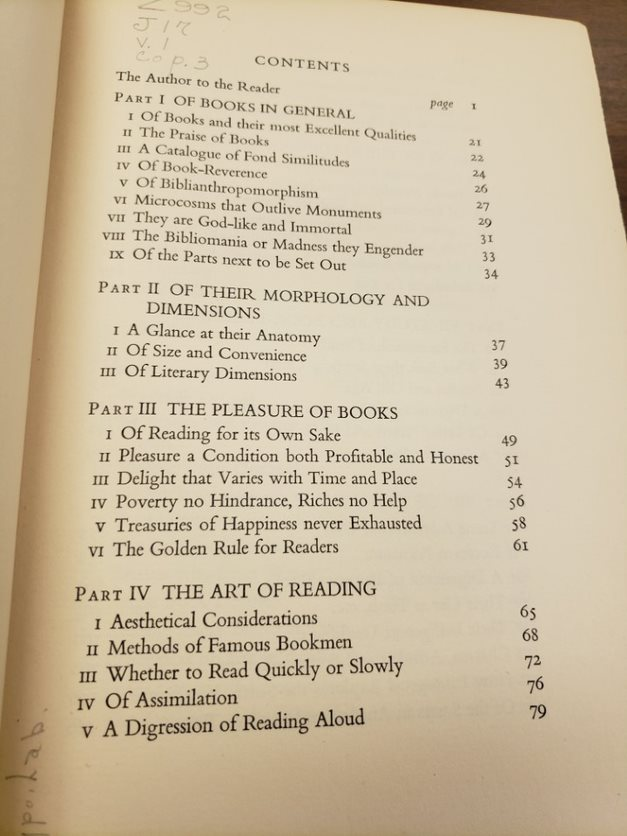
In the 20th century, Holbrook Jackson, a British journalist and avid book lover, published a number of essay collections that extolled the virtues of books and reading. UI Special Collections owns a copy of The Anatomy of Bibliomania (1930) and Bookman’s Pleasure: a recreation for book lovers (1945). Anatomy of Bibliomania explores questions that all book lovers and collectors mull over, such as The Art of Reading, The Uses of Books, and How Bookmen Conquer Time
Table of Contents for The Anatomy of Bibliomania (Leigh Hunt Collection 010. J12a)
and Place . The Table of Contents proceeds beyond the love of books to Parts XXIII through XXIX, a discussion of the evolution to bibliomania.
The conversation regarding bibliomania was not confined to Great Britain. In the United States, Eugene Field, also a journalist, published The Love Affairs of a Bibliomaniac in 1896, which became part of the canon of books about books. Following a fictionalized bibliomaniac protagonist, The Love Affair highlights the sensual nature of loving books (Shaddy 53-54).
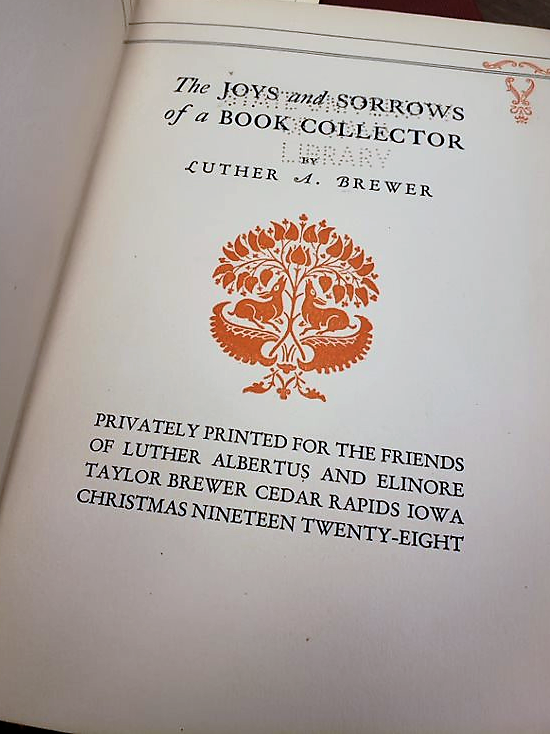
Maybe the most unique title book about book collecting from UI Special Collections is The Joys and Sorrows of a Book Collector by Luther A. Brewer. It is an essay Brewer wrote about his hobby: book collecting. But what makes this specific item so interesting is that it was not for national or international consumption. The Joys and Sorrows of a Book Collector was privately printed in Cedar Rapids, IA, and given to friends for Christmas in 1928.
Title page of The Joys and Sorrows of a Book Collector (Z992.B84, x collection)
The conversation around book collecting has continued for more than 200 years. Why does this conversation persist? It could be the symbolism attributed to books: that the number of books on one’s shelves is directly proportional to the value placed on knowledge and learning. Perhaps the number of books is equal to the intelligence of the collector. Or maybe a full bookshelf is aspirational. Perusing the Table of Contents of these foundational works about bibliomania demonstrates the varied paths collectors take. Whether they collect for love of knowledge, appreciation of the physical artifact, preservation of text, or for vanity, book collectors enjoy the meta-exercise of thinking about why they collect books. Whatever the reason, critics and authors continue to delve into what it means to be a collector of books and whether or not the tendency is symptomatic of mania.
Works Cited
Connell, Philip. “Bibliomania: Book Collecting, Cultural Politics, and the Rise of Literary Heritage in Romantic Britain.” Representations, vol. 71, 2000, pp 24 – 47.
Kondo, Marie. The Life-Changing Magic of Tidying Up. Ten Speed Press, 2014.
Shaddy, Robert A. “Mad About Books: Eugene Field’s The Love Affairs of a Bibliomaniac.” Midamerica: The Yearbook of the Society for the Study of Midwestern Literature, Vol.24, 1997, pp. 53 – 73.