Skip to content
Skip to main content

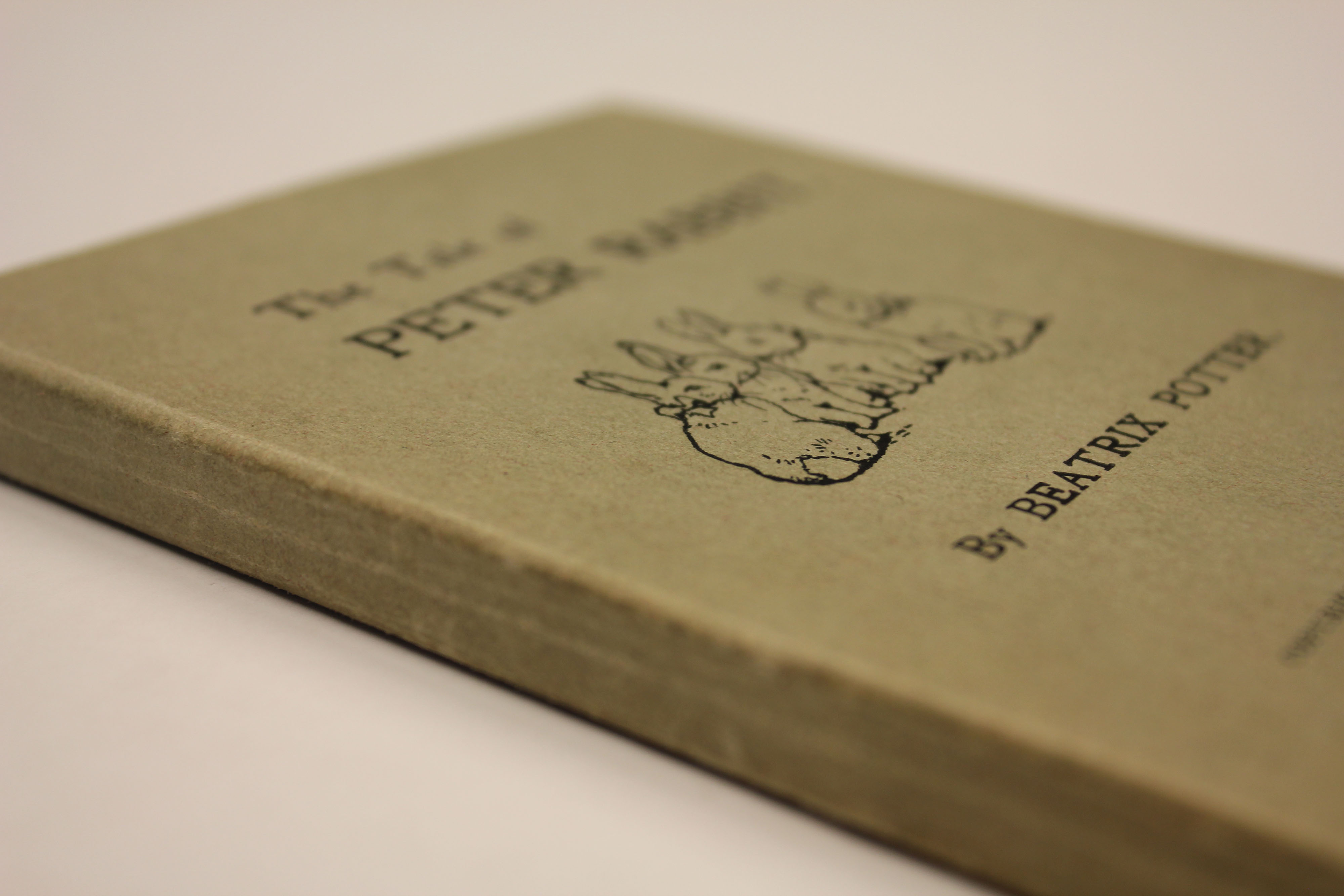
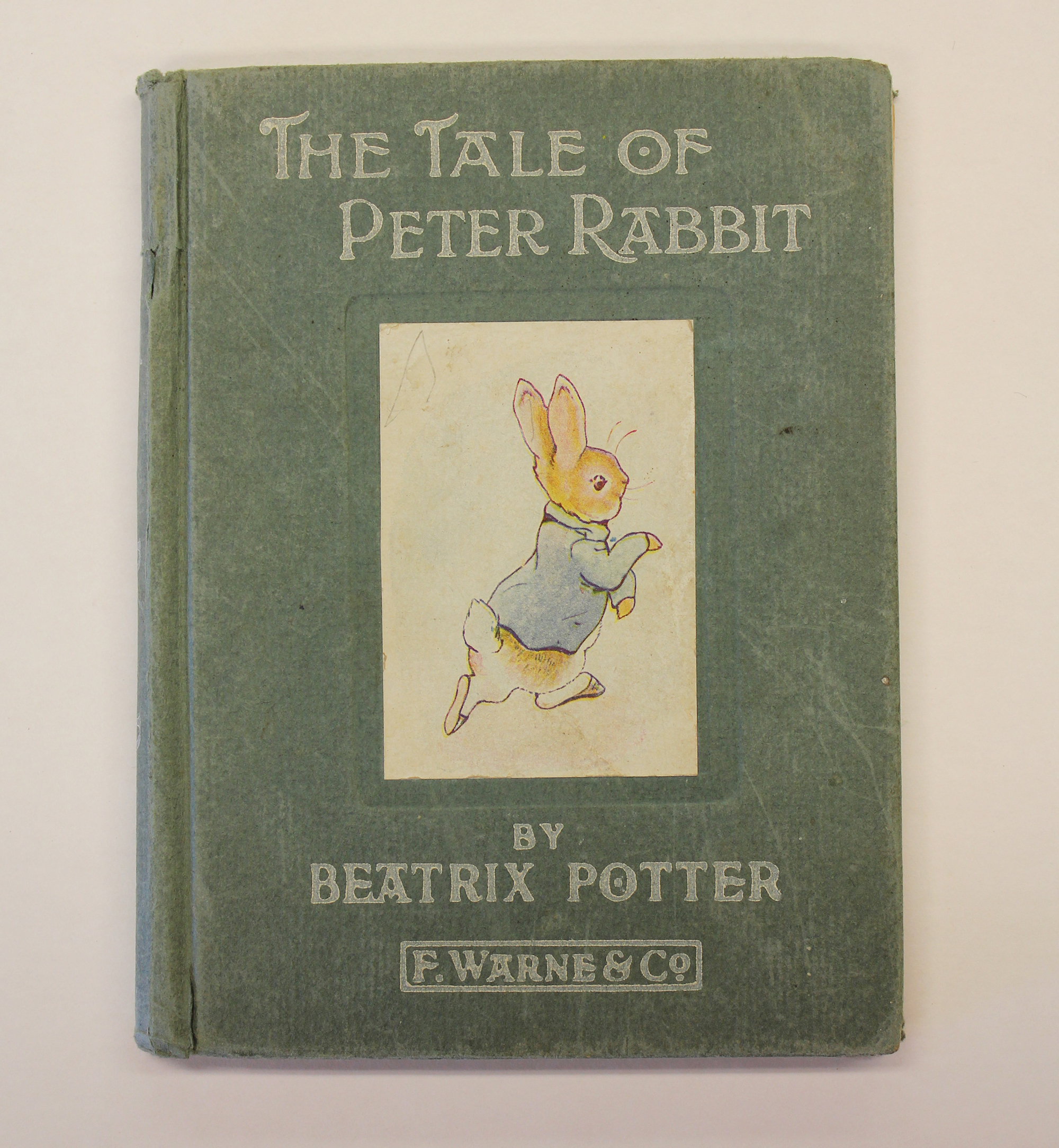
First Edition of The Tale of Peter Rabbit

First edition, first issue, privately printed in 1900, issued in 1901

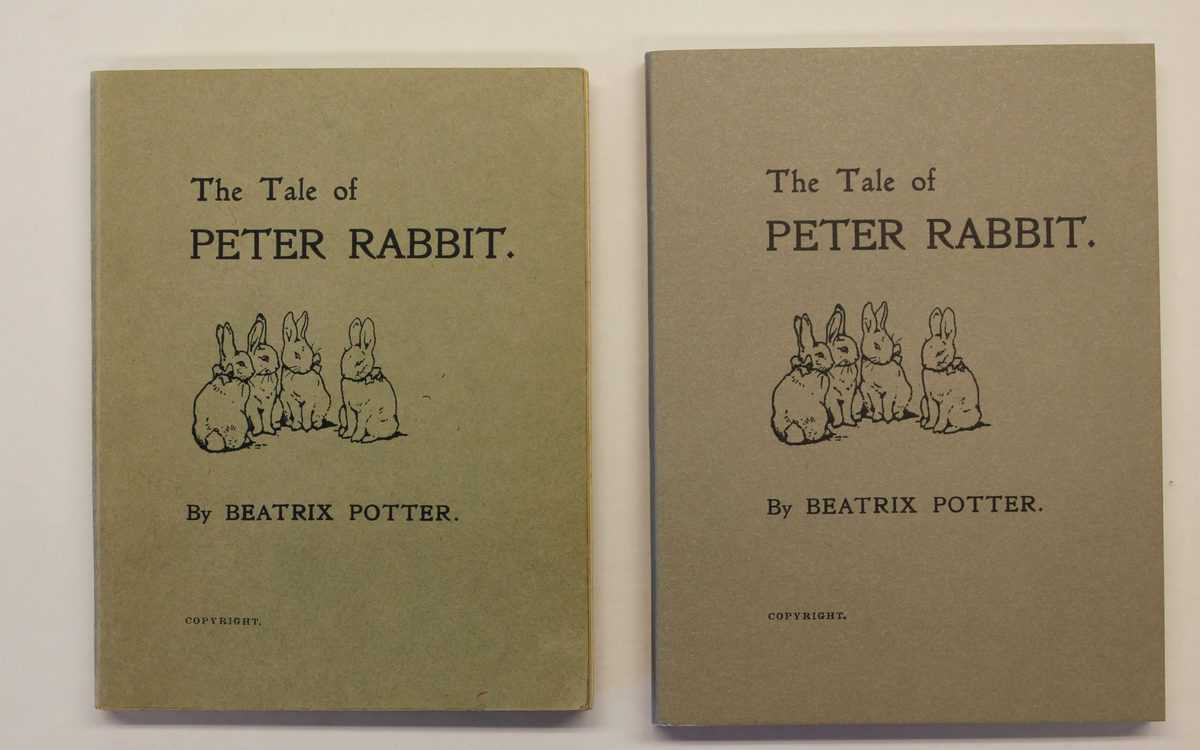
July 28th marks the 148th birthday of Beatrix Potter:  illustrator, natural scientist, conservationist, and, of course, world-famous author of  The Tale of Peter Rabbit. Here at the University of Iowa, we are fortunate enough to have a copy of one of the first printings of this charming tale, which according to our acquisition papers, was previously owned by Potter’s niece. The provenance is not the only thing that makes this copy special, but the condition alone is enough to impress any Beatrix Potter collector. Children’s books were often avidly read and handled, hence, finding this famous piece of children’s literature in such good condition is quite remarkable. When placed next to a 1993 facsimile, only the size and slight difference in the color can distinguish the two.

IMG_5529 edit
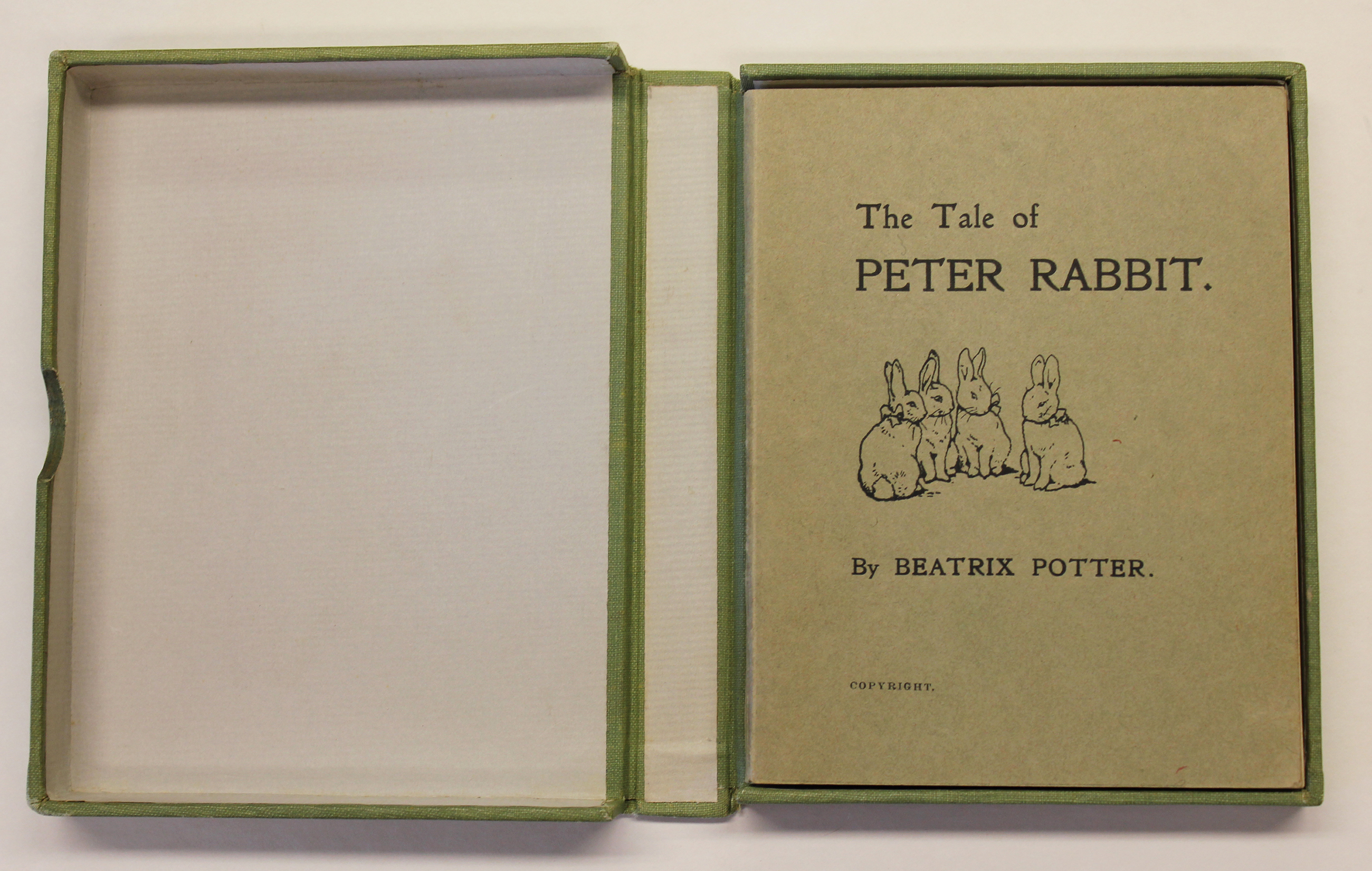
The Tale of Peter Rabbit in it’s custom-made box which was likely made around 1948.
On the left is a privately printed, first edition, first issue of The Tale of Peter Rabbit. On the right is a facsimile of the privately printed, first edition, first issue, printed in 1993.

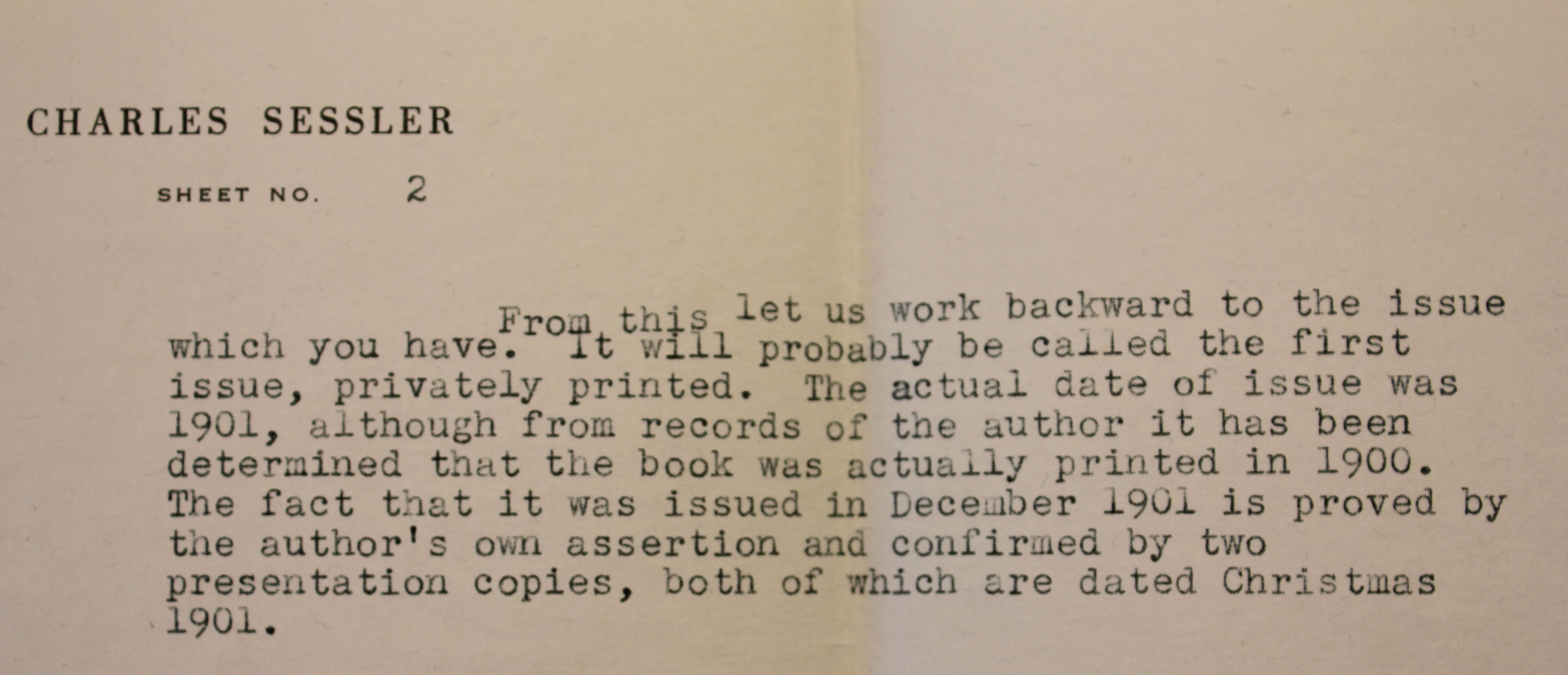
This particular book was one of 250 that were privately printed by Potter, as she was initially rejected by multiple publishers for commercial printing. Our copy’s acquisition papers shows a curious note that Potter’s records indicate it was privately printed in 1900, and then later issued in 1901. However, the privately printed edition was printed in 1901. Potter primarily gave out copies to family and friends, along with selling them for a small fee. [Linder, Leslie. A History of the Writings of Beatrix Potter. Frederick Warne & Co Ltd, 1971.]

Acquisition papers from 1948 stating this book was printed in 1900.

After a second printing of 200 first editions of The Tale of Peter Rabbit in February 1902, the story started to gain some popularity. Eventually, after some textual alterations and the addition of color images, Frederick Warne & Co. published 8000 copies of the first commercially sold edition of The Tale of Peter Rabbit in October 1902. Some of the changes to later productions were to omit pages that were deemed “unsuitable for children”.

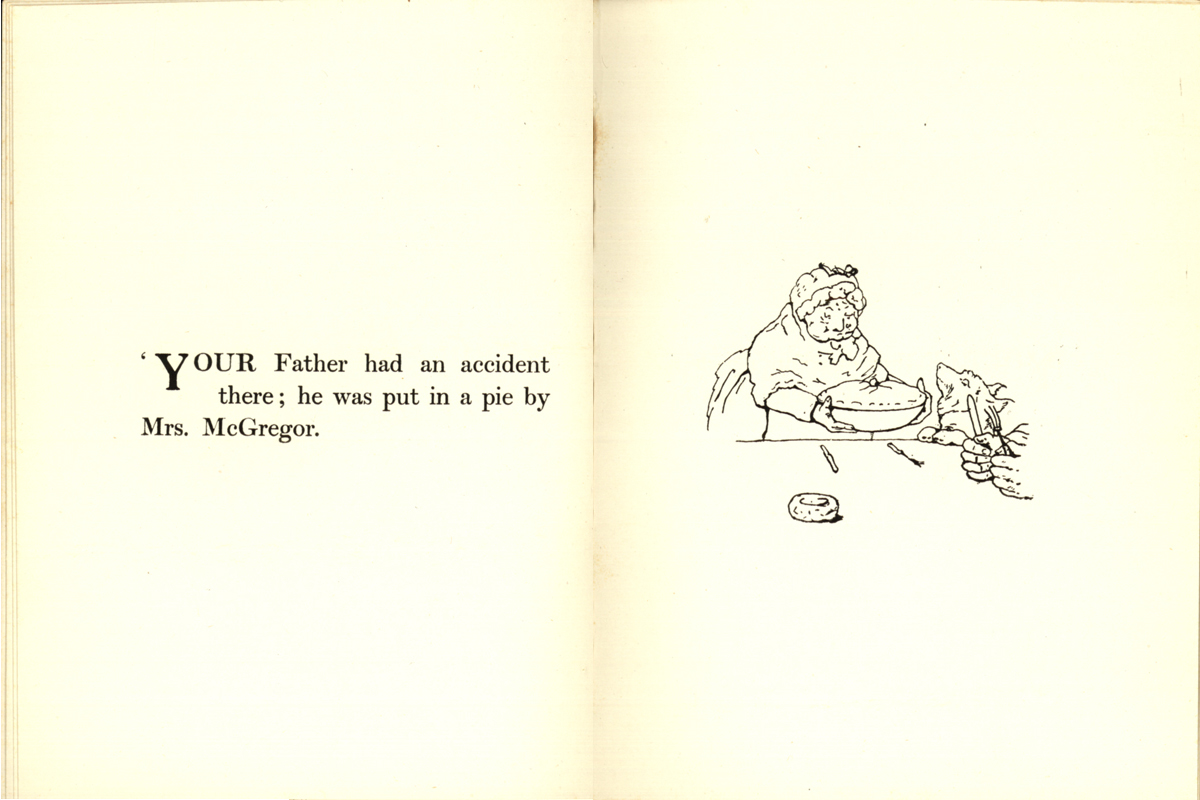
pie

One set of these omitted pages show how Peter Rabbit’s father was put in a pie by Mrs. McGregor (this made it into the first commercially sold edition).

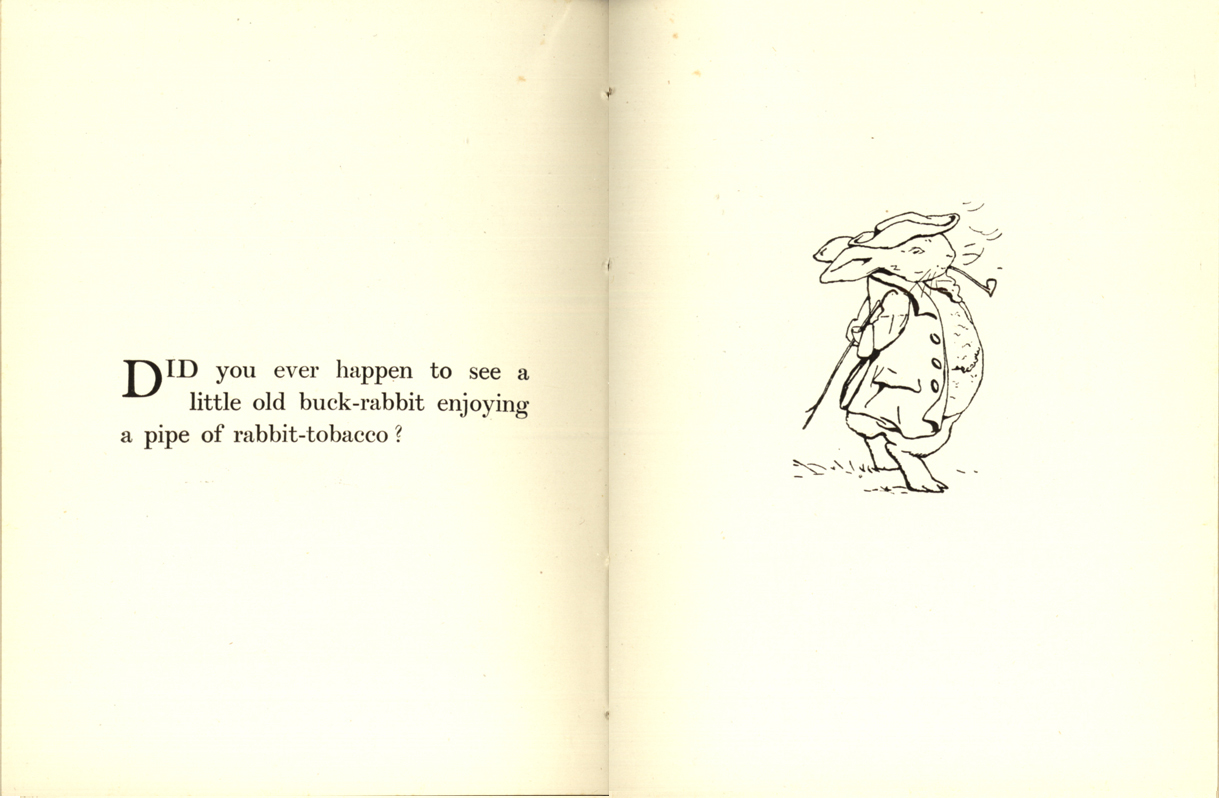
tobacco

Another set of omitted pages show a rabbit smoking a pipe of tobacco (which only appears in the privately printed editions).

Along with many related Peter Rabbit books, such as The Peter Rabbit Pop-Up Book, Peter Rabbit’s Cookery Book, and Yours Affectionately, Peter Rabbit (currently on display in our reading room), we also have a later edition of The Tale of Peter Rabbit, which is undated, but is at least as old as 1918 based on the decorated endpapers inside the book.This cover style, which began with the first commercially printed edition in 1902, can be seen in contemporary publications.

IMG_5550 edit
~1918 edition of The Tale of Peter Rabbit

Beatrix Potter has thirty-three titles to her name, twenty-three being similarly written tales to accompany The Tale of Peter Rabbit. We have many of these wonderful tales in our collections, and audiences of young and old are welcome to take a look!

Can’t make it to to the collections? Check out a fully digitized version of the first edition, first printing of The Tale of Peter Rabbit here!

Beatrix Potter aficionado, Lindsay Morecraft Moen


Please note that this blog was updated in 2021 to reflect new information

Spring Break Class Solving Research Mysteries

Today a team of librarians, archivists, and museum professionals from around campus including University Archivist David McCartney again begin teaching a week long Spring Break class, “The Continuing Role of Real Collections.” The students have been researching mystery items as part of the class and often come up with very surprising revelations!  What follows is a post from a student from last year’s class, Lindsay Schroeder, and the surprising story she unearthed:

The Mystery Portait
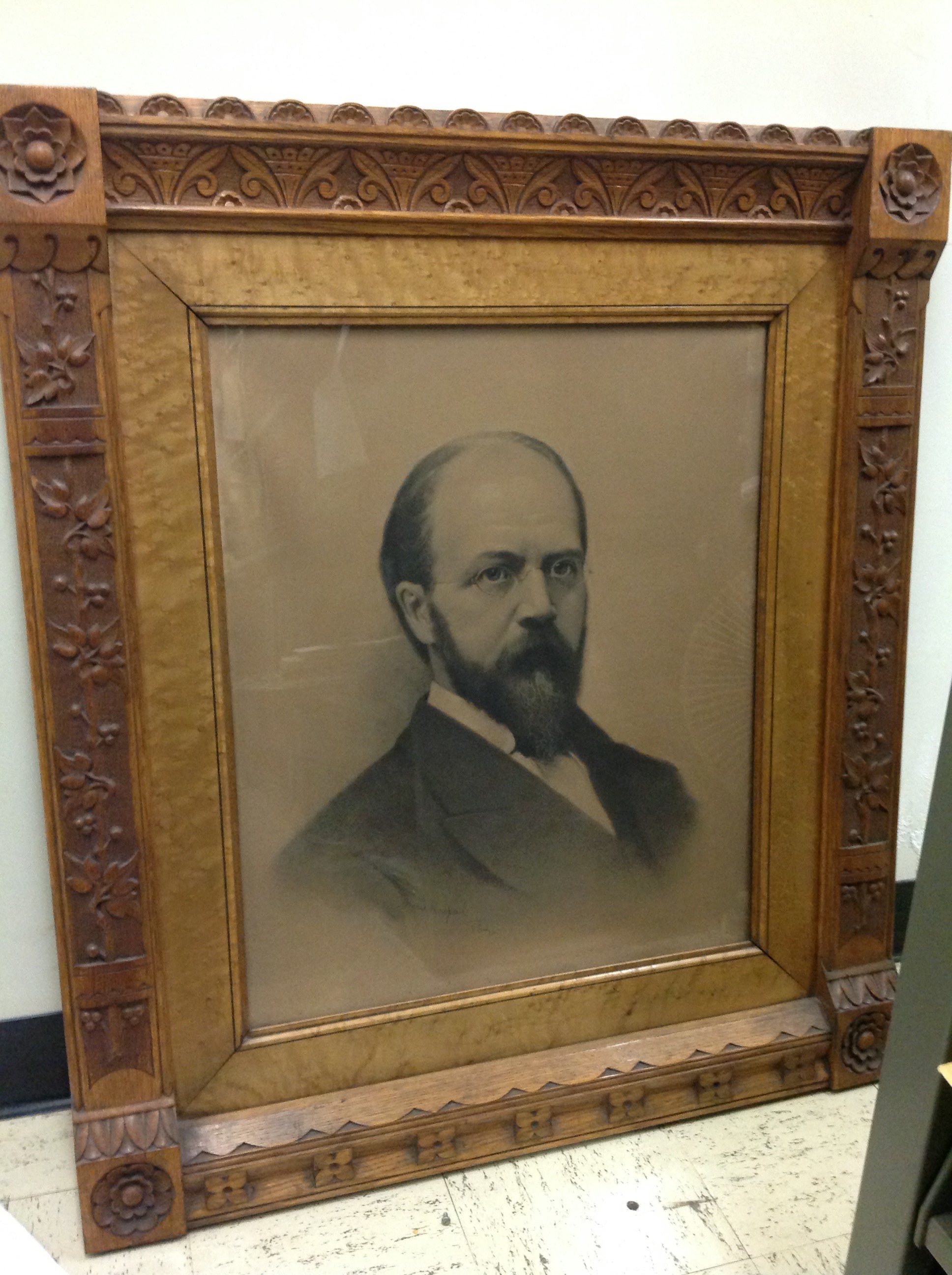
The Mystery Portrait

During spring break of 2013 I took Topics in Museum Studies:The Continuing Role of Real Collections, taught by David McCartney with many prominent guest speakers within the museum and library fields. We were given a project to research artifacts within the University of Iowa that had little to no information connected to them so little is known about what they are. I chose a large painted portrait of a man with a wood, ornate frame and held only one clue, the artist’s signature. This mysterious artifact was found in the University of Iowa’s Museum of Natural History’s attic storage cabinet, hidden between large animal hides this spring.

The artist’s name was Marie Koupal, dated 1882. I researched her name and found an article within the Daily Iowan, dating November 19, 1920. It was about a man named Dr. Mark W. Ranney and his cherished book collection that stood in the Ranney Memorial Library at the University. The article concluded with a major clue, “Besides the books there are about twenty pictures on the walls that belong in the collection. Most of these are portraits…A portrait of Dr. Ranney stands on an easel in one corner of the room. This was done in 1882 by Marie Koupal and is framed in a fine hand made frame of several kinds of wood” (Daily Iowan). This was the same portrait, of Dr. Mark W. Ranney. This object’s original purpose had to be a memorial piece done by Koupal, because on January 13, 1882, Dr. Ranney died of acute pneumonia.

Special Collections has information in their collection guide pertaining to the Dr. Mark Ranney papers, with an additional link to a biographical report written by Margaret Schindler Bryant, in Books at Iowa, Issue 30, April 1979, about Dr. Ranney. This report gave me a lot of information regarding Dr. Ranney and his passion for collecting rare books along with other artifacts. Bryant’s report gave great insight to who this man was and why his portrait was originally located in the library during the 1920s, commemorated on an easel. Dr. Ranney’s wife bequeathed his entire collection to the University of Iowa after her death on July 18, 1907. She left a trust that created the “Mark Ranney Memorial Fund”. This established the Mark Ranney Memorial Library that was located in room 305, Schaeffer Hall.

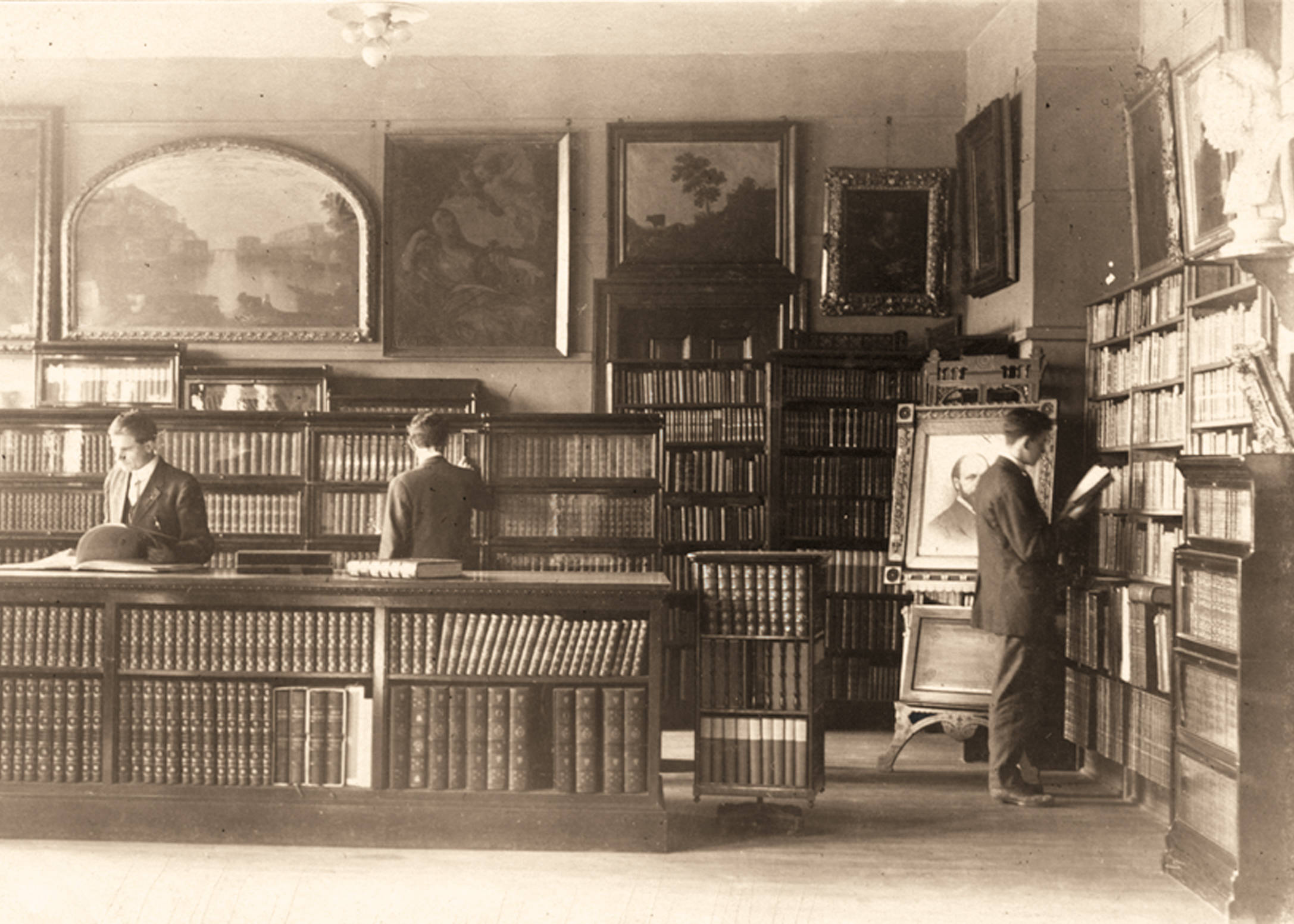
The day before my report and presentation was due, I was searching the Iowa Digital Library within the time frame of 1920-1940. After endless searching for more concrete information, I came across the ultimate completion of this project, a photograph from the digital database of the Mark Ranney Memorial Library with the portrait of Dr. Ranney on the easel in the 1930s. It was truly amazing and reminded me of why I am in this field of work.

Photograph of Ranney Memorial Library with the portrait visible in the room
Ranney Memorial Library, Schaeffer Hall, University of Iowa, between 1902 and 1907.


The Mystery Portait
Portrait identified as Mr. Ranney

Visit this photograph here

Many thanks to Lindsay Schroeder for identifying this important portrait so it could be reunited with the Ranney Collections in Special Collections!


World War II Map of Occupied Countries

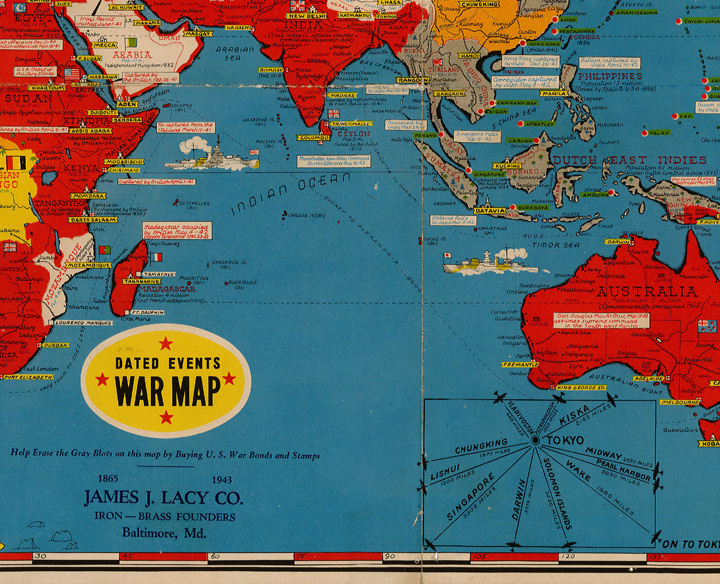
map_legend3Today is Veterans Day so we want to share this 1943 map of occupied countries, noted in gray. The legend reads: “Help erase the gray blots on this map by buying U. S. war bonds and stamps.” This map is part of the John N. Calhoun Papers. Calhoun lived in Burlington, Iowa. After earning his law degree at the University of Iowa, he served as a senator in the Iowa state legislature from 1933 to 1937. Major Calhoun served as a member of the U. S. Army in the Persian Gulf from 1942 to 1945 and was promoted to the rank of lieutenant colonel. Calhoun returned to his legal practice in Burlington following the war. His papers include other materials from his World War II service, such as photographs and correspondence.  We are grateful to have received John Calhoun’s papers from his wife after his death in 1972.

Identifying our 4mm Miniature Book

tiny book perched on a fingertip
Microminiature Bible

The University of Iowa Special Collections and University Archives is home to the Charlotte Smith Collection of miniature books with more than 4,000 tiny tomes.  Most perplexing has been this microscopic Bible that remained unidentified, likely because we lacked the tools to adequately magnify the page with the publisher’s information.  Highlighting this tiny book yesterday on our social media pages brought it to the attention of our conservator, Giselle Simon, who suggested that we try the microscope that recently arrived in the conservation lab.

Handling it safely proved to be no easy task!  With some extra sets of hands we were able to read the name of the publisher – Toppan Printing Co.  (You can see the damage on this page from earlier attempts to read it).

Following the trail we were able to identify the item as being a set of two books sold at the 1965 World’s Fair in New York.  In fact, the larger miniature book in the set was already in the collection, unassociated with the ultra microminiature that could not be read.

Now the two have been reunited and they will be cataloged together.

Citation as included in Anne C. Bromer’s excellent reference book, Miniature Books: 4,000 Years of Tiny Treasures from 2007.

Holy Bible, Tokyo: Toppan Printing Company, 1964.  4x4mm.  Published to coincide with the New York World’s Fair in 1965, this Bible was printed by a new process called “microprinting.”