Skip to content
Skip to main content

Discovering the hectographic world of Mae Strelkov

The following is written by Olson Graduate Research Assistant, Rich Dana

In the 1970s, a remarkable woman from Argentina was an underground art sensation.

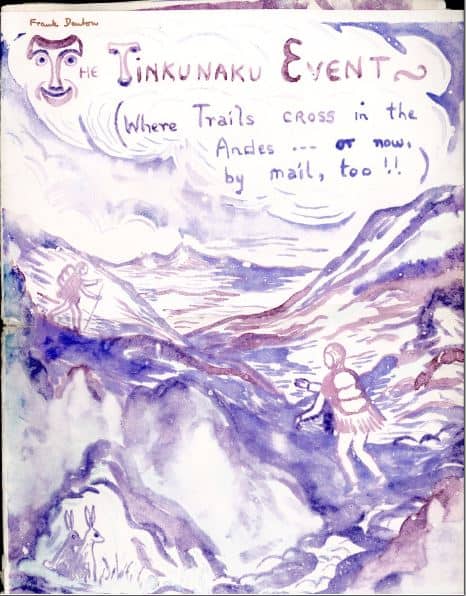
While researching the forgotten art of hectographic printing, I discovered the work of Mae Strelkov, a little-known visionary artist from Argentina. This discovery was the sort of experience that illustrates precisely why those of us who frequent special collections libraries love them so much; when I followed the finding aid (M. Horvat Science Fiction Fanzines Collection, MsC0791) and opened the folder, the contents were not just a reproduction or a digital scan of some of her creations, but a nearly-complete collection of her hand-made zines, including post-marked, hand-made envelops and personal notes. 

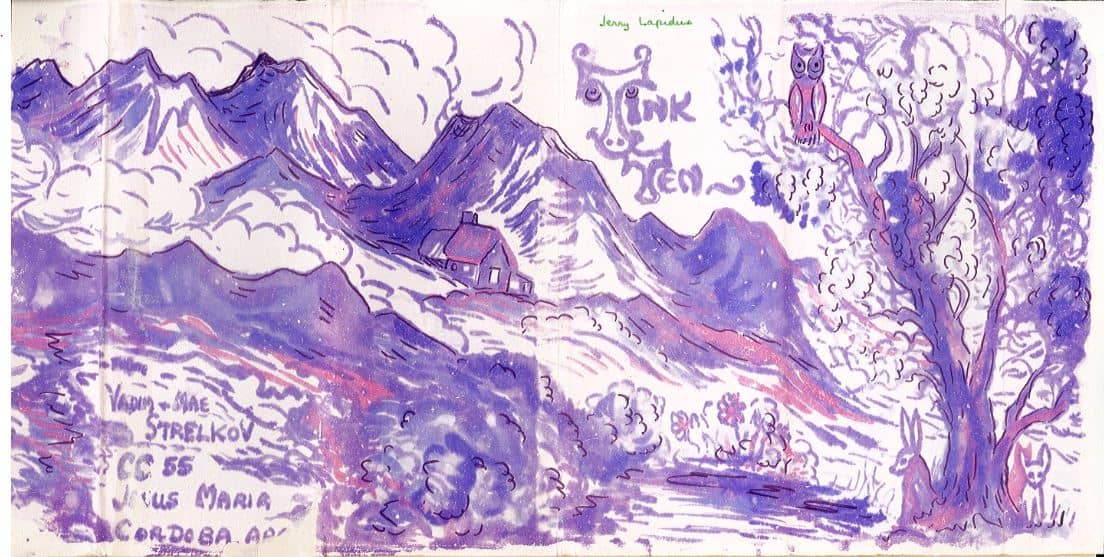
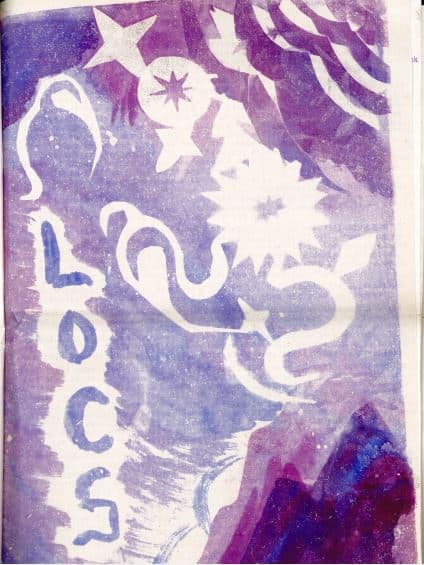
Purple landscape of mountains with tree and owl in foreground
Example of Mae Strelkov’s purple-hued landscapes

Some readers may have never heard of a hectograph. Hectography is a technique for duplicating documents using inks made from aniline dye rather than pigments. The ink is transferred to paper via a rubbery copy pad made of gelatin and glycerine, yielding up to 40 prints before becoming depleted. The hectograph was the precursor to the spirit duplicator, commonly known as a “ditto machine,” remembered for the bright purple text and sweet methyl-ester smell it produced. “Hecto” was used widely by school teachers and churches and in the production of early science fiction fanzines. It fell out of favor as newer copiers became available after WWII, making Mae Strelkov one of a handful of artists still using hectography in the 1970s. 
 
I began to search for more information on Mae Strelkov, and found several articles written by SF fans in the early 1970s. I was also very fortunate to speak with her son, Tony Strelkov, from his home in Argentina via Zoom. Tony explained that his mother was born and raised in China, the child of English missionaries. As a teenager she met his father, Vadim Strelkovwho had fled Russia after the revolution. They married when Mae was 18 and were immediately forced to flee China to escape the Japanese invasion in 1937 

The young refugee couple found a new home in Chile, and then Argentina. In Buenos Aires, Mae worked as a translator and secretary.  In 1960, Vadim was hired to manage an estancia (estate and cattle ranch) in the Cordoba hill-country of Argentina. In these beautiful surroundings, Mae raised their children, wrote and created art. Mae was an avid reader of science fiction and fantasy, and despite the isolation of ranch life, or perhaps in response to it, she became an amateur publisher, trading her zines by mail with other fans in the US, UK, Canada, and Australia. She became close friends with Donald A. Wolheim, the legendary science fiction publisher and founder of DAW books. Tony described to me the boxes, packed full of science fiction novels and fanzines, that would regularly arrive from her American friend, Wolheim. 

For Mae, printing options were limited for creating her publications. She settled on the hectograph, making her own printing pads (a fan legend that Tony confirmed) by boiling cow bones to extract the gelatin. Because of the limited ink colors available, her idyllic landscapes are rendered in pinks, purples, and blues, giving them a psychedelic quality. Her writings reflect on her missionary parents’ spiritual traditions, those of her childhood home in rural China, and the Andes’ indigenous people. Her landscapes are fantastical, and her accounts of everyday life on the ranch are infused with a mystical quality. Her missives are also full of observations on linguistics. She created symbols for what she considered universal human sounds– a far-out idea at the time, but one that is now widely studied among language scholars. 

In 1973, Susan Wood (Glicksohn), a Canadian literary scholar/feminist/environmentalist (and SF fan) wrote in her fanzine Aspidistra: 

“SF conventions, for me, exist mainly as places to meet other fannish people whom I only know on paper, people whom I have never met, who are my friends. One of those friends is Mae Strelkov…Mae has lived most of her life in Argentina, where she and her husband Vadim share a ranch with children, cattle, crazy goats, pumas—a whole world she’ll create for you with skill and zest. A talented author and an artist too, Mae is equally at home, and equally fascinating, writing about her lively family—or the world’s problems; about linguistics, and the strange pattern of words and symbols she finds repeating themselves through the oriental, western and Amerindian cultures she knows so well—or the antics of her pet skunk; about the Catholic Church, and its effects on the world as she sees it—or your latest fanzine.” 

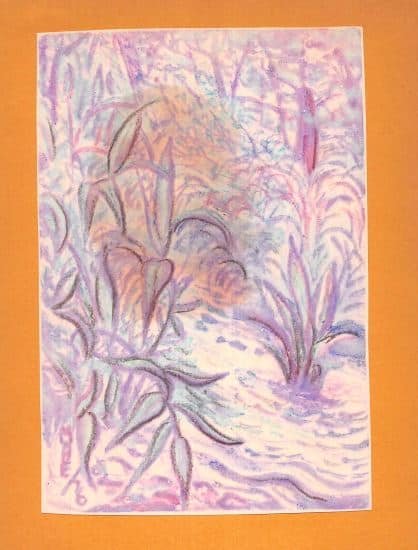
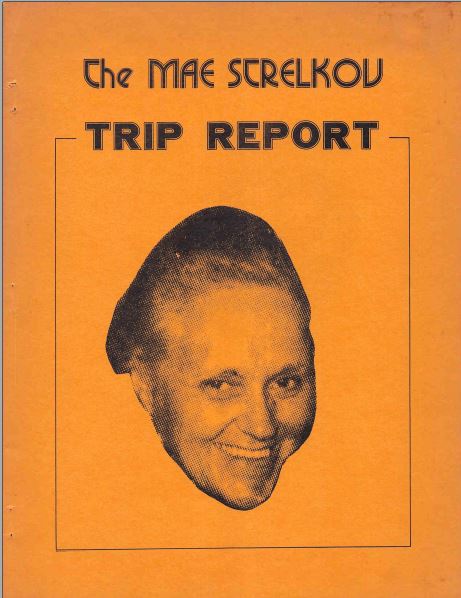
Picture of Mae's head on an orange background
From “The Mae Strelkov Trip Report,” 1975

 Susan Wood and Ohio fan Joan Bower mounted a successful “fan fund” (commonly used in fandom to subsidize travel for fans who cannot otherwise afford it) to fly Mae from Argentina to the US, where she would attend the 1974 World Science Fiction Convention in Washington DC (DISCON II) and DeepSouth Con in AtlantaAccording to Con reports, the grandmotherly 57-year-old Strelkov made a splash with the young American con-goers. She also purchased a Greyhound Bus Ameripass and zig-zagged from coast to coast and back, visiting fans, pen-pals, and distant relatives on an epic solo adventure, all of which she recounted in The Mae Strelkov Trip Report. The 35-page report was mimeograph-printed and distributed by one of her biggest fans, NASA engineer and fanzine publisher Ned Brooks. 

No description of Mae Strelkov’s writing and artwork can fully impart the actual documents’ utter uniqueness and magical quality. Unlike the vast majority of fanzines, Mae’s were produced almost entirely outside of the direct influence of American pop culture and fannish activities. For American SF fans in 1974, she must have appeared much like the character Valentine Michael Smith, a fascinating stranger in a strange land. 
 
Mae Strelkov’s zines, as well as those created by Susan Wood and Ned Brooks,  all available in the Michael Horvat Science Fiction Fanzines Collection, Msc0791.  

A special thanks to Tony Strelkov for sharing his mother’s story.  

The Large Glass finds a home in the International Dada Archive

The following is written by International Dada Curator Timothy Shipe. 

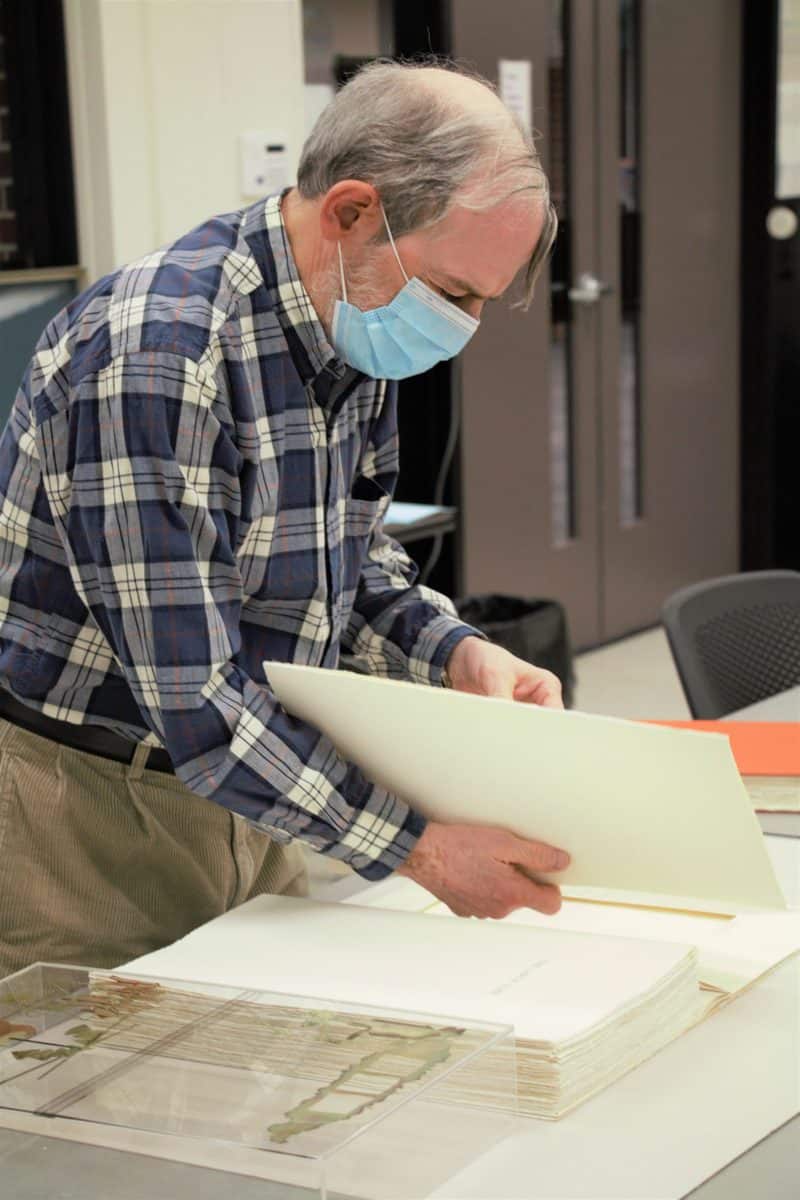
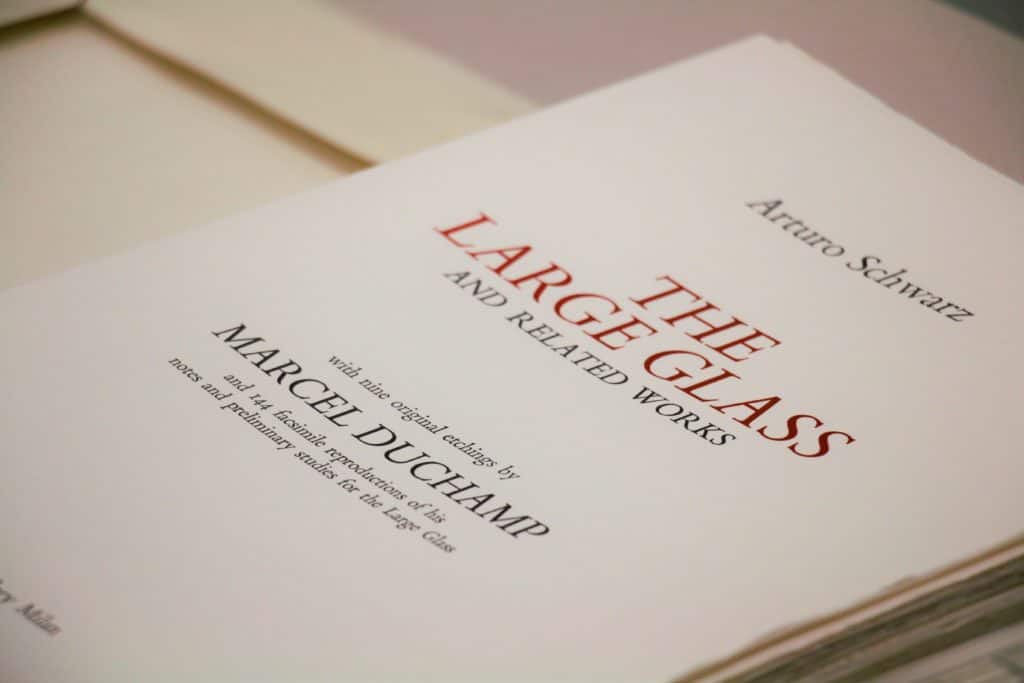
Curator Tim Shipe opens up The Large Glass and Related Works for the first time

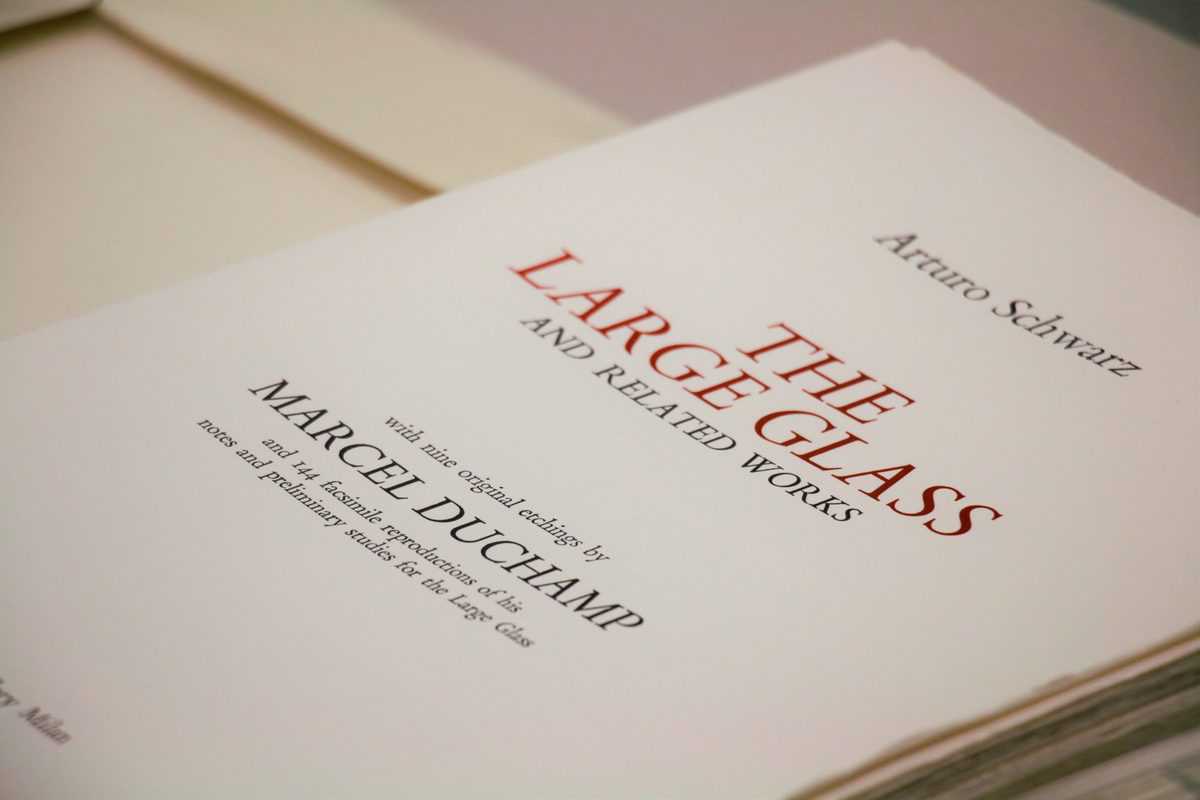
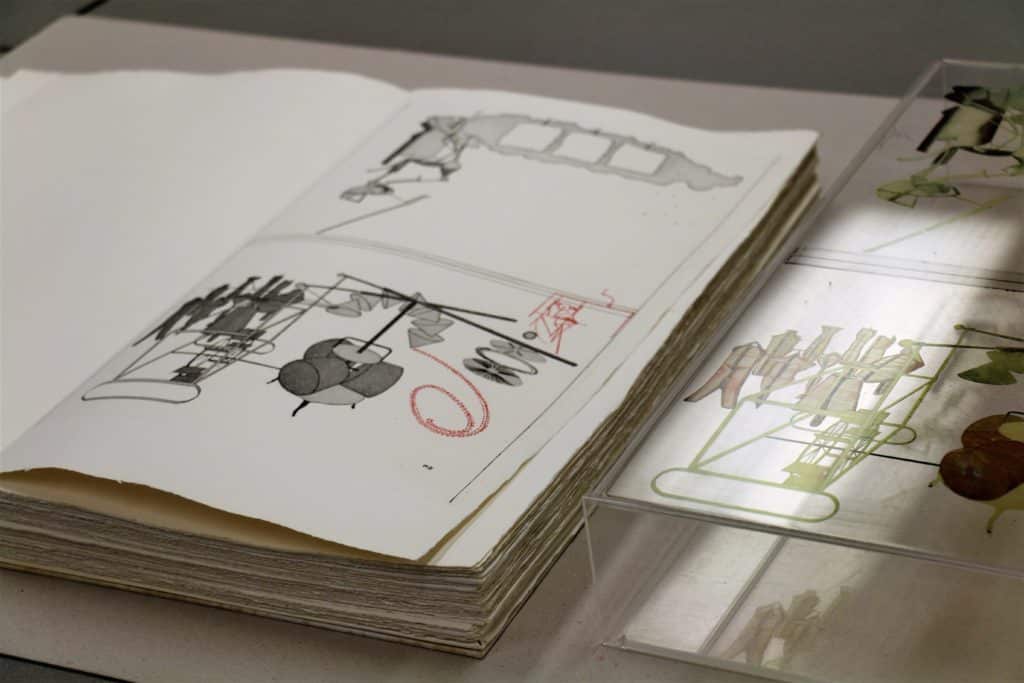
The latest major acquisition for the International Dada Archive is The Large Glass and Related Works (1967-1968), an impressive collaboration between artist Marcel Duchamp and the Egyptian-born Italian writer and gallery owner Arturo Schwarz. The magnificent set of two large portfolios contains a monograph by Schwarz on Duchamp’s unfinished masterpiece, The Bride Stripped Bare by Her Bachelors, Even (known as the “Large Glass”), housed in the Philadelphia Museum of Art. It is accompanied by an extensive set of facsimiles of Duchamp’s preparatory notes for the “Large Glass,” one of several similar sets of notes the artist published during his lifetime (including the famous “Green Box,” the most precious treasure of the Dada Archive).

But what makes The Large Glass and Related Works most special is the two sets of nine original etchings by Duchamp designed especially for this edition. These are among the last art works by Duchamp, who died in 1968. The first set, titled simply “The Large Glass,” consists mainly of depictions of individual elements taken from that complex work, along with a diagram of what the Glass would have looked like had it been completed.

Facsimiles of Duchamp’s notes

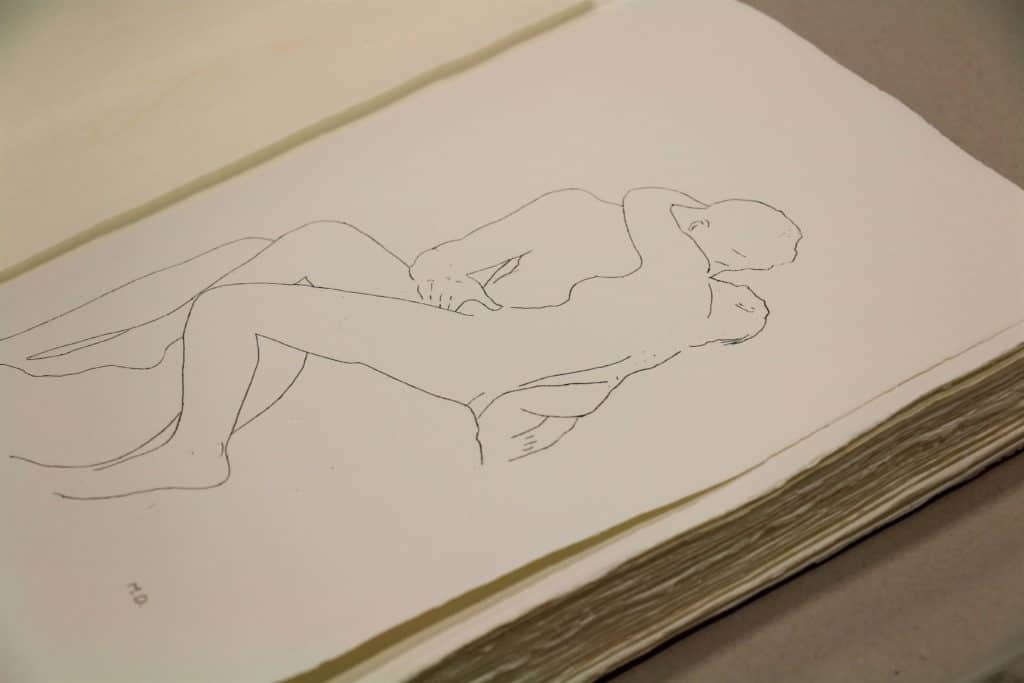
The second set of etchings, titled “The Lovers,” is a set of erotic drawings largely based on classic works of art. According to Schwarz, these were intended as a sort of sequel to the “Large Glass,” depicting the consummation of the frustrated love affair between the “bachelors” and the “bride.” One of these, based on Lucas Cranach’s famous depiction of Adam and Eve, is, in a sense, a self-portrait of Duchamp, since it replicates a well-known Man Ray photograph of a 1924 stage performance in which a nude Duchamp and Brogna Perlmutter imitate the scene in Cranach’s painting.

The Large Glass and Related Works was formerly part of the Ruth and Marvin Sackner Archive of Concrete and Visual Poetry but was deaccessioned before that collection came to Iowa. We were fortunate to have the opportunity to purchase this important work for the Dada Archive, where it will complement the other major Duchamp items that are frequently used in classes in Art History and other fields.

*Photos taken by Lindsay Moen

Szathmary inspiration for the perfect slice of pie

Our Archives Assistant Denise Anderson explored the Szathmary collection to create the perfect cherry pie. Below is the recipe, along with Denise’s step-by-step guide on what she did to create what is sure to be the best dessert at your next Thanksgiving. 

Time to make a Betty Crocker fresh fruit (in this case cherry) pie recipe, found on page 10 in All About Pie from the Szathmary Recipe Pamphlets collection.

The original recipe, pictured above calls for the following ingredients for a 9″ pie:

*1 to 1 1/2 cups sugar

*1/3 cup GOLD MEDAL Flour 

*1/2 tsp. cinnamon

*4 cups fresh fruit (cherries)

*1 tbsp. butter

*Pastry for 9″ two-crust Pie

Taking this base recipe, I have made a few adjustments to make the perfect pie (which you see below). 

I like the look of an ample pie, so I used a nine-inch, glass, deep-dish pie pan and I increased the 4 cups of fruit called for to 6 1/2 cups, which then required adjustments to the other ingredients; adjustments provided below.

Frozen tart cherries are also available, but if you use fresh cherries, which are ripe around the Fourth of July, you will wash, sort out blemishes and remove the stones.  Preserve the juice in a separate measuring cup. 

In a pan on the stovetop, combine 3/4 cup cherry juice, 5 T. small pearl tapioca, 2 1/2 cups sugar, 2 T. water, 1 T. fresh lemon juice, 1/2 t. almond extract.  Cook and stir this on medium-low heat until it thickens, and then boil it for one minute.  Remove from heat and set it aside for 15 minutes.  Tapioca can be difficult to locate on grocer’s shelves. You might have better luck finding quick cooking tapioca granules at a natural grocers. 

My grandmother Sylvia taught me to make pie crust using the Crisco Single Crust recipe printed on the label.  This recipe is included in Crisco’s American Pie Celebration, from the Szathmary Recipe Pamphlets collection.  Because I have a penchant for oversized pies, I tripled the recipe and cut the dough in half for top and bottom crusts, ensuring there was no difficulty rolling the dough to fit.

From Crisco’s American Pie Celebration

Crisco Single Crust recipe:

Combine 1 1/3 cups flour and 1/2 t. salt.

With a pastry cutter, work 1/2 cup Crisco into the mix evenly.

Sprinkle in 3 T. water, not all in one spot, and mix it in.

Roll the dough into a ball and then evenly flatten it a bit in your hands until it is a thick disk.  Sprinkle flour onto your countertop or pastry cloth and smooth it around in a circle with your palm.  Gradually roll the dough into a circle using a rolling pin, working from the center outward in different directions until you reach a size that is two inches larger than your pie pan if it were placed on top of the dough upside down.  As you roll, sprinkle more flour onto the dough if it begins to stick.  Gently drape one half of the dough circle over the other half, and then again (quartered) so it may be easily picked up and positioned in the pie pan.  Now follow these steps with the top crust, and when it is draped into a quarter, cut slits through the crust for ventilation.  Set the quartered top crust aside for a moment, still folded.

Pour the cherries into the bottom crust, and then pour in the thickened cherry juice.  Dot the top of the cherries with 2 T. of butter cut into small pieces.  With a coffee cup of water next to the pie, dip your fingers into the water and run them along the rim of the bottom crust until you have dampened the entire rim, leaving the excess dough hanging over the sides.  This moisture will help seal the two crusts together.  Place the quartered top crust in place, and gently unfold it to cover half, and then the whole pie.  Excess crust from both the top and the bottom are draped over the rim.  With your thumb and index finger, work around the rim, pinching the dough slightly to build up the rim and make an interesting design.  Use a knife to trim off the excess dough, cutting below the fluted edge.

Cut 3 or 4 strips of aluminum foil to wrap loosely around the rim of the pie, so it won’t burn.  Overlap the pieces of foil and crimp them together a bit with your fingers to hold them together, without pressing into the dough.  Line the bottom of the oven with aluminum foil before preheating to 425 degrees.  Bake for one hour on the center rack, removing the foil strips after 45 minutes.

Political Cartoons: A “Darling” Reminder to Vote

The following post comes from Olson Graduate Assistant Rachel Miller-Haughton.

Political cartoons are more fraught and relevant today than ever. The New York Times ended their political cartoons in July 2019, after they pulled an image that was widely perceived as anti-Semitic. Other publications have gone the same way in order to be perceived as more serious, or less controversial. At the same time, cartoonists and their supporters write about the loss of the visual medium. Patrick Chappatte, a New York Times political cartoonist, says, “Political cartoons were born with democracy. And they are challenged when freedom is.” No matter whether you like them or not, the impact of political cartoons cannot be denied. The most extreme example of this in recent memory are the attacks on the offices and contributors to French magazine Charlie Hebdo in response to their portrayal of Islamic prophet Muhammad. The response to a political cartoon, and subsequent conversations over free speech, is something that has colored our understanding of what they look like. 

Almost 100 years ago, a cartoonist was illustrating his view of the current election. Jay N. “Ding” Darling was a cartoonist who spent much of his life in Sioux City, Iowa, and spent most of his career at the Des Moines Register. Born in 1876, he won the Pulitzer Prize in 1924 and 1942. He was disillusioned with many of the political groups he worked with, but his life’s passion was wildlife conservation. The University of Iowa Libraries now holds many of his works. The “Ding” Darling Papers in Special Collections are a large group of the political cartoons the artist was best known for, as well as other art forms he created over the span of his life. Two images from the 1924 election stand out, even today. That year, Calvin Coolidge, the Republican candidate, won, helped by a divide in the Democratic party where many liberal Democrats left the party and backed third-party Wisconsin Senator, throwing the majority of the rest of the votes to Coolidge. A three-party election with a divided majority party was highly contentious

“The citizens will soon go forth and vote their calm, dispassionate judgement. [also titled] the citizens will now go forth and vote their calm, dispassionate judgement” by Ding Darling, 1924

The first image is captioned, “The citizens will now go forth and vote their calm, dispassionate judgement.” It features two voters clutching their ballot, pursued by huge ballooning figures carrying signs saying, “campaign lies,” “beware of chaos!” and “the government is run by a bunch of crooks,” among others. Anyone who has spent a few minutes watching TV, or on social media, has been blasted by similar messages around the 2020 election. Darling shows us that voters in the early 1900s were obviously feeling a similar strain, albeit with different names (“red peril” from the newly formed Soviet Union is reflected now as Russian cyber agitation)

“It`s a wonder there aren`t more serious accidents” by Ding Darling, 1924

The second cartoon, also from 1924, says “It’s a wonder there aren’t more serious accidents” and is commentary about nonvoters. Meant to either galvanize or shame “non voting voters” to be more like “the small percent who take their voting duty seriously,” it is certainly interesting to reflect on today. Already, the 2020 voter turnout is breaking records. Darling hoped this piece would encourage those who were able, and had the right, to vote, while also telling those who didn’t they don’t get to complain about “the gov’t machinery.” This may have been his way of encouraging participation in democracy. 

The 2020 election is weighing on all our minds as Americans. Looking in Special Collections, it is almost comforting (albeit frustrating) to look back at history and know this is not the first time we’ve felt bombarded by groups telling us how to vote. Political cartoons have always done a good job of showing us what is important, and cutting through the noise of words with a single image. Who we listen to is up to us. But the importance of voting, although portrayed in a humorous manner by Darling, is no less pressing today than it was in 1924. 


For more information on “Ding” Darling, check out the “Ding” Darling Wildlife Society