Skip to content
Skip to main content

Private Catholic: Zines for Catholic School Kids

“From the Classroom” is a series that features some of the great work and research from students who visit our collections. Below is a blog by Abbie Steuhm  from Dr. Jennifer Burek Pierce’s class “Reading Culture History & Research in Media” (SLIS:5600:0001). 

Private Catholic: Zines for Catholic School Kids

By Abbie Steuhm

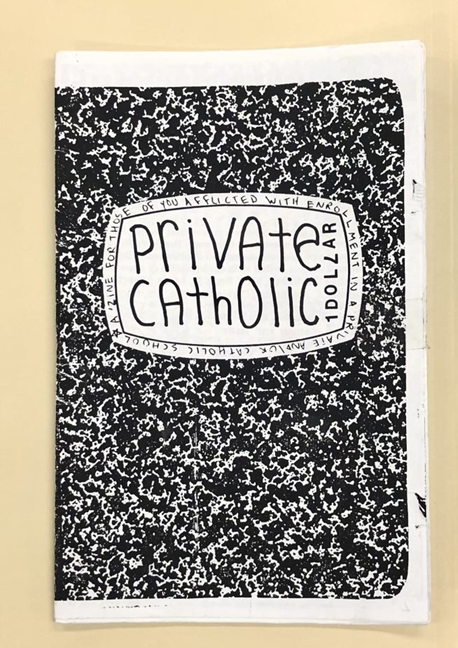
In the U.S. education system, private schools are unique as scholarly institutions that stand outside of government funding and therefore government regulations. Catholic private schools in particular mix religion and education for young students. While there is a lot of debate around these schools, we find ourselves knowing little about the stories and thoughts of the students themselves who attend. However, some of these stories are told within the minor-league zine Private Catholic found within the Sarah and Jen Wolfe Zines Collection (MsC0878) held in the University of Iowa’s Special Collections & Archives.

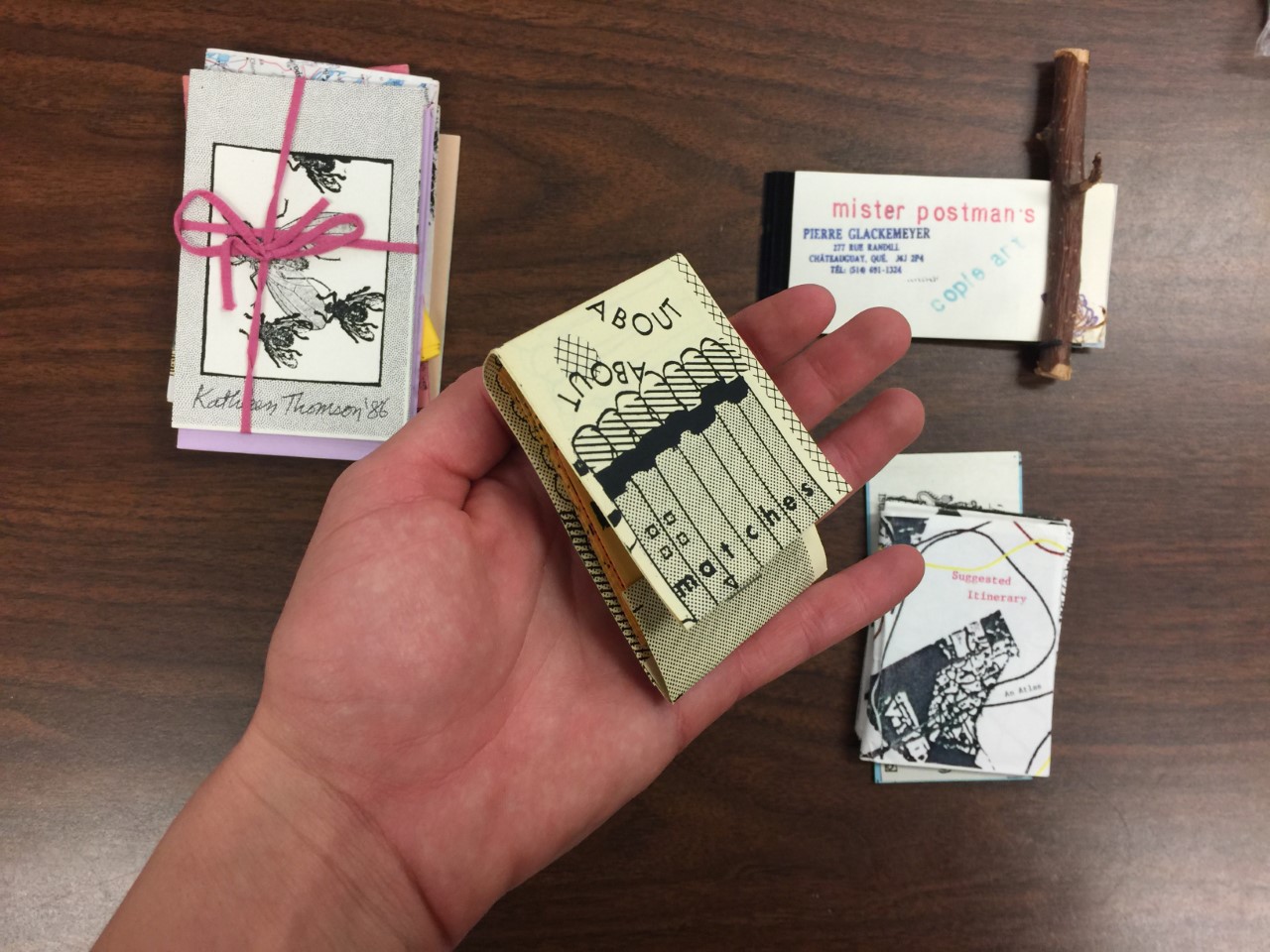
“Zines” are handmade booklets self-published by a variety of people, usually members of alternative subcultures. Due to the accessibility of self-publishing and lack of mainstream censorship, many zines detail deeply personal experiences relating to issues of misogyny, classism, racism, anarchism, and empowerment. This makes zines rather difficult to collect and showcase to a wide audience, since these stories were meant to be seen by a small group of collectors and self-publishers instead of an entire academic institution. However, the University of Iowa Libraries staff—many of whom are part of the zine subculture—are dedicated to preserving this small history. This allows stories from unheard voices like Catholic students to be read and experienced by researchers today.

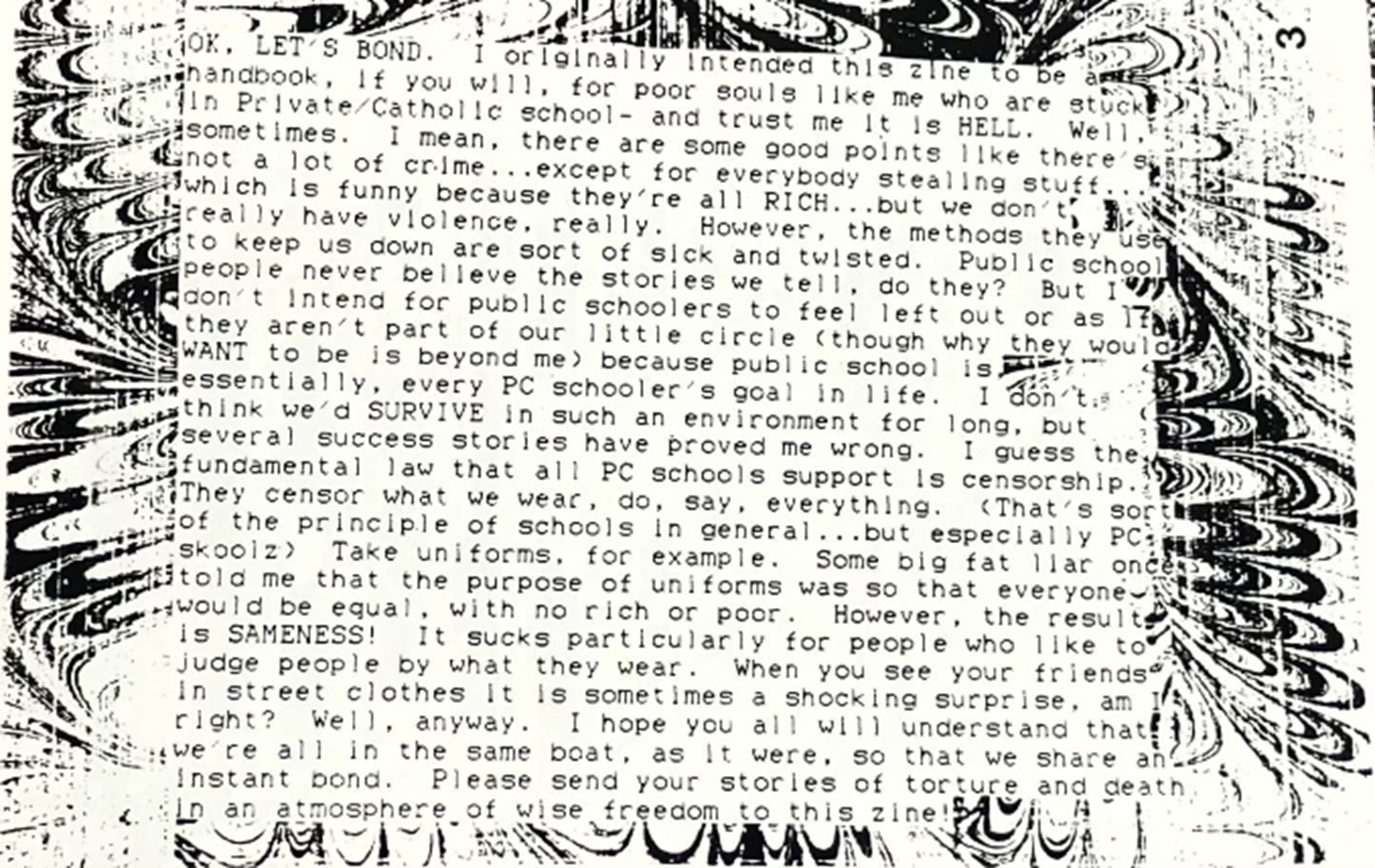
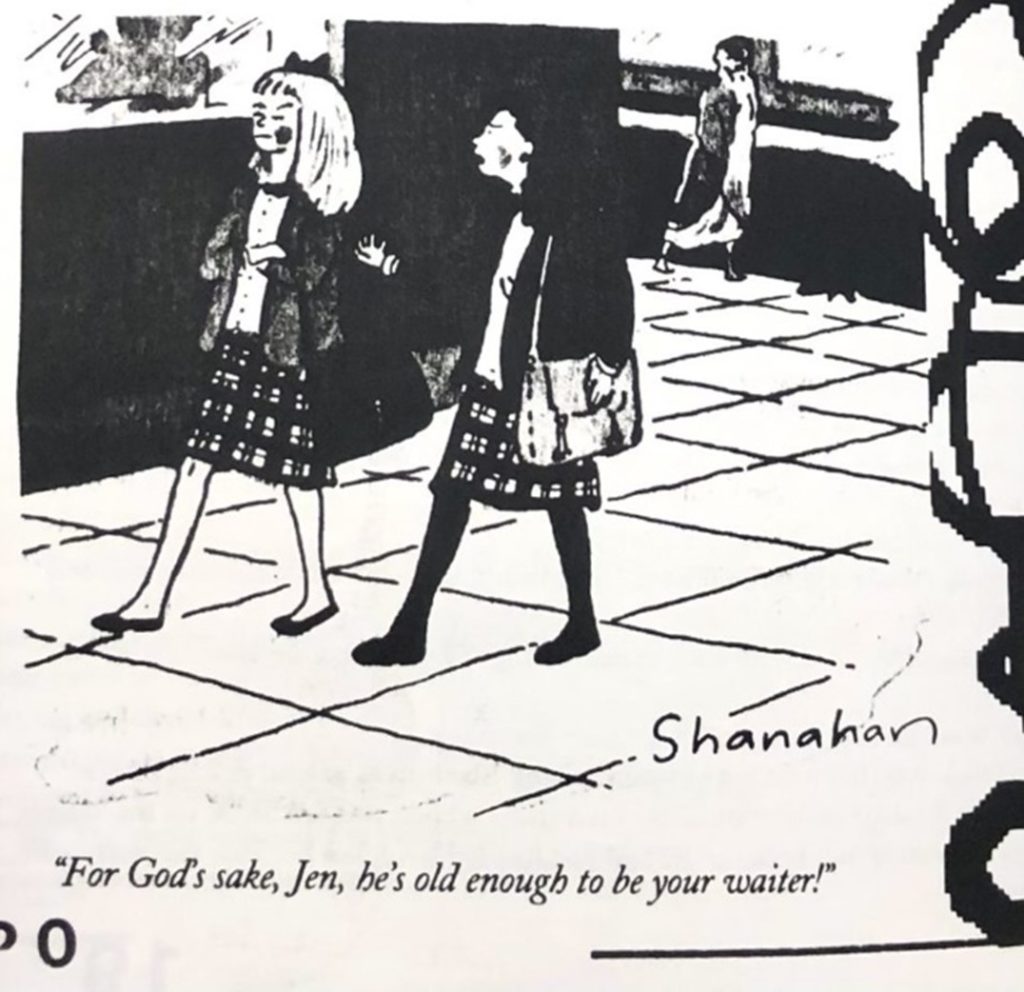
The unnamed creator of the Private Catholic zine gave their personal statement in the first issue, starting with an all-caps statement “OK, LET’S BOND.” They continue by saying they had “originally intended this zine to be a handbook… for poor souls like me who are stuck in Private Catholic school—and trust me, it is HELL” (Private Catholic, no. 1). While the average reader may take this statement as an intense dislike for private Catholic schools, the author explicitly states in issue two how they are “not decidedly for or against Private Catholic schools… They can be pretty cool (uniform means you don’t have to worry what to wear), etc.” Private Catholic allows teenage Catholic school-goers a place to vent their frustrations and air some outrageous stories. For example, underneath the “True Stories” section of the zine’s first edition, someone named Gina tells her single-sentence story of how she received detention for, quote, “being bad at volleyball.”

Author Note found in Private Catholic

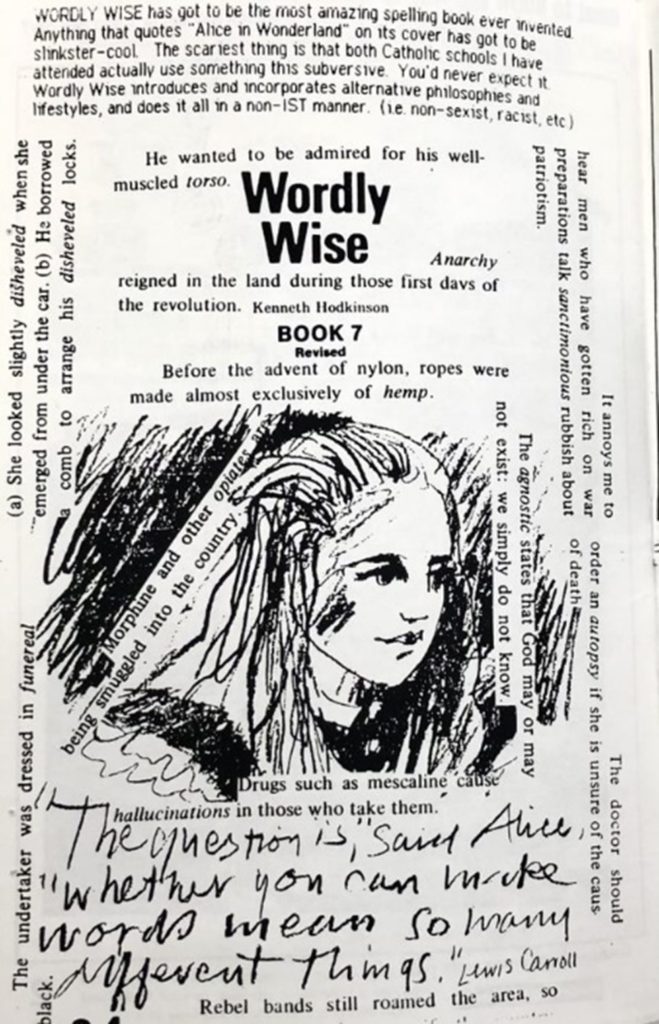
Private Catholic earns its place within the zine subculture as it details narratives that go against the strict grain of private Catholic schools. In the first issue, one contributor talks about how the spelling book Wordly Wise “introduces and incorporates alternative philosophies and lifestyles” besides an image of Alice from Alice in Wonderland surrounded by definitions of various words such as “anarchy” and “funeral.” Within the same issue, a two-page spread of cut-and-paste pictures from popular magazines displays various images of girls posing in Catholic school uniforms. The commentary on these pages tells how those magazines were selling the look of a Catholic school girl as “sexy, alternative” despite how students were conforming to authoritarian standards with those uniforms.
Both current and former students cognizant and articulate difficult topics that even adults find trouble voicing at times. This is the reason zines deserve their space within Special Collections & Archives; the original, unedited thoughts of underrepresented groups, minorities, and the youth of the past are scissored, glued and typed in various, abstract ways into self-published magazines, a feat worthy of preservation and admiration from fellow students who made their way from Catholic school to public university.

Further Reading:

Girl Zines: Making Media, Doing Feminism by Alison Piepmeier (2009)

Stolen Sharpie Revolution by Alex Wrekk (2014)

Notes from Underground: Zines and the Politics of Alternative Culture by Stephen Duncombe (1997)

Poems That Just Are

“From the Classroom” is a series that features some of the great work and research from students who visit our collections. Below is a blog by Luke Allan from Dr. Jennifer Burek Pierce’s class “Reading Culture History & Research in Media” (SLIS:5600:0001). 

Poems That Just Are

By Luke Allan

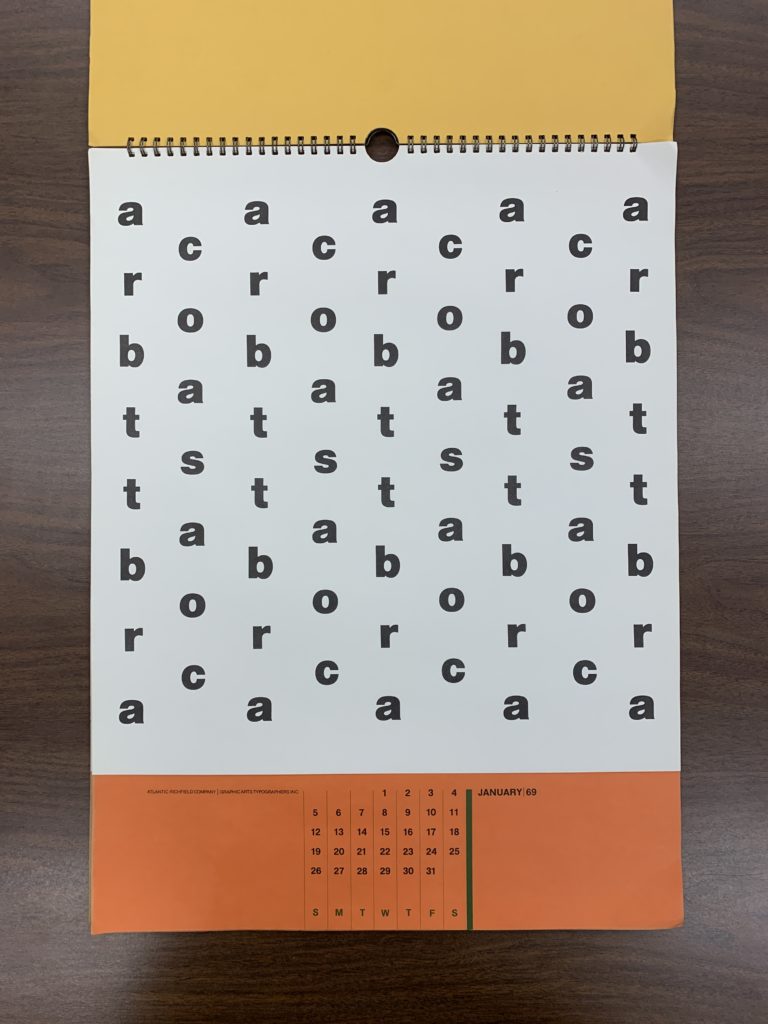
Ian Finlay in front of wall with letters on it
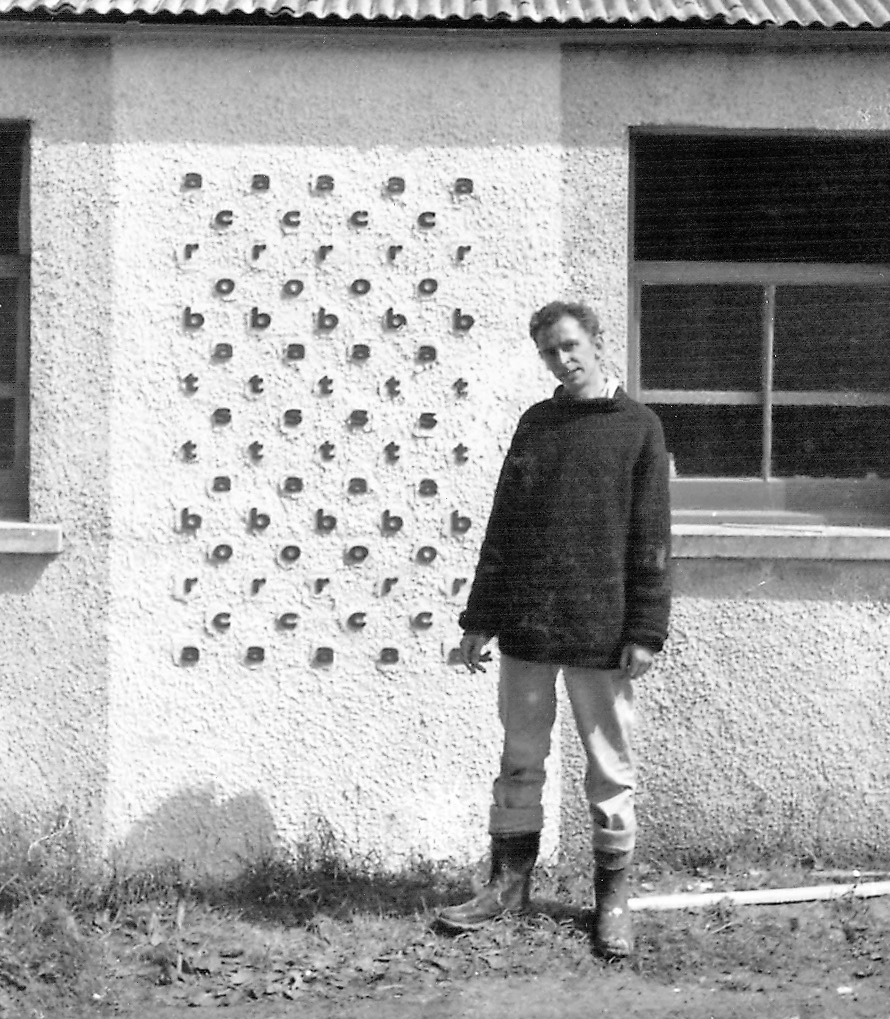
FIG 1: Ian Hamilton Finlay with his poem acrobats on the wall of his house in 1965. Photo by Jonathan Williams

In a letter to a friend in the late 1950s, Ian Hamilton Finlay (1925–2006) admits to feeling that he must be “about the only contemporary writer who believes that the purpose of art is to—oh dearie me, I forget exactly what—let’s say: be beautiful.” Finlay is in his early thirties, living alone on a remote Scottish island, recovering from the collapse of his marriage, struggling with his mental health problems, and desperately poor. In 1959 he’ll move to Edinburgh, and from there to a dilapidated farmhouse in the Highlands. In the meantime he’ll meet his second wife, Sue, and in 1966 the young couple will move into a slightly less dilapidated farmhouse in the Pentland Hills, called Stonypath, and have their first child. For the next fifty years Ian and Sue will transform Stonypath, and the square acre of wilderness it sits on, nicknamed Little Sparta, into a unique “poem garden”, cultivated by the world’s first self-proclaimed “avant-gardeners”.

But let us take a step back. At some point in those years between moving to the city and leaving it again with Sue, Ian meets Paul Pond and Jessie McGuffie, and together they start a small poetry magazine, Poor. Old. Tired. Horse. The title is borrowed from a Robert Creeley poem, “Please”, and this borrowing itself hints at one of the motivations behind Ian’s interest in running a magazine: the wish to establish a community of likeminded poets and friends. In the mid-sixties Ian was diagnosed with agoraphobia, an event that, if nothing else, gave a name to the feelings of anxiety and alienation that had troubled him for many years, and which fenced him off from the world. Running a magazine would be, whatever else it would be, a way of having friendships in exile.

Editing POTH took Finlay on a long journey into the contemporary poetic avant-garde that would radically reorient his own writing. He already sensed that he no longer cared for poems that were merely “about” things, that he wanted instead poems “that just are” (letter to Gael Turnbull, 29 April 1963). But it was his encounter with the work of the Brazilian poet Augusto de Campos in winter 1962, while editing issue 6 of POTH, that lit the fuse for Finlay. De Campos’s poems were concretos—concrete. They demonstrated a way of thinking and writing that short-circuited traditional logical and grammatical structures. Feeling alienated from the “ordinary syntax” of “social reality”, as he put it in a letter to Jerome Rothenberg in 1963, Finlay found in concrete poetry a mode of thinking and writing that freed him from the grammar of a world he didn’t recognize as his own: concrete poetry became, for Finlay, “a model of order” within a world “full of doubt” (letter to Pierre Garnier, 17 September 1963). The encounter is crucial for Finlay. In POTH 8 (1963) Finlay publishes his first concrete poem, “Homage to Malevich”, and over the next five years he produces some of his greatest hits, including “acrobats” (1964) and “wave/rock” (1966). Much as Finlay used the magazine to establish a safe social space inside a larger, unstable world, so the concrete poem served as a microcosm of stillness and clarity within the disorder of modern life.

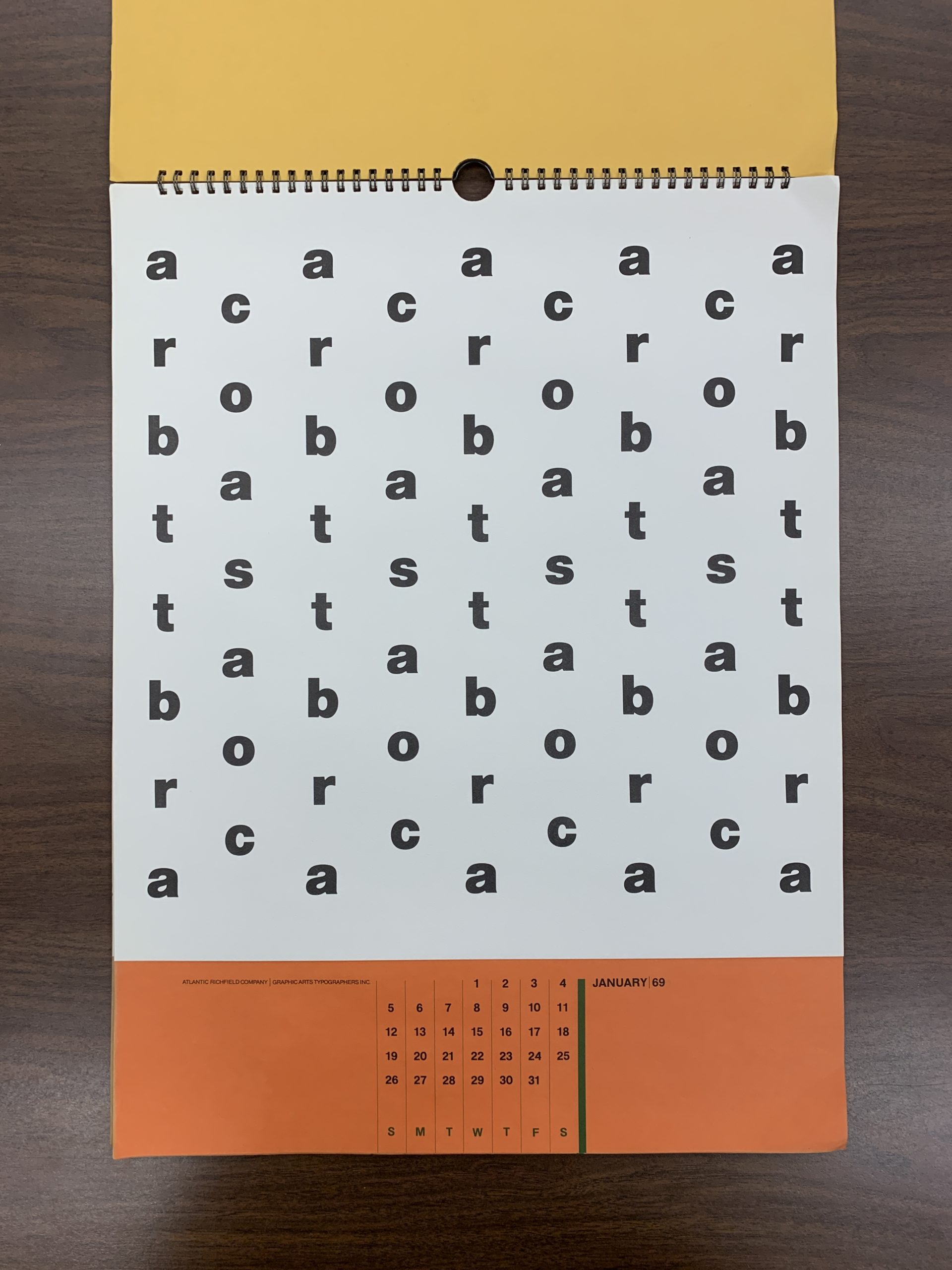
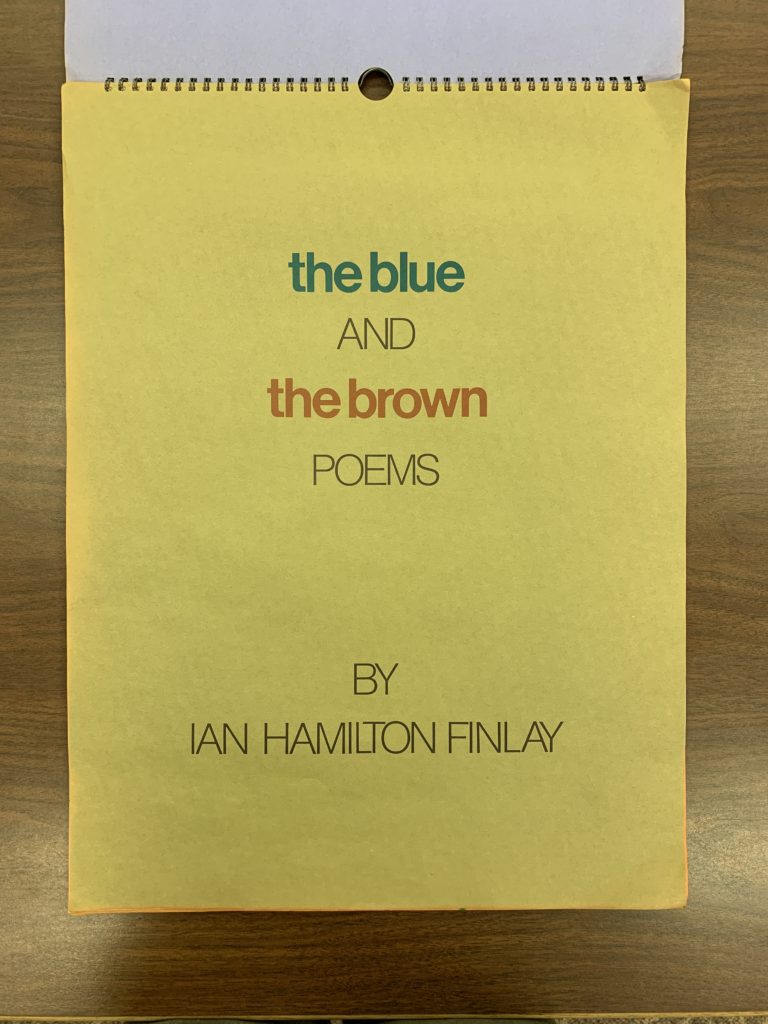
The poem-object shown in the images below is a calendar. Published in 1968, it collects twelve of Finlay’s early concrete poems, and is his first real encounter with a US readership. The calendar’s title, The Blue and the Brown Poems, is a reference to Wittgenstein’s Blue and Brown Books, transcriptions of lecture notes in which the philosopher first develops his destabilizing ideas about the relationship between words and meanings. The calendar is larger than you might think: at 20 inches tall, it’s probably too big for your fridge door or the space beside your desk. It asks, unusually for a calendar, for a more monumental setting, hung on a large wall like a framed painting or poster.

The calendar begins, also unusually, in September. This may be a reference to the calendar of the Roman Empire, in which case it’s an early example of Finlay’s interest in classical culture, a central theme of his later work. Each month features a concrete poem printed in color on white paper, accompanied by a short commentary by the critic Stephen Bann.

Finlay believed that concrete poems were for contemplating, so it followed that their ideal presentation was in a place where they could be readily contemplated. The calendar, like the wall or the garden, is a quintessentially Finlayian form. It is a way to turn the poem into something we can live around or within. Underpinning these considerations of form and space is a more fundamental belief in the relationship between poetry and ordinary experience: the calendar is a bridge between the heavens of literary culture and the ovens of real life in the home.

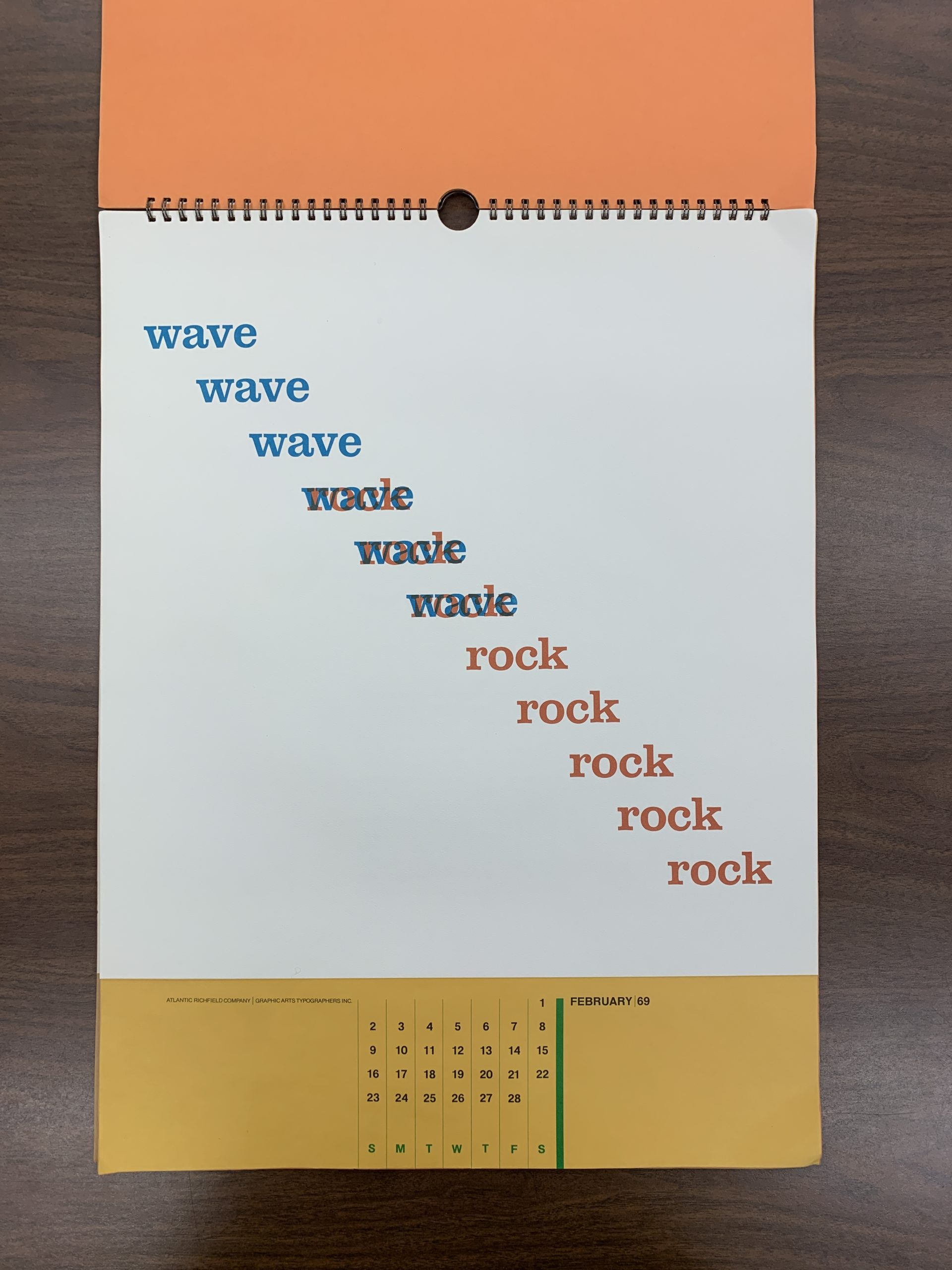
In ‘wave/rock’, the words “wave” and “rock” bear the colors of the sea and the land, and where the two words overlap there is a sonic collision that produces the “wrack”—seaweed washed up on the shore. Visually, the superimposed blue and brown letterforms give an impression of seaweed-covered rocks. A “wrack” is also a wrecked ship, the word suggesting sudden violent damage, and as these two words collide the wreckage miraculously takes on the form of a word for wreckage. In this sense the poem borrows the kind of forces found at sea as metaphors for the kinds of forces found in language.

FIG 4: “wave/rock” (February) The poem was first realized as a glass poem-object in 1966 (pictured here) and later exhibited as a sculpture in a park in Dunfermline, Scotland, in 1969. It was also printed across a page spread in the magazine Aspen. Later still it was realized as a fabric wall hanging

Finlay started out as a writer of short stories and plays. In the middle of his life he found concrete poetry, and he set out on a journey into small-press publishing that would serve as his primary medium of friendship. In the final third of his life he realized the full potential of the concrete poem as a part of a landscape. Later, Finlay disassociated himself from concrete as a movement, because he felt that it did not share his views on the important function of tradition within the avant-garde. Today it is his garden domain, Little Sparta, for which he is best remembered, but at one level the garden is only the final manifestation of a poetic impulse to make enclosures that characterized Finlay’s oeuvre. The social enclosure of the magazine and the press, the aesthetic enclose of the concrete poem, and the physical and philosophical enclosure of the garden: these were ways of dealing with a sickness Finlay had diagnosed in the world and for which he spent his life discovering—oh dearie me, I forget exactly what—let’s say: beautiful cures.

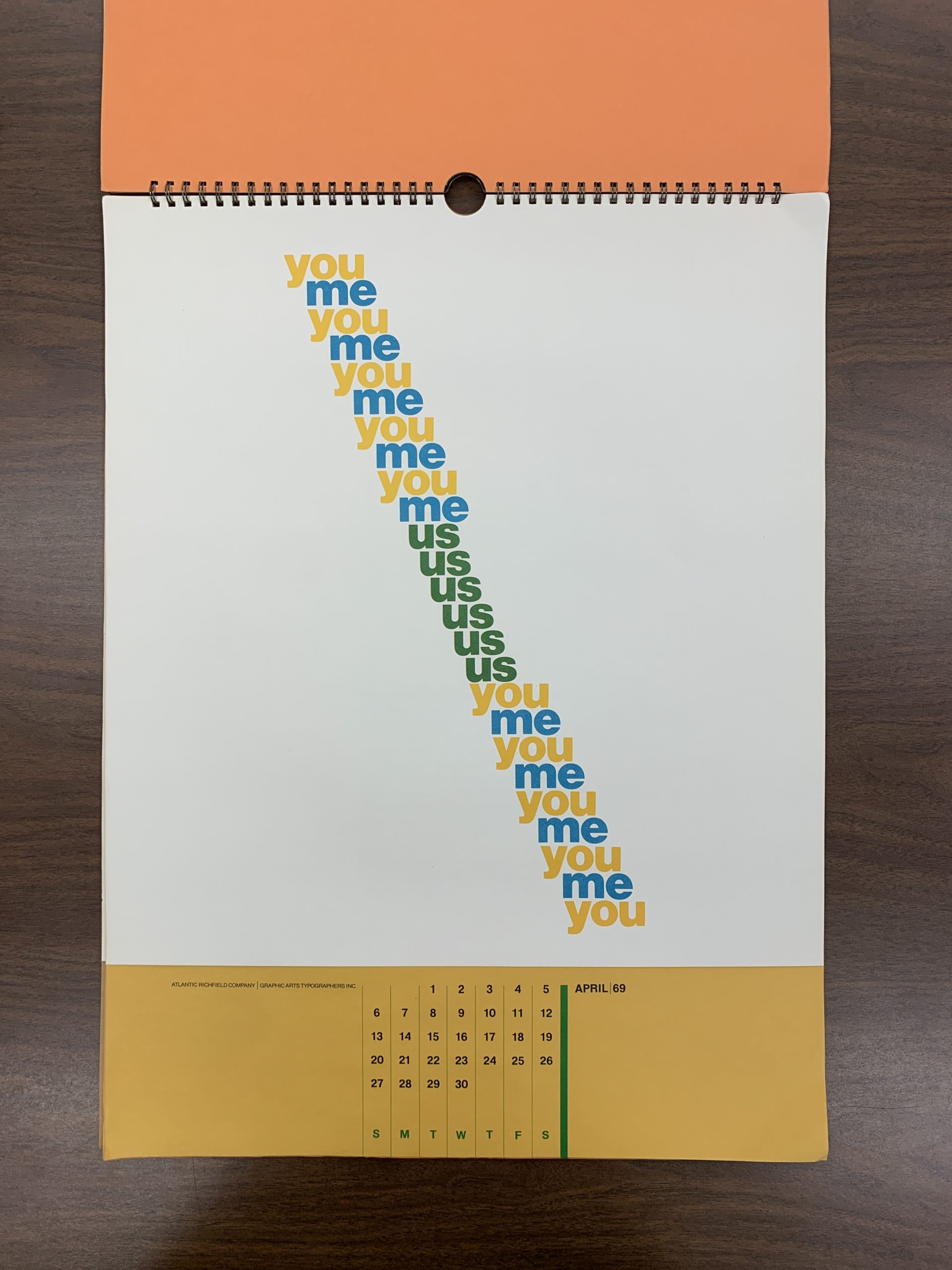
FIG 5: “you / me” (April). The yellow of “you” and the blue of “me” combine to make the compound green of “us”. The two colors then separate again, continuing on a path that is at once shared and separate, on which they are, so to speak, alone together. The metaphor of color—one crucial to Wittgenstein too, we should remember—reminds us that relationships, like compound colors, are more than the sum of their parts. Blue and yellow make something unique, called green, that was in neither, and that cannot be kept if the colors are separated back out.

* * *

When the University of Iowa acquired The Sackner Archive in 2019, work began to unpack and classify the 75,000 works of visual and concrete poetry that Ruth and Marvin Sackner had collected over the course of their lives. Ruth Sackner passed away in 2015, and Marvin Sackner joined her just a few weeks after the Archive’s inaugural exhibition, in September 2019. The work required to process the many books, prints, periodicals, letters, and objects that make up their enormous collection continues behind the scenes, and items from the archive are currently available to view by special request. Over time, the archive will be fully integrated into ArchivesSpace, but even now it is possible to browse the archive here.

Over the course of forty years Finlay published more than a thousand books, booklets, cards, prints and poem-objects, many through his publishing imprint Wild Hawthorn Press. It’s clear that Ruth and Marvin Sackner were enormous fans of Finlay’s work, because their collection contains several hundred of these publications.  It’s a rich seam, and one that is still largely unexplored.

FURTHER READING

In print:

Yves Abrioux and Stephen Bann, Ian Hamilton Finlay: A Visual Primer (London: Reaktion Books, 1985; 2nd edition, revised and expanded, 1994)

A Model of Order: Selected Letters for Ian Hamilton Finlay, ed. Thomas A Clark (Glasgow: Wax366, 2009)

Patrick Eyres, “Gardens of Exile”, New Arcadian Journal 10 (1983)

Ian Hamilton Finlay: Selections, ed. Alec Finlay (Berkeley: University of California Press, 2012)

Wood Notes Wild: Essays on the Poetry of Ian Hamilton Finlay, ed. Alec Finlay (Edinburgh: Polygon, 1995)

Ian Hamilton Finlay, Rapel: 10 Fauve and Suprematist Poems (Edinburgh: Wild Hawthorn Press, 1963)

John Dixon Hunt, Nature Over Again: The Garden Art of Ian Hamilton Finlay (London: Reaktion Books, 2008)

Caitlin Murray and Tim Johnson, eds., The Present Order: Writings on the Work of Ian Hamilton Finlay (Marfa, TX: Marfa Book Company, 2011)

Jessie Sheeler, Little Sparta: The Garden of Ian Hamilton Finlay, Photographs by Andrew Lawson (London: Frances Lincoln, 2003)

Online:

Carli Teproff, “A force on the Miami art scene, Ruth Sackner dies at 79”, Miami Herald, October 12, 2015. https://www.miamiherald.com/news/local/obituaries/article38777727.html

Andres Viglucci, “Marvin Sackner, a physician, inventor and renowned collector of word art, has died”, Miami Herald, September 30, 2020 https://www.miamiherald.com/article246121525.html?fbclid=IwAR1Tur1UbivcjHp3HaTx6AN2r8KJNNYXIcdFQc0meVeUXPieXJvQYhuUEJ8

Padded Cell Pictures, Concrete! (documentary about Marvin and Ruth Sackner) https://www.kaltura.com/index.php/extwidget/preview/partner_id/1004581/uiconf_id/15920232/entry_id/1_bv84gwjw/embed/dynamic?

Sackner Archive Live Exhibition. 

Sackner Archive Exhibition Guide. 

University of Iowa Library Guide to the Sackner Archive. 

Jacques Auguste de Thou, the romantic

The following was written by Camille Davis, curatorial assistant to Dr. Eric Ensley 

Jacques Auguste de Thou (8 October 1553, Paris – 7 May 1617, Paris), also known by his Latin name, Thuanus, was a French historian and president of the Parliament of Paris. He was also the key negotiator in the Edict of Nantes with the French Huegonots. In special collections libraries, he is known by his distinct provenance bindings that leave a trail of his history throughout the stacks. 

Fig. 1 showing de Thou and his second wife Gasparde de La Chastre’s coat of arms with conjoint monogram “I A G”. Image from Provenance Online Project on Flickr

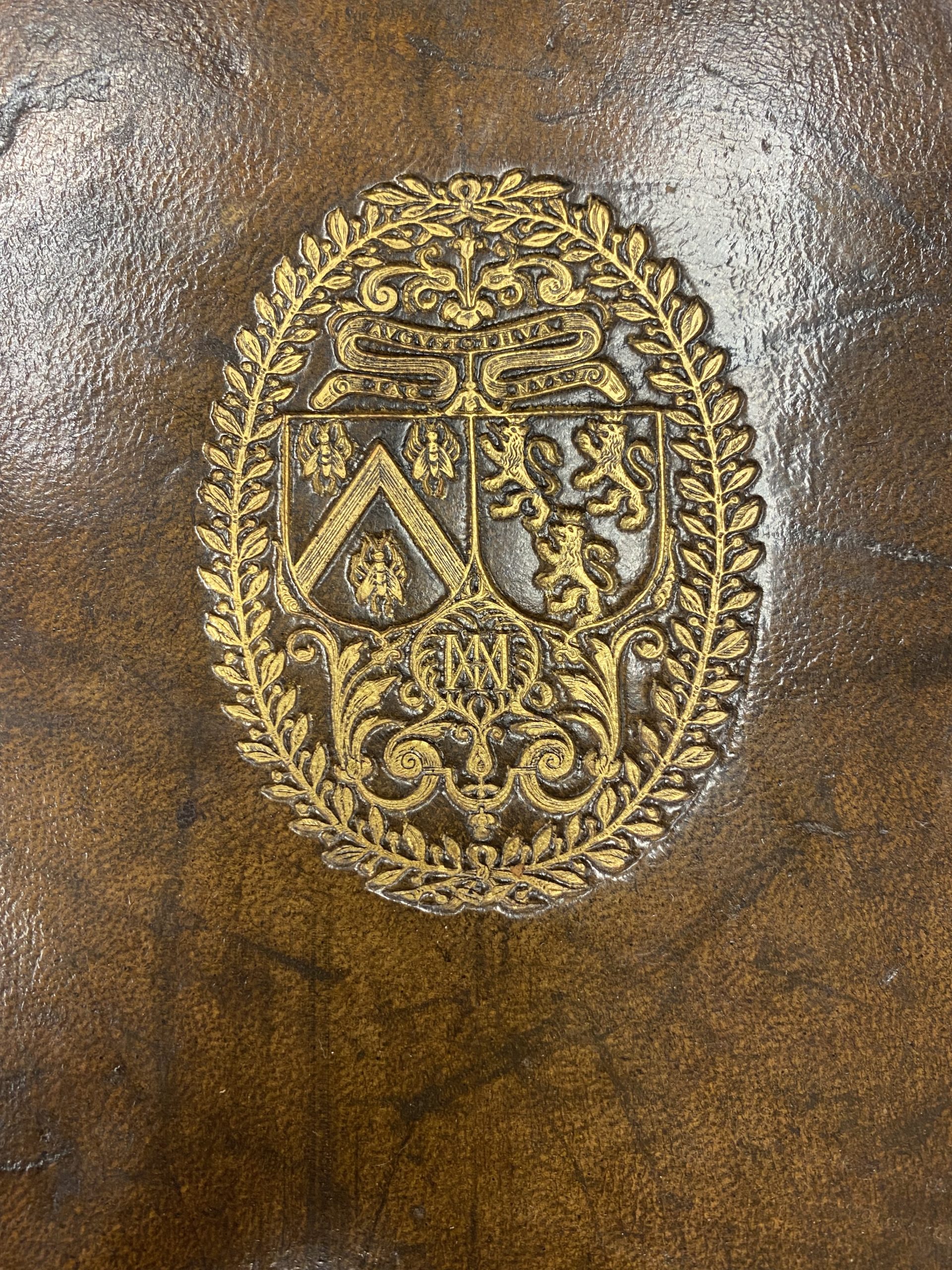
While he inherited his father’s library in 1583, de Thou was also known to be an avid book collector himself. Unlike other collectors, his books have three distinct decorative styles that inform us of when in his life he acquired these books. As the Conservation Online database notes, “many of [de Thou’s] books were simply bound in red, olive, or citron colored morocco, with plain boards, a few border lines in gilt, and his coat of arms in the center of the upper cover, surrounded by laurel branches, but with only the title and his cipher on the spine” (“Jacques Auguste de Thou”). This distinctive style makes his bindings particularly easy to spot when pulling from the stacks. The first binding style is simply his coat of arms: argent, a chevron between three sable flies, and his initials. We know that he had these books bound when he was a bachelor as his other two bindings were always ciphers of his coat of arms and initials. When he was married to his first wife, Marie Barbançon, the provenance bindings seamlessly integrate his sable fly insignia with her triple lion coat-of-arms. A cipher of their initials also appears at the bottom of this gilt binding (Fig.1). After she dies and he is remarried to Gasparde de la Chastre, he will once more ask for his custom bindings to represent their shared coat of arms. After his death, his son, François Auguste de Thou would continue to have books bound with this final cipher. This moving tribute to both of his parents also can make it difficult to discern which of the De Thous had the book bound. 

Typically, these coats of arms are gilt and are on plain brown calf bindings that have minimal tooling. However, the British Library, specifically, has many particularly interesting bindings that had belonged to de Thou. Karen Limper-Herz, binding expert and the curator of incunabula at the British Library, has previously discussed how de Thou, as a bachelor, had several lovely green and gold gilt fanfare bindings made for him as a bachelor. Another book in the British Library’s holdings that is distinctly different than his later bindings is a painted goatskin binding that was bound for de Thou during his marriage with his second wife, Gasparde de la Chastre.

Fig 2. showing coat of arms of de Thou and his first wife Marie Barbançon, with conjoint monogram “I A M” below. Image from Camille Davis, Special Collections & Archives

During the time that we have been recataloging the 16th century books at the University of Iowa Special Collections & Archives, we have spotted at least one of de Thou’s bindings and we certainly expect that there are more yet to be discovered in the stacks. The binding that was spotted was from the time when de Thou was married to his first wife, Marie Barbançon. As is typical for de Thou’s bindings, a laurel wreath surrounds their insignias (Fig. 2). Above the combined coats-of-arms, there is a ribbon that says “Jac August Thaunus.” In the center of the coats-of-arms is a cipher of the combined “IAT” (the “I” being a replacement for “J” at the time) and “M” so that both spouses are represented. 

Fascinatingly, this book is a copy of letters to and responses from John Calvin as well as “several letters from distinguished men in the church of God” (or, as the title actually is in Latin, “Ioannis Calvini Epistolae et responsa: quibus interiectae sunt insignium in ecclesia Dei virorum aliquot etiam epistolae,” FOLIO BX9420 .A5). Since we know that this book was in de Thou’s possession, it gives further proof of how he was actively reading the work of the major Protestant minds of the time so that he might be able to work with them on behalf of the French government. If it were ever possible, it would be compelling to see a full compendium of the works in his library so that more could be known about which works de Thou thought were the most relevant to his time, his life and his work. 

It is likely that the University of Iowa has more of de Thou’s bindings within their stacks. After de Thou’s death, his collection of 13,000 books became the property of Jean-Jacques Charron before they were sold off in 1789. Since that time, these books have found happy homes in many special collection stacks. However, unless a library is particularly attuned to those researchers who wish to search library catalogs for bindings and provenance, like the British Library or the Koninklijke Bibliotheek, then it can be particularly hard to find these bindings. Another interesting future digital humanities project would be to follow where all of de Thou’s books ended up; especially if a significant portion ended up in publicly accessible holdings. Then we would be able to piece together a more complete portrait of what books this significant bibliophile, statesman and historian of the 16th century found to be the most valuable books both for his own edification and for his writing. It would have significant implications for the book trade of the time. But, until such a project could happen, we will have to keep one eye open for this unique cipher that winks at us whenever we pass through the stacks. 

Works Cited

“Thou, Jacques Auguste De ( 1553-1617 ).” [CoOL], https://cool.culturalheritage.org/don/dt/dt3491.html.