Skip to content
Skip to main content

I Hear the Train a Comin’

Hallidie U.S. Patent 110,971For more than two centuries, trains have traversed the American landscape altering how and where people live and work. This is why, in 2008, Amtrak created National Train Day to be celebrated on the Saturday closet to May 10th, the anniversary of the pounding of the Golden Spike in Promontory, Utah which marked the completion of the First Transcontinental Railroad.

The first locomotive was built in 1804 by a Cornish inventor named Richard Trevithick. It was powered by steam. A steam locomotive burns fuel, usually coal. The heat then passes though tubes inside a large water-filled boiler creating steam. The steam then passes through high-pressure tubes to cylinders which engage piston rods connected to the locomotive’s wheels, thus driving the train.1

The steam engine remained popular until the early 1900s when diesel and electric began replacing it. A German mechanical engineer, Rudolf Diesel, invented the diesel-powered locomotive. A diesel engine operates when a cylinder piston squeezes and heats air trapped inside; at the top of the stroke, the system injects oil; the air and oil mixture burns and drives the piston down which turns a crankshaft connected to a generator making eletricity for storage in large batteries. The wheels are powered by motors that draw from the batteries. 2

On January 17, 1871, Andrew Smith Hallidie, an American engineer and inventor, was granted a patent for an “improvement in endless wire ropeways” which became the basis for the first cable car system.3 Soon, however, electricity changed city transportation. In 1897, Boston opened an electric subway system. New York City soon followed in 1904. The all-electric locomotive requires either an overhead pickup or a third-rail carrying a high-voltage of electricity to power the engine. Electric trains are easier and cheaper to maintain and last longer than diesels.4

Now coming down the track are hybrid trains which use a battery to store energy temporarily for when the train is idling or stationary; “bullet trains” which run on steel rails at accelerated speeds; magnetic levitation trains which hover above rails suspended by powerful magnets; and the futuristic Hyperloop, Elon Musk’s vision for transporting people in high speed capsules through a series of tubes.


The world’s fastest passenger train, the Maglev, owned by the Central Japan Railway Company, made history last month by hitting a top speed of 366 mph surpassing its previous record of 361 mph set in 2003.

The Federal Railroad Administration was created by the Department of Transportation Act of 1966. The U.S. agency regulates the manufacturing and safety of the train transportation industry. A few of the more widely known train manufacturers are National Railway Equipment Company (NREX) headquarted in Mt. Vernon, IL. This company is known for its N-ViroMotive engine which is used for light duty road switching in yards and urban areas where noise and exhaust emissions are to be reduced. GE Transportation Systems (GETS), a division of General Electric, is headquartered in Chicago while its main manufacturing plant is located in Erie, Pennsylvania. This company is the largest producer of diesel-electric locomotives. Its Dash9 series has an electronic fuel injector and a 4-stroke diesel engine.

GE Dash 9 Series. Source: Wikipedia

GE Dash 9 Series. Source: Wikipedia

Gomaco Trolley Company, located in Ida Grove, Iowa, manufactures trolley cars which look vintage but have state-of-the-art technology. Streetcars or cable cars are used in cities such as Portland, San Diego, San Francisco. Rapid transit commuter trains, known as the metro or subway, are a primary means of transportation in Atlanta, Washington D.C., and New York. U.S. Manufacture of Rail Vehicles for Intercity Passenger Rail and Urban Transit documents several companies which manufacture parts for high-speed, rapid transportation.


LEARN MORE
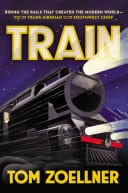
Train: riding the rails that created the modern world by Tom Zoellner.

Train: riding the rails that created the modern world by Tom Zoellner.

Sinclair, Angus. Locomotive Engine Running and Management, 21st edition. New York: J. Wiley & Sons, 1899, Engineering Library TJ607 .S6 1899

Wolmar, Christian. Blood, Iron & Gold: how the railroads transformed the world. New York: PublicAffairs, 2010. Engineering Library HE1021 .W78 2009

Zoellner, Tom. Train: riding the rails that created the modern world. New York: Viking, 2014. Engineering Library HE1021 .Z64 2014

Federal Railroad Administration. U.S. Department of Transportation

Railindustry.com

Facebook: National Train Day 2015

Brasor, Philip and Tsubuku, Masako. How the Shinkansen bullet train made Tokyo into the monster it is today. The Guardian, September 30, 2014

Vartabedian, Ralph. “Work starting on the bullet train; Construction begins Tuesday in Fresno on the first 29-mile segment of the $68-billion fast train..” Los Angeles Times. (January 5, 2015 Monday ): 1252 words. LexisNexis Academic. Web. Date Accessed: 2015/05/07.

Upbin, Bruce. Hyperloop is real: meet the startups selling supersonic travel. Forbes, March 2, 2015
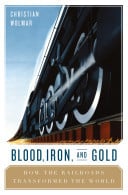
Blood, Iron, & Gold by Chrisitan Wolmar

Blood, Iron, & Gold by Chrisitan Wolmar

REFERENCES

1. Langone, John. The New How Things Work. Washington, D.C.: National Geographic Society, 2004, p.84. Engineering Library FOLIO T47 .L2923 2004

2. Langone, John. The New How Things Work. Washington, D.C.: National Geographic Society, 2004, pp.86-87. Engineering Library FOLIO T47 .L2923 2004

3. Hallidie, A.S. U.S. Patent 110,971. Improvement in Endless Wire Ropeways. Assigned January 17, 1871.

4. Langone, John. The New How Thinks Work. Washington, D.C.: National Geographic Soceity, 2004, pp.88-91. Engineering Library FOLIO T47 .L2923 2004

Finals Week – Extended Hours and Free Coffee!!

According to The Old Farmer’s Almanac, summer officially begins at 12:38 p.m. EDT on June 21, 2015.  But, even though it isn’t officially summer, the UI Summer Sessions begin the week of May 18. Which mean that FINALS for the spring semester are May 11th through 15th.

In order to help you find that extra study time, we have scheduled extended hours during finals week.

Extended Hours:

Sunday, May 10th: 2 p.m. to midnight

Monday, May 11th through Thursday, May 14: 8:30 a.m. to midnight

Friday, May 15th: 8:30 a.m. to 5:00 p.m.

Saturday and Sunday, May 16th and 17th: CLOSED (congratulations – you made it through the semester!)


Must. Have. Coffee.

Must. Have. Coffee.


We have not only scheduled extended hours during finals week, we will also be providing free coffee and lemonade! Cups are provided – but be “green” and bring your own!

Get ready for finals @Hardin Library with free coffee, free popcorn, longer hours, and therapy dogs!

Hardin Library wants you to succeed in your Spring Finals. 

photo from kristinhiggins.com

photo from kristinhiggins.com

The library is open later–until Midnight Friday, May 8 and Saturday, May 9.

Spend more time studying or finish up that group project.

We have lots of room.

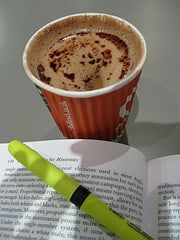
picture of coffee, book, highlighter

photo by Furya @flickr

 Free coffee from 6pm Friday, May 8 –  8pm Friday, May 15!

popcorn

photo by Alllsonmseward12 @Flickr

 Grab some popcorn Friday night and all day Saturday!
 reindeer Find our reindeer!

Ed will be hidden in the library each morning, starting on Monday, May 11 – Friday, May 15.
If you are the first person to find Ed, you win a Hardin Library coffee mug.

image by Zief @Flickr

image by Zief @Flickr

Pet a therapy dog!
Dogs will visit on Saturday, May 9 from 5-7pm.

Manage your references and speed up your writing with our EndNote Desktop workshop – Tuesday, May 5, 2-3pm

EndNote is a reference management tool that helps you to easily gather together your references in one place, organize them, and then insert them into papers and format them in a style of your choosing. This session will walk you through the basics of using EndNote to collect and format your citations. The class will be hands-on and there will be time for questions at the end.


Our next session is:
Tuesday, May 5, 2-3pm, Information Commons East, Hardin Library for the Health Sciences

No time for class?  Use our guide or request a personal training session.

Database of the Week: Global Commodities

Each week we will highlight one of the many databases we have here at the Pomerantz Business Library.

The database: Global Commodities: Trade, Exploration & Cultural ExchangeGlobal_Commodities

Where to find it: You can find it here, and under G in the databases A-Z list.

From their website: “This resource brings together manuscript, printed and visual primary source materials for the study of global commodities in world history.”

Use it to find:

  • Primary source material
  • Price data visualizations, Energy data visualizations, Interactive maps, Historical maps
  • Thematic areas include: Advertising & Consumption, Art & Literature, Cultivation, Ecology & Environment, Exploration & Discovery, Health & Welfare, Politics & Empire, Production, Social Practice, Trade & Commerce, and Transportation
  • Commodities explored include: Chocolate, Cotton, Coffee, Fur, Opium, Oil, Porcelain, Silver & Gold, Spices, Sugar , Tea, Timber, Tobacco, Wheat, Wine & Spirits.

Cocoa


Tips for searching:

  • Use the tabs across the top to explore: Documents, the Chronology, Data & Maps, Visual Resources & Further Resources
  • Use the search bar in the top right hand corner
  • There are also Advanced Search and Popular Searches options

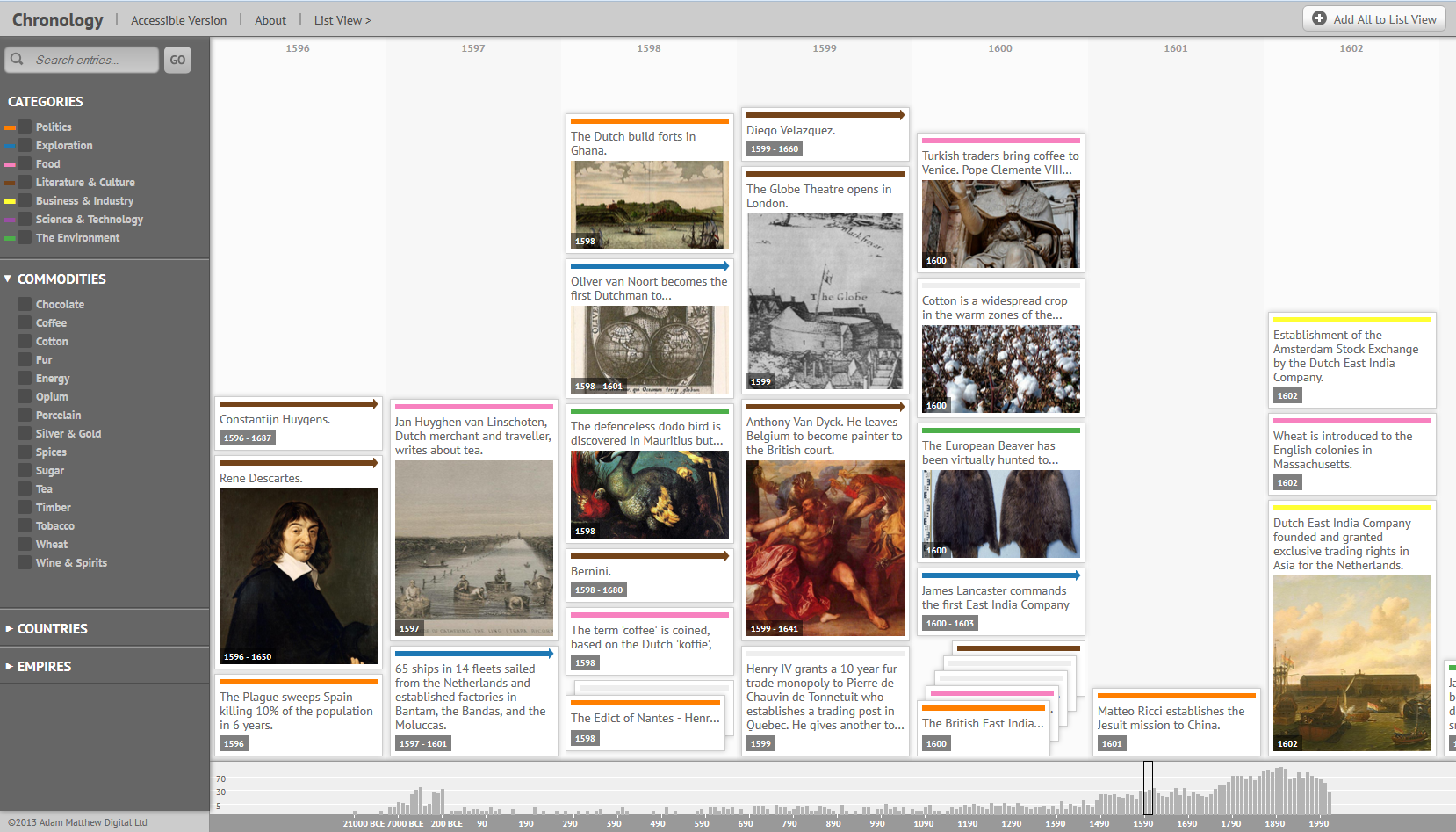
Chronology

Chronology


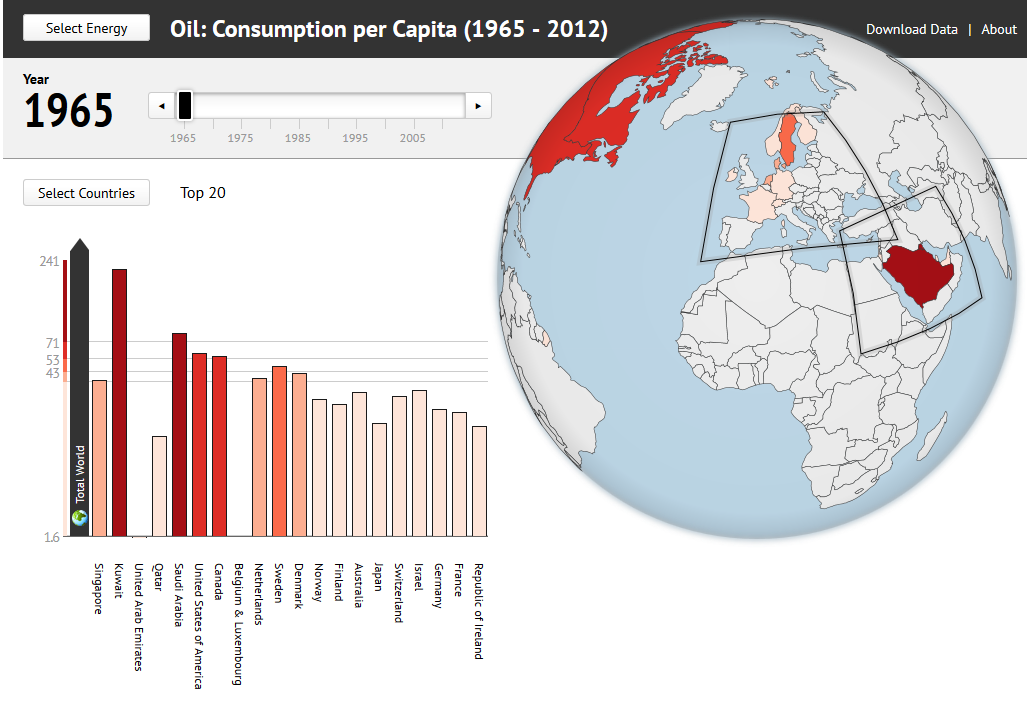
Oil_Consumption

 Energy Visualization

Want help using Global Commodities? Contact Willow or Kim and set up an appointment.

Soot and Dust Clean Up

Thursday, April 30, 2015

Discussion soot clean upIt really is a small world. As a volunteer for the AIC-CERT Disaster Response hotline, I had a call with a question about soot drifting in from a fire a couple doors down. On further inquiry, I discovered that the caller was from Traer, Iowa, only 90 miles away. Rather than trying to explain how to go about cleaning soot over the phone, we agreed that an on-site visit would be best.

Cleaning and dust soot from bookWhen our conservator Giselle Simón and I met with staff at the Traer Historical Museum, we were much relieved to see that the dusting of soot was very minor. We discussed cleaning techniques and strategies for organizing the volunteer cleaning session they were planning. Giselle demonstrated how to use an absorene dry cleaning sponge and a microfiber preservation quality dusting fabric cloth. We encouraged them to purchase a Nilfik HEPA vacuum cleaner and recommended supplies. They sent us a note that they did make the recommended purchases and are ready to start cleaning.

We expect to start on our march to Washington in the morning

Joseph Culver Letter, April 29, 1865, Page 1

Hd. Qurs. Co. “A” 129th Reg. Ills. Vol. Infty.
Raleigh, N.C., April 29th 1865
My Dear Wife

We expect to start on our march to Washington in the morning at 5 o’clock, & though the last mail went out for the Corps, yet I will try & mail this in the 23d Corps which is to remain here for the present.1 It is raining to-night & bids fair to be a wet day to-morrow. I was in hope that we would rest until Monday morning [May 1], but, though we do not see it, doubtless the necessity exists for our immediate departure.

We are in good health & all ready for this our last campaign. The cannon have been booming at intervals of 30 minutes throughout the day, & all Officers of the Army assume the badge of mourning for 6 months. We have not yet learned the particulars of the negotiations. Many vague rumors are afloat, but we must wait until we get through to the north for more definite information.

Chris [Yetter] has not been well for a couple of days, but I think it is only a slight cold. Nate [Hill] has had headache for two days. Allen Fellows in playing with Billy Perry this evening received a severe cut in his hand from a knife Perry was whetting.2 His hand is doing quite well to-night, & I think will be well in a few days. I saw Bro. John Lee this evening at Church. We had a good meeting.

We were inspected & mustered to-day; only once more, & we hope to be done. Every day & every hour of the day, you may hear the boys talking of “Home Sweet Home.” I have been so busily engaged with papers that I could not enter into their enjoyment as much as I would like.

By the time this reaches you, we will be doubtless at Richmond, Va., or beyond it. I hope to receive several letters from you there. I would like very much if our house could be vacated so that we might go immediately to housekeeping on my return, yet I can give no definite idea of the time we will reach home. If convenient for Mr. Mathis, ask him to leave by the 1st of June.

It is getting quite windy, & the light will not last much longer, so I will close. Remember me kindly to all our friends. Tell Maggie Gutherie that I did not get time to answer her letter here. Kiss Howard for me. May the richest of Heaven’s blessings rest upon you & preserve us for future enjoyment in this life. With much love, I remain, Ever,

Your affect. Husband
J. F. Culver

  1. General Grant, on the 29th, wired Washington that four corps would march from Raleigh to Alexandria, passing near Richmond. General Mower, during the day, informed his XX Corps that they would “commence the march to-morrow.” The First Division would take the lead, followed by the Second and Third. Mower hoped the march would be so regulated that the corps would be across the Neuse when it halted for the night. O. R., Ser. I, Vol. XLVII, pt. III, pp. 345, 348.
  2. William W. Perry, a 20-year-old drayman, was mustered into service on Sept. 8, 1862, as a private in Company A, 129th Illinois Infantry. Private Perry was detailed as regimental ambulance driver on Dec. 2, 1862, and did not rejoin the company until May 5, 1864. On Aug. 28, 1864, he was detailed for duty in the regimental medical department, where he remained until mustered out on June 8, 1865, near Washington, D.C. Compiled Service Records of Union Soldiers, NA.

We marched from Holly Springs to this place to-day

Joseph Culver Letter, April 28, 1865, Page 1

Head Qurs. Co. “A”, 129th Ills. Vols.
Raleigh, N. C, April 28th 1865
My Dear Wife

We marched from Holly Springs to this place to-day and are making preparations for our coming Campaign. We will leave here on Sunday or Monday morning next, “Homeward bound.” The last mail leaves at 11 o’clock to-morrow, the last opportunity to send letters from this place & the last we will have until we reach Richmond, Va.

Our present destination is supposed to be Alexandria (near Washington) though we may turn up somewhere else. We have 15 days’ supplies & have orders to average 15 miles per day which will take us fully to Richmond by the route designated for us.1

We had a mail both yesterday and to-day, but I recd. no letters from you. I recd. one to-day from Maggie Guthrie of the 10th inst.2 Your last was the 15th. The war is over, & I doubt not fills the hearts of the people with joy.3 I cannot express my own feelings. If God spares our lives, we hope to be in a few weeks quietly at our homes. We are very restless, & the days seem long that keep us from our loved ones.

I have been suffering for the last few hours from severe headache, but it will all be gone I hope by morning. I cannot say how soon you may look for us. We will doubtless be delayed at Alexandria a couple of weeks & possibly longer. I must try and get home to attend court the first Monday in June, & we may all possibly be there by that time.

The Campaign before us is a severe one. We sent to the rear to-day all that were not in good marching trim, of my Company, Haley, DeLong, Noyes, & Cook.4 They may reach home several weeks before us. All the rest of the Company are in good health. I cannot write much to-night but will try & add a few lines in the morning. Perhaps my head will feel better. Good night. May Holy Angels guard you & Our Father in Heaven keep & bless you.

Saturday morning, Apr. 29th

I arose this morning in the enjoyment of excellent health. We recd. the order of march this morning & will be in Richmond by the 12th or 14th of May.5 We will have no mail facilities until we reach there. We will leave here either to-morrow or Monday. Joy fills every heart, yet there has been no demonstrations. A few more days hard marching, & we will be at Home. I must close as I am busy on the muster rolls & must complete them by noon. Let us thank God for all His mercies. Remember me to all. Kiss Howard for Papa.

Your affect. Husband
J. F. Culver

  1. General Sherman, on the 27th, notified his generals that the Army of the Ohio would remain in the Department of North Carolina, while the Armies of the Tennessee and Georgia would march to Richmond. The Army of the Tennessee would travel via Louisburg, Warrenton, Lawrenceville, and Petersburg, while General Slocum would route his Army of Georgia through Oxford, Boydton, and Nottaway Court-House; roads to the west of those followed by Howard’s army. The Armies of Georgia and the Tennessee would, before leaving Raleigh, turn in the contents of their ordnance trains, and use the wagons for extra forage and rations. The columns would “be conducted slowly and in the best order, and will aim to be at Richmond ready to resume the march by the middle of May.” On the 28th the commander of the XX Corps, General Mower, notified the troops that hostilities had ceased, and they would be marched at once via Richmond to Washington “to be mustered out of service and return to their homes.” While en route there would be no foraging upon the country and private property would be respected. O.R., Ser. I, Vol. XLVII, pt. III, pp. 323-25, 341.
  2. Maggie Gutherie was the 17-year-old daughter of George and Sarah Gutherie. Her father was a prosperous Pontiac Township farmer. Eighth Census, Livingston County, State of Illinois, NA.
  3. In their afternoon meeting at Bennett’s on April 26, General Johnston had agreed to surrender all the troops under his command on these terms: (a) all acts of war on their part to cease; (b) all arms and public property to be deposited at Greensboro, and delivered to a United States ordnance officer; (c) all officers and men to give their “individual obligation in writing not to take up arms against the Government of the United States until released from this obligation;” (d) the officers to retain their side-arms, “private horses and baggage;” and (e) this done, all officers and enlisted men “to be permitted to return to their homes, not to be disturbed by the United States authorities so long as they observe their obligation and the laws in force where they may reside.” O.R., Ser. I, Vol. XLVII, pt. III, pp. 313, 321.
  4. John E. Haley, a 23-year-old farmer, was mustered into service on Sept. 8, 1862, as a private in Company A, 129th Illinois Infantry. Private Haley was mustered out with the regiment near Washington, on June 8, 1865. Joseph G. Noyes, a 28-year-old farmer, was mustered into service on Sept. 8, 1862, as a private in Company A, 129th Illinois Infantry. He was assigned to a Nashville convalescent camp from Jan. 30, 1864, until June, and in April 1865 was confined to the Third Division hospital, XX Corps. Private Noyes was mustered out on June 8, 1865, near Washington, D. C. Charles Cook, a 42-year-old farmer, was mustered into service on Sept. 8, 1862, as a private in Company A, 129th Illinois Infantry. Private Cook was captured by Rebel partisans on April 26, 1863, at Richland, Tenn. Exchanged, he rejoined the company at Gallatin, Tenn., on June 17, 1863. He was hospitalized in Atlanta at the beginning of the “March to the Sea.” Rejoining the regiment in the spring of 1865, Cook was mustered out on June 8, 1865, near Washington, D. C. Compiled Service Records of Union Soldiers, NA.
  5. The troops were cautioned that upon leaving Raleigh, “the march will be continued from day-to-day until our destination is reached or until orders are given from these or higher headquarters to halt.” The XX Corps divisions would “habitually march and encamp from three to five miles apart.” The commander of the lead division would post guards to look after the security of all buildings and private property along the route. These guards would be relieved by the succeeding divisions as they passed. O.R., Ser. I, Vol. XLVII, pt. III, pp. 341-42.

Patent Searching in Scopus

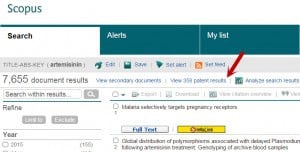
Similar to Web of Science, Scopus is a multidisciplinary database that covers journal articles, conference proceedings, and books and allows citation analysis. A lesser known feature in Scopus is patent searching. There are about 23 million patent records in Scopus, derived from five patent offices, including the US Patent & Trademark Office, the European Patent Office, the Japan Patent Office, the World Intellectual Property Organization and the UK Intellectual Property Office*.

For patent searching, conduct your search as you normally would either using the default Document Search or using other options such as Author Search and Affiliation Search. On the results page, you will see the number (7,655 in the example showed in the screenshot) of Documents Results listed on the upper left side of the screen. To the right of this number, there is a link that says “View 358 patent results”. This link will take you to a separate page with patents listed. Note that the patent link will only appear if there are patent results that matched your search terms.

Patent searching in Scopus screenshot

To know more about patents and how to find them, visit the Patent guide created at the Lichtenberger Engineering Library. You can also take a patent class at Hardin Library; for more information, visit the Hardin Open Workshops website at http://www.lib.uiowa.edu/hardin/workshop/.

*Source: Elsevier. Scopus Facts & Figure Factsheet. http://www.elsevier.com/__data/assets/pdf_file/0007/148714/3859-Scopus-Facts-and-Figures-LO.pdf  Accessed April 28, 2015.

Calling All Sleuths! 2015 Nancy Drew Iowa Convention

Nancy Drew BungalowUniversity of Iowa Libraries, Special Collections Dept.

Come check out the 2015 Nancy Drew Iowa Convention, celebrating the 85th anniversary of Nancy Drew and the 110th anniversary of Iowa native and Nancy Drew author, Mildred Wirt Benson!

9:30am, Friday, May 1
University of Iowa Main Library, Room 2032.
This event is free and open to the public.

You can read about this event in the Iowa-City Press Citizen, and come learn even more about the life and work of Mildred Benson by exploring her papers at the Iowa Women’s Archives.