Skip to content
Skip to main content

Transcription addiction

We’ve been in touch with one of our most faithful DIY History transcribers, Roger. He didn’t intend to get so drawn into the project when he first visited our site, but now he admits that “things like eating and mowing get in the way but I’ve managed to blow off most other things cause I’m addicted to this.” Besides transcribing the manuscript pages, at which he has become expert, he likes to monitor the “Recent changes” log, which records all the work done by various contributors, and is accessible to anyone who creates a DIY History account. Like other frequent transcribers, he has an eerie sense of entering the private thoughts of writers long ago: “I keep thinking we’re almost invading something private these people from 200 years ago never expected anyone, but maybe a daughter or grand daughter would ever see their writings. It’s a great look into the “olden” times.” Roger has spent a lot of time transcribing recipes in the Szathmary Culinary Manuscripts and Cookbook collection, and has come across some really harrowing dishes, which make full use of body parts. He knows someone who worked at a meat locker for years, and even she “has no interest at all in the tongue, feet, head or any other questionable parts of meat, like udder. She hated to handle a tongue, no way is she going to eat it.” Ah, how times and palates change. Roger has found a way to multi-task his hobbies: “I use my 46 ” flat screen as my monitor so I can kick back in the lazy boy and start typing and deciphering. I finally decided Sunday I wasn’t able to watch TV and type at the same time and a Nascar race was on. So I did a bit of rearranging so I could watch on the older 27 ” TV while online and if something interesting came up I could jump back on the flat screen to see wrecks or whatever.”

Another of our best transcribers is British; his hobbies include deciphering Minoan Linear A and Mycenaean Linear B, gardening, and fine cooking. He has dedicated himself to transcribing and proofreading the Civil War Diaries and Letters, and sometimes reports to us his discoveries about old American slang and expressions, such as “wooden nutmegs and flannel sausages.”

We love to hear the transcribers’ stories, as they help us share the stories of these old manuscripts.

English Cookbook, 1700 | Szathmary Culinary Manuscripts and Cookbooks

English cookbook, 1700 | Szathmary Culinary Manuscripts and Cookbooks

Library & Information Science Source – Trial ended 30 June 2013

Developed by librarians for librarians, Library & Information Science Source will appeal to those interested in librarianship, classification, cataloging, bibliometrics, online information retrieval, information management and many other library and information science related areas. Specific coverage includes subjects such as automation, care and restoration of books, circulation procedures, government aid, internet software, library equipment and supplies and rare books.

Please send additional comments to Karen Fischer.

National Poetry Month @HardinLib

npm2013_poster_540

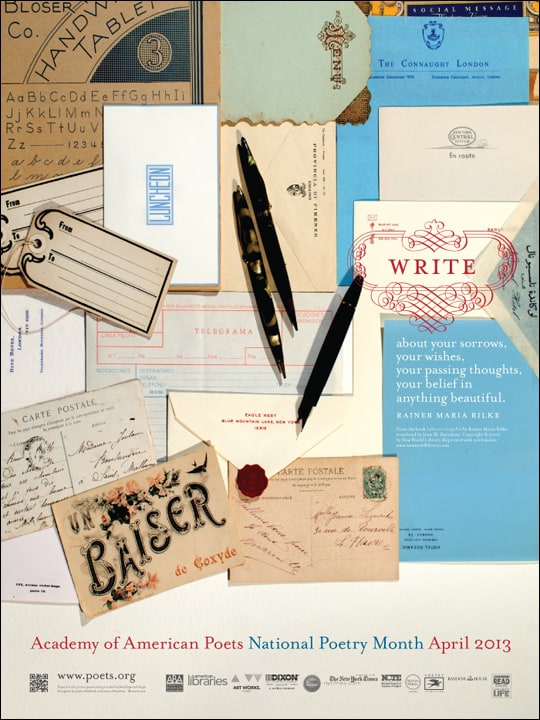
April is National Poetry Month.  Poems on many subjects have been posted throughout the library for you to enjoy.  This year the poems were selected by Hardin Library student employees.


Notes from the John Martin Rare Book Room, April 2013

History of Medicine Society Presentations and Events 2013/2014

Thursday, September 26, 2013,  5:30-6:30.    Dayle DeLancey, Asst. Professor, Dept of Medical History & Bioethics, Univ. of Wisconsin School of Medicine and Public Health.  “African American Print Culture and the History of Medicine”.

Thursday, October 24, 2013, 5:30-6:30.   Russell Currier, Past President, American Veterinary Medical History Society, “2,000 Year History of Scabies: From Humoral Beliefs to Contagion to Modern Understanding”.

Thursday, November 21, 2013, 5:30-6:30.    K. Lindsay Eaves, MA, PhD candidate. Research Asst., UI Biological Anthropology Lab and  Report Manager for Wapsi Valley Archaeology, Inc., Anamosa, IA,  “An Uncorseted Life: The Medical Basis of Congressional Medal of Honor Recipient, Dr. Mary Edwards Walker’s Suffrage and Dress Reform Activism”.

Thursday, January 23, 2014, 5:30-6:30.    Asitha Jayawardena, Medical student, Univ. of Iowa.  Winner of Sparks Essay Contest. “Expedited ‘Diffusion of Innovation’: A reflection on the Ponseti Method in the current era of medicine”.

Thursday, February 27, 2014, 5:30-6:30.    H. Stanley Thompson, Emeritus Prof. Dept. of Ophthalmology and Visual Sciences, Univ. of Iowa, “Abraham Flexner’s Contributions to the University of Iowa’s College of Medicine”.

Thursday, March 27, 2014,  4:30-7:00     John Martin Rare Book Room, 4th floor, Hardin Library for the Health Sciences, University of Iowa   “Open House in the John Martin Rare Book Room”

Friday, April 25, 2014, 6:00-9:00 History of Medicine Society Banquet.   W. Bruce Fye, Professor of Medicine and Medical History, Mayo Clinic, “Franklin Roosevelt’s Secret ‘Serious Heart Ailment’ and the 1944 Presidential Campaign.” Location to be determined.
 

Which Riddle?

E.S.P. fluxkits, by James Riddle

E.S.P. fluxkits, by James Riddle

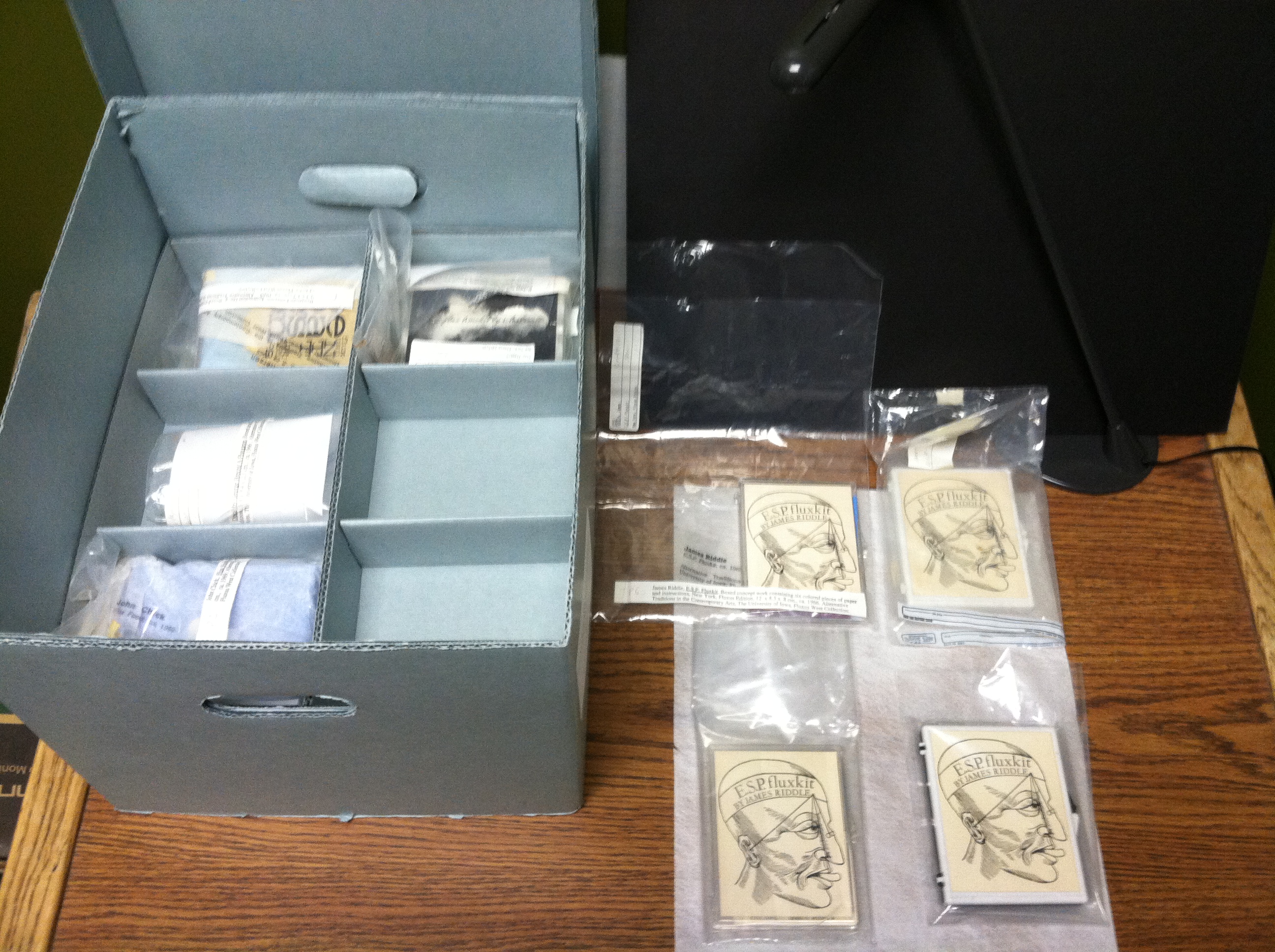
James Riddle, creator of the E.S.P. fluxkit, is represented in the collection by 4 E.S.P. fluxkits.
1) clear box; colored cards visible
2) clear box; colored cards visible
3) white box; contents not visible
4) box with white top, black bottom; contents not visible

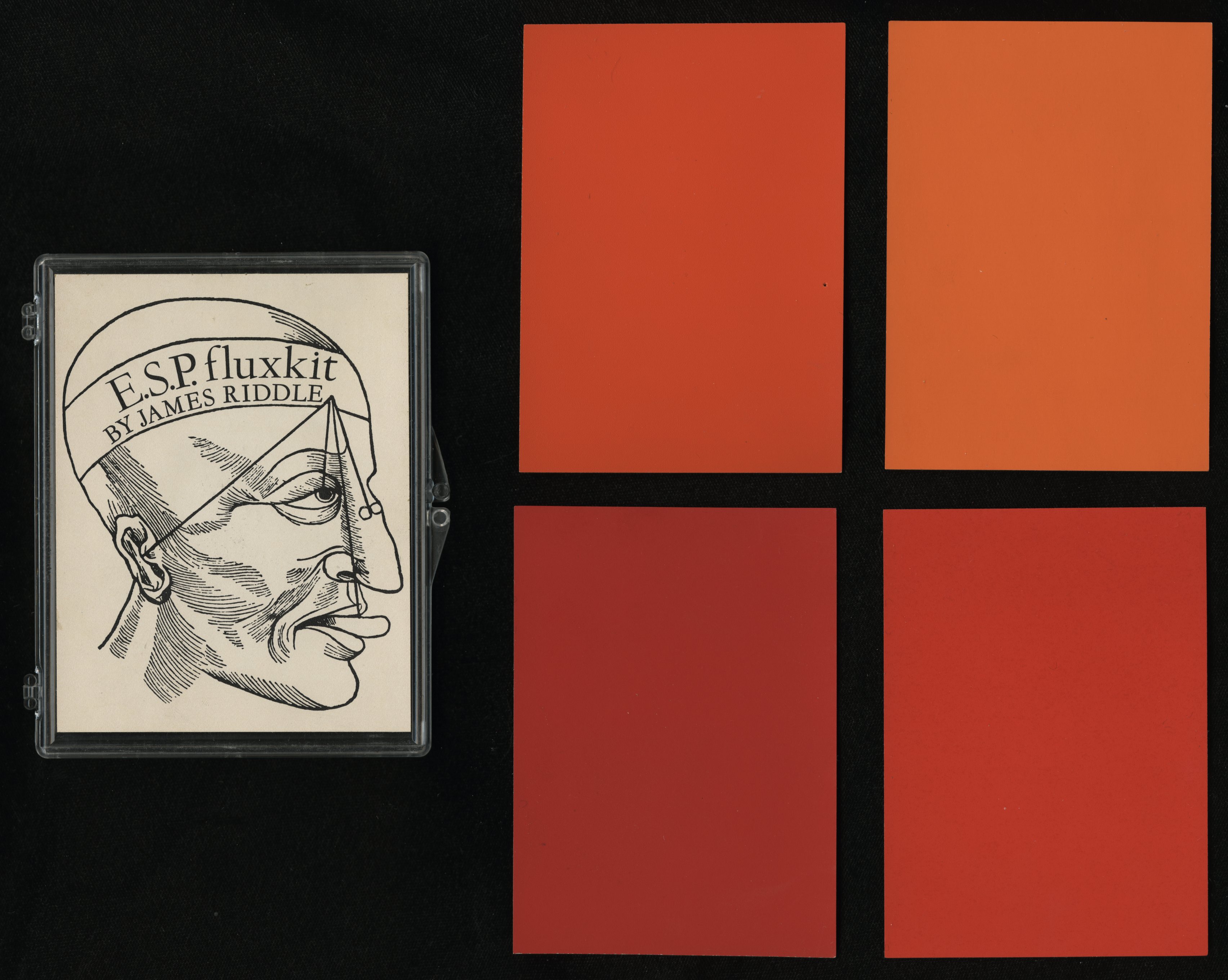
Not physically identical, but conceptually, yes, the idea goes across the board. The directions (when available) state that one is to run one’s fingers lightly over the cards while blindfolded in an effort to distinguish the colors from one another. In attempting to give a digital sense of the physical collection here at the University of Iowa, Which Riddle gets scanned? I ask the boxes: who wants to go? I wait for them to speak. Nope. Nothing. This moment is E.S.P. free. I pay more mind to the containers for each box, which has the most identifying ephemera? Which has been most attentively labeled and wrapped?
Somewhere I read that they should contain 10 cards. Well, that’s not quite the reality. Two boxes contain 6 cards and instructions, one contains 9 cards, the last contains 13 cards PLUS instructions. And there we have it. I won’t presume to redistribute the cards evenly but I will give the best representation of the color spectrum Riddle wanted to pose in the E.S.P. fluxkits. Or was it the color spectrum he was really getting at?

Again we are posed with more questions than answers, but the collection only becomes more intriguing.

a portion of E.S.P. fluxkit, by James Riddle c. 1966

a portion of E.S.P. fluxkit, by James Riddle c. 1966