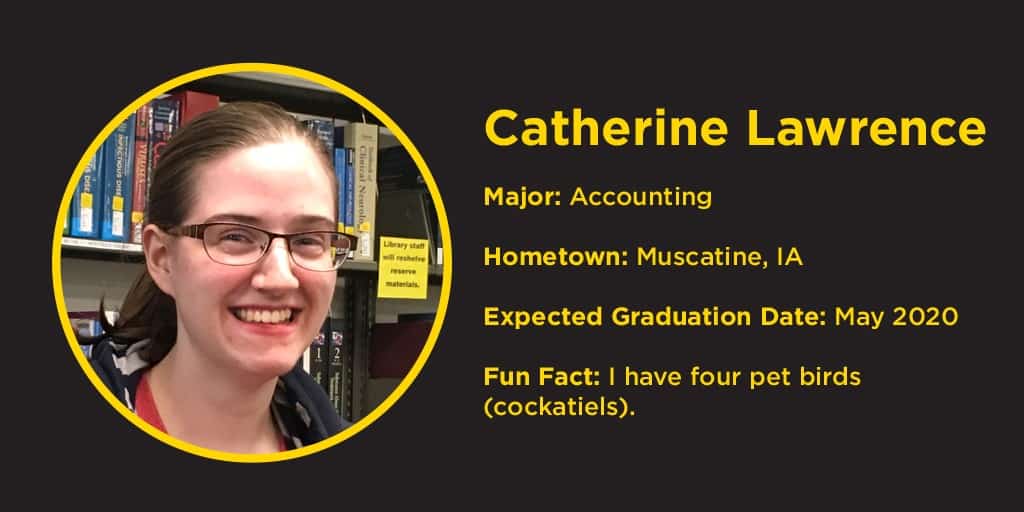
Congratulations to Hardin student assistant Catherine Lawrence. Catherine is receiving a Bachelor of Business Administration Degree in Accounting.
What activity did you participate in at The University of Iowa that you are proud of?
VITA, Volunteer Income Tax Assistance
What are your future plans?
I plan on studying for the CPA exam, and afterwords I’d like to get a job at Rockwell Collins or RSM. I’d really like to stay in Iowa City, so hopefully I can make that happen.
What did you like best about working at the Hardin Library?
I loved so many things about working at Hardin Library! My favorite part of the job was doing special projects, like helping with book shifting from the 1st to 4th floor. I was very fortunate to find a job with awesome supervisors! The people who work here are amazing human beings.
How are you dealing with the COVID-19 pandemic?
Rearranging my furniture and getting creative with my cooking.
Vendors/publishers have provided Hardin Library access to additional resources at no charge during the COVID-19 pandemic. Access end dates will be determined by the vendor supplying the resource and dates will vary.
Access to these resources is restricted to University of Iowa affiliates, and you will be required to use your Iowa HawkID and password to access the materials off campus.
For a complete list of all available resources along with descriptions, please see our guide:
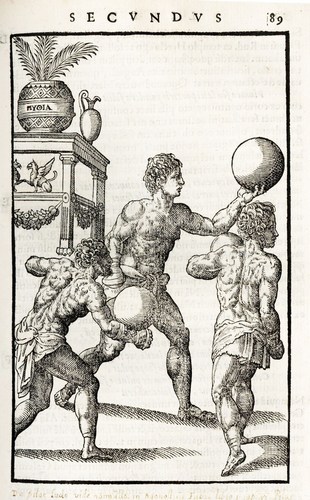
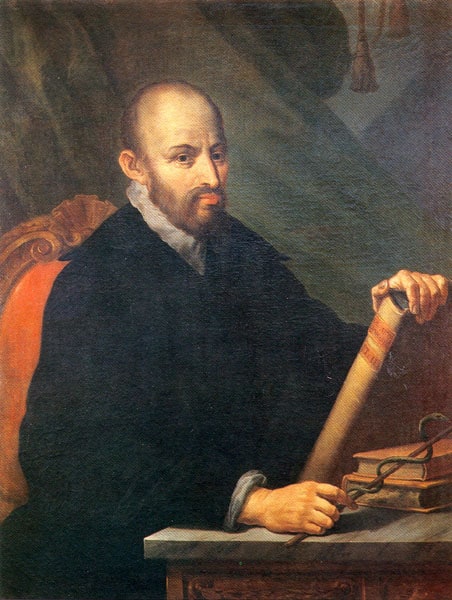
GIROLAMO MERCURIALE (1530-1606) De arte gymnastica libri sex. Apud Juntas 1587 3rd ed. 3, 308 [27] pp. illus. 23.6 cm .[The Art of Gymnastics, volume six in Latin].
Mercuriale, professor of medicine at Bologna and Pisa, is best know for this masterwork, first published in 1569.
De arte gymnastica was the first complete text on gymnastics and stresses the importance that all forms of exercise have in maintaining good health. Relying heavily on ancient practices, this work is an excellent compendium of physical therapy of earlier times. Mercuriale describes ancient gymnasia and baths and discusses mild exercises such as dancing as well as more strenuous pursuits such as wrestling and boxing. He gives consideration to the health benefits of proper exercise and concludes the book with a section of therapeutic exercises.
An English translation of this book can be found in De arte gymnastica. Critical edition by Concetta Pennuto; English translation by Vivian Nutton. Latin and English on facing pages; critical matter in English or Italian. Firenze: L.S. Olschki, 2008. ISBN: 9788822258045; 8822258045. University of Iowa affiliates may request this title via Interlibrary Loan.
Thanks to Emeritus Professor Paul Greenough for suggestions to add translation information to the newsletters.
Like the rest of the University of Iowa Libraries, the John Martin Rare Book Room and the Hardin Library for the Health Sciences are physically closed. Much of Hardin Library’s current collection is available online, and Library staff continue to work virtually, assisting our users by email, Zoom, and other electronic means.
We are also mailing physical books to our users, when possible. These circumstances mean that the Rare Book Room’s collection is currently unavailable, although we encourage you to explore the digital exhibits, illustrations, and books available through the website at http://www.lib.uiowa.edu/hardin/rbr/
Thank you for your support and interest in the John Martin Rare Book Room.
April 1 was Dr. Mirko von Elstermann’s last day as Biomedical Sciences Librarian at Hardin Library. We wish Mirko the best in his future endeavors. His departmental liaison responsibilities have shifted to other Hardin librarians. Current list of Hardin liaison assignments
Remember that even though Hardin’s building is currently closed, Hardin’s staff are working from home and can be contacted by email or chat. Hardin is currently responding to email and chat Monday-Friday 7:30am-6pm and Saturday and Sunday 1pm-5pm.
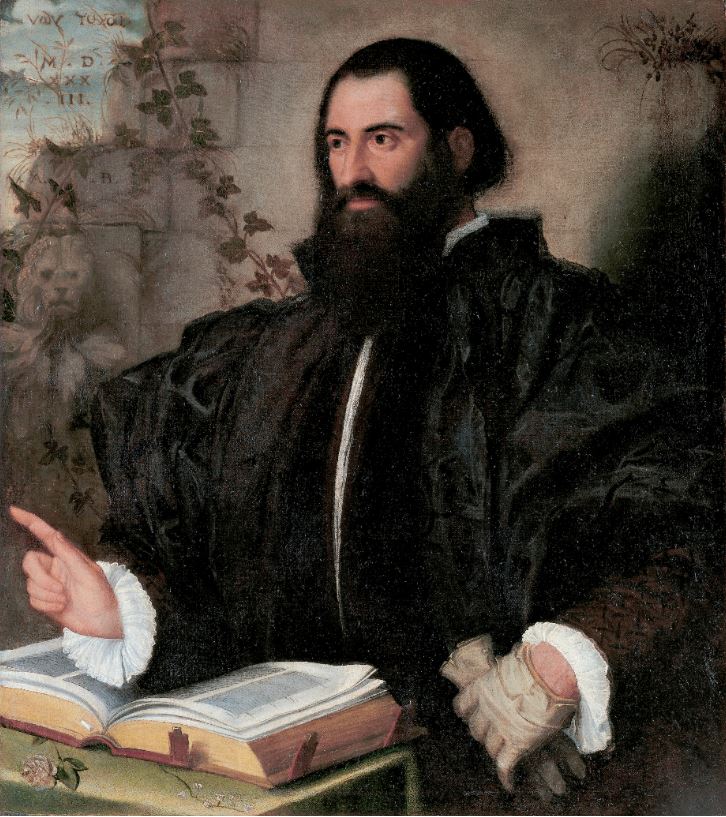
By Moretto da Brescia – Musei di Strada Nuova – Palazzo Rosso
PIETRO ANDREA MATTIOLI (1500-1577) Commentarii, in libros sex Pedacii Dioscoridis Anazarbei, Demedica materia. In officina Erasmiana; Apud Vincentium Valgrisium 1554 [48] 707 [1] pp., illus. 31.5 cm.
Mattioli of Siena studied medicine at Padua where he graduated in 1523. During his career, he practiced at Siena, Perugia, Rome, Trent, and Gorizia. Mattioli was physician to Ferdinand I and later Maximilian II. He wrote books on syphilis, the practice of medicine, and therapeutics, but his best-known and most popular work was Comentarii.
Mattioli first published his commentary on Dioscorides in Italian at Venice in 1544 and this is his first Latin commentary and also the earliest edition to contain information on botanical specimens from the Americas, Asia, and Africa. He prepared what many authorities now regard as the encyclopedia of Renaissance pharmacology. Mattioli studied hundreds of plants, examined and described them fully, added many new species, and provided excellent illustrations which were far superior to those of any previous work in the field.
By Unknown – Pietro Andrea Mattioli. Commentarii, in libros sex Pedacii Dioscoridis Anazarbei, de medica materia. Adiectis quàm plurimis plantarum et animalium imaginibus, eodem authore. Vincentius Valgrisi, Venedig, Public Domain, Link
Elizabeth Wurtzel on the beach with her dog Alistair in 2017 | image from Wikimedia Commons
Author Elizabeth Wurtzel’s groundbreaking biography about depression Prozac Nation inspired many other confession-style biographies. Ms. Wurtzel died from metastasized cancer on January 7, 2020. Here is a selected list of biographies that discuss mental health or addiction held in the University of Iowa Libraries collections.
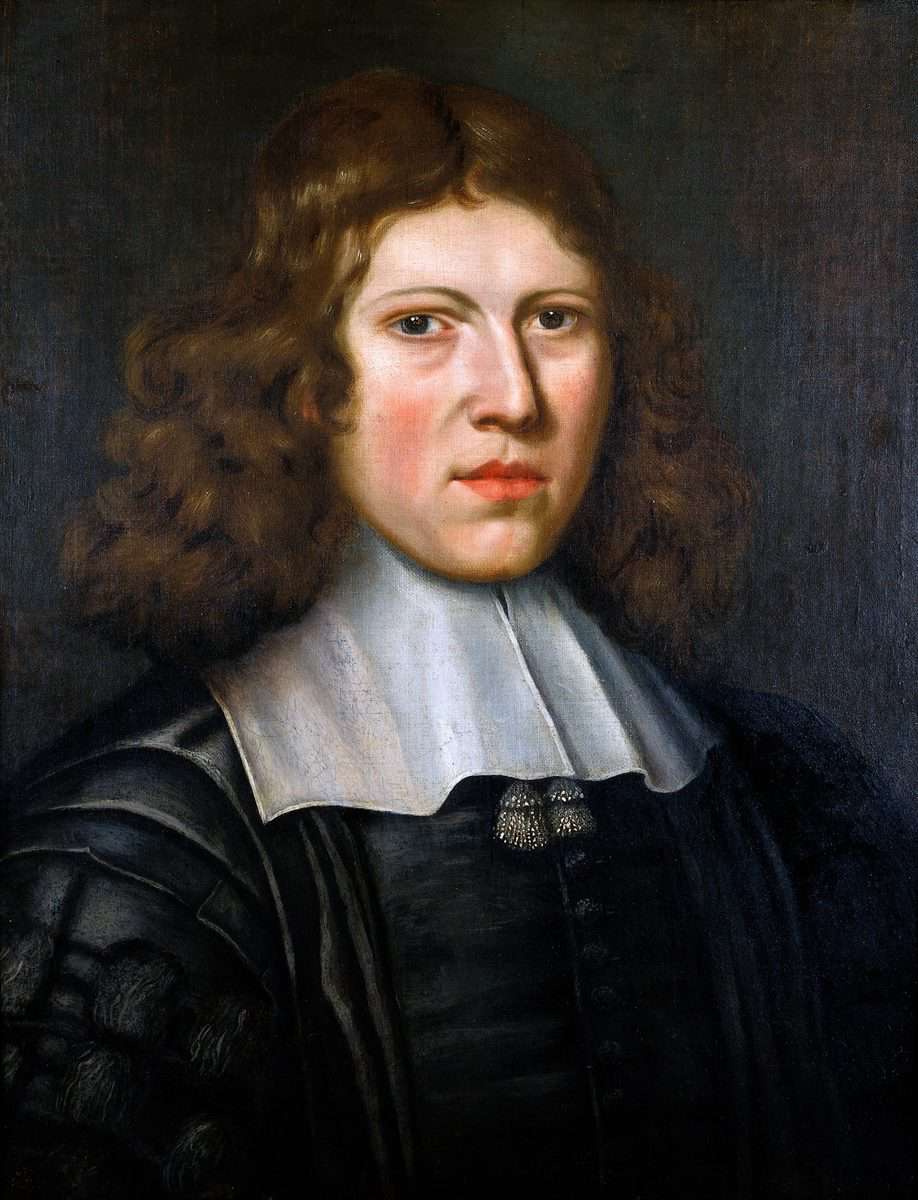
Richard Lower (1631-1691), anatomist. Oil painting by Jacob Huysmans Credit: Wellcome Library, London. Wellcome Images
RICHARD LOWER (1631-1691). Tractatus de corde. Amsterdam: Apud Danielem Elzevirium, 1669. [16] 232 pp
Richard Lower was one of the foremost English physiologists of the seventeenth century. Soon after receiving his M.D. degree in 1665, Lower relocated to London. He quickly acquired a large practice, was elected a Fellow of the Royal Society and later a Fellow of the Royal College of Physicians. Lower was an ardent supporter of Harvey, and this treatise is the first important work on cardiac physiology to appear after the work of Harvey.
In this book, Lower first described many finer structures of the heart, including the scroll-like nature of the musculature. He discussed the physiology and mechanism of the heart and of respiration, described his experiments on transfusion, and gave an accurate description of tricuspid valve endocarditis. His chief contributions included his concept of the heart’s musculature, his explanation of the muscular nature of the heart beat, and his proof that the dark venous blood becomes bright red on passing through the lungs by virtue of being brought into contact with air in the lungs.
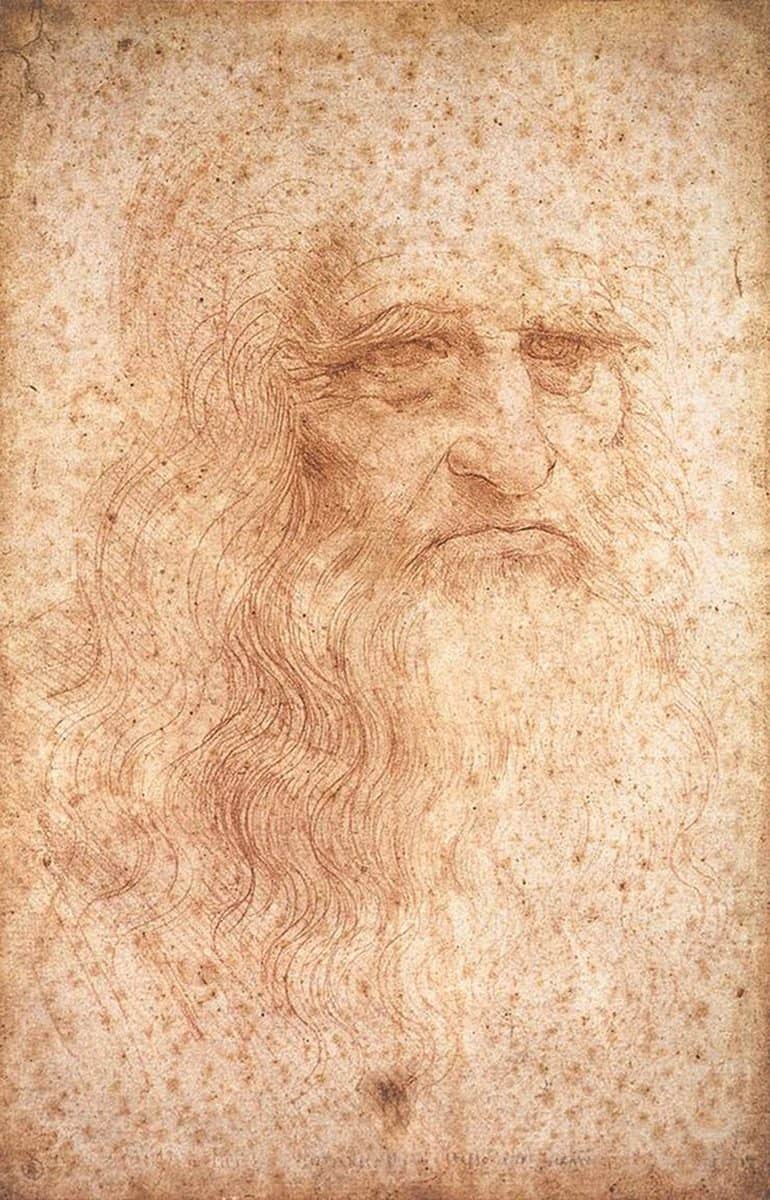
LEONARDO DA VINCI (1452-1519). A catalogue of the drawings . . . in the collection of His Majesty the King at Windsor Castle. 2 vols. New York: Macmillan and Cambridge, England: 1935.
Leonardo Da Vinci was one of the greatest artists and scientists of the Italian Renaissance. His contributions to science include significant accomplishments in mechanics, physics, hydraulics, astronomy,
anatomy, architecture, and civil engineering. He is considered to be the founder of physiological anatomy. After his death, his writings and drawings were forgotten for over two centuries and became
scattered among private collectors, libraries, and archives throughout Europe.
The greater part of his extant writings and drawings on anatomy were found at the Royal Library of Windsor Castle in the early 1700s; however, no drawings from the collection were published until 1796. The first effort to make the collection available to the public in facsimile was not made until 1898 when the first volume of this set, containing a transcription of Leonardo’s text together with a French translation, was issued. The
second volume was published in 1901; unfortunately both volumes contained numerous mistakes due to misunderstandings, ignorance of the subject, and the difficulty of interpreting Leonardo’s
handwriting.
Janna C. Lawrence, MLS, AHIP Hardin Library Director
Janna Lawrence, Director of Hardin Library, recently co-authored two articles:
Krasowski MD, Lawrence JC, Briggs AS, Ford BA. Burden and Characteristics of Unsolicited Emails from Medical/Scientific Journals, Conferences, and Webinars to Faculty and Trainees at an Academic Pathology Department. Journal of Pathology Informatics 2019; 10:16. http://dx.doi.org/10.4103/jpi.jpi_12_19.
Puig-Asensio M, Braun BI, Seaman AT, Chitavi S, Rasinski KA, Nair R, Perencevich EN, Lawrence JC, Hartley M, Schweizer ML. Perceived Benefits and Challenges of Ebola Preparation Among Hospitals in Developed Countries: A Systematic Review. Clinical Infectious Diseases (in press). https://doi.org/10.1093/cid/ciz757
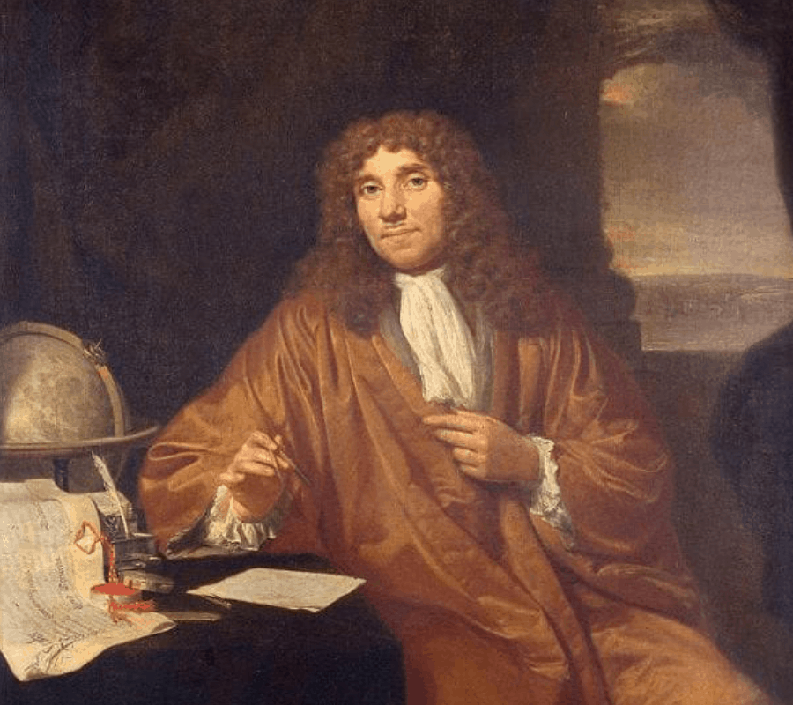
ANTHONY VAN LEEUWENHOEK (1632-1723). Continuation arcanorum naturae detectorum. Delft: Apud Henricum a Kroonevelt, 1697.
Antonio van Leeuwenhoek, of Delft, was the first to use the microscope systematically and brought the construction of the simple microscope to a high degree of perfection.
Self-taught and never having attended a university, ignorant of Latin and Greek and the classical texts, he became one of the greatest and most expert microscopists, thanks to the sagacity of his observations and the perfection of his technique.
Leeuwenhoek was a master lens-grinder and constructed several hundred microscopes, grinding a new lens for each new investigation which he undertook. These volumes contain eighty letters from several hundred in which Leeuwenhoek communicated the results of his investigations to the Royal Society in London and which were published in its Philosophical Transactions. In 1683, van Leeuwenhoek’s drawing of bacteria was the first published representation.
Though not a trained scientist, he opened up avenues of anatomy previously unseen, leading to accurate physiology and accurate therapeutics. Malpighi used one of his microscopes to define the ultimate structure of the capillaries. Leeuwenhoek first described the individual plant cell, the individual striped muscle cell, spermatozoa, red corpuscles, and the crystalline lens of the eye.