
ANTHONY VAN LEEUWENHOEK (1632-1723). Continuation arcanorum naturae detectorum. Delft: Apud Henricum a Kroonevelt, 1697. Antonio van Leeuwenhoek, of Delft, was the first to use the microscope systematically and brought the construction of the simple microscope to a high degree of perfection. Self-taught and never having attended a university, ignorant of Latin and Greek and the classicalContinue reading “Anthony van Leeuwenhoek | Microscope Builder | October 2019 Notes from the John Martin Rare Book Room @Hardin Library”
Category Archives: John Martin Rare Book Room
In Memory of Richard M. Caplan | September 2019 Notes from the John Martin Rare Book Room @Hardin Library

Richard M. Caplan, July 16, 1929 – August 20, 2019 This issue of Notes from the John Martin Rare Book Room is dedicated to the memory of Richard D. Caplan, long time supporter and contributor to the University of Iowa History of Medicine Society. In his tenure at the University, Dick gave seven HOMS lecturesContinue reading “In Memory of Richard M. Caplan | September 2019 Notes from the John Martin Rare Book Room @Hardin Library”
A Model for Chaucer’s Doctor | August 2019 Notes from the John Martin Rare Book Room @Hardin Library

JOHN OF GADDESDEN (1280?-1361). Rosa Anglica practica medicine a capite ad pedes. Pavia: Joannesantonius Birreta, 1492. John studied at Merton College, Oxford, then practiced first at Oxford and later in London, where he was highly esteemed among his contemporaries. He was the first Englishman to be appointed court physician to an English king, Edward II, and isContinue reading “A Model for Chaucer’s Doctor | August 2019 Notes from the John Martin Rare Book Room @Hardin Library”
Benzi’s Observations on Galen | May 2019 Notes from the John Martin Rare Book Room @Hardin Library

UGO BENZI (1376-1439). Expositio super libros Tegni Galeni. Venice: Bonetus Locatellus, for Octavianus Scotus, 1498 Benzi, also know as Hugo of Siena, initially studied philosophy and medicine at the University of Siena. He completed his doctorate at Pavia in 1396 where he remained on the faculty until 1399. During his subsequent academic career, he held majorContinue reading “Benzi’s Observations on Galen | May 2019 Notes from the John Martin Rare Book Room @Hardin Library”
Malaria Discovered by Laveran | April 2019 Notes from the John Martin Rare Book Room @Hardin Library
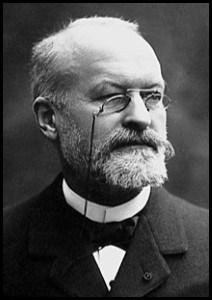
CHARLES LOUIS ALPHONSE LAVERAN (1845-1922). Traité du paludisme. Paris: Masson, 1898. After graduating from the University of Strasbourg in 1867, Laveran became an army physician like his well-known father. While stationed at Constantine in Algeria, he discovered the malaria parasite which he named Oscillatia malariae. One of the great discoveries of modern medicine, it was announcedContinue reading “Malaria Discovered by Laveran | April 2019 Notes from the John Martin Rare Book Room @Hardin Library”
Judicial Astrology | Al-Qabisi | February 2019 Notes from the John Martin Rare Book Room @Hardin Library

ABD AL-ʻAZĪZ IBN ʻUTHMĀN (fl. 950 – d. 967) AND Danck, Joannes fl. 1331. Libellus ysagogicus Abdilazi, id est servi gloriosi Dei… 1485 Abu al-Saqr Abd al-Aziz Ibn Uthman Ibn Ali al-Qabisi l-Mawsili al-Hashimi, generally known as Al-Qabisi, (Latinised as Alchabitius or Alcabitius), and sometimes known as Alchabiz, Abdelazys, Abdilaziz ‘Abd al-Azîz, عبدالعزيز القبيصي) was anContinue reading “Judicial Astrology | Al-Qabisi | February 2019 Notes from the John Martin Rare Book Room @Hardin Library”
Robert Knox | Man, his structure and physiology | March 2019 Notes from the John Martin Rare Book Room @Hardin Library
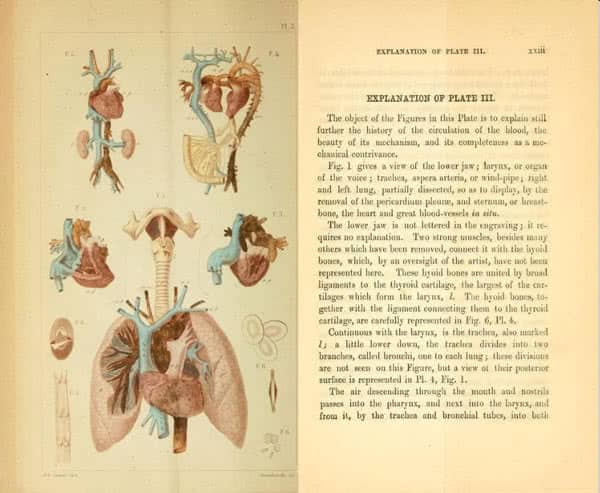
ROBERT KNOX (1791-1862). Man, his structure and physiology : popularly explained and demonstrated. 2nd ed. London ; New York: H. Bailliere, 1858. This popular introduction to anatomy and physiology was written by the noted – if somewhat infamous – Edinburgh anatomist Robert Knox. Knox believed that a knowledge of human structure and physiology was vital, forming theContinue reading “Robert Knox | Man, his structure and physiology | March 2019 Notes from the John Martin Rare Book Room @Hardin Library”
Aulus Cornelius Celsus, De Medicina | January 2019 Notes from the John Martin Rare Book Room @Hardin Library

AULUS CORNELIUS CELSUS (25 B.C.-50 A.D.). De medicina. Venice: Philippus Pincius, for Benedictus Fontana, 1497. Aulus Cornelius Celsus was a Roman encyclopaedist, known for his extant medical work, De Medicina, which is believed to be the only surviving section of a much larger encyclopedia. The De Medicina is the oldest medical document after the HippocraticContinue reading “Aulus Cornelius Celsus, De Medicina | January 2019 Notes from the John Martin Rare Book Room @Hardin Library”
Hippocrates Translated by François Rabelais | December 2018 Notes from the John Martin Rare Book Room @Hardin Library

HIPPOCRATES (ca. 460 B.C.-ca. 368 B.C.). Aphorismorum Hippocratis sectiones septem. Lyons: Apud Seb. Gryphium, 1543. The John Martin Rare Book Room holds 21 titles by Hippocrates published from 1527 through the 1800’s. This volume, translated from the Greek to Latin is by François Rabelais (ca. 1490-1553?). Rabelais was a French physician, Catholic monk, and noted humanist,Continue reading “Hippocrates Translated by François Rabelais | December 2018 Notes from the John Martin Rare Book Room @Hardin Library”
Arthur Hill Hassall | Food and its Adulterations | November 2018 Notes from the John Martin Rare Book Room

ARTHUR HILL HASSALL (1817-1894). Food and its adulterations. London: Longman, Brown, Green, and Longmans, 1855. Hassall studied medicine as his uncle’s apprentice in Dublin and later returned to England where he received a diploma from the Royal College of Surgeons in 1839 and an M.D. from the University of London in 1851. An individual of many scientificContinue reading “Arthur Hill Hassall | Food and its Adulterations | November 2018 Notes from the John Martin Rare Book Room”