Sciences Library Winter Interim Hours, December 15, 2012 – January 21, 2013:
| Monday – Friday | 9:00am – 5:00pm |
| Saturday – Sunday | CLOSED |
Exceptions: CLOSED December 24-28 & 31, January 1 & 21.
Sciences Library Winter Interim Hours, December 15, 2012 – January 21, 2013:
| Monday – Friday | 9:00am – 5:00pm |
| Saturday – Sunday | CLOSED |
Exceptions: CLOSED December 24-28 & 31, January 1 & 21.
The August 2012 theses and dissertations are now available in Iowa Research Online (IRO), which is the repository of the research and scholarly output selected and deposited by the faculty, researchers and students of the University of Iowa. IRO is part of the larger Open Access movement to transform scholarly communication.
The sciences departments in the College of Liberal Arts and Sciences are well represented in IRO with the following departments contributing new disserations and theses.
The UI Libraries are also happy to announce some improved functionality in Iowa Research Online.
If you have any questions about the IRO or if you would like to deposit your research there, please contact the Sciences Library.
The UI Libraries is trying out a new resource. The trial ends on December 15, 2012.
The Data Citation Index supports data discovery, reuse and interpretation that benefits everyone involved in the research lifecycle.
Please send comments to Michael Wright.
Do you use PubMed or other NCBI databases in your research? Would you like to learn some expert tips and tricks? Shane Wallace and Chris Childs from the Hardin Library for the Health Sciences will be coming to the Sciences Library to demonstrate the advanced features of PubMed and other NCBI databases and answer your questions. Please join us.
Lunch @ the Sciences Library: PubMed & NCBI
12:30-1:20 pm, Wednesday, November 14th
102 SL (Sciences Library classroom)
In this workshop you will learn:
The workshop is open to all UI students, faculty and staff. There is no need to register. You may bring your lunch if desired. If you have any questions or concerns, please contact Sara Scheib at (319) 335-3024 or sara-scheib@uiowa.edu.
My Friend, Rachel Carson: Shirley Briggs and the Iowa Connection to “Silent Spring”
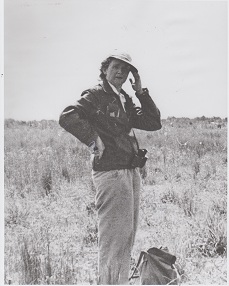 Fifty years ago, Rachel Carson published “Silent Spring,” a lucid and compelling book about how DDT and other pesticides were damaging the environment and human health. The book called for a change in the way humankind viewed the natural world and became an inspiration for the environmental movement. One of Carson’s staunchest advocates and closest friends was Iowan Shirley Briggs, who met Carson when they worked together at the U.S. Fish and Wildlife Service in the 1940s.
To recognize this Iowa connection to “Silent Spring,” the University of Iowa Libraries and Office of Sustainability are presenting a symposium and exhibition opening, Thursday, Nov. 15, inspired by the extensive collection of Briggs’ diaries, letters, photos and artwork in the Iowa Women’s Archives.
The symposium begins at 4:30 p.m. Nov. 15 in Phillips Hall Auditorium (100 PH), followed by an opening reception in the UI Sciences Library, where an exhibit of Briggs’ photos, writings, art work and memorabilia will be on display through Jan. 7. “A Sense of Wonder,” a short film about the last days of Rachel Carson as she struggled with cancer, will be shown from noon to 1 p.m., Wednesday, Nov. 14 at the Iowa City Public Library.
Speaking at the symposium will be Liz Christiansen, director of the UI Office of Sustainability, who will read from “Silent Spring” and tell about Carson’s legacy to the environmental movement. Kären Mason, curator of the Iowa Women’s Archives, will talk about Briggs and her connection to Carson’s work. Brief clips from “A Sense of Wonder” will also be shown.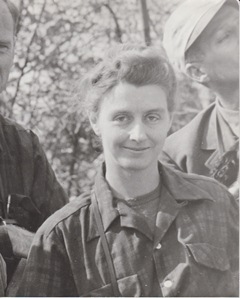
Briggs, an Iowa City native, was the author of “Basic Guide to Pesticides” (1992), inspired by the many requests for information about pesticides after “Silent Spring” was published in 1962. Briggs attended the University of Iowa earning a B.A. in art, art history, and botany in 1939 and an M.A. in art and art history in 1940. She studied with Grant Wood at UI. In 1945, she was hired by the U.S. Fish and Wildlife Service as an artist. She became close, lifelong friends with Carson and with other noted naturalists, such as Roger Tory Peterson, through her work as editor of the Atlantic Naturalist, a publication of the Audubon Naturalist Society of the District of Columbia.
After years of research in the United States and Europe, Carson made the decision to produce “Silent Spring.” This landmark work was linked to the increase of awareness of the impact of persistent, bio-accumulative chemical pollutants in the environment – these include DDT, mercury, Chlordane and Dieldrin, among others. These deadly chemicals are still being cleaned up and removed from the environment.
After her book’s publication, Carson was vilified by chemical companies. Her writings about the impact of legacy chemicals led to landmark legislation and the banning of the use of DDT. She died in 1964 after a long battle against breast cancer. After Carson’s death, Briggs created a non-profit organization, the Rachel Carson Council, a pesticide research information clearinghouse for both scientists and lay people.
Just eight years after “Silent Spring” was published, President Richard Nixon established the Environmental Protection Agency and with an extensive directive, helped pave the way for a series of important environmental laws, such as the Clean Air and Clean Water Acts.
Please join the Sciences Library for:
Lunch @ the Library: Gray Literature
At 12:30-1:20pm on Wednesday, November 7th in 102 SL (Sciences Library classroom).
What is gray (or grey) literature? Characteristics of gray literature include:
Document types include:
In this workshop, Marianne Mason, U.S. Federal Information Librarian, will teach you how to find gray literature, how to use it in your research, and how to cite it. And as always, how to get help when you need it.
The workshop is open to all UI students, faculty and staff. There is no need to register. You may bring your lunch if desired, but coffee and cookies will be provided. If you have any questions or concerns, please contact Sara Scheib at (319) 335-3024 or sara-scheib@uiowa.edu.
All eyes are focused on the East coast this week as Hurricane Sandy prepares to make landfall. Here are some great web resources to help you stay on top of the situation:
USGS – Flood Information – Hurricane Sandy – In anticipation of the arrival of Hurricane Sandy, the USGS has deployed storm tide sensors real-time streamgages. View the Storm Tide Mapper for real-time map-based information, or view the list of affected streamgages.
USGS – Coastal Change Hazards – Hurricane Sandy – Learn how Hurricane Sandy could lead to dramatic coastal change through the erosion of beaches and dunes.
USGS – WaterWatch – Provides information about current and historical streamflow conditions.
NASA – Hurricane Sandy – Satellite observations and images of Hurricane Sandy from NASA.
What other resources do you use to stay informed about extreme weather events? Share in the comments.
This week (October 22-26), education and research institutions all over the world are celebrating Open Access Week. Open-access (OA) literature is digital, online, free of charge, and free of most copyright and licensing restrictions. If you are interested in learning more, the UI Libraries has created a guide to open access for UI researchers.
Many researchers at the University of Iowa have already embraced the open access movement and are making an effort to publish to open access journals when possible. Some faculty members, such as James J. Amos, M.D., Michael S. Lewis-Beck, and Kembrew McLeod are acting as open access advocates to get the word out to their colleagues.
How can you help support the open access movement?
Please contact the Sciences Library if you have any questions or if you’re interested in learning more about open access.
Do you use Web of Knowledge or Web of Science? Some new enhancements were added to the abstract and citation database this week, including improvements to the Author Search (previously known as Author Finder), editing results sets, ReseacherID, Citation Alerts and the new Data Citation Index.
To learn more, view this short video or read the Web of Knowledge upgrade announcement.
If you would like to arrange for a one-on-one or group tutorial of Web of Science, please contact the Sciences Library at (319) 335-3083 or lib-sciences@uiowa.edu.
Web of Knowledge/Science Maintenance Alert
Please be advised that scheduled maintenance will take place beginning on Sunday, October 21, 2012 at 1400 GMT (9:00AM CDT) and ending by Monday, October 22, 2012 at 0200 GMT (9:00PM CDT). Web of Knowledge may not be available during that period. We apologize for any interruption this may cause.