My Friend, Rachel Carson: Shirley Briggs and the Iowa Connection to “Silent Spring”
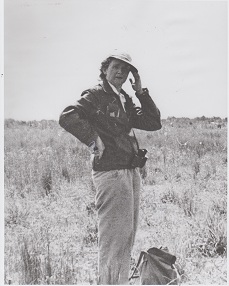 Fifty years ago, Rachel Carson published “Silent Spring,” a lucid and compelling book about how DDT and other pesticides were damaging the environment and human health. The book called for a change in the way humankind viewed the natural world and became an inspiration for the environmental movement. One of Carson’s staunchest advocates and closest friends was Iowan Shirley Briggs, who met Carson when they worked together at the U.S. Fish and Wildlife Service in the 1940s.
To recognize this Iowa connection to “Silent Spring,” the University of Iowa Libraries and Office of Sustainability are presenting a symposium and exhibition opening, Thursday, Nov. 15, inspired by the extensive collection of Briggs’ diaries, letters, photos and artwork in the Iowa Women’s Archives.
The symposium begins at 4:30 p.m. Nov. 15 in Phillips Hall Auditorium (100 PH), followed by an opening reception in the UI Sciences Library, where an exhibit of Briggs’ photos, writings, art work and memorabilia will be on display through Jan. 7. “A Sense of Wonder,” a short film about the last days of Rachel Carson as she struggled with cancer, will be shown from noon to 1 p.m., Wednesday, Nov. 14 at the Iowa City Public Library.
Speaking at the symposium will be Liz Christiansen, director of the UI Office of Sustainability, who will read from “Silent Spring” and tell about Carson’s legacy to the environmental movement. Kären Mason, curator of the Iowa Women’s Archives, will talk about Briggs and her connection to Carson’s work. Brief clips from “A Sense of Wonder” will also be shown.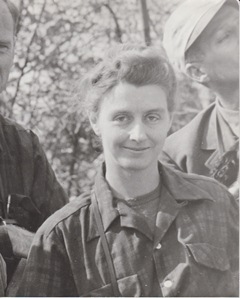
Briggs, an Iowa City native, was the author of “Basic Guide to Pesticides” (1992), inspired by the many requests for information about pesticides after “Silent Spring” was published in 1962. Briggs attended the University of Iowa earning a B.A. in art, art history, and botany in 1939 and an M.A. in art and art history in 1940. She studied with Grant Wood at UI. In 1945, she was hired by the U.S. Fish and Wildlife Service as an artist. She became close, lifelong friends with Carson and with other noted naturalists, such as Roger Tory Peterson, through her work as editor of the Atlantic Naturalist, a publication of the Audubon Naturalist Society of the District of Columbia.
After years of research in the United States and Europe, Carson made the decision to produce “Silent Spring.” This landmark work was linked to the increase of awareness of the impact of persistent, bio-accumulative chemical pollutants in the environment – these include DDT, mercury, Chlordane and Dieldrin, among others. These deadly chemicals are still being cleaned up and removed from the environment.
After her book’s publication, Carson was vilified by chemical companies. Her writings about the impact of legacy chemicals led to landmark legislation and the banning of the use of DDT. She died in 1964 after a long battle against breast cancer. After Carson’s death, Briggs created a non-profit organization, the Rachel Carson Council, a pesticide research information clearinghouse for both scientists and lay people.
Just eight years after “Silent Spring” was published, President Richard Nixon established the Environmental Protection Agency and with an extensive directive, helped pave the way for a series of important environmental laws, such as the Clean Air and Clean Water Acts.
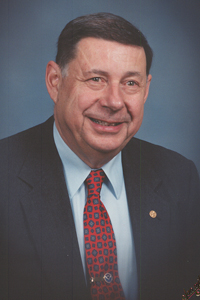 We depend on weather satellite images daily for our forecasts and travel plans. Without the groundwork laid by the National Earth Satellite Service beginning in 1972, though, these images would not be possible today. A distinguished UI alumnus, George H. Ludwig (BA ’56, MS -59, Ph.D. ’60) was a founding director of NESS and led its operations throughout the 1970s. It is part of Mr. Ludwig’s long and significant career in physics and environmental research, now documented in his papers recently donated to the University Archives.